Loveland, Ohio – On Monday afternoon I got a chance to sit down with Ohio Secretary of State candidate Bryan Hambley, the only declared Democratic candidate for the state-wide office. Two Republicans have also declared their intention to run, current Ohio Treasurer Robert Sprague from Findlay and Marcell Strbich who lives in Montgomery County.
Hambley is a cancer doctor who cares for leukemia patients at U.C. His wife Jana, is a trauma surgeon, and together they have two children ages 5 and 7 that attend Loveland schools.
I sat down with Hambley at a private meet the candidate night where we talked about what he could do as the Ohio Secretary of State to correct Ohio’s gerrymandered democracy, how the current Secretary of State has been responsible for deliberately confusing ballot language, how he would improve assistance to the caregivers that help disabled Ohioans cast their ballot, and improving civility among Ohio politicians.
Loveland, Ohio – Bryan Hambley, a cancer doctor who cares for leukemia patients, has announced his campaign for Ohio Secretary of State. Hambley and his wife Jana, a trauma surgeon, live in Loveland with their five and seven-year-old children. While practicing medicine, Bryan has also organized communities, “To fight against pharmaceutical companies that use their money to buy influence in hospitals, bring critical healthcare to underserved communities, and stand up for the right to vote and be heard.”
Having been raised on a small family-owned farm, Hambley told Loveland Magazine that he believes in the power of communities banding together to advocate for their needs.
His first foray into organizing happened when he was a small child, and the state tried to shut down his town’s small public school. The town of 800 people got into their trucks, drove to the capitol, and made their voices heard to save the school.
Hambley said that Democracy works best when communities can exercise their right to be heard. “Here in Ohio, we have seen our Secretary of State abuse our democracy, making it harder to vote, purging voters from the voter rolls, and drawing unfair maps that disenfranchise millions of Ohio citizens. I am running because I care about Ohio, and I have seen my patients and our communities suffer from a broken and gerrymandered democracy.”
Kelly Sakalas, Chair of the Warren County Democratic Party, said, “Bryan is the first in the door and last to leave. He spent countless hours volunteering and knocking on doors supporting reproductive rights, fighting against gerrymandering, and supporting Senator Sherrod Brown. We are lucky to have him here in Warren County, and Ohio will be lucky to have him as their Secretary of State!”
As Hambley gears up for this election, he said that he will travel to “all corners of the state” to meet folks and hear their vision for Ohio. He welcomes any outreach from the press or any Ohioan interested in discussing the future of our State.
HAMBLEY FOR OHIO CAMPAIGN RAISES OVER $360,000 IN 30 DAYS
In just the month of January, Bryan Hambley’s campaign for Ohio Secretary of State raised an impressive 6-figure haul
LOVELAND, Ohio – Bryan Hambley, candidate for Ohio Secretary of State, announced having raised over $362,081 in just 31 days.
“We know there is a long way to go, but we are extremely proud of the first 31 days of the campaign. In just four weeks, we have been to Cleveland, Columbus, Cincinnati, Toledo, Lebanon, West Chester, and Dayton.I’m looking forward to visiting every county in Ohio to meet with voters this year” Hambley said. “Ohio is a big state and it takes strong fundraising to reach voters across the state. The support we’ve received in January demonstrates our commitment to running a strong, viable campaign across our state.”
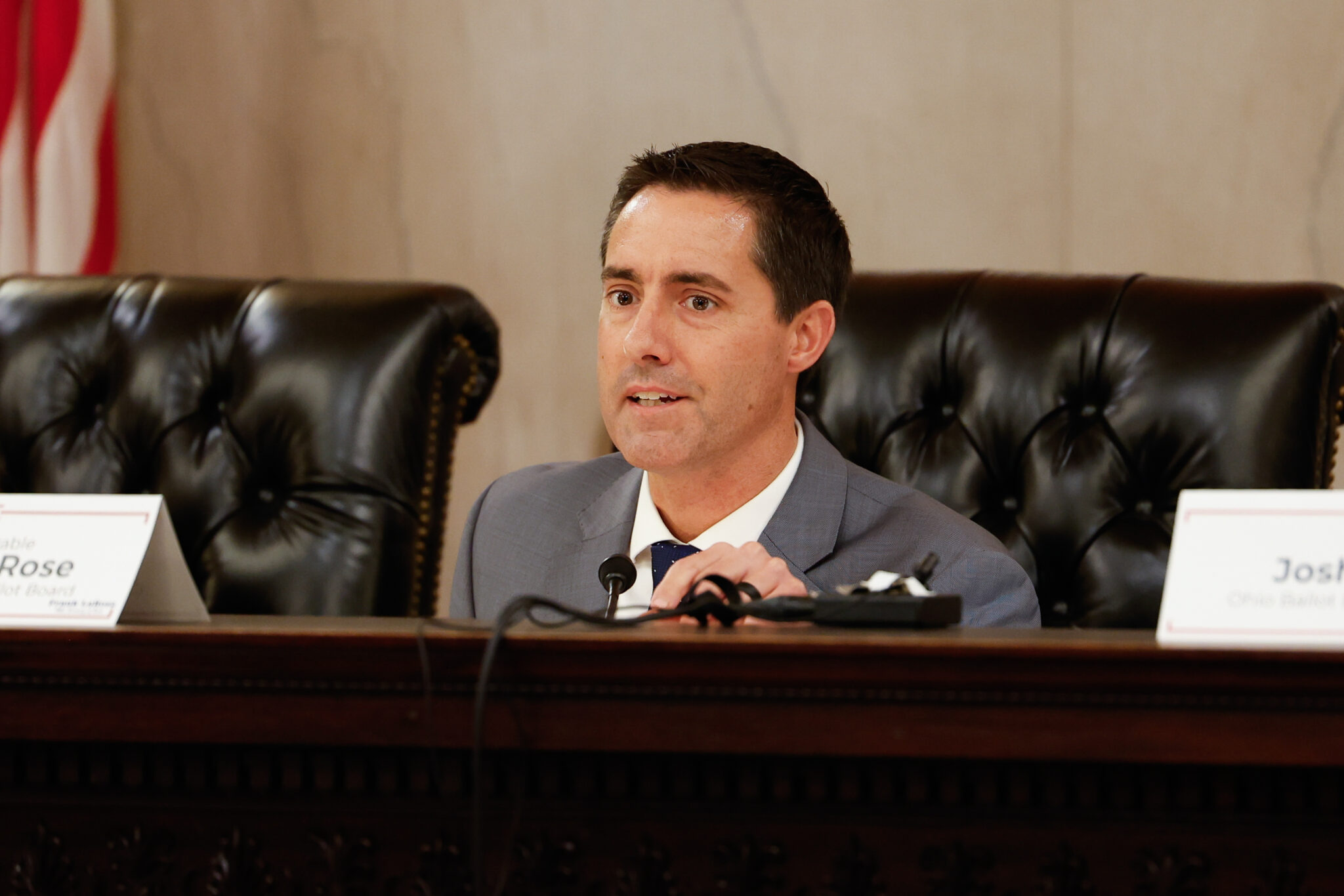
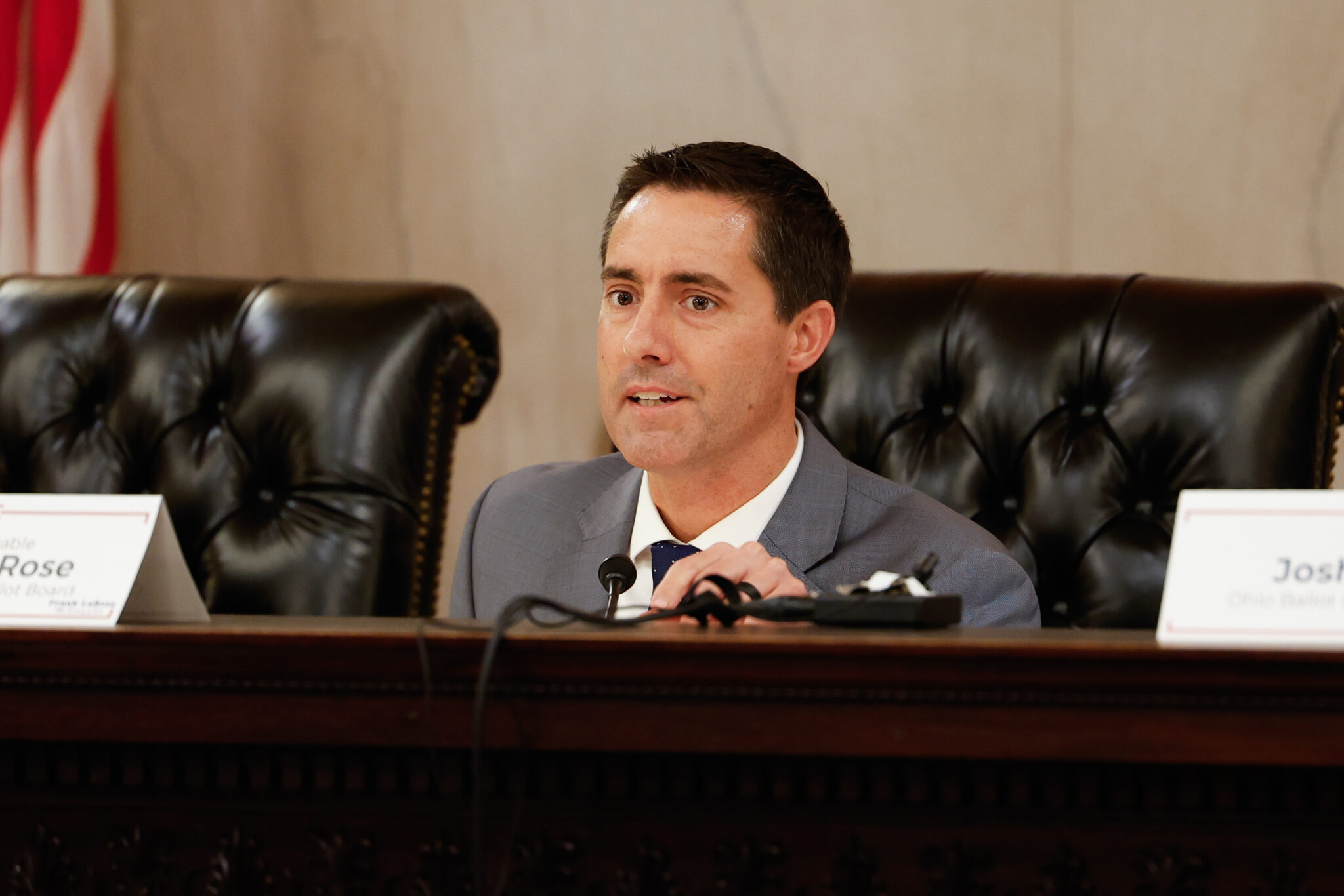
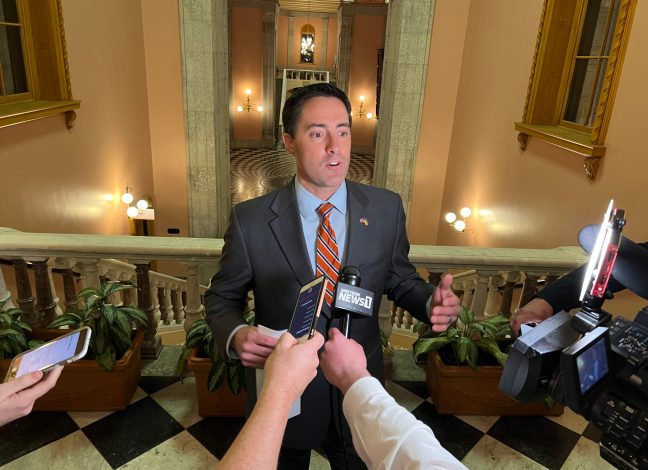
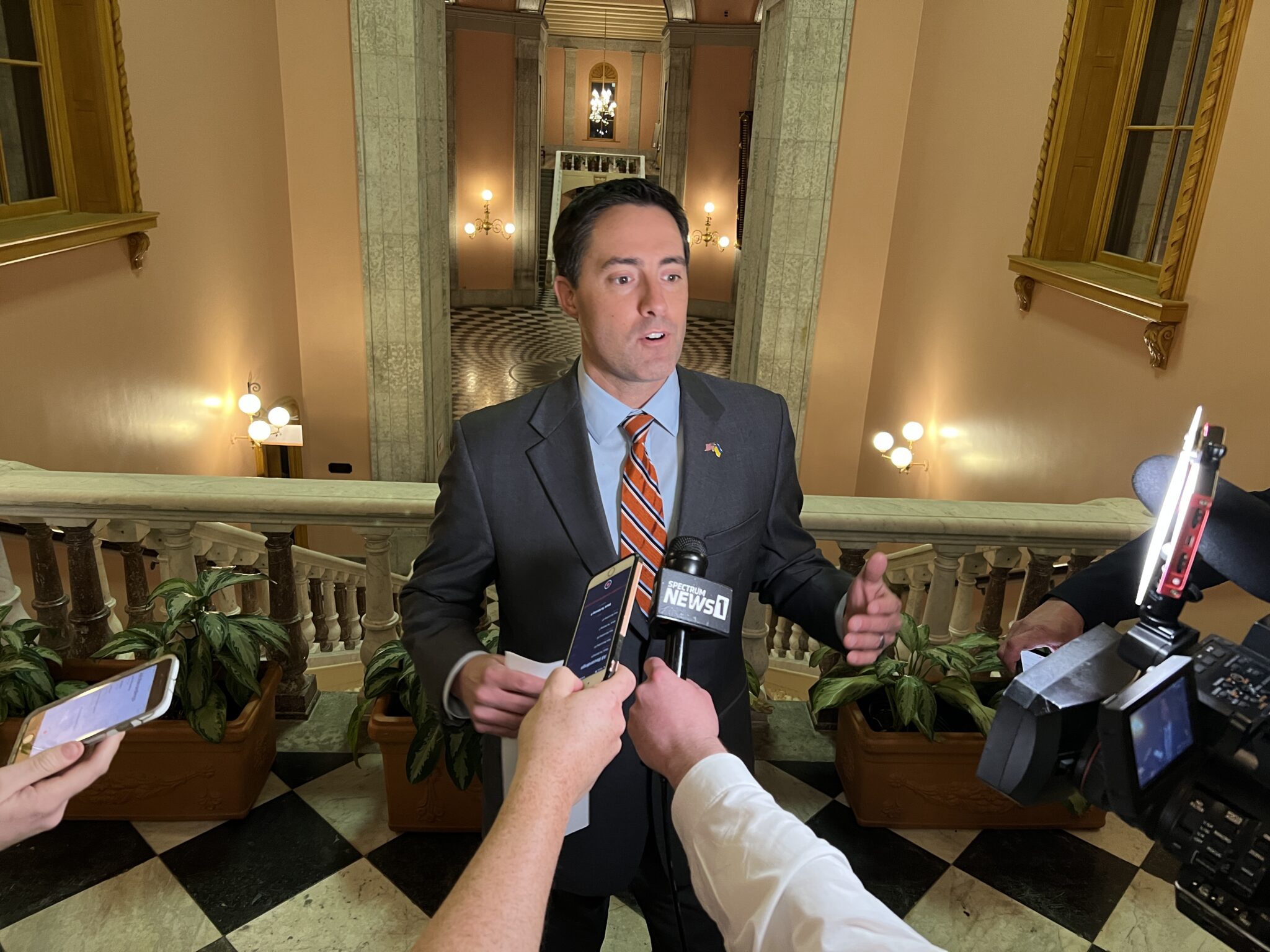
Ohio Secretary of State Frank LaRose has struck a deal to share voter data with three other Republican-led states. The agreement comes roughly six months after LaRose chose to exit a much larger, bipartisan interstate compact known as ERIC.
Ohio’s new agreements give the state access to interstate voter information on its own terms. When LaRose announced Ohio was backing out of the compact, he praised that “a al carte” model.
But even with three new partner states, Ohio will get a lot less of that information than it got from ERIC.
LaRose’s new deal
Under the agreements, Ohio will share voter data with elections officials in Florida, Virginia and West Virginia. Those states in turn will give Ohio access to their voter rolls. However, LaRose’s announcement offers scant details about scope and terms of the agreements.
In a press release, LaRose touted “state-specific data sharing and security protocols.”
“Ohio took the lead on this election integrity project,” LaRose said, “and it’s only one aspect of the work we’re doing to keep our elections honest as we prepare for the next presidential election year.”
Unlike the previous the data sharing system, LaRose inked three separate agreements with each individual state. The secretary said the data will allow both states to identify cross state voter fraud and duplicate registrations. Ohio Capital Journal has requested those agreements, but they were not immediately made available.
Amanda Grandjean, a deputy assistant and senior advisor in LaRose’s office, said they anticipate additional agreements with other states.
“These new agreements came from a 27-state working group that formed earlier this year in hopes of finding a more durable and accountable solution to cross-state data sharing that fit each state’s individual needs,” Grandjean said.
Grandjean led negotiations on the three existing deals. She expressed confidence more will follow as states address “legal and cybersecurity protocols.”
The deal they left behind
Previously, Ohio was part of ERIC, the Electronic Registration Information Center. State elections officials lead the organization, and it pools voter data from member states. Using that combined database and information from federal sources, ERIC helped members maintain accurate voter rolls.
It also enabled them to identify voters illegally casting ballots in different states for the same election. Last October, for instance, LaRose touted finding 75 incidents of alleged multi-state voter fraud.
As part of ERIC’s efforts, though, member states had to encourage eligible but unregistered voters to register. In his letter to ERIC announcing Ohio’s decision to pull out, LaRose alluded to those requirements.
Conservative media seized on those demands, describing them as “a left-wing voter registration drive.” ERIC member states fall all along the spectrum of conservative to liberal. Two of the most left-leaning states in the country, California and New York, have never joined.
Since 2022, eight states, all of them Republican-led, have left ERIC. Texas’ resignation from the organization will take effect in October. After that, the organization will include 24 states and the District of Columbia.
At a panel on election policy last month hosted by the National Conference of State Legislatures, even one of the conservative leaning panelists criticized the exodus. Matt Germer from the R Street Institute argued conservative states should reform ERIC rather than leave.
“Instead, what we’ve seen are a number of states throwing the baby out with the bathwater.”
But in LaRose’s announcement of his office’s new agreements, he took a parting shot at the organization.
“This is a major new development,” LaRose insisted, “as states look to move beyond the old model of sharing voter data through an unaccountable third-party vendor.”
Nick Evans has spent the past seven years reporting for NPR member stations in Florida and Ohio. He got his start in Tallahassee, covering issues like redistricting, same sex marriage and medical marijuana. Since arriving in Columbus in 2018, he has covered everything from city council to football. His work on Ohio politics and local policing have been featured numerous times on NPR.
In a 3-2 decision, the Ohio Ballot Board rejected using the full amendment proposal text for voters to see, and the approved summary language leaves out protecting contraception, fertility treatment and miscarriage care
In a 3-2 split decision Thursday, the Ohio Ballot Board rejected using the full text of a proposed reproductive rights amendment on the ballot in November, adopting instead summary language written by the Ohio Secretary of State’s Office that was criticized for being incomplete and inaccurate.
The board’s approval of the language – which is now titled Issue 1 for the November general election – was the next step in the process of voters deciding whether or not the Ohio Constitution will include the right to abortion, as well as contraception, fertility treatment, miscarriage care, and continuing one’s own pregnancy. Those last four items were all left out of the language approved by the ballot board majority.
The summary language does not change what the actual amendment would state in the constitution, but would be the last representation of the amendment voters read before the casting their approval or rejection.
The full text of the amendment will be available at boards of elections during the election, but not in the ballot booths with voters. LaRose said posters with the text will be accessible at voting locations.
In the summary language approved by the board, the medical term “fetus” is changed to “unborn child,” and the amendment’s “decision” language is changed to “medical treatment.”
The leader of the Ohio Ballot Board, Secretary of State Frank LaRose, said the changes were made by “staff” of the board, though Democratic board member and state Rep. Elliot Forhan said “I would assume that the buck stops with the secretary of state.”
LaRose during the meeting also said that, “having worked extensively on drafting this, I do believe it’s fair and accurate.”
LaRose has been vocal in his opposition of the amendment, even saying the effort around the previous Issue 1, which would have changed the threshold to approve a constitutional amendment had it not been roundly defeated, was targeting the abortion rights fight specifically.
At the beginning of Thursday’s meeting, he prefaced the board’s activity by saying the group was not there to “debate the merits” of the amendment or the marijuana ballot initiative also on the table at the meeting.
Ohio Ballot Board member, State Sen. Theresa Gavarone, R-Bowling Green, speaks at the Ballot Board meeting Thursday. (Photo by Graham Stokes for Ohio Capital Journal. Republish photo only with original article.)
Board member and state Sen. Theresa Gavarone, however, gave a speech in the middle of the meeting harshly criticizing the amendment and calling it “a bridge too far,” even after multiple comments by LaRose about the neutrality with which the board was supposed to conduct their business.
“This is a dangerous amendment that I’m going to fight tirelessly against,” Gavarone said. “But that’s not why we’re here today.”
Gavarone also claimed, as anti-abortion groups throughout the state do as well, that the amendment is “an assault on parental rights.” Neither the amendment nor the summary approved by the board mention parental rights of any kind.
The senator continued her comments during the board meeting, saying the true nature of the amendment “is hidden behind overly broad language,” despite the fact that the board summary took out pieces of the full text.
The summary passed by the board does not include a list of the rights to “reproductive decisions” spelled out in the ballot measure, including contraception, fertility treatment, continuing one’s own pregnancy, and miscarriage care, all of which would be impacted under the new constitutional amendment.
A clause in the proposed amendment that says “the state shall not, directly or indirectly, burden, penalize, prohibit, interfere with, or discriminate against” the exercise of the amendment by an individual or an assistant of the individual was reduced to “the citizens of the state of Ohio” in the summary.
The phrase “the citizens of the state of Ohio” is also used in the clause summarizing a prohibition of abortion that would only happen if a pregnant patient’s physician finds the pregnancy to be viable.
The phrase “pregnant patient” in the ballot measure was changed to “pregnant woman” in the summary.
Ohio Ballot Board member, State Sen. Paula Hicks-Hudson, D-Toledo, speaks at the Ballot Board meeting Thursday. (Photo by Graham Stokes for Ohio Capital Journal. Republish photo only with original article.)
State Sen. Paula Hicks-Hudson, the other Democratic member of the ballot board, made two motions to change the language of the summary to bring back the full text or certain clauses of the actual amendment text into the approved language.
“The full text is clear, it’s concise and it’s direct, which is one of the requirements that’s needed for us to present to voters in the state of Ohio,” Hicks-Hudson said.
Both motions were rejected 3-2, with LaRose, Gavarone and the final board member, Bill Morgan, voting against the motions.
Morgan didn’t speak during the meeting other than to register his votes, and didn’t specifically comment on the amendment discussion or language afterward.
“I think it’s what we were supposed to do, what the ballot board does,” Morgan told the OCJ.
Groups for and against the initiative anticipated potential issues with the board’s decision, with pro-abortion rights group Ohioans United for Reproductive Rights requesting that the ballot language mirror the amendment itself, so voters could see the entire constitutional change when they vote in November.
Lauren Blauvelt, a member of the coalition, decried the changes made to the language, and said the group is considering a lawsuit to fight back.
“The entire summary is really propaganda and we are going to talk about all of the reasons why Ohio voters should just be able to see the language for what it is,” Blauvelt said after the board meeting.
Anti-abortion groups argued against using the full text, saying it was unnecessary, and Ohio Right to Life president Mike Gonidakis pushed back on calls for a lawsuit against the summary.
“Any litigation filed on this is going to be thrown out by the Ohio Supreme Court because the statutory responsibility of the ballot board is to provide a fair and accurate representation. That’s what the law requires, and that’s what they did today,” Gonidakis said.
Gonidakis said he did not work with anyone on the ballot board on the summary language, but he wished the language was “stronger.”
Mike Gonidakis, president of Ohio Right to Life, talks to the press after the Ohio Ballot Board meeting Thursday. (Photo by Graham Stokes for Ohio Capital Journal. Republish photo only with original article.)
“Look, at the end of the day, people are going to make up their minds before they go in the ballot box anyways, and they’re not going to go in and then try to figure out what they want to do by reading something on a screen,” he said.
The proposed amendment has gone through a rollercoaster of activity since the Ohio Ballot Board approved the measure in March as compliant with the regulations for a constitutional amendment proposal, allowing a petition campaign that resulted in nearly 500,000 supporting signatures from Ohio voters.
Amid all the necessary hoops through which the abortion rights campaign has jumped, abortion rights groups have also had to battle against lawsuits attempting to block the amendment from voters. Another lawsuit alleged the Ohio Ballot Board hadn’t taken enough time or consideration before certifying that the amendment was compliant.
The Ohio Supreme Court rejected both lawsuits, clearing the way for voters to see the issue in the Nov. 7 general election.
SUSAN TEBBEN
Susan Tebben is an award-winning journalist with a decade of experience covering Ohio news, including courts and crime, Appalachian social issues, government, education, diversity and culture. She has worked for The Newark Advocate, The Glasgow (KY) Daily Times, The Athens Messenger, and WOUB Public Media. She has also had work featured on National Public Radio.
A group of election precinct officials have sent a letter to the Ohio Secretary of State say they “cannot defend democracy” when the Ohio Redistricting Commission, including Secretary of State Frank LaRose, aren’t doing the same, they say.
Election workers in 23 counties signed on to a letter asking the commission and LaRose to heed their warnings that the maps adopted by the commission and pushed along by a federal court are unconstitutional, and therefore would push precinct workers to be a part of elections “when the outcomes of those elections have already been predetermined by politicians who manipulated districts to prevent fair competition.”
“As precinct election officials, we cannot in good faith participate in a primary election on August 2 if it proceeds with unconstitutionally gerrymandered districts, and we advise our fellow poll workers to not be made complicit in illegitimate elections,” the letter stated.
The officials said they are continuing to collect signatures on the letter, and cite Ohio Attorney General Dave Yost in arguing more time exists for the General Assembly to change election dates and methods before the November general election.
The Ohio Redistricting Commission has also been given a June 3 deadline by the Ohio Supreme Court to resubmit a legislative district plan, after finding the maps adopted invalid for the second time.
Loveland, Ohio – Here are the candidates voters chose to run against each other in statewide and U. S. Senate and Congressional seats in the November 8 General Election this Fall.
Governor and Lieutenant Governor
• Mike DeWine and Jon Husted (R)
• Nan Whaley and Cheryl L. Stephens (D
Attorney General
• Jeffrey A. Crossman (D)
• Dave Yost (R)
Auditor of State
• Taylor Sappington (D)
• Keith Faber (R)
Secretary of State
• Chelsea Clark (D)
• Frank LaRose (R)
Treasurer of State
• Scott Schertzer (D)
• Robert Sprague (R)
Chief Justice of the Supreme Court
• Jennifer Brunner (D)
• Sharon L. Kennedy (R)
Justice of the Supreme Court – Term Commencing 01/01/2023
• Terri Jamison (D)
• Pat Fischer (R)
Justice of the Supreme Court – Term Commencing 01/02/2023
Ohio Secretary of State Frank LaRose on Tuesday denied that he had called for the impeachment of Ohio Supreme Court Chief Justice Maureen O’Connor after she had repeatedly ruled against LaRose and the rest of her fellow Republicans on the Ohio Redistricting Commission.
Audio obtained by the OCJ of Secretary Frank LaRose speaking at a Union County Republicans breakfast last week.
The state’s top elections official was at the Franklin County Board of Elections on Tuesday as he kicked off early voting for most of this year’s primaries. It won’t include ballots for state legislative candidates because of a dispute over gerrymandering — a fracas over the boundaries of the districts in which members of the state House and Senate will run.
Tired, apparently, of partisan gerrymandering, Ohio voters in 2015 overwhelmingly approved a constitutional amendment that requires districts be drawn so that the partisan makeup of the legislature resembles the partisan breakdown in recent statewide elections.
That’s not how things stand now. Republicans have won recent elections with about 54% of the vote, but they control 65% of the seats in the state House and 78% of the state Senate.
This year, using the new system for the first time, the five Republicans on the seven-member redistricting commission have passed four sets of maps that O’Connor and the three Democrats on the Supreme Court have ruled are too partisan.
Republican Justice Pat DeWine has continued to sit in the case even though several ethics experts have said he has a clear conflict because his father, Gov. Mike DeWine, is a member of the redistricting commission. Justice DeWine has voted in favor of upholding the maps that his father and the other Republicans have passed.
Meanwhile, Republican frustration with O’Connor, who will leave the court at the end of the year, has been boiling over. Some Republican members of the legislature last month floated the idea of impeachment.
Gov. DeWine called the notion “extraordinary” and said it’s a bad idea to talk about removing judges whenever one disagrees with their decisions. But LaRose, the secretary of state, wasn’t so reticent on Friday when asked at a Union County Republican breakfast if O’Connor should be impeached.
“I think that she has not upheld her oath of office, and that to me is a basic test of a public servant,” he said. “That’s up to the state legislature, whether they want to impeach the chief justice or not. I certainly wouldn’t oppose it.”
LaRose stipulated that any impeachment would take so long that “it may feel really good, and it may be the right thing to do because she’s violated her oath of office by making up what she wants the law to say instead of interpreting what it actually says. But I don’t know if it would accomplish much, but I’d be fine with it if they did.”
At Tuesday’s event, LaRose tried to draw a distinction between saying impeachment may be the right thing to do and actually calling for it.
“The thing that I did was not call for anybody to be impeached,” he said. “I answered a question that was asked at a little breakfast gathering where I was with a group of supporters in Union County and what I said was, ‘It’s up to the state legislature.’ There are 33 senators and 99 representatives. If they gather evidence and hold that trial for an impeachment, if they decide as the people’s representatives to do that, then I don’t oppose that.”
LaRose and some legislative Republicans are not alone in being frustrated by the redistricting battle. For the second time, the Supreme Court has ordered members of the commission to show why they shouldn’t be held in contempt for failing to pass maps that comply with the court’s interpretation of the state Constitution. Responses were submitted on Monday.
Some members have argued that they shouldn’t be held individually liable for the actions of a seven-member body they don’t control. And some have argued for the court to simply impose maps on the commission would overstep its powers as a judicial body.
LaRose on Tuesday said holding contempt proceedings is another overreach.
“It’s a ridiculous idea that a co-equal branch of government would be held in contempt for doing our job in a way that the court doesn’t like,” he said. “What we have attempted to do all throughout this process is follow the rules that are set out in the Constitution — and not just the one part of the Constitution that the court seems to be focusing on, but all of the line-drawing rules in the Ohio Constitution.”
LaRose was asked if he was attacking a co-equal body by publicly saying that he, a statewide official, was OK with the impeachment of a Supreme Court justice who had ruled against him.
“Certainly not,” he said. “The Constitution lays out the process for impeaching and removing a justice from the Ohio Supreme Court or other elected officials. That’s not a power I have. I can express my opinion as a citizen just like any of us can and what I was telling this group of supporters in Union County a couple days ago is that if the state legislature found evidence and carried out that process, then I wouldn’t stand in the way of that.
“And I certainly have concerns that the court has delved into really the politics of this more than they should have. But that’s a choice up to the General Assembly and certainly not a choice I get to make. I was simply expressing my opinion,” he said.
Democratic Secretary of State candidate Chelsea Clark said LaRose’s comments about O’Connor make him unfit for his office.
“It’s now obvious to anyone that Frank LaRose can’t be trusted to administer organized elections and now when he’s called out for the chaos, he wants to blame the referees,” she said in an email. “To claim ‘it would feel good’ to impeach the chief justice because he disagrees with the court’s rendering is pathetic. For someone who claims to believe in separation of powers, Secretary LaRose has no problem trying to overturn the will of the people.”
LaRose on Tuesday said primary elections for legislative seats most likely will take place in August.
Ohio Secretary of State Frank LaRose on Friday said he “certainly wouldn’t oppose it” if the legislature impeached Ohio Supreme Court Chief Justice Maureen O’Connor over her joining in rulings rejecting GOP-generated maps for Congress and the legislature, according to a recording of a breakfast meeting with Union County Republicans.
LaRose, who is not a lawyer, said in the recording his fellow Republican “violated her oath of office by making up what she wants the law to say instead of interpreting what it actually says.”
O’Connor joined the court’s three Democrats in ruling multiple times that the congressional and legislative maps approved by a majority vote of Republicans violated the Ohio Constitution by unfairly favoring the GOP.
Some Republican members of the legislature had previously raised the possibility of impeaching O’Connor, who will leave office at the end of the year. But LaRose, the state’s top elections official, is apparently the first of the five Republicans on the state’s seven-member redistricting commission to say he’d go along with it.
Such calls to effectively end the career of a judge because her rulings didn’t go the GOP’s way have been too extreme for at least one other Republican on the commission — Gov. Mike DeWine.
“This is an extraordinary measure to take,” he said when the idea was floated earlier this month. “I think we don’t want to go down that pathway, because we disagree with a decision by a court, because we disagree with a decision by an individual judge or justice. Not a good idea.”
LaRose’s spokesman was sent a transcript of the secretary’s comments about O’Connor. The spokesman was also asked whether LaRose believes judges should be removed whenever LaRose thinks they misinterpret the law — and whether such a belief undermines the entire purpose of having courts. The spokesman, Rob Nichols, didn’t respond to an email and a phone call.
LaRose made his comments about O’Connor at the Union County Republican Breakfast on Friday, according to a recording obtained by the Capital Journal. The source of the recording provided it on the condition of anonymity.
County Republican Party Chairman Justin Hogan didn’t immediately respond to an email requesting comment.
On the recording, the secretary of state was asked, “Can you talk about the ex-Republican O’Connor, should she be impeached?”
LaRose replied: “I think that she has not upheld her oath of office, and that to me is a basic test of a public servant. That’s up to the state legislature, whether they want to impeach the chief justice or not. I certainly wouldn’t oppose it.”
He was referring to repeated rulings in which O’Connor sided with the court’s Democrats in saying that maps passed by the Republican majority on the redistricting commission were illegally gerrymandered.
In recent statewide elections, voters have supported Republicans by roughly a 54-46 margin. But the maps produced by Republicans favor the party to have much greater representation in the legislature and Congress.
They violate constitutional amendments overwhelmingly passed by Ohio voters requiring that the partisan makeup of the state legislature and congressional delegation resemble the general partisan makeup of the state, O’Connor has ruled.
The impasse has created a constitutional crisis in Ohio, with deadlines approaching for the primary, but no district boundaries in which candidates can run. LaRose on Friday acknowledged that impeaching O’Connor wouldn’t end the crisis, but on the recording said it might “feel really good.”
“I don’t know if it will solve our current problem because the impeachment process would take a couple months and we’re going to need to have district lines way before that,” he said. “And so it may feel really good, and it may be the right thing to do because she’s violated her oath of office by making up what she wants the law to say instead of interpreting what it actually says, but I don’t know if it would accomplish much, but I’d be fine with it if they did.”
LaRose didn’t explain how O’Connor misinterpreted the law, much less how such a misinterpretation would violate a justice’s oath of office.
The secretary of state’s sharp partisan tone is a stark departure from the bipartisan one LaRose struck when he initially ran for office in 2018.
Columbus, Ohio – The 133rd Ohio General Assembly wrapped up its term with a flurry of lame-duck activity last week, closing out a challenging year of legislating amid a global pandemic.
Lawmakers hurried to get priority bills passed and sent to Gov. Mike DeWine’s desk for a signature before the two-year term ended. There were, however, a number of major legislative projects that did not get passed.
Here are some of the priorities falling to the 134th General Assembly, which starts in January:
What to do with House Bill 6?
After months of deliberation about House Bill 6, lawmakers have decided to punt any repeal or replacement effort to 2021.
HB 6 is the $1.3 billion nuclear bailout bill at the center of what has been called the largest corruption scheme in state history.
In the days after Speaker Larry Householder and four other political operatives were arrested in July, one thing was clear: Ohio lawmakers needed to do something about the tainted bill.
DeWine, who signed the bill into law in 2019, called for its repeal. Householder was removed as House Speaker. His replacement, Rep. Robert Cupp, R-Lima, said one of the first priorities of his speakership would be addressing HB 6.
Davis Bees Nuclear Power Station with electricity pylons, Ohio. Getty images.
Cupp did create a new “House Select Committee on Energy Policy and Oversight,” which met nine times between September and December to hear testimony on various attempts to repeal HB 6.
Members could not come to an agreement on how to best approach HB 6; some wanted a full repeal, others wanted only certain portions replaced and a few defended the whole bill as being good public policy, even if it did come about through sordid means.
Two of those involved have already pleaded guilty in federal court; the cases against Householder and two others are ongoing.
Householder was reelected to another term and it remains to be seen if the chamber will take a vote in 2021 to expel him. When Cupp was elected as speaker in July, he indicated such a vote would wait until after the new term starts.
School spending reform will take more time
The Ohio Supreme Court ruled the state’s school funding model was unconstitutional back in 1997. Decades later, lawmakers are still working to figure out a constitutional and equitable substitute.
A bipartisan funding overhaul passed the House in early December, but did not make it through the Senate.
Sen. Matt Dolan, R-Chagrin Falls, who chairs the Senate Finance Committee, wrote in a December letter “there is not enough time in the legislative session for the Senate to have the in-depth hearings this bill deserves.” Dolan suggested the new formula could be passed as a piece of the next state budget, which will be decided in the first half of 2021.
Republicans still concerned about pandemic authority
For all the condemnation leveled against Ohio’s pandemic response by Republican lawmakers in 2020, the legislature achieved little this year in the way of curbing the government’s executive powers.
Between May and December, Republicans introduced numerous bills targeting the pandemic authority of the governor and the Ohio Department of Health (ODH). Only a few of them passed, and DeWine followed through on a pledge to veto any bill restricting ODH’s ability to issue health orders meant to stem the spread of COVID-19.
DeWine vetoed a bill over the summer which would have reduced the penalties for violating a public health order. Lawmakers did not seek a veto override.
Gov. Mike DeWine is pictured during his statewide address on Wednesday, Nov. 11. Photo courtesy Ohio Channel.
More recently, DeWine vetoed a bill to prevent ODH from issuing widespread quarantine orders (it also would’ve given lawmakers authority to vote down any public health orders). Despite protests and pressure from conservative lawmakers to override the veto, such a vote was not taken during the lame-duck session.
Late in the term, lawmakers debated efforts to make future health orders more fair to business owners, should they be necessary. At other points this year, legislators said they wanted to address the state’s pandemic authority for future crises beyond the coronavirus. Those efforts may come up again in 2021.
Campaign finance and election reform
These were two hotly-debated topics this year in large part because of the presidential election cycle and the House Bill 6 scandal.
As the Ohio Capital Journal has reported, lawmakers proposed a wide array of improvements to the state’s election system over the past term — from automated voter registration to online absentee ballot requests. Some legislators expressed worry about approving reforms during an election year, which may provide an opportunity for reforms to be heard during an “off year” like 2021.
The HB6 scandal involved allegations of bribery money being funneled through “dark money” groups in order to influence Ohio elections and public policy. These groups are registered nonprofits which are not required to disclose who funds them.
Ohio Secretary of State Frank LaRose, whose office oversees campaign finance in the state, came out in favor of improved transparency when it comes to “dark money groups.” He supported legislative efforts which followed Householder’s arrests to require such groups to publicly disclose their financial activity.
Secretary of State Frank LaRose is flanked by state Reps. Gayle Manning and Jessica Miranda during a press conference in support of HB 737.
A bipartisan bill proposing reforms to the state’s campaign finance system did not receive a hearing in 2020, but these efforts may carry over to the new term.
Split opinions on criminal justice reform
There was much attention paid to the legislature’s work to reform the Ohio criminal justice system, with plenty of disagreements leading to mixed results.
Lawmakers passed Senate Bill 1, which expands access to drug treatment programs in lieu of convictions and broadens the description for criminal records that may be sealed.
A separate bill to reclassify low-level drug offenses from felonies to misdemeanors passed the Senate last June, but was not taken up for a vote during the House’s lame-duck session. The bill sought to divert drug offenders into treatment rather than criminal punishment.
Despite bipartisan support in the Statehouse and among civil rights groups, the bill remained controversial among law enforcement groups and prosecutors. The Ohio State Bar Association came out against the bill, arguing in testimony that some drug offenders “must have serious consequences hanging over their heads like the threat of a felony and prison time” in order to commit to a treatment program.
Rep. Bill Seitz, R-Green Twp., a supporter of the bill who will serve as Majority Floor Leader next term, told The Cincinnati Enquirer that work will continue in 2021 on criminal justice reform.
How to register to vote: You can register online here:https://olvr.ohiosos.gov/ You can also download an application, print it, and mail it to your county board of elections.
When to register to vote: To vote in the Nov. 3 election, your application must be received by mail, or delivered to the board of elections office, or online no later than Monday, Oct. 5. Boards of elections are open Oct. 5 until 9 p.m.
Who can register to vote: U.S. citizens, at least 18 years old on or before the next general election, and a resident of Ohio for at least 30 days before the election.
Documents needed to register online: Ohio driver’s license or state ID with number; name; date of birth; address; last four digits of your Social Security number.
How to request an absentee ballot: If you choose not to vote at a public polling location on election day, you can request a ballot in advance – called absentee voting. The Ohio Secretary of State will mail applications to every registered voter, which can be completed and returned, or voters can print the form from the Secretary of State website:https://www.ohiosos.gov/publications/#abr Additionally, some Ohio newspapers have printed the form in the daily paper so voters can cut it out, complete it and mail it in.
When to request an absentee ballot: You can request an absentee ballot 90 days before an election, which this year is Aug. 5. The window to request is open until THREE days before the election but in practicality that deadline leaves little time for the postal service to get the ballot to you and for you to return it.
When and how to return an absentee ballot: Your completed ballot must be postmarked – at the latest — the day before the election. Placing the ballot in a mailbox does not guarantee that it will be post marked. Deliver it personally to a post office and request that it be marked. It’s your responsibility to make sure it has enough postage. Alternatively, you can drop it off in person at your county board of elections during business hours and before the polls close at 7:30 p.m. on Election Day. You don’t have to wait until Election Day to deliver.
How, where and when to vote early in-person: Early in-person voting centers, set up by the county board of elections, open Oct. 6, or 28 days before Election Day. You’ll need identification, such as a driver’s license, bank statement, utility bill, pay stub, military or state ID to vote. And depending on public health orders, you may need a face mask.
How to be a poll worker: Ohio relies on 35,000 registered voters to work the polls on Election Day. Because many poll workers are of retirement age, they face increased health risks due to Covid 19. There is high interest in expanding the hiring pool to include younger people. Poll workers receive training. Pay varies by county. You can sign up here: https://www.ohiosos.gov/elections/precinct-election-officials/peosignup/
Republished with the permission of the Ohio Center for Investigative Journalism and Eye On Ohio.
— About the project: Your Voice Ohio is the largest sustained, statewide media collaborative in the nation. Launched nearly five years ago, more than 60 news outlets have participated in unique, community-focused coverage of elections, addiction, racial equity, the economy and housing. Nearly 1,300 Ohioans have engaged with more than 100 journalists in dozens of urban, rural, and suburban communities across the state. Over and over again, Ohioans have helped journalists understand their perspectives and experiences while sharing ideas to strengthen their local communities and the state. Doug Oplinger, formerly of the Akron Beacon Journal, leads the media collaboration. The Democracy Fund, John S. and James L. Knight Foundation, and Facebook are the primary funders of Your Voice Ohio. The Jefferson Center for New Democratic Practices, a non-partisan non-profit engagement research organization, designs and facilitates Your Voice Ohio community conversations.


![[WATCH] Ohio Secretary of State candidate Bryan Hambley](https://lovelandmagazine.com/wp-content/uploads/2025/06/Hambley-interview.jpg)








 By
By