Tag: Ohio State Board of Education

  • Former Ohio teacher, State Board of Ed member sees literacy as ‘key civil rights issue’

    Former Ohio teacher, State Board of Ed member sees literacy as ‘key civil rights issue’

    BY:  Ohio Capital Journal

    Christina Collins’ journey to become an educator started when she helped her grandfather read his mail.

    He had dropped out in middle school, and had trouble with reading and understanding words, even ones specifically written for him.

    Collins’ dad and brother both struggled in school as well, and it was through their struggles that she saw “how hard it was for some people to be successful.”

    “So, those moments all kind of led to, for me, believing that literacy is a key civil rights issue,” Collins told the Capital Journal. “I mean, the ability to participate in the world around you is to be a literate human being.”

    The Gahanna native became a high school English teacher, and cherished the interactions she’d have with students, the kids who seemed to be doing fine and the kids who struggled or made trouble.

    “I was always very driven about recognizing every student, and getting other people to recognize every student to help support every student,” Collins said.

    To this day, she gets messages from students who have moved on to become educators themselves.

    That new generation of teachers is facing a whole host of new challenges, from culture war battles to ever-changing education standards, and Collins sees the developments in education statewide and nationally as a departure from the true aims of the field.

    “Our pendulum has swung way too far over to seeing kids as test scores,” she said. “We should be finding every kid’s talents and getting them going in the right direction.”

    Joining the board

    While Collins was an educator, she taught her classes, kept up with the curriculum and all the other everyday roles of a high school teacher.

    But she realized that, for other teachers, those roles didn’t include staying up all night reading legislation.

    “I thought that was just a thing all teachers did,” she said. “I thought ‘well this is part of education, everybody’s reading legislation.’”

    When her colleagues dispelled that belief, she realized perhaps her next move might be toward honing the policy that came from the statehouse into local school districts.

    She became an administrator with the purpose of “being a filter for the noise” coming out of Columbus via policy mandates and standard changes, from Race to the Top and performance evaluations to the third-grade reading guarantee.

    “There was a time when I was in a district as curriculum director where in five years there were four different sets of graduation requirements,” Collins said.

    Feeling the impact of constant and rapid changes coming from legislative bodies who included many non-educators compelled Collins to run for a spot on the Ohio State Board of Education. She took her spot on the board right as one of the biggest level-sets ever to happen to Ohio education unfolded: the COVID-19 pandemic.

    The pandemic brought school closures, virtual learning, a scramble to decide whether testing made sense among uncertain learning environments, and a reckoning when it came to what kids really needed from their educational facilities.

    Amid the stress of teachers learning new roles, and parents learning what it takes to be a teacher, Collins saw the era as a point of hope, as a needed reflection period for policymakers and districts alike.

    “I saw it as a key moment where we could just blank-slate reset and think differently about our education system,” she said.

    Surely, she thought, the adaptation that students had gone through in their methods of socialization and learning will lead to changes in the way education is conducted. Surely things like student hunger and poverty that were so starkly spotlighted amid a global pandemic would stay at the forefront of the minds of leadership as they move forward.

    “My experience on the board, especially that first year, I was like ‘can we think differently, can we think about competency-based learning models, how can we meet their needs?’”

    As a member of the board, she was part of many discussions when it came to coming out of the pandemic and the needs of the education system. But those discussions didn’t go the way she’d hoped.

    “It was like the rush to return to normal was the sole focus, and that was coming straight from the statehouse,” she said.

    She wasn’t naive to the fact that the state Board of Education, whose candidates appear on nonpartisan ballots, had its conservative and liberal members. But discussions during the pandemic were markedly bipartisan, with some “more known conservative members” hearing the ideas of education reform related to pandemic-era impacts and thinking “maybe we should think differently,” according to Collins.

    “Coming out of the pandemic, this culture of kids has changed, and I don’t think that we’re focused on the right things to meet their needs,” she said.

    But the pressure coming from legislators was becoming too great for the board to fight.

    The tune coming to Collins and the rest of the board was the return of state testing and the return of “normal” in-person instruction, despite a years-long pivot to learning alternatives.

    “At no point did (the state) slow down and address how we’re throwing (the students) all back together,” Collins said.

    The legislature paused testing amid the pandemic, and policymakers sought to allow schools to move forward without reflection on the tests that were conducted, some through federal mandate, at least for a while. But as 2022 rolled around, the restart of testing became a discussion at the legislative level again, a decision Collins thinks should have been put on the back-burner a little longer.

    “That was a moment where we should have delayed, there should have been a bit longer before that happened again,” she said.

    Culture wars over change

    When the pandemic seemed to be in the rearview mirror, the board’s work didn’t slow down, instead shifting to an area Collins wasn’t quite expecting: culture wars.

    She hadn’t been fully caught off-guard when anti-racism resolutions brought white-hot debate to the board’s door, or when proposed Title IX language changes brought along talk of transgender rights in schools. Her seat on the board was barely warm when she started receiving emails accusing her of being anti-American and even socialist, all based purely on the fact that she was an educator, she said.

    But she was surprised to see such push-back on a non-binding resolution that sought to recognize disparate educational outcomes among students of different racial and socio-economic backgrounds.

    “I think I’m still a little shocked that in Ohio we’re at a point where we’ve had those kinds of culture war issues,” Collins said. “I don’t believe the majority of Ohioans want those issues to be at the forefront.”

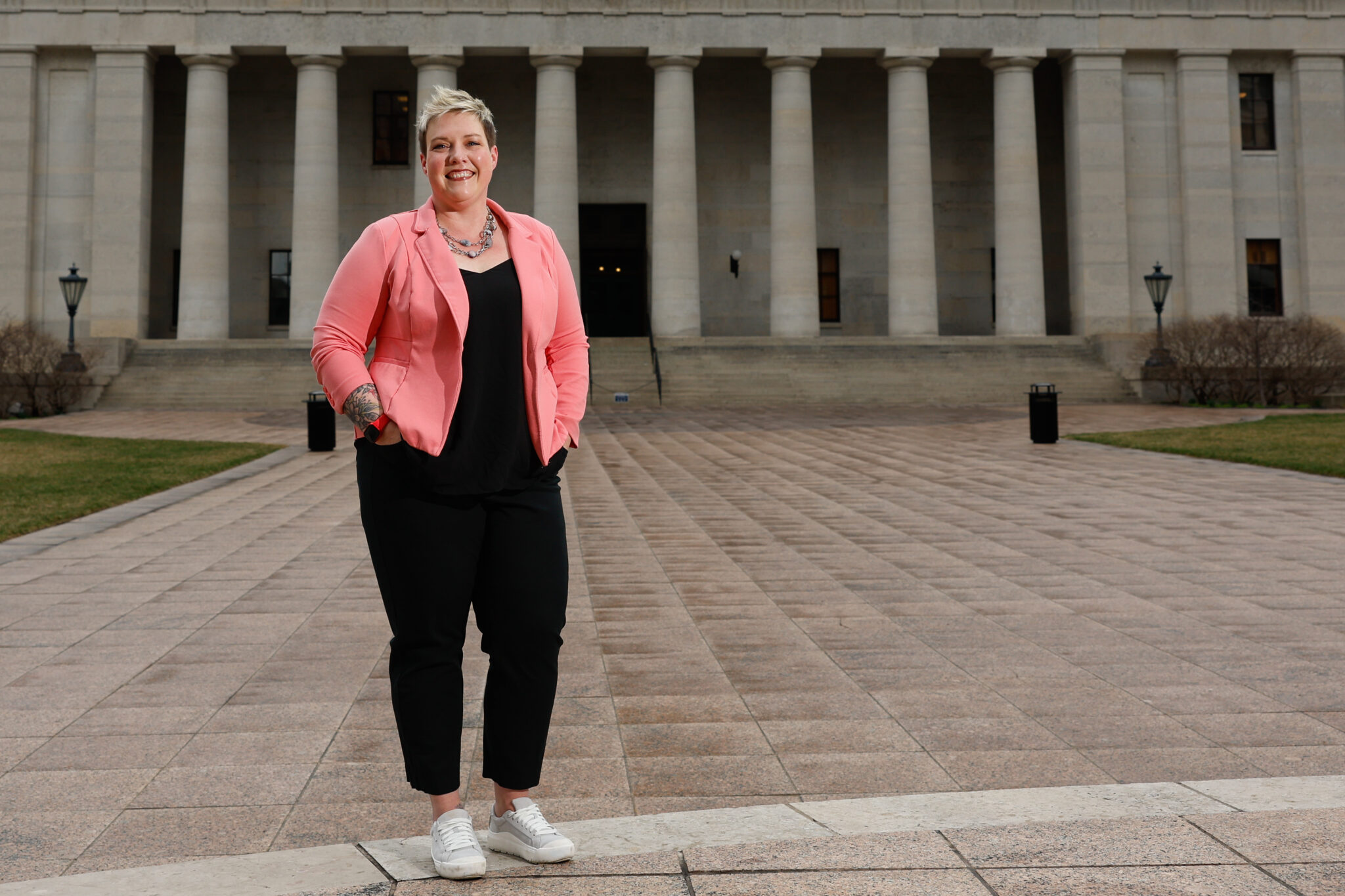
     COLUMBUS, OH — MARCH 05: Christina Collins, former State Board of Education member and currently the head of Honesty for Ohio Education a pro-public schools organization that testifies in favor of fair school funding, March 5, 2024, outside the Statehouse in Columbus, Ohio. (Photo by Graham Stokes for Ohio Capital Journal. Republish photo only with original article.)

    Having those issues, which Collins acknowledged weren’t necessarily within the board’s purview, become months-long debates with resolution approval, then reversal, meant other things that the board could have been doing within the education space weren’t seeing the light of day.

    “All of that was happening at the same time, which I think is how we lost that potential for change,” she said.

    A bigger change was headed for the board, that would remove many of its responsibilities, and cause a shift that would eventually convince Collins to move on.

    A bill had been floating in the Ohio legislature for more than a year. The more than 2,000-page policy would not only change the name of the Ohio Department of Education to the Ohio Department of Education and Workforce, but it would restructure the department to have two leaders under the umbrella of the governor’s cabinet, one for education and another for workforce.

    The ODEW would still include the State Board of Education, but board members would be mainly focused on teacher licensure, educator disciplinary actions and district territory disputes.

    State Sen. Andrew Brenner, R-Delaware, an ex-officio member of the board of education, was not the main sponsor of the bill, but pushed hard for it as chairman of the Ohio Senate Education Committee.

    Arguments were made that the board was ineffectual and inefficient. Collins sees no reason to place blame for the way the board has worked, but from her perspective, the board filters legislative measures to the local districts as another cog in a wheel that needs improvement.

    “The board’s seeming inability to get things done – which I don’t believe, but the rhetoric around it – I think that’s a reflection of what our local districts are dealing with because they are struggling to implement all of the things,” Collins said.

    During committee hearings on the bill, members of the state board, including Collins, submitted testimony against the changes, saying putting the leaders under the governor’s cabinet would decrease the level of accountability they could have to districts and voters.

    Collins brought up the many mandates under which the board had guided local districts, and the source of any and all of those mandates.

    “These were all legislated efforts, but you’re still saying our schools are failing,” she wrote in her testimony. “I ask, who holds this (General) Assembly accountable when the unending educational initiatives it doles out do not work?”

    The overhaul of the ODE did not play out in the first General Assembly in which it was introduced, but shortly after a new General Assembly came to work, the push for Senate Bill 1 and the changes to the department were introduced again.

    Teachers unions, board of education members and advocacy groups alike all came out in opposition to the bill, representing hours of testimony in committee. Supporters of the bill included the Ohio Chamber of Commerce.

    The bill passed the Senate last March, but it wasn’t until it was inserted into the state budget in the summer of 2023 that it saw full passage.

    Collins was one of a number of board members who signed a letter asking Gov. Mike DeWine to line-item veto the changes to the state board’s roles in the budget document.

    “From my experience being on the board, I think the way that (SB 1) was shoved through and how it was shoved through and when it was shoved through was a little bit unbelievable,” Collins told the Capital Journal. “Something that had essentially stalled in process was added (to the budget) and pushed through the way it was, and then that quickly it was (passed).”

    Honesty for Ohio Education

    As the board faced drastic legislative changes and a significant reduction in the authority it held, Collins started to wonder if being a member would help her make the most change, something she says she looks for in any career move she makes.

    Armed with a superintendent’s license, she debated going back into schools. Ultimately, the departure of Honesty for Ohio Education’s executive director at the end of 2023, and the fact that she’d just had a baby that November made Collins reflect on all the aspects of education and the changes needed.

    “It’s a scary time as a parent, it’s a scary time for education,” she said. “I’m worried about my own kids, I’m worried about everyone else’s kids.”

    As a staunch supporter of public education, the changes being made on a state level with the transformation of the ODEW and the implementation of near-universal private school vouchers made her nervous about the future of her chosen field.

    But like the times with her grandfather years ago, the connection between education and civic duty floated to the top of her mind.

    “On a grander scale, I’m really, really, really worried that we’re losing our democracy, and for me education and democracy are in this reciprocal relationship,” Collins said.

    Honesty for Ohio Education started in 2021 as a reaction to “critical race theory” bills that sought to keep children from learning the connection between race and American history, with claims that the bills would protect children from feeling guilt for history.

    The group started small, but as they began testifying against CRT bills, among others, the group’s numbers grew, and now the coalition “has outgrown itself” from its nascent days, according to Collins.

    “That’s a response to the attacks on education, it’s the attacks on LGBTQ+ kids, it’s the attacks on multi-racial education, it’s the attacks on honest history,” she said. “All of that … has created this avalanche with Honesty where we’re at this influx, where we have to decide how we step into adulthood, essentially.”

    But as the coalition makes its next moves, Collins said it plans to stay focused on things like state curriculum, fights against book bans and how schools can work better, even for the 10% of students outside of the public school system.

    “It’s not just public education … it’s about the kids everywhere in any educational environment who deserve to be safe and have honest and diverse, inclusive education,” Collins told the Capital Journal.

    The coalition focuses on content in schools, but Collins said the ability for school districts to succeed certainly comes down to how well they’re funded and supported by state and local sources.

    Public education is a “common good” for Collins, and that means the 90% of Ohio children in public education should be taken care of in the way the Ohio Constitution dictates. For public education unions, advocacy groups and for Collins, that includes full implementation of the Fair School Funding Plan.

    That reform of the state’s public school funding model emphasizes a formula based around the needs of individual school districts, to allow schools who have more need than others to build up their performance.

    The plan as it is now began it’s push through the legislature in August 2020 but negotiations and the hesitance of legislative leaders like Senate President Matt Huffman to push out the entire $10 billion per year plan in one shot led to a six-year phase-in. The plan is currently up to about 66% implementation.

    Meanwhile, however, the General Assembly fully funded what amounts to a near-universal private school voucher program in the last budget cycle, allowing students in what are considered under-performing public school districts to leave and take state-funded scholarships with them to nearby private schools if their household income is up to 450% of the federal poverty level, or $135,000 for a family of four.

    “When we pass universal voucher bills that give more money to students when they leave the school than a lot of the schools receive for that student, that’s a sign of the value that at least our legislature places on public education kids,” Collins said.

    Susan Tebben
    SUSAN TEBBEN

    Susan Tebben is an award-winning journalist with a decade of experience covering Ohio news, including courts and crime, Appalachian social issues, government, education, diversity and culture. She has worked for The Newark Advocate, The Glasgow (KY) Daily Times, The Athens Messenger, and WOUB Public Media. She has also had work featured on National Public Radio.

    MORE FROM AUTHOR

  • Paul Craft will be Ohio’s next State Superintendent of Public Instruction

    Paul Craft will be Ohio’s next State Superintendent of Public Instruction

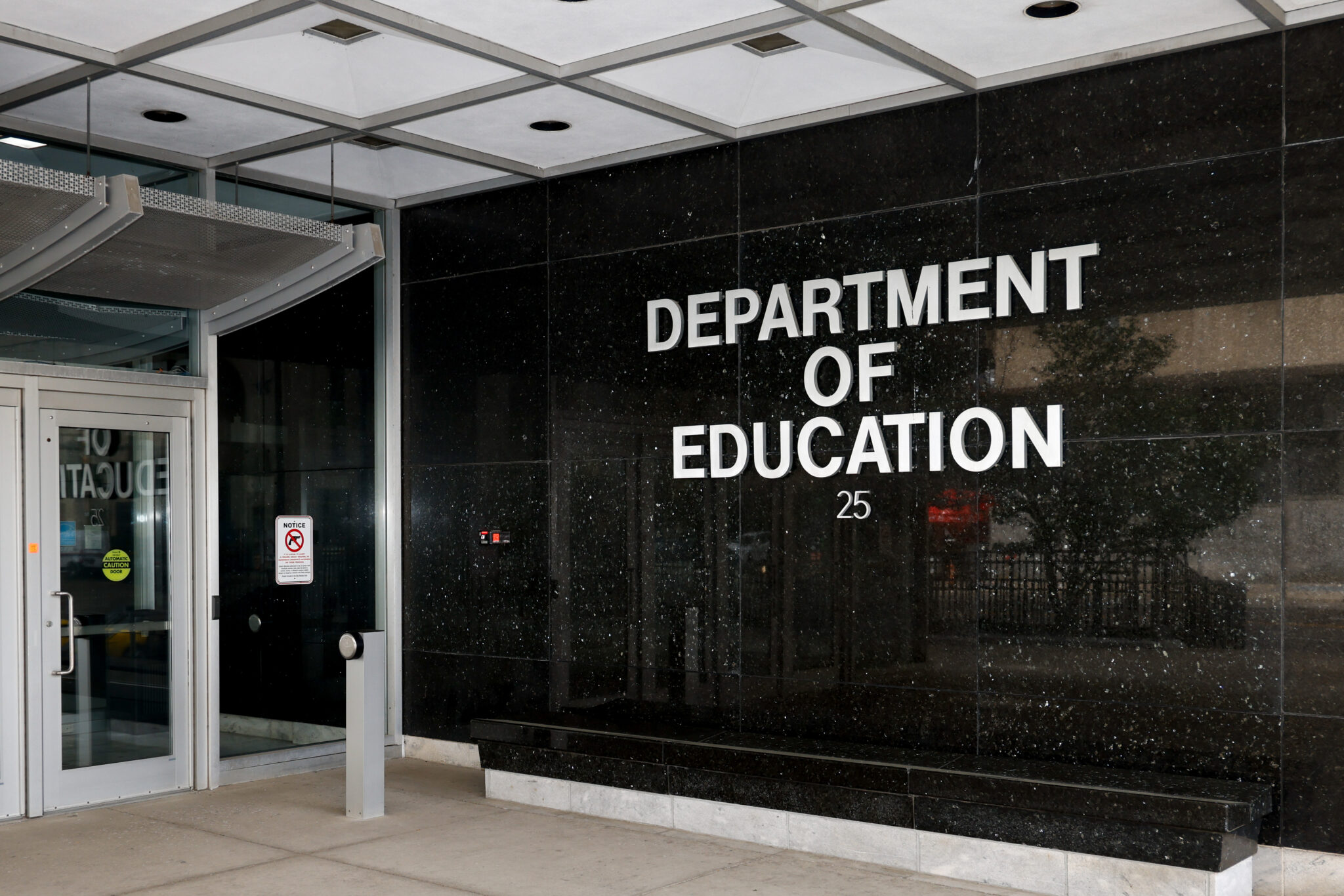
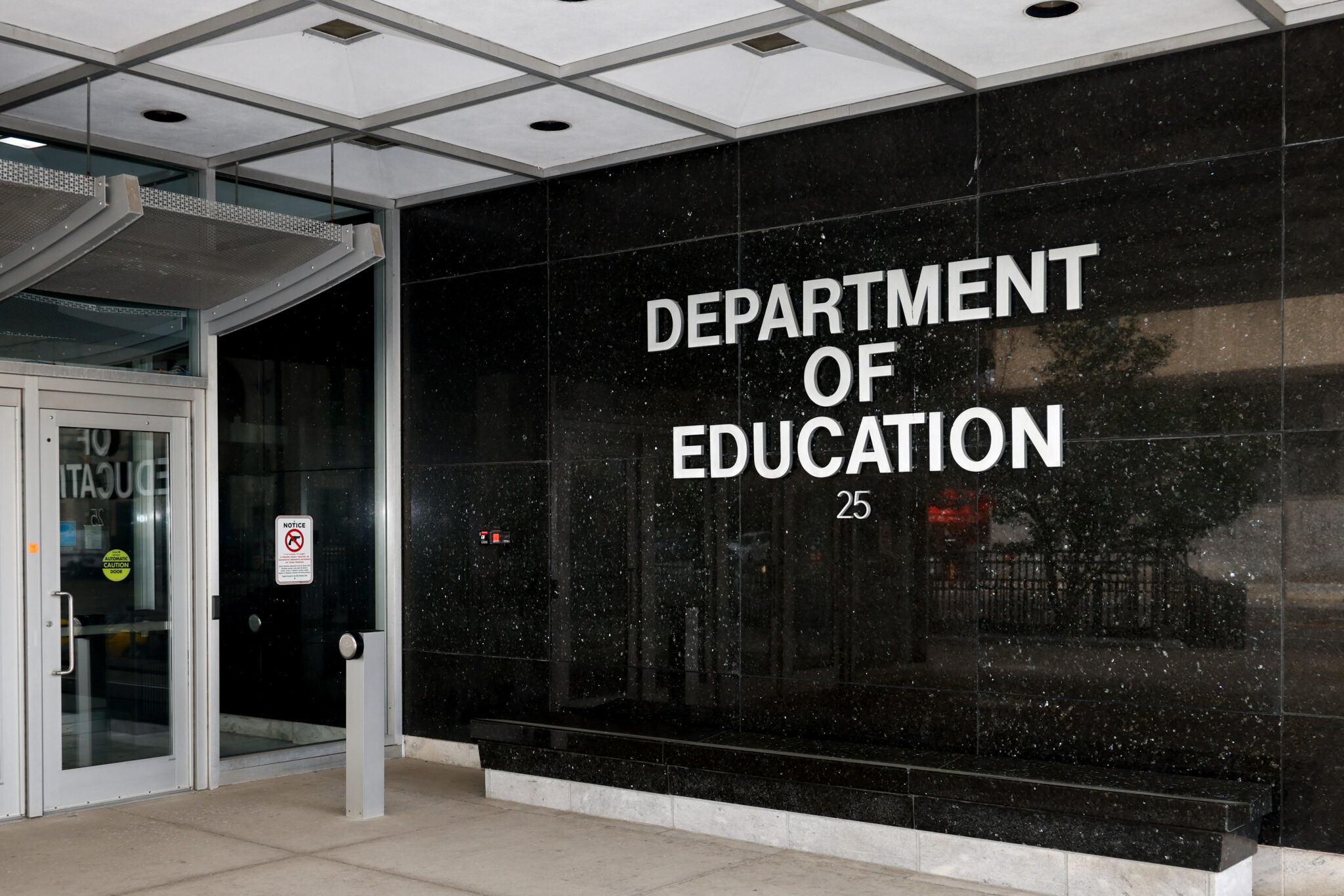
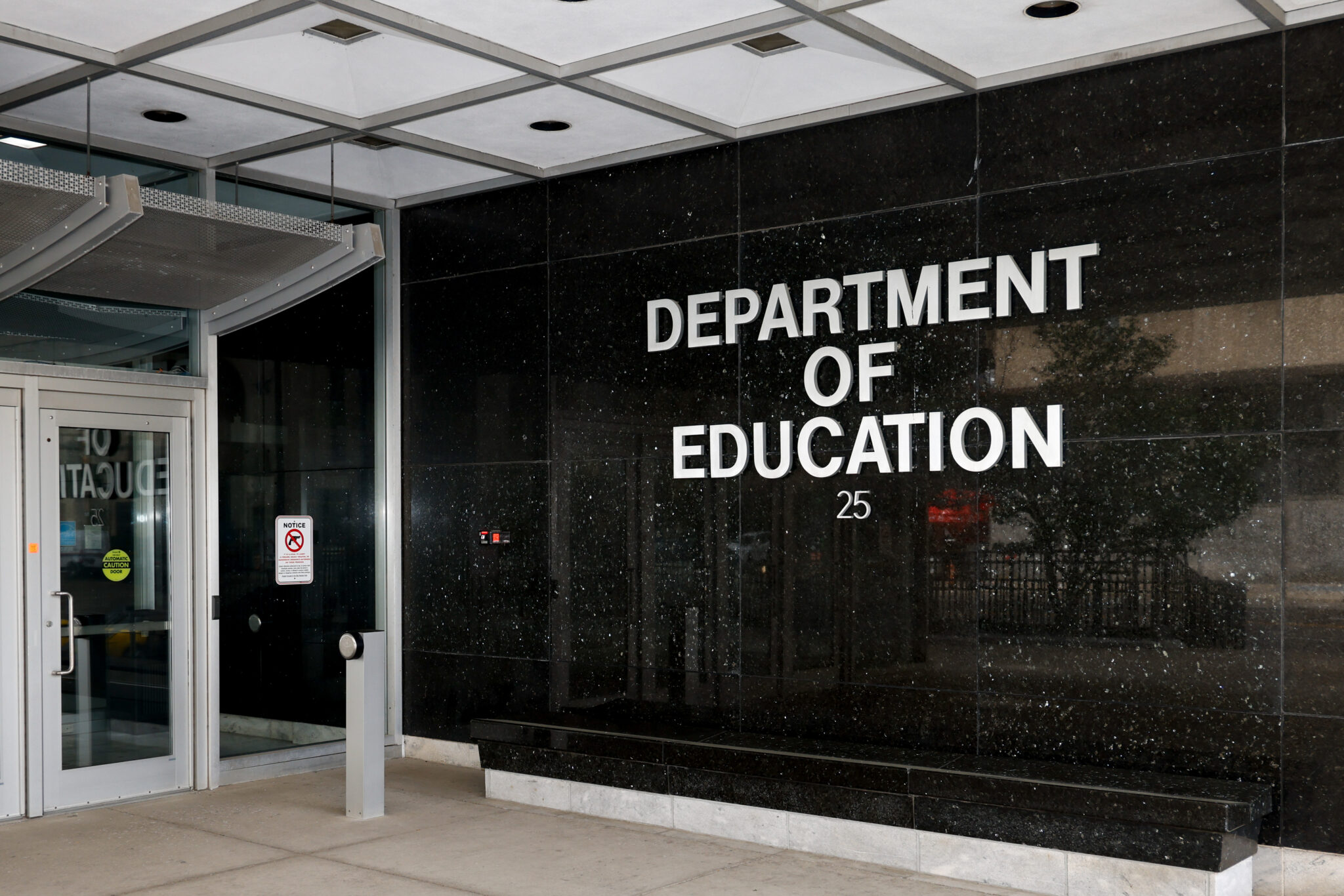
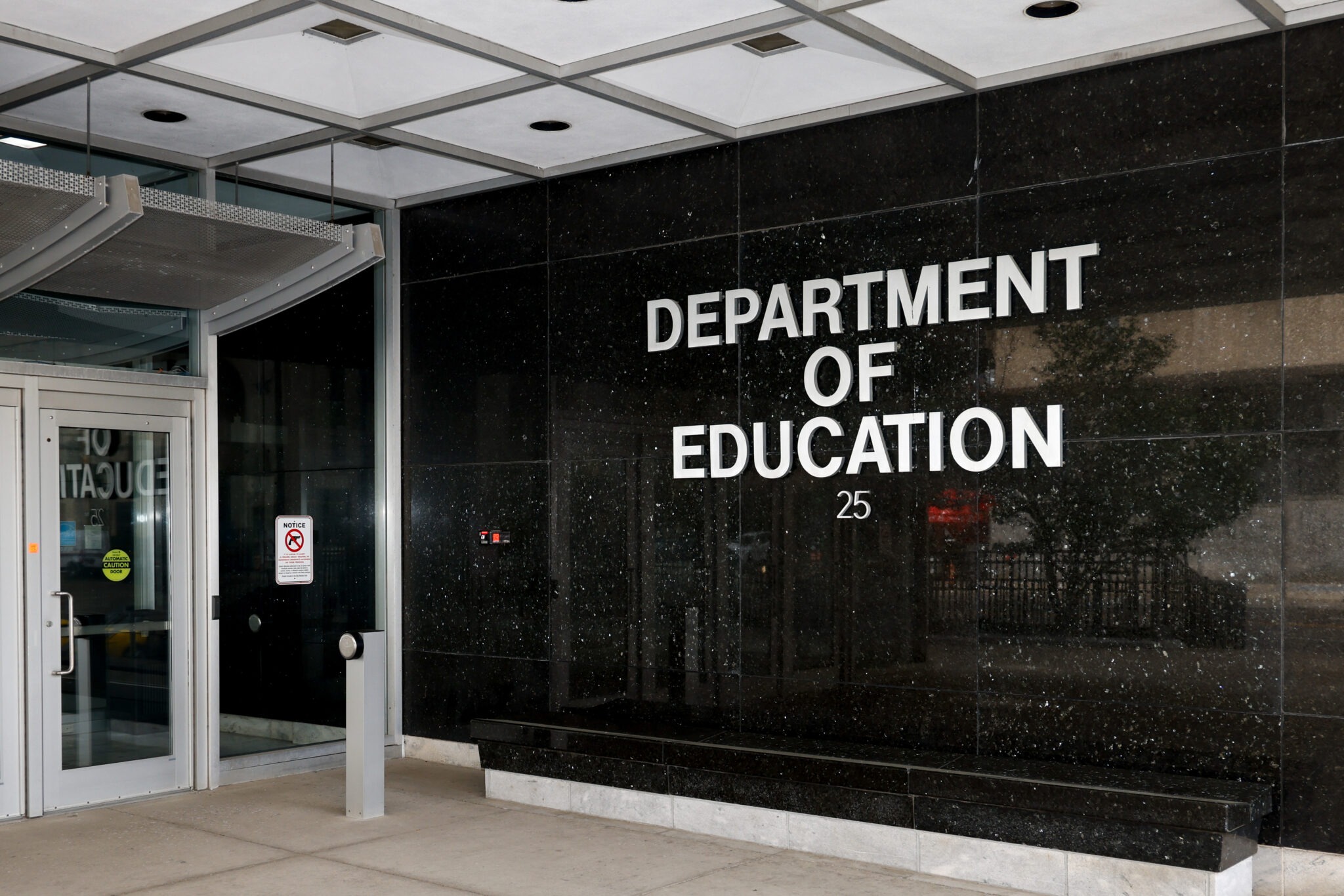
    The Ohio Department of Education in Columbus, Ohio. (Photo by Graham Stokes for Ohio Capital Journal. Republish photo only with original story.)

    BY:  Ohio Capital Journal

    The Ohio State Board of Education appointed Paul Craft to be the next State Superintendent of Public Instruction during Tuesday’s monthly meeting.

    Paul Craft (Buckeye Valley Local Schools Photo)

    Craft’s first day as superintendent will be Jan. 1 and his annual salary will be $190,000, according to the state board resolution.

    “Ohio is home to outstanding educators and school personnel, and I’m excited to lead the work to ensure we have an excellent education workforce ready to make a difference for students,” Craft said in a statement.

    He is currently the superintendent of Buckeye Valley Local Schools, a role he has served in since August 2022. He was also the superintendent of Delaware City Schools for nine years and previously worked in Upper Arlington City Schools, according to his LinkedIn profile.

    He was also the CEO of Metropolitan Educational Technology Association (META) Solutions for three years and previously served in the Ohio Army National Guard for over 30 years, according to his LinkedIn.

    Craft received his undergraduate degree in secondary education and leadership from the University of Montana and his masters in educational leadership from Ohio State University.

    “We want to make sure Ohio is a national leader when it comes to our teaching workforce, and Paul Craft will position us to advance the work focused on having excellent educators in our classrooms,” Paul LaRue, president of the State Board of Education of Ohio, said in a statement.

    The other finalists for state superintendent were Jeffrey Greenley, the superintendent of Belpre City Schools, and Julia Simmerer, the Ohio Department of Education and Workforce Senior Executive Director for the Center for Teaching, Leading, and Learning.

    The vote came down to Craft and Greenley. Fifteen members voted for Craft while board members Michelle Newman and Christina Collins voted for Greenley after coming out of executive session.

    “We received a lot of wonderful letters in support of Mr. Greenley and his qualifications, so I really wanted to proudly put his name forward, but I will proudly vote in support of this resolution,” Newman said before voting to appoint Craft.

    All board members voted in favor of the resolution to appoint Craft as superintendent.

    Chris Woolard is currently the interim state Superintendent of Public Instruction and search firm Ray & Associates helped the board find superintendent candidates.

    Follow OCJ Reporter Megan Henry on Twitter.


    Megan Henry
    MEGAN HENRY

    Megan Henry is a reporter for the Ohio Capital Journal and has spent the past five years reporting in Ohio on various topics including education, healthcare, business and crime. She previously worked at The Columbus Dispatch, part of the USA Today Network.

    MORE FROM AUTHOR

  • Judge rules overhaul of Ohio K-12 education can begin

    Judge rules overhaul of Ohio K-12 education can begin

    The Ohio Department of Education becomes the Ohio Department of Education and Workforce, which creates a cabinet-level director position and puts the department under the governor’s office.

    BY:  Ohio Capital Journal

    Control over Ohio K-12 education can officially start to transfer to Gov. Mike DeWine’s administration after a month-long battle in court.

    Retired Franklin County Common Pleas Court Judge Richard Frye denied a preliminary injunction request to stop the transfer of power of K-12 education from the state school board to the governor’s office on Friday, the last day the temporary restraining order was in effect.

    “I am thrilled that the restraining order has been dissolved and we can focus on the important work of moving forward to help our kids be better prepared for life after high school, whether choosing additional training, beginning a career, or heading to college,” DeWine said in a statement Friday.

    Under the state’s two-year budget, the Ohio Department of Education becomes the Ohio Department of Education and Workforce, which creates a cabinet-level director position and puts the department under the governor’s office.

    Jessica Voltolini will be the interim director of the Department of Education and Workforce starting Monday, DeWine said.

    “She will lead the department as we resume our search for the director and deputy director positions,” he said.

    Voltolini most recently served as the Ohio Department of Education’s chief of staff and she was one of two candidates former interim superintendent of public instruction Dr. Stephanie Siddens recommended to fill her role when she left the department earlier this year. The state board of education picked Chris Woolard as the interim state superintendent.

    The new law also reduces the State Board of Education’s power to teacher disciplinary and licensure cases and territory disputes. The state board of education no longer has various administrative powers or control over curriculum standards.

    Seven members of the Ohio State Board of Education originally filed a lawsuit against Ohio Gov. Mike DeWine on Sept. 19 in an attempt to block these changes from taking place. Judge Karen Held Phipps issued the temporary restraining order Sept. 21, which was eventually extended until Oct. 20.

    “The temporary order we won to stop Gov. DeWine’s education takeover from going into effect was dissolved and an interim order was issued,” Democracy Forward, the plaintiff’s legal counsel, said Friday afternoon in a statement. “We await a final decision on our request to block the law while the case proceeds, and we are confident that democracy and the Ohio Constitution will ultimately prevail.”

    Lawsuit

    On Oct. 1, the lawsuit was amended and State Board of Education members Christina Collins and Michelle Newman, former Toledo Public School Board President Stephanie Eichenberg and the Toledo Public School Board were named the plaintiffs in the case.

    Collins, Newman and Eichenberg all have children attending Ohio public schools. The plaintiffs were represented by Democracy Forward and Ulmer & Berne LLP.

    Franklin County Magistrate Jennifer Hunt held an all-day preliminary injunction hearing on Oct. 2 and the judge’s temporary restraining order continued, but DeWine held a press conference later that day saying he was going to continue with the changes anyway.

    The plaintiffs asked the judge for clarification of the restraining order and the temporary restraining order was extended until Oct. 20.

    Chief Counsel and Ethics Officer for the Ohio Attorney General Bridget Coontz, who was representing the original state school board members, was disqualified from being involved in the lawsuit after she sent an Oct. 3 email with legal advice to the counsel for defendants, Julie Pfeiffer, the section chief at the Ohio Attorney General’s Office.

    Ohio State Board of Education

    Since Ohio voters passed a constitutional amendment in 1953 to create the State Board of Education, the plaintiffs argued these changes in the state budget were unconstitutional.

    Hunt, however, disagreed.

    “The Legislature has complete authority to grant, or remove, the respective powers and duties of the State Board and the Superintendent, and the State Board has no constitutional right to retain all the powers transferred under the Challenged Provisions,” she wrote in her decision.

    The Ohio State Board of Education is currently made up of 19 members — 11 elected and eight appointed by DeWine.

    State Superintendent Search

    The search firm tasked with identifying superintendent candidates paused their search because of “the recent lawsuit and other events that surround the Board’s current situation,” President of Ray & Associates Michael Collins wrote in an Oct. 9 letter obtained by the Ohio Capital Journal.

    “Plaintiffs failed to prove by clear and convincing evidence that they will suffer any of their claimed injuries if injunctive relief is denied,” Hunt wrote in her decision. “Defendants argue that an injunction will cause confusion, unrest and chaos for Ohio’s educational system.”

    Follow OCJ Reporter Megan Henry on Twitter.


    Megan Henry
    MEGAN HENRY

    Megan Henry is a reporter for the Ohio Capital Journal and has spent the past five years reporting in Ohio on various topics including education, healthcare, business and crime. She previously worked at The Columbus Dispatch, part of the USA Today Network.

    MORE FROM AUTHOR

  • Reading Recovery lawsuit trying to prevent science of reading implementation in Ohio schools

    Reading Recovery lawsuit trying to prevent science of reading implementation in Ohio schools

    BY:  Ohio Capital Journal

    A lawsuit is trying to prevent a new law from changing how Ohio students learn how to read.

    Reading Recovery Council of North America, located in Worthington, filed a lawsuit on Oct. 3 in the Franklin County Court of Common Pleas to block the science of reading from being implemented in schools across the state.

    The science of reading is based on decades of research that shows how the human brain learns to read and incorporates phonemic awareness, phonics, fluency, vocabulary, and comprehension.

    Reading Recovery Council of North America’s reading intervention programs would be banned under the new law.

    The association has seen a decline in Ohio school district memberships since the state budget was signed into law and a major portion of its operating revenue comes from annual membership fees paid by Ohio members, according to the lawsuit.

    “The unconstitutional, improper and unlawful teaching, instructional and educational policy directives of the Ohio Legislature … directly and significantly impact RRCNA’s mission and outreach,” wrote David Yeagley, an attorney with Ulmer & Berne that filed the lawsuit.

    DeWine’s press secretary Dan Tierney said the governor is disappointed this lawsuit has been filed.

    “I truly believe there’s nothing more important than the science of reading, and making sure that every single child in the state of Ohio, as they are learning to read, has the benefit of the science,” DeWine said at a March 23 event. He has visited several schools to learn about how the science of reading method has been implemented in lessons.

    State budget

    A chunk of the state’s two-year operating budget goes towards implementing the science of reading — $86 million for educator professional development, $64 million for curriculum and instructional materials, and $18 million for literacy coaches.

    DeWine, who first began advocating for the science of reading during his state of the state address back in January, signed the state budget in July. He originally put the science of reading in his proposed state budget and it remained, with some tweaks, as it went through the budget process.

    “If permitted to take effect, it will allow the General Assembly to disguise a policy-based law in a must-pass appropriations bill,” the lawsuit said.  “The literacy curriculum statute intrudes on classroom teaching and learning programs, models, methodologies and materials.”

    The lawsuit argues the General Assembly is trying to set education policy and curriculum, infringing on the Ohio State Board of Education’s authority to oversee the Ohio education system.

    Three-cueing

    The budget bans teachers from using the “three-cueing approach” in lessons unless a district or a school receives a waiver from the education department or a student has an individualized education program that specifically includes the “three-cueing approach.”

    However, the lawsuit argues the budget fails to clearly articulate “a clear standard for assessing what teaching models or methods might be categorized under the “three-cueing” approach.”

    The budget defines the “three-cueing approach” as any model of teaching students to read based on meaning, structure and syntax, and visual cues. The three-cueing method encourages children to read words by asking three questions: Does it make sense? Does it sound right? Does it look right?

    Reading recovery is “often referred to or perceived as a “three-cueing” approach, and therefore is targeted as being anti-science of reading,” according to the lawsuit. “There are no recognized or established teaching, instructional or educational approaches that strictly and exclusively fall within either the “science of reading” or the “three-cueing approach.”

    Louisiana, Arkansas and Virginia have laws that ban curriculum that includes three-cueing.

    Other education lawsuit

    This is the second education lawsuit filed against DeWine that relates back to the budget bill. Seven members of the Ohio State Board of Education filed a lawsuit against DeWine on Sept. 19 to block the transfer of power over Ohio K-12 education from the board to the governor’s office.

    On Sept. 21,Franklin County Judge Karen Held Phipps issued a temporary restraining order that currently remains in place and is set to expire on Friday.

    The lawsuit is trying to prevent the Ohio Department of Education from transitioning to the Ohio Department of Education and Workforce, which would create a cabinet-level director position and puts the department under the governor’s office. These changes would also limit the State Board of Education’s power to teacher disciplinary and licensure cases and territory disputes.

    Follow OCJ Reporter Megan Henry on Twitter.


    Megan Henry
    MEGAN HENRY

    Megan Henry is a reporter for the Ohio Capital Journal and has spent the past five years reporting in Ohio on various topics including education, healthcare, business and crime. She previously worked at The Columbus Dispatch, part of the USA Today Network.

    MORE FROM AUTHOR

  • Governor begins Ohio’s K-12 education overhaul despite judge extending temporary restraining order

    Governor begins Ohio’s K-12 education overhaul despite judge extending temporary restraining order

    BY:  Ohio Capital Journal

    Ohio Gov. Mike DeWine is moving forward with an overhaul of Ohio’s education department and state board of education despite a Franklin County judge extending a temporary restraining order to prevent that from happening.

    After an all-day preliminary injunction hearing on Monday, Franklin County Magistrate Jennifer Hunt ruled that the temporary restraining order blocking lawmakers’ attempts to overhaul Ohio’s K-12 education system remains in effect until the court makes a decision on the case, which must happen by Wednesday at noon.

    “There is certainly a potential for chaos,” DeWine said during what he called a “very unusual press conference” Monday night. “Questions such as who will send out the checks that go to our public schools across the state of Ohio, who will make the determination about eligibility for school choice. I can not let this situation fester.”

    Even though the temporary restraining order is still in effect, the education department changes are still going forward because Tuesday marks 90 days since DeWine signed the state’s operating budget into law which included these changes, DeWine said.

    As of Tuesday, he said, the Ohio Department of Education ceases to exist and is now the Ohio Department of Education and Workforce, as set forth in the budget DeWine signed into law in July. Interim Superintendent Chris Woolard is in charge of the department.

    But it’s more than just a name change. This creates a cabinet-level director position, puts the department under the governor’s office, and limits the State Board of Education’s power to teacher disciplinary and licensure cases and territory disputes.

    “We believe, based upon what our lawyers tell us, that the new department can in fact function,” DeWine said.

    He said they will follow the court order and not name the new cabinet-level director, even though “we were actively in the process of finding” candidates before the temporary restraining order was put in place.

    “We will not take an active part in any way as governor in the creation of the Department of Education and Workforce,” DeWine said. “The new department has money going into that department by reason of the budget that was passed by the General Assembly.”

    Lawsuit

    Seven members of the Ohio State Board of Education filed a lawsuit against DeWine on Sept. 19 in an effort to block the education department changes in the state budget bill. The lawsuit was filed in the Franklin County Court of Common Pleas.

    The original plaintiffs were Christina Collins, Teresa Fedor, Kathleen Hofmann, Tom Jackson, Meryl Johnson, Antoinette Miranda, and Michelle Newman. Franklin County Judge Karen Held Phipps issued the temporary restraining order Sept. 21.

    The lawsuit complaint was amended on Sunday and now Collins, Newman, Stephanie Eichenberg and the Toledo Public School Board are the plaintiffs in the case. Eichenberg is a former Toledo Public School Board president. They are being represented by Democracy Forward and Ulmer & Berne LLP.

    “The Court already ruled that the DeWine Administration’s takeover of the State Board of Education in Ohio must be halted until it has an opportunity to issue a decision,” Skye Perryman, President and CEO of Democracy Forward, said in Monday night in a statement. “If the Governor is suggesting the state will not comply with the Court’s order, then he would be in contempt of the Court.”

    Collins, Eichenberg and Toledo Public School Board President Shenna Barnes testified as plaintiffs, and ODE’s Chief of Staff Jessica Voltolini testified for the defense on Monday.

    Collins said during Monday’s hearing that she filed the lawsuit as a concerned parent, not as a state board of education member.

    “The public and transparent nature that I have enjoyed for my entire career and my entire time being a parent is gone,” she said. “There is no public debate. There is nothing that I as a parent can follow to understand why things are being done and how those things will my effect my children.”

    She is the mother of six children, with four currently attending public schools. She said she has reached out to her state board of education representative over the years about questions and concerns over implementing the state’s dyslexia policy, standardize testing and the Third Grade Reading Guarantee.

    Collins, who was elected to the state board of education in 2021, said she started looking into how to file a lawsuit on July 5, a day after DeWine signed the budget into law.

    “I felt like this looked like it was similar to the agenda of our human resources committee on a local education board,” Stephanie Eichenberg said during Monday’s hearing when she was asked what she thought of the new responsibilities of the state board of education.

    Barnes said her working relationship with the state school board “is very vital” and explained how she has worked with state board of education members to put in legislative changes in place at the local level.

    “We need someone who can give us real-time information, that gives us factual information but also responds to us when we ask questions,” Barnes said.

    Ohio voters passed a constitutional amendment in 1953 that created a State Board of Education with the power to appoint a Superintendent of Public Instruction. The Ohio State Board of Education is currently made up of 19 members — 11 elected, and eight appointed by Gov. DeWine.

    Senate Bill 1

    These changes to the Ohio Department of Education and State Board of Education started out as Senate Bill 1, which Sen. Bill Reineke, R-Tiffin, introduced in January.

    The Ohio Senate voted along party lines to pass SB 1 in March — which sent it to the Ohio House, but it stayed in committee. The Senate added SB 1 to the state budget in June, which DeWine signed into law in July.

    The seven board members who originally filed the lawsuit previously wrote a letter to DeWine the day he received the budget and asked him to veto the “power grab” of changing the state board’s roles.

    Follow OCJ Reporter Megan Henry on Twitter.


    Megan Henry
    MEGAN HENRY

    Megan Henry is a reporter for the Ohio Capital Journal and has spent the past five years reporting in Ohio on various topics including education, healthcare, business and crime. She previously worked at The Columbus Dispatch, part of the USA Today Network.

    MORE FROM AUTHOR

  • Franklin County judge orders temporary restraining order to stop overhaul of Ohio K-12 education

    Franklin County judge orders temporary restraining order to stop overhaul of Ohio K-12 education

    Seven members of the Ohio State Board of Education filed a lawsuit to stop the transfer of power from the Board to the governor’s office.

    BY:  Ohio Capital Journal

    A Franklin County judge has issued a temporary restraining order to block lawmakers’ attempts to overhaul Ohio’s K-12 education system.

    Seven members of the Ohio State Board of Education filed a lawsuit against Ohio Gov. Mike DeWine Tuesday in the Franklin County Court of Common Pleas to stop the transfer of power from the Board to the governor’s office.

    Christina Collins, Teresa Fedor, Kathleen Hofmann, Tom Jackson, Meryl Johnson, Antoinette Miranda, and Michelle Newman filed the lawsuit. They are being represented by Democracy Forward and Ulmer & Berne LLP.

    Franklin County Judge Karen Held Phipps issued the temporary restraining order Thursday and will now go to a preliminary injunction hearing on Oct. 2, a day before the changes are scheduled to take effect.

    “Creating a new cabinet-level agency is not a silver bullet and does not magically solve problems,” House Minority Leader Allison Russo, D-Upper Arlington, said in a statement. “Board members are elected on a non-partisan basis and because of that, expertise and experience in education is a big factor of who gets elected. With a governor appointee, there’s little doubt we’ll see an increase in partisan decision-making.” 

    What’s in the lawsuit?

    The state’s operating budget, signed into law by DeWine, would rename the Ohio Department of Education to the Ohio Department of Education and Workforce. It would create a cabinet-level director position, put the department under the governor’s office and limit the State Board of Education’s power to teacher disciplinary and licensure cases and territory disputes.

    “If unchecked by this Court, the system Ohio’s citizens mandated for governing education in Ohio will be rendered virtually powerless,” the lawsuit reads. “The bill strips the Board’s democratically elected members of their core and constitutionally intended duties and responsibilities for the oversight and governance of Ohio’s public education system.”

    The plaintiffs are asking the court to grant a temporary, preliminary and permanent relief to stop the changes from going into effect, remove this piece of legislation from the state budget and strike it void.

    The Ohio State Board of Education is currently made up of 19 members — 11 elected and eight appointed by Gov. DeWine.

    Under the changes, the plaintiffs fear parents and students won’t be able to voice “their support for or opposition to developments in education policy.”

    Democratic Senators Nickie J. Antonio, Catherine Ingram, Vernon Sykes, and Paula Hicks-Hudson all support the lawsuit.

    “This lawsuit is an opportunity to restore the voice of all Ohioans through protecting the duties and powers of their state board of education members,” Antonio said in a statement.

    Senate Bill 1

    These changes to the Ohio Department of Education and State Board of Education started out as Senate Bill 1, which Sen. Bill Reineke, R-Tiffin, introduced in January.

    The Ohio Senate voted along party lines to pass SB 1 in March — which sent it to the Ohio House, but it stayed in committee. The Senate added SB 1 to the state budget in June, which DeWine signed into law in July.

    “In fear that the Senate Bill 1 power grab would not pass on its own merits, the Majority chose to circumvent the process by including it in the biannual budget, violating the single subject rule,” Hicks-Hudson said in a statement. “In doing so, they also chose to disenfranchise duly elected representatives to the Board of Education.”

    These seven board members previously wrote a letter to DeWine the day he received the budget and asked him to veto the “power grab” of changing the the state board’s roles.

    Constitutional violations

    The plaintiffs in the lawsuit argue these changes to the State Board of Education and ODE violate the state constitution.

    “When SB 1 could not pass as standalone legislation, the Education Takeover Rider was attached to HB 33 at the eleventh hour to ensure that the rider became law nonetheless,” the lawsuit reads. “This practice — known as logrolling — is prohibited by … the Ohio Constitution.”

    Phipps said “the Court finds it necessary to address only” the logrolling argument, according to court documents.

    Ohio voters passed a constitutional amendment in 1953 that created a State Board of Education with the power to appoint a Superintendent of Public Instruction.

    The Ohio Constitution also has the three-reading rule, which means a bill should be considered by each house on three different days.

    “The Education Takeover Rider was not considered by each house of Ohio’s General Assembly on three different days,” the lawsuit says.

    Follow OCJ Reporter Megan Henry on Twitter.


    Megan Henry
    MEGAN HENRY

    Megan Henry is a reporter for the Ohio Capital Journal and has spent the past five years reporting in Ohio on various topics including education, healthcare, business and crime. She previously worked at The Columbus Dispatch, part of the USA Today Network.

    MORE FROM AUTHOR

  • DeWine appointee, fellow State Board of Ed incumbent unseated in general election

    DeWine appointee, fellow State Board of Ed incumbent unseated in general election

    BY: SUSAN TEBBEN – Ohio Capital Journal

    Dr. Jenny Shafer Kilgore, a member of the state Board of Education, speaks in support of a bill to eliminate the teaching of “divisive concepts” in schools. Kilgore lost her race for re-election in Tuesday’s general election. Photo from The Ohio Channel

    Two incumbents on the Ohio State Board of Education were not reelected in Tuesday’s general election.

    One unseated member was part of a movement on the board to rescind an anti-racism resolution that mired the state board in controversy, and the other was a governor-appointed member before he sought election to the board.

    Of the 19 members of the board, 11 are elected and the rest are appointed by the governor.

    The school board races were also different this year because of a district shuffle caused by statewide redistricting. Though the changes were spurred by changes in the statehouse and congressional voting districts, decisions on what the school board districts looked like were approved solely by the governor.

    Incumbent Dr. Jenny Kilgore, an elected board member since 2019, lost her bid for reelection, with challenger Katie Hofmann edging past her in a margin just north of 30,000 votes.

    Kilgore was a vocal opponent of an anti-racism resolution passed following the death of George Floyd and social unrest in the country regarding racial issues, though she abstained from the initial vote on the measure. A movement then began to rescind the resolution as conservative outcry for so-called “critical race theory” and “indoctrination” came to a head in Ohio. The resolution was also rescinded amid efforts in the Ohio legislature to put up “divisive concept” bills that would ban discussions of the impact of race on history if it was determined to create “guilt” among white students.

    District 4 board member Kilgore also participated in public protests against “critical race theory” in schools, and testified before a legislative committee, saying House Bill 327 “would allow teachers to teach the subject without the distractions of critical race theory… they would have more opportunity to focus on the subject matter.”

    Fellow incumbent Tim Miller lost his bid to join the board as an elected member to challenger Tom Jackson. Jackson received 44% of the vote in unofficial results from Tuesday. Miller was more than 50,000 votes behind Jackson, also narrowly falling behind a third challenger, Cierra Lynch Shehorn, by just under 600 votes.

    Miller was appointed by Gov. Mike DeWine in 2021 to fill Sarah Fowler Arthur’s District 10 seat left vacant when she joined the Ohio House.

    The outgoing member was instrumental in sending a resolution condemning the Biden administration for changes to anti-discrimination regulations that would include gender identity if accepted on the federal level to executive committee, rather than a full board of ed vote.

    Also elected on Tuesday was former state senator and Toledo-area educator Teresa Fedor, who defeated opponent Sarah McGervey with 56% of the unofficial vote totals in the District 2 race.

    Hofmann said the elections that happened on Tuesday show the need for a different tack on the board of ed.

    “The election of Theresa Fedor, Tom Jackson and (Hofmann) is a clear message that people in Ohio want high quality public schools, not more charters or vouchers,” Hofmann said in a statement to the OCJ. “Ohio public schools must be welcoming, accepting and inclusive where ALL children are respected.”

    Though all state board of ed races are considered non-partisan, the changes to the board are encouraging to the Democratic party as a whole and education associations in the state as well, despite “mixed results” in other general election races.

    “I think having dedicated candidates who are going to reject some of the extremism we’ve seen on the state board of education … is really going going to help change the dynamic in terms of the issue and hopefully refocus the state board on really what students need,” said Scott DiMauro, president of the Ohio Education Association.

    Elizabeth Walters, chair of the Ohio Democratic Party, praised “taking the majority” on the school board, saying the current school board “has become this dysfunctional show of what happens when we elect people who aren’t focused on the things that parents and students care about most.”

    She also said the party worked to bring in candidates, and is prepared to recruit more in the future.

    “We worked hard to recruit strong folks for these seats who have strong backgrounds in education and who can be advocates for what teachers and students really need to be successful here in Ohio,” Walters said in a Wednesday press call.

    Follow Susan Tebben on Twitter.

  • Redistricting changes shifted state school board districts before being struck down

    Redistricting changes shifted state school board districts before being struck down

    Melissa Cropper, executive director of the Ohio Federation of Teachers said the decisions DeWine made appear to be pushing out members and candidates who supporters of public education and topics like diversity and inclusion. The lines as established under the unconstitutional maps would impact candidates focused on topics important to the OFT, like diversity and inclusion in education.

    BY: SUSAN TEBBEN – Ohio Capital Journal

    Amid the chaos and uncertainty of the redistricting process, a deadline loomed that would decide representation on the Ohio State Board of Education. It depended on having district lines to reference.

    Legislative and congressional maps are both in limbo after the Ohio Supreme Court rejected both maps, the legislative maps getting sent back for a second time last week.

    Gov. Mike DeWine was forced to assign the Ohio State Board of Education districts himself because the deadline for establishing districts for the board was January 31. Using the state senate map adopted by the Ohio Redistricting Commission on Jan. 22, DeWine signed the letter notifying board members of their districts on the day of the deadline.

    Ohio Revised Code states the board of education districts must be established by Jan. 31 in a redistricting year, and if the General Assembly doesn’t create those districts themselves, the governor must take on the job.

    Each board district has to makeup three contiguous state senate districts.

    “Each state board of education district shall be as compact as practicable,” the state law reads.

     The Ohio State Board of Education districts as they have been prior to redistricting efforts this year.
    Source: Ohio Department of Education

    Many of those districts didn’t change, but the most significant changes seemed to be in four particular districts; the districts represented by Dr. Christina Collins, Dr. Antoinette Miranda, Michelle Newman and Meryl Johnson.

    Collins’ new district would have stretched from Union County through Holmes County, and includes parts of Franklin County in between.

    Being a resident of Medina County, this plan would push her out of her district, and though the board of education races are considered non-partisan, Collins said it put her in a district that voted “overwhelmingly for significantly right-leaning state board candidates,” namely District 1 board member Diana Fessler and two candidates who unsuccessfully ran against Miranda and Newman.

    “The distance presents its own challenges given I do try to be involved in the counties I represent, but I also question my philosophical appeal as a representative to what appear to be this territory’s political preferences,” Collins wrote in an email to the OCJ.

    Newman’s three senate districts would have included her Newark residence in the 31st District, along with the 33rd district that brings her representation all the way to the Pennsylvania border. She would also represent the rural 30th district, that rolls from Jefferson County down the state line to Meigs County.

    Newman said she’s going to continue to serve kids and support public schools whatever her district lines.

    “However, when I saw my new district jump from 13 to 18 counties, lost the compactness of its previous state and also shifted to nearly all rural vs the urban/rural mix I had before, my eyebrows definitely raised,” Newman told the OCJ. “The fact that the Ohio Supreme Court just ruled the new maps unconstitutional proves my wariness was correct.”

    Miranda’s districts were set to go from the Columbus area near Ohio State University to Nelsonville near Ohio University.

     State Senate districts in Northeast Ohio, as shown on the most recently struck down legislative map. State board of education member Meryl Johnson would have represented districts 22, 23 and 24 under this plan, districts separated by another board member’s area in Senate district 27.
    Source: Dave’s Redistricting App

    Johnson’s 11th district would be broken by a peninsula of the 27th Senate district, covered by board member Tim Miller. That break separates the 22nd Senate district, which includes Ashland, Wayne and Medina counties, from the 23rd and 24th, which include pieces of Cleveland proper and Cuyahoga County.

    Only 11 members of the state board are elected, with the other eight appointed by the governor.

    Education officials don’t see the changes as coincidental. They see a connection between the changes made to the districts, and the four board members choices on the board, most importantly, their decision to support (and refuse to rescind) a resolution that condemned racism in state schools.

    “The governor certainly signaled an intent in terms of who they seem to be trying to protect on the board and who they seem to be drawing into competitive districts,” said Scott DiMauro, president of the Ohio Education Association.

    A spokesperson for DeWine corroborated state law that said it was his job to assign districts if the legislature fails to do so, but did not answer questions as to how DeWine decided on the district lines or whether he contacted incumbent members about the changes before making them official.

    Some incumbent members of the legislature were told as the map-drawing process went along what changes would be made to their districts, and were asked for input before the maps were officially presented to the public.

    DiMauro said the state board of education is an important entity to watch because of the power they hold over curriculum decisions, licensure law enforcement and even the hiring/firing process for teachers.

    The message the state board sends in Ohio is important, and curriculum messages some board members have made regarding education on race in schools have a “destructive” effect, according to DiMauro.

    “There’s a sense that you want a state board that is above politics,” DiMauro said.

    Melissa Cropper, executive director of the Ohio Federation of Teachers said the decisions DeWine made appear to be pushing out members and candidates who supporters of public education and topics like diversity and inclusion. The lines as established under the unconstitutional maps would impact candidates focused on topics important to the OFT, like diversity and inclusion in education.

    “I think ideally we wouldn’t even be talking about what the school board lines are until we have fair districts drawn,” Cropper said.

    With the senate maps among the three maps struck down by the Ohio Supreme Court, the education districts are at the mercy of the new redistricting plan, which the court has asked for by Feb. 17.

  • Loveland High School Earns “Momentum” and “Overall A” Awards by the Ohio State Board of Education

    Loveland High School Earns “Momentum” and “Overall A” Awards by the Ohio State Board of Education

    Loveland, Ohio – Loveland High School (LHS) has been recognized with two awards by the Ohio State Board of Education. The first, the Momentum Award, is given to schools for exceeding expectations in student growth for the year. In order to be recognized, schools must earn straight A’s on all value-added measures on the state report card. They must also have at least two value-added subgroups of students, which includes gifted, lowest 20 percent in achievement, and students with disabilities. The award signifies a school’s commitment to the success of students by ensuring they exceed the growth expectations in English language arts, and mathematics.

    The second award, the Overall A Award, is presented by the State Board of Education to schools that earned an overall A on their 2018 report cards. It reflects high academic performance and that schools are building bright futures for students of every background and ability level.

    “We have a team of highest-caliber leaders and staff at Loveland High School,” said Loveland Superintendent Dr. Amy Crouse. “I am beyond proud of how they have embraced the challenge of making sure that all of our students at LHS are prepared and empowered to take on the world after high school.”


      RP Diamond is the exclusive retailer of LOVELAND HIGH SCHOOL SPIRIT WEAR