Since the legal sale of medical marijuana began in January 2019, The Drug Enforcement and Policy Center at The Ohio State University Moritz College of Law has distributed an annual survey regarding the Medical Marijuana Control Program (MMCP). As Ohio enters another year of medical marijuana sales, they are again distributing a survey to active and prospective medical marijuana patients, in an effort to assess their experiences and satisfaction with the MMCP to date. If you are interested in participating, you may share your insights by taking this survey, which will take approximately 5-10 minutes to complete.
Please note this survey is conducted by The Ohio State University Drug Enforcement and Policy Center and is not affiliated with the MMCP or the Division of Cannabis Control.
Medical Marijuana Control Program
Individuals using or considering using cannabis are encouraged to consult with a physician, and Medical Marijuana Control Program (MMCP) patients are encouraged to remain within the MMCP. Doing so ensures the patient is speaking with a physician about their qualifying condition and maintains access to medical marijuana at operational marijuana dispensaries. Furthermore, active MMCP patients are provided with access to medical marijuana specific discounts that may be offered at dispensaries as well as being exempt from the 10% excise tax levied on non-medical sales per the approved statute.
It is important to note employers have discretion to establish their own drug-free workplace policies. Some individual employers have chosen to take the status of an employee as a medical marijuana patient into consideration. Similar considerations have been given for individuals under court supervision who are medical marijuana patients.
Patients and caregivers can find more information and resources here.
Find a CTR
A physician must be certified with the State Medical Board of Ohio to recommend medical marijuana. You can find a list of physicians with a certificate to recommend here.
Find a Dispensary
If you have an active medical marijuana physician recommendation and patient or caregiver card, you may purchase medical marijuana from a licensed Ohio dispensary.
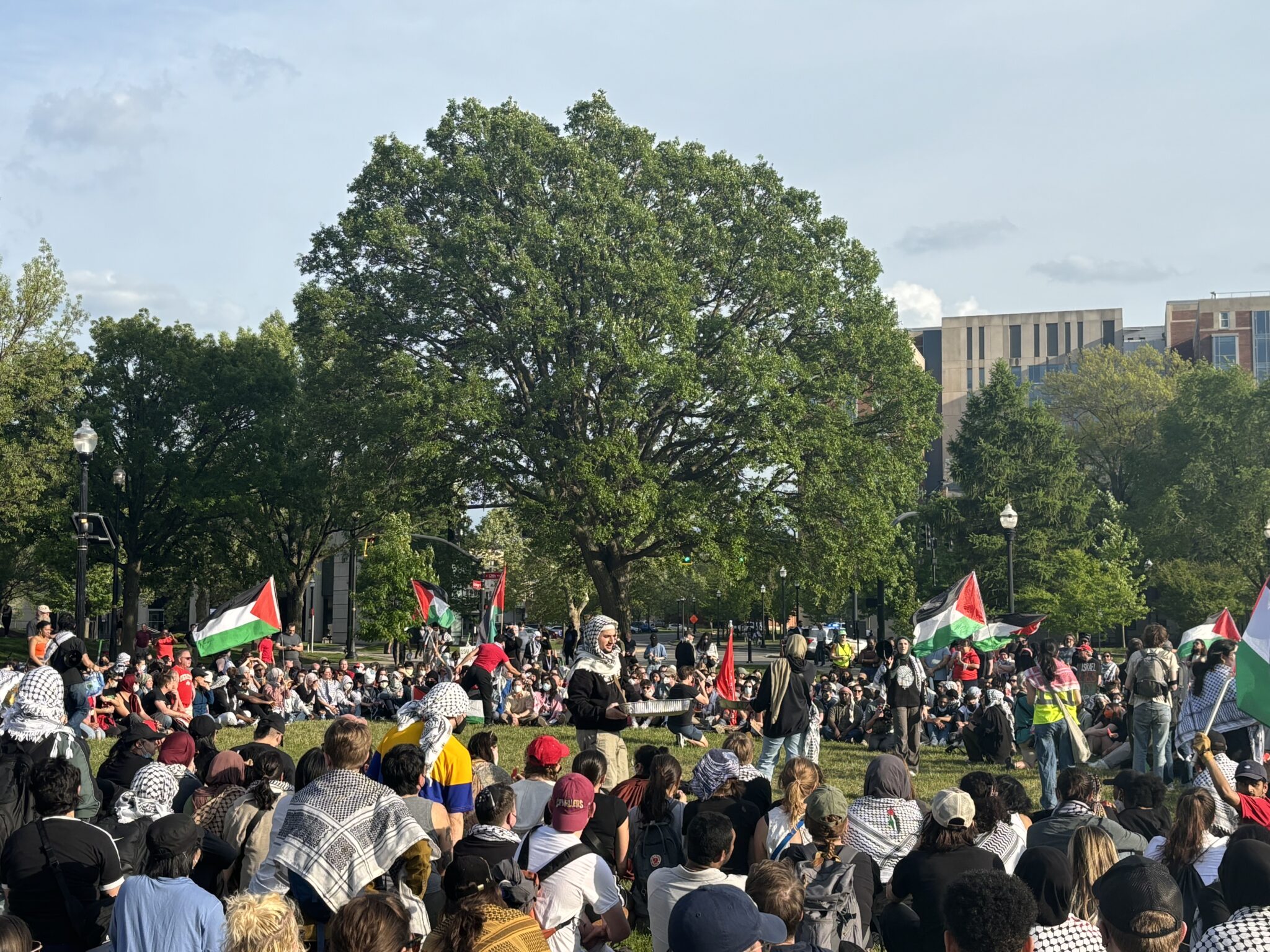
Hundreds of Ohio State University students, faculty and community members protested the ongoing Israel-Hamas war in Gaza on May 1, 2024. (Photo by Megan Henry, Ohio Capital Journal.)
Ohio State University, Case Western Reserve University, Oberlin College, Ohio University, Miami University and Denison University have all had campus protests the past couple of weeks.
Ohio colleges and universities have been the site of recent protests over the Israel-Hamas war in Gaza.
Ohio State University, Case Western Reserve University, Oberlin College, Ohio University, Miami University and Denison University have all had campus protests the past couple of weeks as the semester winds downs.
Protesters are calling for universities to divest their finances from companies and institutions with connections to Israel, transparency over their financial investments and an immediate ceasefire in Palestine.
However, Ohio law stands in the way of some of their demands. Ohio Revised Code Section 9.76 prohibits state agencies like universities from contracting with companies that are boycotting or disinvesting from Israel.
Protests at colleges and universities have ramped up across the nation after more than a hundred protesters at Columbia University were arrested after setting up an encampment on April 18. The University of Southern California canceled its commencement ceremony over safety concerns due to recent protests.
President Joe Biden said he respects the rights of people to express their opinions during the campus protests, but said it must be done without violence or destruction.
“Violent protest is not protected,” he said in a speech Thursday morning. “Peaceful protest is. It’s against the law when violence occurs. Destroying property is not a peaceful protest. It’s against the law. Vandalism, trespassing, breaking windows, shutting down campus, forcing the cancellation of classes and graduation. None of this is a peaceful protest. … To dissent is essential to democracy. But dissent must never lead to disorder, or to denying the rights of others so students can finish a semester and their college education.”
Ohio State University
Hundreds of Ohio State students and faculty as well as community members peacefully protested Wednesday night on the South Oval.
A chorus of chants rang out throughout the protest:
“From the river, to the sea, Palestine will be free.”
“From the river, to the sea, Palestine will live forever.”
“Ohio wants divestment now.”
“Divestment is our demand. No more bloodshed on our hands.”
“Disclose. Divest. We will not stop, we will not rest.”
There were no encampments erected on the South Oval. Ohio State University Police were present as well as Ohio State Highway Patrol cars. An electronic sign near the South Oval read “no overnight events permitted … to include encampments.”
Protesters voluntarily dispersed after a few hours and no arrests were made — a stark contrast to last week when 41 people were arrested at various campus protests. Nineteen of those arrested were Ohio State students, one was an Ohio State staff member and the rest were not affiliated with the university.
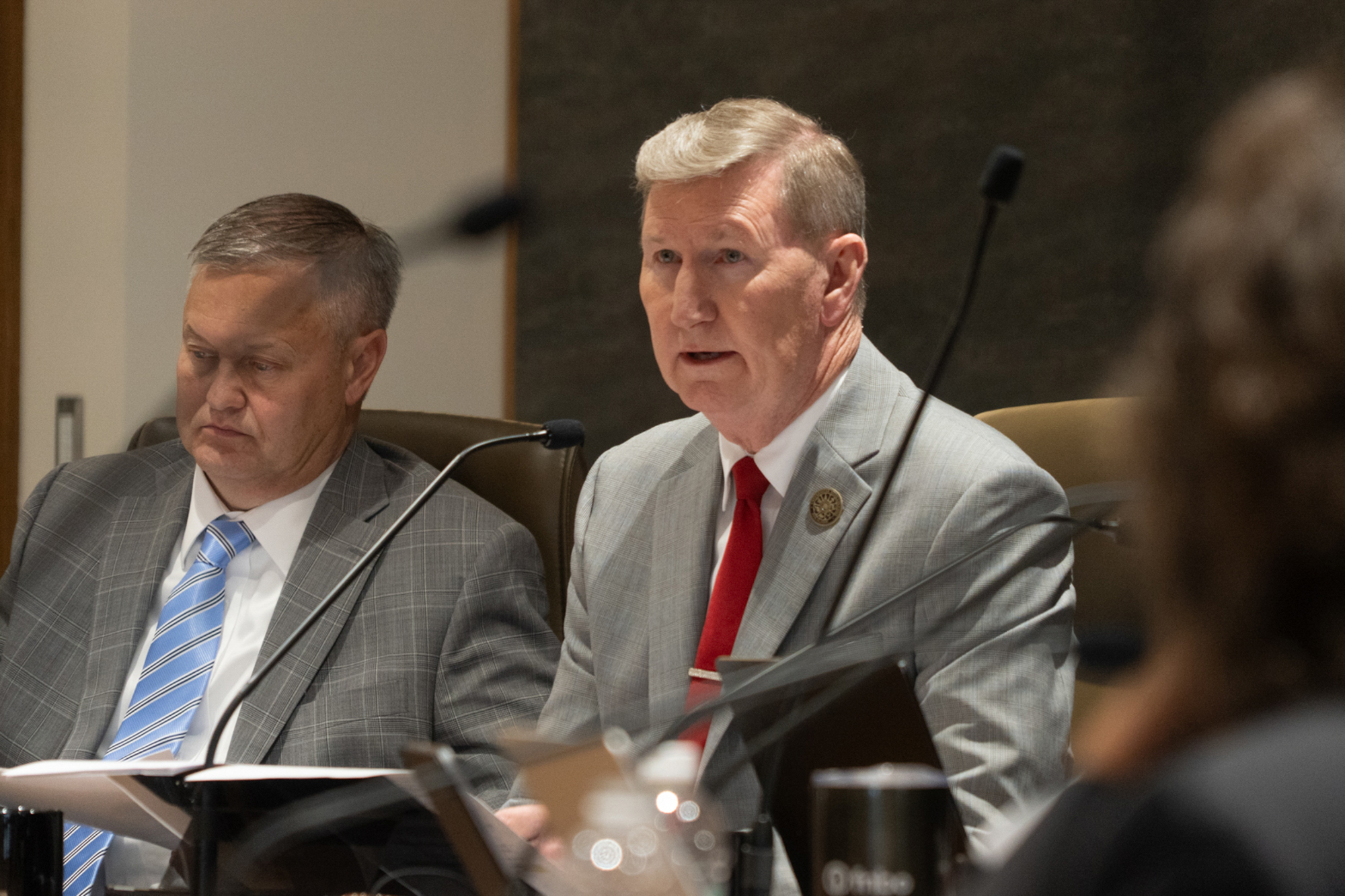
“Encampments are not allowed on campus regardless of the reason for them,” Ohio State University President Ted Carter wrote in a campus-wide letter after last week’s protests. “They create the need for around-the-clock safety and security resources, which takes these resources away from the rest of our community.”
“As a public university, demonstrations, protests and disagreement regularly occur on our campus — so much so that we have trained staff and public safety professionals on-site for student demonstrations for safety and to support everyone’s right to engage in these activities,” Carter went on to write in his letter. “Sadly, in recent days, I have watched significant safety issues be created by encampments on other campuses across our nation. These situations have caused in-person learning and commencement ceremonies to be canceled. Ohio State’s campus will not be overtaken in this manner.”
Ohio House Speaker Jason Stephens, R-Kitts Hill, said he supports Carter’s actions.
“There’s always a challenge whenever you have protests and whatnot,” Stephens said when asked about last week’s arrests at Ohio State. “But, again, I think it’s important for the safety of everyone at a campus that the rules be followed.”
Case Western Reserve University
There have been no arrests so far at any protests at Case Western Reserve University in Cleveland, but about 20 protesters were detained and released from police custody Monday morning, a university spokesperson said.
The private university originally put a 8 p.m. curfew in place, but has allowed students to camp on the university’s Kelvin Smith Library Oval Monday, Tuesday and Wednesday nights, a university spokesperson said.
“Oberlin supports the right of our students to gather and demonstrate peacefully,” the university said in a statement. “Oberlin expects all who participate to conduct themselves in ways that are respectful of others, that do not disrupt the day-to-day activities of the school and that uphold our shared values: respect for each other and our community.”
About 100-125 people attended a protest at Ohio University Wednesday night where people chanted up and down the escalators at Baker Center. No one was arrested.
Megan Henry is a reporter for the Ohio Capital Journal and has spent the past five years reporting in Ohio on various topics including education, healthcare, business and crime. She previously worked at The Columbus Dispatch, part of the USA Today Network.
Ohio Capital Journal is part of States Newsroom, the nation’s largest state-focused nonprofit news organization.
College students walk on campus. (Klaus Vedfelt/Getty Images)
The University of Akron, the University of Toledo, Cleveland State University, Kent State University, Ohio University, Ohio State University and Youngstown State University all said they are in the process of reviewing their scholarships.
At least seven Ohio public universities are reviewing scholarships in the wake of comments Ohio Attorney General Dave Yost made about race-based scholarships after the U.S. Supreme Court ruled against race-conscious admissions.
Cleveland State University, Kent State University, the University of Akron, the University of Toledo and Youngstown State University all said they are in the process of reviewing their scholarships. This is in addition to Ohio University and Ohio State University, as previously reported by the Capital Journal.
“The University of Toledo has paused the distribution of scholarships that consider race as a part of their award criteria following the U.S. Supreme Court ruling on the use of affirmative action in higher education admissions,” university spokesperson Tyrel Linkhorn said in email.
This affects 6% of Toledo’s nearly 1,200 donor-supported scholarships, which is worth $500,000, he said in an email.
“The University and The University of Toledo Foundation are actively working with donors to explore potential revisions to scholarship agreements so we can continue to support our donors’ goals in a way that fully complies with the Supreme Court decision,” Linkhorn said in an email.
Kent State and Youngstown State mentioned the Supreme Court case and “guidance from the state of Ohio” as reasons for their review. Cleveland State just mentioned the Supreme Court case and Akron didn’t give a specific reason.
The Capital Journal previously reported that Ohio University is “temporarily pausing” awarding race-based diversity scholarships and that Ohio State University is in the “process of updating scholarship criteria to ensure compliance with the law,” according to the university’s website.
Ohio University has 130 gift agreements that are currently under review that represent $450,000 in potential scholarship awards, university spokesperson Dan Pittman said in an email.
“The review is to ensure language in the gift agreements remains lawful,” Pittman said. “If deemed necessary, the University will work with donors to make revisions to language in the agreements.”
Ohio State University expects to give away approximately $448 million dollars in financial aid this fiscal year, university spokesperson Ben Johnson said in an email.
Bowling Green State University, Miami University, Northeast Ohio Medical Center, Shawnee State University, the University of Cincinnati and Wright State University did not answer questions about the status of their race-based scholarships.
A university spokesperson for Central State University, Ohio’s only public historically Black university, said in email they don’t have race based scholarships.
Supreme Court decision
The U.S. Supreme Court. (Al Drago/Getty Images)
Last summer, the U.S. Supreme Court ruled Harvard and the University of North Carolina violated the equal protections clause of the 14th Amendment by using race as a factor in applications.
The next day, Yost sent a letter to Ohio colleges and universities saying “employees must immediately cease considering race when making admissions decisions,” according to the letter. It also said his office won’t legally protect someone at a college or university who uses race as a factor.
The topic of race-based scholarships came up on a Jan. 26 call with universities, said Yost’s spokesperson Bethany McCorkle.
“What was said in response to a question was after the recent Supreme Court decision, scholarships will need to be looked at to ensure compliance with the law,” McCorkle said in an email. “Although the Court did not expressly prohibit race-based scholarships, it indicated that ‘eliminating racial discrimination means eliminating all of it.’ Race-based scholarships discriminate on the basis of race in awarding benefits. Therefore, it would follow that such programs are unconstitutional.”
The Harvard Supreme Court decision is being “weaponized to intimidate and create fear,” said Sara Kilpatrick, executive director of the Ohio Conference of the American Association of University Professors.
“We obviously disagree with the Harvard decision, and we also disagree with how the Attorney General is trying to extrapolate it to apply to virtually anything that touches race,” she said. “We hope that institutions are not being pushed into a direction that ultimately will harm students.”
If race-based scholarships are removed from universities, Kilpatrick said it could prevent Ohio students from earning degrees.
“This is a dangerous slippery slope, and they should be cautious about how far they’re trying to push this,” she said. “This will undoubtedly dry up desperately needed revenue streams for institutions.”
Megan Henry is a reporter for the Ohio Capital Journal and has spent the past five years reporting in Ohio on various topics including education, healthcare, business and crime. She previously worked at The Columbus Dispatch, part of the USA Today Network.
LINCOLN, NEBRASKA — Barring a last-minute change of heart on either side, the University of Nebraska will need a new president soon.
NU system President Ted Carter, the former superintendent of the U.S. Naval Academy and a vice admiral, is expected to be named the next president at The Ohio State University in Columbus.
UPDATE: The Ohio State Board of Trustees did name Carter as the university’s next president during their Tuesday meeting.
Privately confirmed
Multiple people who have been informed this week of Carter’s pending departure confirmed the hiring to the Nebraska Examiner.
“Yes, he is gone,” one university leader said.
“It’s true, what you heard,” an elected official said.
“You’re not wrong,” a state official said.
Members of the NU Board of Regents reached Tuesday either declined to comment or did not immediately return calls seeking comment. Representatives of the University of Nebraska system did not immediately return calls or messages seeking comment.
Helped bridge political divide
Carter just received a positive evaluation and notice for his work during the 2022-23 academic year, including notice that he would receive a $144,000 bonus.
The regents cited his work boosting a private fundraising campaign to raise $3 billion, and his efforts to secure more state funding for NU than Gov. Jim Pillen, a former regent, proposed in his first state budget. They also mentioned increased research funding and improved retention rates for young students.
Carter said he would donate that bonus to charity, partly because the university’s campuses in Curtis, Kearney, Lincoln and Omaha are coping with a $58 million budget shortfall, the Lincoln Journal Star reported.
The NU president helped launch the Nebraska Promise program that helped low- and middle-income Nebraskans attend NU tuition-free. He has been working on a five-year plan to improve the university system. He also helped the campus navigate the COVID-19 pandemic.
Carter made waves in Nebraska with his ability to persuade conservative and liberal constituencies about the value of investing state and private resources in higher education, several political observers said.
State changing
But the state has changed since he arrived in January 2020. A more conservative Legislature increasingly puts university spending and actions in the political crosshairs. including public spats between former Gov. Pete Ricketts and former University of Nebraska-Lincoln Chancellor Ronnie Green.
Carter also defended academic freedom in 2021 when Pillen, then a member of the NU Board of Regents running for governor, tried to pass a resolution banning the imposition of critical race theory on NU campuses. The resolution failed.
Carter has answered some of those changes by trading on the trust he had earned and, as his critics explained, consolidating power in the president’s office.
The most recent example came in June, when the NU Board of Regents unanimously moved final decision-making authority over Husker athletics under Carter instead of under the UNL chancellor.
AARON SANDERFORD
Political reporter Aaron Sanderford has tackled various news roles in his 20-plus year career. He has reported on politics, crime, courts, government and business for the Omaha World-Herald and Lincoln Journal-Star. He also worked as an assignment editor and editorial writer. He was an investigative reporter at KMTV.
The Ohio Senate passed a bill Wednesday that would create “intellectual diversity” centers at Ohio State University, the University of Toledo, Miami University, Cleveland State University, and the University of Cincinnati.
The party line vote came after an amendment was added during the Senate session that tacks on Miami, Cleveland State, and Cincinnati to Senate Bill 117. The bill now moves to the House for committee consideration.
SB 117 would create the Salmon P. Chase Center for Civics, Culture, and Society at Ohio State University’s College of Public Affairs and the Institute of American Constitutional Thought and Leadership at the University of Toledo’s College of Law. It would also now create centers for civics, culture and society at Miami, Cleveland State and Cincinnati.
“The (Ohio State) center will educate students by means of free, open and rigorous intellectual inquiry, to seek truth, equip students with the skills they need to reach their own informed conclusions in matters of social and political importance,” said Sen. Jerry Cirino, R-Kirtland, one of the bill’s sponsors.
SB 117 amendment
Many Senate Democrats slammed SB 117 and the amendment during Wednesday’s session.
“SB 117 is forcing the installation of conservative think-tanks at our public universities across the state of Ohio and they are using taxpayer money to do it,” said state Sen. Bill DeMora, D-Columbus.
“The amendment is atrocious,” said Sen. Catherine Ingram, D-Cincinnati.
Miami and Cleveland State were not aware of the potential amendment adding them to the bill before Wednesday afternoon’s Senate Session.
“They had absolutely no idea,” Senate Minority Leader Nickie Antonio, D-Lakewood, told reporters when she reached out to her alma mater Cleveland State. “They did not ask for it … and are very concerned about this being imposed on them.”
State Sen. Kent Smith, D-Euclid, did something similar with his alma maters Miami and Cleveland State, and both institutions of higher education said this was the first time they were hearing about the amendment.
“Committees are the best forums for thoroughly studying bills,” he said.
Senate President Matt Huffman said making the amendment on the Senate floor was not ideal.
“Certainly that’s not the best way to do these things,” he said to reporters. “I don’t like substantive floor amendments. We’re at a lengthy legislative break. Secondly, the House in their negotiations of essentially, at least for the moment, have rejected the concept of this higher education reform that we want to have. And so what we really want to do is tee these things up.”
The amendments also clarified that both these centers are “independent academic units in their respective universities,” Cirino said.
COLUMBUS, Ohio — JUNE 15: Senate Majority Floor Leader Rob McColley, R-Napoleon, speaks during the Ohio Senate session, June 15, 2023, at the Statehouse in Columbus, Ohio. (Photo by Graham Stokes for Ohio Capital Journal)
He introduced the bill in May along with Sen. Rob McColley, R-Napoleon — arguing that university faculty are predominantly liberal.
But McColley insisted Wednesday that SB 117 is not a conservative takeover of higher education.
“There is not a single letter, there is not a single word, there is not a single phrase that requires this to teach conservative principles,” he said. “The University of Toledo Law is supportive of this. The Ohio State University does not oppose this either.”
State Sen. Andrew Brenner, R-Delaware, said college students do want these centers, but are afraid to speak out.
“If they speak out, they are afraid it might impact their academic career,” he claimed.
The bill would give UT $1 million in fiscal year 2024 and $2 million in fiscal year 2025 for the Institute, and Ohio State $5 million in fiscal years 2024 and 2025 for the Center.
The bill’s amendment would each give Miami, Cleveland, and Cincinnati $2 million each fiscal year to support the centers, Cirino said.
McColley clarified that what’s in the proposed budget when it comes to SB 117 doesn’t include the three new universities that were added to the bill through Wednesday’s amendment.
The Ohio House has pushed back on the higher education bills being added to the budget.
“We’re maybe not going to get 117 in the budget,” Huffman said. “You don’t know what the deal is until there’s a deal. So we’re just putting 117 forward as a bill.”
Senate Bill 83, also introduced by Cirino and which would overhaul higher education, was added to the budget by the Senate.
Among other things, SB 83 would ban university staff and employees from striking, college students would be forced to take certain American history courses, professor tenure would be based around “bias,” and mandatory diversity, equity and inclusion training would be prohibited, with only specific exemptions.
“The House are not fans of 83,” Huffman said. “I think we’ve offered a pretty good higher education package that they rejected.”
While the constitutional deadline for Ohio Gov. Mike DeWine to sign the budget is Friday, it seems unclear at this point if that is actually going to happen.
“I’m optimistic and I think we’ll see what happens on Friday,” Huffmann said.
Lee Strang
Professor Lee Strang is the John W. Stoepler Professor of Law & Values at the University of Toledo Law School. (Photo from University of Toledo website.)
UT Law Professor Lee Strang first got the idea for the Institute of American Constitutional Thought and Leadership in 2019 after visiting the Georgetown Center for the Constitution and Princeton University’s James Madison Program.
Megan Henry is a reporter for the Ohio Capital Journal and has spent the last five years reporting on various topics including education, healthcare, business and crime at The Columbus Dispatch, part of the USA Today Network.
“There are growing concerns about the potential impacts regarding the timing of the removal of males during the hunting season…”
Ryan Boyer, NWTF district biologist for Michigan, Indiana and Ohio.
The NWTF Ohio State Chapter recently allocated $50,000 to support a new wild turkey research study that seeks to address population declines in the state.
With increasing concerns over population declines in Ohio, the Ohio Department of Natural Resources and Ohio State University are conducting the first broad-scale study of hen survival in the state in almost two decades. Findings will help researchers and wildlife managers understand how survival rates, harvest rates and reproduction have changed in the last 17 years and what factors may be causing those changes.
In the early 2000s, researchers determined May 1 to be the median date for which hens begin incubating; however, it’s clear today that incubation start dates vary in different regions of the state. Changing weather and habitat conditions, too, may be impacting the initiation of nest incubation from the median date established in the early 2000s.
“There are growing concerns about the potential impacts regarding the timing of the removal of males during the hunting season, and therefore it is important to know as precisely as possible when hens begin incubating nests,” said Ryan Boyer, NWTF district biologist for Michigan, Indiana and Ohio. “In many cases, state agencies set their season open dates to coincide closely with the median date for nest incubation initiation, allowing time for hens to be bred and for nesting to begin. Ensuring that season start dates align with nesting chronology greatly reduces the chance of negatively impacting populations by removing males too early.
“Just like the world around us, wild turkey ecology is dynamic. We are proud to partner with the ODNR and Ohio State University to provide support for this research project and continue to ensure the best-available science is being used in informing management and regulatory decisions.”
Mark Wiley, ODNR game bird biologist, notes that it is not just timing that can have an effect nesting success, but also changes in habitat.
“Afforestation (establishment of a forest or stand of trees in an area where there was no previous tree cover) and forest maturation affect habitat quality, which in turn can affect nesting productivity and hen survival,” he said. “A more thorough understanding of hen demographics in relation to changing habitat conditions will improve our ability to successfully manage a dynamic wild turkey population.”
Beginning in early January and through March, ODNR staff will capture birds using rocket nets. Once captured, researchers and ODNR staff will quickly work to attach leg bands as well as GPS transmitters. The information from the transmitters will be invaluable to researchers.
“Researchers from OSU will download and monitor turkey location and activity data two to three times per week,” Wiley said. “They will use turkey location and activity data to detect nesting activity, movements and mortality events.”
The researchers will confirm nesting activity by locating the birds on the ground, and after the incubation period, the team will be able to determine nest fate, hatching rates and causes of nest failure, if it fails.
Three weeks after a successful hatch, the research team will locate and count the number of poults with each hen. They will also establish an annual survival rate of hens from transmitter data. That data will allow researchers to determine the sources of mortality and investigate the seasonal movements of hens.
Results of the study will be shared with nearby states that are conducting similar wild turkey research projects, including New Jersey, Pennsylvania and Maryland, and data will be aggregated to provide a larger representation of how climate and habitat changes impact nesting on a landscape scale.
“The research project is important to all hunters, experienced or new,” said Bill Sulicks, NWTF Ohio State Chapter president. “We are all eager to see the turkey population begin to thrive again as in earlier years. We believe this study can guide us, in a way, to approach the recent decline, and so in saying this: ‘Once you are aware of a problem, you need to understand how it works, before you can fix it.’”
Field work, including turkey trapping and telemetry monitoring, will occur throughout this year and 2024 and may continue into 2025. The final project report, thesis and scientific manuscript will be available at the end of the project in 2025.
About the National Wild Turkey Federation
Since 1973, the National Wild Turkey Federation has invested over half a billion dollars into wildlife conservation and has conserved or enhanced over 22 million acres of critical wildlife habitat. The organization continues to drive wildlife conservation, forest resiliency and robust recreational opportunities throughout the U.S. by working across boundaries on a landscape scale.
2023 is the NWTF’s 50th anniversary and an opportunity to propel the organization’s mission into the future while honoring its rich history. For its 50th anniversary, the NWTF has set six ambitious goals: positively impact 1 million acres of wildlife habitat; raise $500,000 for wild turkey research; increase membership to 250,000 members; dedicate $1 million to education and outreach programs; raise $5 million to invest in technology and NWTF’s people; and raise $5 million to build toward a $50 million endowment for the future. Learn how you can help us reach these lofty goals.
You’ve probably heard of “gateway” drugs, but a group of researchers at Ohio State University say there’s such a thing as a “gateway conspiracy.”
A duo of surveys done by psychology researchers and supported by the National Science Foundation seek to bolster the field of “conspiracy theory research,” which an announcement of the study said “to date has tended to look for traits that predict the tendency to believe in conspiracy theories at a given point in time.”
The “gateway conspiracy” that OSU researchers tested in the surveys “argues that conspiracy theory beliefs prompted by a single event lead to increases in conspiratorial thinking over time.”
One survey asked 501 people questions “assessing their beliefs in COVID-19 conspiracy theories, political ideology” and their affinity for the theories in June 2020.
About 100 of the participants came back in December of the same year and were asked “statements gauging their level of conspiratorial thinking,” including their believe in the false idea that there had been extensive voter fraud in the 2020 presidential election.
Results from the surveys show those that believed false theories about the pandemic were “more likely to later report they believed that the 2020 presidential election had been stolen from Donald Trump through widespread voter fraud, which is also not true.”
A possible trigger for these beliefs? A sense of distrust, according to OSU psychology professor Russell Fazio, senior author of the survey study.
“It’s speculative, but it appears that once people adopt one conspiracy belief, it promotes distrust in institutions more generally — it could be government, science, the media, whatever,” Fazio said in announcing the study.
COVID-19 was ripe for conspiracy because individuals felt a lack of control, according to Fazio’s fellow study author, Javier Granados Samayoa.
“With COVID-19, there was this large event that people could not control, so how could they make sense of it? One way is by adhering to conspiracy theories.”
The study also found that the high likelihood of rabbit-hole-opening theories causing negative outcomes for believers and those around the believers spotlights the importance of tamping down COVID-19 conspiracies.
“Not only do COVID-19 conspiracy theories threaten lives and economies in the present, they may also create problems down the road by leading to heightened conspiracist ideation,” the study stated. “Policymakers would be wise to consult the research that has tested strategies by which belief in conspiracy theories can be blunted.”
One such candidate, Terpsehore “Tore” Maras, independent candidate for secretary of state, asked the Ohio Supreme Court to change the rules when it comes to election observers and allow her to choose her own observers, against the legal mandate that four other candidates also petition for more poll watchers.
Successful Co-Parenting Online is an online educational class that familiarizes parents with information, skills, and techniques to minimize the negative effects of separation and divorce on children to promote positive adjustment during the divorce process.
Backed by the online security of Ohio State University, SCP Online offers individuals a confidential, self-paced learning experience. A trained Extension professional will host each participant as he or she progresses through the program. These trained hosts will respond to questions as well as verify the completion of the class.
Successful Co-Parenting is being offered in cooperation with the Clermont County Court of Domestic Relations and meets the co-parenting education requirement assigned by the court. Participants need 90 minutes – 2hrs to complete the course. A certificate of completion will be emailed to participants upon completion of the course.
Registration is $35 per person and payable online by credit card through a secure registration site (Cvent). There are NO refunds issued for this course. Registration: SIGN UP FOR THIS COURSE TODAY!
Cassie Mattia is the Associate Editor of Loveland Magazine and lives in Historic Downtown Loveland
by Cassie Mattia
Loveland, Ohio – Many college football fans across Ohio are devastated due to the announcement that was delivered by the American Athletic Conference and the Michigan Athletic Department on Tuesday that both the OSU vs. Michigan game and the Cincinnati vs. Tulsa game are officially canceled.
Both rivalry games were scheduled for Saturday, December 12th, but because of the rise in positive COVID-19 cases in Cincinnati and in Michigan, it was advised by UC’s conference Medical Advisory Group and Michigan’s health experts that they cancel the games. The UC vs. Tulsa game will not be rescheduled but both teams are scheduled to play again on Saturday, December 19th in the AAC Championship Game.
Both UC’s and Michigan’s Athletic Directors spoke about the spike in positive COVID-19 cases in their student-athletes and around campus.
“Like so much of our country, the Bearcats football program has dealt with rising cases of COVID-19 over the last several weeks,” UC’s AD John Cunningham said in a press release, “Since returning from Orlando on Nov. 21, 2020, we had an increased number of positives among our student-athletes, coaches and staff. Thankfully, we have had very few symptomatic cases and those who did show symptoms appear to be doing well. This week, UC began a slow, measured return to activities, fully aware of the importance of monitoring our student-athletes who are returning after time away from practice. If we are selected to host the AAC Championship game on Dec. 19, we have requested a variance with the state of Ohio to allow a limited number of fans in the stadium. We look forward to continuing our season on Saturday, Dec. 19.”
Michigan’s Athletic Director Ward Manuel said, “The number of positive tests has continued to trend in an upward direction over the last seven days. We have not been cleared to participate in practice at this time. Unfortunately, we will not be able to field a team due to COVID-19 positives and the associated quarantining required of close-contact individuals. This decision is disappointing for our team and coaches but their health and safety are paramount, and it will always come first in our decision-making.”
The Wolverines will continue daily testing in hopes that they will be cleared to be apart of the Big Ten Champions Week, which will be held December 18th-19th.
Due to the OSU vs. Michigan game cancellation, the Buckeyes are now facing their third game cancellation this season resulting in the team being ineligible for the Big Ten Champions Title. This particular rule was established before the season began.
Thankfully for both UC and OSU fans, both teams are still ranked in the Associated Press Top 10. Below are the rankings as of December 9th.
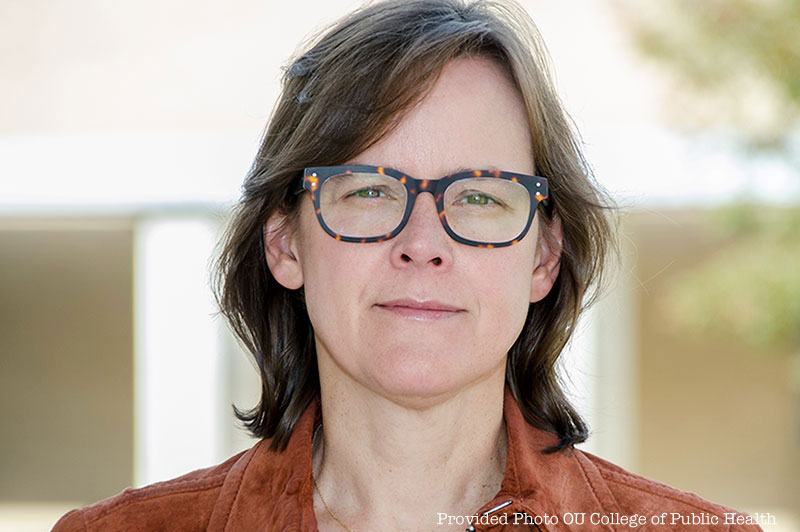
Ohio State University College of Public Health Dean Amy Fairchild sent the following message to students today.
Dear Buckeyes:
As we wrap up our final days on campus and look toward the holidays, I’d like to remind you of the critical role you play in preventing the spread of COVID-19.
Most importantly, we know that household transmission is the primary way that this virus is infecting people. One night at a bar or party means that you can bring the virus home, where it can spread rapidly. You have the power to reduce infections, including among your loved ones who may risk severe illness, hospitalization and death. I cannot emphasize enough that what may be a symptom-free inconvenience for one person can be devastating to another — and I say that underscoring that the pandemic’s severity is increasing throughout our nation and our state by the day.
By now you know what is required to do your part — proper masking when you’re in the same room as others, physical distancing, hand hygiene and staying far from large gatherings and within a small, consistent bubble of close friends and roommates. Parties simply aren’t worth it, particularly when cases are increasing in our community and on and around our campus.
I strongly recommend that, if you are able, you head home for the holidays as soon as you can if you receive a negative test result from routine testing this week. If you are not planning to leave this week, I urge you to test twice before heading home for break. The first test, part of our routine weekly screening, should be today, tomorrow or Wednesday. From that point forward, before you depart for home, please be especially careful by limiting unnecessary contact with others, maintaining physical distancing and wearing a mask any time you cannot avoid being with other people. If you plan to leave next week, the second test should be on Monday or Tuesday. Regardless of your planned departure date, out of concern for the safety of your family and friends, you must wait for your final “exit test” results before you head home. Testing hours and instructions are available on the Safe and Healthy Buckeyes website. If you are positive you should work closely with Ohio State’s Case Investigation and Contact Tracing Team to make your plan for isolating to stop spread of the virus.
If your results are negative, remember infection can take several days to be detected, which is why we test routinely. Continuing to follow precautions when you go home is your best bet for limiting illness in your families. Among those precautions: Wear masks on the car ride home, or however you’re getting home. Crack the windows. Limit the family coming to pick you up to one person.
During break, please resist the temptation to let the expectations we’ve set at Ohio State fall by the wayside. I understand that what feels “normal” is to visit with all of the friends and family you’ve missed, but we are in a time when those visits — especially if they include many people who aren’t masked and distant — can have serious repercussions, sending ripples through multiple families and social circles. Think about ways to bundle up against the Ohio fall and winter, keep the group small and spend some time outside.
If you know you were in riskier situations on campus, and especially if you have higher-risk loved ones at home, consider a 14-day self-quarantine in a room by yourself if that is possible. Wait 14 days to visit extended family who are vulnerable to the virus, including grandparents.
Thank you for all you’ve done this semester to keep us Together As Buckeyes and for your continued commitment to keeping your family, friends and our entire community safe and healthy.