Butler County Board of Developmental Disabilities (BCBDD ) says, “Community Outreach Advocate Courtney Hineman has made it her professional and personal mission to advocate for inclusion in the developmental disability community.”
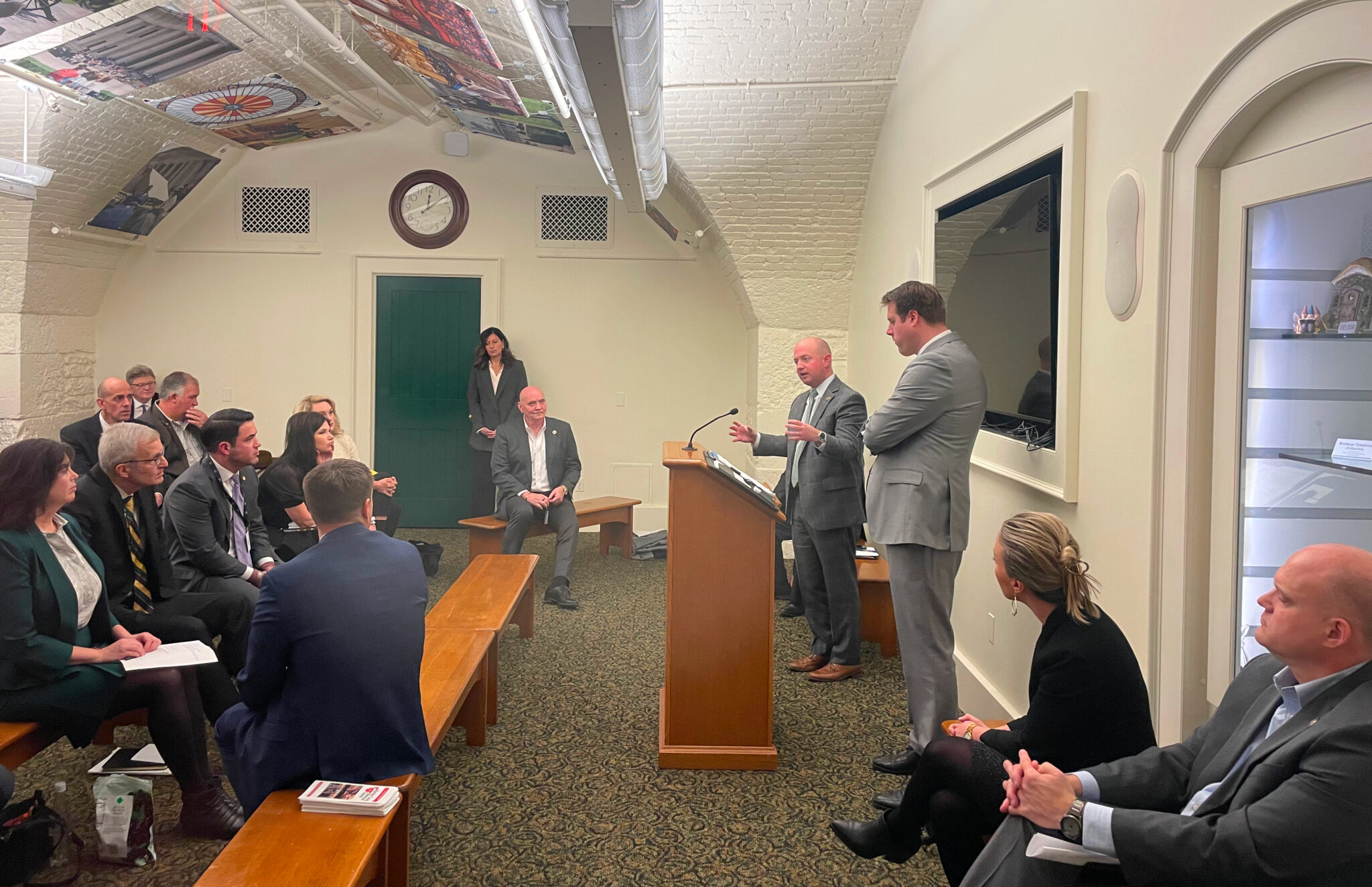
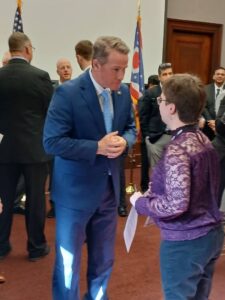
Courtney speaking with United States Senator Jon Husted.
This interview highlights Courtney’s recent advocacy work in D.C. with the U.S. Congress and at the Ohio Statehouse.
In April, Courtney took her advocacy on the road to Washington, D.C., to attend the Disability Policy Seminar and Advocacy Day. “While in D.C., Courtney met many fellow advocates, shared her story, and explained why disability policies are vital to the developmental disability community with several U.S. legislators.” The purpose of the “Hill Visits” is to speak directly with state congressional delegations about the high-priority issues affecting people with intellectual and developmental disabilities.
Watch as Courtney and the BCBDD‘s public relations coordinator, Cassie Mattia sit down for an interview where Courtney dives into her Washington, D.C., trip and her latest Ohio Developmental Disability Council meeting in Columbus.
The Butler County Board of Developmental Disabilities supports 4,207 Butler County Residents. Supports and services are available life-long through contracts with partner agencies or directly provided by our Board.
We believe in…
Diversity – Valuing our differences and celebrating our likenesses
Excellence – Setting high standards for ourselves and our organization
Equity – Supporting each other in our unique needs and strengths
Opportunity – Inspiring each other to grow and learn
House Bill 183 would require Ohio K-12 schools and colleges to mandate that students could only use the bathroom or locker room that matches their sex assigned at birth.
A bill that would ban transgender students from using the bathroom and locker room that matches up with their gender identity passed out of the Ohio House Higher Education Committee Wednesday by a 10-5 party line vote.
State Reps. Beth Lear, R-Galena, and Adam Bird, R-New Richmond, introduced House Bill 183 which would require Ohio K-12 schools and colleges to mandate that students could only use the bathroom or locker room that matches their sex assigned at birth. It would also prohibit schools from allowing students to share overnight accommodations with the opposite sex.
HB 183 now awaits further consideration in the House, which is next scheduled to be in session April 24.
Parents, grandparents, and school superintendents asked Bird for this bill, he said.
The American Medical Association officially opposes policies preventing transgender individuals from accessing basic human services and public facilities consistent with gender identity.
HB 183 would not prohibit a school from having single-occupancy facilities and it would not apply to someone helping a person with a disability or a child younger than 10 years old being assisted by a parent, guardian, or family member.
State Rep. Gayle Manning, R- North Ridgeville, thought about bringing an amendment to the committee that would have carved colleges and universities out of the bill, but she decided against it.
“I’m hopeful we will continue to have these discussions on the removal of higher ed,” she said. “The reason being, we’re talking about adults. Universities are similar to a city with the number of students that they have. Frivolous lawsuits that will increase the cost of tuition eventually and the cost of our families.”
Manning voted in favor of the bill even though she hopes lawmakers can continue conversations to “find a better solution.”
Bird opposes taking the higher education component out of the bill.
“The reason I oppose that is because we have college credit plus in Ohio,” he said. “We seventh graders going to college, kids in high school going to colleges and in that college environment, we got to make sure they are protected.”
State Rep. Joe Miller, D-Amherst, vocalized his disdain for the bill before the committee voted.
“Here we are again … taking away school districts and colleges’ ability and their leadership to make decisions that are best for providing safe, equitable access for all Ohio students,” Miller said. “I hope that this doesn’t see the floor and doesn’t see the governor’s desk.”
More than 100 people submitted opponent testimony on HB 183 and more than 30 people submitted proponent testimony.
“We do love and care about all kids,” Bird said when asked about all the backlash the bill has received. “Me and my Republican colleagues have heard from constituents all across the state. They may not have been loud. They may not have been vocal. They may not have come with a sign to the Statehouse, but we are here representing the vast majority of Ohioans who want protections.”
Trans advocates speak out against HB 183
Transgender advocates hosted a press conference following the House Higher Education Committee to voice their opposition to HB 183.
Trans Ohio Board Member Carson Hartlage said HB 183 is harmful to all students, including cisgender students.
“Most trans non binary and gender non conforming students only begin using restrooms that align with their gender identities after they’ve experienced some form of trauma when using a restroom that aligns with their sex assigned at birth,” Hartlage said.
Thirty percent of LGBTQ+ students said they were prevented from using the bathroom that aligned with their gender, and 26% were stopped from using the locker room that aligned with their gender, according to Ohio’s 2021 state snapshot by GLSEN, which examines the school experiences of LGBTQ middle and high school students.
When looking specifically at transgender and nonbinary students, 42% were prevented from using the bathroom that aligned with their gender and 36% couldn’t use the locker room that aligned with their gender, according to the Ohio GLSEN report.
Ohio’s first openly transgender public official and member of the Gahanna-Jefferson Public Schools’ Board of Education Dion Manley shared his concerns.
“As a trans man is I’ve been going into men’s restrooms for 25 years without incident,” Manley said. “I go visit the schools on a regular basis. So these legislators want me to go into a girls restroom in the elementary school, middle school, and high school.”
Mallory Golski, civic engagement and advocacy manager at Kaleidoscope Youth Center, said how Ohio was recently at the center of history in a positive way with Monday’s eclipse.
“We’re here reflecting on how we’re at the epicenter of another piece of history,” she said. “And unfortunately, we’re at the wrong place at the wrong time. Unlike the fleeting blackout of the total solar eclipse, the history I’m talking about here today at the statehouse leaves transgender youth in the dark.”
Jeanne Ogden’s daughter would be directly impacted by this bill. Her daughter’s college classroom building does not have single-use restrooms in the building, forcing her daughter to go across the street to use the restroom.
“These kids getting bullied and yes, their mental health is suffering,” said Ogden, the executive director of Trans Allies of Ohio. “Trans people are tired. Parents are exhausted.”
Megan Henry is a reporter for the Ohio Capital Journal and has spent the past five years reporting in Ohio on various topics including education, healthcare, business and crime. She previously worked at The Columbus Dispatch, part of the USA Today Network.
Ohio Capital Journal is part of States Newsroom, the nation’s largest state-focused nonprofit news organization.
For the first time since 2008, two women are serving as the minority leaders of their caucuses in the Ohio Statehouse.
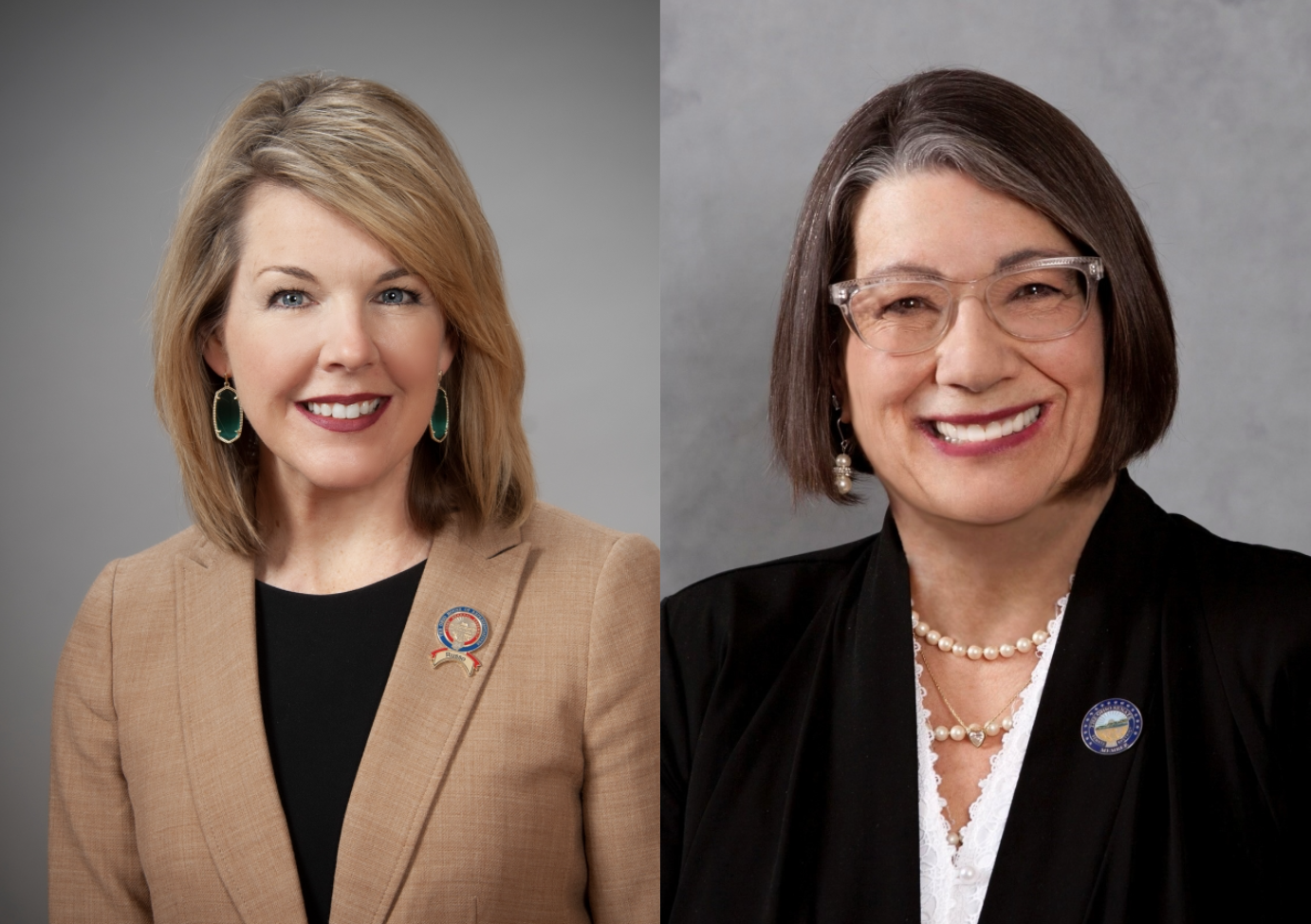
Ohio Senate Minority Leader Nickie Antonio, D-Lakewood, became leader in 2023 and Ohio House Minority Leader Allison Russo, D-Upper Arlington, became leader in 2022.
“I couldn’t be more proud to have two women leading the caucuses, but more importantly, beyond their gender, they’re just both really talented legislators and leaders,” said Ohio Democratic Chair Liz Walters. “They have different, but I think equally effective leadership styles that allow them to keep their caucuses together, and make sure the needs of all their members are met.”
The last time two women served as minority leaders was during the 127th General Assembly (2007-2008) when then-state Representative Joyce Beatty and state Senator Teresa Fedor were the minority leaders.
Antonio and Russo are navigating a Republican supermajority.
“I think they really work well and balance each other, which goes a long way towards making the Democrats as a whole very effective,” Walters said. “When they work together, right across chambers, it helps overcome a lot more of the obstacles and make them a more formidable force.”
But neither of them initially had political aspirations.
Antonio’s path to Senate Minority Leader
Antonio, 68, first got involved in politics at the local level when she advocated for a skatepark in Lakewood for her daughter. She went to city council, but was disappointed the council members didn’t seem to be paying attention to her.
“I could do that job,” she remembered saying when she got home that night.
COLUMBUS, Ohio — MAY 31: Senate Minority Leader Nickie Antonio, D-Lakewood, talks to reporters after the Ohio Senate session, May 31, 2023, at the Statehouse in Columbus, Ohio. (Photo by Graham Stokes for Ohio Capital Journal)
But she ultimately decided to run for office in 2004 after Ohio passed a constitutional amendment defining marriage as between a man and a woman.
That caused many of their friends to move out of state, but Antonio and her now wife Jean committed to staying in Ohio to make it better.
“We felt like LGBT folks were being attacked,” she said. “Certainly we were being marginalized and told that we were less than.”
There was an opening on Lakewood City Council in 2005, so she ran and ended up serving two terms. Then the House seat for her district opened up in 2010 so she ran and got elected — making her the first openly gay person to be elected to the Ohio General Assembly.
“A lot of people didn’t really know how to talk about it,” she recalled when she was elected in 2010.
She married her long-time partner Jean in 2015 after the Supreme Court legalized same-sex marriage.
Antonio served for eight years in the Ohio House of Representatives before being elected to the Ohio Senate in 2018, where she once again made history by being the first openly gay person to be elected Senate Minority Leader.
“One of the things I appreciate most is her tenure as a public servant,” Walters said.
People will often pull Antonio aside and tell her about a family member who is part of the LGBTQ community.
“I’m happy that I’m able to have those conversations with folks because I think every conversation that’s had opens the door for some understanding and … I really do believe it makes a change in the long run,” she said.
“I’m definitely where I am supposed to be and doing what I’m supposed to be doing,” she said. “It’s really important to me in the room where it happens. And as the minority leader, I am in the room where it happens.”
Some highlights of her career so far include working on bills that helped closed the loophole for people who are adopted to get original information, cut down on the response time for people experiencing a stroke and allowing pharmacies to give vaccines.
Before launching her political career, she taught students with behavioral problems and learning disorders for 10 years in Cleveland.
“I loved those kids and I always tell people that I learned everything I needed to know about the legislature and dealing with my colleagues in the legislature from troubled youth because you have to have a sense of humor, never show fear, really like people and make it part of your mission to find some kernel of commonality to start with to be able to communicate with them,” she said.
Russo’s path to House Minority Leader
Russo, 47, never intended to be in politics. She grew up in Mississippi and moved around quite a bit with her husband who was active duty military before deciding to put roots down in Ohio to be close to her in-laws.
She worked in health policy for more than twenty years, but a couple key moments lead to her to run for office.
COLUMBUS, Ohio — SEPTEMBER 20: House Minority Leader Allison Russo, D-Upper Arlington, speaks at the Ohio Redistricting Commission meeting, September 20, 2023, in the Lobby Hearing Room at the James A. Rhodes Office Tower in Columbus, Ohio. (Photo by Graham Stokes for Ohio Capital Journal)
The first was the 2016 Presidential Election where Donald Trump defeated Hillary Clinton.
“2016 got those of us who had always been very active voters off the sidelines and into the arena in a way that probably no other election has,” she said.
The following year, there were efforts to repeal the Affordable Care Act and freeze Medicaid expansion enrollments in Ohio, so she worked with folks doing advocacy work at the state and federal level. People encouraged her to pursue politics, but she brushed that aside since she was enjoying her career and her youngest child was less than a year old.
But she ultimately decided to throw her hat in the ring when the House seat in her district opened for the 2018 election.
“I thought, well, it’s now or never,” she said. “I knew absolutely nothing about running a campaign.”
Russo, a mother of three, often had her children with her when she was campaigning and knocking on doors. She ended up not only winning the election, but flipping the district seat blue.
She ran for Congress in 2021, but lost to U.S. Rep. Mike Carey 58% to 42%. The next year, she was elected House Minority Leader.
Walters said Russo has “an aptitude and innate ability to lead her caucus and maneuver, playing chess every day rather than checkers.”
As minority leader, Russo tells the members of her caucus they need to cultivate relationships and find common ground in order to be successful.
“In a super minority, you are constantly having to figure out how to navigate this place, so that you can be effective and it’s not always in big ways, like you pass a big massive piece of legislation,” Russo said. “It can be in little ways— you get part of your legislation into a bill, you make bills better, you get things into the budget, you have wins there.”
But sometimes finding common ground can be tricky.
“You also don’t want to sacrifice your values,” she said. “You also want to be fearless in calling (things) out when needed. Don’t pull your punches.”
Russo feels fortunate to live about 15 minutes away from the Statehouse, so she can run home to take one of her kids (ages 17, 14 and 7) to practice and then come back, if needed, for an event at the Statehouse later that night.
“I realize that’s a luxury,” she said. “In some ways, it’s my proximity to the Statehouse that allows me to do this job with three kids at home and I know that that’s not normal for most people who are in these roles.”
Advice for future women politicians
Russo’s advice for women looking to get into politics is to not wait around for approval to run for office.
“As women, we’re looking for someone to give us permission to take on these leadership roles or to run for office or whatever — you do not need that,” she said.
Antonio’s suggestion to women who are in politics or who want to go into politics is to not take anything personal.
“There are definitely things that make you feel like you get a gut punch some days,” she said.
Something that can turn women away from politics is the lack of privacy, Russo said
“Politics is an industry that’s tough for anyone, but it can be especially tough for women,” Walters said. “It’s a field that’s traditionally dominated by men with lots of strong opinions and feelings. … Leaders Russo and Antonio work twice as hard as their counterparts while overcoming unique obstacles. Even though they shouldn’t have to.”
What’s next for Antonio and Russo?
Antonio is term-limited and she’s not sure what she’ll do after her time in the Statehouse is up.
“What I do know is I do not intend to go back to the House,” she said.
Russo will be up for re-election for a fourth term this November. If she wins, she’ll be term-limited in the House. So what’s next after her time in the House is up?
“To be determined,” she said. “There’s a lot of this that’s out of my control. And then a lot of this is about timing, and often many unknown factors.”
And as for a potential run for Ohio Governor in 2026?
“I know there’s been a lot of chatter in that space,” she said. “Let’s get through 2024 first and we’ll see what happens.”
Megan Henry is a reporter for the Ohio Capital Journal and has spent the past five years reporting in Ohio on various topics including education, healthcare, business and crime. She previously worked at The Columbus Dispatch, part of the USA Today Network.
Ohio Capital Journal is part of States Newsroom, the nation’s largest state-focused nonprofit news organization.
House Bill 168 would rename Ohio’s Medical Marijuana Control Program to the Division of Marijuana Control and it would be in charge of regulating the medical marijuana and adult-use programs.
Ohioans 21 and older would be able to cultivate, purchase and possess marijuana if a bipartisan bill passes in the Ohio Statehouse.
State Reps. Jamie Callender, R-Concord, and Casey Weinstein, D-Hudson, introduced House Bill 168 — also known as the Ohio Adult Use Act — earlier this month.
The bill would also allow conviction records for prior cultivation and possession offenses to be expunged.
“Adult-use is good for our economy, good for our justice system, and the right thing to do,” Weinstein said in a news release. “Ohioans are ready to legalize cannabis.”
HB 168 would put a 10% sales tax on adult-use cannabis products. Researchers at Ohio State University estimate the potential annual tax revenue generated from adult-use cannabis in Ohio ranges from $276 million to $374 million in year five of an operational adult-use cannabis market.
“It opens up a route for people to have access to cannabis without punishment, without losing their jobs, without losing child custody,” said Tim Johnson, CEO of Cannabis Safety First.
The bill would rename the Ohio’s Medical Marijuana Control Program to the Division of Marijuana Control and it would be in charge of regulating the medical marijuana and adult-use programs. The division would be housed within the Ohio Department of Commerce.
COLUMBUS, OH — JANUARY 03: Rep. Jamie Callender (R-Concord) speaks from the floor during opening day ceremonies of the 135th General Assembly of the State of Ohio, January 3, 2023, in the House Chamber at the Statehouse in Columbus, Ohio. (Photo by Graham Stokes for Ohio Capital Journal. Republish photo only with original story.)
“Through the expansion of Ohio’s successful Medical Marijuana program to all Ohioans, we will not only be building upon best practices from around the country but utilizing the lessons learned here in Ohio,” Callender said in a news release.
Twenty-two states, including Michigan, and Washington, D.C. have legalized the recreational use of and sale of cannabis.
“It’s time for Ohio to act on this before we fall too much further behind our neighbors,” Weinstein said.
Legalizing marijuana would free up the judicial system from cannabis arrests and possession charges, Johnson said.
“It will allow law enforcement to centralize their resources around more harmful drugs and other priority incidents as far as criminal activity and so forth in their communities,” he said.
Expunged
The expungement piece of the bill would help people go through a quicker process to get their possession or trafficking charges erased.
“The whole principle behind all of this is … to open up our workforce pool … to allow people to return to being able to purchase homes, go to school, receive grants, have custody rights, all of that,” Johnson said.
One of the things the bill does is allow prosecutors to expunge low-level marijuana possession offenses. It also prevents arrests and convictions for possessing marijuana paraphernalia from appearing in Ohio’s criminal records.
Coalition to Regulate Marijuana like Alcohol
The Coalition to Regulate Marijuana like Alcohol is collecting petition signatures to get a similar proposal on November’s ballot. The coalition needs to get 124,000 signatures from 44 of Ohio’s 88 counties by the July 5 deadline.
Their proposal would legalize and regulate the cultivation, manufacturing, testing and sale of marijuana to Ohioans 21 and up. Ohioans 21 and older could home grow with a limit of six plants per person and 12 plants per residence, and it would impose a 10% tax at the point of sale for each transaction.
The proposal was submitted by citizens through an initiated statute, so it is not an amendment to the state’s constitution. Ohio’s Aug. 8 special election will ask voters if the state constitution should be harder to amend.
COLUMBUS, Ohio — APRIL 20: Tim Johnson, an Air Force veteran and retired law enforcement officer who has worked with Ohio lawmakers on cannabis legislation joins supporters of legalized marijuana, April 20, 2023, outside the Statehouse in Columbus, Ohio. (Photo by Graham Stokes for Ohio Capital Journal. Republish photo only with original story.)
Pricilla Harris, executive director of the Sensible Movement Coalition, is excited about the legislation to legalize marijuana, but said advocates favor the ballot proposal.
The ballot proposal has more protections for possession limits — 2.5 ounces compared to the bill’s 50 grams.
“We are still looking for patient protection, workforce protection for employers,” Harris said. “Unfortunately, we are just kind of lacking in that area when it comes to the bill.”
Between legislation and the ballot initiative, marijuana activists are confident weed will soon be legalized in Ohio.
“Either way you’re gonna see something happen this year in Ohio,” Johnson said.
Harris said it’s exciting to think about marijuana potentially being legalized.
“We would no longer be putting collateral damage on the residents of Ohio that are choosing cannabis as their medicine or their personal use,” she said.
Senate Bill 9
Senate Bill 9 — introduced by State Sens. Stephen Huffman, R-Tipp City, and Kirk Schuring, R-Canton — would expand Ohio’s medical marijuana program by adding more permissible forms of medical marijuana and adding to the list treatments for medical conditions.
It would also create a 13-member Medical Marijuana Oversight Commission that would oversee the Division of Marijuana Control within the Department of Commerce to oversee Ohio’s Medical Marijuana Program.
Currently, the Ohio Department of Commerce, the State Medical Board of Ohio, and the Ohio Board of Pharmacy oversee regulation and licensing in the marijuana program.
There are 355,368 patients that have registered for medical marijuana and 168,741 have both an active registration and an active recommendation as of March, according to the Ohio Medical Marijuana Control Program.
Megan Henry is a reporter for the Ohio Capital Journal and has spent the last five years reporting on various topics including education, healthcare, business and crime at The Columbus Dispatch, part of the USA Today Network.
After more than hour behind closed doors, a bloc of Ohio Republicans led by state Rep. Derek Merrin, Monclova Twp., trooped through the Ohio Statehouse.
The faction — thirty-odd lawmakers who wound up on the losing side of the House Speaker’s race last week— climbed three floors and squeezed into the clerk’s office.
After pausing for photos they filed a new version of their proposal to make it harder for Ohioans to pass constitutional amendments.
The proposal asks voters to raise the passage threshold for future amendments. The idea proved controversial and ran out of steam at the tail end of the last legislative session.
But with the resolution taking center stage now, as spurned Republicans lock horns with new Speaker Jason Stephens, it seems clear many in the party aren’t ready to drop the issue.
New Year’s resolution
Right after his plan went off the rails, sponsor Rep. Brian Stewart, R-Ashville, said he was “Looking forward to January.” Stewart noted then that Republican numbers were thin — a point he’d warned about previously — but argued there was plenty of support in the caucus.
Angry brian stewart is interesting. Maybe one of stephens' promises to ohio dems was to kill any bills like hjr 6? 👀 https://t.co/LtVzqMc46N
The outlook got a bit murkier after the speaker vote. Stewart, an ally of presumptive speaker Merrin, was set to be a part of leadership this term. After the floor revolt gave the gavel to Stephens, Stewart seemed to indicate his proposal was collateral damage.
Wednesday, though, Stewart filed his “Ohio Constitution Protection Amendment” alongside more than 30 GOP co-sponsors. He noted two substantive changes from the previous version.
“The new version would require that signatures come from all 88 counties instead of just 44,” Stewart said. “If an amendment is going to apply to every Ohio and then every community should have a hand in putting that potential constitution amendment on the ballot.
“We’re also going to eliminate the cure period for constitutional amendments,” Stewart added. That period allows citizen-led organizations to gather additional signatures if their initial batch doesn’t meet requirements to make the ballot.
Even with Wednesday’s show of force, Stewart has a long way to go to get his resolution on the ballot. Three-fifths of the members in both chambers have to approve the resolution first. In the House, that’s 60 votes. Only 45 Republicans voted for Merrin in speaker’s race, and only 38 participated in Wednesday’s rogue caucus meeting — a handful of them over the phone.
Ohio Secretary of State Frank LaRose. (Photo by Justin Merriman/Getty Images)
Getting the band back together
While Stewart counts votes, supporters outside the House appear to be gearing up for another try, too. After previously deferring to House lawmakers, Secretary of State Frank LaRose seems to be on board. Monday at Gov. Mike DeWine’s inaugural celebration, LaRose said he wasn’t done pursuing changes.
“What I was talking to the new speaker about and to Rep. Stewart about was the importance of getting this done,” LaRose explained.
“Today people might want to pretend or think that it’s about, abortion or redistricting or whatever issue, but 50 years from now, it could be about holograms and flying cars,” LaRose said. “We just don’t know what the things are that are going to come up, but if it can’t get 60% it probably belongs in the Ohio Revised Code and not in the Ohio Constitution.”
Here's the full letter. It also ties the issue to redistricting reform, and responds to the organized labor groups that rallied at the Ohio Statehouse yesterday. pic.twitter.com/ilhWLPiWM0
Shortly before HJR 6 stalled out, Cleveland.com obtained a memo written by Stewart urging GOP members to back the proposal. In it, he directly tied the effort to short-circuiting future abortion and redistricting ballot measures.
Opponents are lining up, too. In a statement Wednesday, Jen Miller from the League of Women Voters of Ohio promised a fight.
“For over a century, everyday Ohioans have had the freedom to collect signatures and pass ballot initiatives that make our lives better,” she said. “This resolution is unnecessary, unpopular, and undemocratic, and our broad coalition stands ready to defeat it.”
Deadlines
Democratic House Leader Allison Russo addressed the issue with reporters on Monday as well. She acknowledged “throughout even lame duck, speaking with both (Rep.) Merrin and Speaker Stephens, (the proposed amendment threshold change) was something that I expressed concern about.”
She didn’t directly address whether killing any future proposal was part of a deal with Speaker Stephens.
Stewart’s initial plan was to get the question on the ballot this May. To make that happen, lawmakers would need to pass the resolution by Feb. 1. Russo noted with leadership still figuring out committee membership, that’s not looking likely.
Stewart, though, argued his colleagues are ready to advance the resolution, and he put the ball in Speaker Stephens’ court.
“We certainly believe in introducing it today that we have ample opportunity to do that again,” Stewart said. “So we’re ready to pass it. It’s a question of whether the current leadership’s appetite is there as well.”
“What Representative Stewart deserves and what the citizens Ohio deserve is a debate on this issue,” Merrin chipped in. “We want to have a debate and see where see where the votes are at.”
Left to right, state Reps. Phil Plummer, R-Dayton, Derek Merrin, R-Monclova Township, Brian Stewart, R-Ashville. (Photo by Nick Evans, OCJ.)
The math
For all their bluster, Merrin’s camp faces some challenging math. The chances of them peeling off a single Democratic vote are virtually nonexistent. Even if all 45 Republicans who didn’t back Stephens are on their side, they still can’t force a floor vote.
That maneuver, known as a discharge motion, requires a majority of members to sign on — at least under previous House rules. Convincing five members to back a discharge motion, and then fifteen to back a controversial ballot measure, may not be an insurmountable task, but it’s far from likely.
Speaking Wednesday, Merrin and Rep. Phil Plummer, R-Dayton, put special emphasis on the rules package for the coming session. They argued the House should set rules giving greater latitude to individual members and sap some of the speaker’s power to control the process or punish members.
Whether they’ll propose making it easier to force a vote is unclear. Why Speaker Stephens would go along with it if they did is similarly unclear.
For his part, LaRose kept things positive — focusing on the goal rather than the ways and means. He wants to see the idea advance “whether it’s in the next few weeks or the next few months.” And in a feat of understatement, LaRose brushed off its previous failure.
“The goal here was always to start a conversation,” LaRose said. “We’ve certainly done that.”
The legislation, which initially eliminated most August special elections, became a vehicle for broader election restrictions included photo ID requirements
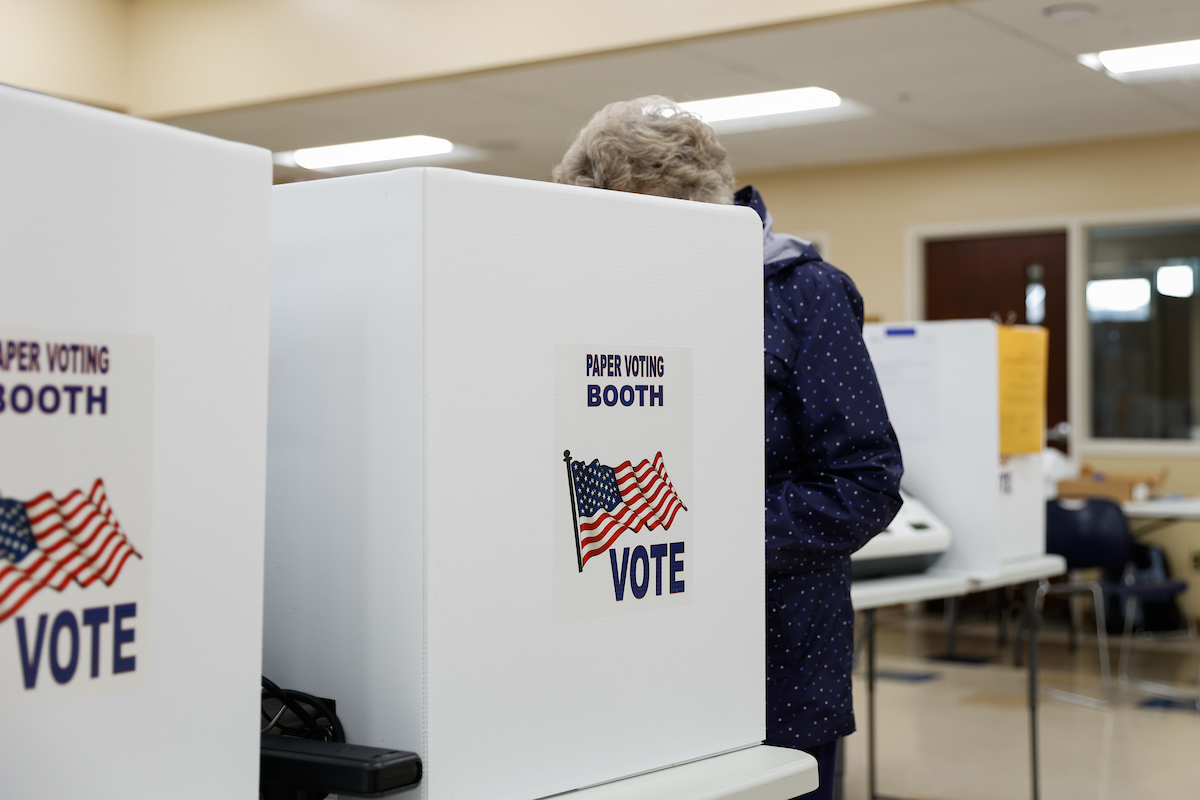
After a protracted day at the Ohio Statehouse, lawmakers approved sweeping new voting restrictions including photo ID requirements early Thursday morning. That proposal now heads to the governor.
The House gaveled in for session early Wednesday afternoon, and after half an hour of ceremonial proceedings broke for recess. Rep. Tim Ginter, R-Salem, described the break as 30 minutes “more or less.”
It took nearly six and a half hours for lawmakers to get back to work.
Legislators have taken a break from legislating, and the GOP holiday party is in full swing in the atrium. pic.twitter.com/OCu962oNMe
Turns out they had a holiday party in the Statehouse atrium.
After recess
When House lawmakers returned to their desks, they didn’t jump straight to the controversial measures. They concurred on a bland smattering of measures amended in the Senate. Lawmakers made tweaks to occupational licensure and township authorities. They even made the All-American Soap Box Derby Ohio’s official gravity racing program.
After that they went back to farewell speeches.
Later, the House took up Senate Bill 202. The proposal prohibits disability from being used as a pretext for denying or limiting parenting rights. Representatives tacked on a series of unrelated amendments. Rep. Bill Seitz, R-Cincinnati, proposed a task force to study the state’s bail system to see how many people are being held for lack of money.
“As is so much the case with so many things in Ohio — simple things that you would think we would know — we don’t know!” Seitz said.
Other amendments allow county prosecutors to represent other officials, provide a salary bump for a Fulton County judge instead of replacing a retiring colleague, and allow lawyers to apply out of state experience toward their judicial candidacy.
Lawmakers then took up and passed an unemployment compensation measure. Once they were done, the chamber went back into recess so the GOP could hold a caucus meeting.
Voting legislation
All the while, lawmakers whipped votes and opponents made a handful of eleventh-hour appeals.
AARP’s state director Holly Holtzen wrote a letter to the House members arguing older Ohioans are “disproportionately affected” by voter ID requirements.
“While AARP supports fair and effective procedures to detect and prevent voter fraud, we also want to ensure that Ohio’s 50+ population can exercise their voices in elections,” Holtzen wrote. “We understand that state lawmakers have a responsibility to balance these two elements but doing so responsibly and with sufficient debate is crucial.”
The organization made a similar appeal in 2011 for a voter ID measure that didn’t go forward.
Fifteen minutes before midnight, the House returned to take up voter ID legislation.
The Senate added the language to legislation eliminating most August special elections.
In addition to requiring voters to show a photo ID at the polls and allowing one drop box per county, the bill makes a series of cuts to the voting timeline. Absentee ballot requests must arrive a week, rather than three days, before Election Day. The final day of early voting will disappear, with its hours redistributed through the previous week. Absentee ballots postmarked the day before the election have to arrive within four days rather than the 10 allowed under current law.
The debate
Rep. Seitz explained the changes on the House floor and dismissed Democrats’ complaints about voter ID requirements.
“What we’re doing is we’re saying anyone who does not have a driver’s license in Ohio can get a photo ID at the BMV — free. Free, free free,” Seitz said.
Seitz also insisted he’d earned two concessions from the Senate that would be included in amendments to a separate bill. Under those changes, ballot drop boxes would be available outside regular business hours provided there’s 24-hour video monitoring. The other amendment would give boards more than four days to make their way through provisional ballots.
Then Seitz argue the legislation represents a “missed opportunity” for Democrats. He pointed to the Senate reducing the number of proposed drop boxes from three to one.
“As I predicted on day one with our bill,” Seitz said, “if you do not like this bill, if you are not willing to work with us on this bill, do not be surprised when at the end of the day you will get a bill that is much less to your liking.”
Rep. Bride Rose Sweeney, D-Cleveland, pushed back, disputing Seitz’s characterization.
“When you’re working from a basis of removing the right to vote,” she said, “that is not really a place that me and my colleagues on this side of the aisle feel that we are ever going to be in a position of supporting something.”
Sweeney criticized the reduced time for absentee ballots to arrive after the election, and she invoked GOP concerns about voter fraud to do so. If one unlawful vote is one too many, she argued, isn’t disenfranchising one voter too many?
Rep. Richard Brown, D-Canal Winchester, picked up the idea of voter fraud, too, and went in a different direction. He noted Secretary of State Frank LaRose’s reports of how safe and accurate Ohio elections are.
“If our election system is the gold standard, which other states emulate and look to for how they should run their elections, then why are we changing anything at all?” Brown asked. “There’s no need to change anything. There is no problem to solve here. In fact, the changes suggested in this bill and the amendments, solve no problems, but create new ones.”
Rep. Kent Smith, D-Euclid, noted “nothing good happens after midnight,” as he began his testimony early Thursday morning. Nevertheless, House lawmakers voted to concur with the Senate amendments around 12:30 a.m. With a vote of 55 to 32, the House passed the measure and it now heads to the governor.
Sam Cao, 17, at left, seen with Sam Lawrence, 19, at right. The two teenaged Sams are running as Democrats for seats in the Ohio House. Source: Sam Lawrence.
Sam Cao worked out a plan with his principal and superintendent. They had to figure out how Cao could potentially balance constituent work in the Ohio House of Representatives with classwork at Mason High School.
At Miami University, Sam Lawrence mulled a similar plan for his upcoming sophomore year. Ohio University’s Rhyan Goodman is likely doing the same for his junior year.
The three Democrats would be quite young for elected office. Cao is 17 but turns 18 before Election Day, which allows him to run; Lawrence is 19; Goodman was 19 when he announced his run in February.
If elected, they could shape state policy on everything from Ohio’s $74 billion biennial budget, civil and criminal justice, women’s rights, gun policy and countless others. All three are running in districts where Republicans have recently won with commanding margins, leaving them with uphill paths to office.
They can serve in wars and vote. They can’t lawfully buy a drink. And they don’t think their age should preclude them from public office.
“The one thing I’d like to point out is it’s not no experience; it’s different experience,” Lawrence said.
“I would like to ask every one of our legislators if they were attending school while all these terrible school shootings are happening. They were not in school when we had these high-powered assault weapons that could mow down tens of children at a time. Those people don’t have those life experiences.”
Some current incumbents started their terms just a few years older. Sen. Niraj Antani, R-Miamisburg, started in the House in 2018 at 23 years old. Rep. Jena Powell, R-Arcanum, first won in 2018 at 24. Rep. Thomas Hall, R-Madison Twp., won office in 2020 at 25. Rep. Bride Rose Sweeney, D-Cleveland, won in 2018 at 26.
Several (older) Democrats asked about the youthful insurgents rebuffed concerns of a lack of life or work experience from the candidates. They also rejected the trend as any signs of a party unable to attract more established candidates. Instead, they characterized it as a reflection of members of a new generation who are aghast at increasingly extreme legislation coming from the Statehouse and inspired enough to seek to affect change on their own.
“They’re going to be limited based on their life experiences, but at the same time, there is something romantic about it,” said Dennis Willard, a Democratic political consultant.
“In a sane world, this might seem insane. But were not living in a sane world with the Ohio Legislature. I know who I’d vote for.”
There’s some historical precedent too. U.S. Sen. Sherrod Brown, the dean of Ohio’s struggling Democratic Party, won his first state House race at 21 in 1974. In 2000, 18-year-old Derrick Seaver won a seat as a Democrat (he switched parties a few years later).
In an interview, Seaver, now 40 and the director of the San Jose Chamber of Commerce, expressed ambivalence about teenagers running for office. Youth has its perks — young people can be listeners and learners who bring new perspectives to older and pastier general assemblies. Plus, the media attention they attract can make the difference in tough races.
However, they’re less situated to understand the nuances or interconnectedness of public policy, he said. Plus, if they lose an election, they don’t have a college degree or developed work experience to fall back on.
“I will say that since that time, and I don’t want this to come across as discouraging, but certainly I feel that maybe I should have waited until I was older,” he said.
Sam Cao
Ohio’s new 56th House District contains swaths of Warren County including the cities of Lebanon and Mason. More than 62% of its voters are Republican, according to Dave’s Redistricting App.
Cao grew frustrated when COVID-19 grew so prevalent in the county that his high school closed its doors when it ran out of healthy substitute teachers. He tried to contact Zeltwanger, to no avail. Then he tried to contact the Democrat running for the seat, only to learn no such person exists. He credits his AP Government teacher with encouraging him to take a shot for himself.
To prepare, he’s looking to history. For one, there are his role models — Brown, the U.S. Senator; Robert Kennedy, the liberal icon and former U.S. Attorney General; and William Proxmire, another U.S. Senator who famously replaced the demagogic Sen. Joe McCarthy and declared his predecessor a “disgrace to Wisconsin, to the Senate, and to America.”
Cao has also been seeking guidance from the last four Democrats who tried and failed to win the seat.
“You know what you’re entering, kid?” he said, relaying their advice.
“We call this the arena for a reason. You’re a minnow. And sharks come in. These legislators at the Statehouse, they’re not playing with you. They could eat you up.”
His path to the general election ballot is no guarantee — he’s facing Joy Bennett, a freelance writer, in the looming Aug. 2 primary.
In an interview, he boiled his policy goals down to three items. For one, he wants to vote against abortion restrictions and gun rights expansions, which are likely to come in the GOP-dominated legislature. For two, he wants to improve the state’s infrastructure — one example being a lack of roads leading to his own high school, the largest in the state, causing regular traffic jams. Third, he wants to support legislation introduced by Sen. Tina Maharath (another young and Asian-American Democratic lawmaker) to develop curriculum teaching Asian-American history in school classrooms.
“Look beyond our age,” Cao said. “I know our age is like, the wow factor or the pizazz factor about who we are as candidates, but I want you to look at the policies. I want you to look at what values we stand for.”
Sam Lawrence, at left, and Sam Cao at right. Source: Sam Lawrence.
Sam Lawrence
In Hamilton County, Lawrence is running against Rep. Sara Carruthers, a two-term incumbent Republican. It’s a similarly tough district for Democrats — more than 60% of its voters are registered Republicans, according to Dave’s Redistricting App.
His goals in office include protecting abortion access for women, legalizing and taxing marijuana for recreational use, bringing intrastate train access to Ohio, and expanding clean energy generation like wind and solar in Ohio.
He said a House full of only 19-year-olds would likely destroy the state. But having a few of them around has its value — who better to represent the interests of young Ohioans? Who better to understand the realities of seeking student loans in an inflationary economy? Or evaluating recently passed legislation that allows teachers to carry arms in Ohio, which he called “incredibly unpopular” among young people.
He considers former presidential candidate and current U.S. Secretary of Transportation Pete Buttigieg a role model. He has knocked on doors for House Minority Leader Allison Russo, D-Columbus, and volunteered for Congressman Tim Ryan’s U.S. Senate Campaign as well.
“Something everyone should know about us: We are taking this extremely seriously,” he said. “There is a reason that this Democratic process is in place. There is a reason that, by law, you are allowed to run at my age. There is a reason that people have won at my age. I think we should test that theory.”
Rhyan Goodman
Of the three teenagers, Goodman has the best shot at winning as far as the raw demographics go. His Athens County district splits 52-45 for Republicans.
He’ll face Rep. Jay Edwards, R-Nelsonville, a successful fundraiser and former member of House leadership seeking his fourth term in office. Edwards has won in a landslide every election since 2016.
Goodman doesn’t have any campaign website that could be located. He did not respond to calls or text messages seeking an interview.
His nascent political career has already met scandal. In April, he resigned from Ohio University’s student senate before facing an impeachment trial. According to The New Political, a student publication, Goodman was accused of coordinating an effort to remove former Treasurer Simar Kalkat from her position. He allegedly encouraged student senators to accuse Kalkat of intimidation.
Over the weekend protesters rallied in demonstrations large and small voicing their opposition to the U.S. Supreme Court’s decision overturning Roe v. Wade.
The Attorney General
Saturday afternoon a couple dozen people gathered near the end of a sleepy street in Beechwold. Demonstrators brought bullhorns, pots and pans, even a vuvuzela, and organizers handed out pamphlets describing what areas are and aren’t public property. Then they marched up a narrow side street to Attorney General Dave Yost’s home.
Protesters demonstrating outside the home of Attorney General Dave Yost. (Photo by Nick Evans, OCJ.)
“After his workday, he comes home, kicks his feet up, has real nice evening,” organizer Mandy Shunnarah-Reed told the group before they set out. “Meanwhile, the rest of us have to live with the consequences of the decisions he’s made about our bodies and our livelihoods, 24-7, 365. We don’t get to just not worry about it, because it’s not business hours.”
“So that is why we are annoying him on a Saturday,” she said.
The group grew to about 50 and they made a racket of chants, whistles and smashing cookware at the foot of Yost’s driveway while a security agent from the AG’s office looked on. The cacophony was short lived though — after about twenty minutes they learned Yost wasn’t home.
Some Ohioans employed similar tactics to voice opposition to COVID-19 restrictions and to intimidate then-health director Amy Acton early in the pandemic. But Katie McKeel and her husband John were quick to draw a distinction.
Katie carried a sign that read “my body, my rights, my vote, my voice will be heard in 2022.” But the “22” was taped on. She first made the sign in 2018 for the women’s march in Washington D.C.
“If my right to my choice and my self-autonomy and what I do with my own body is not as important as the airspace of our elected officials, I find that to be completely out of whack,” Katie said.
“We haven’t threatened Dave Yost. Amy Acton got death threats,” John chimed in. “That’s a big difference.”
Christy Williams came to the protest with her daughter, and she argued that banning abortions won’t reduce the number that occur, it will just make them more dangerous. Like the McKeels, she believed their right to protest should take precedence.
“This is a civil right,” she said. “You can do this.”
The Statehouse
Sunday morning thousands of people turned up at the Statehouse for a rally put on by the Ohio Democratic Party. Notably, although not surprisingly, many of the groups spanned generations. Mothers with daughters and even granddaughters showed up together waving handmade signs. Picking up on that, U.S. Sen. Sherrod Brown noted up he was there with his wife, his daughters and grandkids. Brown told the crowd “we need a plan,” and argued for electing two new Democratic U.S. Senators and maintaining the Democratic majority in the House.
“If we can carry out this plan, by this time next year the Senate and the House of Representatives will have codified Roe v. Wade,” Brown argued.
The problem is, picking up Senate seats while keeping the House is a pretty tall order for a midterm election amid persistent inflation. The court’s decision to overturn Roe surely changes the political calculus, but it’s unclear how much.
The other issue, as people like Nina Turner have pointed out, is that Democrats already have control of all the levers of power they need to codify abortion protections — they simply haven’t acted because some Democratic senators oppose ending the filibuster.
Speaking afterward, Brown acknowledged some members of his caucus are “not in the right place” when it comes to the filibuster, but he insisted with two new members the party would act.
“If we have two more Democrats, we will change the filibuster rules, so that a majority can speak,” Brown said. “All we’re asking for is majority rule.”
One candidate looking to flip a Senate seat in Brown’s plan spoke to the crowd as well. Ohio Democratic U.S. Senate nominee Tim Ryan described the whiplash of marching to the Supreme Court building on Friday to protest with his 18-year-old daughter, in D.C. for an internship, alongside fellow congresswomen who were part of the fight that led to Roe in the first place.
“This is a struggle,” Ryan said. “This is a struggle for this election, and the next election, and the next election in the decades to come because we’re gonna turn this around, and we’re gonna make sure that this never happens again.”
Tim Ryan addressing the crowd outside the statehouse. (Photo by Nick Evans, OCJ.)
Ryan acknowledged afterward that some voters might feel pessimistic in light of Democrats’ unwillingness to roll back the filibuster and take action to protect abortion access at the federal level. But he urged them not to check out.
“So I would say you have a chance now,” Ryan said. “We are where we are. You have a chance to actually make that difference right here in Ohio.”
While Ryan and Brown made the case for federal action, Democratic gubernatorial nominee Nan Whaley made a more immediate, explicit argument.
“Ohio is ground zero for this fight,” Whaley insisted. “We are one of the largest states in the country where abortion is on the ballot.
Whaley called Gov. Mike DeWine the “most anti-choice governor in the country” and chastised him for urging people to be civil in the wake of the decision. What’s civil about taking away rights, forcing women to maintain a pregnancy or risk dying on an operating table she asked.
Like Brown and Ryan she drew a bright line from the court decision to the ballot box.
“This is not a drill. This is not a hypothetical,” Whaley told the crowd. “Our lives and our children’s lives are on the line. I refuse to go back and I know I am not alone.”
The Ohio Senate Local Government and Elections Committee hears from the public on two redistricting proposals, one from Senate Dems and the other from the Senate GOP on November 4.
The last of the General Assembly’s congressional redistricting public hearings in individual committees are this week, just as a joint committee starts work.
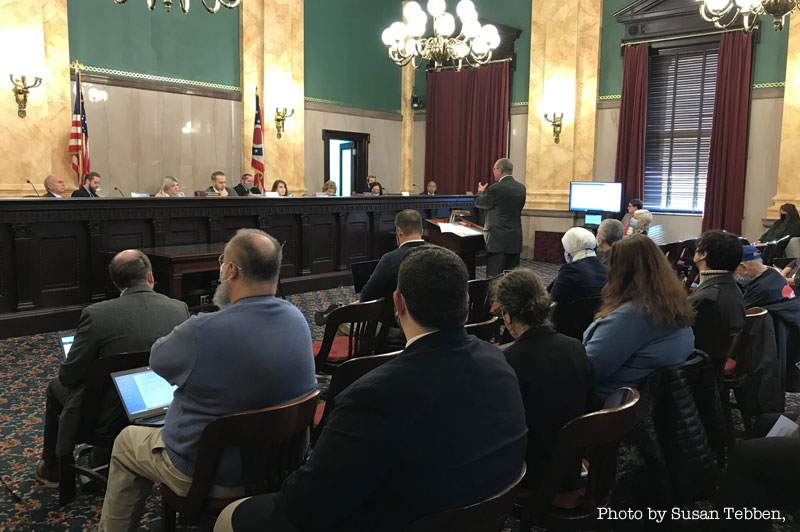
In Senate Local Government and Elections Committee on Tuesday, the last scheduled hearings on GOP and Democratic bills to change the congressional district maps in the state occurred, with much of the same criticism for the GOP map that anti-gerrymandering groups and Ohioans in target areas say don’t focus on fairness.
The Ohio Senate GOP’s congressional redistricting map proposal.
On Tuesday, Bellbrook resident Wendy Dyer spoke through tears about the volunteering she did to promote the petition that would eventually change the state constitution and the redistricting process as a whole. She said at that time she felt a sense of achievement and change in the state, something that’s now changed with the map proposals from the GOP.
“I thought Ohio had really accomplished something,” Dyer said. “Now I really just feel stupid that I honestly believed that my government would do the right thing.”
Anne Light Hoke, of Columbus, said she disagrees with the Senate Republican map that moves her from District 3 to District 15, which is nestled in with three other districts in Franklin County, but then stretches due south into most of rural Southeastern Ohio.
Hoke said as a resident of Columbus, she said she has “urban concerns” like public transportation, traffic congestion and police brutality.
“Although I was born in a small town, I no longer have small town concerns like broadband access, access to sewer systems and water systems, burning trash regulations and fracking,” Hoke told the committee members on Tuesday.
The public input is set to continue Wednesday morning in the House Government Oversight Committee on House Bill 479, the House GOP’s map proposal. As of Wednesday, the committee agenda had not changed to include a new map proposal from the House Democrats, introduced on Monday.
Also on Wednesday, the new joint committee on congressional redistricting is scheduled to meet for the first time at 2:30 p.m. in the Ohio Statehouse’s south hearing room. The two chairs of the House and Senate committees that have been hearing individual map proposals, state Rep. Shane Wilkin, R-Hillsboro and state Sen. Theresa Gavarone, R-Bowling Green, will be the co-chairs of the joint committee.
The joint committee is also scheduled to meet on Friday at 10:30 a.m., in the House Finance Room (Room 313).


![[WATCH INTERVIEW] Courtney Hineman took her advocacy on the road to D.C.](https://lovelandmagazine.com/wp-content/uploads/2025/05/courtney-cassie-interview-feature.jpg)
 Watch as Courtney and the BCBDD‘s public relations coordinator, Cassie Mattia sit down for an interview where Courtney dives into her Washington, D.C., trip and her latest Ohio Developmental Disability Council meeting in Columbus.
 The Butler County Board of Developmental Disabilities supports 4,207 Butler County Residents. Supports and services are available life-long through contracts with partner agencies or directly provided by our Board.