Tag: Ohio utility consumers

  • Corruption tax? Policy expert says that’s basically what Ohio utility consumers have been paying

    Corruption tax? Policy expert says that’s basically what Ohio utility consumers have been paying

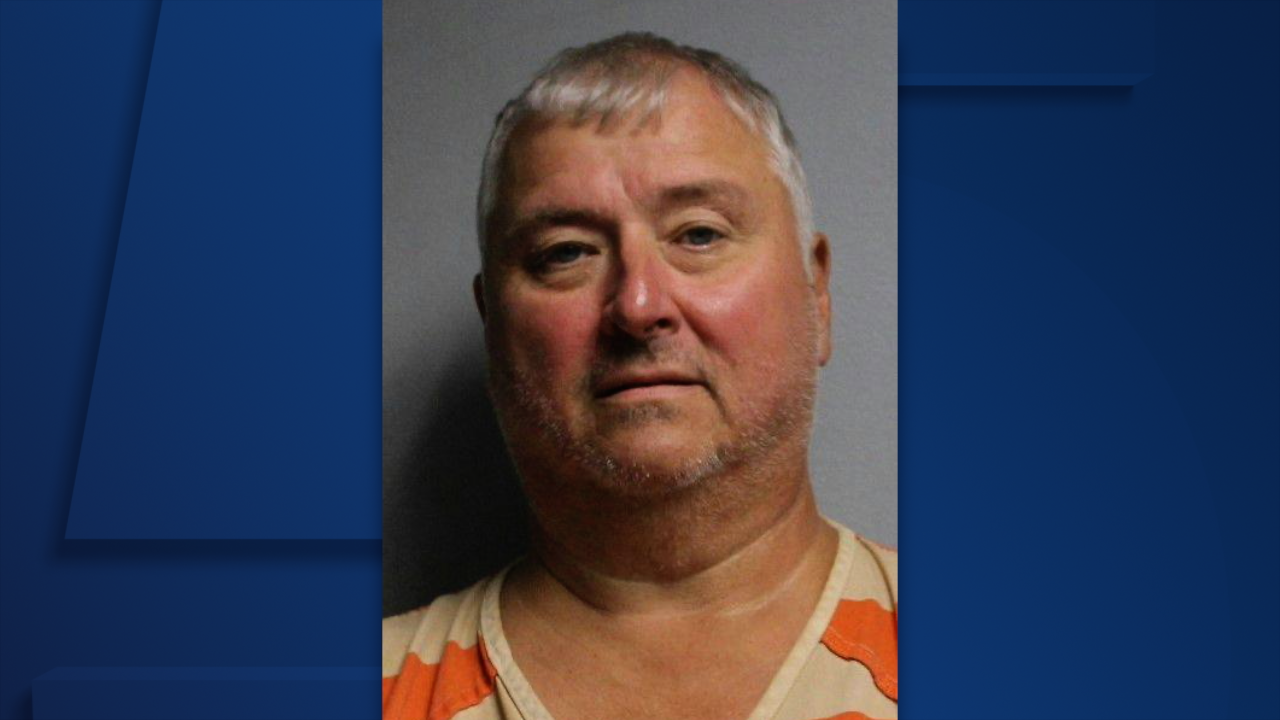
    Mugshot of former Ohio House Speaker Larry (Photo from the Butler County Jail.)

    BY:  Ohio Capital Journal

    Many politicians — especially conservatives — are loath to approve anything that could be construed as a tax increase.

    But since 2009, Ohio’s leadership has gone along with a number of questionable rate hikes demanded by regulated utilities. They’ve functioned in the same manner as tax increases — regressive ones with unsavory origins.

    There were new state charges earlier this month in Ohio’s massive FirstEnergy bribery scandal. They brought new attention to the issue, but that scandal is hardly the only time Ohio utilities have been able to impose questionable rate increases on their unsuspecting customers.

    In the scandal, Akron-based FirstEnergy paid more than $61 million in bribes in exchange for the 2019 passage and protection of a $1.3 billion ratepayer bailout. As a consequence, former House Speaker Larry Householder, R-Glenford, is serving a 20-year federal prison sentence.

    The state charges filed this month against two top FirstEnergy executives and the state’s top regulator pertain to those crimes. But they also describe more than a decade’s worth of additional shady increases in which payoffs played a central role.

    They accuse Sam Randazzo — whom Ohio Gov. Mike DeWine later appointed to be top regulator — of secretly helping FirstEnergy make huge, secret payments to powerful energy users. In exchange, the charges say, the industrial users dropped their opposition to rate increases FirstEnergy wanted to impose on all its customers.

    The payments might not have been illegal, but they functioned as kickbacks all the same.

    The Columbus Dispatch on Sunday reported that in 2008 then-Gov. Ted Strickland, a Democrat, tried to negotiate an end to the shady practice, but then-House Speaker Jon Husted killed the attempt, a former aide to Strickland told the paper. Husted is now DeWine’s lieutenant governor and is said to be planning a run in the 2026 Ohio Republican primary to be governor in his own right.

    Those increases are in addition to a whole slew of other rate hikes that Ohio’s erstwhile regulator has granted, but the state Supreme Court later ruled to be illegal. They total more than $1.5 billion worth altogether. Even though the gains have been ruled unlawful, utilities have gotten to keep them because the Public Utilities Commission of Ohio keeps granting such increases without building in a refund mechanism in the event they’re struck down.

    Jenifer French, DeWine’s appointment to replace the disgraced Randazzo, has repeated PUCO staff claims that such refund mechanisms are illegal. But the legal case seems dubious and watchdogs and lawmakers from both parties dispute it.

    So Ohio ratepayers have shelled out billions in illegal electric payments and untold millions more as the consequence of shady kickbacks to powerful companies. Those who allowed such payments are responsible for what is the functional equivalent of a tax increase, said Rob Moore, principal of Scioto Analysis, a Columbus firm that applies economics to questions of public policy.

    One reason they work the same as a tax is because one has little choice in 2024 about paying for electrical service, he said.

    “You can’t get away from it,” Moore said. “You’re going to have to pay something for electricity.” He later added, “That’s functionally no different from a tax.”

    And it’s one that falls extra-hard on the poor.

    Disconnected electricity and gas can destroy perishable food while also taking away the ability to cook it. For those who are struggling, finding money and getting to the store for one batch of food can already be a challenge. Having to do it again after arranging a reconnection can be even more difficult.

    Disconnection also can be used as a rationale for children’s services to break up a family, the Energy News Network reported in 2022.

    The news outlet reported that as part of a story about nearly 200,000 disconnections by Ohio electric utilities at the height of the coronavirus pandemic. Advocates asked the PUCO for relief, but the regulatory agency said it was powerless to act.

    Moore said that if you view utilities as the practical equivalent of a tax, it’s a regressive one.

    “In general, lower-income people pay more of their income on utilities than upper-income people,” he said.

    Moore cited a 2013 report by the U.S. Energy Information Agency saying that households in the bottom 20% of incomes made 6% of their total expenditures on home energy, while those in the top 20% paid half that.

    Energy-insecure households are likely to be poorer still. The agency last year reported that they paid 27% more in real terms than everybody else — $1.24 per square foot vs. 98 cents.

    As with the state and local tax burden, the extra costs Householder, the PUCO and others have imposed on Ohio seem to be falling most heavily on those least able to pay it.

    “Basically, he just levied a tax and lined his pockets with it,” Moore said of the former speaker.


    Marty Schladen
    MARTY SCHLADEN

    Marty Schladen has been a reporter for decades, working in Indiana, Texas and other places before returning to his native Ohio to work at The Columbus Dispatch in 2017. He’s won state and national journalism awards for investigations into utility regulation, public corruption, the environment, prescription drug spending and other matters.

    MORE FROM AUTHOR


  • Manufacturers, consumers blast plan to make ratepayers subsidize charging stations

    Manufacturers, consumers blast plan to make ratepayers subsidize charging stations

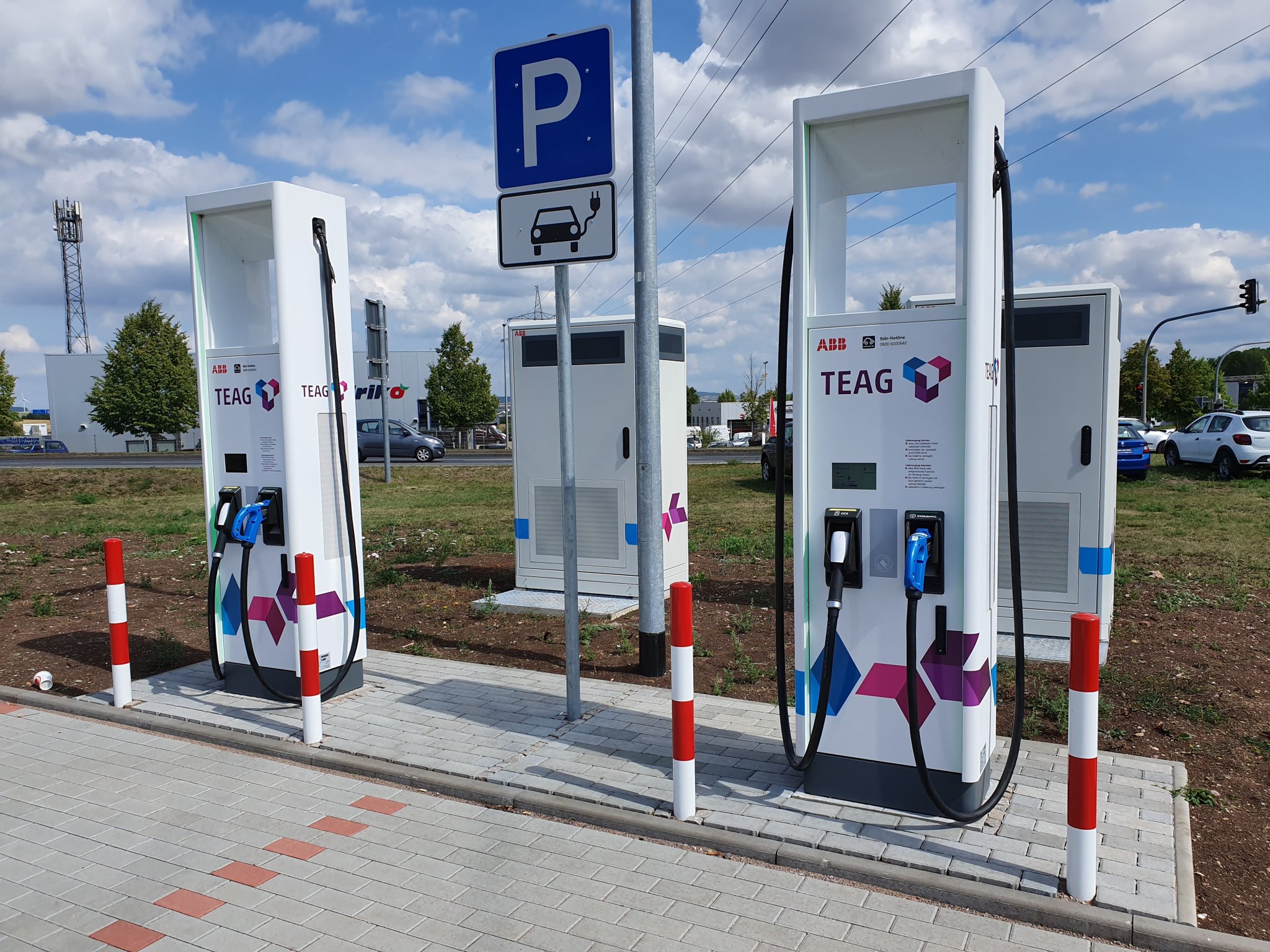
    An electric vehicle charging station. Photo courtesy Wikimedia Commons.

    BY:  Ohio Capital Journal

    The number of electric vehicles on U.S. roadways is expected to ramp up dramatically in the coming years, and with it the number of charging stations will have to grow as well.

    Now groups representing Ohio utility consumers and manufacturers are trying to kill a plan that would force ratepayers to finance the electricity infrastructure needed to serve those charging stations. The people who will be profiting from those stations or the utilities themselves should bear those costs, they said.

    In addition, they said, the way the language is written “is generally lacking in consumer protections.” That’s famously been a problem with Ohio utilities and the agency that’s supposed to be regulating them.

    A provision in House Bill 33, a draft state budget, would allow monopoly utilities to impose higher rates to fund economic-development activities such as supplying EV stations even though subsidies for such activities are already available from the state and local governments, the advocates said.

    “The federal government is making substantial funds available to local governments for electric vehicle charging stations,” Maureen Willis, legal director for the Ohio Consumers’ Counsel, told the House Finance Committee last week, according to a written copy of her testimony. “That is occurring under the federal infrastructure bill. Ohio’s share of the funding is significant.”

    The growth in sales of electric vehicles through the rest of the decade is expected to be enormous — going from 4.6 of all new passenger-vehicle sales in 2021 to a projected 40% to 50% in 2030, the U.S. Bureau of Labor Statistics reports.

    Driving such high expectations are a $7,500 tax credit for electric vehicles under last year’s Inflation Reduction Act. And earlier this month, President Joe Biden proposed two new EPA rules aimed at dramatically reducing greenhouse-gas emissions from vehicles by 2030.

    And, because nobody wants to drive a battery powered vehicle out into the boonies without being sure they’ll be able to charge it, $7.5 billion was built into last year’s Bipartisan Infrastructure Law to subsidize building out a national network of charging stations.

    Building out the system might seem laudable in the face of catastrophic climate change. But Ohio’s electric utilities and the Public Utilities Commission that’s supposed to be regulating them have a history of abusing ratepayers.

    The PUCO has allowed more than $1 billion in rate hikes that were later ruled illegal by the state Supreme Court. But, because of the way the “riders” were written, there’s no way to make the utilities refund the money. In one instance, Akron-based FirstEnergy collected $460 million and then couldn’t show whether the money was spent on bribes, much less whether any of it was spent on its stated purpose.

    And, speaking of bribes, the PUCO and a very recent employee in 2019 drafted a bailout law that was at the center of a scandal in which FirstEnergy and AEP spent $61 million to help pass a $1.3 billion bailout. Former House Speaker Larry Householder and former Ohio GOP Chairman Matt Borges last month were convicted of racketeering in the matter.

    Now, consumer and manufacturing representatives say, someone is again trying to give Ohio utilities broad latitude to raise rates on their customers.

    Ryan Augsburger, president of the Ohio Manufacturers’ Association, this week told the House Finance Committee that the provision in the draft budget would allow Ohio utilities to collect from ratepayers for expenses that taxpayers are already subsidizing. And, he said, the wording of the provision is so loose that utilities would have great flexibility in applying it.

    “The electric utilities are already poised to benefit from recovery of costs associated with infrastructure expansion,” Augsburger said, according to a written copy of his comments. “This new language grants electric utilities swift cost recovery from customers for all net costs associated with infrastructure development and economic development projects… Cost recovery from customers is to make the electric utility whole after (the utilities) have already received funds from the All Ohio Future Fund for the economic development projects.”

    Willis of the Consumers’ Counsel said the language allowing for utility increases “is generally lacking in consumer protections.”

    ___________________________

    MARTY SCHLADEN

    Marty Schladen has been a reporter for decades, working in Indiana, Texas and other places before returning to his native Ohio to work at The Columbus Dispatch in 2017. He’s won state and national journalism awards for investigations into utility regulation, public corruption, the environment, prescription drug spending and other matters.

    MORE FROM AUTHOR