Tag: Ohioans United for Reproductive Rights

  • For some religious Ohioans, Issue 1 about autonomy more than beliefs

    For some religious Ohioans, Issue 1 about autonomy more than beliefs

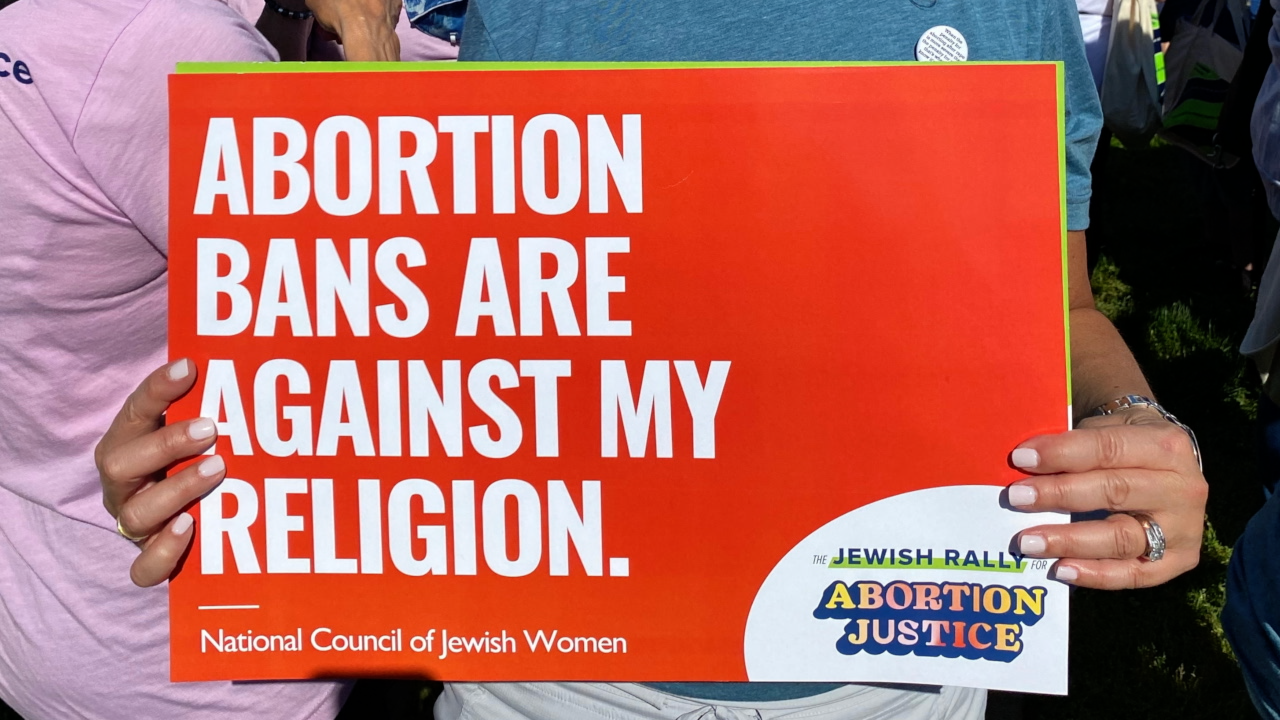
    Members of the Jewish community have spoken out against abortion bans in Ohio, saying it infringes on their religious freedom. Photo by Morgan Trau, WEWS.

    BY:  AND Ohio Capital Journal

    Religious variations abound in the state of Ohio, and some members of different churches are taking what they’ve learned in their lives and through decades of experience into the ballot box as they vote on Issue 1, the reproductive rights constitutional amendment.

    For Catholics like Alexandra Belcher and Jennifer Perry, Issue 1 is a choice between the opinions of their religious leaders and their experiences with bodily autonomy.

    For Perry, a physician assistant from Tiffin, growing up Catholic meant she believed in pro-life messages up until she voted in her first election.

    “I voted Republican because that’s what the religious leaders said supported pro-life values,” Perry said.

    Now that she works in medicine and has gone through multiple complicated pregnancies, Perry developed a perspective built on her experiences and not the values of far-away leaders.

    “My view of what defines pro-life and what defines pro-choice has become just so much broader, and it’s not a black and white issue at all,” Perry told the OCJ.

    With the “narrow” view that life begins at conception, Perry said she felt her belief system did “a disservice” to her in preparing for the future.

    “We weren’t given both sides of the coin,” she said. “We weren’t given both perspectives.”

    Struggling with infertility, and losing a “desperately wanted” child in a second-trimester miscarriage brought her new light on the struggles even individuals who want to become parents must go through.

    “I desperately wanted that child, my husband desperately wanted that child, and I had to go through labor and delivery knowing that child wasn’t going to be ours,” Perry said. “To think that a mother … would have to go through that out-of-state, not with her family and friends or her chosen doctor, that’s just excruciating to me.”

    Perry is still a practicing Catholic, and feels strongly that she and those like her should stay in the church and help bring those perspectives to fellow parishioners, in hopes of bringing change to the opinions of the religion.

    The Catholic Conference of Ohio, which calls itself “the official voice of the Catholic Church in Ohio on matters of public policy,” has taken a strong opposing stance on Issue 1. The conference produced a letter signed by nine leaders in Ohio dioceses including Cincinnati, Cleveland, Toledo, Steubenville, Columbus, Youngstown, Canton and Parma.

    “The Church must not be silent and cannot remain on the sidelines when confronted with such a clear threat to human life,” the letter from Feb. 28 stated.

     COLUMBUS, OH — MAY 14, 2022: Hundreds gather at a rally to support abortion rights less than two weeks after a leaked Supreme Court draft opinion showed a likely reversal of Roe v. Wade, May 14, 2022, at the Ohio Statehouse, Columbus, Ohio. (Photo by Graham Stokes for the Ohio Capital Journal. Republish photo only with original article.) 

    For Cleveland-area pharmacist Alexandra Belcher, she has no problem ignoring the opinions the church has on abortion, but remains open to talking with her friends and fellow parishioners about the nuances of reproductive health.

    “The more I grew up, the more I realized this can not be up to somebody else,” Belcher told the OCJ.

    Belcher went to Catholic school for 12 years, and is still a practicing Catholic, but nothing could have prepared her for her ectopic pregnancy, an unviable pregnancy that can be life-threatening for the pregnant person.

    “In my medical chart, the resolution is coded as an abortion,” she said.

    But that resolution involved medication that was administered in a hospital, so Belcher could be monitored by a doctor.

    “The awful thing about those drugs is that they take you into labor and delivery,” she said. “So all you can hear is crying babies, the song they play (when a baby is born), and I sat there for hours while they made sure everything was going well with my medication.”

    Even after leaving the hospital, Belcher suffered “excruciating” pain, so much so that when she went into labor in her next pregnancy, she was surprised to find how much less severe the pain of childbirth was for her.

    “Nobody is going into a decision to have an abortion joyfully, whatever has happened to get them to the point of an abortion,” Belcher said. “It’s still not a joyful decision.”

    Members of other religions, including faith leaders, are thinking about Issue 1 with a focus on the freedom to decide rather than the wrath of a higher power.

    Rev. Timothy Ahrens showed his support for Issue 1 in an ad by Ohioans United For Reproductive Rights.

    “As a pastor I’ve counseled families on the most important personal decisions, even abortion,” he said in the 30-second ad. “Abortion is a private family decision. Government needs to stay out of family decision making.”

    Ahrens is the senior minister of the First Congregational Church of the United Church of Christ in downtown Columbus, a role he has served in since 2000. He has been a pastor for nearly 40 years.

    The United Church of Christ supports reproductive issues and a woman’s right to have an abortion, according to the denomination’s general synod and statements regarding freedom of choice.

    “The laws of Ohio right now hurt my mother, my sister, my sister-in-law, my wife, my daughters, my daughter-in-laws and my granddaughters,” Ahrens said. “I feel very strongly that the government needs to get out of trying to manage people’s lives in relation to reproductive freedom.”

    Ahrens acknowledged that other Christians denominations disagree with his stance on abortion.

    “Those who stand against abortion do so based on biblical, foundational thoughts,” Ahrens. “I don’t look at what they’re saying as groundless.”

    He mentioned Psalm 139 as a passage that mentions God “knit me together in my mother’s womb.”

    “It never says I knew you at the moment of conception,” Ahrens said. “This has a range of perspectives, if we really sat down and boiled it down to the moment of conception.”

    While it’s clear what most religious denominations think abortion, it’s ultimately up to the individual members of a congregation to cast their ballot on Issue 1.

    “It comes down to how closely people who are part of religious congregations are listening to the cues that they are being given,” said Kim Conger, University of Cincinnati’s director of the masters of public administration, who studies how religious advocacy groups impact politics.

    “There seems to be more variation across different parishes about how strongly a priest is pushing on the idea of not just that abortion is a sin, but voting for issue 1 would be a sin,” Conger said.

    The idea of one religion stepping up to tell individuals what they should believe about reproductive health doesn’t sit well with Belcher or Perry, and as medical professionals, they don’t agree with the state getting involved either.

    “The reasoning is not because it’s in the best interest, or because there is evidence-based medicine, the reasoning is this magical belief that this group of cells is a person who has rights,” Belcher said.

    For Perry, the reproductive debate comes down to American roots in religious freedom and the necessity for separation of church and state.

    “Because we allow for so many different expressions of religion, or at least we’re supposed to, if that starts to crumble, I feel like the fabric or the foundation of what America was build on starts to crumble,” Perry said.

    Watching battles with insurance companies and socio-economic issues for patients having necessary medical treatment, Perry also sees much bigger issues the state could be addressing instead.

    “It’s very hard to be in health care right now, and this is another huge burden you’re placing on these providers,” she said.

    Having faced these moral and professional questions, Perry and Belcher both hope for a future for their children where medical decisions are made between a patient and a medical provider, without the intervention of either the government or their chosen religion.

    “I think that when it comes down to it, if I’m ever faced with the pearly gates, the God that I believe in will understand,” Belcher said.


    Megan Henry
    MEGAN HENRY

    Megan Henry is a reporter for the Ohio Capital Journal and has spent the past five years reporting in Ohio on various topics including education, healthcare, business and crime. She previously worked at The Columbus Dispatch, part of the USA Today Network.

    MORE FROM AUTHOR

    Susan Tebben
    SUSAN TEBBEN

    Susan Tebben is an award-winning journalist with a decade of experience covering Ohio news, including courts and crime, Appalachian social issues, government, education, diversity and culture. She has worked for The Newark Advocate, The Glasgow (KY) Daily Times, The Athens Messenger, and WOUB Public Media. She has also had work featured on National Public Radio.

    MORE FROM AUTHOR

  • LaRose pushes unfair, inaccurate language for voters on November Ohio reproductive rights amendment

    LaRose pushes unfair, inaccurate language for voters on November Ohio reproductive rights amendment

    COMMENTARY

    by Marilou Johanek

    Play fair or play dirty. Issue 1 showed Ohio voters how state Republicans play when they can’t persuade. Extremists know most Ohioans support the right to abortion within limits. The outright ban on abortion gerrymandered pols seek is wildly unpopular. Convincing rational minds otherwise is pointless. So Ohio’s GOP overlords cheat to win.

    Lawmakers rushed a game-changing ballot amendment to an August election (in violation of state law) to sabotage the abortion rights amendment in November. Ohio Secretary of State Frank LaRose spearheaded the shady maneuver to cancel self-governance by majority vote — just to keep a majority of Ohio voters from having their say on abortion access as a constitutional right.

    The state’s elections chief actively campaigned to end the only enduring recourse of ordinary citizens to circumvent a crooked government because he didn’t want an abortion rights amendment to pass. Sit with that for a minute. The guy who administers the electoral system in Ohio tried to undercut the electorate.

    That’s how amoral LaRose has become as he angles for attention as the greatest MAGA candidate in the U.S. Senate race. Burnishing his anti-abortion bona fides with the pro-Issue 1 crowd, in partnership with a leading anti-abortion lobbyist, was more important than upholding majoritarian democracy. Stumping for minority rule on the hollow pretense of “protecting” the constitution was a new low for LaRose.

    But the integrity-is-overrated elections boss and Republican kingpins in the Statehouse badly mistook the masses for rubes. All the misleading, fear-mongering, coming-after-your-children TV ads (out-of-state money could buy) didn’t fool an overriding majority of ticked-off Ohio voters who showed up in record numbers to beat back an egregious political power grab on Aug. 8.

    The beaten cheerleader for Issue 1 refused to concede the people had spoken (a Trumpian reflex?) and last week rolled out another snow job to derail the abortion rights amendment through ballot language subterfuge. LaRose chairs the Republican-dominated Ohio Ballot Board that voted along party lines Thursday to approve the summary language voters will read on their November ballot about the proposed abortion amendment.

    Under state law, LaRose could have used the full text of the amendment as written, and attorneys for Ohioans United for Reproductive Rights urged him to so “there can be no dispute about whether legal standards have been satisfied, or whether the condensed text misleads, deceives, or defrauds voters.” Instead, LaRose recast the amendment to purposely mislead and deceive.

    His draft is slanted with such routinely deployed anti-abortion propaganda it could have been dictated, word for word, by Ohio Right to Life President Mike Gonidakis. LaRose’s specious interpretation of the proposed amendment to enshrine reproductive freedom in the state constitution is deliberately deceptive with provocative wording to unfairly prejudice outcome.

    The revisions he engineered on an amendment he campaigned against are so beyond the pale of “fair and accurate,” as the secretary ludicrously declared, that stunned amendment backers filed suit Monday with the state supreme court for fairness and accuracy. LaRose omitted actual provisions of the original amendment.

    He deleted a description of reproductive choices an individual should have the “right to make and carry out” such as “decisions on contraception, fertility treatment, continuing one’s own pregnancy, miscarriage care, and abortion.” LaRose’s altered the language stipulating an individual right to “one’s own reproductive decisions” to just “a right to one’s own reproductive medical treatment, including but not limited to abortion.”

    Perhaps most blatant was the secretary of state’s pointed replacement of the medical term “fetus” throughout the amendment with “unborn child,” employing the same weighted rhetoric seeded over decades by the anti-abortion movement. He also curiously substituted “the citizens of the State of Ohio” for amendment prohibitions specifically targeting “The State,” defined in the language “as any governmental entity and political subdivision.”

    So what was originally worded “The State shall not, directly or indirectly, burden, penalize, prohibit, interfere with, or otherwise discriminate against” Ohioans exercising their reproductive rights became “the citizens of the State of Ohio” prohibited for doing the same. Different meaning. Why?

    Original language allows that “abortion may be prohibited after fetal viability” or when the fetus can survive outside the womb — a standard restriction for decades under Roe. With a six-week ban on hold by the courts, abortion is currently legal in Ohio up to 22 weeks of pregnancy, a measured limitation widely acceptable.

    LaRose flipped that reasonable allowance upside-down with inflammatory assertions that the amendment would “always allow an unborn child to be aborted at any stage of pregnancy, regardless of viability, if, in the treating physician’s determination” the applicable life and health exceptions are met. The glaring prejudicial language and selective editing of the fall abortion amendment to intentionally distort an initiative petition so it fails should infuriate every Ohioan — regardless of their beliefs about abortion.

    Frank LaRose, the public servant responsible for conducting free and fair elections in Ohio is playing dirty to win. It’s wrong. But it’s only the beginning. Issue 1 was a preview of the depths Ohio Republicans will go to when they can’t persuade. They cheat.

    The devious battle to deny abortion access in Ohio, despite the wishes of a majority of voters, will be epic.


    Marilou Johanek
    MARILOU JOHANEK

    Marilou Johanek is a veteran Ohio print and broadcast journalist who has covered state and national politics as a longtime newspaper editorial writer and columnist.

    MORE FROM AUTHOR

  • Split ballot board approves reproductive rights amendment summary written by Ohio Sec. of State

    Split ballot board approves reproductive rights amendment summary written by Ohio Sec. of State


    In a 3-2 decision, the Ohio Ballot Board rejected using the full amendment proposal text for voters to see, and the approved summary language leaves out protecting contraception, fertility treatment and miscarriage care

    BY:  Ohio Capital Journal

    In a 3-2 split decision Thursday, the Ohio Ballot Board rejected using the full text of a proposed reproductive rights amendment on the ballot in November, adopting instead summary language written by the Ohio Secretary of State’s Office that was criticized for being incomplete and inaccurate.

    The board’s approval of the language – which is now titled Issue 1 for the November general election – was the next step in the process of voters deciding whether or not the Ohio Constitution will include the right to abortion, as well as contraception, fertility treatment, miscarriage care, and continuing one’s own pregnancy. Those last four items were all left out of the language approved by the ballot board majority.

    The summary language does not change what the actual amendment would state in the constitution, but would be the last representation of the amendment voters read before the casting their approval or rejection.

    The full text of the amendment will be available at boards of elections during the election, but not in the ballot booths with voters. LaRose said posters with the text will be accessible at voting locations.

    In the summary language approved by the board, the medical term “fetus” is changed to “unborn child,” and the amendment’s “decision” language is changed to “medical treatment.”

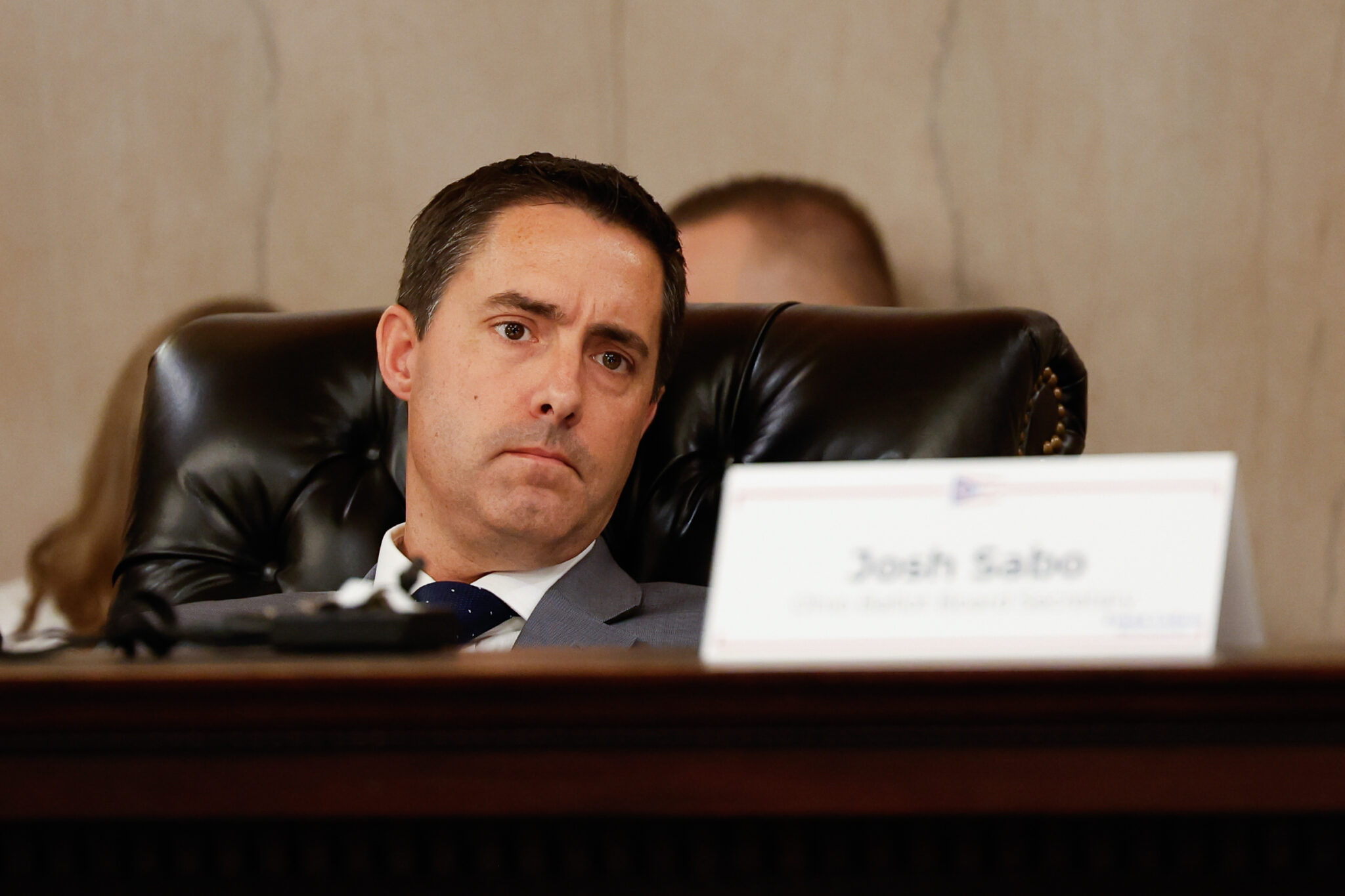
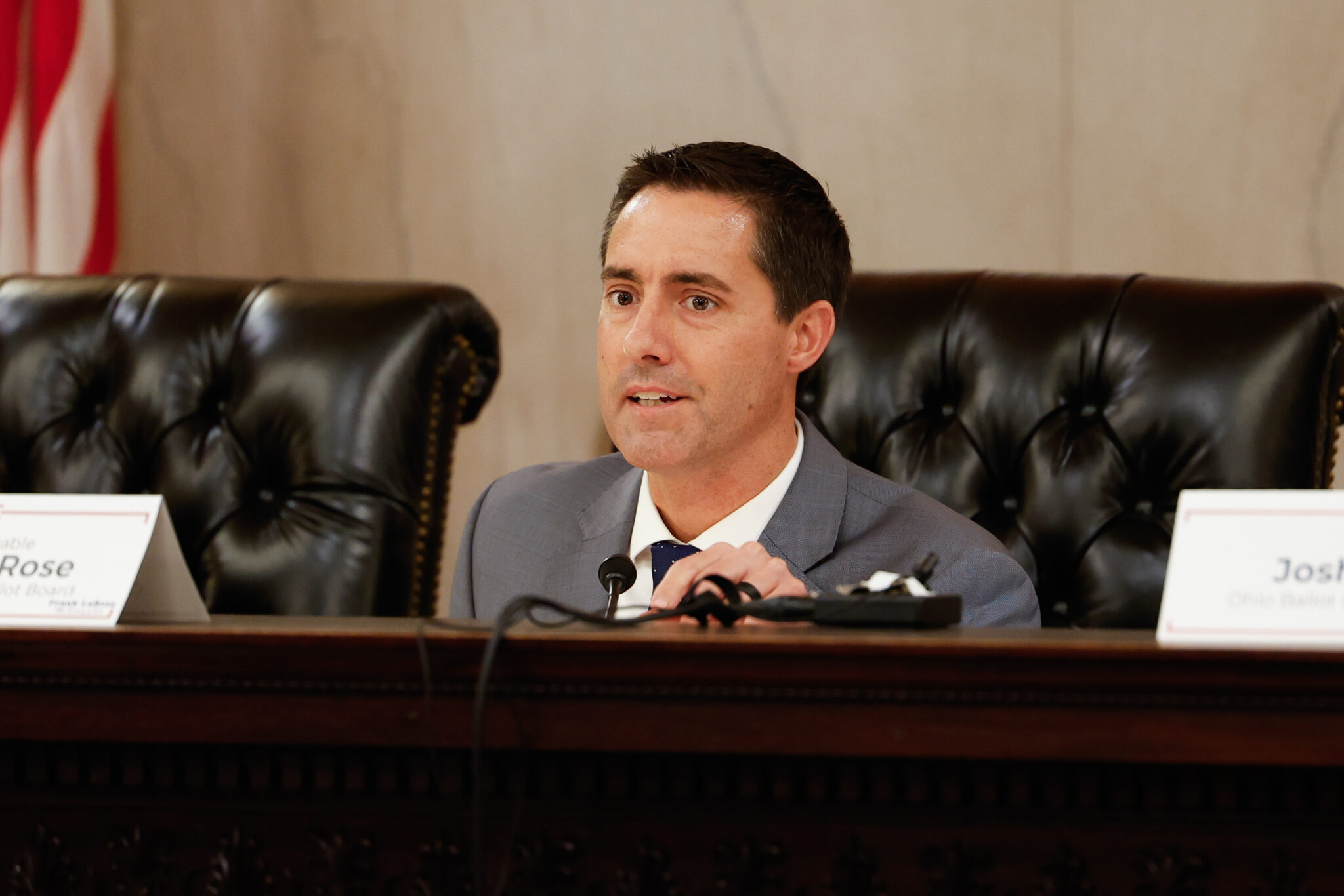
    The leader of the Ohio Ballot Board, Secretary of State Frank LaRose, said the changes were made by “staff” of the board, though Democratic board member and state Rep. Elliot Forhan said “I would assume that the buck stops with the secretary of state.”

    LaRose during the meeting also said that, “having worked extensively on drafting this, I do believe it’s fair and accurate.”

    LaRose has been vocal in his opposition of the amendment, even saying the effort around the previous Issue 1, which would have changed the threshold to approve a constitutional amendment had it not been roundly defeated, was targeting the abortion rights fight specifically.

    At the beginning of Thursday’s meeting, he prefaced the board’s activity by saying the group was not there to “debate the merits” of the amendment or the marijuana ballot initiative also on the table at the meeting.

     Ohio Ballot Board member, State Sen. Theresa Gavarone, R-Bowling Green, speaks at the Ballot Board meeting Thursday. (Photo by Graham Stokes for Ohio Capital Journal. Republish photo only with original article.) 

    Board member and state Sen. Theresa Gavarone, however, gave a speech in the middle of the meeting harshly criticizing the amendment and calling it “a bridge too far,” even after multiple comments by LaRose about the neutrality with which the board was supposed to conduct their business.

    “This is a dangerous amendment that I’m going to fight tirelessly against,” Gavarone said. “But that’s not why we’re here today.”

    Gavarone also claimed, as anti-abortion groups throughout the state do as well, that the amendment is “an assault on parental rights.” Neither the amendment nor the summary approved by the board mention parental rights of any kind.

    The senator continued her comments during the board meeting, saying the true nature of the amendment “is hidden behind overly broad language,” despite the fact that the board summary took out pieces of the full text.

    The summary passed by the board does not include a list of the rights to “reproductive decisions” spelled out in the ballot measure, including contraception, fertility treatment, continuing one’s own pregnancy, and miscarriage care, all of which would be impacted under the new constitutional amendment.

    A clause in the proposed amendment that says “the state shall not, directly or indirectly, burden, penalize, prohibit, interfere with, or discriminate against” the exercise of the amendment by an individual or an assistant of the individual was reduced to “the citizens of the state of Ohio” in the summary.

    The phrase “the citizens of the state of Ohio” is also used in the clause summarizing a prohibition of abortion that would only happen if a pregnant patient’s physician finds the pregnancy to be viable.

    The phrase “pregnant patient” in the ballot measure was changed to “pregnant woman” in the summary.

     Ohio Ballot Board member, State Sen. Paula Hicks-Hudson, D-Toledo, speaks at the Ballot Board meeting Thursday. (Photo by Graham Stokes for Ohio Capital Journal. Republish photo only with original article.) 

    State Sen. Paula Hicks-Hudson, the other Democratic member of the ballot board, made two motions to change the language of the summary to bring back the full text or certain clauses of the actual amendment text into the approved language.

    “The full text is clear, it’s concise and it’s direct, which is one of the requirements that’s needed for us to present to voters in the state of Ohio,” Hicks-Hudson said.

    Both motions were rejected 3-2, with LaRose, Gavarone and the final board member, Bill Morgan, voting against the motions.

    Morgan didn’t speak during the meeting other than to register his votes, and didn’t specifically comment on the amendment discussion or language afterward.

    “I think it’s what we were supposed to do, what the ballot board does,” Morgan told the OCJ.

    Groups for and against the initiative anticipated potential issues with the board’s decision, with pro-abortion rights group Ohioans United for Reproductive Rights requesting that the ballot language mirror the amendment itself, so voters could see the entire constitutional change when they vote in November.

    Lauren Blauvelt, a member of the coalition, decried the changes made to the language, and said the group is considering a lawsuit to fight back.

    “The entire summary is really propaganda and we are going to talk about all of the reasons why Ohio voters should just be able to see the language for what it is,” Blauvelt said after the board meeting.

    Anti-abortion groups argued against using the full text, saying it was unnecessary, and Ohio Right to Life president Mike Gonidakis pushed back on calls for a lawsuit against the summary.

    “Any litigation filed on this is going to be thrown out by the Ohio Supreme Court because the statutory responsibility of the ballot board is to provide a fair and accurate representation. That’s what the law requires, and that’s what they did today,” Gonidakis said.

    Gonidakis said he did not work with anyone on the ballot board on the summary language, but he wished the language was “stronger.”

     Mike Gonidakis, president of Ohio Right to Life, talks to the press after the Ohio Ballot Board meeting Thursday. (Photo by Graham Stokes for Ohio Capital Journal. Republish photo only with original article.) 

    “Look, at the end of the day, people are going to make up their minds before they go in the ballot box anyways, and they’re not going to go in and then try to figure out what they want to do by reading something on a screen,” he said.

    The proposed amendment has gone through a rollercoaster of activity since the Ohio Ballot Board approved the measure in March as compliant with the regulations for a constitutional amendment proposal, allowing a petition campaign that resulted in nearly 500,000 supporting signatures from Ohio voters.

    Amid all the necessary hoops through which the abortion rights campaign has jumped, abortion rights groups have also had to battle against lawsuits attempting to block the amendment from voters. Another lawsuit alleged the Ohio Ballot Board hadn’t taken enough time or consideration before certifying that the amendment was compliant.

    The Ohio Supreme Court rejected both lawsuits, clearing the way for voters to see the issue in the Nov. 7 general election.


    Susan Tebben
    SUSAN TEBBEN

    Susan Tebben is an award-winning journalist with a decade of experience covering Ohio news, including courts and crime, Appalachian social issues, government, education, diversity and culture. She has worked for The Newark Advocate, The Glasgow (KY) Daily Times, The Athens Messenger, and WOUB Public Media. She has also had work featured on National Public Radio.

    MORE FROM AUTHOR

  • Ohio abortion rights amendment a go for November ballot

    Ohio abortion rights amendment a go for November ballot

    495,938 valid signatures certified to bring proposal to Ohio voters

    BY:  Ohio Capital Journal

    An abortion rights amendment proposed for the Ohio Constitution was certified on Tuesday to go forward for consideration by voters in November as nearly 500,000 signatures in support were verified by the Secretary of State’s office.

    In a letter to the campaign that collected signatures to put the ballot measure to Ohioans this year, Secretary of State Frank LaRose said 495,938 valid signatures were recorded, and a total of 55 counties fulfilled the percentage requirements for verification.

    “Therefore, in the absence of judicial direction to the contrary, I will direct the boards of election to place the proposed amendment on the November 7, 2023, general election ballot,” LaRose wrote.

    When advocates turned their boxes of signatures in to the secretary of state’s office on the July 5 deadline, they reported more than 700,000 signatures were submitted to be verified statewide.

    Despite the lower number, the final tally is well above Ohio’s legal requirements to put an amendment proposal on the ballot.

    Based on current law, abortion rights advocates needed to collect 413,487 signatures in 44 of 88 counties, a number based on election results from the last governor’s race.

    Ohioans United for Reproductive Rights (OURR), a coalition of groups supporting the the codification of abortion rights in the state constitution, celebrated the news, but also set their sights on another hurdle at the ballot: Issue 1, hitting voters next month in the August 8 primary.

    Issue 1 would make it harder for Ohio voters to amend the constitution by raising the threshold from a simple majority to 60%. If passed, Issue 1 would require the abortion ballot measure to meet that threshold.

    It would also require proposals made after January 1, 2024, to meet signature requirements in all 88 counties instead of the current requirement of 44 counties.

    “Now that the petition drive is complete, we’re eager to continue the campaign to enshrine those rights in Ohio’s constitution and ensure that Ohioans will never again be subject to draconian reproductive health care policies imposed by extremists,” wrote Lauren Blauvelt and Dr. Lauren Beene, executive committee members for the OURR, in a statement.

    “This is a major step for Ohio, but it’s bigger than just one state,” said Kimberly Inez McGuire, executive director for Unite for Reproductive and Gender Equity. “This is about reversing the tide of abortion bans and securing a better future for us all.”

    GOP leaders including LaRose have admitted Issue 1 supporters are motivated by their desire to stop the abortion rights amendment.

    The campaign standing in opposition to the abortion amendment, Protect Women Ohio, and anti-abortion lobby Ohio Right to Life, decried the new development, pushing ahead with their efforts to block the amendment from passage.

    Peter Range, CEO of Ohio Right to Life, called the amendment “anti-life,” and said it is “even more imperative that every pro-life Ohioan votes yes on Issue 1 this August to ensure that our constitution, our preborn and our families are protected,” according to a statement sent by the group.

    Protect Women Ohio said they have spent “an initial” $8 million on TV, radio and digital ads in support of Issue 1, and against the November abortion amendment.

    With the amendment now allowed to go to the ballot, the Ohio Ballot Board chaired by LaRose will draft the language voters will read about the measure on their ballots.

    Recent polls show 57.6% of Ohioans support the abortion rights amendment, while 32.4% oppose it and 10% are undecided. On the Aug. 8 Issue 1 effort to change the threshold for passage of amendments from 50% to 60%, another recent poll showed 57.2% of Ohioans oppose Issue 1, while 26% support it, and 17% are undecided.


    Susan Tebben
    SUSAN TEBBEN

    Susan Tebben is an award-winning journalist with a decade of experience covering Ohio news, including courts and crime, Appalachian social issues, government, education, diversity and culture. She has worked for The Newark Advocate, The Glasgow (KY) Daily Times, The Athens Messenger, and WOUB Public Media. She has also had work featured on National Public Radio.

    MORE FROM AUTHOR

    ____________________

    Related Loveland Magazine Interview: