

Tag: Ohio’s minimum wage

  • Paying the disabled like everyone else would reduce poverty, economists say

    Paying the disabled like everyone else would reduce poverty, economists say

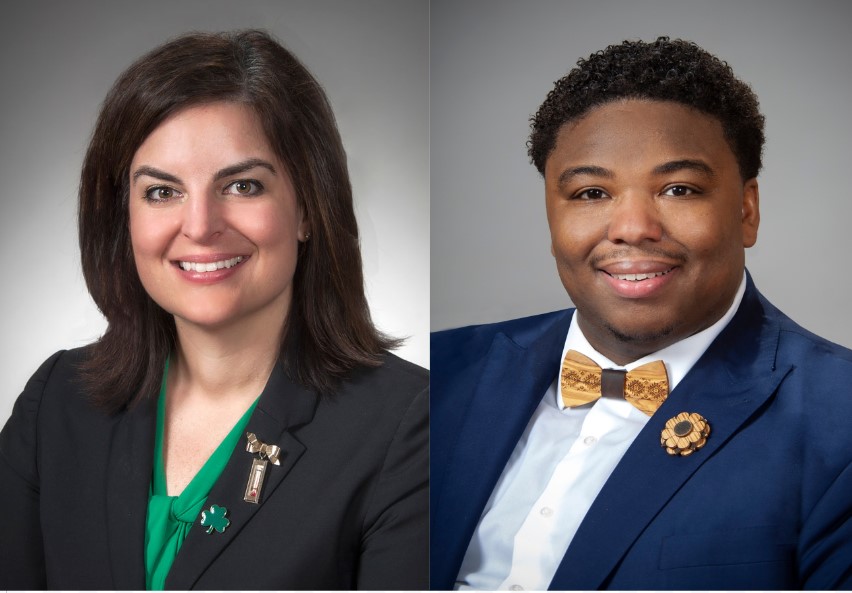
    Ohio Reps. Brigid Kelly, D-Cincinnati, and Dontavius Jerrells, D-Columbus. Official photos.

    BY: MARTY SCHLADEN – Ohio Capital Journal

    Ohio’s minimum wage is set to increase in January from $9.30 an hour to $10.10, but unless the law changes the disabled will be left far behind.

    They can currently earn the state’s “subminimum” wage of $4.25 an hour and can be paid substantially less than that, NBC 4 reported. Now Ohio Reps. Brigid Kelly, D-Cincinnati, and Dontavius Jerrells, D-Columbus want to raise it to where it will be for most other workers.

    That would lift some people out of poverty, a majority of a panel of Ohio economists said earlier this week. But a majority was also uncertain whether it would be an overall help to the state economy.

    In a survey conducted by Scioto Analysis, 12 of 18 economists said the measure would reduce poverty. Three disagreed and three were uncertain or had no opinion.

    Four economists agreed that paying the disabled the regular minimum wage would be good for the overall economy. Four disagreed and 10 were either uncertain or had no opinion.

    In the comments that accompany the survey, Youngstown State University economist Albert Sumell said increasing minimum wages for the disabled is no silver bullet, but it would be beneficial.

    “The effect will be modest but clearly some individuals with disabilities would benefit,” he said.

    On the other hand, Kent State University economist Curtis Reynolds questioned whether subminimum wages were what prompted some employers to hire disabled workers in the first place.

    “The challenge, of course, is whether individuals will still have job opportunities at the higher wage,” wrote Reynolds, who said he was uncertain about the effect of raising the wages. “If yes, then the higher minimum wage would reduce poverty. If not, then it will not reduce poverty. I am not sure which will happen for this population (which has not been studied as much in research on minimum wage policies).”

    The economists’ uncertainty about whether raising minimum wages for the disabled would grow the economy was even more pronounced. Some of the uncertainty stemmed from the relatively small number of disabled workers and how little minimum-wage workers of any group earn.

    But some of the economists argued that there are other reasons for undertaking the increase.

    “I think the main goal of minimum wages is to create equitable growth and dignity for workers,” wrote Jonathan Andreas of Bluffton University. “I’d be in favor of more equity and dignity even if it caused a little less growth, but the research on minimum wages generally finds that it doesn’t cause problems so it looks like a way to increase equity without hurting growth. I’ve never seen research about the minimum wage for people with disabilities so I haven’t seen enough information to know.”

    Follow Marty Schladen on Twitter.

  • Two Ohio lawmakers want to prohibit paying people with disabilities less than minimum wage

    Two Ohio lawmakers want to prohibit paying people with disabilities less than minimum wage

    BY: NICK EVANS –  Ohio Capital Journal

    State Rep. Brigid Kelly, D-Cincinnati. Photo from Ohio House website.

    Thanks to a 2006 constitutional amendment, Ohio’s minimum wage will increase from $9.30 to $10.10 next January. Two Democratic state lawmakers want to make sure all of the state’s minimum wage workers get that raise.

    Under current state law, employers can pay people with disabilities less than the state’s minimum wage. When lawmakers approved the changes in 2000, their stated intent was to open more doors to employment. But Reps. Brigid Kelly, D-Cincinnati, and Dontavius Jarrells, D-Columbus, argue the two tier system harms rather than helps.

    “Frankly, if we’re really serious about giving people more opportunity for a better life, if we’re really serious about ensuring that people have access to jobs, regardless of their disability status,” Kelly said, “then we should certainly, one, not be paying less than a minimum wage, and two, we should be raising the minimum wage.”

    Kelly explained they came across the provisions in a previous general assembly while working on a broader minimum wage increase. She said many lawmakers are surprised when they find out the practice exists.

    But Ohio’s legislative language actually mirrors federal law. Under section 14(c) of the Fair Labor Standards Act, employers can apply for certificates to pay people with disabilities less than minimum wage. According to data from the Department of Labor, 44 Ohio companies have pending applications, 12 had certificates expire earlier this year, and another six hold active certificates.

    Ohio’s Department of Commerce requires employers apply for a license as well but doesn’t post data about license holders on its website.

    To the extent that it can, the Biden administration is attempting to move away from the policy. In an executive order, President Joe Biden required federal contractors offer the same $15/hour minimum wage to all workers regardless of disability status.

    To Kelly, eliminating the dual standard is a no-brainer.

    “If you have someone who does have a disability but is perfectly capable of performing a job, then they should be paid for it,” she said. “For me that that is a nonstarter. I mean, businesses make reasonable accommodations for folks on a regular basis. And that doesn’t involve changing their pay scale, or paying them less than the minimum wage.”

    Kelly and Jarrells have picked up more than ten co-sponsors, but none of those are Republicans. Kelly expressed optimism that colleagues on both sides of the aisle will see it as a commonsense update. Still, she acknowledged it will likely take more than one general assembly for it to gain passage.

    Follow OCJ Reporter Nick Evans on Twitter.