Tag: OneOhio Recovery Foundation

  • Clermont County Mental Health and Recovery Board Receives $1 Million Grant to Support a Crisis Receiving Center

    Clermont County Mental Health and Recovery Board Receives $1 Million Grant to Support a Crisis Receiving Center

    Batavia, Ohio – The Clermont County Mental Health and Recovery Board has received a $1 million grant to support its efforts to help fight addiction by delivering needed crisis services, Dr. Lee Ann Watson, the Executive Director of the Clermont County Mental Health and Recovery Board announced.

    The grant from the OneOhio Recovery Foundation will go toward increasing access to behavioral health services by providing a no-wrong door access point for Clermont residents experiencing a behavioral health crisis, Dr. Watson said.

    “While our Board has recognized that the lack of a Crisis Receiving Center has been a major gap in the behavioral health continuum of care in Clermont County for many years, we have simply not had the funding to address the need,” said Dr. Watson. “The OneOhio funding Recovery Foundation grant will allow us to meet this vital need in Clermont County.”

    The grant is part of an inaugural round of approximately $51 million in funding made available by the Foundation as part of its mission to combat the opioid epidemic by supporting prevention, treatment and recovery programs and services in our communities. The grant money was funded by 55 percent of settlement funds that Ohio is receiving from the pharmaceutical industry as a consequence of its role in the national opioid epidemic.

    The grant received by the Clermont County Mental Health and Recovery Board reflects the Foundation’s commitment to supporting organizations on the frontlines of the addiction epidemic by advancing efforts that foster more resilient, healthier communities across Ohio.

    “Across Ohio, organizations like the Clermont County Mental Health and Recovery Board are working day in and day out to strengthen their communities that have been impacted by the opioid epidemic,” said Alisha Nelson, Executive Director of the OneOhio Recovery Foundation.

    “We’re pleased to partner with the Clermont County Mental Health and Recovery Board to support their efforts to save lives, rebuild families affected by addiction, and foster strong and resilient places to live,” Nelson added.

    The recipients announced as part of the Foundation’s first grant cycle were chosen after a review process that included evaluation by the local OneOhio Regional Board, the OneOhio Expert Panel and the Foundation’s Board of Directors.

    Grant recipients have “demonstrated a strong commitment to addressing the opioid crisis”. The funded initiatives are evidenced-based and align with Ohio’s approved abatement strategies, including prevention, recovery supports, services for impacted families and children, and many more.

    A complete list of recipients can be found at OneOhioFoundation.com/GrantAwards.

    The Foundation had an overwhelming response to the 2024 Regional Grant application process, with more than a half-billion dollars in funding requests submitted for the $51 million available this cycle. Organizations and leaders seeking to submit applications in the future can sign up on the Foundation’s website here to receive updates.

    About OneOhio Recovery Foundation

    OneOhio Recovery Foundation is a private, non-profit foundation created under the leadership of Gov. Mike DeWine and Attorney General Dave Yost, and other state and local leaders, with the mission of advancing Ohio’s addiction prevention, treatment, and recovery efforts now and into the future.

    The Foundation is governed by a 29-member board from across Ohio and is funded by 55 percent of settlement funds that Ohio is receiving from the pharmaceutical industry as a consequence of its role in the national opioid epidemic. Funds support local efforts to prevent and combat addiction and are also invested to support those efforts for the long term.
  • Ohio Gov. Mike DeWine gets plaudits for OneOhio pick, pans for the process

    Ohio Gov. Mike DeWine gets plaudits for OneOhio pick, pans for the process

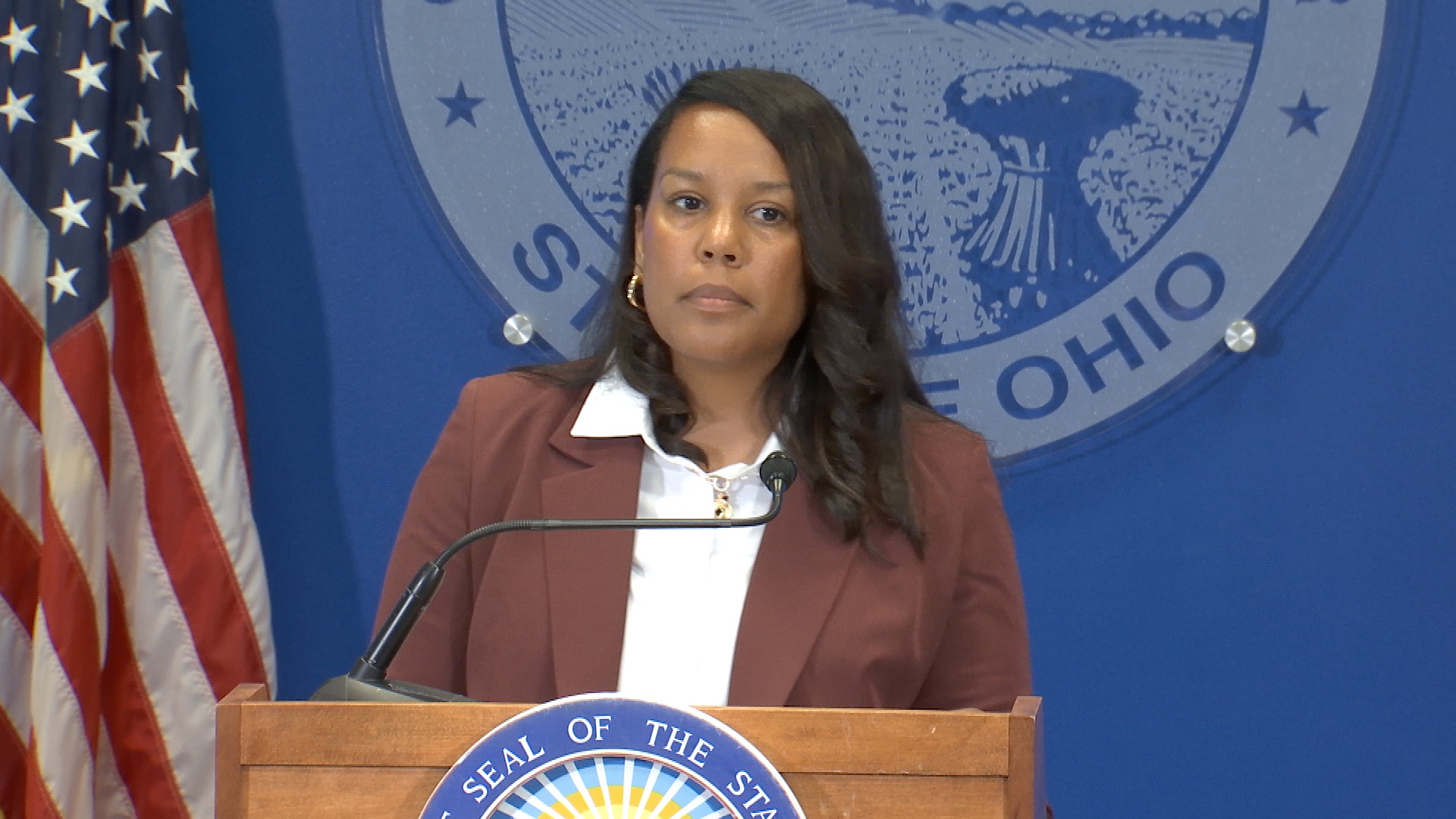
    OneOhio Recovery Foundation Executive Director Alisha Nelson. (Photo by Morgan Trau)

    BY:  Ohio Capital Journal

    This week, Ohio Gov. Mike DeWine tapped an executive director to lead the OneOhio Recovery Foundation. The nonprofit charged with administering more than $1 billion in opioid settlement money has faced criticism over lack of transparency. While critics of OneOhio praise DeWine’s pick, they argue the nomination process was opaque.

    The background

    State and local officials negotiated the OneOhio Recovery Foundation as way to manage opioid settlement money flowing to Ohio. The organization’s 29-member board hints at the competing interests. The governor, attorney general and general assembly all get to name board members. The state is then divided into 19 regions in which local leaders get to tap board members.

    In all, the agreement gives the nonprofit control over 55% of the $2 billion coming to Ohio.

    The memorandum of understanding that established OneOhio insists “meetings shall be open, and documents shall be public to the same extent they would be if the Foundation was a public entity.”

    But when Harm Reduction Ohio president Dennis Cauchon tried to attend the group’s first meeting in 2022, OneOhio turned him away. HRO then filed a public records request for documents related to the meeting. OneOhio didn’t respond.

    HRO sued OneOhio in the state supreme court. The justices decided — unanimously — that OneOhio is the functional equivalent of public entity and must comply with the records request.

    Dissatisfied with that outcome, state lawmakers added language to the budget explicitly defining OneOhio as not a public entity. Gov. Mike Dewine signed the budget on July 4. Eight days later, the OneOhio board voted to send DeWine their short list for executive director.

     Gov. Mike DeWine introducing OneOhio Recovery Foundation executive director Alisha Nelson (left) and Ohio Department of Children and Youth director Kara Wente. (Photo by Morgan Trau) 

    The director

    When DeWine announced his decision, he noted the OneOhio board “conducted an extensive national search” and he praised all three candidates. In the end though, he landed on Alicia Nelson.

    “For more than 16 years,” he said, “Alicia has turned her passion and life experiences into a career promoting and developing policies that support long term recovery and the advancement of the behavioral health field.”

    DeWine would know. As attorney general, he selected Nelson to lead his office’s anti-drug efforts. Shortly after taking office as governor, he turned to her again to lead RecoveryOhio, a new agency tasked with addressing mental health and drug abuse. Nelson also has experience working with the Alcohol Drug and Mental Health, or ADAMH, board of Franklin County. In the private sector, DeWine described how she’s worked to improve mental health payments within the Medicaid system.

    Nelson said she and the OneOhio board are committed to transparency, and she took a long view of the work in front of them.

    “What does it take to see the vision of 2050, where we want to be, to really see this issue abated and that no one else has to struggle with the loss of a loved one,” she said.

    Cauchon, from Harm Reduction Ohio, spoke glowingly of Nelson as well. He described her as “a talented, wonderful person and totally qualified.”

    He recalled how at RecoveryOhio she was instrumental in clearing bureaucratic hurdles for naloxone distribution. “It was just like a technical administrative thing that was having serious consequences,” he explained, “but she cared.”

    “I think that OneOhio is fortunate to have her as the executive director,” he said. “I have no problems with her at all. In fact, I salute her. I’ve worked with her in the past, and I have great respect for her.”

    The process

    The problem, Cauchon said, is how the board arrived at its short list. He claims the OneOhio held numerous meetings without public notice as they conducted their national search. Although the state budget asserts OneOhio doesn’t have to comply with state open meetings laws, those provisions won’t take effect until October.

    The controlling mandate, Cauchon said, is a restraining order granted by Franklin County Common Pleas Judge Mark Serrott in April. That order explicitly directs the board to comply with open meetings laws “for all meetings and subcommittee meetings.” Serrott made a point of insisting on adequate public notice, and that any exempt meetings must be “identified and disclosed.”

    In July, Judge Serrott extended that order through the budget’s October effective date.

    According to OneOhio’s February 2023 meeting minutes, the firm contracted to conduct the search said their team would meet with OneOhio’s personnel committee “twice per month to update the committee on candidates applying for the position.” OneOhio’s website shows no meeting minutes for that subcommittee after February.

    “It’s unfortunate,” Cauchon said, “because if they’d done it as the law requires, the outcome could have been the same — maybe would have been the same. But it’s like their cultural view that they’re a secret society, and that they’re a secret club.”

    Harm Reduction Ohio filed a motion to compel discovery against OneOhio and to hold the organization in contempt. The judge denied the first and sealed both motions. OneOhio has until next week to provide its response to the contempt motion.

    In a statement, OneOhio spokeswoman Connie Luck said, “we strongly dispute the claims made and will be responding through the proper legal channels.”

    Follow OCJ Reporter Nick Evans on Twitter.


    Nick Evans
    NICK EVANS

    Nick Evans has spent the past seven years reporting for NPR member stations in Florida and Ohio. He got his start in Tallahassee, covering issues like redistricting, same sex marriage and medical marijuana. Since arriving in Columbus in 2018, he has covered everything from city council to football. His work on Ohio politics and local policing have been featured numerous times on NPR.

    MORE FROM AUTHOR

  • Ohio Senate budget would shield opioid settlement foundation from public scrutiny

    Ohio Senate budget would shield opioid settlement foundation from public scrutiny

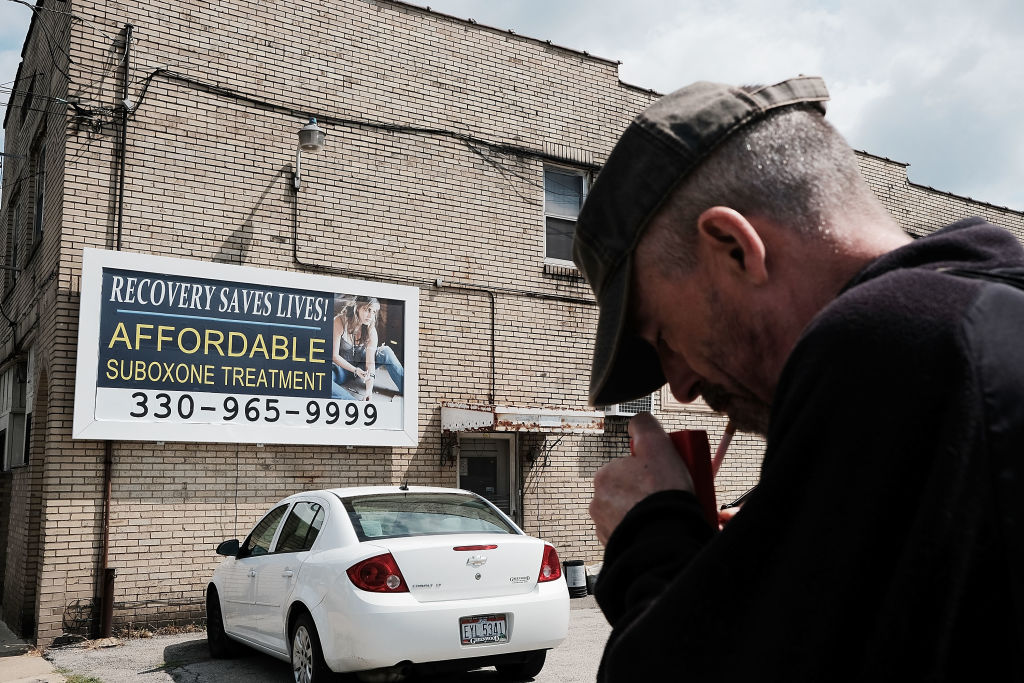
    A man walks by a billboard for a drug recovery center. (Photo by Spencer Platt/Getty Images)

    The budget rider seeks to overturn a unanimous Ohio Supreme Court decision last month that determined OneOhio Recovery Fund is subject to public records law

    BY:  Ohio Capital Journal

    Last month, the Ohio Supreme Court ordered OneOhio Recovery Foundation to hand over public records. If the state Senate gets its way on the budget, the non-profit managing opioid settlement proceeds might never have to do so again.

    The Senate’s version of the budget orders the OneOhio board to hold meetings in public, but it also includes a provision specifying the organization is not a state entity. Because it’s not a public office, it would be exempt from requirements — like complying with public records requests.

    Moreover, by excising OneOhio board members from the definition of “public official,” one advocate contends, they might not be subject to bribery laws.

    The court case

    That runs directly counter to the Ohio Supreme Court’s unanimous opinion. The case stemmed from the board’s first meeting in June of 2022. Dennis Cauchon, who heads up the drug policy organization Harm Reduction Ohio, tried to attend the meeting, but organizers forced him to leave. Cauchon then filed a public records request seeking any documents the board prepared for that meeting as well as any prior meetings they hadn’t announced.

    Despite provisions in its founding document ensuring meetings and documents remain public, OneOhio turned Cauchon down. In court, OneOhio argued that as a private nonprofit they aren’t subject to public records law.

    The court applied a four-part test and determined that OneOhio is the “functional equivalent” of a public office. The justices concluded “the foundation is performing a historically governmental function — the disbursement of public money.”

    They flatly rejected OneOhio’s contention there isn’t “even a hint” of government officials controlling its day-to-day operations. The ruling notes the governor appoints the executive director, and various government entities appoint all 29 of the board members.

    “The Foundation’s May 16, 2022 board meeting was organized by the interim director of RecoveryOhio (an organization commissioned by the governor) and was held at the Ohio Department of Public Safety, where RecoveryOhio typically holds its meetings,” the opinion stated, adding. “The attorney general’s office paid for the Foundation’s startup operating expenses.”

    The budget rider

    State senators inserted language in the recently approved budget that would override the court’s ruling. The provision is notable for its series of definitions laying out what OneOhio isn’t. According to the Senate, it isn’t a state agency, executive agency, public office, state entity, or public employer. Similarly, board members are not public employees or public officials.

    In an emailed statement, OneOhio spokesperson Connie Luck applauded the Senate’s move.

    “We support the Senate’s budget language,” she wrote. “Along with the recent decision by the IRS to grant the foundation 510c3 status, these actions confirm the OneOhio Recovery Foundation is a private, nonprofit organization.”

    Notwithstanding the supreme court decision last month ordering the OneOhio to hand over public records, she added, “the foundation supports a broader public mission and will continue to operate as arguably the most transparent organization in the state of Ohio.”

    But the string of un-definitions in the Senate’s budget would put OneOhio’s operations in a black box. And that worries Cauchon.

    “$1.1 billion is a lot of money,” he said, “and it is profoundly important to reducing overdose death in Ohio.”

    “You have a right to know how (the) government is spending government money,” Cauchon continued. “It’s kind of an absurd concept that they can get $1.1 billion, and keep it secret, how it’s done. From them, all the public needs to know is what they announce they’ve spent the money on.”

    Long-term implications

    OneOhio will likely be around for decades. Settlement money has already begun to arrive, according to recent reporting from Kaiser Health News. It will continue trickling in through 2038.

    In all, Ohio will receive $2 billion, 55% of which will go to OneOhio. It’s a substantial pot of money, and many service providers will be clamoring for their share. But without oversight, Cauchon calls it “a petri dish for corruption.”

    He points to one of the public official provisions. It references the statute dealing with “offenses against justice and public administration.” Among the crimes in that chapter are bribery, theft in office and unlawful interest in a public contract. By carving out board members from the chapter’s definition of “public official,” Cauchon argued, they wouldn’t be subject to bribery charges.

    “The county commissioner serving on OneOhio is not considered a public official for the Bribery Act,” Cauchon offered as a hypothetical example.

    That said, the same statute exempts JobsOhio board members from the definition of public official, as well. The difference, Cauchon noted, is the JobsOhio statute includes explicit prohibitions on bribery and conflict of interest. The Senate budget rider didn’t include any similar provisions for OneOhio.

    Cauchon argued even if lawmakers now don’t intend to abuse those changes to steer contracts and reward allies, eventually somebody will.

    “My concern early on was that it would be a nudge or a wink, but now it doesn’t have to be a nudge or a wink. You can just do it. It’s unambiguously legal,” he said.

    “And there’s no way for anyone to find out,” he added, “because you have no right to know who got any contract, who got how much money, how the decision was made. It’s a beautiful design if that’s your goal.”

    Follow OCJ Reporter Nick Evans on Twitter.


    Nick Evans
    NICK EVANS

    Nick Evans has spent the past seven years reporting for NPR member stations in Florida and Ohio. He got his start in Tallahassee, covering issues like redistricting, same sex marriage and medical marijuana. Since arriving in Columbus in 2018, he has covered everything from city council to football. His work on Ohio politics and local policing have been featured numerous times on NPR.

    MORE FROM AUTHOR