Tag: overdoses

  • Clermont authorities report increase in meth, cocaine and LSD after spring slowdown

    Clermont authorities report increase in meth, cocaine and LSD after spring slowdown

    Lt. Nick DeRose noted that the county also has experienced a rise in cocaine traffic – almost all laced with fentanyl – and LSD in recent weeks.

    Batavia, Ohio – Clermont County law enforcement and treatment specialists are noticing an uptick in methamphetamine (or meth) after a slowdown during the spring shutdown of the economy.

    The Clermont County Opiate Task Force touched base on drug and alcohol trends in the era of COVID-19 in an Aug. 13 meeting.

    For Help 24/7 Call: 528-SAVE (7283)

    Sheriff’s Office Lt. Nick DeRose, commander of the Clermont County Narcotics Task Force, said both volume and prices of meth have increased substantially in July and August. He noted that the county also has experienced a rise in cocaine traffic – almost all laced with fentanyl – and LSD in recent weeks.

    Fentanyl is a powerful synthetic opioid analgesic that is similar to morphine but is 50 to 100 times more potent. Lysergic acid diethylamide (LSD), also known colloquially as acid, is a hallucinogenic drug. Effects typically include altered thoughts, feelings, and awareness of one’s surroundings. Many users see or hear things that do not exist. Dilated pupils, increased blood pressure, and increased body temperature are typical, according to a news release issued by the County.

    “COVID slowed things down, but come June there was a major increase – mainly a mixture of meth with fentanyl,” said Lt. Matt Green of the Union Township Police Department. “Some are doing meth and cocaine and not knowing they’ve been laced with fentanyl.”

    The department has handled 40 overdoses in the past two months, Green said.

    The report also noted that people who use meth experience a roller coaster of emotions, members of the task force reported. Many meth users are fidgety with nervous energy. They often experience psychosis, with symptoms including delusions, hallucinations, talking incoherently, and agitation. The person with the condition usually isn’t aware of his or her behavior.

    Dr. Shawn Ryan of BrightView said meth causes the body to produce an amount of brain hormones “off the chart.” He added that it’s difficult to normalize the hormones as part of a treatment plan.

    Jamie Lutson of Clermont County Municipal Court Probation said she had noticed a big increase in females addicted to meth. “Some say they are using the drug to stay awake so they can work and take care of their children.”

    Lutson added that alcoholic relapses occurred more frequently as treatment programs “came to a screeching halt.”

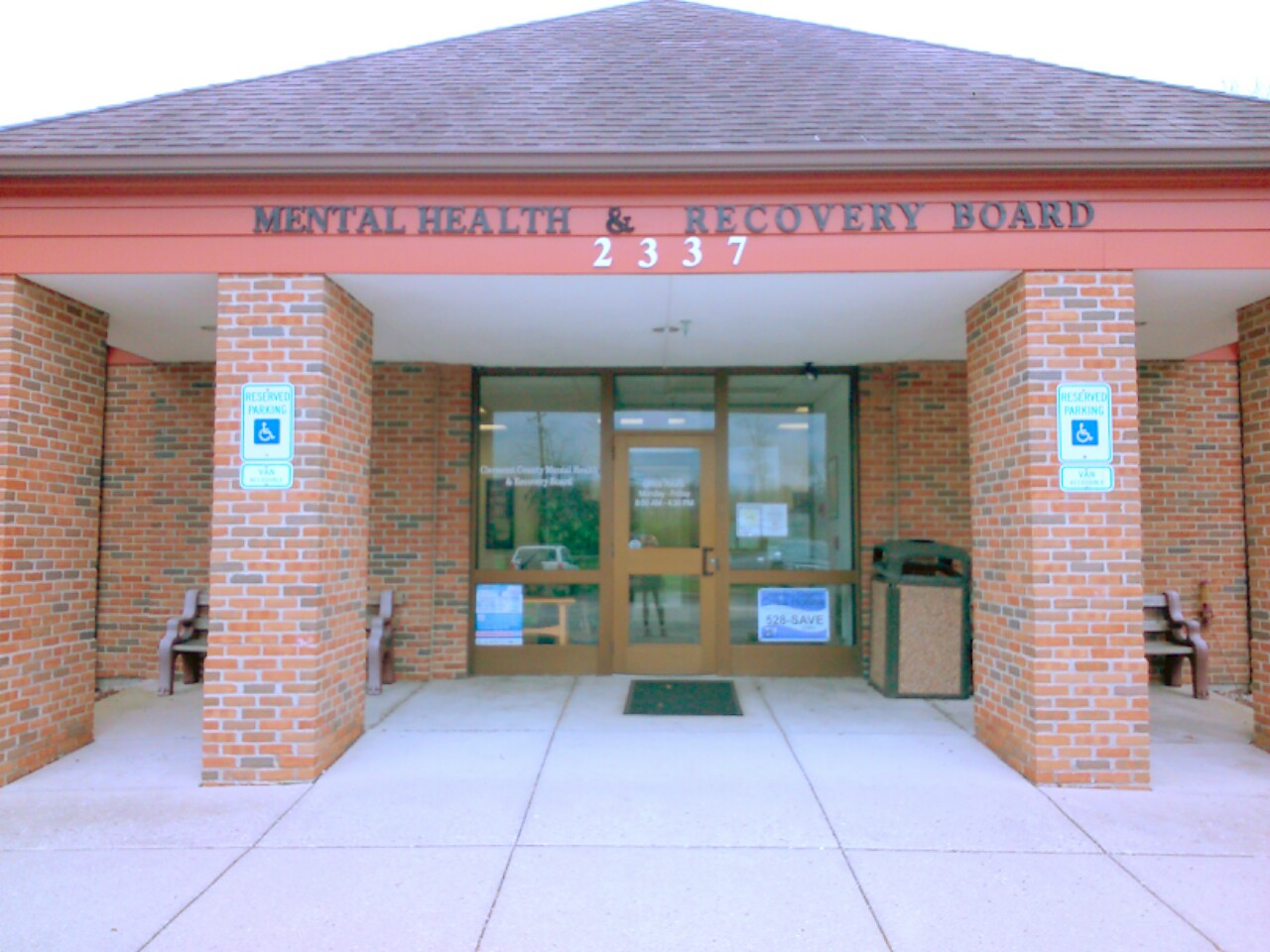
    Lee Ann Watson, associate director of the Clermont County Mental Health & Recovery Board and co-chair of the Opiate Task Force, said the group will use the input to help target efforts to address the situation.

  • Judge Jerry R. McBride: Why Issue One should be opposed

    Judge Jerry R. McBride: Why Issue One should be opposed

    by Judge Jerry R. McBride

    If you are concerned about neighborhood safety, then you should NOT support Issue One on the ballot this fall. It will hinder law enforcement, prosecutors, and judges in their ability to deal with the biggest drug crisis in this state’s history.As a result, it will result in more drugs on the streets, more crime, more deaths from overdoses, and more costs to local communities and taxpayers.

    Jerry R. McBride is a Clermont County, Ohio, Common Pleas Court Judge

    Judges have the ability to comment on issues that affect the administration of justice. Issue One will have a devastating effect on the administration of justice on Ohio. As one trial judge, this is my take on Issue One:

    ISSUE ONE DOES NOT BELONG IN THE STATE CONSTITUTION

    A state constitution should set forth the powers and functions of the branches of government, certain general values and principles upon which the citizens of the state generally agree, and the basic rights which are afforded to the citizens of the state. It should set forth matters which are so fundamental and important that they will not be subject to change over time. This proposed constitutional amendment does not in any way belong in a state constitution. It seeks to change sentencing law as it exists in the state of Ohio based on an assumption that change needs to be made. If change does need to be made, then it should be made through the process of enacting legislation, as is done on a regular basis in this state, and not through a constitutional amendment.

    ISSUE ONE DIRECTLY CONTRADICTS THE CONCEPT OF TRUTH IN SENTENCING AND IGNORES THE RIGHTS OF VICTIMS.

    There should be truth in sentencing, not lip service to truth in sentencing. Issue One allows a credit to be given by the Department of Rehabilitation and Correction for participation in rehabilitative, work, or educational programming of up to 25% of a sentence plus 30 days. While this may sound good at first glance, it is contrary to the concept of truth in sentencing. When a victim is told what a sentence will be, he/she should be able to rely on that being the sentence unless a hearing is scheduled on a possible reduction in the sentence. Why should a sentence be reduced just because an inmate “participates” in programming? Isn’t that the bare minimum that should be expected from an inmate? Why should an inmate be rewarded for doing the bare minimum? If a sentence is to be reduced, it should be reduced by the sentencing judge based upon an assessment that the risk of recidivism has been reduced, not because somebody has shown up to work. And if the judge makes the assessment that the sentence should be reduced, a hearing will be required and the victim will have an opportunity to be present and to be heard, which is the way it should be. Additionally, what does it mean to “participate” in these activities? This essentially allows the prison authorities to reduce a judge’s sentence,and it should be the judge who imposed a sentence who determines whether that sentence should be reduced.

    ISSUE ONE IS DANGEROUS IN THAT IT INTERFERES WITH THE JUSTICE SYSTEM’S ABILITY TO DEAL WITH THE DRUG CRISIS

    It is highly inappropriate in the midst of the biggest crisis in this state in terms of drug abuse for the possession and use of dangerous drugs to be treated essentially the same as minor traffic and criminal offenses. Possession of dangerous drugs leads to overdoses, to more serious criminal offenses, to deaths. The possession and use of dangerous drugs are not minor offenses to the persons who are addicted to drugs, to the victims of crime involving persons under the influence of drugs, to the parents and family members who are praying that their loved ones will not overdose and die. To suggest that we need to include treatment in our approach to this drug crisis is highly appropriate, and in fact it is already being done routinely across this state. However, to suggest that we should reduce the level of these offenses so that they are no longer classified as serious offenses is highly inappropriate.

    ISSUE ONE TREATS USE OF DANGEROUS DRUGS AS LESS SERIOUS THAN JUST ABOUT EVERY OTHER CRIME

    The proponents of the constitutional amendment, in saying that a jail sentence cannot be imposed, are saying that possession and use of such drugs as heroin, methamphetamine, and cocaine should be treated more lightly than reckless driving, shoplifting, lying to a police officer, gambling, and persistent disorderly conduct, all of which can result in the imposition of jail sentences. Is this really the message that we should be sending to drug addicted adults who represent a risk of committing more serious offenses as long as they persist in the use of dangerous drugs?

    ISSUE ONE ELIMINATES THE ABILITY OF A JUDGE TO IMPOSE A JAIL SENTECE FOR A FIRST OR SECOND POSSESSION OFFENSE, EVEN IF THE DRUG IS HEROIN, METHAMPHETAMINE, OR COCAINE

    In all likelihood, probation will be appropriate for a person who commits a drug possession offense which is the first or second within a 24-month period. However, that will not always be the case. For instance, probation may not be appropriate at all if the offense is committed at the same time as a more serious offense such as a burglary or an assault. Similarly, probation may not serve the purpose of protecting the public if the drug possession or use offense is committed by a convicted sex offender for whom use of a dangerous drug or alcohol represents a significant risk of reoffending and for whom intermediate sanctions may provide no real protection to the community. As for the term probation, does that include treatment in a halfway house or in a lock-down community based correctional facility?

    If it doesn’t include residential treatment, including lockdown residential treatment, ittakes away some of the most effective tools which can be used in trying to rehabilitate an offender. Needless to say, the problem with creating an absolute standard that requires that a person who uses or possesses drugs receive the lowest level of sanction available is that applying that standard under the facts of given case may not be consistent with the seriousness of the offense or the likelihood of recidivism.

    ISSUE ONE PUTS HANDCUFFS ON JUDGES IN THEIR ABILITY TO GET OFFENDERS TO STOP USING DRUGS

    The proposed amendment would eliminate the possibility of imposing a jail sentence at all for a violator on a first or second drug possession or use offense within 24 months and would eliminate the possibility of a court imposing a prison sentence for a felony violator unless the violator commits a new criminal offense. However, this leads to some very real dilemmas. If that is to be the law, what is a court to do with someone who simply refuses to attend treatment or to comply with any of the intermediate sanctions or who simply says that he/she will not comply with anything that the court orders? What is a court to do with someone who says he/she will comply with community control sanctions but then refuses to do anything which is ordered? Under the language of the proposed constitutional amendment, a felony offender could simply tell a judge at the time of the sentencing hearing that he/she will comply with the community control sanctions that are ordered, and then after being placed on community control, refuse to do anything that the court orders. At that point, a prison sentence could not be imposed. What is the possible sense in that? How does that serve to protect the public? The probation department has a statutory duty to report violations to the court, but if the offender continually absconds or fails to comply with the sanctions that are ordered, how can the probation department perform that function? The answer is very simple- it can’t.

    ISSUE ONE JUST GIVES LIP SERVICE TO THE CONCEPT OF GRADUATED SANCTIONS

    Issue One strips away the full range of tools which enable a judge or probation department to be effective in not only rehabilitating an offender, but also in protecting the public. It is difficult to argue with the concept of graduated responses, and the use of intermediate sanctions, by courts and probation departments. It is consistent with the use of evidence-based practices. However, the application of graduated responses or intermediate sanctions to a violator in a given case will depend on the seriousness of the original offense, the risk of recidivism, and the nature of the violation. In this regard, a graduated response policy will typically include probation (monitored or with conditions), intermediate sanctions (which may include such things as house arrest, residential or outpatient treatment, day reporting, a short jail term, or other requirements), and jail or prison. Issue One, however, arbitrarily takes away the option of jail or prison even for someone who thumbs his or her nose at the system and who refuses to undergo treatment or to make other changes that are necessary to reduce the likelihood of recidivism. It also arbitrarily takes away the option of jail or prison for someone for whom lesser sanctions are simply not appropriate.

    ISSUE ONE CONTRADICTS THE IMPORTANT CONCEPT OF SEPARATION OF POWERS

    The proposed amendment provides that each court must prepare guidelines for graduated responses that may be imposed in sentencing offenders and that the guidelines must be approved by the Department of Rehabilitation and Correction, which is part of the executive branch. Such a provision, which is proposed to be part of the state constitution, violates an already existing constitutional principle, which is the separation of powers. Additionally, there is no reason to believe that the Department of Rehabilitation and Correction has any expertise in deciding what factors a court should consider in determining which graduated response should be applied in a given case in sentencing an individual. That is pure and simple a judicial function.

    UNDER ISSUE ONE, THERE WILL BE LESS, NOT MORE, MONEY FOR TREATMENT

    The proponents of this constitutional amendment assume that the costs of their proposal will be covered by a substantial reduction in the number of prison beds. However, since the cost of housing fourth and fifth degree felons in the prison system is a very small part of the overall prison cost, since the projections as to cost reductions by the Department of Rehabilitation and Corrections have been inaccurate in the past, and since the increase in prison population has primarily resulted from longer sentences, and that is not addressed at all by the constitutional amendment, there is no real reason to believe that the assumptions of the proponents in this regard are correct.

    ISSUE ONE WILL RESULT IN GREATER COSTS TO LOCAL COMMUNTIES WITH WORSE RESULTS

    In the unlikely possibility that the proponents of Issue One are correct that there will be more money for treatment, and that appears to be fool’s gold, the most significant costs of this proposed constitutional amendment are the following- it undermines the efforts being made by courts and the law enforcement community to deal with the drug crisis, it undermines the ability of courts to effectively sentence offenders, and worst of all, it will not make the public any safer at all, and given the problems identified above, will likely lead to the public being more at risk. The cost of the proponents of Issue One pursuing their ill-conceived political agenda will be to put more people at risk of being victims, will not result in more or better treatment for drug users, and will result in greater cost- both human and monetary- to local communities. That is the reason that law enforcement, prosecutors, and judges throughout Ohio are opposing Issue One as being both ill-conceived and dangerous.


      Relaxed atmosphere and friendly service welcomes you back time and time again! Located in the heart of the Historic Loveland District Just outside Cincinnati, Ohio.


  • Overdose deaths decline for 2nd straight year in Clermont County

    Overdose deaths decline for 2nd straight year in Clermont County

    Batavis, Ohio – Deaths due to drug overdoses declined for the second straight year in Clermont County, according to the Clermont County Coroner’s Office.

    In 2017 76 deaths were caused by accidental drug overdoses.

    In 2017, the Coroner’s Office, under the direction of Dr. Brian Treon, ruled that 76 deaths were caused by accidental drug overdoses. This compared to 83 in 2016, and 94 in 2015 – the highest number since Clermont County began to see the effects of increased opioid use in the late 2000s.

    “We are encouraged by these numbers,” said Karen Scherra, the director of the Clermont County Mental Health & Recovery Board (MHRB). “These numbers indicate that the comprehensive measures we as a county have taken to address this issue are working.” The MHRB, the county hub in the fight against opioid addiction, is the lead organization in Clermont County’s Opiate Task Force, a collaborative that began in 2013 to address the opioid crisis in the county.

    In 2017, more medication-assisted treatment and other kinds of treatment became available to more people suffering from substance abuse disorder, Scherra said. In 2017, MHRB spent over $1.9 million on addiction treatment services.

    Other advances in 2017 included more Quick Response Teams.

    Other advances in 2017 included more Quick Response Teams, which go to the homes of those who have survived overdoses to connect them to recovery resources; and more police/fire/EMS departments carrying Narcan, which can reverse overdoses.

    In addition, a long-term recovery home for men was opened in 2017 in Clermont County. MHRB is now working on funding to open a similar home for women. Clermont County also opened a women’s wing in the Community Alternative Sentencing Center. This jail alternative connects clients with multiple treatment options.

    Funding for these initiatives are provided through a combination of MHRB levy funds, federal and state grants.

    “In response to the rise in drug overdose deaths, we created an Overdose Death Review Committee in 2014,” said Public Health Commissioner Julianne Nesbit.

    Clermont County Public Health, a member of the Opiate Task Force, is also on the forefront of the opioid battle. “In response to the rise in drug overdose deaths, we created an Overdose Death Review Committee in 2014,” said Public Health Commissioner Julianne Nesbit. “We look at aggregate level data to see if there are any trends that we can address to help reduce future deaths in the community.

    “Since we first saw the increase in drug overdose deaths, we have had a full-time Injury Prevention Coordinator who works to educate the community and work with our partners on the drug epidemic.”

    In March, Hamilton County reported that overdose deaths for 2017 had increased 31 percent over the previous year to 529. Butler County reported a 20% increase to 232.

    More information on Clermont County’s Opiate Task Force can be found on its website, www.getcleannowClermont.org.

    For more information, contact MHRB Executive Director Karen Scherra, kscherra@ccmhrb.org, 513.732.5407.