Tag: Paolo DeMaria

  • Ohio school superintendent DeMaria to retire

    Ohio school superintendent DeMaria to retire

    BY: SUSAN TEBBEN and Ohio Capital Journal

    Ohio’s leader of public education, State Supt. Paolo DeMaria, announced his intention to retire at the end of September.

    DeMaria began his tenure as superintendent in June 2016 and is leaving just as the state legislature approves a comprehensive overhaul of the state’s public school funding formula.

    “The future of Ohio is in very capable hands, and you have my commitment to support a smooth leadership transition ensuring the continued progress and success of Ohio’s strategic plan for education, Each Child, Our Future, and the education system,” DeMaria said in a letter to the state Board of Education president, Laura Kohler.

    The governor made note of DeMaria’s “tireless work” as superintendent.

    “I would like to thank Superintendent DeMaria for his tireless work on behalf of Ohio’s children,” Gov. Mike DeWine said in a provided statement. “Throughout his service in state government, Paolo has been passionate about ensuring that the needs of the whole child are met so that every child can live up to his or her God-given potential. Fran and I wish him well in his retirement.”

  • Ohio Schools to Receive COVID-19 Test Kits

    Ohio Schools to Receive COVID-19 Test Kits

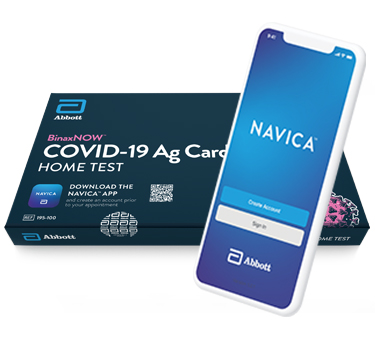
    The Ohio Department of Education in cooperation with the Ohio Department of Health and the Ohio Educational Service Center Association today announced plans to provide an estimated 200,000 Abbott BinaxNOW Home Tests to Ohio public and private schools as another means of providing a safe learning environment for students, in addition to staff vaccinations and continued adherence to safety protocols like surface cleaning and facial coverings.

    The state purchased the tests and will work closely with Ohio’s network of educational service centers to distribute them to schools and districts.

    The 15-minute BinaxNOW COVID-19 Ag Card Home Test has received FDA Emergency Use Authorization and is packaged with instructions to access a telehealth professional who will oversee test administration, prescription writing, and result reporting. Schools and districts are encouraged to work with their local departments of health to determine the best strategies for using the tests at their locations. It would be appropriate to use the tests for symptomatic students, teachers, and staff members.

    “It was important to get these tests in the hands of school leaders because we know how important it is for students to be able to continue learning in their classrooms,” said Ohio Governor Mike DeWine. “In addition to the staff vaccinations, masks and physical-distancing practices that Ohio’s schools already employ so well, these tests will be a big help in our efforts to keep students, staff and communities safe.”

    “Convenient access to testing is one more tool in our toolbox as we all work together to help slow the spread of COVID-19,” said State Superintendent of Public Instruction Paolo DeMaria. “Even with these tests and school staff members having the opportunity to be vaccinated, it still will be important to continue protective strategies like mask wearing, frequent hand-washing, and maintaining social distancing.”

    “We’ve worked very closely with leaders at the state and local levels to make sure Ohio’s schools have access to the resources they need to ensure the safety and health of their students and staff members,” said Ohio Educational Service Center Association Director Craig Burford. “We’re proud to be able to assist in this effort by distributing test kits to public and private schools across the state.”

    Schools and districts should contact their regional educational service centers for more information on how to obtain tests.

    Find more information about the BinaxNOW At Home COVID-19 Test including a list of Frequently Asked Questions and Answers here.

  • State education testing shows declines, may be waived in new legislation

    State education testing shows declines, may be waived in new legislation

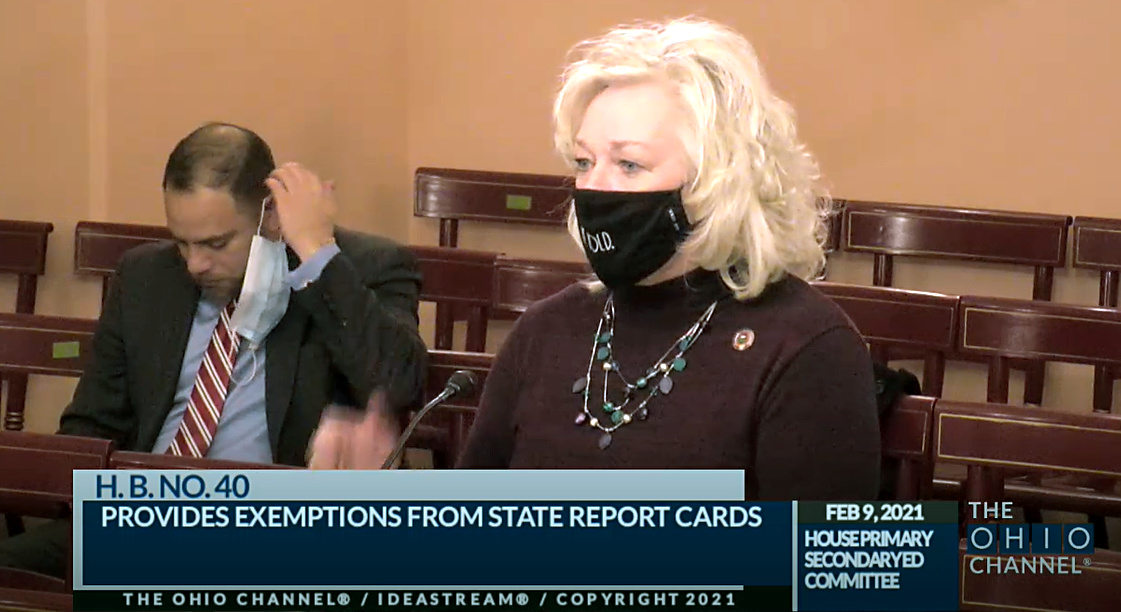
    Ohio state Rep. Lisa Sobecki testifies before the House Primary & Secondary Education Committee on Tuesday, on a bill seeking waivers on state and federal testing.

    by Susan Tebben and Ohio Capital Journal

    As state officials look for solutions to an education gap caused by the COVID-19 pandemic, two pieces of legislation introduced Tuesday hope to give more leniency on state and federal testing.

    Rep. Lisa Sobecki, D-Toledo, is a co-sponsor with Rep. Jeffrey Crossman, D-Parma on House Bill 40, to make exemptions for students in taking state report cards.

    The bill would waive state testing for the 2021-2022 school year and direct the Ohio Department of Education to seek a waiver for federal testing, as well as holding school districts harmless on state report cards to determine funding levels and eligibility for EdChoice private school vouchers and academic distress commissions.

    “We do need to see where our kids have been left behind, but I don’t need a test that’s going to tell us something after the kids have left,” Sobecki told the House Primary & Secondary Education Committee.

    She said the waiver of testing “appears to have broad, bipartisan support” within the legislature.

    Bipartisan support for state testing waivers came in the same Tuesday meeting, in the form of a separate bill brought by Republican state reps. Kyle Koehler and Adam Bird, to ask for many of the same things, including state and federal testing exemptions.

    “I am not asking to waive test requirements because we don’t need to know how testing will go,” Koehler told the committee. “I think we know it’s not going to go well. Students are going to be behind.”

    In further support of testing pressure relief, State Board of Education member Dr. Christina Collins released a proposed resolution directing the ODE limiting the use of state testing, and to “include a district designation of online, hybrid, or in-person on school building and district level report cards.”

    In the resolution, Collins writes that COVID-19 “has affected every student in Ohio, disrupting the structure of teaching and learning and emphasizing children’s dependency upon adults for nurture, protection and providing for health and well-being.”

    Along with the district designation, the board member asks that a disclaimer on state reports say that data “are for the purpose of understanding how learning was impacted as a result of extreme circumstances.”

    Earlier in the day, ODE Superintendent Paolo DeMaria said the test scores coming out of a pandemic’s worth of learning styles emphasize the need for students to get back to in-person instruction.

    DeMaria acknowledged a lower participation rate in the state testing, saying the ODE promoted a “safety first” mentality in taking the tests. But from the testing that did occur, the state saw an 8% increase in kindergarten-readiness scores considered “not on track.”

    Third-grade English Language Arts proficiency scores were also lower, which was also shown in a study released by the Ohio State University’s John Glenn College of Public Affairs.

    This third-grade test is set to occur this year starting from March 22 to April 23, part of why Sobecki said their legislation needs to be quickly moved through the statehouse and set up to be signed by the governor.

    “It’s February, folks,” Sobecki said.

    DeMaria, and the study itself, noted that the declining scores were even lower in minority and economically disadvantaged groups.

    State reports also showed a decrease in enrollment of 3%, particularly in pre-school and kindergarten.

    DeMaria spoke during Gov. Mike DeWine’s Tuesday press conference, in which he spent most of the time presenting the progress of vaccinating school teachers and personnel, something that the state started this month. While the state continues to vaccinate those 70 and older, they set aside some of the approximately 100,000 per week the state receives to give to school districts.

    Also on Tuesday, DeWine added a new project for school districts across the state, asking them to come up with an individualized plan to help students catch up on last year’s losses.

    “We need to be bold in our ideas, and we need to work with the Ohio General Assembly,” DeWine said, adding that a total of $2 billion in federal funding has been made available to schools to help with this problem.

    DeWine left the decisions up to the individual districts, but offered examples such as longer school years, longer school days, summer classes, tutoring, or even remote options as ways to fill the education gap.

    Districts have until April 1 to make their plans public and accessible to the General Assembly.

  • Ohio Department of Education and Governor’s Office of Workforce Transformation announce Innovative Workforce Incentive Program

    Ohio Department of Education and Governor’s Office of Workforce Transformation announce Innovative Workforce Incentive Program

    Columbus, Ohio – The Governor’s Office of Workforce Transformation and the Ohio Department of Education today

    $34 Million Available Over Two Years

    announced the list of industry-recognized credentials eligible for $34 million under the new Innovative Workforce Incentive Program. Ohio Governor Mike DeWine and the Ohio General Assembly developed the program to create more opportunities for students to earn in-demand, industry-recognized credentials.

    The program includes $9 million in the state’s two-year budget for grants to assist school districts, community schools, joint vocational schools, and STEM schools in establishing credential programs to prepare students for careers in priority industry sectors. Schools can begin applying for a share of the funding via the state’s Comprehensive Continuous Improvement Plan grant application process on December 19, 2019.

    School districts are also eligible to receive a share of $25 million over the current state budget to encourage the start of additional credential programs. Under this program, schools can receive $1,250 for each qualifying credential earned by students.

    “When Ohio students graduate high school, they should be college or career ready,” said Governor DeWine. “This program helps schools expand credentialing opportunities and ensures potential employers that students have the skills they need to succeed in high-wage, in-demand fields.”

    Lieutenant Governor Jon Husted

    “We must prepare Ohio’s workforce to earn the skills they need to succeed in an increasingly tech-infused economy, and we need to seize the opportunity to do so before they graduate from high school. Today’s announcement reinforces the administration’s commitment to providing more opportunities for Ohioans to earn in-demand, industry-recognized credentials, offering a pathway to better paying and higher quality career options,” said Lieutenant Governor Jon Husted who serves as Director of the Governor’s Office of Workforce Transformation.

    Paolo DeMaria, state superintendent of public instruction

    “Today’s students are tomorrow’s workforce,” said Paolo DeMaria, state superintendent of public instruction. “We are committed to supporting students in acquiring relevant, marketable skills that empower them to achieve success in Ohio’s emerging and priority industries. Innovative Workforce Incentive Program Funds will make it possible for schools to develop the programs students need to earn in-demand credentials.”

    The Innovative Workforce Incentive Program aligns with Ohio’s five-year strategic plan for education, Each Child, Our Future. The plan states that each child will see the relevance of his or her learning, be exposed to practical, real-world work settings, and begin defining his or her future during high school.

    Industry-recognized credentials are an innovative approach to ensuring that high school inspires students to identify paths to future success. Such credentials also offer students many ways to demonstrate the knowledge and skills needed for high school graduation and beyond. Credentials also benefit employers by validating the knowledge and skills of potential employees.

    More information about the Innovative Workforce Incentive Program, including the qualifying industry-recognized credentials is available here.

    Find more information on high school industry-recognized credentials here.

  • Three Loveland Schools Recognized with Achievement Awards by Ohio Superintendent and State Board of Education

    Three Loveland Schools Recognized with Achievement Awards by Ohio Superintendent and State Board of Education

    State Board of Education and Ohio Superintendent of Public Instruction Paolo DeMaria (Image ODE)

    Columbus, Ohio – The State Board of Education and Ohio Superintendent of Public Instruction Paolo DeMaria announced this week the recognition of schools across the state for achieving high performance, outstanding progress and momentum for students – and among them are Loveland High School (LHS), Loveland Elementary School (LES) and the Loveland Early Childhood Center (LECC).

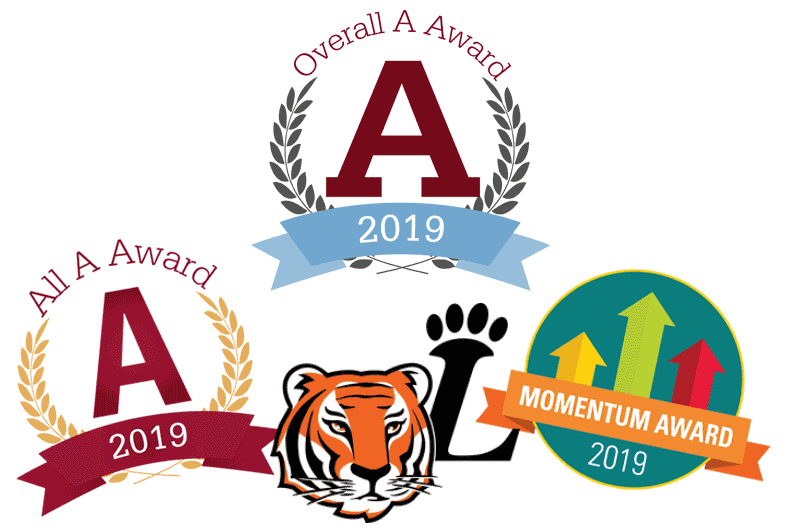
    Loveland High School earned the “Momentum Award” for the third consecutive year in recognition of exceeding expectations in student growth. In order to be recognized, schools must earn straight A’s on all value-added measures on the report card and must have at least two value-added subgroups of students, which include gifted, lowest 20% in achievement, and students with disabilities. Value-added measures use student achievement over time in English Language Arts and Math to measure the gain in learning from year to year.

    Loveland Elementary School earned the “Overall A Award” for receiving an “A” as a school on the report card. The overall letter grade is calculated by using results in the six components that make up the state report card: Achievement, Progress, Gap Closing, Improving At-Risk K-3 Readers, Graduation Rate and Prepared for Success.

    Loveland Early Childhood Center earned the “All A Award” for receiving A grades on the applicable Ohio School Report Card measures. Only 50 schools and four school districts across the state were recognized for this achievement in 2019.

    “I’m incredibly proud of our educational leaders and staff across the district who embrace the mindset of continuous improvement,” said Loveland City School District Superintendent Dr. Amy Crouse. “They have done a remarkable job putting goals into action for the benefit of student achievement and academic momentum at Loveland Schools.”

    State Board of Education President Laura Kohler issued a statement in a press release issued by the Ohio Department of Education:

    “The students, teachers, administrators and staff honored today are shining examples to peers and colleagues around Ohio. We are so proud of these award recipients and the effort they put into learning, leading and growing every day. We are both encouraged and challenged by the example of excellence they are setting.”


  • 2018 Community School (charter schools) Sponsor Evaluations Released

    2018 Community School (charter schools) Sponsor Evaluations Released

    Columbus, Ohio – To help ensure accountability and quality in Ohio’s community school system, the Ohio Department of Education today released the 2017-2018 sponsor evaluations.

    What’s a Sponsor? – A sponsor has the authority (ability) to establish a community school. Sponsors ensure that schools adhere to their contracts, and they make important decisions, such as whether to renew contracts with community schools. They also provide oversight and technical assistance.

    What’s a Community School? – Community schools, which are often called charter schools nationally and in other states, are public schools created in Ohio law; are independent of any school district; and are part of the state’s education program. Community schools are public schools of choice and are state and federally funded.

    “High-quality sponsors are the foundation for an effective community school system,” said Paolo DeMaria, superintendent of public instruction. “The sponsor evaluations are an important piece of Ohio’s accountability system, driving continuous improvement and helping to ensure Ohio’s families have quality school choice options.”

    The sponsor evaluation system assists the Ohio Department of Education in its oversight of sponsors and helps increase the quality of sponsor practices. The evaluation framework is made up of three equally weighted components:

    • Academic Performance;
    • Compliance with Rules and Laws; and
    • Quality Practices.

    The Academic Performance component determines how well students are performing academically at sponsors’ schools. The Compliance component rates whether sponsors are compliant with all relevant laws and rules and whether sponsors are monitoring their schools’ compliance with laws and rules. The Quality Practices component, which was created using national standards and input from sponsors, looks at sponsors’ adherence to quality practices.

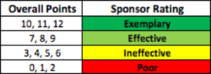
    All three components are scored on a common scale (0-4 points) to allow for simple calculations. Sponsors receive points for each component that, when added together, provide a summative rating. The point scale for 2017-2018 is as follows:

    Sponsor Rating Chart

    Ohio law includes a set of incentives for sponsors rated “exemplary,” as well as a set of consequences for sponsors rated “ineffective” and “poor.” For example, a sponsor rated “exemplary” for two consecutive years is able to take advantage of incentives, including receiving a longer term on its contract with the Department. Any sponsor that receives an “ineffective” overall rating is prohibited from sponsoring any new or additional community schools, and the sponsor is subject to a quality improvement plan. Any sponsor that receives a “poor” rating or three consecutive “ineffective” ratings is subject to revocation of its sponsorship authority. An appeals process is available to sponsors that are subject to revocation of their sponsorship authority.

    The 2017-2018 community school sponsor evaluations can be found online by clicking here.


    Welcome to All About Kids We invite you to come visit one of our convenient locations, talk to our staff and teachers and learn why.


  • Award-winning: Loveland High School Teaching Professions Academy

    Award-winning: Loveland High School Teaching Professions Academy

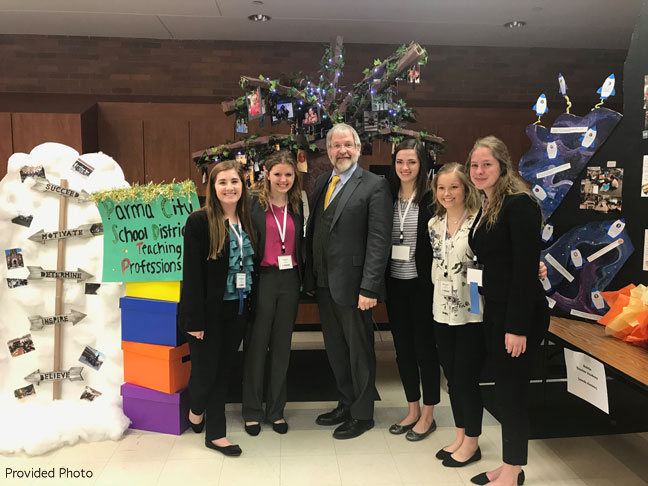
    Award-winning LHS Teaching Professions Academy students with State Superintendent of Public Instruction Paolo DeMaria at the Educators Rising Conference.

    Andrea Conner is Director of Secondary Programs Loveland City School District

    By Andrea Conner

    Take 40 Loveland High School (LHS) students with a passion for education and a teacher with a vision to not only provide rich course offerings for students but also help develop future educators, and you have Loveland’s new Teaching Professions Academy (TPA). That’s right – in Loveland, we are teaching Tiger students how to become Tiger teachers for their future careers.

    This program, designed and instructed by Bre Sambuchino, gives our high school students the unique opportunity to make real-world connections between the curriculum and instructional strategies they study in this new class when they apply them to field-placement experiences within our district. From Loveland Elementary School to Loveland Intermediate School, TPA students get hands-on experience learning the different skills teachers must possess to be successful at the various levels of student development. TPA students work together to prepare real, vibrant lessons for our young Tigers – taking care and pride in representing their program with professionalism.

    A table-top sized tree quickly grew with various versions of what might be the best technique to use to create a tree that both captured the passion of the group while still making certain it was versatile enough to be transported.

    The pinnacle of the program’s successful first year was evident on March 15 when the TPA students and Ms. Sambuchino traveled to the EdRising Ohio conference at Ohio Dominican. TPA students participated in various speaking and lesson-planning competitions and worked as a group to create their chapter display with the theme “Where do we grow from here?” A table-top sized tree quickly grew with various versions of what might be the best technique to use to create a tree that both captured the passion of the group while still making certain it was versatile enough to be transported. “Their ideas continued to grow with the tree!” commented Sambuchino.

    The conference and the tree certainly delivered in true LHS TPA fashion! The tree won first place (chapter display), and LHS Senior Maddy Butts won second place in the STEM lesson planning and delivery competition teaching a robust “states of matter” lesson to her field placement class. She is now a National Qualifier, and she will be competing in Orlando, Fla., in June. In addition to these accolades, Loveland High School’s program was awarded as an Honors Chapter, one of 12 out of 64 total state chapters. The students, along with their award-winning tree, even made State Superintendent of Public Instruction Paolo DeMaria’s Twitter feed!

    Success like this isn’t based on luck. It is the result of focused, strategic effort; the LHS TPA is the first of a series of Academic Pathways the Loveland City School District is developing to prepare our students for tomorrow, today. It is our mission, in action – and – it is award-winning.


    RP Diamond Printing & Embroidery

      RP Diamond is the exclusive retailer of LOVELAND HIGH SCHOOL SPIRIT WEAR Welcome to  RP Diamond Printing & Embroidery located at 370 Loveland Madeira Road
  • New options available for Ohio’s High School Equivalence Test

    New options available for Ohio’s High School Equivalence Test

    Ohioans now have three testing options for earning a certificate of high school equivalence. The Ohio Department of Education approved GED, HiSET and TASC as the official testing companies for adult learners to use to earn the certificate of high school equivalence, generally considered to be the equivalent of a high school diploma.

    All previously awarded Ohio High School Equivalence Diplomas still are considered valid.

    “For individuals who haven’t earned a high school diploma, earning the certificate of high school equivalence can be a life-changing event,” said Paolo DeMaria, superintendent of public instruction. “A high school diploma or its equivalent often is a minimum requirement for applying for many jobs or for being promoted. It also is needed to enroll in most colleges and advanced training programs. We are proud to provide more testing choices for individuals seeking better futures.”

    Nearly 11 percent of adults over the age of 18 in Ohio have not completed a high school diploma or an equivalent.

    Many Ohioans require additional learning support prior to taking the tests. The state’s Aspire workforce readiness programs, funded by the Ohio Department of Higher Education, provide free classes for adults desiring to take the equivalence tests. Information about the Aspire programs can be found here or by calling 833-8ASPIRE.

    “Having these high school equivalence options and the free classes offered through the Aspire program can really give those individuals who haven’t earned a high school diploma a jump start on a successful future,” said Ohio Department of Higher Education Chancellor John Carey. “The Aspire classes and the testing options not only put these students on a pathway to continued education, but they also provide motivation by showing them that they have what it takes to succeed.”

    Individuals who are 16 and older who have withdrawn from school (if ages 16-18) and have not previously earned a high school or honors diploma are eligible to take a high school equivalence test. (Students ages 16 or 17 require parental consent.) Students must register online for the test of their choice and submit all required documentation to the Ohio High School Equivalence Office.

    “Ohio’s new options for the high school equivalence test will empower more Ohioans to earn a certificate of high school equivalence,” said Director Ryan Burgess of the Governor’s Office of Workforce Transformation. “Whether their next step is to pursue employment or continuing education, individuals who earn this certificate will be better prepared for success in a rapidly changing economy.”

    All previously awarded Ohio High School Equivalence Diplomas still are considered valid.

    The Ohio High School Equivalence Office at the Department of Education provides guidance and assistance to test takers, preparation centers and testing centers. More information about Ohio High School Equivalence can be found on the Department’s website by clicking here.

    Adult learners also may qualify for Ohio’s Adult Diploma and 22+ Adult High School Diploma programs. More information about these programs can be found by clicking here.

  • Ohio Department of Education looking for local nonprofit agencies that will help them feed hungry children this summer

    Ohio Department of Education looking for local nonprofit agencies that will help them feed hungry children this summer

    Free meals are provided at schools, colleges and universities, nonprofit organizations, parks, camps, community centers, swimming pools, libraries, low-income housing complexes and more.

    With the help of numerous sponsoring agencies and stakeholders, the Summer Food Service Program works to feed thousands of children in Ohio. Since 2014, Ohio has increased participation in the program by 10 percent.

    Despite these numbers, many Ohio parents and caregivers are forced to make difficult decisions daily to provide for their families. In many cases, this leaves Ohio’s most vulnerable citizens, our children and youth, struggling with hunger daily.

    This year, the Department wants to increase participation in summer meal programs and is actively seeking local nonprofit agencies to participate as sponsors or sites by providing free meals to children.


    “The need for healthy meals doesn’t stop when school breaks for the summer,” said Paolo DeMaria, superintendent of public instruction. “The Summer Food Service Program helps provide children with nourishment to make sure summer can be a time for continued learning and fun. Instead of worrying about where their next meals will come from, our students can enjoy activities like reading, sports, playing outdoors and the growing that happens during the summer months.”

    Free meals are provided at schools, colleges and universities, nonprofit organizations, parks, camps, community centers, swimming pools, libraries, low-income housing complexes and more.

    Sponsoring organizations receive reimbursement to cover the costs of providing nutritious meals and snacks to children in eligible areas.

    Sponsoring organizations receive reimbursement to cover the costs of providing nutritious meals and snacks to children in eligible areas. Nonprofit organizations offering summer activities for children living in low-income areas also are encouraged to apply.

    Expansion of the program is particularly needed in southern Ohio counties, where families struggle with food insecurity, as well as in rural communities and areas where migrant families reside.

    The Summer Food Service Program ensures that children ages 1-18 continue to receive nutritious meals during the summer break from school, when they do not have access to school breakfast or lunch. Children with disabilities and approved individualized education programs may participate through age 21.

    A sponsoring organization must be:

    • A public or nonprofit private school;
    • A public or nonprofit private residential summer camp;
    • A unit of local, municipal, county or state government;
    • A public or nonprofit college or university; or
    • A private nonprofit organization.

    The Summer Food Service Program is funded by the U.S. Department of Agriculture and administered by the Ohio Department of Education.

    Any organization interested in becoming a sponsor or site should complete the potential sponsor survey no later than Friday, March 2.