Tag: parking garage

  • 2-story 275 space garage pivots to 140 space surface lot

    2-story 275 space garage pivots to 140 space surface lot

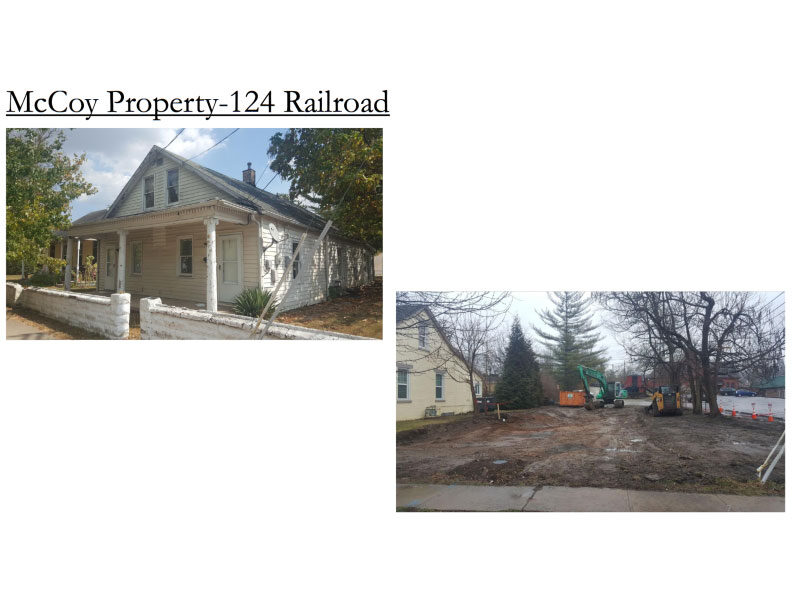
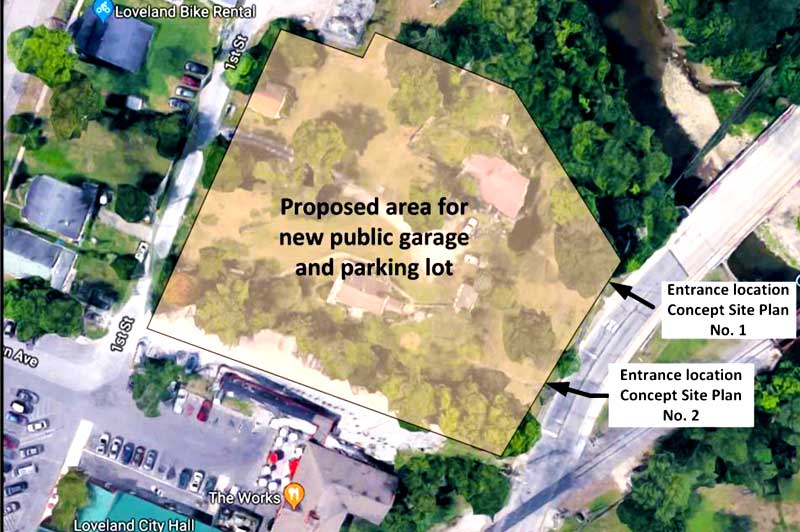
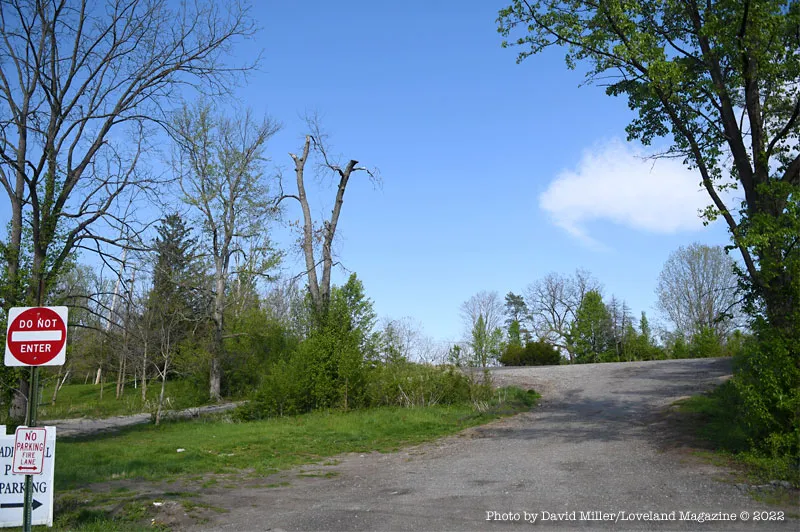
    This Loveland Magazine file photo shows where a new surface lot is proposed. Visitors to Historic Downtown already use the semi-improved lot for parking. Much of the soil will be removed if a new lot is constructed. Previously an “Indian Mound” was thought to be at the site.

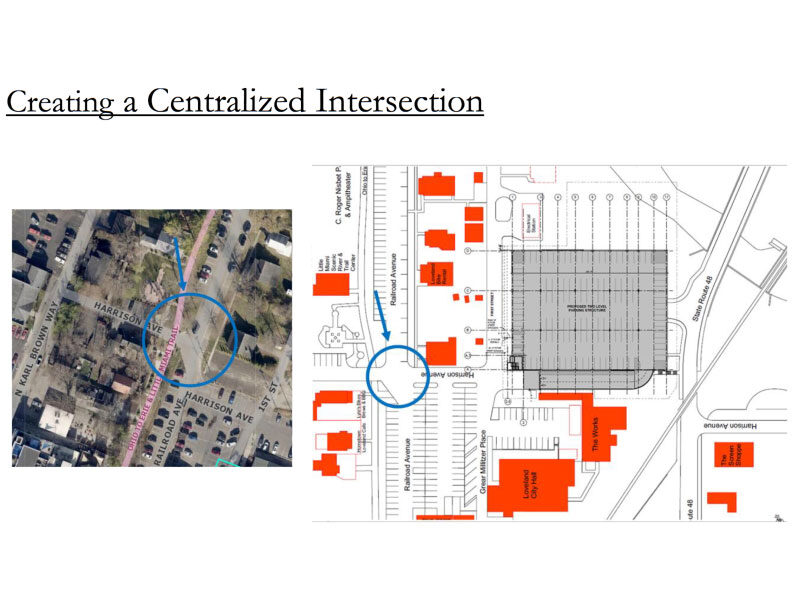
    Loveland, Ohio – On May 9, City Manager Dave Kennedy proposed to City Council that a new surface parking lot be constructed on city-owned property located at 213 N. 2nd Street in Historic Downtown. The city previously planned for the construction of a two-storied downtown parking garage on the property. Approximately 275 new parking spaces were proposed on the parcel which the taxpayers purchased in 2019. The land is behind City Hall and adjacent to the Works Restaurant between First Street and S.R. 48.

    The cost of the garage was estimated to be $6,292,627, which amounted to almost $23,000 per/vehicle.

    In a May 9 memorandum to City Council, Kennedy said:

    “Recognizing that there is not currently a viable outside funding source to reduce the amount of debt funding needed to construct the parking garage, and realizing the impact that the COVID pandemic has had on inflating construction costs, city staff is proposing that we pivot and utilize grant monies already awarded to the city, for construction of a surface parking lot in the same location as the proposed parking garage.”

    Kennedy added, “If a surface parking lot is the desired direction of City Council, we anticipate being able to construct a lot, similar to the Linda J. Cox Trailside Parking Area with a minimum of 140 spaces.” The Linda J. Cox Trailside Parking Area near Eads Hardware and Loveland Canoe and Kayak has 125 spaces.

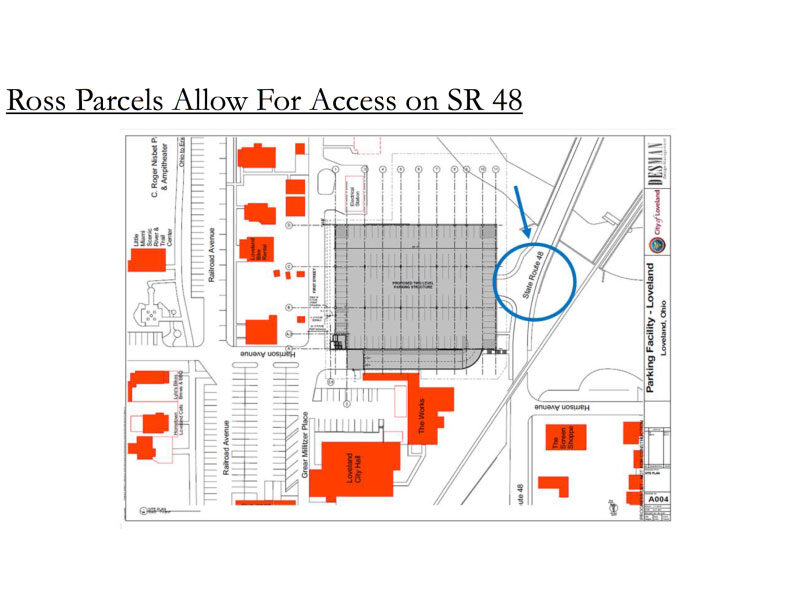
    The surface lot would provide vehicular and pedestrian access to and from State Route 48 into the downtown business district, according to the City Manager.

    In preparation for the eventual construction of either a garage or surface lot the City contracted with the firm Environment & Archaeology to complete both a Geophysical Survey and a Phase I Archaeological Survey in an effort to determine if “cultural resources” were on the land. Previously, an “Indian Mound” was thought to be at the site. The supposition was based on an 1848 map of Loveland. In his report, Kennedy said that archaeological survey determined that the possible Indian Mound consisted of fill dirt and not a “pre-contact cultural feature”. The archeological studies cost $40,020. (Questions arise about possible Native American remains and “Mound” at site of proposed Parking Garage in the Historic District)

    To date, the city has received $900,000 in grant funding from the Ohio Capital Budget which is administered by the Ohio Department of Natural Resources (ODNR), and $250,000 from the Appalachian Regional Commission (ARC), a total of $1,150,000. ODNR receives $18,000 of the capital funding for project administration. This reduces the total available to the City to $1,132,000.

    In April of 2022 resident Lauren Enda said at a council meeting that according to Loveland’s Director of Finance, Mark Medlar, Loveland taxpayers had already spent $980,000 on purchasing the site, demolition, and design engineering for the “multi-million dollar” proposed garage. Enda had advocated for residents to be given the chance to vote the proposed parking garage up or down at the ballot box.

    Kennedy reported to Council, “Although the estimated cost for construction of the surface lot will not be known until the design process is completed, the project engineer feels that a surface parking lot and underground detention can be constructed with the existing grant funding. To assure there is adequate funding to complete the project with maximum parking space and acknowledging that construction will extend into 2024, city staff recommends earmarking all FY2024 Downtown TIF revenue towards project costs which may exceed the grant funding. Utilizing Downtown TIF dollars towards the surface lot is a proper use of these funds as they are directly generated by private investment into the downtown district.”

    The report recommended that all parking be free of charge.

    The total cost of the engineering and design proposal is estimated to be $51,500. Kennedy said the project would be completed by May of 2024.

    A resolution was introduced authorizing the City Manager to execute an agreement with McGill Smith Punshon Design for design and engineering services related to the construction of the downtown surface parking lot. All Council members approved moving forward with the revised plan.
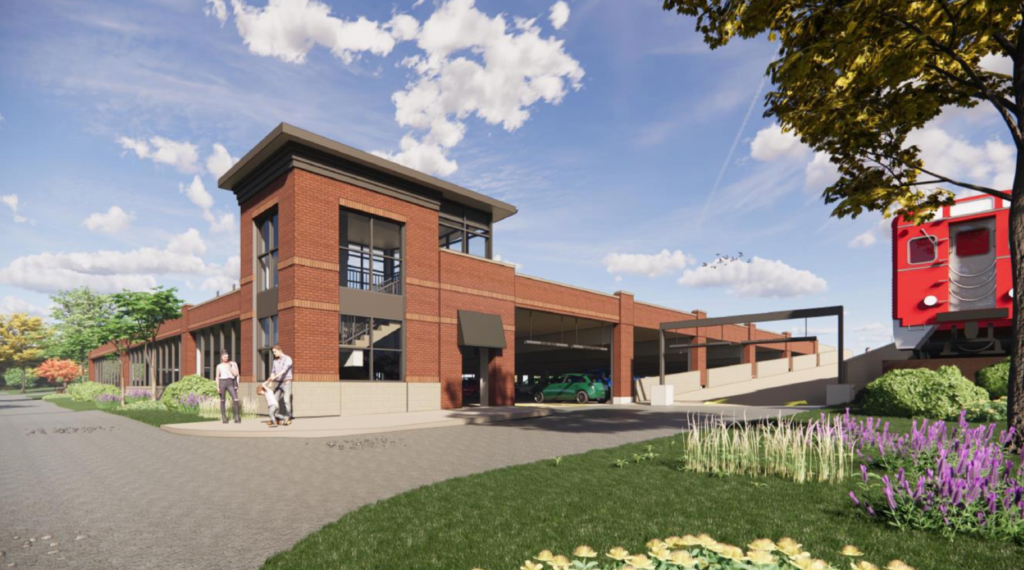
    The previously proposed 2-storied parking garage.

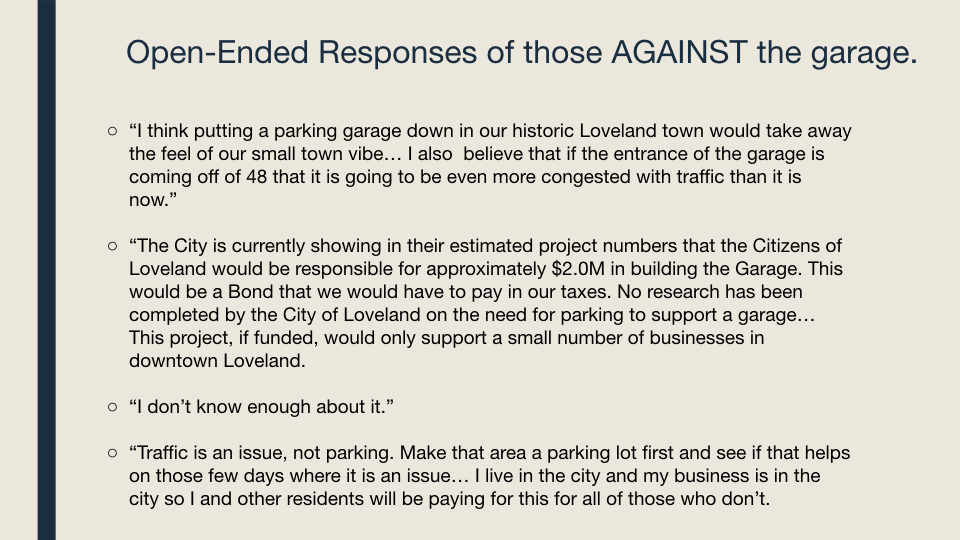
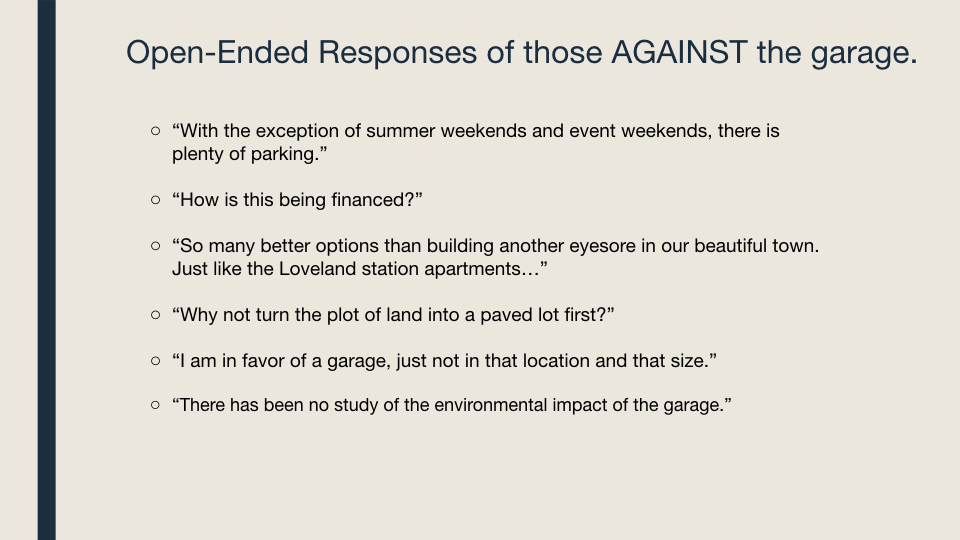
  • Chamber President releases results of parking garage survey

    Chamber President releases results of parking garage survey

    by David Miller

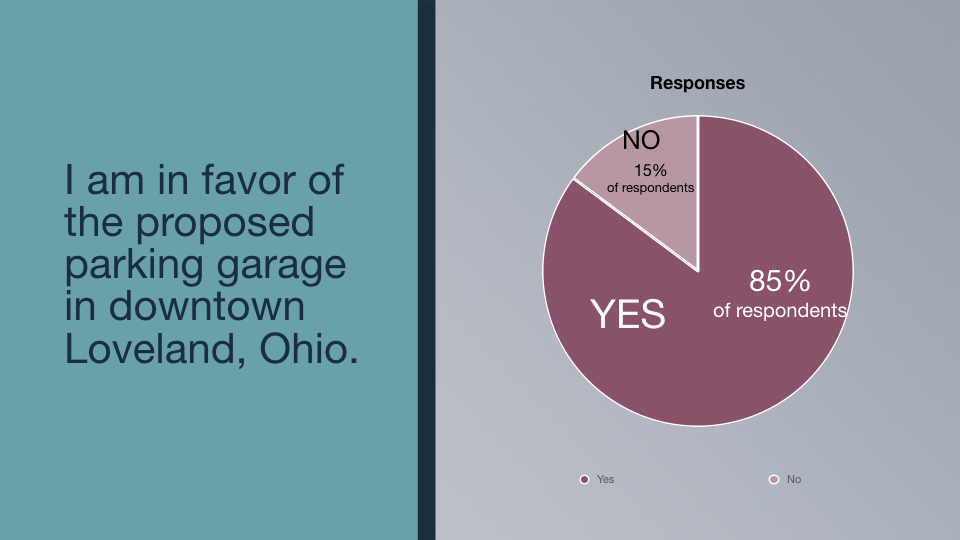
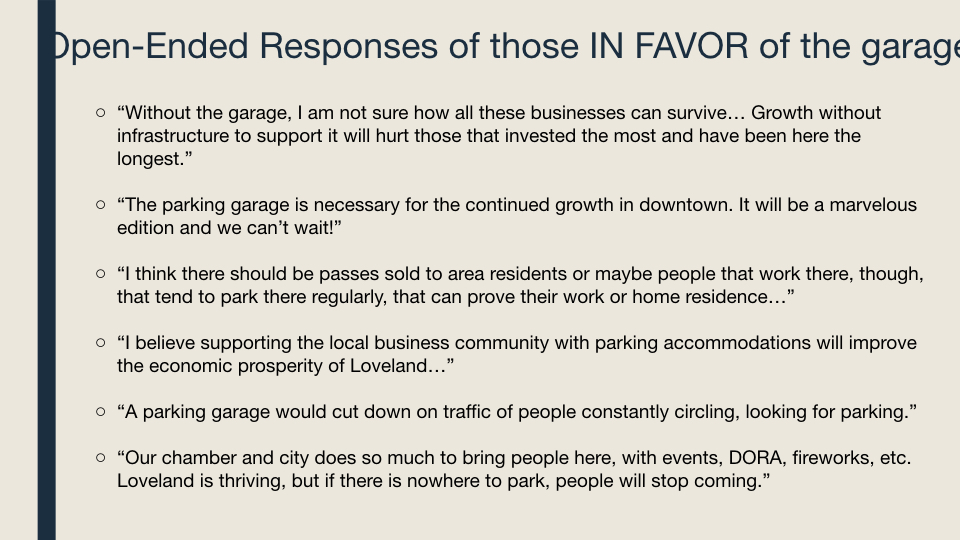
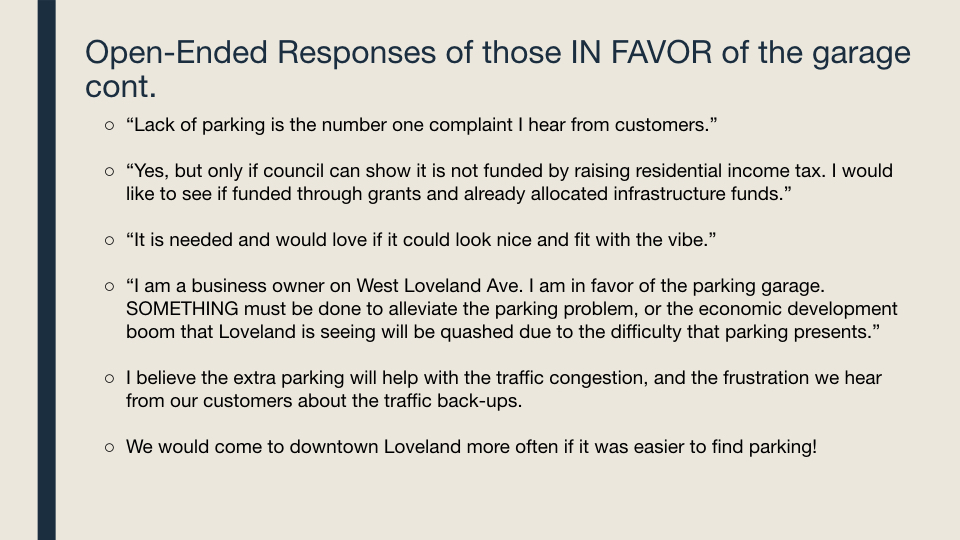
    Loveland, Ohio – At Tuesday’s council meeting CeeCee Collins released the results of a parking garage survey recently conducted by the Little Miami River Chamber Alliance. Collins is the President of the Chamber.

  • [VIDEO] City Manager addresses acquisitions associated with the proposed parking garage

    [VIDEO] City Manager addresses acquisitions associated with the proposed parking garage

    This story was updated at 10:30 AM, Sunday, February 27*

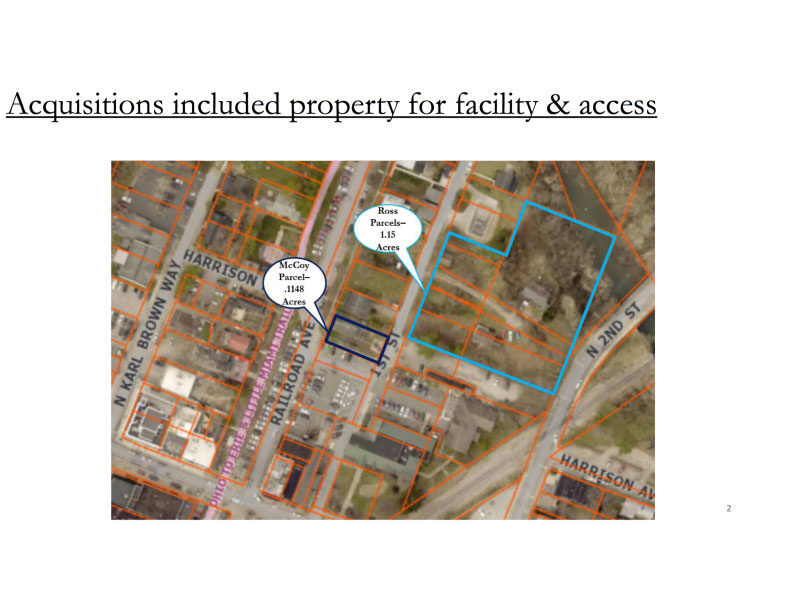
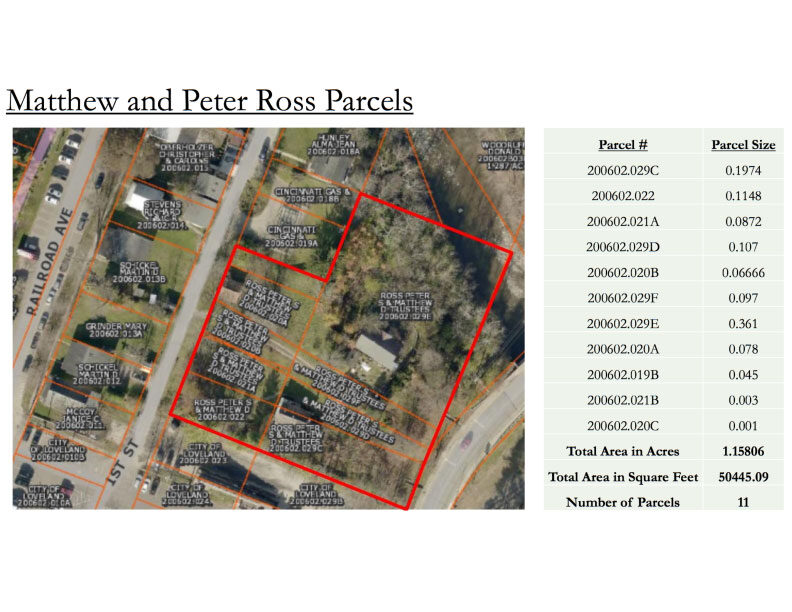
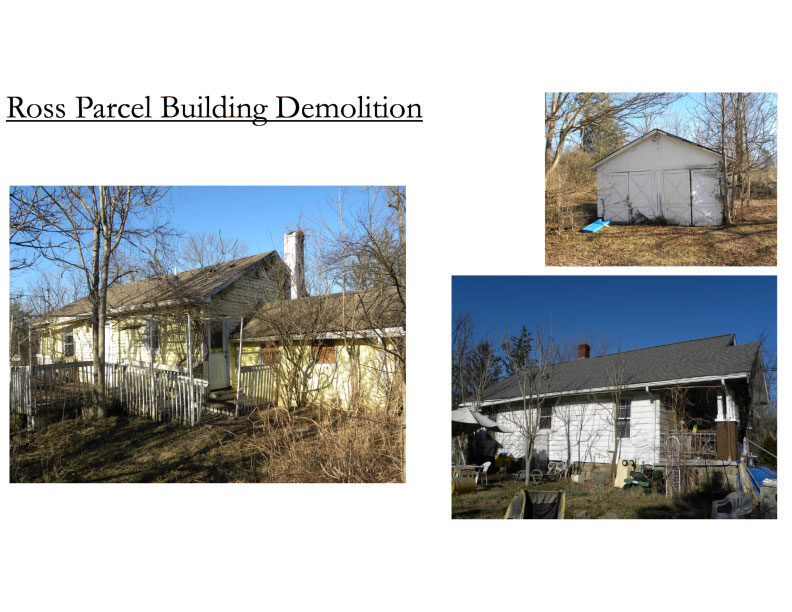
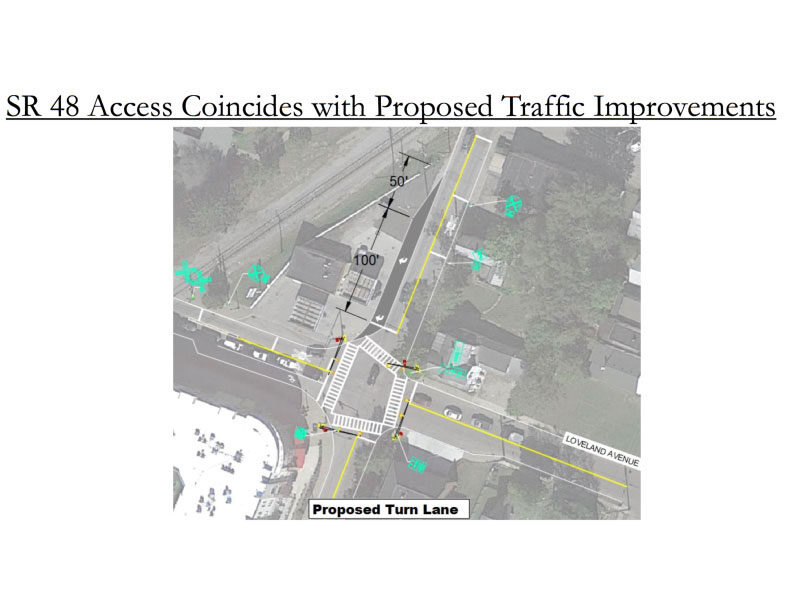
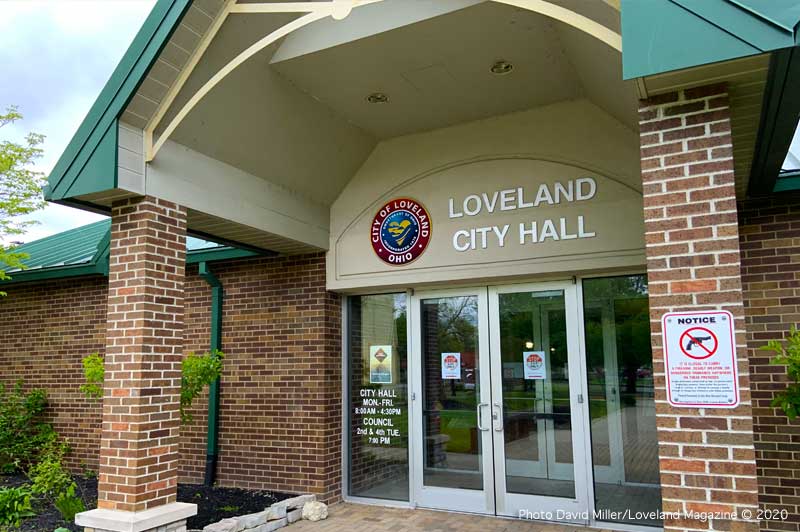
    Loveland, Ohio – On Tuesday, February 22, at the City Council meeting, City Manager Dave Kennedy addressed the acquisitions associated with the proposed parking garage project and how they relate to other associated projects.

    This video was produced by the City of Loveland and edited by LOVELAND MAGAZINE TV to show only the presentation by the City Manager and the ensuing discussion by Council members.

    *Publisher’s Note: At the end of this video is a discussion by Mayor Kathy Bailey about a news reporter, however, she failed to mention the name of the reporter. We want our readers to know that the story told by the Mayor did not have anything to do with Loveland Magazine.

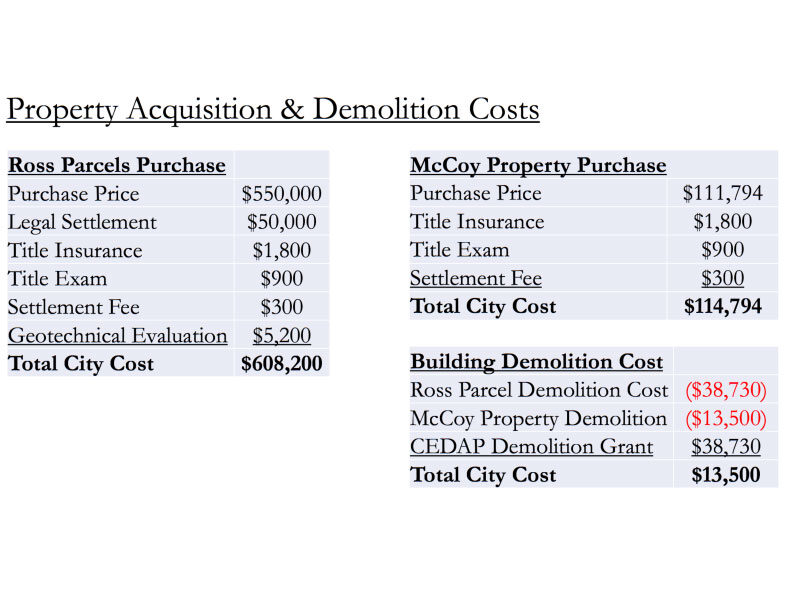
    Below are the slides that Kennedy used in his presentation. You can Right-Click an image to open in a new tab to view larger sizes.

  • Regional stakeholders weigh in on Loveland’s proposed parking garage

    Regional stakeholders weigh in on Loveland’s proposed parking garage

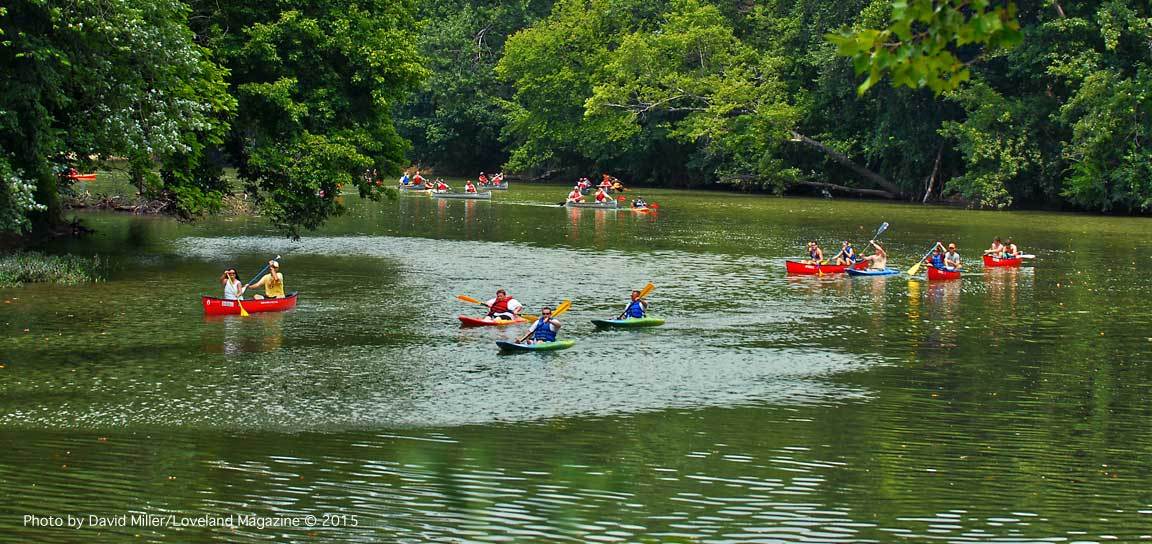
    Photo of the Little Miami River in downtown Loveland by David Miller

    All Stakeholders Must Weigh In on Proposed Parking Garage

    by Jeanne Nightingale, Citizens for Rights of the Ohio River Watershed (CROW),  Sierra Club Miami Group,  League of Women Voters Natural Resources Committee, Woman’s City Club of Greater Cincinnati

    The Little Miami State Park, located within the beautiful and historic Little Miami River valley, has been designated as a federal and state scenic river. It is protected because of its water quality, panoramic setting, and the many historic sites that can be found along its banks. The historic City of Loveland has become the gateway to the linear park trail that meanders 50 miles along the river valley, a popular destination for cyclists, paddlers, and hikers. 

    It is not surprising that Loveland’s business community welcomes the opportunity to accommodate out-of-town visitors to the scenic park by building a parking garage 100 feet from the Little Miami River trail head. Since downtown parking is scarce, such a facility would be convenient for customers frequenting the growing number of restaurants, shops, and businesses that make this charming old town an even greater tourist attraction.

    And yet, what is an asset for some is a liability for others. The residents of Loveland have been given no chance to weigh in on the proposed two-story 270-space garage parking garage in the heart of their town and adjacent to the confluence of two natural waterways, the Little Miami River and the O’Bannon Creek. There is a growing concern among many Loveland residents that such a structure would destroy the very scenic park that attracts tourists in the first place. 

    By law, and in accordance with the provisions of chapter 1547 of the Ohio Revised Code the Ohio, the Ohio Department of Natural Resources (ODNR) is charged with appointing an Advisory Council representing local interests to assess the ecological viability of building such a structure within reach of the Little Miami State Park. Nevertheless, the City Council of Loveland has proceeded – with zero community input – to apply for millions of dollars in government grants to build the garage behind Loveland’s City Hall.  

    The Little Miami River, in fact, traverses an ecologically vulnerable flood plain. Trail volunteers report their never-ending battle of keeping the trail free of conditions that cause flooding on parts of the trail-clogged culverts, erosion caused by bridge embankments, adjacent developments, and other obstacles that interrupt the flow of water away from the trail surface. Even a few inches of rainfall can cause permanent flood damage. With the ground’s inability to absorb or impede the flow of water, the consequences can be disastrous. And yet, no data-driven environmental impact studies have been done to date.  

    Mature trees – vital for maintaining the permeability of the forest soils and preventing erosion and flooding – will need to be cut down to make room for this imposing concrete structure. Have wet weather studies been done to assess the impacts of increased stormwater runoff from the bulldozed ground, demolished building and asphalt surfaces, or the discharge from the requisite catch basins and storm sewer pipes needed to manage stormwater overflows? What would be the measure of air pollution due to increased particulate matter as well as increased noise pollution? Have any of these environmental concerns have been addressed?

    Communities that dwell within natural watersheds have the legal right to participate in constructive dialogue and debate on matters that put the health, biodiversity, and safety of the ecosystem in which they live at risk. Loveland City Council must hold a public hearing before it takes a vote on the proposed downtown parking garage. Addressing the parking situation in this unique town should rightfully include all stakeholders in the discussion. 

  • Rally this Saturday at City Hall to ask for public engagement on proposed parking garage

    Rally this Saturday at City Hall to ask for public engagement on proposed parking garage

    Make Your Voice Heard About the Garage Proposal

    by Lauren Enda

    Everyone is invited to a rally this Saturday, February 19 at 1 PM in front of Loveland City Hall. Members of the community are asking the city council to engage with the public before building a parking garage in historic downtown Loveland. There are too many unanswered questions surrounding the garage proposal.

    Before spending millions of taxpayer dollars, council should: 

    1. Determine the exact need 

    2. Look at less expensive options – cost to build, maintain and enforce 

    3. Look at the environmental consequences – water runoff, noise, light, and air pollution 

    4. Address other priorities of the city, like traffic and the antiquated water systems that won’t be addressed because of this spending 

    5. Balance parking issues with how the massive size (about the size of a football playing field) will detract from Loveland’s charm 

    6. Let the citizens vote by referendum if council decides to move ahead

    Join us on Saturday if you believe the citizens of Loveland should have answers to these questions before moving forward. Sign the petition at the link below to let your voice be heard.

    Petition · Stop the Loveland Garage · Change.org


    by Lauren Enda,

    Lauren Enda lives in Loveland at Hidden Creek

  • Council Continues to Choose the Most Expensive and Damaging Option for Parking, Ignoring Other Options – with No Explanation Why

    Council Continues to Choose the Most Expensive and Damaging Option for Parking, Ignoring Other Options – with No Explanation Why

    by Lauren Enda,

    For the last several months, I have been speaking at council about the need for more conversation, study, and transparency about the parking garage proposal. Loveland needs to do something about the parking issue, that much we can all agree upon. The proposed garage is one of many, many options available to Loveland. Every other option is less expensive, less permanent, less damaging to the environment and less jarring to the landscape. And every other option would enhance, rather than detract from, Loveland’s brand as a quaint and historic area.

    Here is a high-level overview of just one option that would be free to Loveland taxpayers, drastically cut down summer traffic levels in Loveland, provide Loveland businesses even more customers and clients, and maintain our natural, peaceful downtown landscape. The Miami Riverview Park is approximately one mile away from Loveland and it sits on the bike trail. There are hundreds of spaces available – all free of charge. Loveland could mount a marketing and communication plan, teaming with Miami Township, to divert cyclists and walkers coming from 275 to park there and then ride or walk into Loveland – which on a bike takes about a minute. Cyclists or walkers from the east or Route 48 could park there as well without entering Loveland’s downtown area at all. 

    To get the word out about the parking alternative, we could post temporary signs on the trail directing people to Miami Riverview next time they are in Loveland – we could even include a QR code with a map directing them. We could make up information cards to put on windshields and for businesses to give to their customers. Loveland has a Marketing and Communications Coordinator on staff who could design more ways to get the word out about this idea. If cyclists parked at Miami Riverview, it would free up dozens, if not hundreds, of parking spaces downtown for Loveland residents, and reduce traffic. Miami Riverview is just one option of many. And it is free, easy, available now, with no construction, no environmental damage, and no controversy. Let’s pursue this option first.

    A parking committee could outline further options, weighing cost, return on investment, environmental damage, number of spaces, etc… Residents would be happy to talk through more options with members of council at any time. We do not have to choose the most expensive option. In fact, why would we choose the most expensive option? Choosing to spend millions of dollars unnecessarily shows a lack of respect for taxpayers and their money. Council needs to explain their course of action when other options are available. Let’s spend our precious dollars on other higher priority issues – our aging water system, traffic issues, or sorting out the Chestnut property. There are plenty of priorities to choose from that would benefit everyone.

    “I chose Loveland as my retirement home. A large part of my decision to move here was the bike trail and the downtown area and I am determined to protect that. I will fight to protect it.”

    Lauren Enda

    To make speeches and write articles takes a lot of work – and a lot of courage.  Partnering with and learning from a wide variety of individuals and organizations helps to learn about the garage and its detrimental impacts. Two of those organizations spoke at City Council on February 8th – the Sierra Club and the Citizens for Rights of the Ohio River Watershed. Both organizations acknowledge that parking must be addressed but saying the issue must be fully studied and the Council must give residents the ability to vote on a parking garage. Contacting Ohio’s Environmental Protection Agency, The Ohio Department of Natural Resources, multiple elected officials, and The Economic Development Administration has also widened my knowledge of the issue. 

    I chose Loveland as my retirement home. A large part of my decision to move here was the bike trail and the downtown area and I am determined to protect that. I will fight to protect it. I want Loveland to succeed. I want Loveland businesses to succeed. I want visitors to enjoy my town as much as I do. And I want everyone to have a place to park. Together, let’s find ways to provide that parking using a rational, systematic approach. 

    If you want to show your support for a more reasoned approach to the parking issues in Loveland, sign this petition. Council needs to hear from us that we want more data on the parking issue. Thank you.

    Petition · Stop the Loveland Garage · Change.org

    Lauren Enda lives in Loveland at Hidden Creek.

    >

  • Lauren Enda: Is There a More Sustainable Plan to Provide Parking Without Harming Our Environment?

    Lauren Enda: Is There a More Sustainable Plan to Provide Parking Without Harming Our Environment?

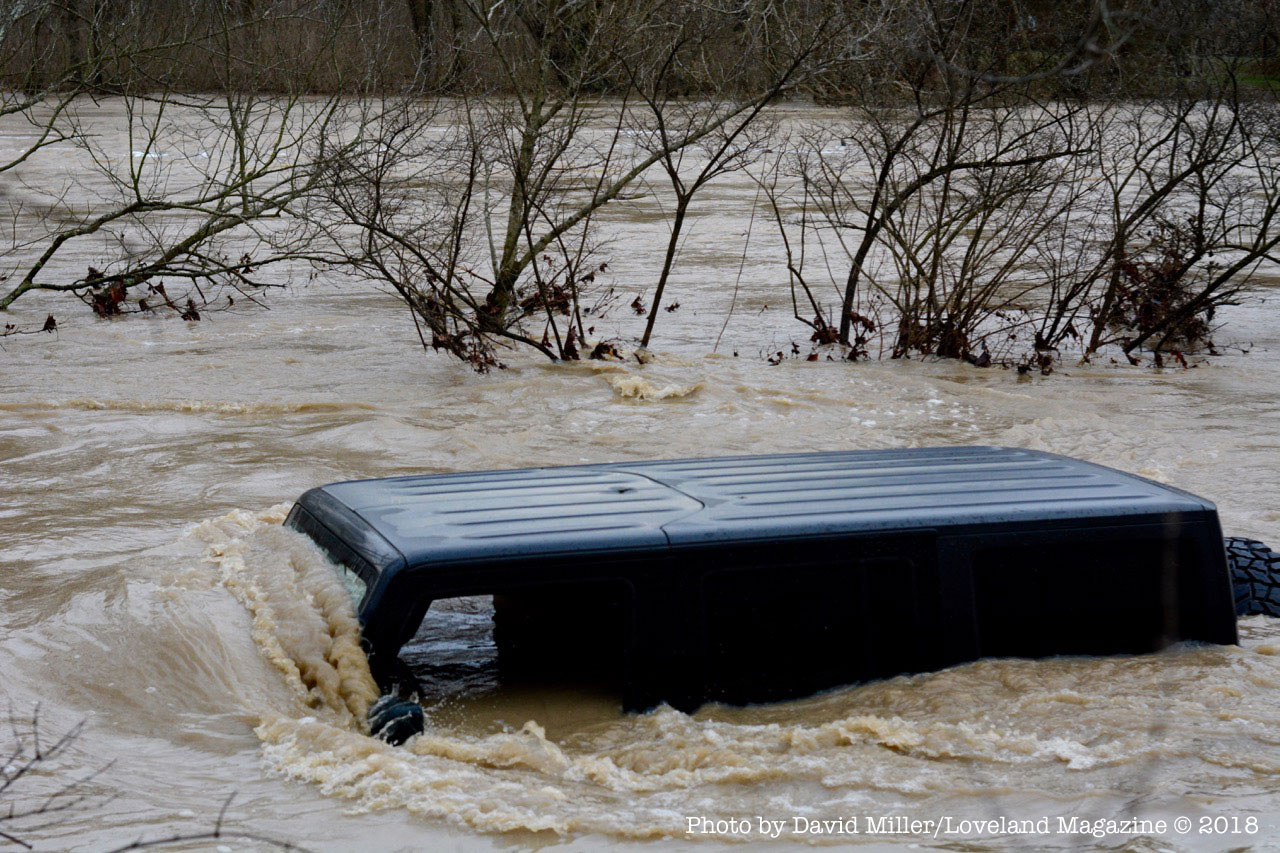
    The above photo is of flooding in Loveland on February 25, 2018

    “The notion of the common good also extends to future generations.

    – Richard Rohr

    Lauren Enda lives in Loveland at Hidden Creek

    by Lauren Enda

    Weather is changing in Ohio. According to Cincinnati’s Office of Environmental Sustainability, Ohio is getting hotter, wetter, and suffering with more extreme weather and periodic droughts. More storms and more rain increase runoff and flooding. Hamilton County has had nine 100-year storms in the last 10 years. This is a startling statistic and should be troubling for everyone, especially those who live near water. Therefore, the city of Loveland should be looking very closely at what, and how much, is developed. Replacing permeable surfaces (grass, gravel, earth) with impervious surfaces (concrete and asphalt) are a major cause of flooding in urban areas. This article will present a high-level overview of the environmental risks associated with the proposed parking garage.

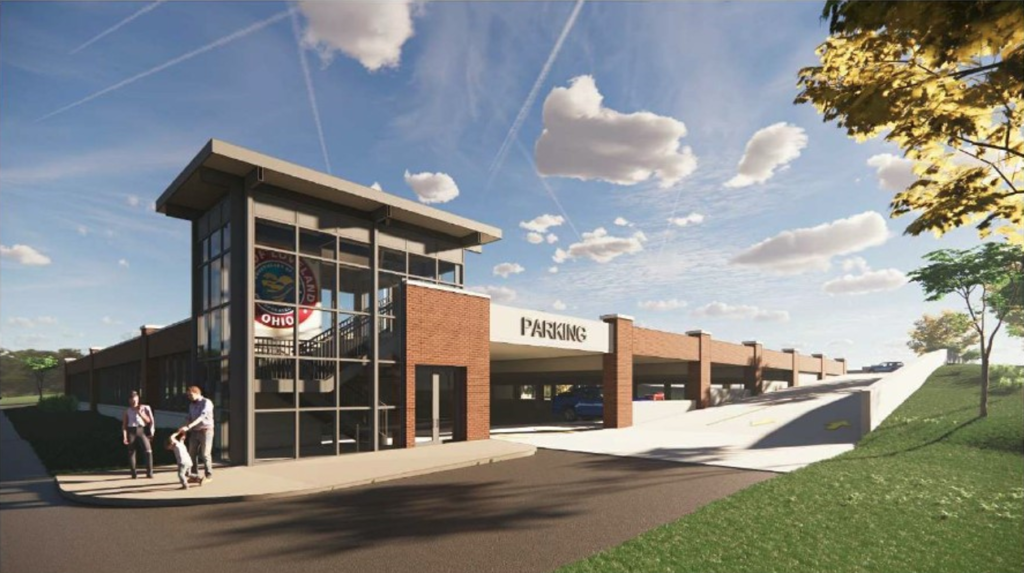
    The proposed parking garage for Historic Downtown as envisioned by City Hall.

    What happens when we heedlessly and perhaps needlessly, dig out trees, remove soil, disturb the water tables, and pour tons of concrete without appropriate studies? Replacing permeable surfaces with impervious surfaces could lead to unwanted and dangerous side effects.

    Most dangerous to the residents and businesses of Loveland is water runoff and flooding. According to the United States Geological Survey, “…rainfall in forested watersheds is absorbed into soils, stored as groundwater, and slowly discharged to streams… Flooding is less significant in these more natural conditions because some of the runoff during a storm is absorbed into the ground, thus lessening the amount of runoff into a stream… As watersheds are urbanized, much of the vegetation is replaced by impervious surfaces, thus reducing the area where infiltration to groundwater can occur. More simply, in a developed watershed, much more water arrives into a stream much more quickly, resulting in an increased likelihood of more frequent and more severe flooding.”1

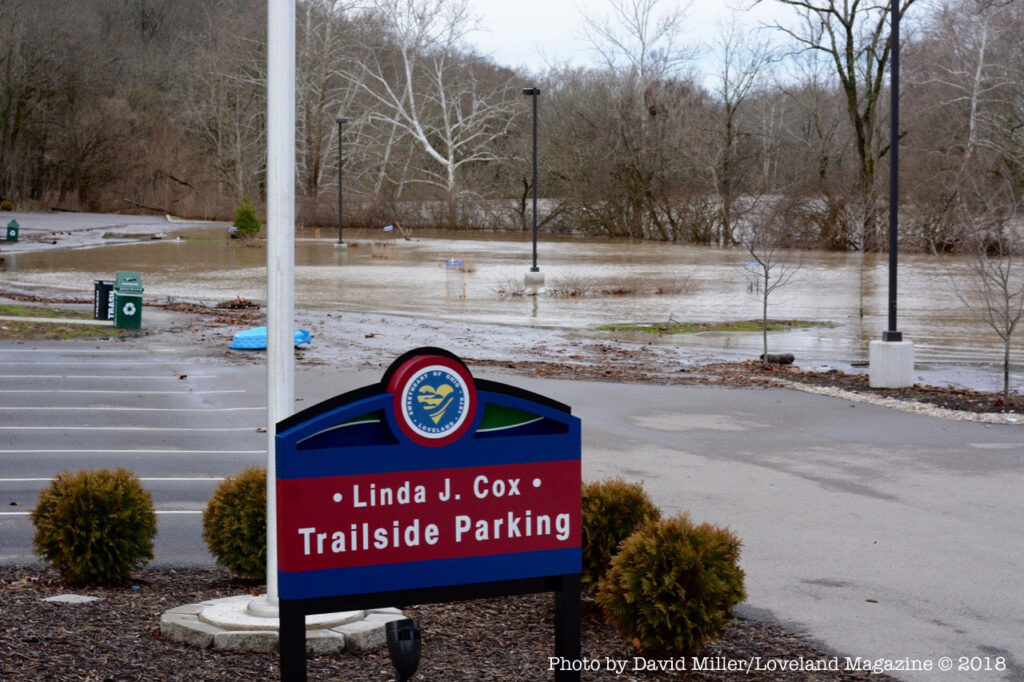
    The Linda Cox Trailside Parking lot in February 2018

    The Little Miami River and O’Bannon Creek could be at risk. Studying runoff, flooding and erosion in and near the Linda J. Cox parking lot may be a good place to start before Loveland adds more concrete or asphalt downtown. The increasing number and severity of storm events is not going away, but will worsen, raising the flood risk even higher. Can we afford to have more flood events? Is Loveland prepared for, or even starting to prepare for, this eventuality? 

    But flooding is not the only problem with water running from a massive parking garage into the Little Miami. The water itself brings contaminants from paved parking surfaces like oil, leaking brake fluid, antifreeze, and trash, which are then put directly into the river. The summary of a 2014 report in the journal “Environmental Challenges” quotes that, “Impervious car park surfaces represent a major source of urban water pollution.”2

    The risk of increased flooding and contaminated runoff are bad enough, but the proposed garage will bring pollution to Loveland in other ways. 

    • Air pollution: More cars downtown will mean more exhaust fumes rising into the air. 
    • Noise pollution: More traffic and more cars will bring more noise to our tranquil downtown.
    • Light pollution: Parking garages are magnets for crime and other undesirable activities and therefore must be extremely well lit – 24 hours a day, 7 days a week. This light pollution will destroy the picturesque nighttime setting we currently enjoy.
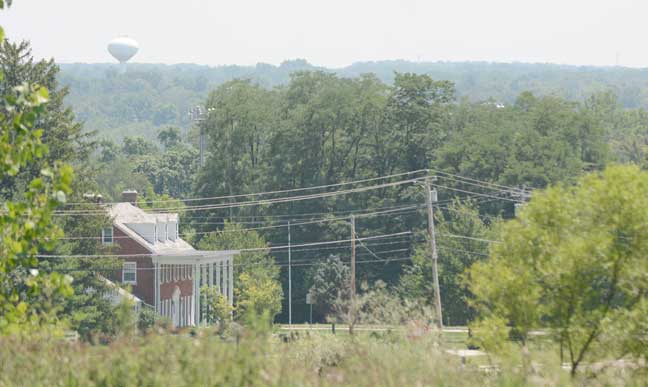
    The smoggy Loveland horizon from Loveland High School during an Air Pollution Alert in July of 2016

    An additional, but by no means trivial, impact on our environment, is the concrete itself. Concrete has a massive carbon footprint, which is concerning if we care about the future of our children and grandchildren. According to a 2018 report by the BBC, “Concrete is the most widely used man-made material in existence. If the cement industry were a country, it would be the third largest (carbon dioxide) emitter in the world – behind China and the US.”3 Let’s not make uninformed or hasty decisions about building with a material that is so hurtful to the environment.

    Finally, expanses of concrete or asphalt create what is called a “micro-climate: “The climate of a small, specific place within an area as contrasted with the climate of the entire area.”4 According to multiple studies, urban areas with paved surfaces are hotter than the surrounding areas by as much as 7 degrees. We have all witnessed this phenomenon when standing in a parking lot in the summer. Does Loveland want to introduce a “heat island” to our downtown?

    “Success can be measured in different ways.”

    Loveland resident Lauren Enda

    I do not claim to be an environmental scientist, a climate expert, or a soil or water conservation guru. Perhaps as a community we can learn more about the current, and future, environmental impacts of today’s decisions. What will these decisions look like in 2030 or 2040 when the problems facing Loveland will perhaps be much larger than simply having to park a block further away? Will our children be glad for more concrete, or will they wish for a safer, cleaner, more sustainable Loveland? Success can be measured in different ways.

    An unbiased environmental study by experts who will not benefit with the building of the proposed garage would help Loveland make decisions for today, and for our future, in an uncertain and changing world.  


    1. Runoff: Surface and Overland Water Runoff (usgs.gov)
    2. The sources, impact and management of car park runoff pollution: A review – ScienceDirect
    3. Climate change: The massive CO2 emitter you may not know about – BBC News
    4. Microclimate – definition of microclimate by The Free Dictionary

  • Councilman and candidate Neal Oruy speaks about Grail annexation and parking garage

    Councilman and candidate Neal Oruy speaks about Grail annexation and parking garage

    Loveland, Ohio – At the October 26, City Council meeting, current Councilman and candidate who was running for re-election, Neal Oury, went to the open forum microphone and talked about the Grailville annexation and the proposed parking garage in Historic Downtown.

    Go to LOVELAND MAGAZINE TV to view other recently published videos on this subject.

  • I believe that we have to look at new models of Urban Planning

    I believe that we have to look at new models of Urban Planning

    by Kim Lukens

    YOUR QUALITY  OF  LIFE – YOUR COMMUNITY IDENTITY – YOUR COMMUNITY VALUES

    My name is Kim Lukens. My home is located in the Brandywine Subdivision which is on the east side of Loveland. I need to access 275 West for my lifestyle probably 70% of the time. I have to drive by what some call Historic downtown Loveland, to Loveland Madeira Rd. over to 275 West to live out my lifestyle. This transit can take me 20 to 40 minutes because of congestion. I have been a resident of Loveland City for just over a year. My name is on the Nov 2nd, 2021 ballot for you to choose as one of Loveland’s City Council Representatives.

    I have seen the current City Council which includes the Mayor and City Manager influence Loveland City’s identity and quality of life. Loveland city has been altered through zoning, voting, and saying YES to developers that want to build homes instead of supporting the development of a park. Saying YES to 25 multifamily townhomes on a dense amount of land, the annexation of 95 acres owned by a single owner for a development that would build 200 to 250 homes. The historic blueprint of downtown Loveland has changed. There is an increase in the number of restaurants. The product of alcohol seems to be heightened to the public such as advertised ‘’HAPPY HOUR”, emphasis on BAR food, DORA, musical bands inside some of the newer owned restaurants, the new Civic Center, over 70% of the CITY EVENTS involve accessibility or linkage to alcohol. I see this direction as not sustainable and having a negative impact on the Quality of Life.

    What has happened to the value of the State-funded Historic Bike Trail that rolls for 100’s of miles from Southwest to Northern Ohio? The value of the Little Miami River which is a natural tributary and Lake Isabella. Where have the mature trees and woods disappeared too?

    How important are historic preservations of buildings to you?
    The Joy of making a homemade picnic lunch, the Joy of reading a book, playing a game of cards, playing chess, or reading the newspaper at Nisbet Park.

    Do we need curbside service or valet parking when we enjoy downtown Loveland?

    Can we create a one-of-a-kind Walking City and work with the space we have for parking without building a garage? Can we walk one, two, or three blocks to work in and enjoy Downtown Loveland? Can we provide closer parking spaces for those who need wheelchairs, walkers, canes, or who have some sort of handicap?

    I believe that the United Nations Sustainable model of how to achieve a High Quality of Life can work. Loveland City is currently not in a Sustainable Zone.

    I hope that we can preserve our past, embrace our present and prepare for our Future.

    I believe that we have to look at new models of Urban Planning. We need to embrace Colleges that are on the cutting edge of Sustainability, Security, and Resilience. Our world has been altered due to COVID, technical advances, our current situation with natural resources,
    immigration and other concerns and fears.

    Thank-You!

  • Lauren Enda: Parking garage will harm Loveland’s heritage and the natural environment we love

    Lauren Enda: Parking garage will harm Loveland’s heritage and the natural environment we love

    by David Miller

    Lauren Enda

    Loveland, Ohio – Lauren Enda went to the Loveland City Council meeting Tuesday evening to talk about the proposed parking garage in Historic Downtown. Some of the concerns she expressed were about the negative impact she envisions for Loveland’s heritage and quaintness, and the environment.

    She proposes that Loveland residents should be allowed to vote at the ballot box on what she describes as a “big city solution” that will take from the town things it will never get back.

    She also suggestsed that an environmental impact study should be done to protect the “natural environment we love”.