Tag: partisan favoritism

  • Ohio Supreme Court strikes down congressional maps for second time

    Ohio Supreme Court strikes down congressional maps for second time

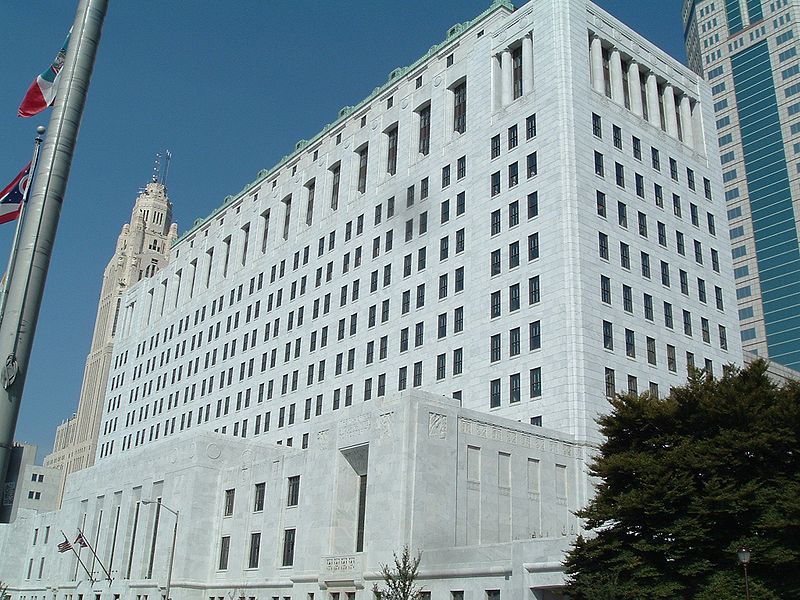
    Pictured is the Thomas J. Moyer Ohio Judicial Center where the Ohio Supreme Court meets. Photo courtesy Wikimedia Commons..

    BY: SUSAN TEBBEN – Ohio Capital Journal


    For the second time, the Ohio Supreme Court rejected a map for congressional districts in the state.

    The court ruled that the map violated the constitution by favoring one political party over another irrespective of election results across the state.

    “We hold that the March 2 plan unduly favors the Republican Party and disfavors the Democratic Party in violation of the (Ohio Constitution),” the majority decision reads.

    The 4-3 decision reflected the other decisions the court has made on redistricting: Chief Justice Maureen O’Connor voted to reject the maps, along with Justice Michael Donnelly, Justice Melody Stewart and Justice Jennifer Brunner. Justices Sharon Kennedy, Patrick DeWine and Patrick Fischer all dissented in the case.

    In ruling against the partisanship in the congressional map, the court called out the commission for creating Democratic districts with razor-thin advantages, while the Republican-leaning seats “comfortably favor Republican candidates.”

    In the most recent congressional map, only three Democratic-leaning seats have more than 52% Dem advantage, whereas all Republican-leaning seats have more than 53% GOP advantage.

    “Considering that Democratic candidates have received about 47% of the vote in recent statewide elections, this probable outcome represents only a modest improvement over the (previously) invalidated plan,” according to the court decision.

    The court pushed back against arguments made by Ohio Redistricting Commission members, including Senate President Matt Huffman and House Speaker Bob Cupp, both of whom have left the commission since then, replaced by state Sen. Rob McColley and state Rep. Jeff LaRe.

    The legislative leaders and their replacements on the commission tried to argue they were not obligated to correct “legal defects” in the original congressional plan while revising the plan.

    “The commission’s constitutional duty is to adopt a congressional district plan to replace the original, invalidated plan,” the court majority wrote. “Indeed, the commission has a constitutional duty to remedy the defects in the previous plan.”

    Huffman, Cupp, McColley and LaRe said fixing the “defects” would “incentivize” Democrats to vote against the plan, and called the article setting forth anti-gerrymandering rules a “safety valve of sorts” for the ORC to adopt a plan that didn’t have to align with the same redistricting rules as the General Assembly.

    “No constitutional language suggests that the voters who approved Article XIX intended to allow the prohibitions against partisan favoritism and unduly splitting governmental units to be avoided so easily,” the majority ruled.

    The lawsuit was filed in March, after the Ohio Supreme Court turned down calls to reject the maps in a previous lawsuit on congressional redistricting. The court said because its previous decision to reject the first congressional map was final, challengers had to file a new lawsuit to challenge the second version.

    The supreme court rejected the first map on the same grounds as the second rejection: partisan favoritism.

    In their dissent to the majority decision, Kennedy and Patrick DeWine said they would have left the plan in place as constitutional and allow its use for the 2024 primary and general elections.

    Kennedy and DeWine said because they would have held that the first congressional map “did not unduly favor Republicans and was constitutional,” they would have done the same for the second plan.

    DeWine, who is Gov. Mike DeWine’s son, has recused himself from any court cases regarding holding the ORC members in contempt of court due to his father’s participation as a commission member. However, he has refused calls for his recusal in all redistricting cases because of his father’s involvement in the process.

    Fischer joined the dissent, but wrote separately to argue that map challengers “do not even meet the lower clear-and-convincing evidence burden of proof or the even lower preponderance-of-the-evidence burden of proof” that the second congressional map unduly favored Republicans.

    He also criticized the process conducted by the state supreme court, saying a lack of hearings “undoubtedly raises concerns among the public regarding this court’s lack of transparency.”

    “This court’s misguided rush to decide these cases has resulted in an unnecessary and truncated procedure that has effectively tied this court’s hands and rendered it unable to make a fully informed decision,” Fischer wrote.

    The court gave the General Assembly 30 days to pass a new map, and if they can’t, the Ohio Redistricting Commission will have another 30 days to do so.

    Since the May primary, which included congressional races, already occurred, a new congressional plan’s impact will go forward to 2024 elections.

    The legislature is currently on summer break, set to come back in the fall. Huffman’s spokesperson did not respond to a request for comment on the ruling, or if they would be reconvening the GA early to deal with the issue.

    A spokesperson for Cupp said the office was reviewing the decision.

    The ORC’s co-chair, Democratic state Sen. Vernon Sykes joined Senate Minority Leader Kenny Yuko in saying the court “made it clear that Republicans have repeatedly used the redistricting process to give themselves an unfair advantage.”

    “Once again, we are ready to follow the law and give Ohioans the fair maps they demanded,” Sykes and Yuko said in a statement. “We hope this time our Republican colleagues will join us, instead of trying to run out the clock.”

    A spokesperson Ohio Secretary of State Frank LaRose, the state’s chief elections officer and a member of the redistricting commission, said LaRose’s office had received the ruling and had a legal team reviewing the decision.

    The League of Women Voters, one of the two parties who challenged the congressional maps, praised the decision and hoped for swift and public action to adopt new congressional maps.

    “We agree that the congressional map is beyond a reasonable doubt gerrymandered, and we stand ready to work with the mapmakers to see a map produced that truly upholds the will of the voters for a free and fair election,” said Jen Miller, executive director of the LWV of Ohio.

    Follow OCJ Reporter Susan Tebben on Twitter.
  • Ohio Redistricting Commission resubmits maps already rejected as illegal by supreme court

    Ohio Redistricting Commission resubmits maps already rejected as illegal by supreme court

    BY: SUSAN TEBBEN – Ohio Capital Journal

    The Ohio Redistricting Commission Thursday voted to resubmit maps to the Ohio Supreme Court that the court has already rejected as illegal and unconstitutional partisan gerrymandering.

    The commission once again passed its third map 4-3 along party lines, with the exception of Republican Auditor Keith Faber, who said he voted no for the same reasons he voted against the map originally, claiming favoritism for Democrats.

    Republicans voting for the maps were Ohio Gov. Mike DeWine, Secretary of State Frank LaRose, state Sen. Rob McColley and state Rep. Jeff LaRe (sitting in for Senate President Matt Huffman and House Speaker Bob Cupp respectively).

    With a U.S. District Court promising to order the third set of maps to be put in place for the 2022 election, the commissioners saw fit to push those maps back into play, despite not one but two rejections by the state’s highest court.

    Indicating the action that was forthcoming from the commission, LaRose read a two-page statement he said explained the “logistical realities” of administering an Aug. 2 primary.

    He said the third map is already programmed in county boards of elections systems, which was done at his order, and he said he “would not instruct the boards to deprogram Map 3 before May 28, risking that the new map could be invalidated with no immediate options to administer a primary election.”

    “Therefore, Map 3 is the only viable option to effectively administer a primary election on Aug. 2, 2022,” LaRose told the commission on Thursday.

    In pushing for passage of the maps, McColley said these maps would be “only for use in the 2022 election.”

     State Rep. Jeff LaRe and state Sen. Vernon Sykes talk during Thursday’s meeting of the Ohio Redistricting Commission.
    (Photo: Susan Tebben, OCJ)

    The constitutional amendment overhauling redistricting processes in the state spelled out the commission’s ability to pass partisan four-year maps or bipartisan 10-year maps. It does not specify a two-year option, which critics say spells trouble in the supreme court battle.

    “We will continue to look at our legal options, and possibly this would only be a two-year map and we will work to get better maps in the future,” said Jen Miller, executive director of the League of Women Voters of Ohio. “But the redistricting commission can’t decide to adopt a two-year map.”

    The Ohio Supreme Court rejected the maps on March 16 for the same reason it rejected all other maps: partisan favoritism.

    “Substantial and compelling evidence shows beyond a reasonable doubt that the main goal of the individuals who drafted the second revised plan was to favor the Republican Party and disfavor the Democratic Party,” the majority wrote in their opinion on those maps.

    Court justices also rejected the maps after they were slightly changed by GOP mapmakers and submitted as the fourth map from the Ohio Redistricting Commission. Huffman introduced revised Map 3 on March 28, after he said it became clear the independent mapmakers maps were not going to be completed on time.

    On Thursday, the Democratic members of the commission, seemingly building up arguments against being held in contempt by the Ohio Supreme Court, introduced changes to a proposed map drawn by independent mapmakers in late March. That map had previously been dismissed by Republican members of the commission who claimed it unduly favored Democrats and didn’t address all the constitutional and court-ordered changes required of new state House and Senate maps.

    House Minority Leader Allison Russo brought up the maps, as she did in a letter earlier Thursday, asking for proposed amendments to the map by Thursday afternoon.

    She told the commissioners those items had been identified and addressed prior to Thursday night’s meeting. No other commission members submitted amendments, she said.

    But Republican commissioners were quick to express their dissatisfaction with these maps during the meeting, even as revised.

    McColley referenced an affidavit by independent mapmaker Dr. Douglas Johnson, saying Johnson acknowledged the maps were not done when he and Dr. Michael McDonald left their posts on March 28, having had their plan dismissed by the commission.

    Russo pushed back on the assertion, saying the maps were finished, but were only “double-checked” after completion.

    “To be clear, this map is finished,” Russo said.

    The Johnson/McDonald map was turned down again by the ORC on Thursday, with a party-line 5-2 vote.

    Russo read a statement at the end of the night, calling the latest journey to Map 3 “a bad-faith effort to punt (Republican) responsibility to another entity,” meaning the federal court.

    “The events that led us back here were not committed through incompetence,” Russo read from the statement. “We are here purposefully.”

    LaRose and DeWine were missing from the commission meeting after a recess following the vote to adopt the third map. Spokespersons said they had other commitments, and because the commission did not have any other voting items, they chose to leave before the meeting adjourned, and before media could ask any questions.

    DeWine’s spokesperson, Dan Tierney, said it was “simply impossible to adopt any map or resubmit any map that an election could be run on August 2.”

    Asked why the commission didn’t meet earlier than two days before the deadline, Tierney said there were “issues coming to compromise.”

    The maps now go to the Ohio Supreme Court for consideration and court challenges, which seem likely.

    As the commission’s newest co-chair, LaRe said with a map passed to cover only the next two-years, the commission still needs to continue its work.

    “We’re only talking about the ’22 election, so there’s more work for the commission to do,” LaRe said. “We’ve got to look at the next election cycle, so we’re not done yet.”

    He did not give a timeline on when the commission will begin working on the next election.

  • House GOP leader on Justice Maureen O’Connor impeachment: ‘All options are on the table’

    House GOP leader on Justice Maureen O’Connor impeachment: ‘All options are on the table’

    BY: JAKE ZUCKERMAN AND NICK EVANS – Ohio Capital Journal

    Columbus, Ohio – A ranking House Republican left open the possibility of impeaching the chief justice of the Ohio Supreme Court, which this week rejected Republicans’ third proposed legislative redistricting map. 

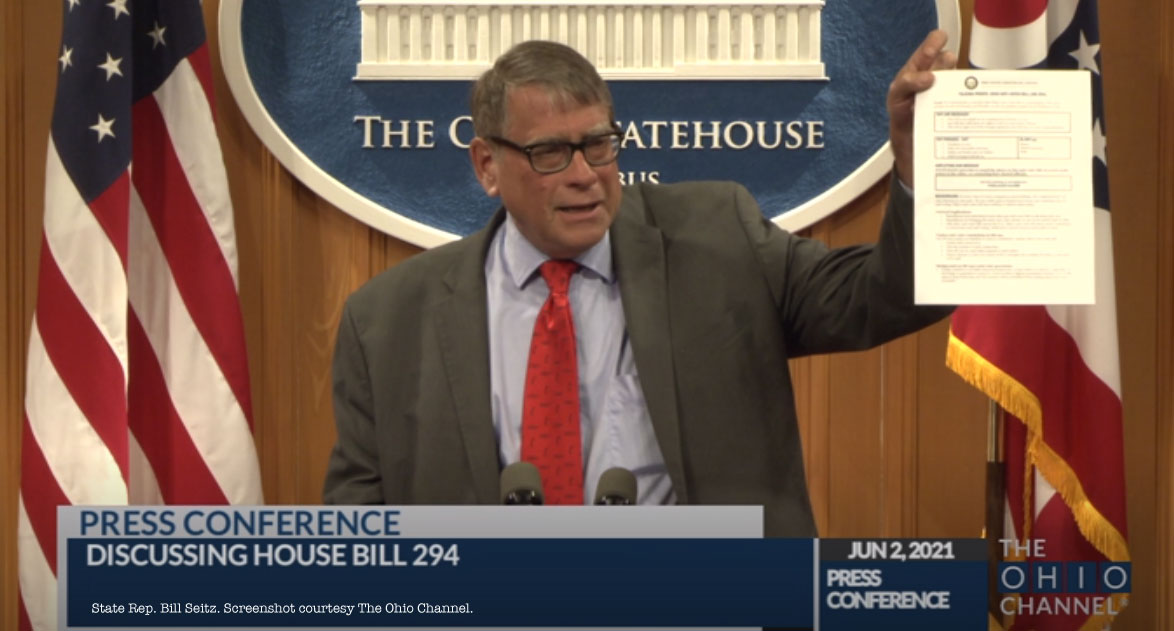
    During a private GOP caucus phone call Thursday, House Majority Leader Bill Seitz and Rep. Jon Cross voiced support for impeaching Justice Maureen O’Connor, according to a person on the call. O’Connor, also a Republican, has acted as a swing vote on two high-stakes redistricting cases and sided with Democrats on the bench finding the maps disproportionately favored Republicans in violation of the Ohio Constitution. 

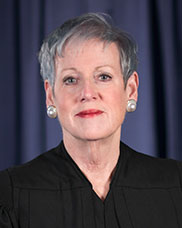
    Justice Maureen O’Connor

    Through a spokesman, Seitz, a longtime Cincinnati lawmaker and influential caucus member, declined to comment on caucus discussions but said Friday “nothing has been decided, and that all options are on the table.”

    Cross, a Kenton Republican, declined comment, noting “we (I) don’t comment about caucus meetings.”

    The call, held Thursday afternoon, lasted about 20 minutes, the source on the call said. In it, Seitz presented an argument that included old precedent for the House moving to impeach a justice after an unfavorable court decision. 

    When Cross offered what was described as a more fiery argument for impeachment, House Speaker Bob Cupp, R-Lima, ended the call, according to the source. Cupp’s office did not respond to requests for comment about the caucus call or his position on impeachment. 

    Cupp spent six years on the Ohio Supreme Court bench, serving alongside O’Connor for his entire tenure.

    On Facebook Thursday, hours before the caucus call, Cross wrote “enough is enough,” and that O’Connor had violated Ohio law related to altering the time, place or manner of an election.

    The claim about Seitz’ support marks the most senior legislator in favor of the possibility of impeaching O’Connor. Also Thursday, Rep. Scott Wiggam, R-Wooster, a committee chairman, said on social media “it’s time to impeach Maureen O’Connor now.

    https://twitter.com/Scott_Wiggam/status/1504496308584919044

    The hubbub comes in response to the court’s redistricting ruling late Wednesday evening. A four-justice majority found “beyond a reasonable doubt” that the most recent maps violated the constitution, particularly the provisions prohibiting partisan favoritism. While uncertainty remains, the ruling could force lawmakers to either move the May primary election date or create a second primary election date for non-statewide races. In a letter this week, Secretary of State Frank LaRose indicated the plan for now is to proceed with two separate primary elections.

    The decision on whether to pursue impeachment won’t be up to him, but Gov. Mike DeWine advised against the move Friday. 

    “This is an extraordinary measure to take,” he said. “I think we don’t want to go down that pathway, because we disagree with a decision by a court, because we disagree with a decision by an individual judge or justice. Not a good idea.”

    Three House Republicans publicly floated the concept of impeaching DeWine himself in 2020 for his COVID-19 response. The idea went nowhere. 

    The Supreme Court is currently reviewing a second, GOP-proposed congressional redistricting map after overturning the first effort on constitutional grounds. 

    Not long before the redistricting fiasco, O’Connor publicly broke from Republicans on judicial integrity. The Ohio Republican Party, with the 2020 presidential election looming, blasted a lower court’s ruling on election procedures and Franklin County Common Pleas Judge Richard Frye as a “partisan judge.” In an unusual move, O’Connor called the statement “disgraceful” and “deceitful” and emphasized the concept of judicial independence. 

    “This is a blatant and unfounded attack on the independence of the Ohio judiciary,” she wrote. 

    “To accuse a judge of deciding the matter before him on partisan politics and further accuse the judge of ‘obstruction of his judicial responsibility’ is without merit and is meant to further the false narrative that judges have no conscience, no legal responsibilities, and no capacity to decide what the law is beyond the raw politics of the issue.”

    An impeachment would be an extreme, though not unprecedented reaction. In fact, the Ohio Legislative Service Commission notes all eight impeachments in Ohio’s history were against judges. For instance, in 1808, members of the Ohio House grew angry enough at a ruling by Justice George Tod that they sought his impeachment. He survived via one vote in the state Senate, according to the court. Justice Calvin Pease was impeached and acquitted as well around the same time. 

    The Ohio Supreme Court gave state lawmakers until March 28 to submit a new proposal. The Ohio Redistricting Commission, a bipartisan panel of statewide and legislative officials, is scheduled to meet Saturday. 

    Morgan Trau contributed to this story.