Tag: Partners for Progress

  • Ohio Gov. Mike DeWine and Lt. Gov. Jon Husted subpoenaed in civil suit over bailout scandal

    Ohio Gov. Mike DeWine and Lt. Gov. Jon Husted subpoenaed in civil suit over bailout scandal

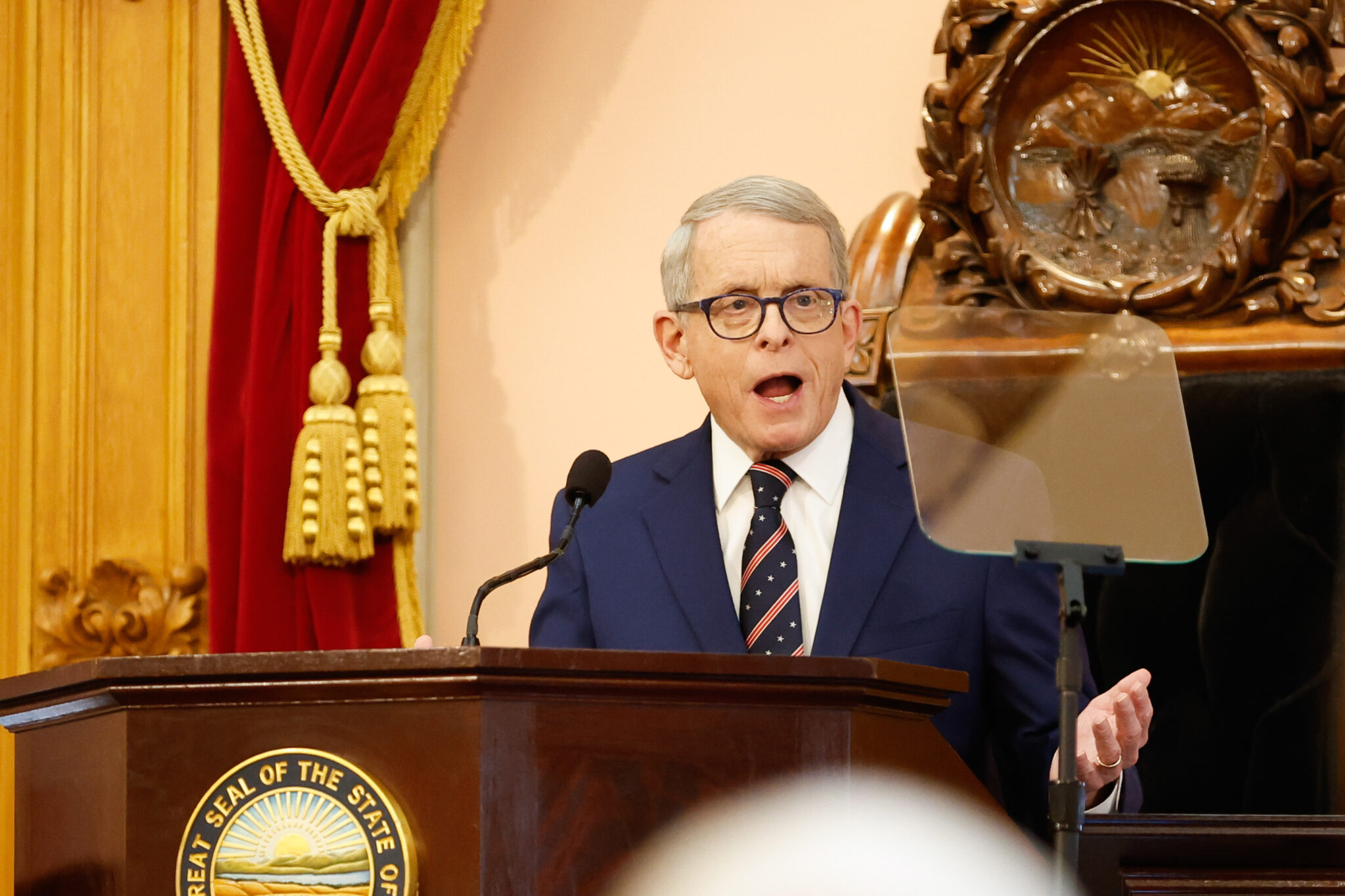
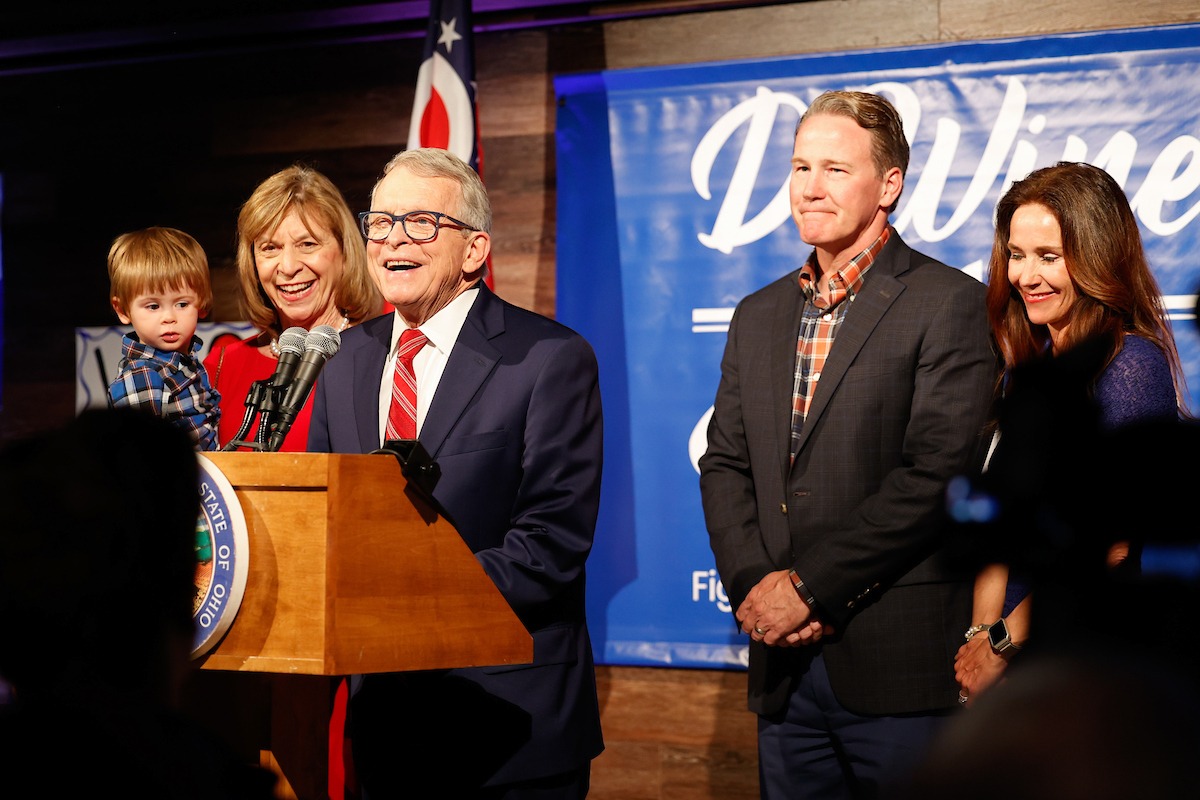
    COLUMBUS, OH — MAY 03: Ohio Gov. Mike DeWine joined on stage by First Lady Fran DeWine, grandson Calvin, Lt. Gov. Jon Husted and Second Lady Tina Husted to celebrate DeWine winning the Republican Party nomination for governor in the Ohio primary election, May 3, 2022, at the DeWine-Husted campaign headquarters, Columbus, Ohio. (Photo by Graham Stokes for the Ohio Capital Journal. Republish photo only with original article.)

    BY:  

    Plaintiffs in a civil suit related to a massive bribery and money-laundering scandal have subpoenaed documents from Ohio Gov. Mike DeWine and they’re scheduling a sworn deposition with Lt. Gov. Jon Husted.

    There have been four criminal convictions so far in the scandal and U.S. Attorney Kenneth L. Parker has said the investigation is continuing. However, there is no indication that DeWine or Husted is an object of it.

    Even so, members of the DeWine-Husted administration were significant players in the scandal and DeWine’s nominee to head up the Public Utilities Commission of Ohio could be a target of the probe.

    The demands for documents and testimony come in a class-action suit that big investors in Akron-based FirstEnergy filed against the company over its involvement in the scheme. Between 2017 and 2020, the company paid out more than $60 million to gain a $1.3 billion ratepayer bailout that was mostly intended to prop up two failing nuclear plants in Northern Ohio.

    Among those already convicted are former Ohio House Speaker Larry Householder, R-Glenford, who was sentenced to 20 years in prison for his role in what federal authorities said might be the biggest bribery and money-laundering scheme in Ohio history. Former state Republican Chairman Matt Borges in June was sentenced to five years for his role.

    However, others who played prominent roles in the scandal are yet to be charged.

    They include former FirstEnergy CEO Chuck Jones and former Vice President Michael Dowling, who directed the money to make Householder speaker in 2018 and then pass and and protect House Bill 6, the corrupt bailout legislation. They also include Sam Randazzo, DeWine’s first nominee to chair the Public Utilities Commission of Ohio.

    Jones, Dowling and Randazzo deny wrongdoing, but in a deferred prosecution agreement, FirstEnergy said Jones and Dowling paid Randazzo a $4.3 million bribe just as DeWine was selecting Randazzo to be FirstEnergy’s top regulator. In that post, Randazzo helped write the corrupt bailout bill and he helped FirstEnergy avoid a scheduled audit known as a “rate case” that was slated for 2024.

    Large investors such as pension and investment funds are suing FirstEnergy over the scandal, arguing that the company violated securities laws by not disclosing its reckless conduct. And then, when the feds made arrests in July 2020, its stock value plummeted — as did their investments.

    The plaintiffs in the civil case have been battling with Randazzo — who is not a defendant — since April over whether he has complied with judges’ orders to produce documents relevant to the $4.3 million in FirstEnergy money he received just before he began regulating the company.

    A magistrate judge and a special master in the case have consistently rebuked Randazzo for not cooperating more fully, with the most recent instance coming last week. Randazzo appealed up the food chain, asking Magistrate Judge Kimberly Jolson not to hold him to a disclosure order from the special master, Shawn K. Judge.

    The plaintiffs in the civil case asked Jolson to make Randazzo comply with Judge’s order to cough up more information. As part of the filing, they provided a table of depositions they’ve scheduled or are in the process of scheduling. To prepare for some, they presumably could use the information and documents they’re demanding of Randazzo.

    One deposition they’re scheduling is of Randazzo himself, which has a “target period” of March 4 to March 29.

    Another is of Husted, the lieutenant governor, which has a target period of Feb. 28 to March 19. Dave Anderson of the Energy and Policy Institute first flagged the document that listed Husted’s deposition.

    Hayley Carducci, Husted’s spokeswoman, on Tuesday said Husted is cooperating.

    “We’re aware of the civil investor lawsuit against First Energy,” she said in an email. “The Lt. Governor has already provided public records pertaining to this, and we will continue to comply as we have done in the past. There’s no new information to disclose.”

    As with Randazzo, Husted is not a defendant in the civil case.

    DeWine also has recently received a subpoena for documents in the civil case.

    “We’re reviewing it with counsel for what can be provided,” Press Secretary Dan Tierney said in an interview. “Our office is subject to the public records act and in a sense this is no different.”

    Tierney pointed out a distinction between the class-action suit and the case which has already convicted Householder and Borges and proceedings that could charge others.

    “This is a civil case and anybody has a right to bring a civil case if they want,” Tierney said of the proceeding in which the governor’s documents had been subpoenaed. “The civil process is where people say they’ve been damaged and they want the court to award damages. That is far different than the criminal case in which the federal government said public integrity laws had been violated.”

    He added, “It still remains in the criminal case that nobody in our office or the lieutenant governor’s office has been questioned or subpoenaed or had any legal filings like that.”

    Even in the absence of such requests, DeWine and his administration were involved several ways in the drafting and passage of the corrupt utility bailout:

    • He nominated Randazzo to head up the PUCO a day after it was publicly revealed that FirstEnergy had paid a group controlled by Randazzo millions of dollars over the years. “Forced DeWine/Husted to perform battlefield triage,” FirstEnergy CEO Jones said in a text message to Dowling. “It’s a rough game.”
    • While he was still a FirstEnergy lobbyist, Dan McCarthy set up Partners for Progress, a 501(c)(4) “dark money” group through which Jones, Dowling and others funneled millions into the conspiracy. DeWine hired McCarthy as his legislative affairs director and kept him in that post for a year after Householder and the others were arrested.
    • HB 6, the bailout legislation, was highly controversial as Householder jammed it through the legislature, other lawmakers testified at his trial. Even so, DeWine signed it the day it passed and when Householder was arrested, the governor’s first position was to keep the law in place — and part of it still is. DeWine reversed himself a day later, calling to repeal and replace the subsidies.

    Morgan Trau contributed to this report.


    Marty Schladen
    MARTY SCHLADEN

    Marty Schladen has been a reporter for decades, working in Indiana, Texas and other places before returning to his native Ohio to work at The Columbus Dispatch in 2017. He’s won state and national journalism awards for investigations into utility regulation, public corruption, the environment, prescription drug spending and other matters.

    MORE FROM AUTHOR

  • Ohio’s billion-dollar bailout bribery trial showcasing rampant arrogance, corruption, and enabling

    Ohio’s billion-dollar bailout bribery trial showcasing rampant arrogance, corruption, and enabling

    by David DeWitt

    Every day more details emerge from Ohio’s billion-dollar bailout bribery trial showcasing gargantuan levels of arrogance, corruption, and enabling among energy executives and Ohio’s most powerful Republican politicians.

    Yesterday in federal court, prosecutors played recordings of late Ohio right-wing lobbyist Neil Clark that showed in extravagant detail how dirty Ohio politicians and power players really are.

    Pointing to the U.S. Supreme Court’s disastrous Citizens United ruling, Clark described to undercover FBI agents how to make dark money contributions in a way calculated to get a public official’s attention, saying those should come in chunks of $15,000, $20,000, $25,000 or more.

    “Based on a Supreme Court decision, businesses can do this and nobody can do anything about it,” Clark said. “Politicians can get a bunch of money and say, ‘I didn’t know.’”

    And that exactly how many Ohio politicians have been operating, this trial is showing: Selfish, reckless, greedy, amoral, large-scale, pay-to-play grift.

    The scope of corruption at every turn in Ohio is a bit staggering, so let’s take a look at all we’ve learned so far, all together in one place:

     Indicted former Ohio House Speaker Larry Householder. Official photo.

    Executives from financially struggling FirstEnergy flew Ohio House speaker aspirant Larry Householder and associate Jeff Longstreth to D.C. on the FE corporate jet in January 2017 for some swanky steakhouse dinners.

    Two weeks later, Longstreth opened a bank account for a dark money group called Generation Now and that same day emailed then-FirstEnergy Vice President Michael Dowling “wiring instructions” so the company could put money in the account. A day later another dark money group was opened, Partners for Progress, which was funded exclusively by FirstEnergy, an FBI agent testified.

    Partners for Progress was the dark money project of then-FirstEnergy lobbyist Dan McCarthy. It received $5 million from FirstEnergy within a few weeks of when McCarthy founded it.

     Juan Cespedes. Photo provided.

    During a meeting between Householder and FirstEnergy lobbyists in October 2018, a lobbyist named Robert F. Klaffky slid an envelope containing a check for $400,000 across the table and under Householder’s hand as they discussed a $1.3 billion ratepayer bailout of failing nuclear and coal plants, former FirstEnergy lobbyist Juan Cespedes testified.

    “Our client cares very much about this issue,” Klaffky told Householder.

    “Well yes they do,” Householder replied after peeking into the envelope.

    Cespedes has testified that the campaign checks were “specifically tied” to the bailout.

    “We were trying to establish the fact that our support was specifically tied to the legislation,” Cespedes said.

    All told, Householder’s dark money political machine amassed $61 million in utility company contributions to elect a legislature that would make him speaker and pass the bailout.

    This included allocating millions in dark money for ads promoting Householder that called dark money “dirty.”

    In its deferred prosecution agreement, FirstEnergy admitted that it funneled those millions into the operation through the entities to make Householder speaker and to beat back attempts to repeal the bailout he championed, House Bill 6.

    Why did it go through the dark money groups like that? It was thought to be bad optics if the struggling company were publicly giving the money, Cespedes said in testimony.

    An FBI agent testified that hundreds of thousands in FirstEnergy money went to Householder personally for expenses ranging from paying off his credit card bills to cleaning the pool at a home he owned in Florida and settling a coal mine lawsuit for him.

     Ohio Lt. Gov. John Husted. Official photo by Vivien McClain Photography.

    Text messages between FirstEnergy executives show that Householder and FirstEnergy officials expected help from the administration of Gov. Mike DeWine and Lt. Gov. Jon Husted in passing House Bill 6 through the Ohio Senate.

    Starting in 2017, FirstEnergy donated more than $1 million to nonprofit groups and political campaigns to help elect DeWine.

     Vivien McClain Photography

    In the Neil Clark recording played at trial, he pegs FirstEnergy contributions toward DeWine at around $3 million.

    “The governor got about $3 million from FirstEnergy,” Clark said on June 6, 2019, explaining that even so, Mike DeWine was an inconsistent supporter of the bailout.

    “The governor, when he knew Larry (Householder) didn’t have the votes, he ran away from him,” Clark said. “Now he wants to come back.”

    Clark also said that DeWine is highly influenced by campaign contributions.

    “I don’t want to say he’s a pay-to-play guy, but (DeWine is) clearly influenced by people who have money,” Clark said.

    After winning election, DeWine and Husted dined with FirstEnergy executives in December 2018.

    In early 2019, DeWine appointed the FirstEnergy lobbyist operating Partners for Progress, Dan McCarthy, to be his legislative affairs director, meaning McCarthy was in charge of representing DeWine’s interests before the General Assembly.

    DeWine also appointed as chairman of Ohio’s utility watchdog a former FirstEnergy consultant who FirstEnergy said they bribed $4.3 million just before he took his seat on the Public Utilities Commission of Ohio.

    Even though he was supposed to be regulating the utility, the official, Sam Randazzo, played a role in writing the bailout legislation, according to documents released by the Ohio House.

    While it was under consideration in the legislature, 2019 text messages show then-FirstEnergy VP Dowling telling then-CEO Chuck Jones that Husted was working on extending the timeline for the subsidies: “Just had long convo with JHusted…JH is working on the ten years, he’s afraid it’s going to end up being eight.”

     Former FirstEnergy CEO Charles “Chuck” Jones. Source: FirstEnergy, via Flickr

    Text messages shown at trial indicate that former Ohio Republican Party Chairman Matt Borges was assigned to try to enlist Ohio Attorney General Dave Yost’s help with the bailout. Borges, a FirstEnergy lobbyist after leaving his post as Ohio GOP chair, had previously served as Yost’s campaign manager and a political advisor.

    The texts showed that in June of 2019, Yost thought the proposed utility bailout was a bad law, but he didn’t publicly oppose it because of $24,000 in campaign support he’d received from FirstEnergy.

     Ohio Attorney General Dave Yost. Official photo.

    In a text to Cespedes, Borges said “Don’t repeat this,” but Yost believed the bailout was a bad law.

    Yost “‘would be out front (in opposition) if not for (FirstEnergy) support and your involvement,’” Borges quoted Yost as saying.

    DeWine signed House Bill 6 the same day it was passed by the legislature.

    Also that same day, Jones sent a photo-shopped image of Mount Rushmore to the bribed utility watchdog, Randazzo.

    The faces of Mount Rushmore were replaced with Randazzo, two FirstEnergy executives and another utility company executive with the caption: “HB6 F— ANYBODY WHO AIN’T US.”

    An effort to repeal the bill was soon mounted.

     Sam Randazzo, then a private sector attorney, testifies before the PUCO in March 2018. Source: The Ohio Channel.

    During the repeal effort, FirstEnergy executives were fighting it. Jones texted Dowling to say, “DeWine’s on board. I talked to him on Wednesday.” A DeWine spokesperson said the governor has no recollection of his conversation with Jones.

    As the repeal battle raged, FirstEnergy’s Dowling worked to keep the name of a senior aide to DeWine — McCarthy — off of a $10 million infusion of corporate cash into the fight. He did so even after an assistant told him it would violate IRS rules to not list McCarthy on the transaction, according to text messages presented in court.

    Borges paid $15,000 off the books in 2019 in an attempt to gather inside information about the campaign to repeal the $1.3 billion utility subsidy, Cespedes testified.

    Borges and Cespedes also texted about protecting Ohio Secretary of State Frank LaRose if he faced pressure to recuse himself as chair of the Ohio Ballot Board over the repeal effort.

     Center, former Ohio Republican Party chair, and statehouse lobbyist, Matt Borges with his attorneys outside of the federal courthouse. Photo courtesy of WEWS.

    “He’s going to be a friend in this process,” Borges texted to Cespedes. “So let’s be prepared to speak up for him.”

    Cespedes responded, “We will support him more than anyone.”

    Additional texts said Borges was in touch with LaRose.

    “LaRose is expecting us to be publicly supportive of him,” Borges wrote in a July 2019 text.

    In another text, Borges wrote that LaRose wanted to meet with John Kiani, now chair of Energy Harbor (then FirstEnergy Solutions).

    Kiani reportedly stood to make $100 million personally from the $1.3 billion swindle of Ohio ratepayers, by selling the power plants after enticing buyers with the bailout.

    That same chairman in an email referred to Borges’ scheme to spy on the repeal effort as a “black op” and said he was prepared “to do whatever it takes” to defeat it, Cespedes testified.

     Ohio Secretary of State Frank LaRose. Official photo.

    Kiani had plans to operate the two FirstEnergy Solutions nuclear power plants in Ohio for a short period, get a government bailout and then sell the power plants in a deal in which he stood to make $100 million, Cespedes testified.

    Kiani remains the executive chairman of Energy Harbor.

    Randazzo has not been charged and denies wrongdoing. McCarthy has also not been charged, but did resign from the DeWine administration.

    DeWine has steadfastly defended McCarthy as well as his selection of Randazzo.

    DeWine and Husted, as well as Yost and LaRose, were reelected to second four-year terms in 2022.

    Husted, Yost, and LaRose are all poised to continue to seek political advancement in Ohio.

    Generation Now, Cespedes, and Longstreth have pleaded guilty.

    FirstEnergy entered into its deferred prosecution agreement.

    Neil Clark died by suicide in 2021, nine months after being indicted by federal prosecutors.

    The federal racketeering trials of Householder and Borges are ongoing and expected to last until March.

    Jurors will review all the evidence and decide their fate.

    It will be up to Ohioans to decide how long we will continue to allow our politicians to rob and abuse us in service to themselves and private interest profiteering.

    Every day we learn more about how Ohio government has really been operating under the design of unscrupulous thieves and grifters, rotting the institutions of our state into a national joke and embarrassment: a grotesque totem to pay-to-play corruption; a decayed and decrepit husk of representative democracy.

  • FirstEnergy exec tried to keep DeWine aide’s name off of $10M transaction

    FirstEnergy exec tried to keep DeWine aide’s name off of $10M transaction

    BY: MARTY SCHLADEN – Ohio Capital Journal

    In October 2019, as a battle raged over an attempt to repeal a $1.3 billion utility bailout, a FirstEnergy executive worked to keep the name of a senior aide to Gov. Mike DeWine off of a $10 million infusion of corporate cash into the fight. 

    The executive, Vice President Michael Dowling, did so even after an assistant told him it would violate IRS rules to not list the DeWine aide on the transaction, according to text messages presented Tuesday in the federal corruption trial of former Ohio House Speaker Larry Householder and lobbyist Matthew Borges. The men are accused of racketeering in a scheme to use $61 million from FirstEnergy in exchange for the massive bailout, most of which went to prop up the company’s failing nuclear and coal plants in order to make them attractive to buyers.

    DeWine has denied involvement in the arrangement even though he met with FirstEnergy executives and visited one of its nuclear plants in 2018 as he was seeking the governorship and FirstEnergy was lavishly funding Householder’s effort to elect sympathetic Republicans who would then vote to make him speaker. For his part, DeWine received $23,000 from the Akron-based utility for his campaign and his inaugural celebration, according to Ohio Citizen Action. He vowed to donate the money to charity following revelations of the scandal.

    The governor appointed as chairman of the Public Utility Commission of Ohio a former FirstEnergy consultant who was paid $4.3 million by the utility just before taking his seat on the commission. Even though he was supposed to be regulating the utility, the official, Sam Randazzo, played a role in writing the bailout legislation, according to documents released by the Ohio House. 

    In early 2019, DeWine also appointed FirstEnergy lobbyist Dan McCarthy to be his legislative affairs director, meaning McCarthy was in charge of representing DeWine’s interests before the General Assembly.

    In early 2017, while McCarthy was still working for FirstEnergy, Householder and his son, along with FirstEnergy CEO Chuck Jones and others, flew corporate jets to Washington, D.C. for fancy dinners and Donald Trump’s inaugural

    Just after that, McCarthy formed a 501(c)(4) group called Partners for Progress. Also known as a “dark money” group, it received $5 million from FirstEnergy within a few weeks of when McCarthy founded it.

    In an affidavit supporting Householder’s arrest, FBI Special Agent Blane Wetzel said Partners for Progress was “designed to conceal the nature, source, ownership, and control of the payments” from FirstEnergy and associated companies. Through the rest of 2018, McCarthy continued as president of Partners for Progress as it pumped FirstEnergy money into a Householder-controlled dark money group and funded the effort to make Householder speaker.

    The following year, McCarthy resigned that role to work for DeWine in the legislature as Householder shepherded the bailout legislation, House Bill 6. When a final version passed in July 2019, DeWine signed it the same day.

    But opponents quickly started a campaign to circulate petitions to put a repeal on the ballot. That prompted FirstEnergy to pump even greater sums into a “decline to sign” campaign aimed at thwarting the petitions.

    It funded xenophobic mailers and broadcast ads claiming without evidence that the repeal effort was a Chinese plot.

    “Who is knocking at your door?” began a mailer read in court Tuesday. “Foreign enemies have infiltrated our energy grid,” it added and said, ominously, that circulators of repeal petitions “are asking for your information.”

    In October 2019, executives with FirstEnergy and its generation-owning subsidiary seemed panicked that the repeal effort might succeed and they were planning to pump $10 million more into the effort to stop it — through Partners for Progress, the dark money group started by McCarthy, who was now a DeWine aide.

    Dowling, the FirstEnergy vice president, seemed to think it wouldn’t be a good look for the name of a DeWine official to show up on paperwork accompanying the huge transaction.

    “Please make sure Dan McCarthy’s name is not on the filing,” Dowling said in a text message to Partners for Progress Treasurer Michael Vanburen that was presented in court Tuesday.

    Vanburen replied that even though McCarthy was no longer president of the dark money group, IRS rules required that his name be on the filing. Dowling didn’t accept that.

    “There must be a creative way to handle this,” he said. “It’s important that (McCarthy’s) name not be listed.”

    Asked if DeWine asked that McCarthy’s name not be used in paperwork regarding the money transfers, Press Secretary Dan Tierney in an email said, “No. Dan McCarthy resigned from Partners for Progress in December 2018. Dowling’s comments, as you have relayed them to me, do not match the timeline of McCarthy’s affiliation with Partners for Progress.”

    DeWine seems to have been in touch with FirstEnergy executives around the time of the repeal effort. Later in October 2019, FirstEnergy CEO Jones texted Vice President Dowling to say, “DeWine’s on board. I talked to him on Wednesday.”

    According to Jones, they talked about whether the repeal HB 6 effort would gather enough valid signatures to get the measure on the ballot.

    “He said their valid rate was less than 30%,” Jones said of DeWine.

    For his part, Tierney said, “The Governor does not have any recollection of such a conversation.”

    In a later text conversation, Jones said he’d received similar assurances from Secretary of State Frank LaRose.

    After arrests were made in the House Bill 6 scandal, DeWine staunchly defended McCarthy and kept him in his administration for more than a year, until Sept. 24, 2021.

    “As far as I know, Dan McCarthy has been well-respected for many, many years, long before he started working for me as our legislative director and I have faith in his integrity,” DeWine said in early 2021 as questions about the role McCarthy’s dark money group played in the bribery and money laundering scandal continued.

    In another trial-related matter, U.S. District Judge Timothy Black on Tuesday said that he had released a second juror, this time for testing positive for COVID. An earlier juror had been released for refusing to wear a mask.

    That brings the number of alternate jurors to two for a trial that is expected to last into early March.

  • Texts, calendars, emails link DeWine to FirstEnergy’s bribery scandal

    Texts, calendars, emails link DeWine to FirstEnergy’s bribery scandal

    BY: JAKE ZUCKERMAN – Ohio Capital Journal

    Gov. Mike DeWine and his administration played a hands-on role passing an allegedly pay-for-play nuclear bailout and appointing an industry-friendly regulator who has since been accused of taking a $4.3 million bribe, documents and messages show.

    Calendar records show DeWine, a Republican, met repeatedly to discuss energy policy with FirstEnergy Corp. officials and at least once with GOP House Speaker Larry Householder, who has been criminally accused of taking a separate, multimillion-dollar bribe from the company to pass the bailout.

    Despite a cautionary letter from environmental groups and a 198-page dossier from his former campaign staffer warning against the move, DeWine appointed Sam Randazzo in 2019 to the head of the Public Utilities Commission of Ohio. FirstEnergy last summer admitted it paid Randazzo a $4.3 million bribe. Randazzo has not been charged with a crime and denies wrongdoing.

    Newly released text messages show FirstEnergy executives describing an open line with the administration on the selection and inside support from Ohio’s chief executive.

    “When the Gov Elect asked me about attributes, I listed integrity, work ethic, creativity, thick skin, circumspection in public statements,” FirstEnergy’s then CEO texted Randazzo about the open PUCO seat in December 2018, just before DeWine took office.

    “You fit all of those.”

     Former FirstEnergy CEO Charles “Chuck” Jones. Source: FirstEnergy, via Flickr

    In one text, FirstEnergy executive Mike Dowling credits DeWine and Lt. Gov. Jon Husted with performing “battlefield triage” to save Randazzo’s appointment before a key vote. Both DeWine and Husted have previously denied that a redacted version of the text message that appeared in criminal documents referred to them.

    Federal prosecutors accused House Speaker Larry Householder of secretly controlling a nonprofit that took $60 million from FirstEnergy. He allegedly used the money to enrich himself personally and politically and to ensure the passage of House Bill 6, which provided a massive bailout to two nuclear plants owned at the time by FirstEnergy. Householder was charged with racketeering and awaits trial. Two alleged conspirators pleaded guilty.

    FirstEnergy admitted last summer to the $60 million payment as well as a separate $4.3 million bribe to Randazzo just before he started as Ohio’s top utility regulator. The payment topped off $22 million in consulting fees to Randazzo since 2010 from the company.

    Court documents from prosecutors reveal no focus on DeWine, who has not been charged with any crime. However, a review of records turned over in subpoenas, public records requests for his official calendars by the Energy and Policy Institute, text messages attached to regulatory filings, and others show DeWine and his staff repeatedly influencing and shepherding HB 6 into law.

    On the campaign trail in July 2018, DeWine visited one of the nuclear plants that would receive a bailout, his official calendar shows. A month later, he met with FirstEnergy executives at their Akron headquarters. In October of that year, DeWine met with FirstEnergy at a fundraiser for Republican governors.

    FirstEnergy contributed about $1 million in total to DeWine’s campaign, political organizations supporting it, and to another nonprofit supporting his daughter’s campaign for county prosecutor, according to the Dayton Daily News.

    After winning a close race, DeWine, Husted, Jones and Dowling celebrated over dinner at The Athletic Club in Columbus. The next day, Jones sent Randazzo the text message (above) indicating they discussed the open PUCO seat.

    In January of 2019, the FirstEnergy officials texted one another trying to fill not just one but two open PUCO seats, all the while mentioning phone calls with “DeWine guys” about it.

    “That’s their plan but nothing certain until Sam’s [Randazzo’s] meeting [with DeWine],” Jones texted Dowling. “Four people in DeWine world, you, Sam, and I know about this.” The PUCO seats would eventually be filled by Randazzo with another commissioner renewed.

    Dowling relayed to the other two men a message from Josh Rubin — a DeWine 2018 campaign adviser and a FirstEnergy lobbyist. He said once Randazzo takes office, DeWine will “lean on him on everything.”

    Several texts focus on HB 6. The bill (and eventual law) would bail out FirstEnergy’s nuclear plants, subsidize two coal plants owned by other Ohio utility companies, and create a “decoupling” mechanism that effectively put ratepayers on the hook to guarantee certain revenue streams of FirstEnergy’s. Prosecutors estimate the bill as worth about $1.3 billion to the company.

    Two days before the bill was introduced, DeWine’s calendar shows a slot for an “Energy Discussion” at the governor’s residence. Later that month, after the bill was repeatedly criticized during an opponent testimony hearing at the statehouse, DeWine, Husted, Randazzo and various staffers all met up at 5 p.m. for what the governor’s calendar calls a “Nuclear Bailout Bill Discussion.”

    Over the next month, DeWine’s calendars show two entries for energy policy meetings, plus a call with Householder about HB 6, and another call on the bill.

    On June 9, 2019, DeWine showed signs of wavering.

    “Sam, what do we know about whether nuclear plants need this boost?” DeWine, using his personal email, wrote to Randazzo. “One editorial suggested testimony was not conclusive.”

    Dowling paid a visit to the governor’s residence the next day. Randazzo responded to DeWine’s email on June 11, casting doubt on the studies referenced in the editorials.

    On July 1, Dowling texted Jones.

    “Just had a long conversation with JHusted just now,” he said, going on to explain that Husted sought to extend the length of the bailout. “All is well.”

    Court records contain another text from Jones stating that “State Official 2,” later confirmed to be Husted, joined with others in “fighting to the end” for a beefier bailout.

    After a long slog, lawmakers passed HB 6 on July 23, 2019. DeWine signed it into law mere hours later.

     FBI agents remove boxes of materials from PUCO Chairman Sam Randazzo’s condo in Columbus Nov. 17, 2020. Photo courtesy of Daniel Konik/Statehouse News Bureau.

    Loyalty to staff and HB 6

    As the FBI made its first arrests, DeWine began a pattern of defending HB 6 on the merits and showing unflinching loyalty to his staffers, some of whom have ties to FirstEnergy.

    Householder, his political strategist, a prominent GOP lobbyist, and two FirstEnergy lobbyists were arrested and charged with racketeering in connection with HB 6 on July 21, 2020. The next day, DeWine stood by the law he signed.

    “Because people did bad things does not mean that the policy is not a good policy,” he said.

    He reversed himself the next day and called for a repeal of the bill.

    In October, FirstEnergy fired Jones, Dowling, and fellow executive Dennis Chack as it waged an internal investigation. The company fired another two executives days later “due to inaction and conduct that the Board determined was influenced by the improper tone at the top.”

    At this point, the public remained unaware of the multimillion-dollar financial arrangement between the embattled FirstEnergy and Randazzo. However, on Nov. 16, 2020, FBI agents were seen raiding Randazzo’s condo and removing boxes of material from inside. The next day, FirstEnergy submitted a little-noticed securities filing outlining the $4.3 million payment.

    Despite the images of FBI agents entering Randazzo’s condo, DeWine publicly defended his appointee.

    “We have no indication he’s under investigation or he’s the target of an investigation. We’ll wait until we find additional facts,” he said in a Nov. 17, 2020 news conference. “Look, the FBI many times will indicate if someone is a target. They have not indicated he’s a target. I have no reason to think he’s a target. I don’t know. So, we’re waiting for additional information, quite candidly. I hired him. I think he’s a good person. If there is evidence to the contrary, then we’ll act accordingly, but not going to act without facts.”

    Randazzo would resign three days after that statement.

    Mid-summer 2021, FirstEnergy signed a deferred prosecution agreement with the U.S. Department of Justice. The company agreed to pay a $230 million penalty and cooperate with investigators to avert a charge of honest services wire fraud.

    The agreement contained a lengthy set of facts from the company, stating it paid the $64 million in bribes in exchange for official action from Householder and Randazzo.

    Days after the agreement was announced, DeWine held a press conference on anti-hazing legislation. Reporters asked questions afterward about the agreement, including a line that refers to “State Official 1” and “State Official 2” lobbying to ensure Randazzo’s appointment. DeWine said he’s “not aware” of anyone in his administration, including himself, appearing in the document. Husted, in a statement, said he too “does not believe” he’s referenced in the document.

    Texts obtained by the Ohio Consumers’ Counsel from FirstEnergy and attached to a regulatory filing contain the unredacted version of the text, identifying DeWine and Husted by name.

    In 2017, a lobbyist named Dan McCarthy created a nonprofit entity called Partners for Progress to engage in “advocacy in support of nuclear power,” tax records show. FirstEnergy would later admit to paying $25 million to Partners for Progress, some $15 million of which went to Householder’s nonprofit.

    DeWine hired McCarthy as his legislative director in 2019, around the time McCarthy stepped down from the organization’s board. In February 2021, after media reports identified McCarthy’s role with Partners for Progress, DeWine defended McCarthy.

    “As far as I know, Dan McCarthy has been well-respected for many, many years, long before he started working for me as our legislative director, and I have faith in his integrity,” DeWine said.

    McCarthy resigned in September 2021.

    DeWine response

    In a phone interview, DeWine spokesman Dan Tierney said the OCC-obtained text messages and meetings listed by the Ohio Capital Journal contain no new information.

    The texts, he said, in fact show the lack of a role from DeWine and Husted within the scandal. He said prosecutors have not subpoenaed him or any of his employees.

    “This all along has been a Larry Householder scandal and a FirstEnergy scandal,” he said.

    When asked whether DeWine, a former prosecutor and attorney general, detected any sense of impropriety during all his contacts with Householder and FirstEnergy leading up to the passage of House Bill 6, he declined comment.

    Husted offered a similar comment through a spokeswoman, stating that “there is nothing new here” in the texts, emails and meetings.

    “This kind of advocacy is well within his responsibilities as a public official, and, as we know, the bill was ultimately passed with bipartisan support,” he said.

  • FirstEnergy admits it controlled dark money group started by DeWine aide

    FirstEnergy admits it controlled dark money group started by DeWine aide

    BY: MARTY SCHLADEN and Ohio Capital Journal

    Columbus, Ohio – The mammoth scandal surrounding a 2019 energy bailout appeared to creep closer on Thursday to the administration of Ohio Gov. Mike DeWine.

    FirstEnergy said in a deferred prosecution agreement that the man DeWine appointed to lead the Public Utility Commission of Ohio took a $4.3 million payment and then acted on behalf of the Akron-based power company instead of as the state’s top regulator. 

    That man, Sam Randazzo, has resigned. 

    But FirstEnergy also helped control a 501(c)(4) “dark-money” group started by a senior DeWine aide while he was still a FirstEnergy lobbyist, the agreement showed. The company passed a torrent of money through the secretive group as part of a successful $61 million effort to buy a $1.3 billion, ratepayer-funded bailout, the document FirstEnergy signed off on said.

    While Acting U.S. Attorney Vipal J. Patel slammed the dark money group, DeWine and the aide, Legislative Affairs Director Dan McCarthy, didn’t respond to requests for comment. DeWine has staunchly defended McCarthy since the scandal broke almost exactly a year ago.

    Patel held a press conference in Cincinnati on Thursday to announce that his office had entered into a deferred prosecution agreement with FirstEnergy. The company will pay $230 million and, if it lives up to the terms of the agreement, will have a charge of conspiracy dismissed.

    Former Ohio House Speaker Larry Householder, R-Glenford, has been charged in the case. He was stripped last year of his speakership and he was ejected from the House earlier this year.

    Two of Householder’s associates charged in the case have pleaded guilty and a third, Neil Clark, took his own life in March.

    For its part, FirstEnergy fired CEO Chuck Jones and two other executives and is conducting an investigation of its own.

    In Cincinnati Wednesday, Patel stressed that the investigation is continuing. But he wouldn’t comment on matters other than the agreement with FirstEnergy. 

    DeWine aide McCarthy hasn’t been charged and last summer, he denied wrongdoing. But Partners for Progress, the dark-money group he founded, was a topic of the prosecution agreement.

    Then still a FirstEnergy lobbyist, McCarthy founded it, “weeks after certain FirstEnergy Corp. senior executives traveled with (Householder) on the FirstEnergy Corp. jet to the presidential inauguration (of Donald Trump)  in January 2017,” the agreement said.

    The prosecution agreement added, “Although Partners for Progress appeared to be an independent 501(c)(4) on paper, in reality, it was controlled in part by certain former FirstEnergy Corp. executives, who funded it and directed its payments to entities associated with public officials. 

    “For example, FirstEnergy Corp. executives directed the formation of Partners for Progress and decided to incorporate the entity in Delaware, rather than Ohio, because Delaware law made it more difficult for third parties to learn background information about the entity. Certain FirstEnergy Corp. executives were also involved in choosing the three directors of Partners for Progress, two of whom were FirstEnergy Corp. lobbyists.”

    Millions would flow through Partners for Progress while McCarthy was its president and tens of millions more would later run through it and into the furious effort to pass the bailout after McCarthy resigned to become DeWine’s legislative affairs director in early 2019.

    The prosecution agreement also appears to refer to McCarthy as “Official Aide 1”  as he worked on DeWine’s behalf to help pass the bailout that DeWine would sign later that year.

    It cites emails among energy executives saying that Official Aide 1 and others were “fighting” to extend the term of a bailout of two failing nuclear reactors in Northern Ohio.  It also cites a text-message discussion between a FirstEnergy executive and the aide about language that would make the bailout harder to challenge in a referendum.

    And in the press conference, Patel said the scandal would never have happened if not for the dark-money group of which McCarthy was president and another, Generation Now, which has pleaded guilty.

    “This effort would not have been possible — both in the nature and the amount of the money provided — without the use of 501(c)(4)s,” Patel said.

    The acting U.S. attorney called the scheme, and even the name of McCarthy’s former dark-money group, dishonest.

    “These are supposed to be, according to the (tax) code, social welfare organizations. You all see a lot of social welfare going on? I don’t,” Patel said, adding, “What about these names? Partners for Progress? What are the partners here? The conspirators? What’s the progress? Passage of (the energy bailout) through bribery?”

    While DeWine’s office didn’t respond to questions on Thursday, the governor in February defended his legislative affairs director.

    “As far as I know, Dan McCarthy has been well-respected for many, many years, long before he started working for me as our legislative director and I have faith in his integrity,” DeWine said.

    For Dayton Mayor Nan Whaley, a Democrat challenging DeWine in the 2022 election, that’s not good enough.

    “Today’s charges make clear that this corruption case reaches the highest levels of government in Ohio,” she said in a statement. “Enough is enough. It’s time for Gov. DeWine to come clean about his knowledge and involvement in this scandal.”

  • DeWine refuses to explain aide’s role in bailout scandal

    DeWine refuses to explain aide’s role in bailout scandal

    By Marty Schladen and Ohio Capital Journal

    If you asked most people to start up a dark money group and then funnel more than $1 million through it and into another such group, they’d probably want to know what it was going to be used for.

    But now that the second 501(c)(4) dark-money group, Generation Now, has pleaded guilty to being at the heart of one of the biggest bribery and money laundering scandals in Ohio history, Gov. Mike DeWine is refusing to discuss what one of his top aides was told when he formed the first dark money group, Partners for Progress.

    Generation Now pleaded guilty earlier this month to being the major conduit of money between Akron-based FirstEnergy and related organizations and the effort to pass House Bill 6, a $1.3 billion bailout that mostly went to two nuclear plants FirstEnergy started spinning off in 2016. DeWine signed the bill into law in 2019.

    Last summer, federal authorities arrested then-Speaker Larry Householder and four associates as part of the scandal and two of the associates later pleaded guilty.

    As he announced the arrests, U.S. Attorney David DeVillers stressed that the dark money made the massive scandal possible.

    “I don’t see how (the conspiracy) could possibly have happened” without it, DeVillers said.

    The feds haven’t accused DeWine’s aide, Legislative Affairs Director Dan McCarthy of wrongdoing, but they refer to his dark-money group in an affidavit supporting Householder’s arrest as “Energy Pass-Through.”

    Among the activities Generation Now pleaded guilty to was engaging in transactions “designed to conceal the nature, source, ownership and control of the payments” from FirstEnergy and associated companies.

    But DeWine and McCarthy don’t want to discuss whether McCarthy intended to obscure that FirstEnergy was bankrolling an effort to prop up nuclear plants it was spinning off.

    Asked last week about the matter, DeWine Press Secretary Dan Tierney pointed to a statement McCarthy issued last summer when The Cincinnati Enquirer first reported that he’d started a dark money group that helped fund the HB 6 effort.

    In it, McCarthy explained that in addition to his lobby work for FirstEnergy, he had also worked with people who had adversarial relationships with Householder and one of his indicted associates, Neil Clark, so “any insinuation I was involved in this disgusting scheme is without merit.” 

    But he didn’t explain why he founded Partners for Progress two days after the founding of Generation Now, or why a week later his dark money group got $5 million from FirstEnergy and within a month it was forwarding some of that money to Generation Now. 

    In early 2019, McCarthy stopped lobbying for FirstEnergy and resigned as president of Partners in Progress to become DeWine’s legislative affairs director. The following October, while McCarthy was advocating for HB 6 in that capacity, FirstEnergy and associates wired $20 million to McCarthy’s former money group and it forwarded $10 million of that to Generation Now the same month, the federal affidavit said.

    Despite these and other revelations about DeWine appointees, DeWine on Tuesday declined to give a more complete explanation of what McCarthy believed he was doing when he started Partners for Progress and began funneling money into a now-guilty dark money group.

    “As far as I know, Dan McCarthy has been well-respected for many, many years, long before he started working for me as our legislative director and I have faith in his integrity,” DeWine said.