Tag: patients

  • Ohio abortion rights supporters submit signatures, gunning for November ballot

    Ohio abortion rights supporters submit signatures, gunning for November ballot

    BY:  Ohio Capital Journal

    Two trucks loaded with more than 400 boxes rolled into the Ohio Secretary of State’s Office Wednesday. In those boxes were 710,000 signatures abortions rights advocates say prove they have the support they need to bring a ballot measure asking voters to put abortion care in the Ohio Constitution.

    “Those (402) boxes are filled with hope, and love, and freedom of bodily autonomy … of being able to say ‘we decide what happens to us,’” said Kellie Copeland, executive director of Pro-Choice Ohio.

    In the last 12 weeks, advocates from groups including Ohioans for Reproductive Freedom and Ohio Physicians for Reproductive Rights have gone to farmer’s markets, held drive-through signing events, and reached across the state to collect the nearly 414,000 signatures required of them to place a measure on an Ohio voting ballot. Signature-gatherers collect far more than that minimum in an attempt to make sure enough signatures are correct and valid to meet the threshold.

     COLUMBUS, Ohio — JULY 05: Field staffer for Ohioans United for Reproductive Rights, Carlos Ortiz unloads the first of 402 boxes of petitions with over 700,000 signatures being delivered to Ohio Secretary of State Frank LaRose, July 5, 2023, at the loading dock of the Office of the Ohio Secretary of State, downtown Columbus, Ohio. (Photo by Graham Stokes for Ohio Capital Journal. Republish photo only with original article.) 

    Bill Wood was one of many collecting signatures, and he said he was overwhelmed by the support he saw the past three months.

    “What amazed me is that even late in this process, there were people who were coming up to us and saying, ‘I have been looking forward to signing this, thank you for being here,’” Wood said. “The number of thank-you’s and compliments and wonderful support that we got from people at every stage was amazing.”

    As part of the Westerville Progressive Alliance, he said he has participated in many signature drives and campaigns over the years.

    “I will tell you when we brought this to our people, we have never seen an outpouring of interest and commitment like we’ve seen this year,” Wood said.

    He said the Westerville group alone collected 9,000 signatures.

    The measure would allow abortion in the state via an amendment to the Ohio Constitution, that states “every individual has a right to make and carry out one’s own reproductive decisions, including but not limited to decisions on contraception, fertility treatment, continuing one’s own pregnancy, miscarriage care and abortion.”

    “Ultimately, this is about giving my patients, our patients, our friends, our families, their power back,” said Dr. Marcela Azevedo, co-founder of OPRR.

    If approved, the amendment would bar the state from doing anything to “directly or indirectly burden, penalize, prohibit, interfere with, or discriminate against either an individual’s voluntary exercise of this right or a person or entity that assists an individual exercising this right, unless the state demonstrates that it is using the least restrictive means to advance the individual’s health in accordance with widely accepted and evidence-based standards of care,” according to the ballot language certified by the Ohio Ballot Board.

    Abortion can, however, be prohibited “after fetal viability,” defined in the proposed amendment as “the point in pregnancy when, in the professional judgment of the pregnant patient’s treating physician, the fetus has a significant likelihood of survival outside the uterus with reasonable measures.”

    Pro-abortion rights groups say signatures were collected in every Ohio county, something that may come in handy with another constitutional amendment, Issue 1, on the ballot in August that would require 60% of Ohio voters to approve of a measure, and require signatures to come from all 88 counties, rather than just the 44 of 88 required in current law.

    Now, the Secretary of State’s Office will have until July 25 to verify the signatures and determine whether the measure has enough valid Ohio voter support to move forward.

    If the number falls short of the required amount, advocates have 10 days to file a supplementary petition with more signatures, which must be from registered Ohio voters who didn’t sign the previous petition.

    The groups working to get the measure on the ballot estimate the campaign to do it may cost approximately $35 million.

    A spokesperson for Secretary of State Frank LaRose did not respond to requests for comment.


    Susan Tebben
    SUSAN TEBBEN

    Susan Tebben is an award-winning journalist with a decade of experience covering Ohio news, including courts and crime, Appalachian social issues, government, education, diversity and culture. She has worked for The Newark Advocate, The Glasgow (KY) Daily Times, The Athens Messenger, and WOUB Public Media. She has also had work featured on National Public Radio.

    MORE FROM AUTHOR

  • ‘Unequivocal nightmare:’ OB/GYNs fear uncertainty, health care delays post-Roe

    ‘Unequivocal nightmare:’ OB/GYNs fear uncertainty, health care delays post-Roe

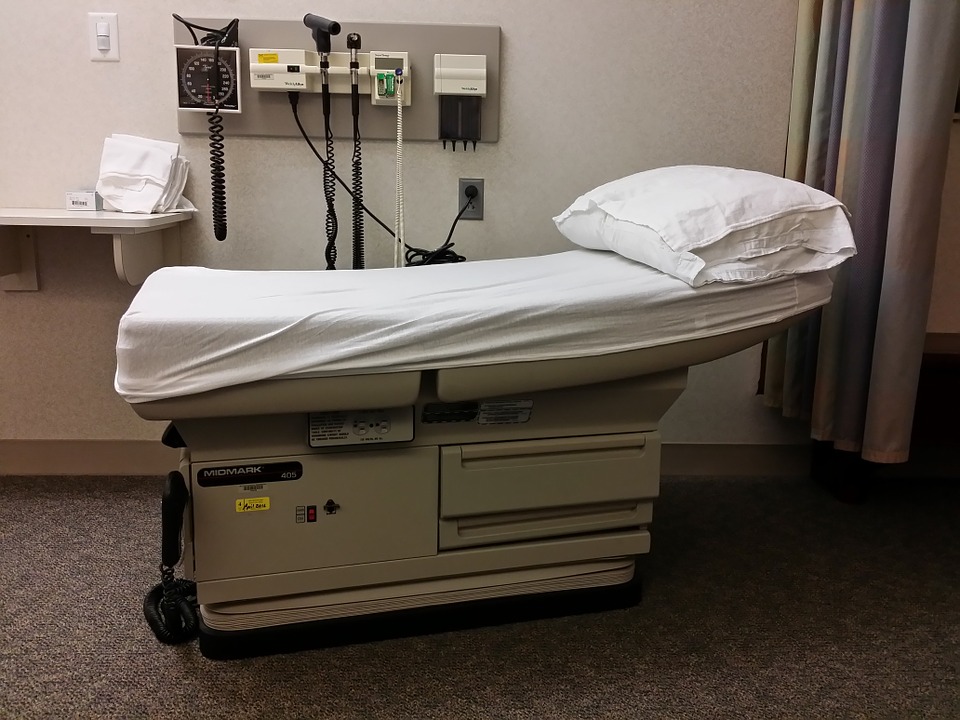
    A medical exam room. File photo from MaxPixels.net.

    BY: SUSAN TEBBEN – Ohio Capital Journal

    Doctors fighting to keep their patients alive are worried about new abortion-related paperwork and legal advice that would hold up necessary care for their patients.

    Consulting lawyers and keeping complicated documentation is a part of life now that the U.S. Supreme Court overturned Roe v. Wade and Ohio put a six-week abortion ban in place.

    “If (patients) are in the midst of a pregnancy loss and a heartbeat is present… we then have to do the same paperwork for someone who was having an elective termination (abortion),” said Dr. Amy Burkett, an OB/GYN hospitalist in Northeast Ohio.

    Doctors face potential criminal charges and risks to their medical licenses because of what they say are unclear regulations and specifications on abortion. Beyond that, the changes to the health care landscape nationally and in Ohio create an environment where doctors who know a pregnancy isn’t viable may have to watch a parent carry the pregnancy anyway.

    “Being forced to go down the path is just an unequivocal nightmare, especially if you think of someone going through an entire pregnancy against their will when they know the fetus is going to die,” said Dr. David Hackney, maternal fetal medicine specialist in the Cleveland area, and chair of the American College of Obstetrics and Gynecologist’s Ohio chapter.

    Hackney, who works with high risk pregnancies and diagnoses birth defects, said abortion bans can increase the complication rate in pregnancies merely by increasing the number of pregnancies coming to term.

    As Roe v. Wade was overturned Friday and Ohio implemented its six-week abortion ban, Hackney was on call, and went to sleep that night unsure how he would proceed with medical care the next day.

    “It’s a Friday night, and all of a sudden the legal ground has changed entirely beneath my feet,” Hackney said.

    With cases that can include time-sensitive care and bleeding that must be dealt with urgently, Hackney said not having a plan in place can cause distractions with dangerous impacts on infant and parent health. That plan may now have to include referrals to other health systems, and even other states for legal options.

    “When it comes to a lot of these legal issues, the most important thing to have is a plan before something awful happens,” Hackney said. “We are even now still working out the details and trying to figure out processes.”

    Abortion bans could have impacts on pregnancy-related procedures that have nothing to do with abortion as well, according to doctors. Dr. Tom Burwinkel, a reproductive endocrinologist who also works on in-vitro fertilization, says bills like HB 598 — a proposed complete abortion ban in Ohio — could cause legal confusion and liabilities for facilities storing embryos or working with those embryos.

    Because the bill, which is currently sitting in a House committee, says an “unborn child” is defined at the time of fertilization, embryos that are damaged even accidentally or through natural occurrences in the IVF process could be held against the doctors conducting the work.

    “If we have embryos stored and something happens to the liquid nitrogen tanks, are the physicians and the people that own the facilities on the hook for the loss of thousands of embryos?” Burwinkle posed.

    Though IVF isn’t impacted by the six-week abortion ban, Burwinkle worries about the future of the IVF field and other pregnancy medicine, as laws and bills in the state focus on ideological ideas of life rather than the medicine involved.

    “Obviously the legislature wants to take things a step further … and that’s somebody imposing their religious beliefs on others. I thought this country was founded on religious freedoms,” Burwinkle said.

    Comments made by U.S. Supreme Court Justice Clarence Thomas in support of overturning Roe v. Wade are giving physicians further reason to be concerned about the future of gynecology, especially contraceptives.

    Burkett said it’s important for the public to understand that contraceptives are not considered abortion medication, even as legislation might couple things like Plan B with abortion-inducing drugs, and misinformation exists coupling IUDs with abortion.

    “IUDs are not considered abortion medications,” Burkett said. “Plan B is also not considered an abortion medication. Neither are medically considered abortifacients.”

    Misinformation about contraceptives does not just impact the public who may not have done enough research, but a part of legislation sponsored by non-medical professionals who may not be listening to the medical community. Hackney said ACOG representatives are always willing to serve as a resource for legislators.

    “In general, most of this legislation happens without meaningful, or certainly not with mainstream medical input,” Hackney said.

    Follow OCJ Reporter Susan Tebben on Twitter.

  • Ohio and Loveland Area coronavirus picture darkens rapidly

    Ohio and Loveland Area coronavirus picture darkens rapidly

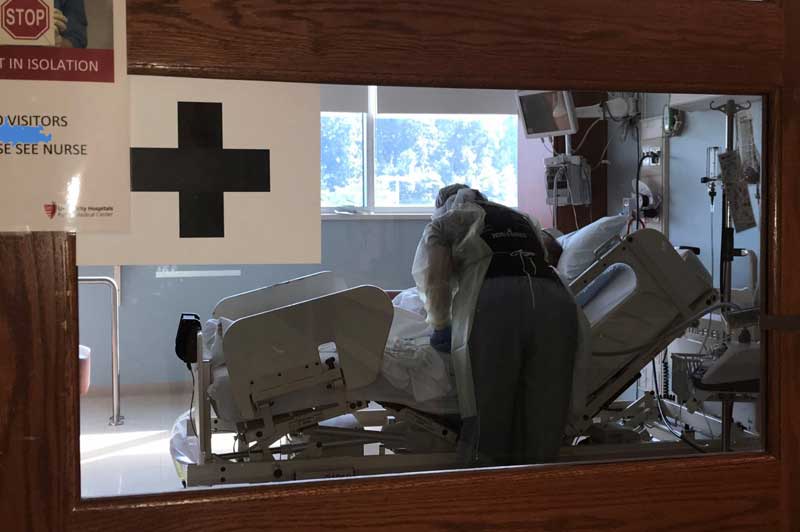
    Medical staff tend to a COVID-19 patient. Courtesy of University Hospitals

    By Marty Schladen and the Ohio Capital Journal

    By many measures, the Ohio coronavirus pandemic is quickly worsening — and that’s before any of the effects of holiday travel and visiting are factored in.

    Thursday saw almost 9,000 new cases in the state, with almost 400 new hospitalizations due to COVID-19 and 82 more dead, bringing the toll throughout the pandemic to 6,753.

    Also, with 33 new admissions to Ohio intensive-care units, the state now has more than 1,200 coronavirus patients in those beds, many for long stretches.

    “That’s been one of the biggest concerns around the state right now,” said Andrew Thomas, chief clinical officer at Ohio State’s Wexner Medical Center. “The hardest area for hospitals to increase their capacity or increase the number of beds is in their intensive care unit.”

    “In those intensive care units, right now one out of every three patients has covid,” Thomas said. “If that number continues to grow, that is going to crowd out the ability of non-covid patients to get the care they need in the intensive care unit. Hospitals do not have the capacity to in unending ways grow the number of ICU beds that they have.”

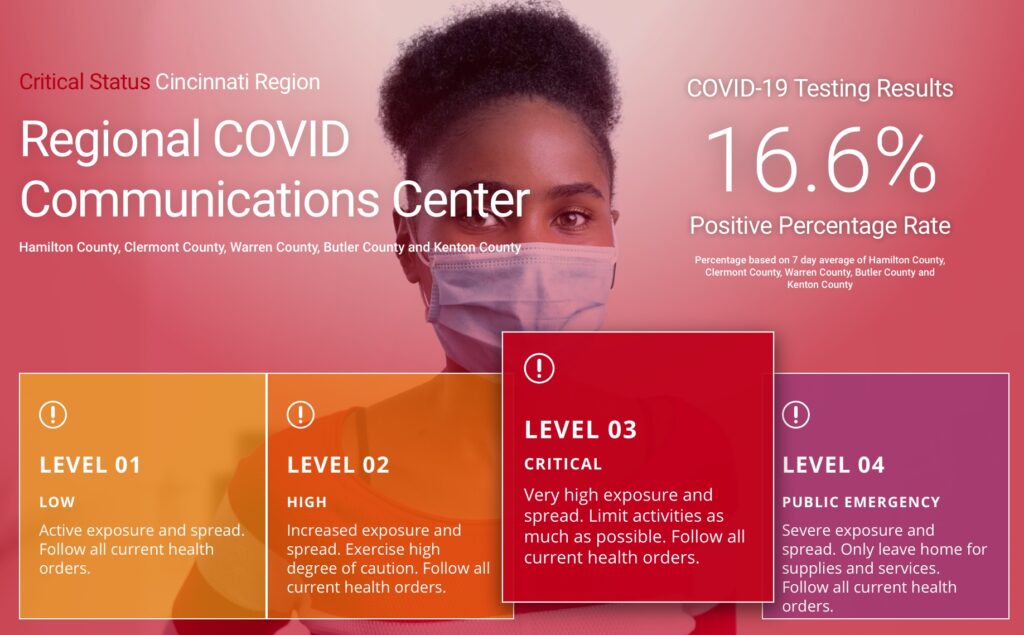
    Even worse, perhaps, is that as the number of Ohioans who are tested for coronavirus rises, the percentage of positive results is also rising — to alarming levels. That means the spread of the disease is snowballing instead of levelling off.

    On Tuesday, 16.1% of the 53,000 tested came back positive for the virus, the highest positivity rate since mid-April. Back then, fewer than 5,000 tests a day were available, so they were more likely to be used for people displaying obvious symptoms of the disease.

    That and other data combine to show the inexorable march of the disease across Ohio.

    The increasing positivity rate prompted Gov. Mike DeWine to add Ohio to the list of states that he warned people not to travel to.

    “We warn people about going to any state with above 15% positivity,” DeWine said. “Now we’re one of those states.”

    In a press conference hosted by the governor, Thomas and other health officials warned that hospitals across the state already are canceling non-emergency procedures such as knee replacements and diagnostics to keep strained capacity and overworked staff from being overwhelmed by the pandemic. 

    And the expected surge from Thanksgiving isn’t even showing itself yet.

    Thomas explained that from the time of exposure to the onset of symptoms is usually three to 10 days, while the time from exposure to hospitalization is typically seven to 14 day. So that window only began to crack open on Thursday.

    “The surge that you’re seeing is not about Thanksgiving,” Thomas said.

    When Thanksgiving-related cases begin showing up at hospitals, their numbers are likely to be large. Federal officials reported that record numbers of Americans traveled for the holiday despite admonitions to stay home.

    Top U.S. health officials also are forecasting a dire few months ahead — even though vaccines are expected to start flowing in a few weeks, including an initial 98,000 doses to Ohio.

    On Wednesday, Centers for Disease Control and Prevention Director Richard Redfield said the United States might see more than half as many covid deaths over the next two months as we’ve seen over the previous nine.

    “The mortality concerns are real,” Redfield said. “And I do think unfortunately, before we see February, we could be close to 450,000 Americans (who) have died from this virus.”

    Redfield, DeWine and other officials have repeatedly implored Americans to protect themselves and others against the disease, but they’re up against fatigue and a powerful strain of coronavirus denial. 

    Despite Redfield’s warnings, the Trump White House and State Department both are planning large, indoor holiday gatherings. They’ll be replete with food and drink that will require attendees to remove masks — if they’re even wearing them. In previous White House superspreaders, masks were notoriously absent.

    In Ohio, DeWine on Thursday vetoed a bill passed by his fellow Republicans in the state legislature that would gut the governor’s ability to issue health orders in a pandemic

    The GOP-led Ohio House had already shot down a requirement that its members mask up while in the state Capitol.

    “Having essential strategies to protect the public against the spread of infectious, contagious disease is not only important in our efforts to eradicate COVID-19, but it is also necessary to help stop the spread of all infectious diseases and prevent future health crises in Ohio,” DeWine said in his veto message.

    However, Senate President Larry Obhof said he has the votes to override DeWine’s veto.

    Altogether, it would appear that we’re in for a long, painful winter.

    “This is not the beginning of the end,” Thomas said. “This is not even the end of the beginning. We are really in a difficult spot here.”

  • Duke Energy Convention Center selected for “Enhanced Hospital Capacity” other local COVID 19 news

    Duke Energy Convention Center selected for “Enhanced Hospital Capacity” other local COVID 19 news

    Ohio’s new stay at home order goes into effect at midnight tonight.

    Columbus, Ohio – Ohio Governor Mike DeWine, Lt. Governor Jon Husted, and Dr. Amy Acton, MD, MPH, provided the following updates on Ohio’s response to the COVID-19 pandemic this afternoon. 

    HOSPITAL CAPACITY 

    The announcement said that Ohio must double its hospital capacity due to the oncoming COVID-19 surge, Ohio has developed a plan to expand healthcare services at alternative sites in addition to the traditional medical care facilities. Representatives from health care systems, local governments, county emergency management agencies, state agencies, the Ohio National Guard, among others, examined buildings across the state that could support large numbers of patients.

    The following sites have been selected based on considerations such as distance to an existing hospital, conditions safe for patients and health care professionals, and space to meet the region’s expected needs, including the Duke Energy Convention Center in downtown Cincinnati.

    1. Seagate Convention Center, Lucas County
    2. Case Western University’s Health Education Campus, Cuyahoga County
    3. Dayton Convention Center, Montgomery County
    4. Covelli Convention Center, Mahoning County
    5. Duke Energy Convention Center, Hamilton County
    6. Greater Columbus Convention Center, Franklin County

    These facilities would be used for the mildly ill, while the sickest patients will be housed in traditional hospitals.

    Assessments of other sites will continue if needed.

    The press release from the Governor’s office said that health care regions in southern and southeastern Ohio have determined the existing hospital facilities in their areas will, with additional equipment, be capable to handle a surge in patients without going to an off-site location.

    OHIO NATIONAL GUARD TO ASSIST FEDERAL PRISON

    Governor DeWine announced that he has authorized the Ohio National Guard to assist federal authorities in the Elkton Federal Correctional Institution in Columbiana County where seven inmates have tested positive for COVID-19, and three inmates have died from the disease.

    “To be clear, this is not a state facility, it is a federal prison – but, this prison is in Ohio. Ohio citizens work there, and their families live here,” said Governor DeWine. “As we’ve said for weeks, we’re all in this together, and providing state help for this federal prison is the right thing to do.”

    The Ohio National Guard’s mission will be focused on providing medical assistance. They will not be armed, nor will they be providing security.

    The guardsmen and women will assist in the prison’s infirmary with non-COVID-19 cases and with patients who are showing symptoms of the disease. These soldiers, who all work in the medical field, will have N-95 respirators for protection while they work to augment the current prison medical staff. They will treat those they can and triage others with serious symptoms for hospital care.

    The guard also stands ready to help with transporting the seriously ill patients to the hospital in the event of a surge of sick inmates. In addition to staff, the guard will bring equipment and ambulances with them as well.

    Governor DeWine also requested that the Federal Bureau of Prisons and U.S. Department of Justice cease accepting new inmates at the facility.

    DISPUTE RESOLUTION 

    Lt. Governor Husted announced that the administration’s Dispute Resolution Commission, which was initially announced last week, is now prepared to receive submissions from essential businesses as well as county health departments.

    The panel, which includes Ohio Department of Commerce Director Sheryl Maxfield, Development Services Agency Director Lydia Mihalik, and Public Utilities Commission of Ohio Chairman Sam Randazzo, will specifically seek to resolve disputes when two county health departments disagree on whether a type of business should or should not be deemed essential during the state of emergency. The purpose of the commission is to provide clarity and ensure that similarly-situated businesses are treated fairly, regardless of which side of a county line they operate.

    For more information, visit Coronavirus.Ohio.gov/BusinessHelp and select the “Businesses & Nonprofits” tab for more information.

    REMINDER – NEW STAY AT HOME ORDER

    Ohio’s new stay at home order goes into effect at midnight tonight. You can find the full order at coronavirus.ohio.gov.

    Retailers will be required to determine a maximum number of customers allowed in the store to account for proper physical distancing. That number must also be displayed at the businesses’ entrances.

    REMINDER – SNOWBIRDS MUST SELF-QUARANTINE 

    Governor DeWine today reminded “snowbirds” that they must quarantine for 14 days once they arrive in Ohio.

    “I know that many of our Ohio snowbirds will soon be returning from places like Florida, and we want to make sure that you remain healthy and that those around you remain healthy,” said Governor DeWine.

    In addition to those returning after spending winter elsewhere, anyone who has traveled outside of Ohio for any other reason must also self-quarantine for 14 days upon their return. This order excludes truckers, healthcare workers, other workers providing essential services, and those who live on the state border.

    CURRENT OHIO DATA

    There are 4,450 confirmed cases of COVID-19 in Ohio and 142 deaths. A total of 1,214 people have been hospitalized, including 371 admissions to intensive care units. In-depth data can be accessed by visiting coronavirus.ohio.gov.

    • 4,450 – Confirmed Cases in Ohio
    • 371 – Number of ICU admissions
    • 1,214 – Number of Hospitalizations in Ohio
    • 142 – Number of Deaths
    • <1–101 – Age Range
    • 54 – Median Age
    48%* – Sex – Males
    52%* – Sex – Females
    LAST UPDATED: 04/06/20 (UPDATED DAILY AT 2 P.M.) *<1% SEX NOT REPORTED

    In Clermont County there are 27 cases, 4 hospitalizations, and 1 death.

    In Hamilton County there are 394 cases, 66 hospitalizations, and 9 deaths.

    In Warren County there are 37 cases, 5 hospitalizations, and 0 deaths.

    In Butler County there are 75 cases, 29 hospitalizations, and 2 deaths.

    Video of today’s full update, including versions with foreign language closed captioning, can be viewed on the Ohio Channel’s YouTube page.

    For more information on Ohio’s response to COVID-19, visit coronavirus.ohio.gov or call 1-833-4-ASK-ODH.