Tag: pharmacists

  • Ohio Board of Pharmacy launches tool to help those living with disabilities

    Ohio Board of Pharmacy launches tool to help those living with disabilities

    By:  Ohio Capital Journal

    The Ohio Board of Pharmacy on Monday launched a tool to help people with low vision, hearing loss, or who face language barriers find pharmacies that can serve them.

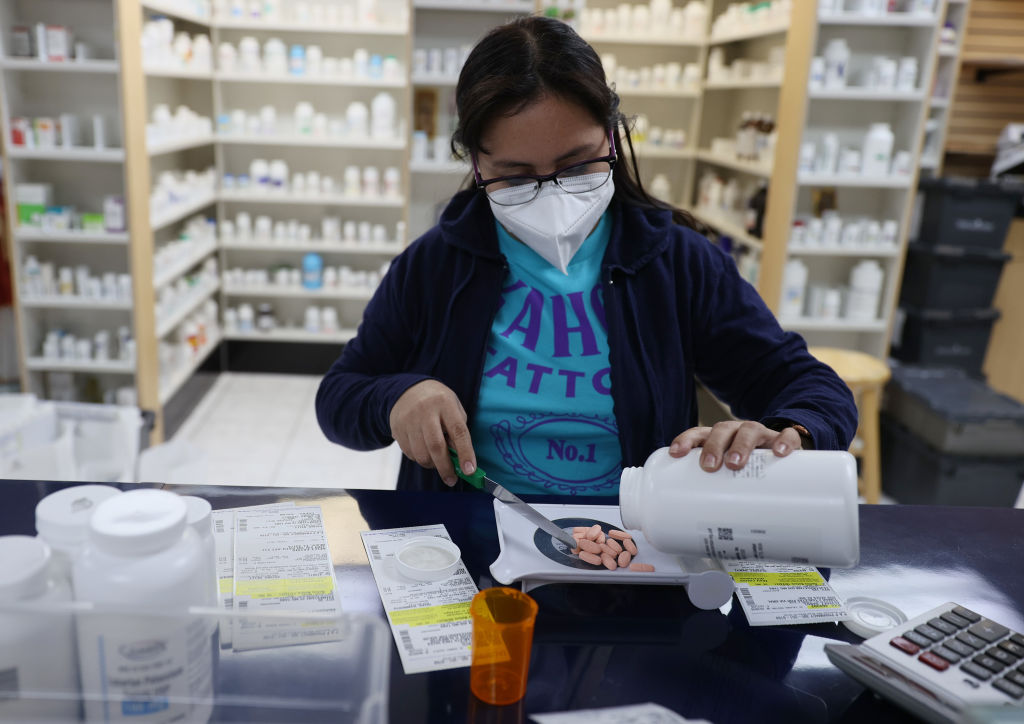
    For many, the pharmacy is the most frequent point of contact with the healthcare system. Pharmacists can consult about their medications and help them manage chronic conditions such as hypertension and diabetes.

    The new website will help people with accessibility challenges find pharmacies that can serve their specific needs.

    For example, for patients with low vision can find pharmacies that provide oversize-font labels, prescription readers and braille labels.

    It can point those with hearing loss to pharmacies that have video-relay services and teletypewriters. And it can tell non-English speakers where to find pharmacies with translation services for Spanish, Chinese, Nepali, Somali, and other languages.

    GET THE MORNING HEADLINES.


    In a statement, Board of Pharmacy Executive Director Steven W. Schierholt said the new webpage is an attempt to make pharmacy services more widely accessibility.

    “The launch of this convenient online search tool highlights the Board’s ongoing commitment to ensure pharmacy services are accessible to all Ohioans,” he said. “The Board is hopeful that this new webpage will help patients and their loved ones quickly identify pharmacies offering services they need to keep them healthy and safe.”

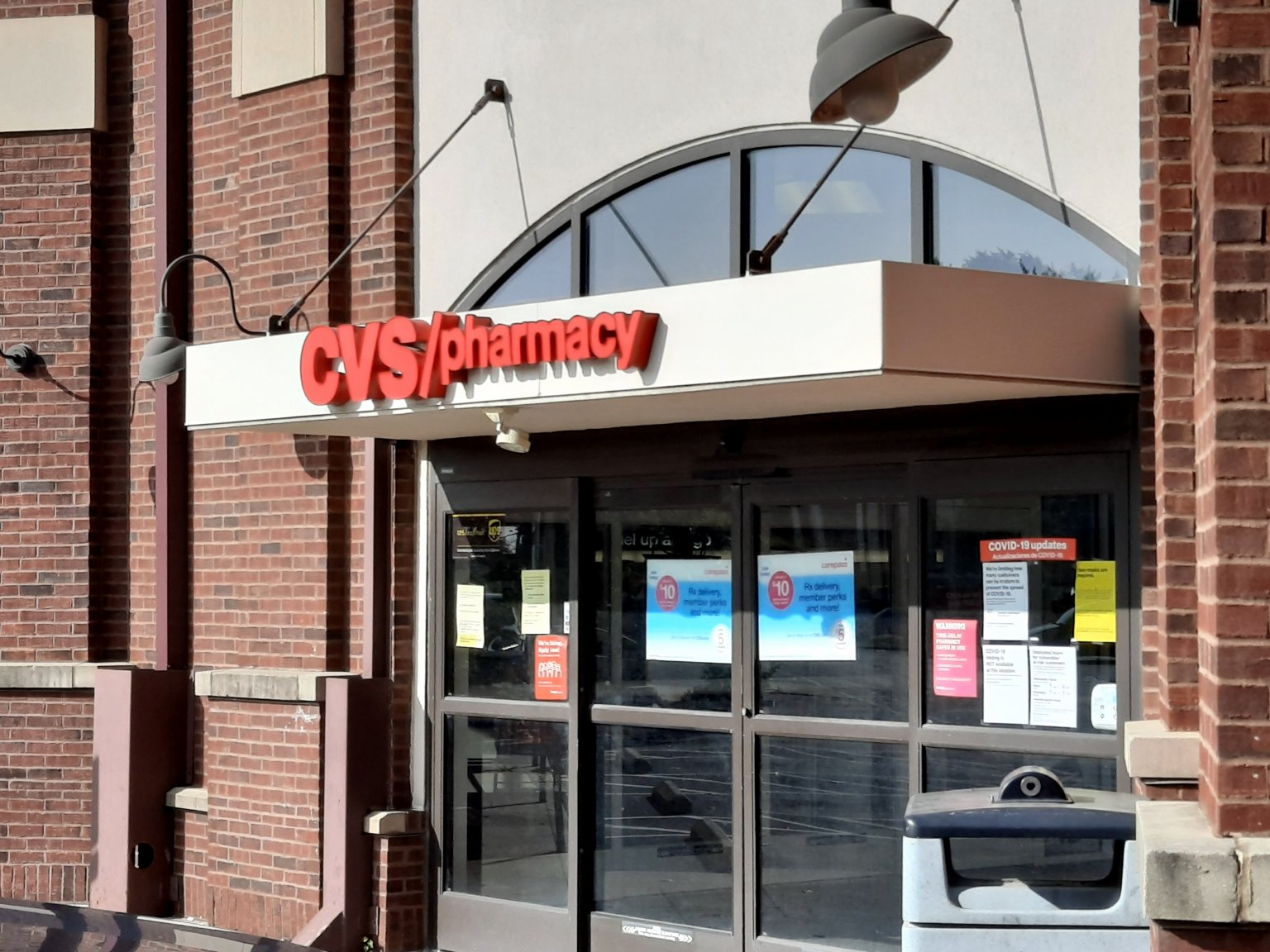
    However, working against accessibility is a wave of pharmacy closures. For the better part of a decade, independent and small-chain pharmacies have said that huge prescription middlemen — CVS Caremark, OptumRx and and Express Scripts — have been driving them from the field with low reimbursements, fees and clawbacks.

    More recently, large chain pharmacies have been closing in droves.

    CVS is at the end of a three-year process in which it closed 900 pharmacies across the country. Walmart last year asked 16,000 of its pharmacists to cut their hours.

    Bankrupt Rite Aid this year announced the closures of hundreds of stores in Ohio and Michigan. And Walgreens this year said it would close “a significant portion” of 2,000 underperforming stores. That prompted Dave Burke, executive director of the Ohio Pharmacists Association, to say he was worried that pharmacy is becoming an untenable business.

    “If Walgreens can’t make a go of this in 25% of their locations, my fear is that this becomes a much larger problem where other people who provide pharmacy services exit the market in whole or in  part,” he said in September.

    The Federal Trade Commission is investigating whether the giant health conglomerates that own the three big pharmacy middlemen are engaged in anticompetitive practices.

    YOU MAKE OUR WORK POSSIBLE.

    ___________
    Marty Schladen
    Marty Schladen

    Marty Schladen has been a reporter for decades, working in Indiana, Texas and other places before returning to his native Ohio to work at The Columbus Dispatch in 2017. He’s won state and national journalism awards for investigations into utility regulation, public corruption, the environment, prescription drug spending and other matters.

    Ohio Capital Journal is part of States Newsroom, the nation’s largest state-focused nonprofit news organization.

    MORE FROM AUTHOR

  • Community pharmacy group says CVS, other bigs are unfairly steering patients

    Community pharmacy group says CVS, other bigs are unfairly steering patients

    A group representing small pharmacists says large chains, especially CVS, are moving patients’ prescriptions to their own stores without consent. CVS adamantly denies that. Photo by Marty Schladen, Ohio Capital Journal.

    A huge majority of community pharmacists have lost patients in the last six months due to unfair practices by much larger competitors, an industry group that represents small pharmacists said last week.

    They accuse CVS Health — which operates as an insurer, claims administrator and pharmacy retailer — as being the company responsible for the most abuses. CVS denies the claim.

    The National Community Pharmacy Association (NCPA) said that between Sept. 8-11, it collected 412 responses to a survey about a practice known as “patient steering.” 

    In addition to being the nation’s largest pharmacy retailer, CVS is now also the largest pharmacy benefit manager, which charges insurers, pays pharmacists, decides which drugs get favorable treatment and collects rebates from manufacturers. The company has said it maintains a strict firewall between the businesses, but critics have accused the company of using one business to advantage the others.

    For example, in the fall of 2017, Ohio community pharmacists complained Medicaid reimbursements from CVS’s pharmacy benefit manager, CVS Caremark, had dropped so low that they were having a hard time staying in business. At the same time the pharmacists they were receiving letters from from another arm of CVS acknowledging that reimbursements were low and that CVS was willing to buy out the community pharmacists.

    That made pharmacists suspicious that the part of the corporation that acquires pharmacies was using CVS Caremark’s reimbursement data to determine which independent pharmacies were most likely to be struggling and vulnerable to a buyout offer. CVS denied that.

    Some observers feared such concerns would only get worse when a federal judge last year allowed CVS to merge with Aetna, the country’s third-largest health insurer.

    Now the NCPA, the group representing small pharmacists, says things are getting worse.

    One method of patient steering is to transfer their prescriptions to another pharmacy without their knowledge, much less their consent. 

    According to the NCPA survey, 79% of community pharmacists said that had happened with one or more of their patients in the past six months. Almost 78% of respondents said some of the patients thus steered saw their prescriptions moved to CVS.

    “That’s a big red flag,” NCPA CEO B. Douglas Hoey said in a statement. “The pharmacy sector is very competitive, and most big chains have aggressive marketing schemes aimed at taking patients from rivals. CVS Health not only owns brick-and-mortar stores, but it also owns its own insurance companies, Aetna and Caremark. That information allows it to eavesdrop on when and where patients are getting their prescriptions and, as the survey reported, coerce unknowing patients into CVS stores.”

    In an email, CVS Senior Director of Corporate Communications Michael DeAngelis said the NCPA claims were patently false.

    “Our pharmacies only initiate prescription transfers when requested by a patient,” he said. “Also, CVS Caremark members have access to our broad network of more than 60,000 pharmacies, including most independent pharmacies and chain pharmacies, in addition to CVS Pharmacy. In fact, more than 40% of the pharmacies in our network are independently owned. If a plan sponsor chooses a particular network design that includes specific pharmacies, their members are notified in advance.”

    DeAngelis also panned the process behind the NCPA survey.

    “The ‘survey’ conducted by the business trade association, NCPA, of its own members has no basis in fact and is nothing but a self-serving attempt to disparage CVS Health,” he said. “Accusations that we transferred patients’ prescriptions to our own pharmacies without their knowledge or consent are simply not true.”

    One Ohio pharmacist said he doesn’t know why he’s losing patients, but he knows he’s been losing them.

    “We’re down 300 or 400 patients a month” compared to last year, said Barry Klein, owner of Klein’s Pharmacy in Cuyahoga Falls. “It’s hard to say what was the cause of it, but definitely our patient count is down.”


    Marty Schladen

    Marty Schladen has been a reporter for decades, working in Indiana, Texas and other places before returning to his native Ohio to work at The Columbus Dispatch in 2017. He’s won state and national journalism awards for investigations into utility regulation, public corruption, the environment, prescription drug spending and other matters.