Tag: Planned Parenthood

  • Pro-abortion groups seek to bypass supreme court in abortion ban lawsuit

    Pro-abortion groups seek to bypass supreme court in abortion ban lawsuit

    BY: SUSAN TEBBEN – Ohio Capital Journal

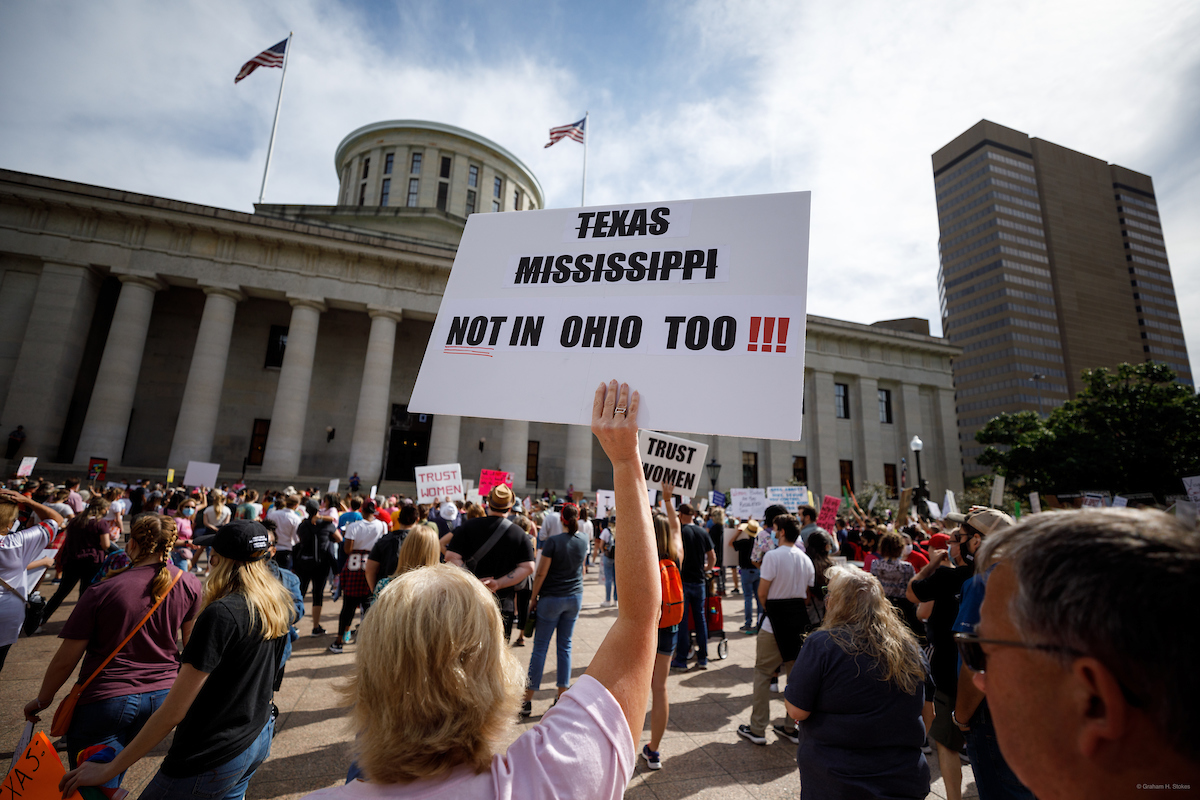
    The groups hoping to put a stop to a six-week abortion ban in Ohio say the Ohio Supreme Court’s inaction forced them to move on to a different court.

    In a recent court filing, the ACLU of Ohio and Planned Parenthood asked the state’s highest court to dismiss their case in favor of separate litigation in the Hamilton County Court of Common Pleas.

    The court filing claimed Planned Parenthood has suffered “irreparable harm which has increased to become intolerable” since filing the lawsuit at the end of June, causing a separate lawsuit to request “immediate relief from the ongoing irreparable harm to the clinics and their patients.”

    Jessie Hill, counsel of record representing the ACLU of Ohio and Planned Parenthood, said the move was spurred by not only the overturning of Roe v. Wade by the U.S. Supreme Court, but also the impending closure of Women’s Med Center of Dayton and clinics in surrounding states like Kentucky and Indiana.

    “Ohioans’ access to abortion care is becoming more and more restricted,” Hill told the OCJ. “Since the situation is so dire and the Ohio Supreme Court has not acted, we needed to pursue an alternative path that could lead to quicker relief.”

    The new lawsuit has been filed, with the added support of law firm WilmerHale, challenging the constitutionality of Senate Bill 23, the bill that is called the “Heartbeat Bill” by supporters, because the bill’s ban hinges on the presence of fetal “cardiac activity.”

    Opponents of the law say banning abortion at six weeks could close out options to women before they are aware of the pregnancy and have unintended consequences for other fetal medicine fields, such as in-vitro fertilization and miscarriages. Meanwhile, Ohio doctors are describing scenes of almost unimaginable anguish — and increased risks to women and girls who become pregnant, in the months since the Dobbs decision.

    “Ohioans deserve the information and resources to make the best decisions for themselves and their families,” said Lauren Blauvelt-Copelin, Vice President of Government Affairs and Public Advocacy at Planned Parenthood of Greater Ohio, in a statement announcing the Hamilton County Court case.

    The groups have already asked the court to implement a temporary restraining order, keeping the state from enforcing the law until the court case has been resolved. The Ohio Supreme Court had previously rejected a request to do so in the case in their court.

    The court has not scheduled any hearings on the matter, or made any decisions on the temporary restraining order.

    Follow OCJ Reporter Susan Tebben on Twitter.

  • DeWine signs abortion restriction likely to close SW Ohio clinics

    DeWine signs abortion restriction likely to close SW Ohio clinics

    Anti-abortion demonstrators march. (Photo by Robert Zullo/ States Newsroom).

    BY: SUSAN TEBBEN – Ohio Capital Journal

    Ohio Gov. Mike DeWine signed a new abortion law on Wednesday that looks likely to close Southwest Ohio abortion clinics.

    DeWine signed Senate Bill 157 without further comment, along with several other bills that passed through the legislature in their last work week before the holidays.

    The bill was condemned by abortion providers, who said not only that portions of the bill that direct doctors on the amount of care they should give babies born as a result of a “failed abortion” are already part of medical oaths and Ohio law, but that the bill would impact wanted pregnancies in which complications become a factor.

    “At this moment, we’re at a crisis point for abortion access in Ohio and across the country,” said Kersha Deibel, CEO of Planned Parenthood Southwest Ohio. “…Stripping abortion care from Southwest Ohio will cause havoc that disproportionately impacts our communities.”

    The Southwest Ohio region of Planned Parenthood also opposes the legislation because of changes to hospital transfer variance agreements between abortion providers and physicians, prohibiting for doctors who are funded by Ohio’s public medical schools from participating.

    “There is no medical justification for disallowing qualified, experienced physicians from agreeing to provide backup coverage for abortion providers under a variance,” said Dr. Adarsh Krishen, chief medical officer for Planned Parenthood of Greater Ohio. “In fact, if the state was genuinely concerned for patient safety, such physicians would be ideal. Instead, this provision is only meant to make it more challenging for abortion providers to remain licensed and operational.”

    The religious policy lobby Center for Christian Virtue praised the law and the potential shut down of Women’s Med Center in Dayton and Planned Parenthood of Southwest Ohio’s clinic, saying the state “has made a bold statement about where our values lie.”

    DeWine did not comment on the bill with his announcement that the bill had been signed.

    The bill is one of a few pieces of abortion legislation brought by the legislature this year. Another measure would make abortion illegal with the rollback of the U.S. Supreme Court decision in Roe v. Wade.

  • Near total abortion ban proposed in Ohio mimics Texas law but goes further

    Near total abortion ban proposed in Ohio mimics Texas law but goes further

    BY: SUSAN TEBBEN and Ohio Capital Journal

    Jean Schmidt representing the Loveland Area is a co-sponsor

    A new abortion ban bill created in conjunction with a Virginia-based anti-abortion group has been introduced in Ohio that mimics a Texas law currently before the U.S. Supreme Court, but goes further by proposing to ban nearly all abortions.

    State Rep. Jena Powell, R-Arcanum, introduced House Bill 480 on Tuesday, which allows civil lawsuits against anyone who “knowingly engages in conduct that aids or abets the performance or inducement of an abortion,” including paying for an abortion even through the use of insurance, according to the language of the bill. State Rep. Thomas Hall, R-Madison Twp., is also a sponsor.

     State Rep. Jena Powell, R-Arcanum

    The bill allows a defense against civil action for abortions “designed or intended to prevent the death of a pregnant mother and the physician made reasonable medical efforts under the circumstances to preserve both the life of the mother and the life of her unborn child in a manner consistent with conventional medical practice.”

    In announcing the bill, Powell called the 1973 Roe v. Wade U.S. Supreme Court decision that legalized abortion nationwide a “constitutional fiction,” saying her bill “utilizes the enforcement mechanism from the successful Texas Heartbeat Act,” currently under court challenge with the U.S. Supreme Court.

     State Rep. Thomas Hall, R-Madison Twp.

    While the Texas case revolves around the detection of a noise during ultrasounds early in pregnancy that doctors describe as electric activity and anti-abortion advocates call a heartbeat — a characterization physicians say is inaccurate — Powell’s proposed legislation has no such standard and would constitute a near total abortion ban. With 33 Republican cosponsors alongside the two sponsors, support for the bill represents more than half the GOP caucus.

    The bill comes after Powell spoke at a Los Angeles event for the Arlington, Virginia-based anti-abortion non-profit LiveAction, which said they are partnering with “leaders across the nation starting with Representative Powell” in conjunction with the launch of their campaign.

    Cosponsors in the Ohio House of Representatives:

    Adam C. Bird,

    Thomas E. Brinkman Jr.

    Sara P. Carruthers

    Gary Click

    Rodney Creech

    Jon Cross

    Al Cutrona

    Bill Dean

    Ron Ferguson

    Sarah Fowler Arthur

    Haraz N. Ghanbari

    Timothy E. Ginter

    Diane V. Grendell

    Jennifer Gross

    Marilyn S. John

    Mark Johnson

    Kris Jordan

    Darrell Kick

    J. Kyle Koehler

    Mike Loychik

    Susan Manchester

    Riordan T. McClain

    Derek Merrin

    Kevin D. Miller

    Tracy M. Richardson

    Craig S. Riedel

    Jean Schmidt

    Reggie Stoltzfus

    D. J. Swearingen

    Scott Wiggam

    Bob Young

    Tom Young

    Paul Zeltwanger

    “The campaign, which kicked off in front of thousands at the Santa Monica Pier, aims to ensure every American knows that abortion is the leading cause of death for children, and to ultimately save every child,” LiveAction said in a press release about the bill.

    The CDC does not list abortion as a leading cause of death for children from age 1 to 14 years old. It lists accidents, “congenital malformations, deformations and chromosomal abnormalities” and cancer as the leading causes for children from age 1 to 9, with intentional self-harm (suicide) replacing congenital issues as a leading cause for children 10 to 14 years old.

    Ohio’s 2020 abortion report from the Ohio Department of Health showed 20,605 abortions in 2020, more than half of which were induced at less than nine weeks gestation. Of the 441 abortions induced in 19 or more weeks gestation, none were considered viable in medical testing, including ultrasounds.

    Abortion is legal in Ohio up to 22 weeks gestation.

    Planned Parenthood Advocates of Ohio say banning abortion would be catastrophic to communities across Ohio.

    “Lawmakers and anti-abortion vigilantes have no business making personal medical decisions for their neighbors,” said Lauren Blauvelt-Copelin, Vice President of Government Affairs and Public Advocacy for PPAO.

    Advocacy group NARAL Pro-Choice Ohio said the bill would have “dangerous” impacts on already marginalized communities in the state, and continue a targeted trend for elected officials in the state.

    “If all dominos fall in the wrong direction, abortion could be illegal in Ohio by July,” said NARAL executive director Kellie Copeland in a statement. “Every pro-choice Ohioans must register and vote.”

    The bill has all-Republican support, which gives it better odds of passage with the legislature’s Republican supermajority.

    The abortion ban is one of several pieces of abortion legislation making their way through Ohio’s General Assembly. A “trigger” bill that would ban abortion if Roe v. Wade is overturned is currently in Senate committee, and a bill targeting what sponsors called “failed” abortions, a statistically rare occurrence in Ohio, passed through the state Senate, and is headed for House consideration.

  • “Ms. Civil Rights” Cincinnati activist Marian Spencer honored with statue at Smale Riverfront Park

    “Ms. Civil Rights” Cincinnati activist Marian Spencer honored with statue at Smale Riverfront Park

    “The case started when Spencer’s sons heard a radio ad inviting children to Coney Island to meet a local TV personality. She telephoned to ask if the invitation applied to all children and was assured that it did; however, when Spencer added, “We are Negroes,” the Coney Island representative admitted the invitation did not extend to Negro children. Spencer was banished from the front gate by a guard brandishing a gun on the Fourth of July 1952. Spencer filed suit and subsequently won the case, which desegregated Coney Island.” – Wikipedia

    by David Miller – photos by Alex Eicher

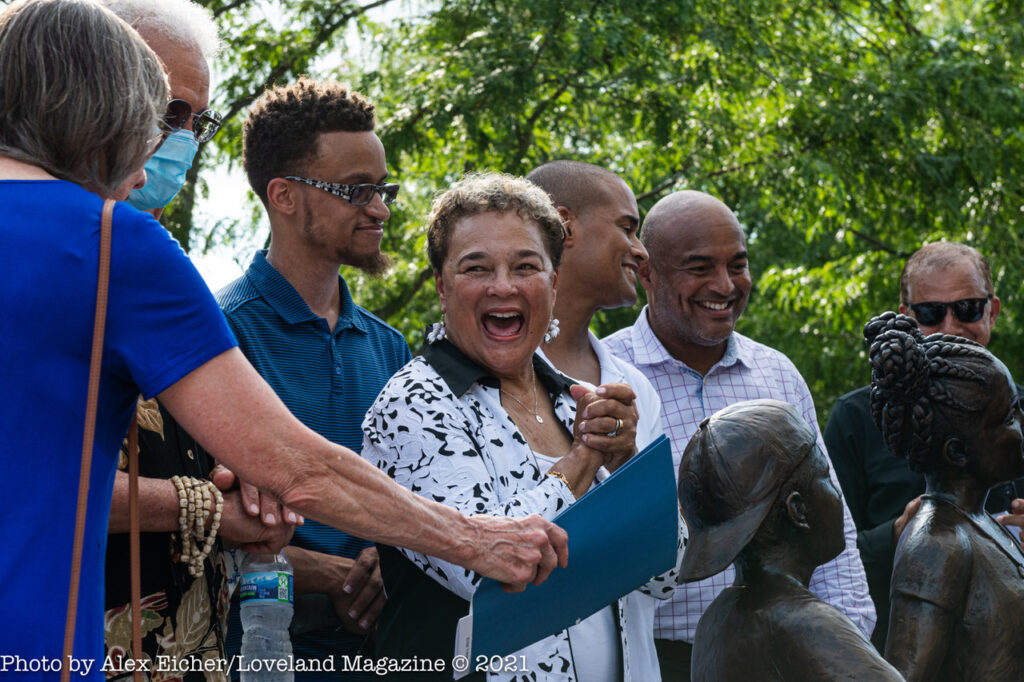
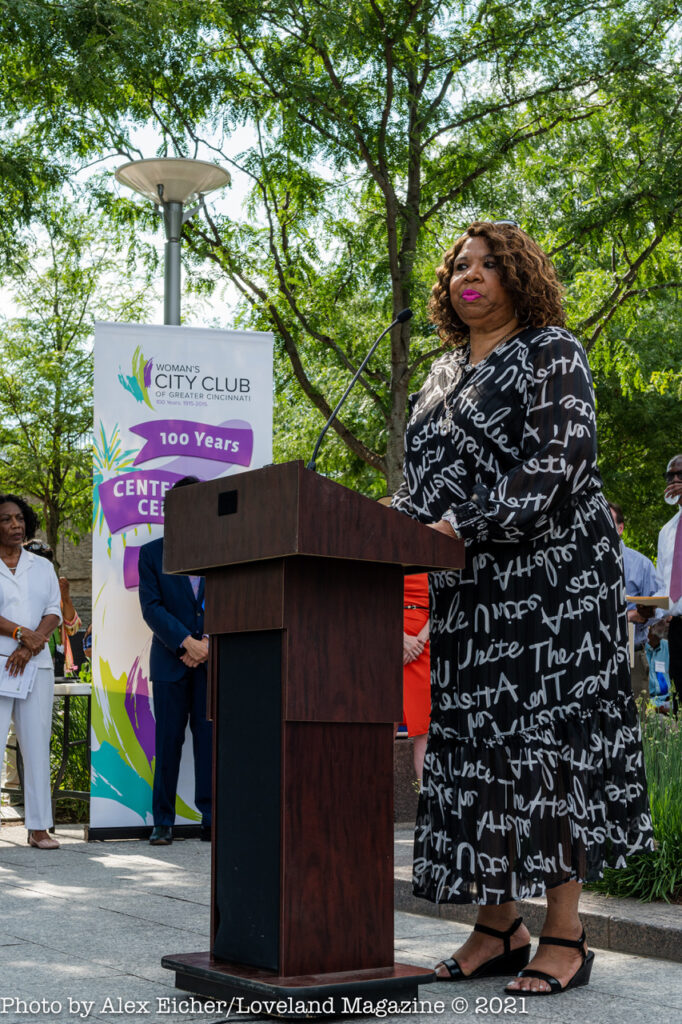
    Cincinnati, Ohio – The life of Civil rights activist Marian Regelia Alexander Spencer was honored with a statue at Smale Riverfront Park on Sunday June 26 – the eve of her birth date. It is Cincinnati’s first statue of a named woman. It depicts Spencer holding the hand of a young girl and the girl holding hands with a young boy. The three are in a not-closed circle that leaves space for another child to grab Spencer’s left hand and the boy’s right hand to close the tight circle.

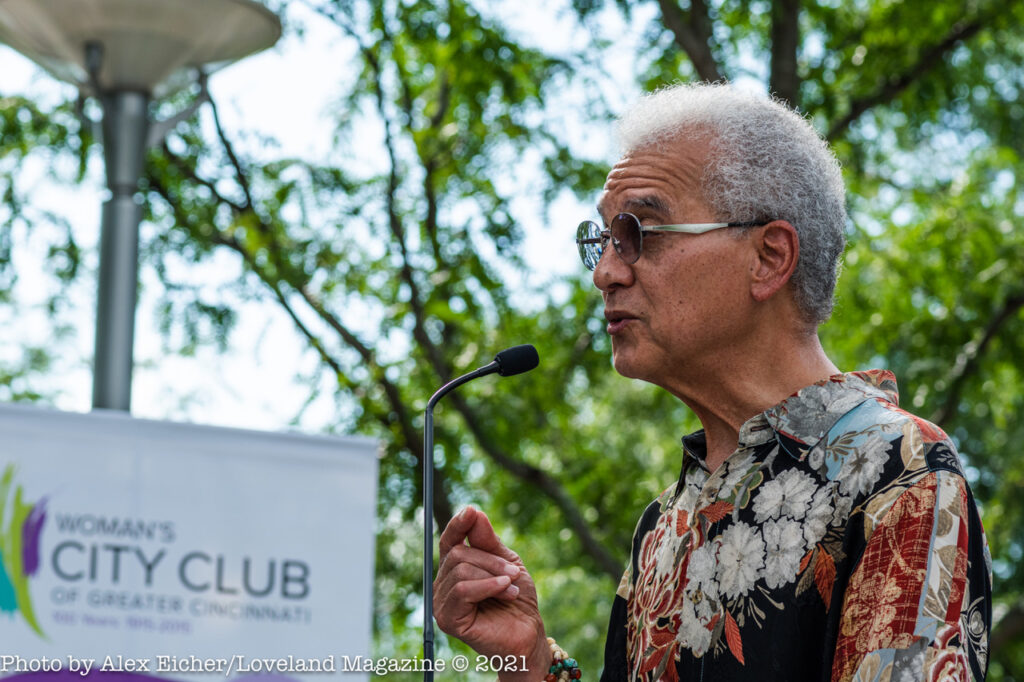
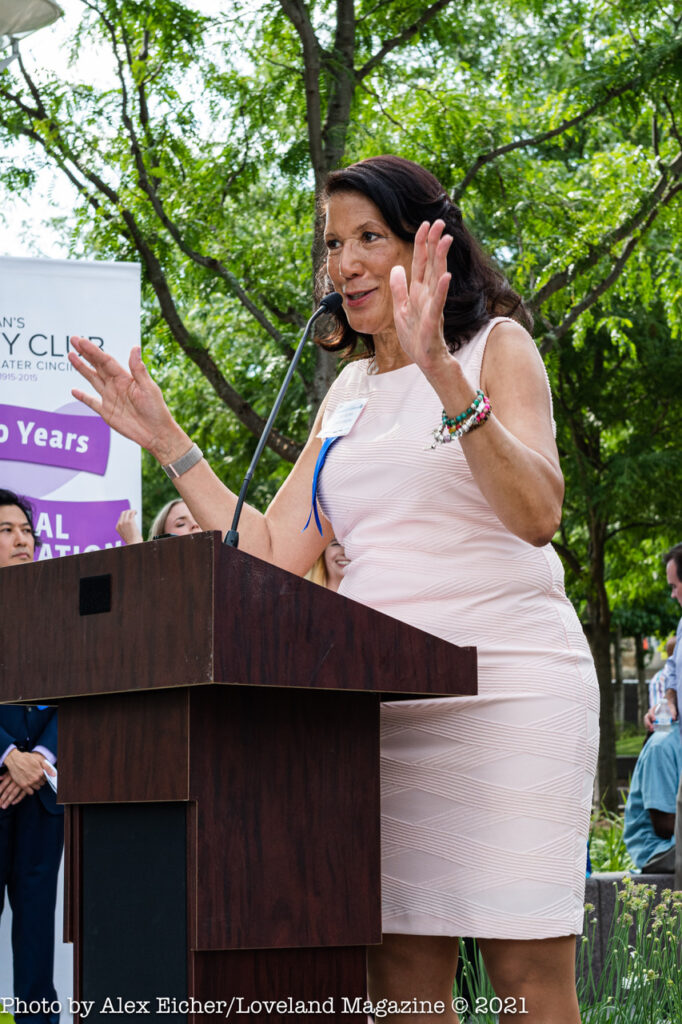
    Spencer was the first Black president of the Woman’s City Club of Greater Cincinnati in 1970. The organization spearheaded the private fundraising for the statue. It is located at the John G. & Phyllis W. Smale Riverfront Park in the Cincinnati Parks Foundation Women’s Committee Garden.

    (Story continues below photos)

    The sculpture was designed by Cincinnati Natives, Tom Tsuchiya, and Gina Erardi.

    Spencer was the first Black woman to be elected to the Cincinnati City Council and once served as vice-mayor.

    She fought for the desegregation of Coney Island and YWCA summer camps and pools nationwide She was the first African American woman to be elected president of the Cincinnati chapter NAACP.

    Spencer died at the age of 99, on July 9, 2019, and was the granddaughter of a former slave. She was active in the civil rights movement to desegregate schools and end discrimination and became the first female president of the Cincinnati NAACP chapter. She also served on the University of Cincinnati board of trustees.

    Spencer was born in the town of Gallipolis, Ohio in 1920. She lived in the home of her grandfather, a freed slave from West Virginia, with her twin sister, Mildred, two brothers, Harry and Vernon, and her parents. The home was built after her grandfather moved to Gallipolis. She became a member of the NAACP at age 13. In 1938 Spencer graduated from Gallia Academy High School. She was co-valedictorian with her sister and a member of the National Honor Society.

    (Story continues below photos)

    After graduation, she moved to Cincinnati to attend the University of Cincinnati as a scholarship student with her sister and fellow scholarship student, Mildred Malcolm. While at the University of Cincinnati, Spencer campaigned for the college prom to be open to all students. That was the start of her struggle for equality for all Greater Cincinnatians.

    Spencer earned a Bachelor of Arts in English from the University of Cincinnati in 1942. In 1940, she married Donald Andrew Spencer, Sr., a Cincinnati teacher and real estate broker. They raised two sons, Donald Jr. and Edward Alexander.

    Tom Tsuchiya, who created the piece with Gina Erardi a Woman’s City Club member, and the Marian Spencer Statue Committee Chair Alice Schneider proposed the statue in 2019. Spencer died later that year at age 99.

    Spencer’s career included numerous achievements as well as many awards and honors for her contributions to human service organizations and civic volunteer work. Among them are Cincinnati Enquirer Woman of the Year Award; Brotherhood Award, National Conference of Christians and Jews; YWCA Career Woman of Achievement Award; and Humanitarian Award, Freedom Heritage Foundation of Columbus, Ohio.

    She was an active member of the Board of Trustees of Planned Parenthood of Cincinnati in the 1990s and subsequently served on the Planned Parenthood Foundation Board. In 1998 Spencer was named a “Great Living Cincinnatian” by the Cincinnati USA Regional Chamber.

    In 2010 the Cincinnati Public Schools renamed an elementary school in Walnut Hills, Cincinnati the Donald A. and Marian Spencer Education Center. In 2016 the Cincinnati City Council voted to rename the 100 block of Walnut Street between Theodore Berry Way and Second Street at The Banks “Marian Spencer Way.” In 2018 the University of Cincinnati named a new residence hall on its main campus “Marian Spencer Hall.” 

    (Story continues below photos)

    Marian Spencer described herself as a fighter. “All people should be equal,” she said. “There should be equality, above everything. Given equal opportunity, we all arrive at the same place.” She was named a Lifetime Achiever by Applause! magazine and co-chaired a YWCA $3.8-million fund-raising campaign in Cincinnati. “Without difficulties that people met and overcome, we are less strong,” Spencer said. “We’ve had our share.”

    The bio statements and quotes in this article are attributed to Cincinnati History and Archives of the Cincinnati Museum Center and Wikipedia – the Free Encyclopedia.

  • Planned Parenthood sues Ohio over telemedicine abortion law

    Planned Parenthood sues Ohio over telemedicine abortion law

    By Susan Tebben and Ohio Capital Journal

    The national and state chapters of Planned Parenthood sued the state of Ohio Thursday over a law set to go into effect in mid-April that prohibits abortion services conducted through telemedicine.

    The lawsuit regards Senate Bill 260, signed into law in January and banning an available telehealth option for what’s called a medication abortion. In a medication abortion, a two-pill regimen is given to a patient, as opposed to removing a fetus or fetal tissue surgically.

    The telemedicine abortion law prohibits physicians from conducting abortions or providing abortion-inducing drugs to a pregnant person without the physical presence of a physician. Violating the law could result in a fourth-degree felony charge for the physician.

    Currently, abortion in Ohio is legal up to 22 weeks gestation.

    Ohio currently requires at least two visits to a health center before an abortion can take place, once for an ultrasound and discussion with a physician about the procedure, and another at least 24 hours later for the actual abortion.

    With medication abortion, the second visit does not have to occur at one of Planned Parenthood’s ambulatory surgical clinics, but can instead happen at one of the health centers that may be closer to the patient, staffed with a nurse practitioner, midwife or advanced practice registered nurse on site, according to the clinics.

    “Once at a health center services as a telemedicine medication abortion site, a patient is connected by videoconference with a physician located in Cincinnati, or in East Columbus, or Bedford Heights,” the lawsuit states.

    The medicine is ingested “under observation by the physician,” and a health center staff member is present in person.

    According to Planned Parenthood, the telehealth option helps, as it does in other medical fields, with medical care that could be limited in certain communities.

    “Ohio is one of the most medically underserved states in the country, a problem particularly felt by Black communities, people of color, as well as the LGBTQ+ community in our state,” said Iris Harvey, president and CEO of Planned Parenthood of Greater Ohio, in a statement. “Telemedicine is key tool to address those disparities.”

    The suit, filed in Hamilton County Court of Common Pleas because of the Planned Parenthood Southwest Ohio Region listed as a party, claims the law “irrationally prohibits abortion providers from using telemedicine to provide medication abortion to Ohioans.”

    “SB 260 carries felony criminal penalties and draconian civil and professional sanctions for abortion providers who violate it,” the suit states.

    The suit was filed against the Ohio Department of Health, ODH director Stephanie McCloud, the State Medical Board of Ohio, along with prosecutors of Hamilton County, Franklin County and Cuyahoga County, all of which have Planned Parenthood clinic locations.

    The system of clinics is asking the court to prevent local prosecutors and state agencies from enforcing the law because it “blatantly violates the Ohio Constitution’s guarantees of substantive due process, equal protection and free choice in health care,” according to court documents.

    The suit even claims abortion access would be cut off completely in Butler, Mahoning and Richland counties, which would go against current Ohio law allowing abortions for pregnancies up to 22 weeks.

    The clinics also noted state officials’ praise of telemedicine in other types of medicine. The state has also passed legislation to lessen telemedicine regulations as they were attempting to ban the use of it in abortion services.

    Telemedicine has become a hot topic amid the pandemic, as use of the services for everything from primary care to dentistry increased during stay-at-home orders and precaution protocols.

    The lawsuit cited the federal Centers for Medicare and Medicaid Services, which called telemedicine “a cost-effective alternative” to traditional medical care.

  • John Becker: I’m a conservative Republican who is vetted, tested, and proven

    John Becker: I’m a conservative Republican who is vetted, tested, and proven


    Guest Column

    by John Becker,

    On October 26th, Loveland Magazine published, Patricia Lawrence: I’m running because our community deserves effective leadership. My liberal Democrat opponent repeatedly misrepresented, mischaracterized, fabricated, and twisted facts beyond recognition. But hey, that can be expected from a desperate politician.

    John Becker has been serving as the State Representative for Ohio’s 65th House District since January 2013. It includes the cities of Milford and Loveland (inside Clermont County) and the townships of Union, Miami, Goshen, Stonelick, and Wayne.

    Rather than picking apart her statements and correcting the record line-by-line, I’m going to reintroduce myself and then compare and contrast our positions and values:

    It is my honor and privilege to serve as your State Representative. I’ve been involved with the Clermont County Republican Party since 1993, served southern Ohio as a State Committeeman for the Ohio Republican Party from 2004-2012, and I’ve been a member of the Ohio General Assembly since January 2013.

    My MBA, with an emphasis in Taxation, was earned at Xavier University. I also have a Bachelor of Science degree in Business Management with a minor in Psychology from Northern Kentucky University. Additionally, I also hold a Certified Treasury Professional (CTP) designation, a school district treasurer’s license, and am a graduate of the Union Township Citizens Police Academy.

    I am running for re-election to continue being a champion in Columbus for our shared conservative values. My platform is very simple: Pro-Life, Pro-Gun, Limited Government, and Lower Taxes.

    With a 30-year career in the private sector, my experience has spanned four major industries including Manufacturing, Health Care Insurance, Banking/Financial, and Charter Education. The companies I’ve worked for include household names like GE, Ford, MetLife, Prudential, Provident Bank, Fifth Third Bank, and Check ‘n Go. I’ve held positions such as supervisor, manager of health care information systems, senior financial analyst, finance officer, assistant vice president, business analyst, and treasurer.

    I am running for re-election to continue being a champion in Columbus for our shared conservative values. My platform is very simple: Pro-Life, Pro-Gun, Limited Government, and Lower Taxes.

    Endorsements are a key indicator of a candidate’s values and effectiveness. My growing list are as follows:

    Party Endorsements

    • Clermont County Republican Party
    • Ohio Republican Party

    Business Endorsements

    • NFIB Ohio – National Federation of Independent Business (small business)
    • Ohio Chamber of Commerce
    • The Ohio Society of CPAs
    • Ohio Valley Associated Builders and Contractors ABC-PAC
    • Ohio State Medical Association PAC
    • 2018 Ohio Farm Bureau “Friend of Agriculture”
    • Ohio State Chiropractors Association
    • Cincinnati Area Board of REALTORS® and the Ohio REALTORS®

    Pro-Life and Grass Roots Values Voters Endorsements

    • Cincinnati Right to Life – PAC
    • Ohio Right to Life – PAC
    • Ohio Value Voters
    • Family First PAC
    • Janet Folger Porter
    • “Very Conservative” from iVoterGuide. (This is their highest rating.)

    Gun Voters

    • NRA with the highly exclusive A+ rating
    • Buckeye Firearms PAC with the highly exclusive A+ rating
    • Ohioans for Concealed Carry (OFCC)

    TEA Party, Liberty, and Tax Voters

    • Ohio Citizens PAC
    • Republican Liberty Caucus of Ohio
    • Coalition Opposed to Additional Sending and Taxes (COAST)

    Military and Veterans Voters

    • “Highly Recommended” by Ohio Veterans United

    In contrast, my liberal Democrat opponent boasts of her endorsements by a collective of labor unions, gun control, and left-wing, pink hat-wearing, feminist pro-abortion groups, including Planned Parenthood.

    If the people of Clermont County want to continue winning with a pro-life, pro-gun, fiscal conservative, they will send me back to Columbus.

    If the people of Clermont County are tired of winning, they will vote for my liberal Democrat opponent. If they want to continue winning with a pro-life, pro-gun, fiscal conservative, they will send me back to Columbus.

    To learn more about me and my candidacy for state representative, please visit my website at www.BeckerGOP.com. If you’d like to subscribe to my monthly newsletter, The Becker Report, email me at John@BeckerGOP.com.

    Election Day is quickly approaching. I’m a conservative Republican who is vetted, tested, and proven. I humbly ask for your vote on November 6, 2018.