Loveland, Ohio – On Tuesday, March 4, there was a public hearing before the Planning and Zoning Commission for “Conditional Use” at 514 West Loveland Avenue in the West Loveland Historic District.
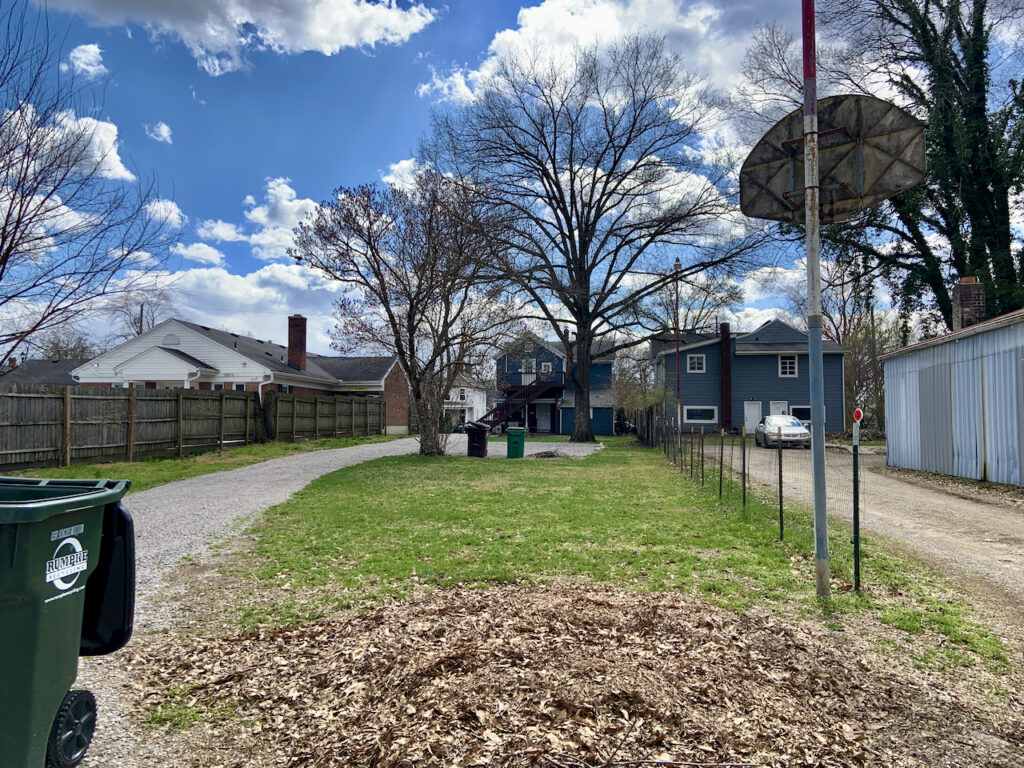
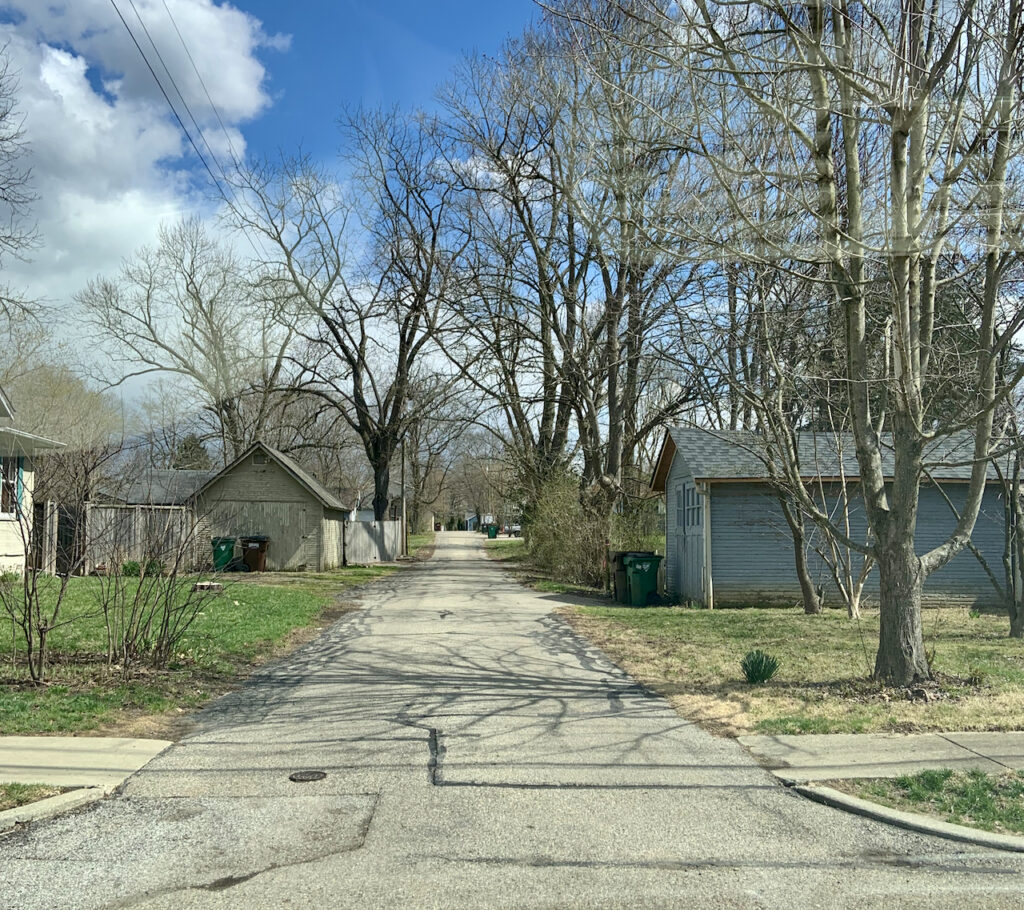
The owner, William Kammerer requested approval to build a new 2-family dwelling on the rear of the property in the Office Residential Zoning District. Currently on the site, there is an existing single, two family dwelling unit, occupied via lease by the Little Miami River Chamber Alliance on the first floor and a short term rental on the 2nd floor that would remain. Ingress and egress was to be from Centre Street (Alley).
514 West Loveland Avenue Avenue backyard as seen from Center Street (Alley).
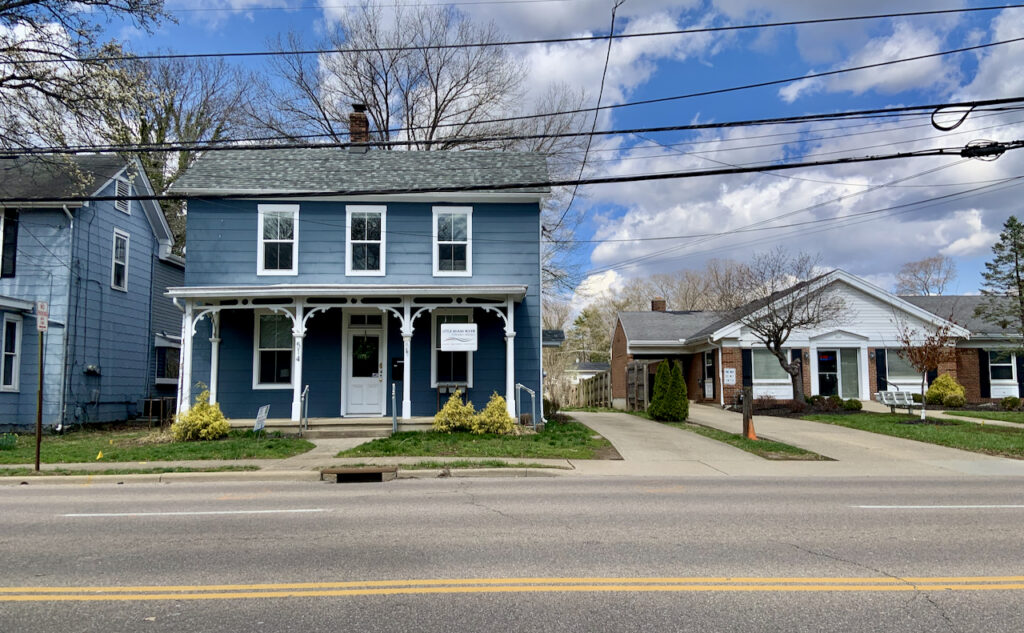
Little Miami River Chamber Alliance office at 514 West Loveland Avenue.
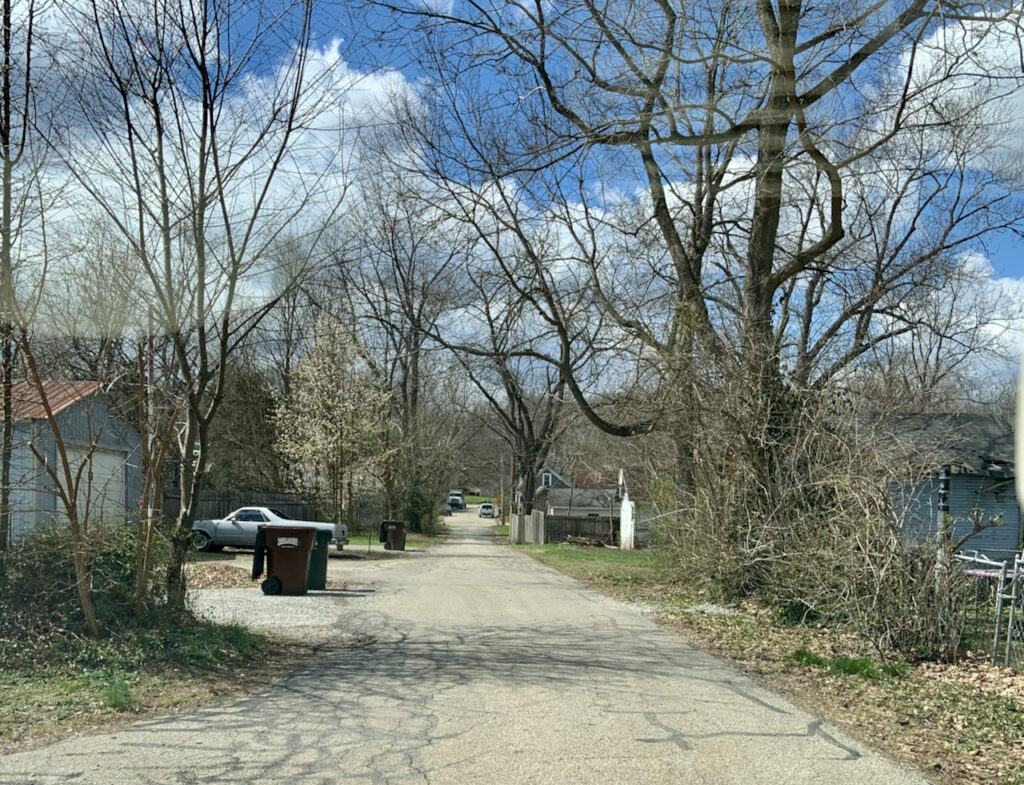
Center Street (Alley) viewed from intersection of Elm Street.
Center Street (Alley) viewed from rear of Union Savings Bank.
The discussion begins at the 1:39 minute mark of this video. The Commission ultimately denied the “Conditional Use” permit.
BECOME A LOVELAND MAGAZINE SUPERFAN BY DONATING NOW!
Open and free local reporting is critical to having well-informed community. Loveland Magazine has published a free newspaper and website for the last 20 years for our community. If you would like us to continue, kindly contribute to this service. It would be greatly appreciated. Donations may be made to: Loveland Magazine, 243 Wall Street, Loveland, Ohio 45140. Or, donations can be made through PayPal using a credit card. (https://bit.ly/4j1ju3k) Advertisers do not nearly cover all of our expenses.
Loveland, Ohio – Last Tuesday night, our enchanting romance took a significant turn at the Love-Land city hall. Despite the frigid temperatures, 65 individuals gathered to affirm something that should be held in the highest regard and too precious to be tampered with. It was what should be sacrosanct; too important or valuable to be interfered with.
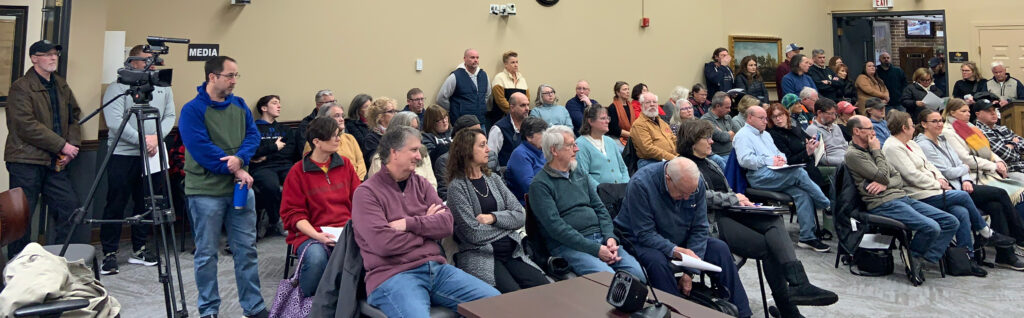
A full-capacity, standing room only, flowing into the hallway crowd.
Not all came with the same sentiment, however the size of the crowd on a night when nary a person wouldn’t have preferred to be somewhere else was telling. What became apparent was that we have something flowing between and through us. How do we protect our eldest, centuries-mature loved one?
Our water has a memory, and it flows through Loveland because the spiritual H₂O means everything. Destroy its soul? Cannot.Dirty it and it’s banks we can. Diminish the life within and on its shores, we can. Our State and National Scenic, Little Miami River sends us messages to heed and pass along to generations, but we don’t always listen. Tuesday, we did. Tell your children and grandchildren.
A bridesmaid with bigamist-many suitors was honored with a renewal of noble, exalted, and sacred vows.
Some took advantage of their 65 friendly neighbors to bloviate in inflated and empty ways with their superior knowledge and self-aggrandizing wisdom. They went on and on because what they tried to convince needed too many-worded-attempts. Perhaps they were the only ones listening and they needed so many phrases to convince even themselves. The audience listened with a third ear as if they could decipher how in the end the bloviators might end up voting. One heartless resident did the same but in the end had no vote, yet surely went to sleep Tuesday night with dreams of grander of saving the day.
Planning and Zoning Commission reverses course from their December 3 decision
Near the end of this week’s public hearing to consider whether 12 homes should be built on Riverside Drive in the West Loveland Historic District on the bank of the National and State Scenic Little Miami River, Planning and Zoning Commissioner Rob Weisgerber made a motion to not recommend the zoning map change to City Council. Weisgerber, Andy Bateman and Chairman Mark Redmond agreed with Weisgerber and voted “Yes” David Parker voted “No”. Commission Member Brian O’Neill did not attend the meeting.
The P&Z recommendation will now be delivered to City Council where there will be another public hearing. Upon completion of the public hearing, City Council may approve or disapprove the recommendation of Planning and Zoning Commission by a simple majority. Council may modify the recommendation of Planning and Zoning Commission by a 3/4 majority vote.
Video of speeches by the public and the discussion and vote of the Commission coming soon…
As our community comes together to review the proposed Special Planning District (SPD) development along Riverside Drive, it is crucial that we approach this process with transparency, collaboration, and a shared commitment to protecting the scenic and historic character of the Little Miami River.
What’s Happening: A developer has submitted a proposal to build 12 single-family homes on the riverbank along Riverside Drive, adjacent to the Loveland Historical Museum and Tufts-Schildmeyer Funeral Home. To enable this project, the developer plans to raise the floodplain using fill dirt and is requesting the city to approve re-zoning for this purpose. The Planning and Zoning Commission will conduct a public hearing as part of their review process.
What’s at Stake: The Little Miami River is a nationally and state-designated scenic river. Current zoning and federal protections aim to preserve its ecological, aesthetic, and cultural value. This proposed development raises important questions:
Environmental Impact: Raising the floodplain could alter natural water flows, potentially increasing flood risks for neighboring properties, impacting wildlife habitats, and degrading water quality.
Community Character: Re-zoning and new construction could disrupt the historic and scenic integrity of the area, altering its charm and appeal.
Process and Precedence: Allowing this development may set a precedent for future projects that prioritize private gains over public and environmental interests.
Understanding the Process: Pursuant to Section 1151.01 and 1151.02(a)(2) of the City’s Planning and Zoning Code:
The first step is a preliminary review meeting to determine whether the proposed project falls within the SPD’s purpose and scope. (This meeting occurred on December 3, and the proposal was approved to advance to a public hearing.)
If deemed appropriate, a public hearing must be scheduled within 45 days to review the conceptual plans and gather public input. (This is the meeting happening on January 7.)
This process ensures community engagement and the consideration of all perspectives, including those of residents, advocacy groups, and experts.
Counter Argument: The developer argues that this project will create valuable housing and address flooding risks through engineered solutions. They assert that the proposed homes will align with the character of nearby properties and enhance the area’s vibrancy.
A Collaborative Approach: While development has its place, our community’s responsibility is to ensure that any changes align with the broader goals of preserving Loveland’s natural, cultural, and historical assets. To this end, we recommend:
Expert Involvement: Consulting with conservation experts and legal professionals to fully understand local, state, and federal zoning laws and protections.
Community Engagement: Encouraging residents to attend the public hearing, voice their perspectives, and engage in the decision-making process.
Transparency: Requiring detailed studies on flooding, traffic, and environmental impact before any decisions are made.
What Can You Do?
SHARE this information with neighbors, friends, and family.
We believe that by working together—residents, city officials, and developers—we can protect the Little Miami River while meeting the needs of Loveland’s growth in a thoughtful and sustainable way.
Aaron Rourke, the Assistant Regional Scenic Rivers Program Manager of the Division of Natural Areas & Preserve said, “The goose that laid the golden egg here, is the State and National Scenic Little Miami River.”
This story was up-dated at 6:15 AM on December 6 to reflect that the vote the Commission took during the meeting was to move forward with the SPD process by holding a formal Public Meeting on the plan at an as yet to be determined future date.
Loveland, Ohio – Richard Fisher spoke first and apparently had the wrong impression after hearing the Chairman of the Planning and Zoning Commission, Mark Redmond’s opening remarks. Fisher said, “I know you are not approving anything” tonight.
During the Open Forum Fisher added that he hopes down the line, wherever this goes, that people keepin mind that we just went through a “pretty big game changing election” in which people said that we want elected officials to listen to us.
However at the end of nearly one hour and 15 minutes of discussion and hearing from the public, the commission determined that the Schildmeyer proposal met all the conditions required to re-zone their property into a Special Planing District which would remove all current and existing zoning regulations by creating a new zoning map with its own set of regulations.
Redmond, Andy Bateman, and David Parker voted that the proposal met the requirements of establishing a Special Planing District. Rob Weisgerber voted that it did not. Member Brian O’Neill was absent from the meeting.
The vote was to move forward with the SPD process by holding a formal Public Meeting on the plan at a yet to be determined future date.
No one from the public spoke in favor of the plan moving forward. Terry Schildmeyer, representing the family and Douglas Hinger with Traditions Building and Development Group testified in favor of their plan.
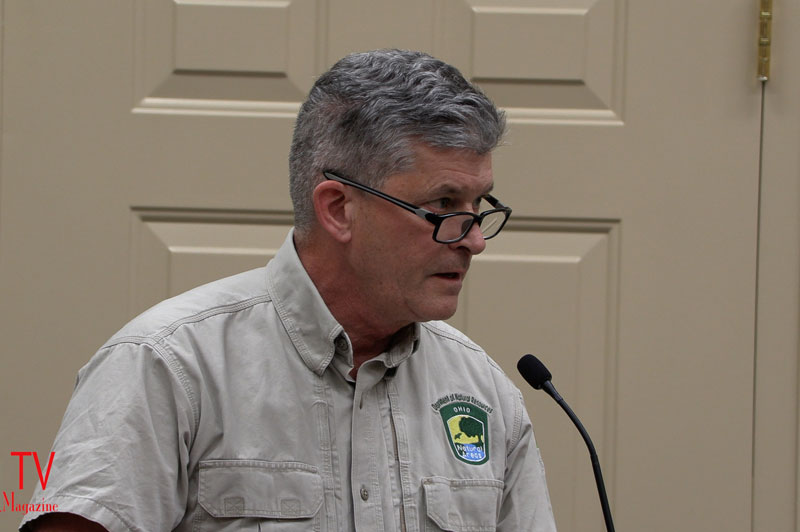
Speaking about the importance of protecting the State and National Scenic Little Miami River, Aaron Rourke, the Assistant Regional Scenic Rivers Program Manager of the Division of Natural Areas & Preserve said, “The goose that laid the golden egg here, is the State and National Scenic Little Miami River.”
The development shares 540 feet of frontage along the Little Miami River at 128 North Riverside Drive in the West Loveland Historic District. The site will be elevated by bringing in earth to bring it above flooding elevation.
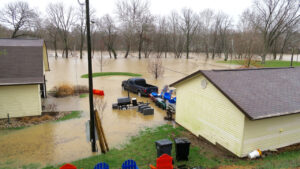
Loveland Magazine file photo of past flooding
Rourke works for the Ohio Department of Natural Resources.
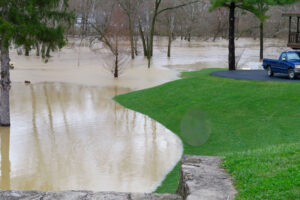
Loveland Magazine file photo of past flooding
The proposed Special Planning District would be located at 128 North Riverside Drive and includes twelve (12) single-family detached dwelling units (24’ x 56’ 3-Story Homes) with minimum lot size of 0.114 acres or 4,966 sq. ft. The owner is Schildmeyer Holdings. The 12 proposed homes would be across Riverside Drive from the Loveland Museum Center and the Tufts Schildmeyer Family Funeral Home.
____________
In order to adopt an SPD, one or more of the following conditions exist, or will exist, within the proposed SPD:
(a) A concentration of retail and service oriented commercial establishments serving as a principal business activity center for the community.
(b) Land that is occupied by substantial natural characteristics worthy of preservation or which are historic aids to the identification of residential communities which help residents relate to their communities and to relate the social organization of communities to their physical environments.
(c) Lands which permit for ingenuity, imagination, and design efforts on the part of builders, architects, site planners, and developers that can produce residential developments which are in keeping with overall land use intensity and open space objectives of the Comprehensive Plan while departing from the strict application of use, setback, height, and minimum lot size requirements contained in the Zoning Code.
____________
[pdf-embedder url=”https://lovelandmagazine.com/wp-content/uploads/2024/11/2024-11-07-Planning-Zoning-Commission-Full-Agenda-1876.pdf” title=”2024-11-07 Planning & Zoning Commission – Full Agenda-1876″]
March is National Developmental Disabilities Awareness Month
by David Miller
Dear City Hall,
I ask you to install directional signs in our Historic District that point to accessible parking spaces.
To honor National Developmental Disabilities Awareness Month I decided to revisit the draft of a proposal I worked on from 2014 until 2016. Most of the proposal was eventually approved by Loveland City Council and the Loveland Planning and Zoning Commission and is now adopted law in the City. I started the project in 2014 when resident, Amy Clawson raised concerns to me. Amy said that unfortunately, a very common problem for people who have different needs is in finding good, appropriate parking that can accommodate their physical or health issues. She pointed me to several instances of inadequate and poorly marked parking spaces in the Historic District. After taking an inventory around town, I published this story: Accessible parking; out of sight, out of mind, neglected and abused.
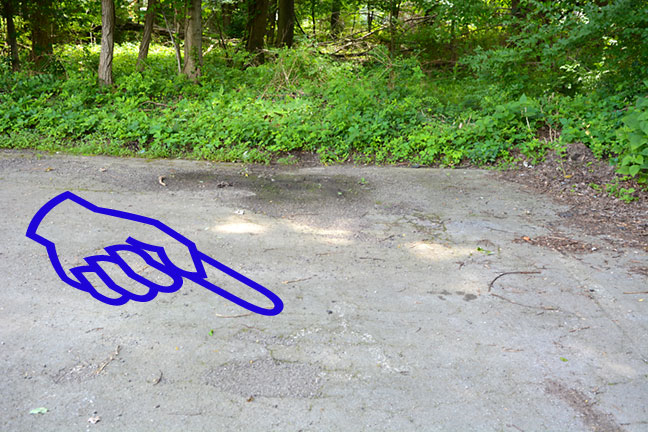
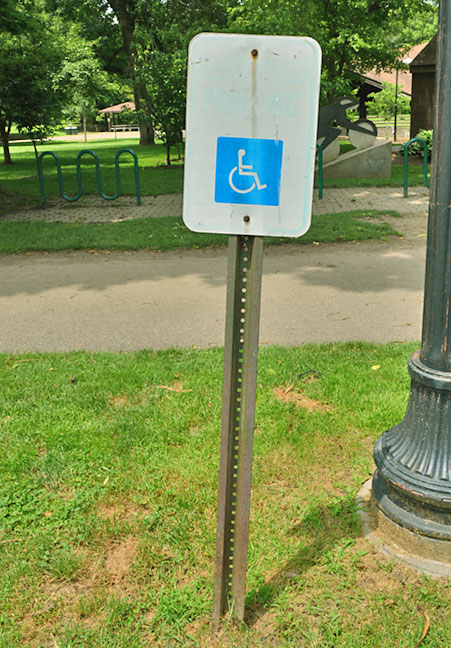
This nearly invisible accessible parking space was at McCoy Park in 2014. There should have been a pole-mounted sign and the paint on the pavement had all but disappeared.
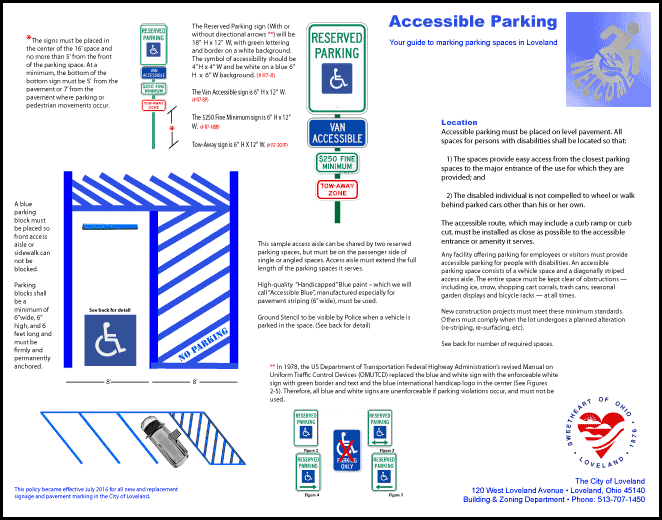
Because most spaces in Loveland in 2016, whether on public or private parking lots were not in compliance with either Ohio or Federal law, the proposal was to mark all accessible parking spaces in the City in a consistent manner and for City Hall to choose a deliberate pathway to bring them all into lawful compliance.
This was the neglected condition of the accessible parking sign near the restroom at Nisbet Park in 2014.
It’s intuition that leads you to rather easily locate the accessible parking spaces at Kroger or shopping centers, however, since most businesses in Historic Downtown do not provide their own parking, directional signs as well as signage at the parking spots themselves are needed.
At the time I started my research, accessible parking was out of sight, out of mind, neglected, and abused. During special events, they are still mostly out of sight and mind.
I received the full support and helpful suggestions from both City Manager Dave Kennedy and City Engineer Cindy Cindy Klopfenstein as I crafted and illustrated the plan. Kennedy from his end ensured that the planning commission and city council gave careful thought to the plan and secured their approvals.
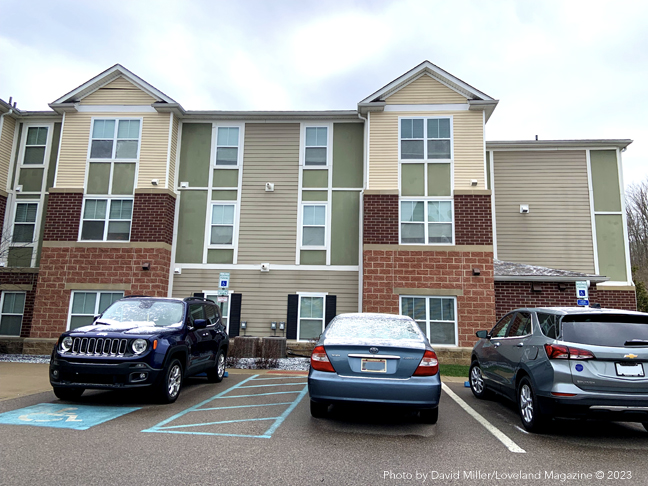
When built, the Trails at East Loveland was the first new development to fully comply with the new requirements for accessible parking spaces.
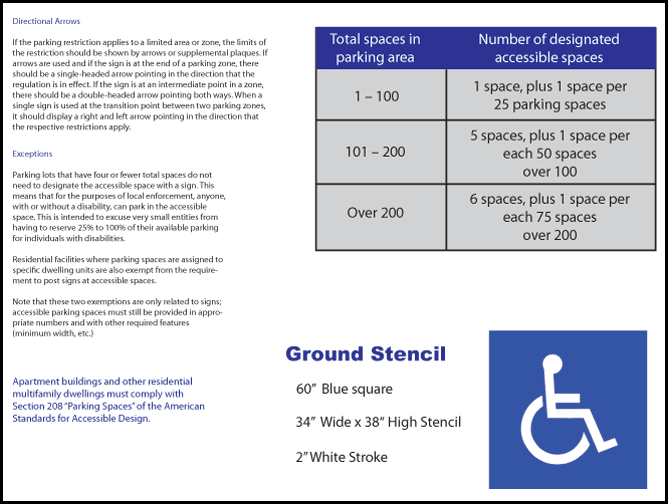
The plan as adopted requires that all new parking spaces from new development must tell the Planning and Zoning Commission how they intend to comply with the new requirements. Any repaving, recoating, or new stripping of existing parking lots must now also use the guidelines.
Also adopted at the time was a policy requirement that all applications, whether from private groups or City Hall who filled out an application for special events describe on the application how they will provide the number of accessible parking spaces based on their anticipated attendance.
The Accessible Parking Sign used by the State of New York
The original plan I proposed was to use a new universal design that at the time was being adopted around the country, but through research of Ohio Department of Transportation law, I discovered that although they were considering the new design they had not yet made it their design of choice. The newer “fluid movement” design is meant to accentuate a more positive image of accessible needs rather than an expression of one using the parking spot as being “handicapped”.
Also, one idea I had in 2016 was to have directional signs placed throughout our Downtown Historic District pointing to where a person could find accessible parking, without driving around looking for them.
Thus, in light of it being National Disabilities Awareness Month I have revisited my earlier proposal and now suggest “wayfinding” directional signs in the Historic District so people can find the hidden gems closest to where they want to go.
I propose permanently mounted signs as well as portable ones that would be brought out for special events such as Christmas in Loveland, parades, and the Independence Day event.
The Direction Sign I propose for Historic Downtown Loveland would tell visitors and shoppers where to find an accessible parking space and that the Sweetheart City of Loveland, Ohio is a welcoming community.
Thank you for considering my suggestion.
Best regards,
David Miller
The Accessible Parking Space Guide Approved in 2016
Loveland, Ohio – The Loveland City School District Board of Education is seeking a person to be appointed to the City of Loveland Planning and Zoning Commission. The successful candidate would serve as a City of Loveland Planning and Zoning Commission member, attend necessary meetings, and communicate with the Board of Education.
Those interested in serving must be a resident of the City of Loveland for at least one year before their appointment to the Commission. Candidates should submit a resume and a brief narrative explaining why they would like to serve.
Documents can be submitted via email to treasurer@lovelandschools.org or delivered to the Board of Education offices during regular business hours. All documents should be received by noon on Wednesday, December 14, 2022.
Loveland Charter
SECTION 9.03 PLANNING AND ZONING COMMISSION. There shall be a City Planning and Zoning Commission consisting of five (5) members. One (1) member shall be a member of Council, to be selected by Council. One (1) member shall be selected by the Board of Education who may or may not be a member of the Board. Council shall select three (3) members who are not Council members. Members of the Commission shall be residents of the City for at least one year prior to their appointment. If the Board of Education and/or the Council shall fail in these appointed duties, for a period of forty-five (45) days, after a vacancy occurs, the Mayor shall make such appointments. The terms of office of a Commission member, who is also a member of Council shall be concurrent. The remaining four (4) members shall be appointed to staggered and overlapping terms of three (3) years each. Any incumbents, as of this Charter’s adoption, shall serve out their respective unexpired terms. (Amended 11-6-01)
SECTION 9.03a POWERS AND DUTIES OF PLANNING AND ZONING COMMISSION. The Commission shall act as the City’s platting commission and shall provide for planning and regulations covering the platting of all lands controlled by the City and may require an official map of such territories to be made. The Commission shall carry out the City planning functions, which includes preparing a master plan, to be updated a minimum of every ten (10) years, and investigate, and make such reports and recommendations relating to planning and zoning, and the physical development of the City; and shall have all the powers granted to and shall perform all the duties imposed on planning commissions by Ohio law, and such other powers and duties as established by Council by ordinance. Meetings of the Commission shall be held as needed but not less than every two (2) months. (Amended 11-6-01)
Loveland Code of Ordinances
1109.03 RESPONSIBILITIES OF THE PLANNING AND ZONING COMMISSION.
(a) The Planning and Zoning Commission shall have the following responsibilities and powers as they relate to this Zoning Code:
(1) Initiate advisable official zoning, district map changes, or changes in the text of the Zoning Code where same will promote the best interest of the public in general through recommendation to the City Council.
(2) Review all proposed amendments to the text of this Zoning Code and the official zoning district map and make recommendations to the City Council.
(3) Review all Special Planning District applications and make recommendations to the City Council as provided in this Zoning Code.
(4) Review all conditional uses as identified in the respective zoning districts according to provisions and criteria stated in this Zoning Code.
(5) Carry on a continuous review of the effectiveness and appropriateness of this Zoning Code and recommend such changes or amendments as it feels would be appropriate.
(6) Review and act on site plans pursuant to Section 1111.09.
(b) The Planning and Zoning Commission shall also have the responsibilities as set forth in the City Charter.
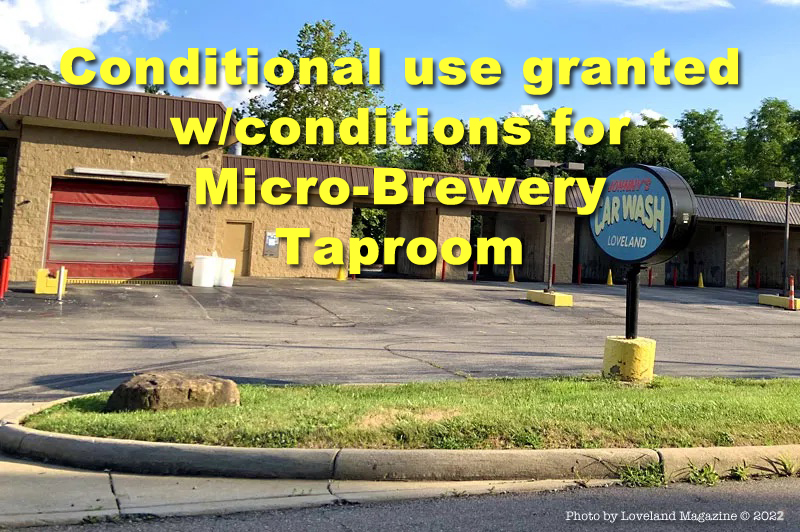
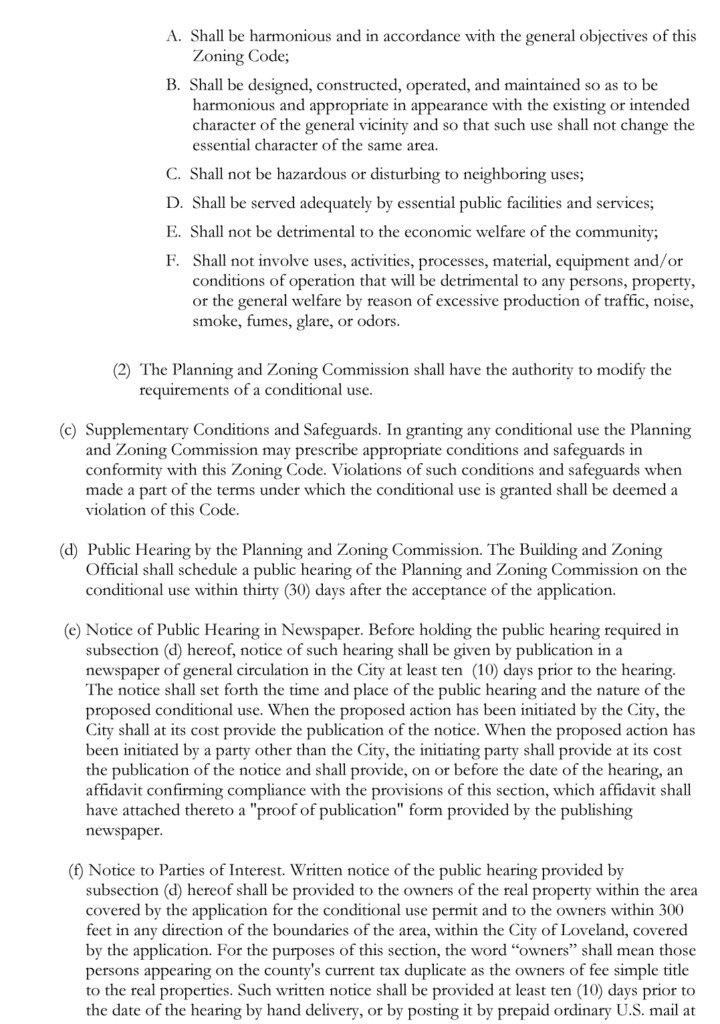
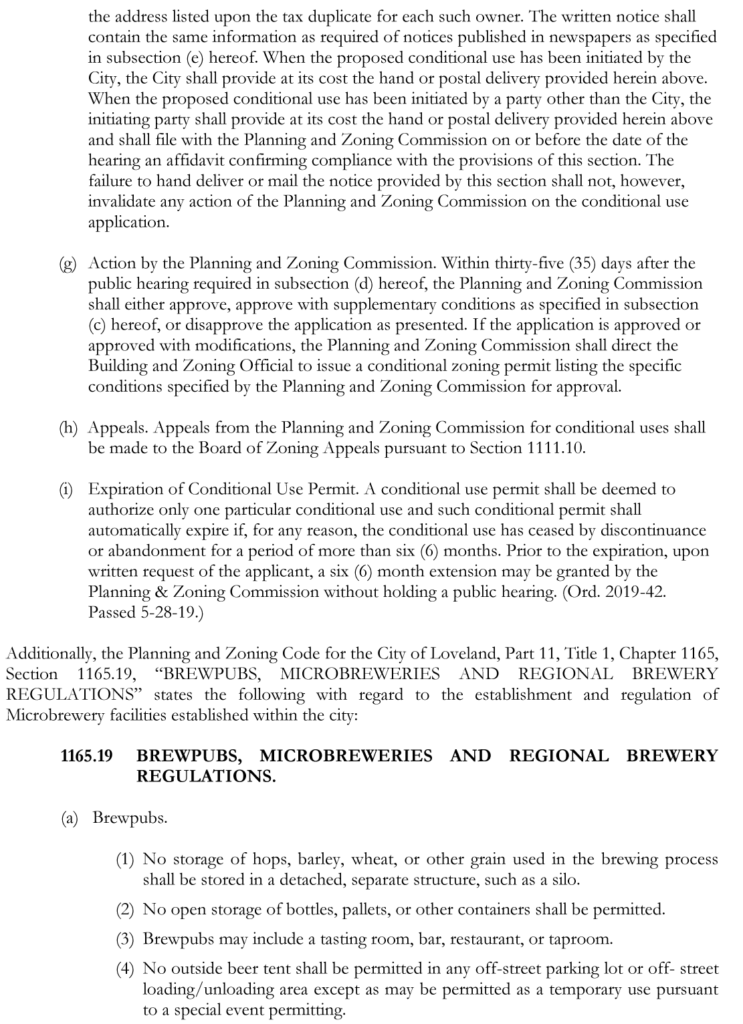
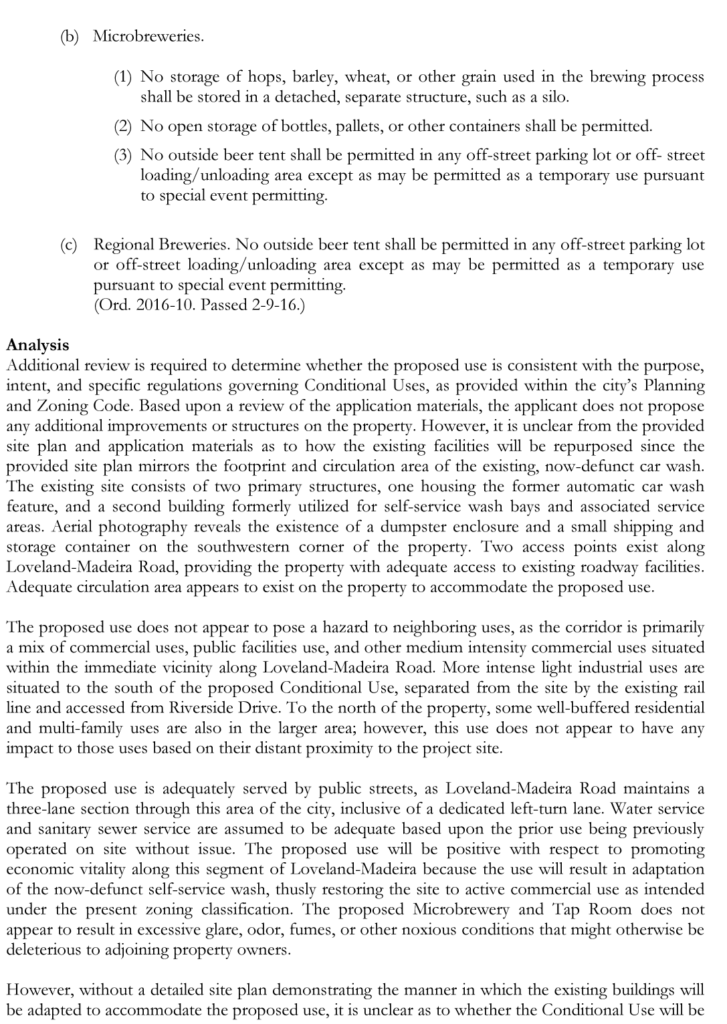
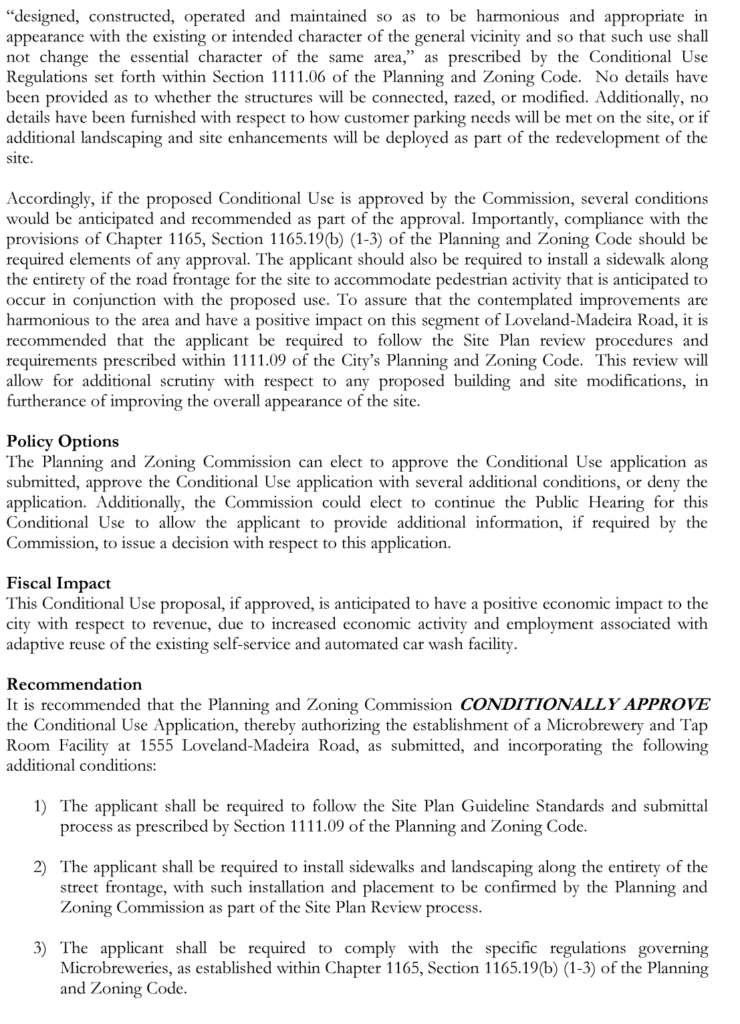
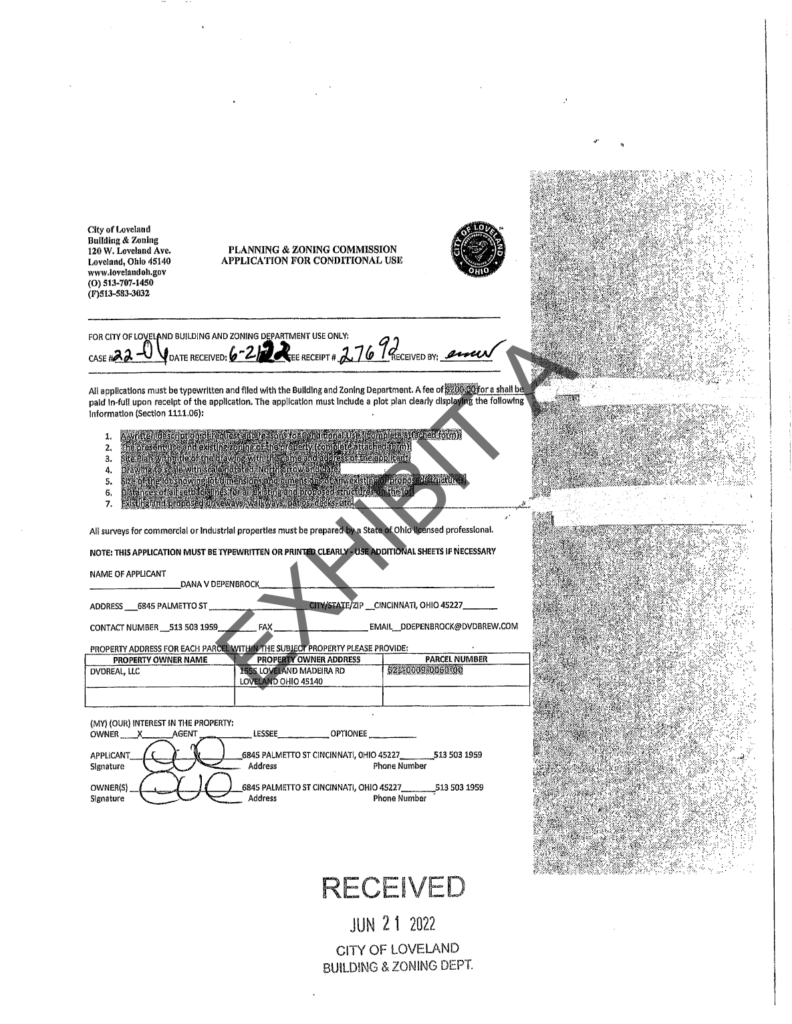
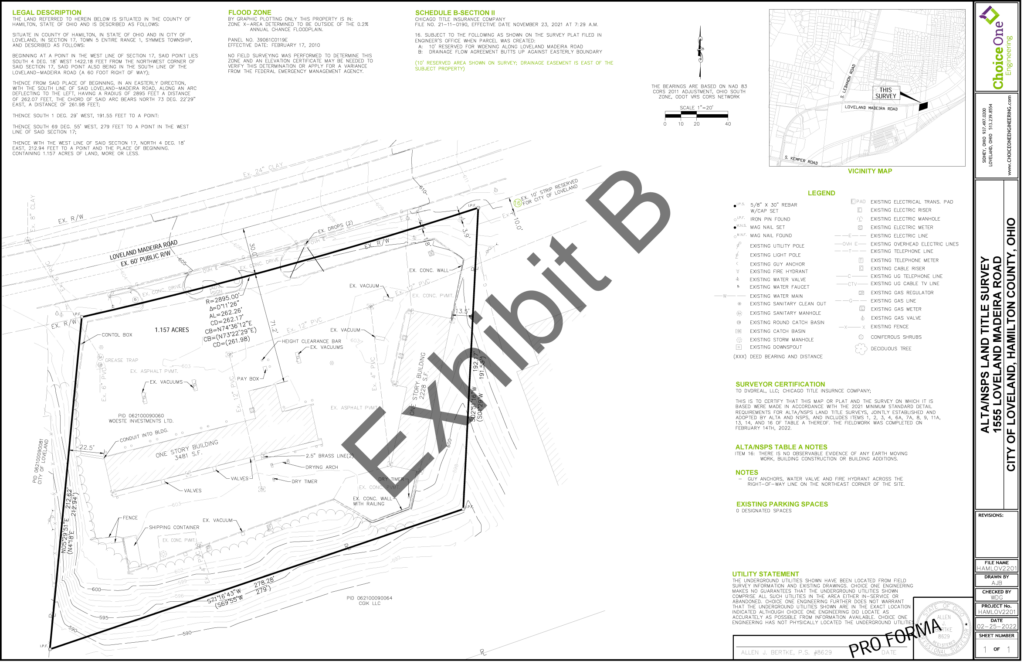
Loveland, Ohio – On Monday evening, Assistant City Manager Cory Wright requested that the Planning and Zoning Commission require a sidewalk and landscaping along Loveland Madeira Road and that a site plan be submitted before conditional use be granted to convert the now-closed Johnny’s Car Wash into a micro-brewery and tap room. Another appearance before the Commission would be required for the site review to discuss landscaping, sidewalks, and how exactly the car wash buildings will be repurposed. The proposed use of the current two buildings on the site is to use the self-service bays for the taproom and tavern and the building that contained the automated full-service wash to become the microbrewery.
The representative for the applicant said that sites in two other cities, one being Milford, were considered in a more than year-long process before choosing Loveland. Justin Conger, President and CEO of the Conger Construction Group out of Lebanon spoke on behalf of the applicant, Dana Depenbrock. Conger said he first approached City Manager Dave Kennedy, “Probably seven months ago” to discuss the feasibility of what they would propose.
There will be insulated overhead glass garage doors installed on some of the self-service bays facing Loveland Madeira Road.
Conger said that as he explored the re-use idea he discovered a similar adaption of a car wash in northern Ohio. “I think it’s a neat idea.” He added that outdoor seating is planned.
Conger said that because of the topography and grade of the site that retaining walls might be needed if they were required to install the sidewalk, “Might be a tough thing to do.” He said it may not be an easy feat and may even be cost-prohibitive.
Resident Kim Lukens addressed the Commission from the podium and said she wanted to talk about “values”. She said, “The City, the community, and visitors all have values that impact our decisions; where money is used, where we go to relax, socialize, and travel.” She said she did not think Loveland needs more places to serve alcohol. She described the proposed use as only a place to drink beer since it won’t be serving food. Lukens asked, “How much more of this type of entertainment does Loveland need more of?” Lukens was the only resident that spoke at the public hearing.
Commissioner Rob Weisgerber said that the establishment could “spark” needed development on that side of town and draw people to other businesses along the Loveland Madeira Road corridor. “Businesses at large,” he said. He described the proposal as a possible “catalyst.”
Commissioner Andy Bateman agreed with Weisgerber and said it would be a “big benefit” to create a neighborhood “watering hole – so to speak”.
Commissioner Al Kressler said that the residents in the large nearby apartment complexes wouldn’t be burning gasoline or diesel fuel, but using sidewalks. “It’s going to be a local watering hole. It is what it is,” he said.
City Manager Kennedy suggested the City might share the cost of the sidewalk. He said, “I think that would be a nice gesture.”
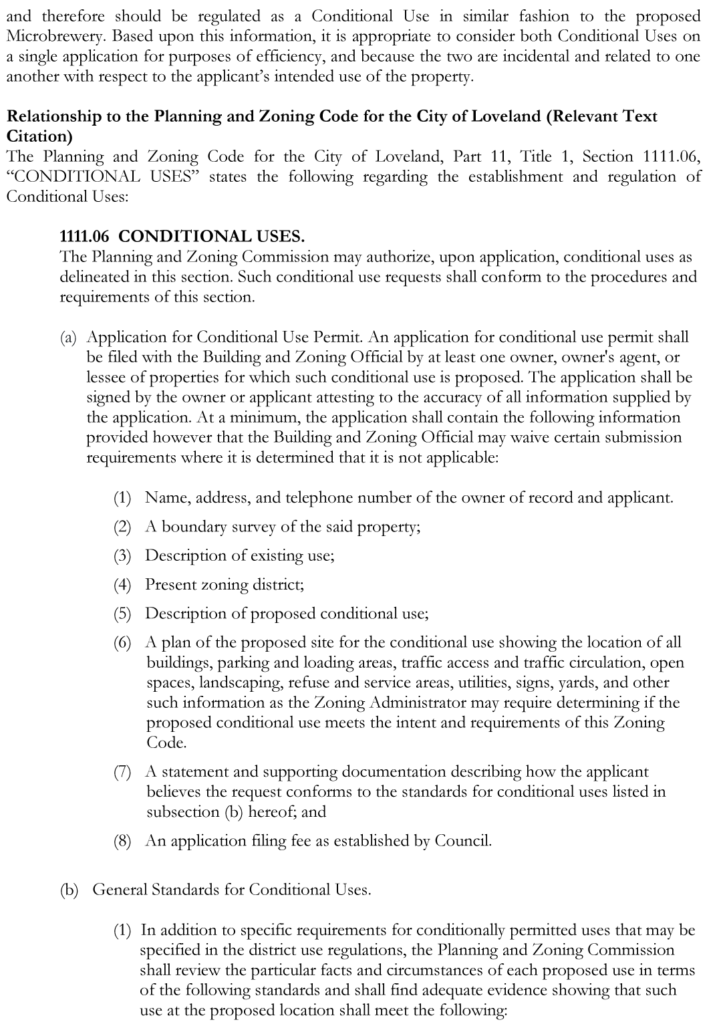
Kressler moved to accept the conditional use with the added requirement that one of the existing driveway cuts be eliminated. The motion passed with all members voting, “Yes”.
BACKGROUND:
The public hearing before the Planning and Zoning Commission on a conditional use permit for converting Johnny’s Car Wash on Loveland Madeira Road into a micro-brewery and tap room was rescheduled for Monday, August 8, at 7 PM.
Loveland Magazine made a public record request for the “Staff Report” that will tell readers more about the project.
BACKGROUND:
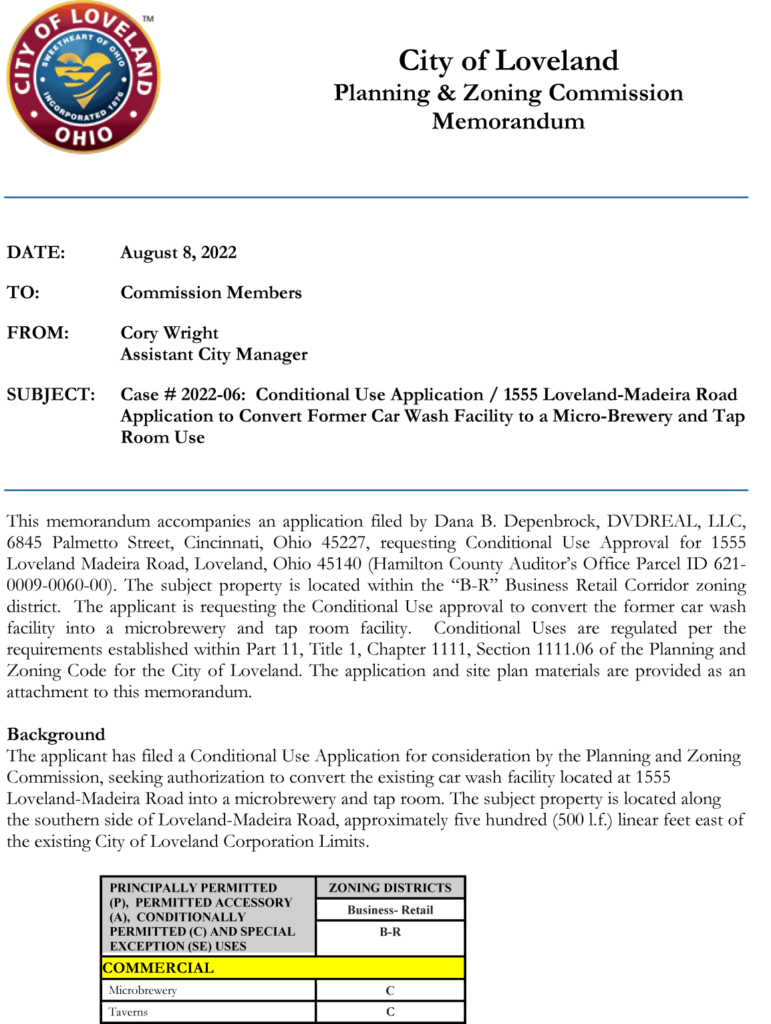
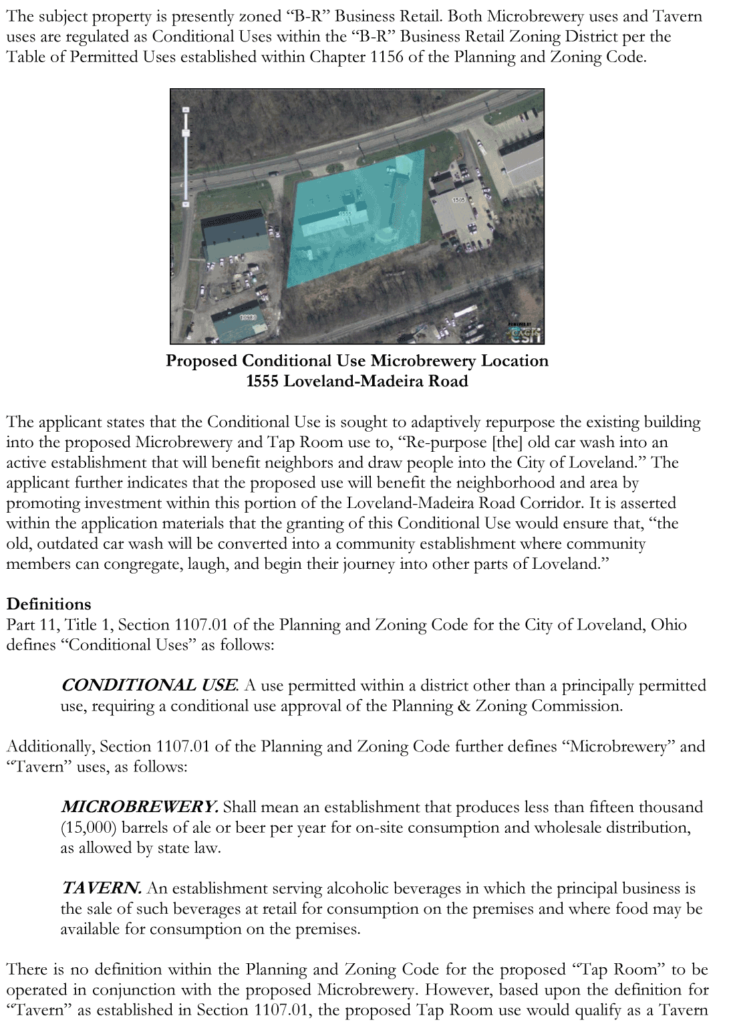
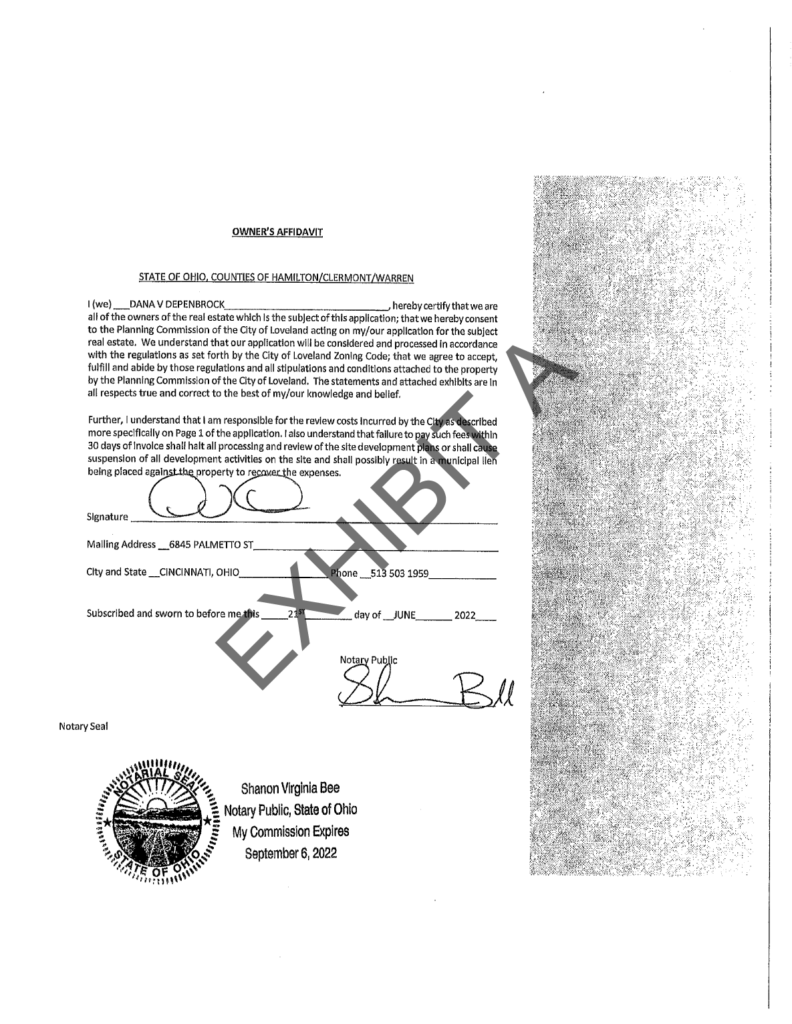
A micro-brewery and tap room are being proposed for property along the Loveland Madeira Road leading out of Loveland. A “conditional use” application was submitted to the Loveland Planning and Zoning Commission on June 21 from DVDREAL, LCC. The existing zoning for the property according to the applicant is for “commercial” use. The applicant is Dana Depenbrock. The proposal is for the location of Johnny’s Car Wash at 1555 Loveland Madeira Road.
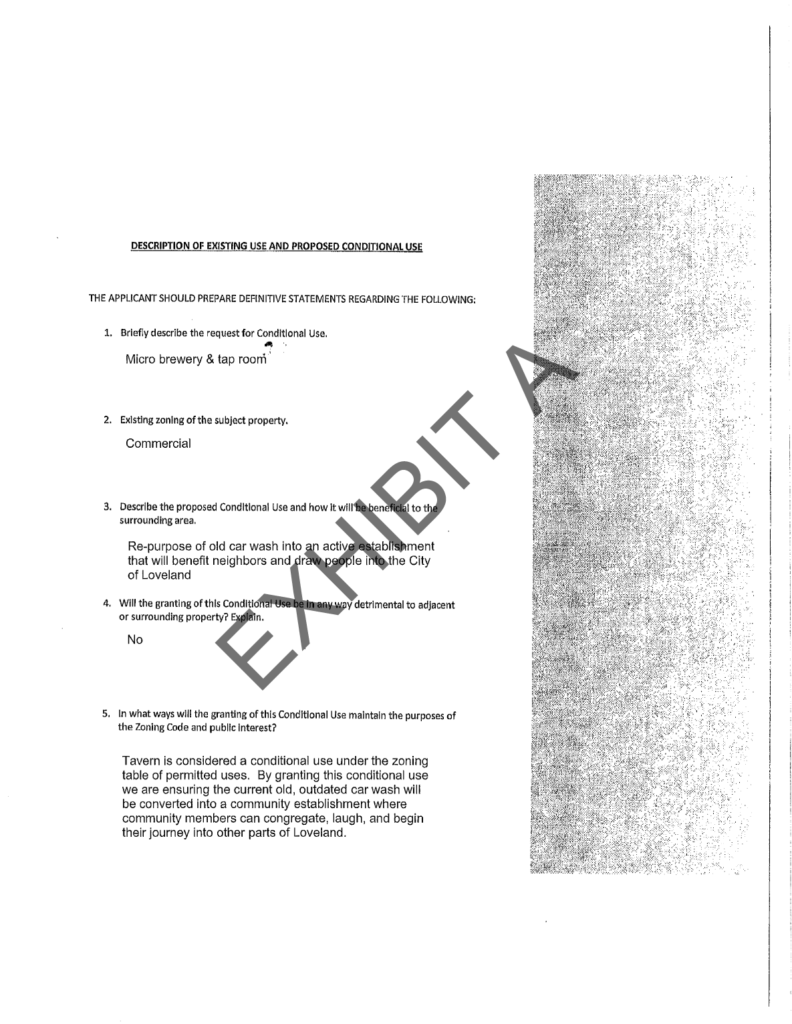
The application says, “By granting this conditional use we are ensuring the current old, outdated car wash will be converted into a community establishment where community members can congregate, laugh, and begin their journey into other parts of Loveland.”
The Planning and Zoning Commission will hold a public hearing for the proposal on Monday, August 8 at 7 PM in the council chambers at City Hall at 120 West Loveland Avenue.
Loveland, Ohio – The public hearing before the Planning and Zoning Commission on a conditional use permit for converting Johnny’s Car Wash on Loveland Madeira Road into a micro-brewery and tap room was rescheduled for Monday, August 8, at 7 PM.
Loveland Magazine made a public record request for the “Staff Report” that will tell readers more about the project.
BACKGROUND:
A micro-brewery and tap room are being proposed for property along the Loveland Madeira Road leading out of Loveland. A “conditional use” application was submitted to the Loveland Planning and Zoning Commission on June 21 from DVDREAL, LCC. The existing zoning for the property according to the applicant is for “commercial” use. The applicant is Dana Depenbrock. The proposal is for the location of Johnny’s Car Wash at 1555 Loveland Madeira Road.
The application says, “By granting this conditional use we are ensuring the current old, outdated car wash will be converted into a community establishment where community members can congregate, laugh, and begin their journey into other parts of Loveland.”
The Planning and Zoning Commission will hold a public hearing for the proposal on Monday, August 8 at 7 PM in the council chambers at City Hall at 120 West Loveland Avenue.
Loveland, Ohio – The Planning and Zoning Commission will hold a “Special Meeting” on Thursday, May 26, at 6 PM, at City Hall.
The purpose of the meeting will be to review the final draft version of the 2022 Comprehensive Master Plan for the City as recommended by the Comprehensive Master Plan Steering Committee and to consider making a recommendation for the adoption of the plan to Council.
The approved Final Draft version of the 2022 Comprehensive Master Plan can be found below:
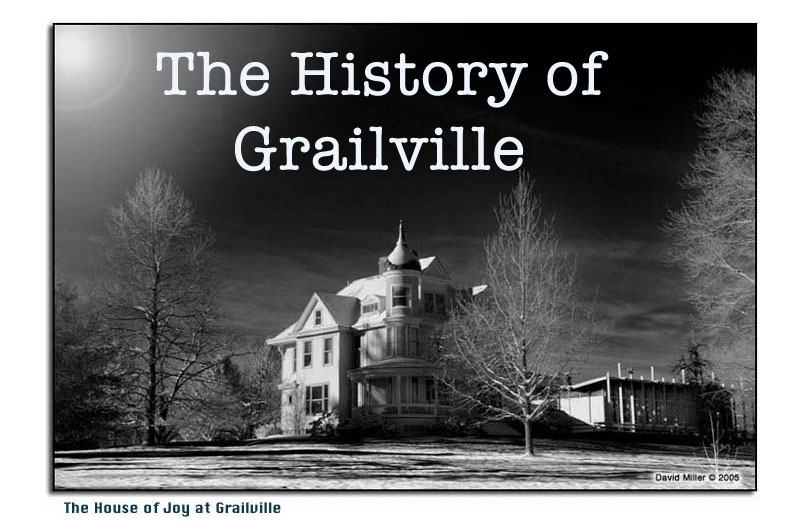
Loveland, Ohio – Here are the complete meeting videos from May 4 when the rezoning of the Grailville property was denied to Drees Homes. The Northern Kentucky home builder had requested a map and text change to Loveland’s zoning code to build 209 Drees homes on the 111-acre Graville site.
If you appreciate these kinds of reports, will you be so kind as to send a contribution our way so Loveland Magazine can keep on keeping on?
All of the many speeches by local residents are here to watch as well as the one person, a Grail member who supported the rezoning. The rebuttal by the Drees’ representative is also here and the discussion by the Planning Commission which ultimately led them to turn down the re-zoning.
You can also watch the post-meeting interview with the leaders of the movement to stop the rezoning, Lauren Enda and Sharon Scovanner.


![[Watch Meeting] P&Z denies Conditional Use at 514 West Loveland Avenue](https://lovelandmagazine.com/wp-content/uploads/2025/03/514-west-loveland.jpg)



 The discussion begins at the 1:39 minute mark of this video. The Commission ultimately denied the “Conditional Use” permit.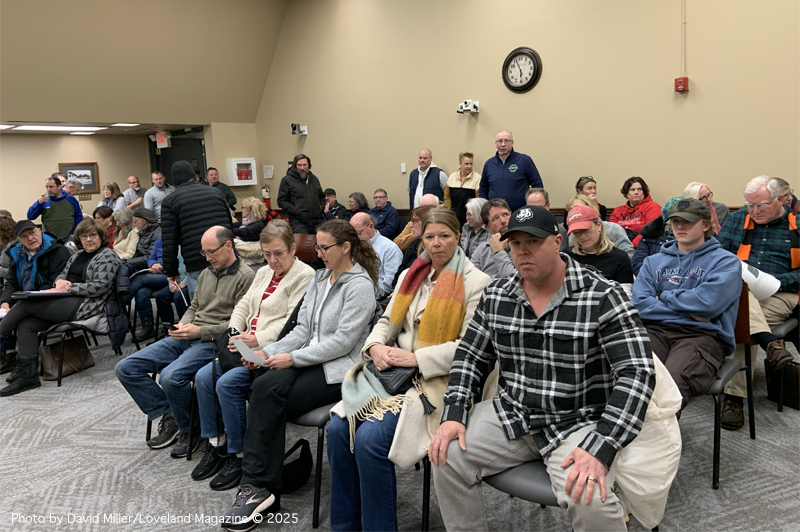
 A full-capacity, standing room only, flowing into the hallway crowd.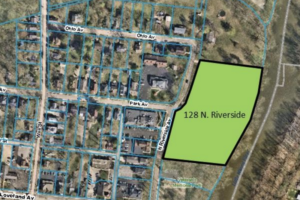






![[The Files] Conditional Use Application to Convert Former Car Wash Facility to a Micro-Brewery and TapRoom](https://lovelandmagazine.com/wp-content/uploads/2022/08/johnnys-car-wash-staff-report.jpg)
![[Complete Video] Rezoning of Grailville denied](https://lovelandmagazine.com/wp-content/uploads/2022/05/speakout-frog-grailville-b.jpg)