Tag: Policy Matters Ohio

  • Republican proposals will devastate poor Ohioans, analyses, advocates say

    Republican proposals will devastate poor Ohioans, analyses, advocates say

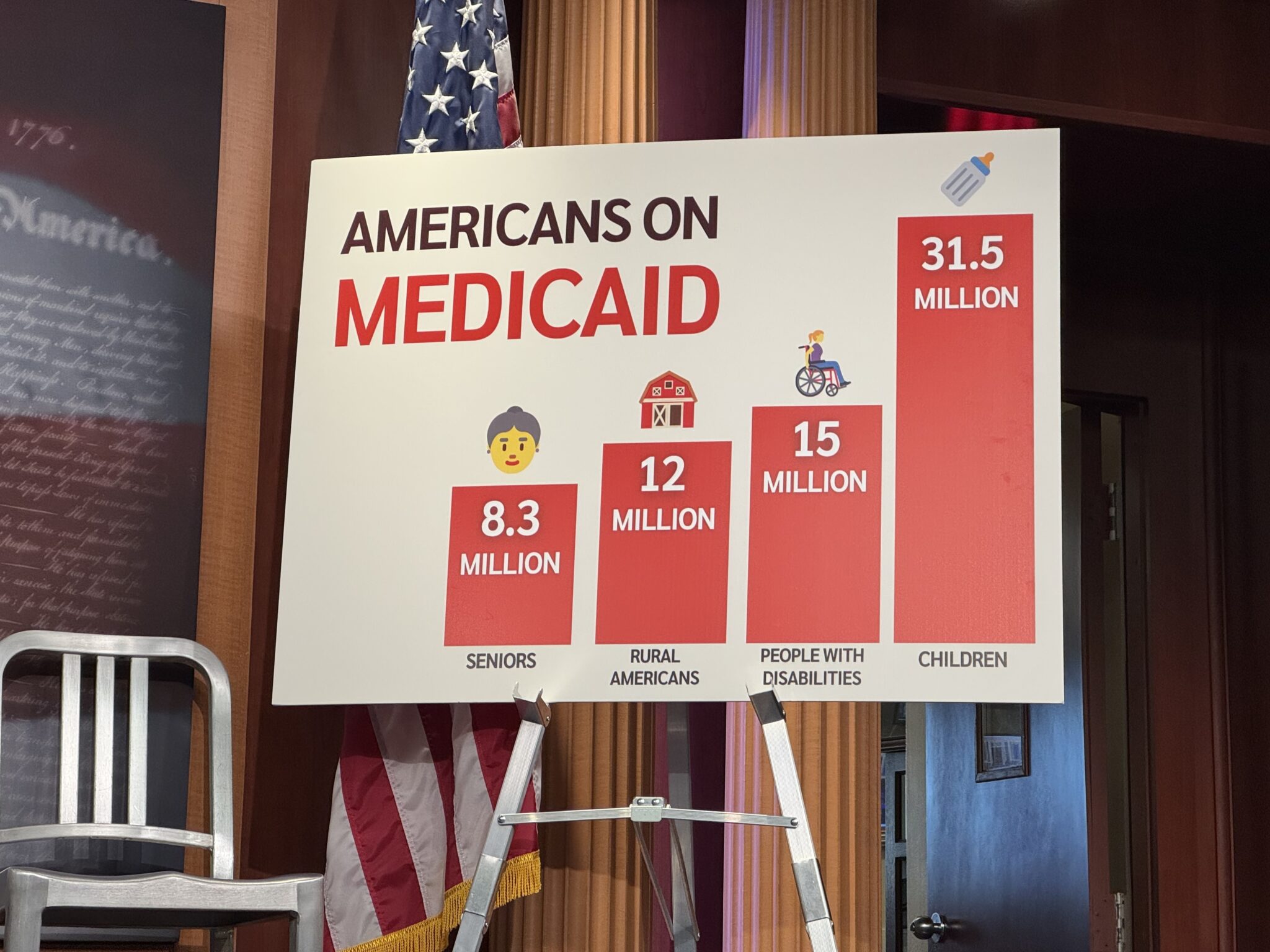
    Medicaid sign at a press conference. (Photo by Shauneen Miranda/States Newsroom)

    By:  – Ohio Capital Journal

    A raft of proposals coming from Republican lawmakers in Washington, D.C. and Columbus will slash health care and other vital programs for the poor in rural Ohio and in its cities, recent analyses say.

    An advocacy group is trying to pressure the state’s Republican U.S. senators to vote against it.

    Republican lawmakers in D.C. and Columbus are hashing out budgets. As they do, they’re looking for ways to cut spending to finance tax cuts weighted heavily toward the wealthy.

    The reconciliation bill — President Donald Trump’s “One Big Beautiful Bill” — passed by the U.S. House of Representatives would provide about would cut taxes by more than $3 trillion and give 70% of the money to the richest 10% according to the nonpartisan Congressional Budget Office.

    At the state level, Policy Matters Ohio said that a flat-tax proposal passed by the Ohio Senate would cost the state $1.1 billion a year and give 96% of the benefit to the state’s top 20% of income earners.

    Some Republicans at both levels also have plans to make deep cuts to the social safety net.

    The Robert Wood Johnson Foundation and the Urban Institute last week published an issue brief saying that cuts to Medicaid and the Affordable Care Act marketplace would result in a $1 trillion loss in health spending for poor and working people. Ohio alone would lose $31 billion as part of that, the analysis said.

    The Medicaid cuts would cost Ohio’s hospitals $9.5 billion — and they’d have to shoulder more uncompensated care as more Ohioans would become uninsured. The Congressional Budget Office estimates that the One Big Beautiful Bill Act would create 16 million more uninsured Americans by 2034.

    “The Medicaid cuts Congress is considering would be the largest funding reduction in the program’s history, and it is hard to overstate just how devastating the impacts would be,” Katherine Hempstead of the Robert Wood Johnson Foundation said in a written statement. “Such drastic changes to Medicaid financing would have ripple effects that go well beyond people covered by the program, further squeezing hospitals, limiting access to care for entire communities, and destabilizing state and local economies.”

    Significant federal funding cuts to Medicaid would be particularly hard on Ohioans. Gov. Mike DeWine’s proposed budget has a provision that would end the state’s 11-year-old Medicaid expansion. That would cost 770,000 Ohioans — most of whom are working — their health coverage.

    The Commonwealth Fund in May said the Buckeye State would be one of the five hardest hit by the proposed cuts. And they would come at a critical time, the organization said in a report released Wednesday.

    Ohio ranked 30th overall for health system performance. It scored particularly badly in terms of infant mortality, preventable hospitalizations, and mortality disparities between Black and other Ohioans.

    Not only would Republican spending proposals slash health funding for lower-income Americans, it would decimate food assistance for the poorest.

    “The House-passed Republican reconciliation plan would cut nearly $300 billion from the Supplemental Nutrition Assistance Program (SNAP) through 2034, based on Congressional Budget Office (CBO) estimates — by far the largest cut to SNAP in history,” the Center on Budget and Policy Priorities wrote in May.

    “As a result of these cuts and other policies in the legislation — which are being used to pay partly for trillions in tax cuts skewed to the wealthy — millions of people would lose some or all of the food assistance they need to afford groceries, when many low-income households are struggling to afford the high cost of food and other basic needs.”

    If those proposed cuts become reality, Ohio’s foodbanks won’t able to ameliorate the hunger they create, the executive director of the Ohio Association of Foodbanks said earlier this month.

    GET THE MORNING HEADLINES.


    Tax cuts weighted toward the wealthiest and cuts in benefits to the most vulnerable have the group Families Over Billionaires trying to put pressure on Republican senators to vote no on the One Big Beautiful Bill Act. As part of a seven-state, $5 million buy, a commercial went up in Ohio this week.

    “We sent Senators (Bernie) Moreno and (Jon) Husted to Washington to lower costs,” the narrator says. “So now that they’re in charge, what are they doing about it? They’re kicking 16 million people off of health care, taking food from 18 million kids, and driving costs through the roof for 80 million families. All to give the super-rich a $250,000 tax cut while your costs go up. They pay less and you pay more. That’s the billionaire tax scam. Tell your senators to vote no.”

    The Congressional Budget Office estimated that 16 million would lose health coverage under the Republican plan. The Urban Institute estimates that 18.3 million children would lose food assistance. Economists widely expect Trump’s tariffs — taxes on imports — to cause significant inflation. The Center on Budget and Policy Priorities estimates that the 1% of wealthiest households would get an average annual tax cut of $250,000.


    Marty Schladen
    Marty Schladen

    Marty Schladen has been a reporter for decades, working in Indiana, Texas and other places before returning to his native Ohio to work at The Columbus Dispatch in 2017. He’s won state and national journalism awards for investigations into utility regulation, public corruption, the environment, prescription drug spending and other matters.

    Ohio Capital Journal is part of States Newsroom, the nation’s largest state-focused nonprofit news organization.

    MORE FROM AUTHOR

  • Ohio governor, state agency lays out suicide prevention plan

    Ohio governor, state agency lays out suicide prevention plan

    JANUARY 31: Ohio Gov. Mike DeWine during the State of the State Address, Jan. 31, 2023, in the House Chamber at the Statehouse in Columbus, Ohio. (Photo by Graham Stokes for Ohio Capital Journal. Republish photo only with original story.)

    Plan mentions high risk to LGBTQ community impacted by gender-affirming care rules, HB 68

    BY:  Ohio Capital Journal

    Ohio Gov. Mike DeWine announced a two-year plan for suicide prevention, including with it statistics many advocates cited in opposing anti-trans legislation passed by lawmakers, and administrative rules the governor proposed.

    The 2024-2026 Suicide Prevention Plan “aims to promote life-saving strategies statewide,” according to an announcement by the governor’s office. The plan was developed in partnership between the RecoveryOhio initiative and the Ohio Suicide Prevention Foundation, “incorporating input from more than 30 private and public organizations,” according to the governor’s office statement.

    The plan’s main goals are centered around public awareness, data gathering, expansion of health care access and support for those with family members who have died by suicide.

    Tony Coder, executive director of the Ohio Suicide Prevention Foundation, wrote in an introduction to the prevention plan that suicide in the state “is at a crisis level, and it will take a statewide effort to reduce the rate of loss.”

    “We need policymakers to create common sense legislation that will improve our behavioral health care system,” Coder wrote. “…We need all hands on deck to end suicide.”

    The groups listed as most affected by suicide in Ohio include rural and Appalachian Ohioans, Ohioans with disabilities, veterans, males, young adults, and LGBTQ+ Ohioans.

    “Nationally, 1 in 5 transgender and nonbinary youth reported attempting suicide in the past year in 2022,” the report stated, also noting that lesbian, gay and bisexual youth are 4.8 times more likely “to consider suicide” and 4.3 times more likely to attempt it than their heterosexual peers.

    The report comes as transgender rights advocates and parents alike say new legislation by the Ohio General Assembly and administrative rules proposed by the governor could cause even more suicide risk to transgender youth, a group already at major risk of suicide, according to studies and medical data.

    One 2023 national study from The Trevor Project found 41% of LGBTQ+ youth surveyed have “seriously considered attempting suicide in the past year,” and that “anti-LGBTQ victimization” contributes to raise rates of suicide risk.

    House Bill 68 bans gender-affirming care for minors in Ohio, a measure that was supported by the Republican supermajority in the Ohio House and Senate, but was vetoed by DeWine.

    The support from the legislature came despite hours of testimony, hundreds of submissions opposing the bill, public protests at chamber votes, and support for gender-affirming care from major medical organizations across the country.

    DeWine’s veto was overridden by the House earlier this month, and by the Senate just last week, allowing the measure to go through, though it may face legal challenges in the near future.

    Even as DeWine vetoed HB 68, he introduced an emergency rule on Jan. 5 prohibiting health care facilities and other medical facilities from “performing gender surgeries on minors,” despite the fact that Ohio children’s hospitals say they haven’t been doing so, even before the rule or legislation was created.

    Two other rules have been proposed, one of which would establish a process through the Ohio Department of Mental Health and Addiction Services to diagnose and treat a “gender-related condition,” but only provide “gender transition services,” not surgical services, according to the draft language.

    A mental health evaluation and counseling would be required for at least six months before diagnosis or any treatment. That evaluation was criticized in public comment submitted regarding the draft language, in which Kathryn Poe, budget and health researcher for Policy Matters Ohio, said definitions in the draft rule “set a dangerous precedent for an organization concerned with the mental health of Ohioans, especially given th elevated risk for transgender Ohioans.”

    The second proposed rule would direct the Ohio Department of Health to report data on gender care to the General Assembly and the public every six months, while also creating “quality standards for those hospitals and ambulatory surgical facilities that wish to treat gender-related conditions.”

    In the new suicide prevention plan for 2024-2026, goals specifically targeted toward LGBTQ+ youth include offering “learning opportunities to grow knowledge skills for specific evidence-based practices, policies and services to impact high-risk populations, including Black and LGBTQ+ youth and young adults.”

    Included in proposed “action steps” to reduce suicide for LGBTQ+ is the creation of “workforce learning opportunities related to stress and risk factors of LGBTQ+ youth,” building “opportunities for affirming spaces and supportive relationships with trusted adults” and promoting anti-bullying policies in schools.

    The report also cites The Trevor Project as a resource for “evidence-informed strategies” to be used in the state for improved suicide prevention outcomes.

    The creator of HB 68, state Rep. Gary Click, called the Trevor Project an “advocacy group” in November as part of a committee meeting on the bill, claiming statistics on transgender mental health reported by the group were “a political statement” that was “designed to intimidate people like me from carrying legislation which would help protect young people.”

    “I totally reject that my bill causes people harm,” Click said at the time.

    Since passage of the bill and veto override, more than 100 families with transgender members have said they plan to leave the state as a result of the bill.


    Susan Tebben
    SUSAN TEBBEN

    Susan Tebben is an award-winning journalist with a decade of experience covering Ohio news, including courts and crime, Appalachian social issues, government, education, diversity and culture. She has worked for The Newark Advocate, The Glasgow (KY) Daily Times, The Athens Messenger, and WOUB Public Media. She has also had work featured on National Public Radio.

    MORE FROM AUTHOR

  • ‘Legacy of neglect’ showcased in Ohio schools report

    ‘Legacy of neglect’ showcased in Ohio schools report

    Stock image from Pixabay.

    BY:  – Ohio Capital Journal

    A report from an Ohio think tank examined the new budget changes and private school voucher impacts on public schools over the last year.

    Research from Policy Matters Ohio said divestments from public schools at the state level “hurt public school students everywhere – especially those in rural counties.”

    Furthering study of the impact the COVID-19 pandemic had on education, Policy Matters’ Tanisha Pruitt and Cassie Mohr said those pandemic effects combined with “Ohio’s legacy of inadequate, inequitable funding” have “weakened the role school plays as a foundational public institution.”

    Ohio was ranked 21st in a U.S. News & World Report on K-12 education and 46th in an EdWeek ranking of equitable distribution of education funding, both of which were cited as part of the 2023 report.

    “Ohio’s students deserve a world-class education, including safe and well-resourced schools that are staffed by teachers who are well trained and fairly paid,” Pruitt and Mohr wrote.

    The new report also confirmed what advocates have repeatedly noted over the years that the public school funding model has been debated — that the vast majority of Ohio students are enrolled in public schools.

    Of the nearly 2 million students enrolled in K-12 education in Ohio, 88.6% are in public schools, and 8.8% are in private schools, while 2.7% are home-schooled.

    Private school vouchers saw a significant change in Ohio’s most recent two-year budget this summer, when legislators opened the state-paid subsidies to 450% of the federal poverty level, nearly universal eligibility.

    But also included in the budget was another phase-in of the Fair School Funding Plan, a six-year effort to dive into the real cost of funding public school students, and fund the schools on an individual basis based on their needs.

    “When fully implemented, the six-year FSFP will correct the over-reliance on local property taxes, eliminate funding caps on districts, and base funding on per-pupil cost estimates that more accurately reflect what it takes to educate a diverse student population,” the report stated.

    Policy Matters’ report focused largely on public schools, where they found a student population that is “somewhat more racially diverse than the state overall” with a makeup that is 16.4% Black versus the 13.3% population in the state overall, and serving a large population of more than 800,000 who are considered economically disadvantaged.

    Pruitt and Mohr remained skeptical of the ultimate success of the FSFP, however, as legislators have “only incrementally moved funding through the formula.”

    “If legislators follow through on their promise to fully realize the FSFP by 2026, they will be helping every public school in the state to be equitably funded, and helping ensure that we live in a state where every child has what they need to succeed in school and after graduation,” the report stated.

    Senate President Matt Huffman has commented in the past that he wouldn’t support funding more than two years at a time, to avoid saddling future General Assemblies with budget items with which they may not agree.

    Teachers

     Source: Policy Matters Ohio 

    The constraints of COVID had their effect on teachers as well, but even outside of the pandemic education methods, educators still face pressures, according to the 2023 report.

    “Teachers recently have experienced a rash of targeted political campaigns to stoke division by denying the identities of trans and nonbinary students, as well as censoring what teachers are allowed to teach in the classroom,” Pruitt and Mohr wrote.

    Beyond that, compensation levels have not kept up over the years, with the Ohio Department of Education showing an average annual salary of $69,130 for an Ohio teacher in the 2022-2023 school year. That amounts to a decrease of more than 6% from the 2018-2019 school year, according to the new Policy Matters research.

    “These factors contribute to one of the most significant problems facing Ohio schools today: too many have too few teachers to give our kids the education they deserve,” according to Pruitt and Mohr.

    The state has also seen a dip in newly licensed teachers as well, with more than 9,000 teachers leaving their jobs in 2021, but only 5,388 earning a new license.

    “Recruitment declines can be attributed to low pay, poor working conditions and other economic factors,” researchers found. New teachers are paid less, and face mounting student loans on top of a salary that is often less than fellow graduates in other professions, they said.

    But licensure was addressed in the budget, with a clause allowing substitutes to have one-year temporary substitute teaching license which could increase the number of subs, and some members of the military could obtain a “military educator license.”

    “While these changes have the potential to boost our educators workforce, they weaken teacher training requirements, which could negatively affect the quality of classroom education, especially in high-poverty schools that already grapple with recruiting and retaining highly qualified educators,” Policy Matters researchers argued.

    The state needs to improve the recruitment methods, according to the report. It could use models like the one pursued by Cincinnati Public Schools superintendent Iranetta Wright, who pledged to recruit more teachers who matched the demographics of her school, but also keep teachers from being saddled with debt by increasing funding for grant programs and teacher residency programs.

    State testing

    For the teachers who are in schools, state testing can be a significant part of the school year, and despite their best efforts, inequities can shine through in even the standardized assessments for subjects like math and reading.

    A 2022 National Assessment of Educational Progress showed fourth and eighth graders in the state “were not statistically different from the national average,” according to Pruitt and Mohr, and Ohio was ranked 21st in a U.S. News & World Report ranking on pre-K-12 education.

    “However, these statewide metrics can mask a high degree of variability among districts, schools and student populations, with predictable disparities,” Policy Matters stated in their 2023 report.

    Disparities among English Language Arts and math scores, for example, don’t have a single cause, researchers found, but “inequities in school funding track closely with gaps in academic achievement.”

     Source: Policy Matters Ohio 

    An analysis of test scores and categories from the Ohio Department of Education showed disparities among student races, but also showed a universal trend that economically disadvantaged students “are more likely to live in school districts with concentrations of poverty – including in rural and Appalachian counties – where property-value-based school funding shortchanges them,” the researchers found.

    In terms of kindergarten readiness, COVID had a negative impact, and in the 2022-23 school year, Ohio’s kindergarten-bound students showed the lowest rate of readiness since 2014, when the state began using a Kindergarten Readiness Assessment.

    “A dropoff in kindergarten readiness was likely inevitable after COVID; Ohio needs to make significant investments in early childhood education to begin recovery,” Pruitt and Mohr said in their analysis.

    The researchers criticized legislative priorities like restructuring the Ohio Department of Education, something that is now being fought over in court. But other curricular level efforts, like one to change the social studies lessons in schools and another that would bar teachers from teaching “any oral or written instruction, presentation, image or description of sexual concepts or gender ideology,” don’t fall under improvements, according to Pruitt and Mohr’s analysis.

    The recommendations they do hope will be implemented include the full implementation of the Fair School Funding Plan, elimination of the private school vouchers at universal eligibility levels, better pay for teachers and the creation of a “pathway to becoming an educator” that helps recruit teachers of diverse backgrounds.

    “More funding should be dedicated to attracting new educators, especially from underrepresented populations, while ensuring the teachers coming out of these programs are fully qualified and prepared to give our kids the best education possible,” the researchers concluded.


    Susan Tebben
    SUSAN TEBBEN

    Susan Tebben is an award-winning journalist with a decade of experience covering Ohio news, including courts and crime, Appalachian social issues, government, education, diversity and culture. She has worked for The Newark Advocate, The Glasgow (KY) Daily Times, The Athens Messenger, and WOUB Public Media. She has also had work featured on National Public Radio.

    MORE FROM AUTHOR

  • Ohio’s Minimum-Wage Increase Largest in 15 Years

    Ohio’s Minimum-Wage Increase Largest in 15 Years

    The federal minimum wage has been $7.25 since 2009. (Artur/Adobe Stock)

    by Mary Schuermann KuhlmanPublic News Service

    Monday, January 3, 2022

    LISTEN

    An annual pay raise has kicked-in for Ohio’s minimum-wage workers, who will now earn $9.30 per hour, about $2 more than the federal minimum wage.

    The $0.50 hourly increase is the largest since 2006, when a ballot initiative indexed the minimum wage to inflation.

    Hannah Halbert, executive director of Policy Matters Ohio, noted had Congress done the same when it set the federal minimum wage in 1968, it would now be worth about $13 an hour, and she pointed out $9.30 amounts to just over $19,000 annually for a full-time worker.

    “That’s still more than $2,000 under the poverty guidelines for a family of three,” Halbert explained. “Even if they’re working full time, playing by the rules, doing what they can, they’re still not going to be able to break that poverty threshold.”

    Ohio is among nine states where a 2022 minimum-wage increase is tied to the cost of living. California’s hit $15 Jan. 1, as part of an incremental increase. Eight other states are also in the process of incrementally raising their minimum-wage amounts to $15 an hour.

    According to Policy Matters Ohio, raising Ohio’s minimum hourly wage to $15 by 2026 would benefit 1.6 million workers. Halbert is convinced it would help the overall economy and reduce income inequality.

    “Thirty-six percent of working women in Ohio would see a pay increase, and 44% of Black working Ohioans would also see an increase,” Halbert outlined. “Raising the wage really does help clear up some of these drivers of inequality in the low-wage system.”

    Halbert emphasized the impact of the pandemic on job market data makes it difficult to determine just how many Ohioans are affected by the 2022 increase. Some 84,000 workers benefited from a $0.15 minimum-wage adjustment in 2019.

    Reporting by Ohio News Connection in association with Media in the Public Interest and funded in part by the George Gund Foundation.

    References:  Ohio minimum wage information Ohio Dept. of Commerce 2022
    Federal minimum wage history U.S. Dept. of Labor 2022
    Ohio minimum wage history Federal Reserve 2022
    Amendment 2 (2006) 11/07/2006
    Minimum wage analysis Policy Matters Ohio 04/13/2021

  • Ohio House passes state budget; here’s what to know

    Ohio House passes state budget; here’s what to know

    Step closer toward a constitutional school funding model

    By Tyler Buchanan and Ohio Capital Journal

    Loveland, Ohio – Ohio took a step closer toward a constitutional school funding model with the passage Wednesday of a two-year operating budget in the Ohio House of Representatives, a sweeping bill that also proposes an across-the-board income tax cut, a broadband internet expansion plan and more spending to aid businesses struggling from the pandemic.

    The House passed a two-year, $74.4 billion budget for Fiscal Years 2022 and 2023 by a vote of 70 to 27. 

    Democrats took issue with certain portions of the budget, but its education funding reforms helped lead a dozen of them to ultimately join the Republican majority in approving the bill.

    The budget now heads to the Ohio Senate, which will negotiate its own version over the coming months. Members of both legislative chambers will eventually hash out disagreements before a final version is sent to Gov. Mike DeWine for approval this summer.

    “We are investing in Ohio’s priorities and Ohio’s future,” said Rep. Scott Oeslager, R-North Canton, who serves as the House budget chairman as he has for several previous budget cycles.

    Oeslager said the ongoing pandemic has presented a wide array of challenges for Ohio, and the ongoing needs associated with the crisis are evident. He complimented House members for crafting a “balanced, responsible and truly meaningful” budget.

    This budget does not include any federal spending from the American Rescue Plan. Speaker Bob Cupp, R-Lima, said Ohio has not yet received this relief funding and a forthcoming committee would determine how best to spend it. 

    Here are budget highlights as approved by the Ohio House of Representatives.

    Education funding model overhaul

    Amesville Elementary in the Federal Hocking School District. Photo from district website. Lawmakers approved a new education funding model in the House budget passed on Wednesday.

    It has been more than 24 years since the DeRolph v. State decision was handed down by the Ohio Supreme Court, which ruled Ohio’s state funding model does not provide an equal opportunity for all students to learn and is therefore unconstitutional.

    Lawmakers were tasked with determining a more equitable, constitutional funding model — something they have failed to accomplish in the decades since.

    Cupp has led a renewed push to reform the funding system in recent years and said after Wednesday’s vote he was glad this budget achieves that goal.

    The House-approved budget includes a nearly $2 billion increase in school funding, with most districts expected to receive more funding over the next six years. (A spreadsheet showing the funding estimates for each individual district in Ohio was published by The Columbus Dispatch.)

    The Loveland City School District may receive $941,996 additional State tax dollars according to the Columbus Dispatch.

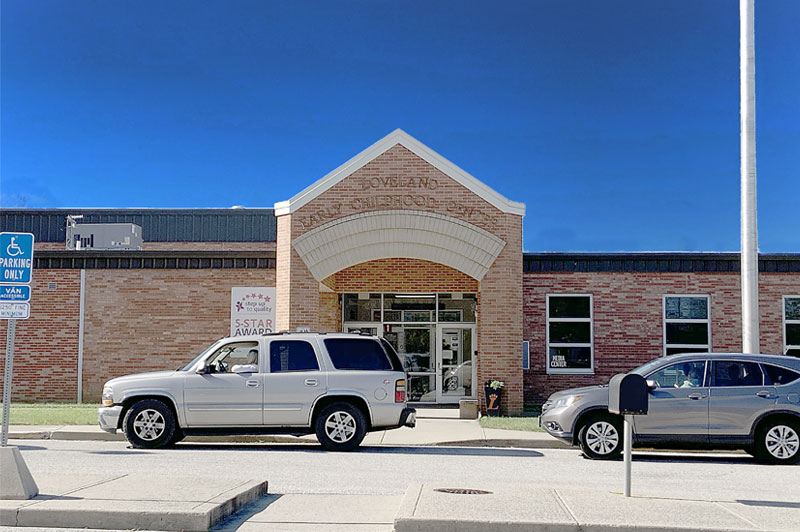
    The Loveland Early Childhood Center in Loveland, Ohio (Photo by David Miller/Loveland Magazine © 2020)

    Cupp said he did not want to speculate on potential disagreements the Senate may have with this funding plan, but hoped there would be more productive conversations between members of the two chambers on this subject.

    “We think they will agree that it is a very good plan going forward,” he said.

    Detailed Ohio Capital Journal reporting on the education reforms included in this budget is forthcoming.

    More spending for COVID-19 relief, and vacating penalties for public health violations

    The budget includes relief spending to benefit a variety of Ohio businesses.

    Millions of dollars would go toward helping entertainment venues, bars, restaurants and hotels. Additionally, there is a “New Business Relief Grant” program to specifically help those businesses that opened after Jan. 1, 2020.

    Republicans also inserted a budget provision that would vacate all public health violations incurred by Ohio businesses since March 2020. 

    A number of Ohio bars, including several on the island village of Put-In-Bay, were cited in 2020 for violating COVID-19 health orders. The House budget would expunge these violations and repay any fines levied against businesses. Photo from the Ohio Investigative Unit.

    Businesses that have faced penalties for violating public health orders, such as not enforcing mask and distancing mandates, would have their violation records expunged. Any disciplinary actions currently in progress would be halted. 

    The state would be forced to repay any fines levied and reinstate licenses revoked. The Legislative Service Commission (LSC) estimates this would amount to $100,000 in fines repaid to health order offenders.

    This provision mirrors a separate bill introduced by Republicans earlier this year

    Cupp defended this provision by saying Ohio businesses failed to abide by public health orders because the virus was an “unknown” phenomenon in 2020.

    “The restrictions were new, they were different, and a lot of businesses sort of got caught up in this administrative web. As we work our way out of the pandemic, we think it’s important to take another look at (the violations) and to give them some sort of the benefit of the doubt…,” Cupp said.

    Tax cuts

    Another main portion of the bill involves income tax cuts and deductions.

    There is a 2% personal income tax cut for all earners, which LSC estimates would save taxpayers around $380 million in the coming two years. 

    “Once more, the wealthy and big businesses will fare far better than working families under this budget,” said Rep. Michael Skindell, D-Lakewood, who unsuccessfully proposed taking out the tax cut and diverting it to other priorities.

    He cited data from the Institute on Taxation & Economic Policy, which was promoted by the think tank Policy Matters Ohio, which shows the tax cut would primarily benefit the richest Ohioans.

    Those earning under $40,000 per year would receive virtually no benefit from this tax cut, the study found. Ohioans earning between $40,000-61,000 per year would see their taxes cut by an average of $7 over the course of an entire year.

    The top 1% of Ohio earners, those making more than $490,000 per year, would comparatively see their taxes cut by an average of $612 each year.

    Skindell said the tax cut shows a “huge disparity and continues the tax shift in this state.”

    Separately, the House budget institutes an income tax deduction on capital gains earnings for Ohio-based “venture capital operating companies.” Such investors could deduct all of their earnings from investments in Ohio businesses and 50% of earnings from investments in businesses elsewhere.

    LSC estimated this provision may cost the state tens of millions of dollars per year in income tax revenue lost.

    Broadband internet expansion

    The House budget includes $190 million in funding toward new broadband internet expansion projects. (Photo by Leonardo Fernandez Viloria/Getty Images).

    Ohio lawmakers have worked toward a bipartisan effort this year of expanding broadband internet access in the state.

    With several bills already progressing toward that end, lawmakers opted to include the proposed “Ohio Residential Broadband Expansion Grant Program” in this budget.

    The budget allocates $190 million over the next two years toward grants to pay for new broadband expansion infrastructure projects.

    Other pieces of the budget

    Here are some other noteworthy provisions from the budget bill:

    • The governor had proposed changing antiquated language in Ohio law to clearly state all couples can adopt children (LGBTQ couples are legally allowed to in Ohio). The governor suggested changing the phrase “husband and wife” to read “legally married couple,” but Republican lawmakers took out this change to leave the original language in place.
    • The budget allocates millions of dollars for firefighting equipment and training, along with millions more for a law enforcement training program.
    • The budget provides $25,000 to Ohio domestic violence groups to give clients travel vouchers, gas cards and ridesharing credits.
    • Millions of dollars will go toward the Foundation for Appalachian Ohio, as well as money for workforce development around the state and in Appalachian communities.
    • The budget includes greater investments for maternal/infant health programs.

    The budget does not include several major proposals from the governor, including gun safety reforms and a $50 million public relations campaign for Ohio.

  • Groups call for budget that “Cares for All Ohioans”

    Groups call for budget that “Cares for All Ohioans”

    By Mary Schuermann Kuhlman, Public News Service – OH

    Columbus, Ohio – As state lawmakers work on Ohio’s budget for fiscal years 2022 and 2023, there’s a grassroots call for the budget to reflect policies that protect and care for all Ohioans and communities.

    The Ohio Organizing Collaborative and Policy Matters Ohio unveiled their “People’s Budget” on Tuesday, which the groups say will ensure the government is working for its people. (You can read the People’s Budget below)


    Portage County Treasurer Brad Cromes joined the release, saying budgets are moral documents and should reflect that.

    “For too long, we have been saying that the financial wellness of a very few is more important than the financial wellness of everybody in the state,” he said, “and that’s got to change if we’re ever going to start moving our state forward.”

    The People’s Budget features seven demands: quality education, safe communities, economic dignity, care for caregivers, stability for families, a working health-care system, and a category known as “Funding Our Lives.” It’s an alternative to Gov. Mike DeWine’s budget proposal released in February.

    Tia Ferguson shared her struggles working as a substitute teacher in Columbus without paid leave. After giving birth to a stillborn son, Ferguson said she had to return to work before she was emotionally ready. She contended that with economic stability, other aspects of life will fall into place.

    “If your child care is funded, that’s a worry that you don’t have,” she said. “So, you can make sure that you’re taking the time to go back to school and get your education, so you can further your career. But if you don’t have that foundational piece set, then all the other aspects don’t even come into play.”

    State Rep. Stephanie Howse, D-Cleveland, said a “people’s budget” is about paying attention and being flexible enough to make adjustments when people really need them. She said she thinks state leaders should take the lead in addressing the discrimination faced by people of color in education, health care, housing, and more.

    “Declaring racism as a public health crisis is needed more now than any time, ever,” she said. “We could be on the forefront of what it really looks like to lift up racial equity and social justice.”

    Specific provisions of the People’s Budget include tax code reforms, increased funding for education, and investments in housing, anti-hunger programs, and maternal health.


    This story was produced in association with Media in the Public Interest and funded in part by the George Gund Foundation.

    A budget that cares for all of us

    The future of Ohio depends on a fair, equitable, and people-centered budget that cares for all of us — no exceptions.

    We Ohioans believe in taking care of one other, no matter our skin color, our ability, or how much money we have. But for nearly two decades, our elected officials have passed a state budget that does not meet our needs or provide us with opportunities to thrive.

    Instead, the wealthy few and corporations have hoarded wealth, lining their pockets at the expense of our schools, hospitals, and child care centers. That is why we are demanding a People’s Budget.

    Our Seven Demands

    1. Quality Education

    For all Ohio students to thrive and pursue their dreams, regardless of how much money they have or what they look like.OUR DEMANDS

    Photo by   Charlotte May   from   Pexels

    2. Safe Communities

    For Ohio to be a place of freedom and justice for all, where our families can be whole and safe.OUR DEMANDS

    Rights Reserved

    3. Economic Dignity

    For all Ohioans to have a home to make memories, see a doctor when we are sick, and put food on the table.OUR DEMANDS

    Rights reserved

    4. Care for Caregivers

    An Ohio that respects and lifts up BIPOC women and the people who care for our families.OUR DEMANDS

    Photo by  Hush Naidoo  on  Unsplash

    5. Stability For Our Families

    For every Ohioan regardless of color or income to be cared for if and when they fall on hard times.OUR DEMANDS

    Rights reserved

    6. A Working Health Care System

    For all Ohioans to receive the very best care and see a doctor when we are sick, no exceptions.OUR DEMANDS

    Rights Reserved

    7. Funding Our Lives

    An Ohio where everyone has the opportunity for a better life, no matter what we look like or how much money we have.OUR DEMANDS

    Rights Reserved

    Tell our elected state leaders why you support The People’s Budget

    SIGN OUR PETITION

  • Feds release unemployment guidance, could be a long time before supplements reach Ohioans

    Feds release unemployment guidance, could be a long time before supplements reach Ohioans

    By Marty Schladen Ohio Capital Journal

    As promised, the U.S. Department of Labor last week released guidance to the states on how it will disburse money to supplement unemployment checks. But it’s far from clear when — or whether — hundreds of thousands of out-of-work Ohioans will see those funds.

    A $600-a-week federal supplement had been credited with keeping millions of unemployed Americans — and the economy — afloat, but it expired at the end of July. 

    The Democratically controlled House passed an extension of the benefit. The Republican-controlled Senate introduced a bill cutting the supplement to $200 a week, but failed to pass it.

    Then President Donald Trump on Aug. 8 signed a memorandum that would repurpose federal disaster relief funds to provide $300 a week in additional support. But it would exclude people getting less than $100 a week in state benefits — a group comprising many minimum-wage workers and service workers who get a low hourly wage and tips on top of that.

    The administration of Gov. Mike DeWine signed on to the plan on Monday, saying that additional guidance was needed from the Labor Department before any predictions could be made about when funds would be disbursed.

    The money can’t come quickly enough for many Ohioans. 

    According to the U.S. Census’ Household Pulse Survey for the week of July 9-14, nearly 1 million Ohio adults sometimes or often did not have enough to eat in the past week. In addition, more than 400,000 hadn’t paid the previous month’s rent and 360,000 homeowners hadn’t made the previous month’s mortgage payment.

    “This is before the $600 (federal unemployment supplement) expired,” Zach Schiller, research director for the think tank Policy Matters Ohio, said.

    Earlier in the week, DeWine also underscored the urgency of getting money out to unemployed Ohioans. He praised Trump for taking the actions he did and he called on Congress to get busy — something that’s unlikely to happen until early September at the soonest.

    However, state officials have to clear several hurdles before they can start distributing the federal dollars Trump has attempted to repurpose.

    For example, “States will need to develop a self-certification process in accordance with FEMA instructions for claimants to certify weekly that they are unemployed or partially unemployed due to disruptions caused by COVID-19,” the Labor Department guidance says.

    And state officials will have to reprogram antiquated, overwhelmed unemployment systems to process the benefit.

    “We are examining the DOL guidance on lost wages assistance to see what kind of system programming is needed in order to pay these unemployment benefits,” Dan Teirney, DeWine’s press secretary, said in an email. “As noted in the guidance, all states are required to develop a self-certification process for claimants based on instructions from FEMA.”

    He said that once state officials figure all that out, they’ll make beneficiaries whole, but it’s hard to know when that will be.

    “While (the Ohio Department of Jobs and Family Services) intends to pay these retroactive benefits as quickly and efficiently as possible, there are several procedural and programming steps that must take place before that can happen,” Tierney said.

    There is also a serious question about whether the Trump plan is legal. Georgetown University law professor David Super last week wrote that it is a clear violation of the Stafford Act, the federal law governing disaster assistance.

    Schiller criticized the scheme as ill-conceived at a time when so many Ohioans are in desperate need of assistance.

    “Altogether, the whole thing is kind of a half-baked measure,” he said.


    Marty Schladen

    Marty Schladen has been a reporter for decades, working in Indiana, Texas and other places before returning to his native Ohio to work at The Columbus Dispatch in 2017. He’s won state and national journalism awards for investigations into utility regulation, public corruption, the environment, prescription drug spending and other matters.
  • Working for less: Most common Cincinnati jobs pay too little

    Working for less: Most common Cincinnati jobs pay too little


    Last year, six of Ohio’s 10 most common jobs paid so little that a typical worker would need food assistance to feed a family of three — generally less than $26,000 a year.

    From the booming Columbus metro area to struggling Youngstown, too many jobs across Ohio don’t pay enough for families to get by.

    The research by Hannah Halbert, with research assistance from Isaac Miller of Policy Matters Ohio shows that too many jobs in Cincinnati pay too little and many pay less as a share of poverty than they did nearly two decades ago. New data released by the U.S. Department of Labor show that six of the Cincinnati area’s 10 most common jobs pay the typical worker too little to feed a family of three without food assistance (earnings under 130 percent of poverty typically qualify).

    At a time when state and federal policymakers are determined to erect new barriers to food assistance and health care, these new data show that the challenge is not requiring people to work, as most already do. Rather, the true challenge is getting employers—many of which are major international corporations with vast profits—to pay their workers a fair wage with benefits and set a schedule that provides some measure of job security.

    Low wages were not always so ubiquitous in the Cincinnati area. In 2000, five of the 10 most common occupations paid so little that a family of three was left dependent on food assistance to get by- now it’s six. Some occupations paid less as a share of poverty in 2017 than they did a decade and a half ago. The new rules of Ohio’s labor market are so tilted in favorof corporate employers that many Cincinnatians will not be able to work their way to self-sufficiency.

    The fact sheet for the Cincinnati area shows the median annual salary and hourly wage of the metro area’s 10 most common jobs in 2000 and 2017, and how far they went towards lifting a family of three out of poverty. The fact sheets also contain data showing which sectors have grown and which have declined since 2017.

    “State and federal leaders are trying to create new barriers to health care, food aid and housing assistance. If they succeed, many of Ohio’s working people will slip deeper into poverty.”

    “Throughout Ohio, not only are many of the most common jobs paying extremely low wages, many do less to lift working people out of poverty than they did in 2000,” Policy Matters Ohio Researcher Hannah Halbert said. “State and federal leaders are trying to create new barriers to health care, food aid and housing assistance. If they succeed, many of Ohio’s working people will slip deeper into poverty.”

    Working for Less

    Most common occupations in the Cincinnati metropolitan area, by employment, 2017

    page1image249770912

    Top 10 occupations 2017

    page1image217104592

    page1image217105424 page1image249765312

    Total Employment

    page1image249740352 page1image249740960

    page1image130905248

    Median Hourly Wage

    page1image130904352

    page1image217588912

    Median Annual Salary

    page1image244367120

    page1image250051424

    Median annual earnings as a share of poverty

    page1image217478848

    Food Prep & Serving Workers, including Fast Food (-)

    31,720

    $9.18

    $19,090

    93%

    page1image244798304

    Retail Salespersons (+)

    page1image217744544

    page1image217739968 page1image217745712

    29,450

    page1image217738752 page1image217739360

    page1image311361328

    $10.95

    page1image131679936

    page1image251376128

    $22,780

    page1image311086592

    page1image311268128

    112%

    page1image310533488

    Registered Nurses (+)

    page1image310416304

    23,580

    page1image310671296 page1image311124144

    $30.80

    page1image310815104

    $64,050

    page1image215549680

    314%

    page1image310858720

    Laborers & Freight, Stock & Material Movers (+)

    23,190

    $13.59

    $28,260

    138%

    page1image215184304

    Cashiers (+)

    page1image215543760 page1image310612048

    21,320

    page1image215652512

    $9.50

    page1image215335488

    $19,760

    page1image311066384

    97%

    page1image310671568

    Waiters & Waitresses (-)

    page1image243739824

    page1image243737584 page1image215305264

    20,170

    page1image251501744 page1image251382944

    page1image311312368

    $9.16

    page1image310910736

    page1image311314928

    $19,050

    page1image311314128

    page1image310900752

    93%

    page1image310598160

    Customer Service Reps (-)

    20,080

    $15.31

    $31,840

    156%

    page1image310620112

    Stock Clerks & Order Fillers (+)

    page1image310664160 page1image310622480

    17,640

    page1image250848320

    $11.87

    page1image311348784

    $24,690

    page1image310629872

    121%

    page1image310682096

    Office Clerks (+)

    page1image310603856

    page1image310686304 page1image310684112

    17,440

    page1image311048528 page1image311049072

    page1image311392992

    $15.29

    page1image311392112

    page1image310718256

    $31,800

    page1image310716784

    page1image310704560

    156%

    page1image310703184

    Janitors & Cleaners, except Maids & Housekeeping (-)

    page1image310785024

    15,670

    page1image310998416 page1image310785920

    $11.42

    page1image310890320

    $23,750

    page1image310931392

    116%

    page1image310861072

    Source: Bureau of Labor Statistics (BLS), Occupational Employment Statistics (OES) Survey, May 2017 estimates, available at https://www.bls.gov/oes/tables.htm, accessed April 13, 2018. Largest detail occupations in Cincinnati MSA by employment. Median annual earnings shown as a share of the poverty threshold for a family of three in 2017 ($20,420). The gross monthly income threshold for food assistance is generally 130 percent of poverty. Red text highlights the occupations paying a typical wage below this threshold. (-) indicates a median wage lower than the state median for that occupation. (+) indicates a median wage higher than the state’s for that occupation. Note that Cincinnati MSA includes areas in Ohio, Kentucky and Indiana.


    “Examining statewide numbers, Ohio may look better off than it really is,” Halbert said. Although the state has recovered all the jobs lost during the recession, since 2007, 215,000 fewer Ohioans are participating in the workforce — pushing down last year’s statewide unemployment rate of 5 percent. Statewide data also masks deep regional disparities and wage stagnation.

    Wrong Direction

    Cincinnati MSA occupations, employment and median annual wage: 2000 and 2017

    page2image246072976

    Top 10 occupations 2000

    page2image133617088

    page2image133617920 page2image133764992

    Earnings as share of poverty

    page2image249264672 page2image249265280

    Top 10 occupations 2017

    page2image246396256 page2image245699808

    Earnings as share of poverty

    page2image249219232 page2image249234000

    Retail Salespersons

    119%

    Food Prep & Serving Workers, including Fast Food-

    93%

    page2image249010192

    Cashiers

    page2image246153216

    page2image248752912 page2image246255328

    102%

    page2image248753648 page2image248754256

    Retail Salesperson-

    page2image246204448 page2image246202368

    112%

    page2image246205168 page2image246205776

    Laborers & Freight, Stock & Material Movers

    page2image246345216

    141%

    page2image245632016 page2image245632624

    Registered Nurses+

    314%

    page2image245879536 page2image245876896

    Food Prep & Serving Workers, including Fast Food

    page2image249340816

    97%

    page2image246090064 page2image246090672

    Laborers & Freight, Stock & Material Movers-

    138%

    page2image245748448 page2image245749056

    General & Operations Managers

    402%

    Cashiers-

    97%

    page2image248731808

    Office Clerks

    page2image249460192 page2image249429248

    152%

    Waiters & Waitresses

    page2image246210304 page2image245862544

    93%

    page2image245526848

    Customer Service Reps

    page2image249213120 page2image249212576

    177%

    Customer Service Reps-

    page2image248631456 page2image249215696

    156%

    page2image249286976

    Registered Nurses

    page2image248793024

    page2image248793728 page2image248794208

    295%

    page2image245810992 page2image245811600

    Stock Clerks & Order Fillers-

    page2image246001696 page2image246002240

    121%

    page2image249017168 page2image249017776

    Waiters & Waitresses

    page2image245745968

    93%

    page2image245841888 page2image245922752

    Office Clerks+

    156%

    page2image245734976 page2image245735584

    Packers and Packagers

    page2image249530432

    120%

    page2image249314176 page2image245769328

    Janitors & Cleaners, except Maids & Housekeeping-

    116%

    page2image246013456 page2image246014832

    Source: BLS, OES Survey, 2000 Cincinnati MSA estimates and May 2017 estimates, accessed 4/13/18 at https://www.bls.gov/oes/tables.htm. Largest detail occupations in Cincinnati MSA by employment. Median annual earnings shown as share of poverty threshold for a family of three in 2000 ($14,150) and 2017 ($20,420). The gross monthly income threshold for food assistance is generally 130 percent of poverty. Red font notes occupations that have median annual earnings under 130% of poverty for a family of three. (+) indicates earnings increased since 2000, (-) indicates the earnings decreased since 2000, as a share of poverty. Note that Cincinnati MSA includes areas in Ohio, Kentucky and Indiana.


    “Ohio needs leaders who will make a renewed public commitment to working people,” Halbert said. “Both the nation and state have productive economies with abundant wealth. We can use policy to shape the economy to benefit working people. Only the lack of political will keeps leaders from passing policies to improve job quality, make education and training affordable and fund basic services like transit and childcare that help people work.”

    The Cincinnati region on average had 1,093,600 jobs last year. That’s 49,800 more jobs than in 2007, when the last recession began. The Cincinnati region has been a driver of the Ohio recovery. One of the top jobs, registered nurse, provides better earnings. This job relies in part on maintaining expanded health coverage. Yet, many of the jobs that have grown over recent years do not offer the same income or stability as those lost. Manufacturing took the biggest hit. Growing sectors, like leisure and hospitality, often pay poorly and lack benefits.

    Job quality has been eroded. Ohio tax policy has sent big cuts to the wealthiest, shrinking funding for education, infrastructure, and healthcare—investments that help working people and their kids get ahead.

    Job quality has been eroded. Ohio tax policy has sent big cuts to the wealthiest, shrinking funding for education, infrastructure, and healthcare—investments that help working people and their kids get ahead.

    Policy Matters Ohio has set out 10 policy priorities that help working people by raising wages, extending overtime protections, providing paid leave, preserving public jobs and more. These new data show that such policies are essential in the Cincinnati region where jobs still make it hard to get by.