The 20-year Metro DC police veteran argues violence didn’t stop after January 6, and voters should prioritize candidates who respect rule of law
A new feature of the Trump rally traveling road show has the former president walking out on stage and intoning the pledge of allegiance. At the end of phrases, he pauses. On the big screens rally-goers see footage of January 6 defendants singing the national anthem in jail.
“You see the spirit from the hostages,” Trump told the crowd at a rally in Dayton last month. “And that’s what they are, is hostages. They’ve been treated terribly and very unfairly, and you know that. Everybody knows that.”
He went on to promise, if reelected, on his first day in office, he’d take action to help those “unbelievable patriots.”
It all makes Michael Fanone a bit sick.
“I recognize that, very similar to like when he told the Proud Boys to ‘stand by,’ he’s keeping this violent element of supporters in his camp, so to speak,” he said. “And I think he fully intends to unleash them on the rest of us if he loses the 2024 election.”
“Or if he wins, to be completely honest with you,” Fanone added.
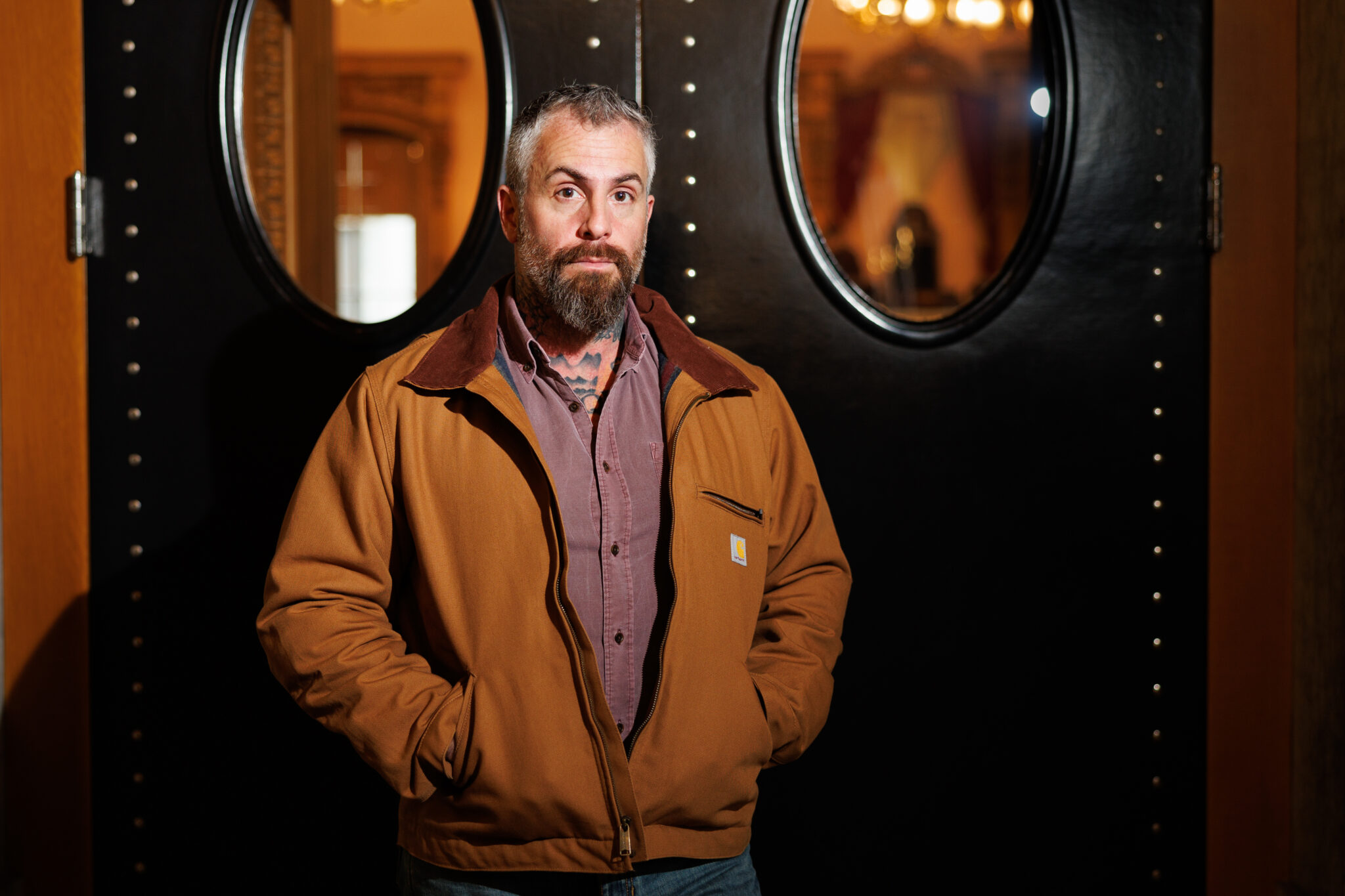
The former Washington Metropolitan Police officer served in uniform for 20 years, and on Jan. 6, 2021, he was one of the officers defending the U.S. Capitol building.
He wasn’t supposed to be there.
A vice investigator, Fanone had been planning to conduct an undercover drug buy that day, but when he heard distress calls from the riot, he rushed to the Capitol instead. As the violence unfolded, he was dragged into the crowd, beaten and tased. Fanone suffered a heart attack. One of the hardest things for him reconcile was the sense of helplessness.
“For a cop, you know, somebody that aspires to be in control of each and every situation that we encounter, that is probably like the worst possible feeling,” he explained. “I felt weak. I felt vulnerable.”
“If it wasn’t for the fact that some people in the crowd intervened on my behalf,” he added, “You know, to literally have to depend on the people that were attacking me — that was a difficult, difficult pill to swallow.”
Fanone retired from the Metropolitan police at the end of 2021. Since then he’s written a book, and he appears on CNN. Now, he’s putting his time into making sure Americans understand what happened on January 6, and that they think about it when they head into the voting booth.
“In the hopes of avoiding another January 6, another event of that magnitude,” he said, “I want to make sure that people are well informed, so that when they go to the ballot box they choose leaders — from either political party — that are committed to the peaceful transfer of power, to respecting the rule of law and abiding by our Constitution.”

Shifting perceptions, conspiracy theorizing
Opinions about the January 6 riot have changed dramatically among Republicans in the years since. After insisting “what happened today is wrong and not what America is about,” shortly after rioters dispersed, Ohio Republican U.S. Rep. Jim Jordan has since taken to downplaying or deflecting the incident. The January 6 commission was a distraction, he argued, when Americans “can’t afford to fill up their gas tank, buy groceries, or take a summer vacation with their family.” At other points he argued the real purpose of the commission was to “stigmatize conservative voices” or “abolish the electoral college.”
Fanone went so far as to label Jordan an “insurrectionist” member of congress.
“(He) was very instrumental in the orchestrating of the electoral scheme,” Fanone described, “and spreading the lies and misinformation that inspired his own supporters and the supporters of the former president to commit crimes.”
While Jordan never testified before the January 6 commission, from other evidence it collected the panel concluded he was “a significant player” in the scheme to overturn the 2020 election. According to the report, Jordan participated in several strategy meetings following the election in which members discussed encouraging Trump supporters to march on the capitol. In a text message, he proposed Vice President Mike Pence “call out all the electoral votes that he believes are unconstitutional as no electoral votes at all.”
Also from Ohio, former Presidential candidate Vivek Ramaswamy has been even more provocative about the riot. This year on its anniversary, he posted a thread of conspiracy theories, blaming the incident on lack of coverage of Hunter Biden’s laptop, or the incitement of undercover FBI agents or a plot by capitol police to “entrap” demonstrators in a “peaceful crowd.”

Fanone dismissed Ramaswamy’s statements as “pandering” and turned his attention to Ohio Republican U.S. Sen. J.D. Vance, who he said has “shown a level of sympathy to those that stormed the Capitol on January 6, that I think is highly inappropriate for someone serving this country.”
One year after the riot, Vance posted a link to Patriot Freedom Project, a nonprofit raising money for January 6 defendants’ legal bills.
“These people are political prisoners,” Vance insisted, “and their captivity is an assault on democracy.”
“Listen, I struggle every day with finding any degree of compassion or empathy for the people that attacked me and my colleagues at the Capitol on January 6,” Fanone said. “but I do recognize the fact that they were manipulated and lied to.”
“It doesn’t excuse the behavior,” he added, “but it certainly, in my mind, means that there are more people to be held accountable than just those that that were present at the Capitol on January 6.”
Looking toward November
Fanone worries about this year’s election, he argued, “because the violence has never stopped.”
A Reuters investigation indicated political violence in the U.S. is at its highest level since the 1970s, although the authors note unlike today, the violence then was primarily directed at property, not people. Most of the incidents were smaller scale — lone assailants or clashes between rival groups at local protests, but they note at least 39 people have been killed as a result.
It’s unclear whether that violence will result in another incident like January 6, but Fanone warns if it does, that event will likely be much worse.
“Groups who may have toyed with the idea of coming armed to the Capitol, but did not, in the future, in order to be effective, they would feel that the use of firearms was necessary,” Fanone said.
He argued the way to diffuse that violence is to elect people who reject violence and respect the peaceful transfer of power.
“If your candidate — your political party’s candidate — can’t do that,” he said, “I think you have an obligation as an American to vote for the candidate that will.”
Fanone has already taken that journey. He voted for Donald Trump in 2016, but soured on the president after he fired FBI director James Comey.
“I have conversations with people often who describe themselves as a lifelong Republican or a lifelong Democrat,” he said, “I tell people, I’m not anything other than a lifelong American.”
Still, he acknowledged if someone wants to speak with him at all, they’re likely open-minded. “We’re talking about a small slice of America,” he said. When it comes to the “harder conversations,” he said, a win is convincing someone that the January 6 riot actually happened, it was bad and it was carried out by Trump’s supporters.
“Unfortunately,” Fanone said, “there’s a lot of people that knowing all of that would still, and will still, support Donald Trump and vote for him in the upcoming election.”
Follow OCJ Reporter Nick Evans on Twitter.