Tag: preferred pronouns

  • Ohio Republican lawmaker says giving preferred pronouns on application indicates political leaning

    Ohio Republican lawmaker says giving preferred pronouns on application indicates political leaning

    By:  Ohio Capital Journal

    A Republican lawmaker said she wants to ban Ohio public universities from asking for prospective students’ preferred pronouns on college applications because, she claims, that could indicate their political ideology and possibly affect their admission.

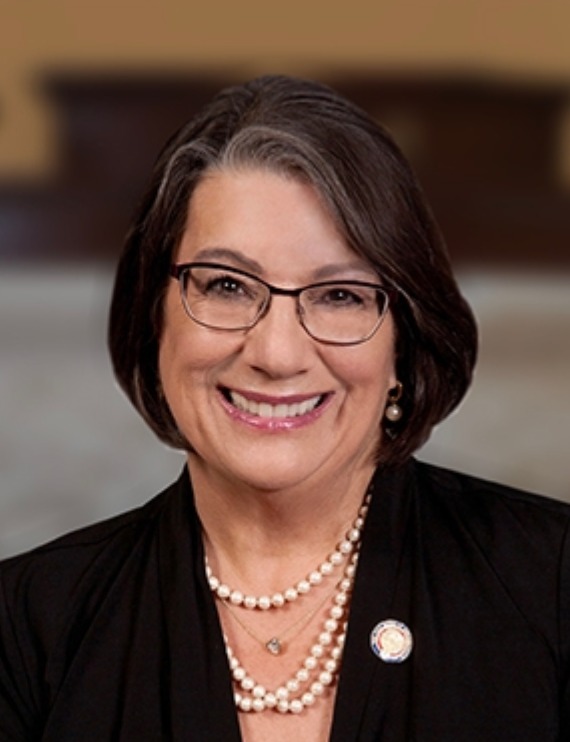
    State Rep. Gail Pavliga, R-Portage County, recently introduced House Bill 686, which would also prohibit a public university from asking a job candidate their preferred pronoun on an employee application. Ohio has 14 public universities.

    “There is no need for a university to require this information, it is clearly not a sufficient indicator of someone’s college readiness,” Pavliga said in her sponsor testimony at a recent Ohio House Higher Education Committee meeting. “So why should it be included in our applications? Providing an optional field for pronoun usage outrightly distinguishes groups based on their political ideology.”

    Anecdotally, she said she has talked to many young Republicans who said they don’t fill out pronoun questions on applications.

    “Those who do not respond to the pronoun prompt are much more likely to lean right on a political spectrum and those who do answer the prompt are much more likely to lean left on a political spectrum,” Pavliga said. “Applicants should not be declined admission based on their political ideology, yet without this bill that is a strong reality.”

    H.B. 686 addresses bias in higher education, she said.

    GET THE MORNING HEADLINES.


    “We are trying to assess the readiness of an individual, whether it be for employment at the university or for admission as a student,” Pavliga said. “The usage of a pronoun really provides no indication of that readiness or that qualification.”

    State Rep. Beryl Brown Piccolantonio, D-Gahanna, said people generally prefer to be addressed in the way they identify and said there is sometimes confusion around her name, causing her to sometimes receive correspondence addressed to her as Mr. Piccolantonio.

    “Beyond the issue of bias, do you think that there is any purpose to making sure that when we address people, that we’re addressing them in the way that they actually live in the world?” she asked.

    Pavliga responded by saying although a person’s preferred pronoun wouldn’t be asked on the application, she said nothing in H.B. 686 would prohibit a question from being asked about a person’s preferred pronouns at any other time.

    The Common App, an online portal many students use to apply to several colleges and universities, has an optional pronoun question. More than 1,000 colleges and universities nationwide use the Common App as part of the application process — including 13 of Ohio’s public universities. Northeast Ohio Medical University does not use the Common App.

    “I am sure if some of the biggest colleges in the country request for the field to be deactivated for their institution, that wouldn’t be a problem,” Pavliga said.

    Even though the bill is introduced by a Republican, Higher Education Committee Chair Rep. Tom Young, R-Washington Twp., said H.B. 686 isn’t a Democrat or Republican bill.

    “It’s a matter of choice and options on the applications,” he said.

    Nearly two-thirds of LGBTQ young people said it would be helpful for the people in their lives to know about more pronouns, according to the Trevor Project’s 2023 survey of mental health. 

    Follow OCJ Reporter Megan Henry on X.


    Megan Henry
    Megan Henry

    Megan Henry is a reporter for the Ohio Capital Journal and has spent the past five years reporting in Ohio on various topics including education, healthcare, business and crime. She previously worked at The Columbus Dispatch, part of the USA Today Network.

    Ohio Capital Journal is part of States Newsroom, the nation’s largest state-focused nonprofit news organization.

    MORE FROM AUTHOR

  • Ohio AG Yost joins another national lawsuit, this time to overturn LGBTQ protections

    Ohio AG Yost joins another national lawsuit, this time to overturn LGBTQ protections

    Ohio Attorney General Dave Yost. (Photo by Justin Merriman/Getty Images)

    The state should be more focused on economic recovery than on lawsuits “fighting for the right to discriminate.”

    Equality Ohio

    BY: SUSAN TEBBEN and Ohio Capital Journal

    Joining 19 other state attorneys general, Ohio’s Dave Yost has jumped in on a lawsuit demanding that sexual orientation and gender identity not be included in discrimination protections.

    The complaint, filed in U.S. District Court for the Eastern District of Tennessee, argues “administrative agencies,” in this case the Biden administration, don’t have the power to change laws, but also challenges a recent U.S. Supreme Court ruling saying employers could not fire employees based on their sexual orientation or gender identity.

    “This case is not about the wisdom of the administration’s policy,” Yost said in a statement. “It is about power.”

    State Sen. Nickie Antonio, D-Lakewood, sent a letter to Yost on Tuesday expressing her disappointment in his decision.

    State Sen. Nickie Antonio

    “It is the Attorney General’s duty as the state’s chief legal officer to protect our children and families, not to attack and malign hardworking Ohioans who happen to be from the LGBTQ community,” Antonio said in a statement.

    LGBTQ policy organization Equality Ohio said the state should be more focused on economic recovery than on lawsuits “fighting for the right to discriminate.”

    “AG Yost’s decision to participate in this misguided lawsuit against LGBTQ+ people pushes Ohio down the wrong path,” said Maria Bruno, public policy director for Equality Ohio.

    The Biden administration directed federal agencies through an executive order to review existing regulations, policies, and other directives for consistency with the U.S. Supreme Court decision.

    The lawsuit accuses the U.S. Department of Education and the Equal Employment Opportunity Commission of “flouting procedural requirements in their rush to overreach” by interpreting federal antidiscrimination law “far beyond what the statutory text, regulatory requirements, judicial precedent and the Constitution permit.”

    The attorneys general said guidance from the DOE and EEOC “concerns issues of enormous importance to the states,” according to court documents.

    “The guidance purports to resolve highly controversial and localized issues such as whether employers and schools may maintain sex-separated showers and locker rooms, whether schools must allow biological males (transgender females) to compete on female athletic teams and whether individuals may be compelled to use another person’s preferred pronouns,” the lawsuit states.

    With regard to the Supreme Court decision, the states say the court “narrowly held” that terminating an employee for being LGBTQ constituted sex discrimination, and the court “declined to consider whether employer conduct other than terminating an employee simply because the employee is homosexual or transgender — for example, ‘sex-segregated bathrooms, locker rooms and dress codes’” — would constitute discrimination.

    The states of Tennessee, Alabama, Alaska, Arizona, Arkansas, Georgia, Idaho, Indiana, Kansas, Kentucky, Louisiana, Mississippi, Missouri, Montana, Nebraska, Oklahoma, South Carolina, South Dakota and West Virginia are also represented in the lawsuit.

    Ohio’s legislature has brought its own movements — or lack thereof — on LGBTQ issues in the past few years. In June, the Ohio House pushed through a ban on transgender female athletes competing on the side that matches their gender identity. The Senate later rejected the addition, but the bill targeting the same goal remains up for consideration.

    A bill to add sexual orientation and gender identity to protected classes in the state, the Ohio Fairness Act, has been introduced multiple times, and has not made it past committee hearings.