Tag: pregnancy

  • Ohio Issue 1 and Issue 2 carry massive significance for younger voters

    Ohio Issue 1 and Issue 2 carry massive significance for younger voters

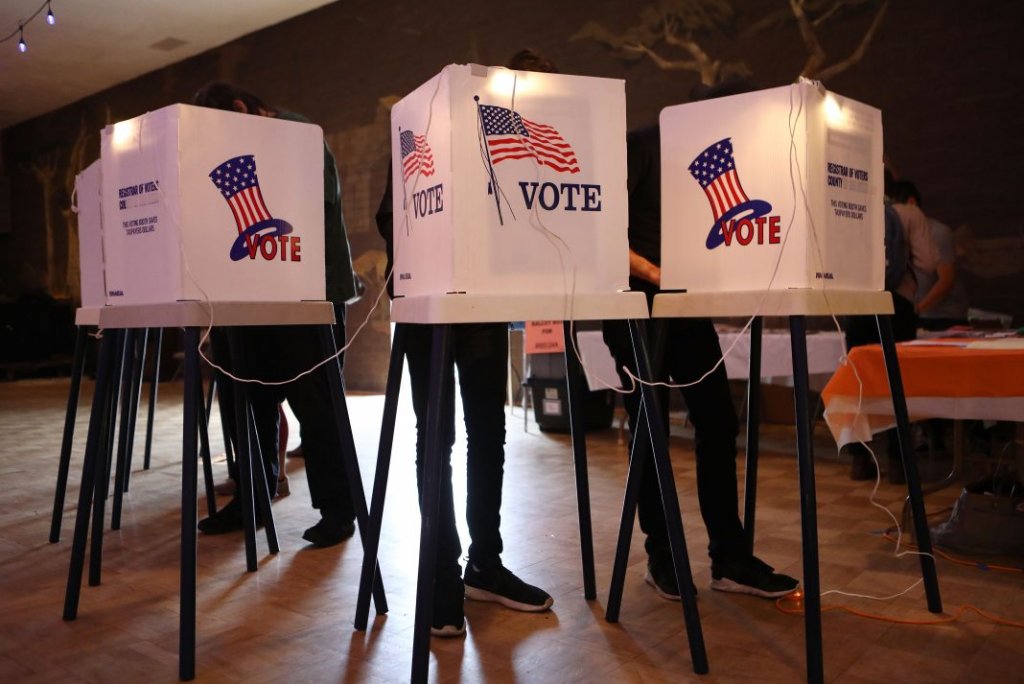
    A college student voter. Getty Images.

    COMMENTARY

    Gen Z and millennial voters could play an important role in deciding fate of reproductive rights amendment and marijuana law

    by David DeWitt

    For Gen Z and millennial Ohio voters, Issue 1 and Issue 2 are critically important. Whether we vote and how we vote will shape what kind of rights and freedoms we have for ourselves and our loved ones well into the future.

    Issue 1 would establish a state constitutional right to “make and carry out one’s own reproductive decisions,” including decisions about abortion, contraception, fertility treatment, miscarriage care, and continuing pregnancy.

    Issue 2 would create a new state law to legalize and regulate recreational marijuana for adults aged 21 and above, including cultivation, processing, sale, purchase, possession, and home growth.

    Tussling over legal access to abortion care and the criminalization of marijuana has shaped American politics for decades, and they stand as two issues where the consequences of law and policy fall heaviest on younger people.

    In an average of births in Ohio between 2019 and 2021, 4.9% were to women under the age of 20, and 2.5% were to women ages 40 and older, while 92.6% were to women ages 20 to 39, according to the March of Dimes.

    Using Ohio Department of Health statistics for 2022, patients 17 and under received 2.5% of abortions performed, and patients over age 40 received 3% of abortions performed, while patients between the ages of 18 and 40 received 94.5% of abortions performed.

    According to the FBI Crime Data Explorer — which does not sort by type of drug involved in state-by-state data — 60% of drug violations in Ohio in 2022 were charged against people between the ages of 20 and 39, a far higher percentage than any other age group. Nationwide, it wasn’t until 2020 that other drugs took over marijuana possession as the No. 1 reason for a drug-related arrest. Nevertheless, more than 315,000 people across America were arrested for marijuana possession in 2020, accounting for 27.5% of drug-related arrests. Also in 2020, Black Americans accounted for about 38.8% of marijuana possession arrests despite representing just 13.6% of the population.

    Younger voters are notoriously unreliable at showing up to vote during non-presidential elections, much less odd-number year elections. Even during presidential elections they show up to the polls at lower rates than other age groups.

    The 2020 presidential election, for instance, had the highest turnout of the 21st century, with 66.8% of citizens 18 years and older voting, but for voters ages 18 to 24, only 51.4% cast ballots, according to U.S. Census Bureau reports. In 2018, Americans ages 18 to 29 made up 11% of voters and 30% of non-voters, according to Pew Research Center. In 2022, they made up 10% of voters and 27% of non-voters.

    This Nov. 7 in Ohio, the stakes are highest for millennial and Gen Z voters. What kind of present and future do we want for ourselves and for Ohio?

    What rights do we want to establish in the constitution, or would we rather leave it up to the politicians to determine our generations’ access to reproductive medical care?

    What kind of freedom do we think adults 21 and over should have from criminal marijuana charges, or should Ohio continue to saddle adults with drug offense records over cannabis possession?

    Voting is our most precious and fundamental right, the spigot from which all of our other rights and freedoms flow. Gen Z and millennial generation voters must participate in these critical decisions, or we are relinquishing significant power over our lives to others who do not bear the same burdens of impact.

    As the writer David Foster Wallace observed, “In reality, there is no such thing as not voting: you either vote by voting, or you vote by staying home and tacitly doubling the value of some Diehard’s vote.”

    Early voting in Ohio has begun. Here is everything voters need to know:

    When do I vote?

    For early, in-person voting, vote at your local county board of elections on these days:

    • Oct. 26-27: 8:00 a.m. – 5:00 p.m.
    • Oct. 30: 7:30 a.m. – 7:30 p.m.
    • Oct. 31: 7:30 a.m. – 8:30 p.m.
    • Nov. 1-3: 7:30 a.m. – 7:30 p.m.
    • Nov. 4: 8:00 a.m. – 4:00 p.m.
    • Nov. 5: 1:00 p.m. – 5:00 p.m.

    Citizens can no longer vote on Nov. 6, the Monday before the election.

    Mailed absentee ballots must be postmarked by Nov. 6.

    On Election Day Nov. 7, vote at your polling location. Find your polling place by clicking or tapping here.

    Polls are open from 6:30 a.m. to 7:30 p.m. on Election Day. If you are in line at the time polls close, stay in line, because you can still cast your ballot.

    If absentee ballots are not returned by mail, they must be received by your board of elections by 7:30 p.m. on Election Day.

    What do I need to vote?

    In order to cast a ballot, voters must have an unexpired Photo ID such as a passport or driver’s license. Previously, voters were able to use non-photo documentation such as bank statements, government checks or utility bills to vote. That is no longer the case under a new law passed in Ohio last year. Student IDs are not considered valid under that law.

    CLICK HERE for more information on ID requirements.

    Here is the list of acceptable types of valid photo ID:

    • Ohio driver’s license
    • State of Ohio ID card
    • Interim ID form issued by the Ohio BMV
    • A US passport
    • A US passport card
    • US military ID card
    • Ohio National Guard ID card
    • US Department of Veterans Affairs ID card

    More information for voters

    To check your voter registration status, find your polling place, view your sample ballot and more, head to the Ohio Secretary of State’s VoteOhio.gov website.


    David DeWitt
    DAVID DEWITT

    OCJ Editor-in-Chief and Columnist David DeWitt has been covering government, politics, and policy in Ohio since 2007, including education, health care, crime and courts, poverty, state and local government, business, labor, energy, environment, and social issues. He has worked for the National Journal, The New York Observer, The Athens NEWS, and Plunderbund.com. He holds a bachelor’s degree from Ohio University’s E.W. Scripps School of Journalism and is a board member of the E.W. Scripps Society of Alumni and Friends. He can be found on Twitter @DC_DeWitt

    MORE FROM AUTHOR

  • Ohio Issue 1’s reproductive rights amendment and protection of access to contraception

    Ohio Issue 1’s reproductive rights amendment and protection of access to contraception

    Getty Image

    BY:  Ohio Capital Journal

    Editor’s Note: This article is part of a series looking at the language of Ohio Issue 1 and the reproductive rights it would impact. The full language of the amendment can be found here.

    In the Nov. 7 general election, Ohioans will decide whether or not to approve Issue 1, a constitutional amendment for reproductive rights.

    While the language of the amendment focuses primarily on abortion, it also lists other rights that would be cemented into the state constitution, including miscarriage care, fertility treatments, contraception, and the right to continue one’s own pregnancy. Today we will look at how and why the proposed amendment seeks to protect access to contraception.

    The use of contraception is not illegal in Ohio, and though it’s commonly called “birth control,” the medications are also used for other conditions, like ovarian cysts, polycystic ovary syndrome and endometriosis symptoms.

    Push to ‘reconsider’ contraception case

    Contraception has long been a target of debate, with fears of further regulations increasing after U.S. Supreme Court Justice Clarence Thomas brought up Griswold v. Connecticut during his concurrence to Dobbs v. Jackson Women’s Health, the 2022 decision that overturned the half-century of abortion legalization given in Roe v. Wade.

    The ruling in Griswold overturned a Connecticut law from the 1800s that banned the use of “any drug, medical device or other instrument in furthering contraception,” particularly in marriages. The question at the heart of the Griswold case: “Does the Constitution protect the right to marital privacy against state restrictions on a couple’s ability to be counseled in the use of contraceptives?”

    The court found that the right to privacy held in the Bill of Rights prohibited states from banning contraception for married couples.

    However, in agreeing with the Dobbs decision, Thomas said the nation’s highest court should also “reconsider” cases such as Griswold, with new reflection on the 14th Amendment.

    “After overruling these demonstrably erroneous decisions, the question would remain whether other constitutional provisions guarantee the myriad rights that our substantive due process cases have generated,” Thomas wrote in his 2022 concurrence.

    A congressional effort that was put forth in July 2022 to codify birth control access passed the U.S. House. The effort had unanimous Democratic support, but only had the support of one Ohio GOP representative, former Rep. Anthony Gonzalez.

    The effort was blocked by the U.S. Senate that same month.

    There is federal law that requires health insurance coverage for prescription female contraceptives, but federal law also allows for a refusal clause “that allows churches, associations of churches, religiously affiliated elementary and secondary schools and, potentially, some religious charities and universities to refuse,” according to an analysis by the Guttmacher Institute.

    The institute’s analysis also showed that, as of September 2023, Ohio’s only state-level regulation is an insurance coverage requirement for extended supplies of contraception.

    “The state’s law allows pharmacists to dispense the full amount of a prescription at one time, including contraception, but there is no requirement that health insurance plans cover the cost of accessing a year’s worth of contraceptives at one time,” the Guttmacher research stated.

    Medicaid recipients are allowed access to “pregnancy prevention services” under the Ohio Administrative Code, including “contraceptive management,” along with “fertility awareness, natural family planning (the use of fertility awareness to track ovulation), and risk factor reduction,” according to the code.

    In an August debate on the previous Issue 1, Secretary of State Frank LaRose joined Ohio Right to Life leader Mike Gonidakis in calling claims that contraception regulations could be on the table in the state “fear-mongering,” saying “no reasonable person is talking about banning the use of contraceptives.”

    Back in 2022, state Rep. Jean Schmidt, R-Loveland, who introduced a bill that, if passed, would have banned all abortions in Ohio without exceptions for rape or incest, said she would “listen to both sides of that debate” over whether to ban contraceptions during a July 2022 radio interview.

    Sex ed

    Researchers and advocacy groups say abstinence-only education and anti-abortion politics have already had their impact in the state, and the need to keep contraception at the forefront continues.

    Even in his analysis of Issue 1, Ohio Attorney General Dave Yost spoke of access to contraception (and other rights listed in the proposed amendment), saying those topics “are harder to assess because Ohio does not have specific statutes addressing minors’ access to these medical treatments or products.”

    When Roe v. Wade — the landmark U.S. Supreme Court case that legalized abortion nationwide — was overturned in 2022, Ohio groups immediately feared the already inconsistent sex education standards in the state would take a hit as well.

    State law requires Ohio schools to emphasize abstinence, but does not require them to include lessons on consent, sexual orientation, or gender identity, according to a review by the Sexuality Information and Education Council of the United States (SIECUS).

    In fact, Ohio House GOP members introduced a bill in 2022 that would ban the use of sexual orientation and gender identity as a topic in Ohio schools. State Rep. Mike Loychik, R-Bazetta, the bill’s co-sponsor, said at the time that the bill would “ensure that sexual orientation and gender ideology are not taught in kindergarten through third grade.”

    But bills like House Bill 616 could also “impact age-appropriate sex education,” according to SEICUS, which said those and other policies pushing abstinence-only or no education at all to certain ages can result in district-by-district decisions on sex education.

    “Local control over sex education presents unique challenges that have resulted in glaring disparities in the quality of sex education that students receive,” SEICUS said in an Ohio analysis.

    The March 2023 research used CDC data from the 2019-2020 school year that showed only 38.3% of Ohio’s schools required a course on methods of contraception other than condoms in grades 6, 7 or 8, whereas 82.5% taught high schoolers about methods other than condoms.

    According to the CDC data, only 37% of Ohio schools grades 6 through 12 require more than one health education course.

    The impact of a lack of standardized sex education could have longterm effects, advocates suggest, particularly in the area of unintended pregnancies.

    The U.S. Department of Health and Human Services encourages the use of contraception in its “Healthy People 2030” objective, to help with pregnancy planning and prevention of unintended pregnancies.

    “Nearly half of pregnancies in the United States are unintended, and unintended pregnancy is linked to many negative outcomes for both women and infants,” the federal agency stated on its Healthy People 2030 website.

    Though they acknowledge that teen pregnancy has gone down in the U.S., they cite data that shows “close to 200,000 babies are born to teen mothers every year in the United States.”

    “Adolescents are at especially high risk for unintended pregnancy,” HHS stated.

    This article clarifies the vote of Ohio’s U.S. Representatives on the federal birth control bill.


    Susan Tebben
    SUSAN TEBBEN

    Susan Tebben is an award-winning journalist with a decade of experience covering Ohio news, including courts and crime, Appalachian social issues, government, education, diversity and culture. She has worked for The Newark Advocate, The Glasgow (KY) Daily Times, The Athens Messenger, and WOUB Public Media. She has also had work featured on National Public Radio.


    MORE FROM AUTHOR

  • Split ballot board approves reproductive rights amendment summary written by Ohio Sec. of State

    Split ballot board approves reproductive rights amendment summary written by Ohio Sec. of State


    In a 3-2 decision, the Ohio Ballot Board rejected using the full amendment proposal text for voters to see, and the approved summary language leaves out protecting contraception, fertility treatment and miscarriage care

    BY:  Ohio Capital Journal

    In a 3-2 split decision Thursday, the Ohio Ballot Board rejected using the full text of a proposed reproductive rights amendment on the ballot in November, adopting instead summary language written by the Ohio Secretary of State’s Office that was criticized for being incomplete and inaccurate.

    The board’s approval of the language – which is now titled Issue 1 for the November general election – was the next step in the process of voters deciding whether or not the Ohio Constitution will include the right to abortion, as well as contraception, fertility treatment, miscarriage care, and continuing one’s own pregnancy. Those last four items were all left out of the language approved by the ballot board majority.

    The summary language does not change what the actual amendment would state in the constitution, but would be the last representation of the amendment voters read before the casting their approval or rejection.

    The full text of the amendment will be available at boards of elections during the election, but not in the ballot booths with voters. LaRose said posters with the text will be accessible at voting locations.

    In the summary language approved by the board, the medical term “fetus” is changed to “unborn child,” and the amendment’s “decision” language is changed to “medical treatment.”

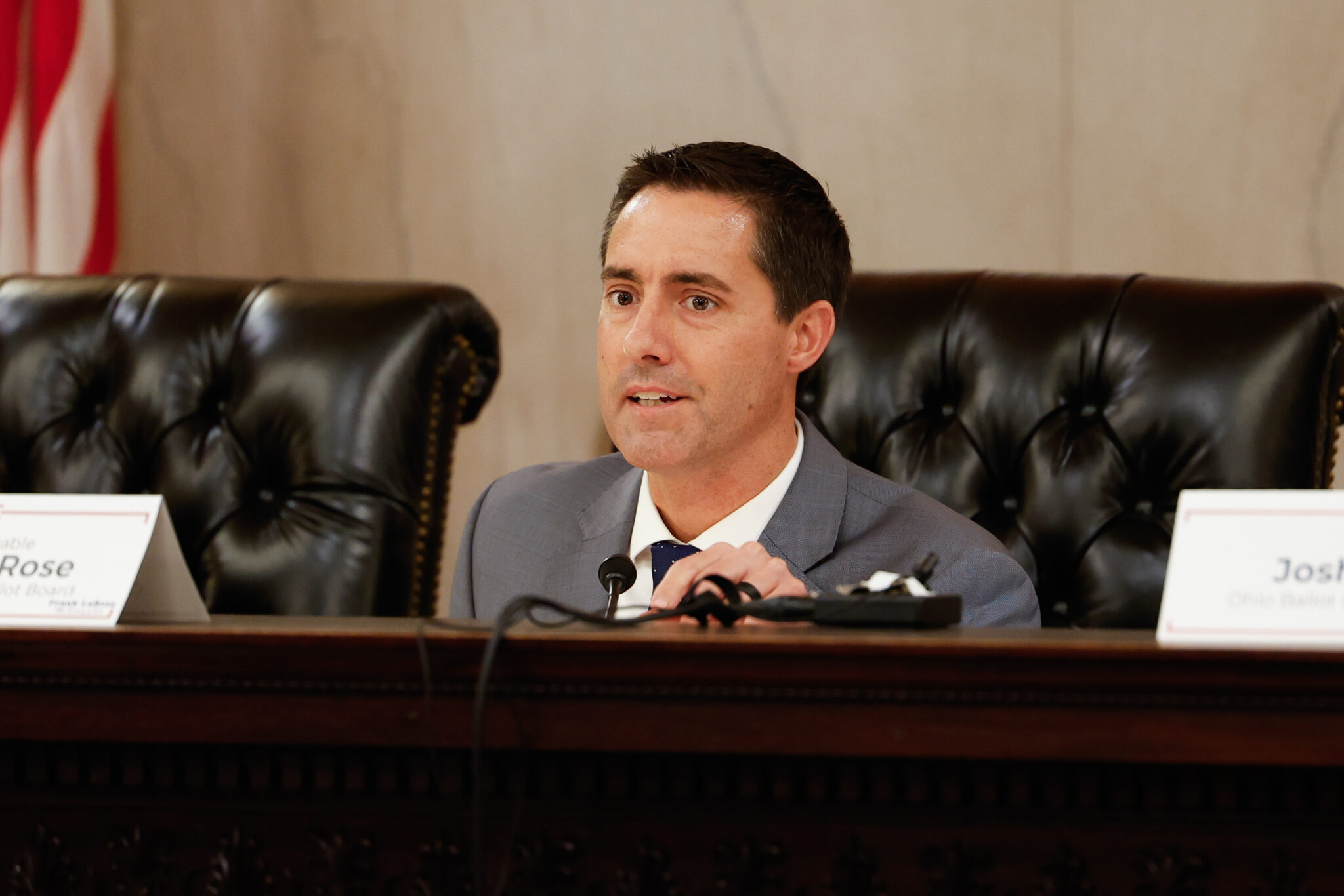
    The leader of the Ohio Ballot Board, Secretary of State Frank LaRose, said the changes were made by “staff” of the board, though Democratic board member and state Rep. Elliot Forhan said “I would assume that the buck stops with the secretary of state.”

    LaRose during the meeting also said that, “having worked extensively on drafting this, I do believe it’s fair and accurate.”

    LaRose has been vocal in his opposition of the amendment, even saying the effort around the previous Issue 1, which would have changed the threshold to approve a constitutional amendment had it not been roundly defeated, was targeting the abortion rights fight specifically.

    At the beginning of Thursday’s meeting, he prefaced the board’s activity by saying the group was not there to “debate the merits” of the amendment or the marijuana ballot initiative also on the table at the meeting.

     Ohio Ballot Board member, State Sen. Theresa Gavarone, R-Bowling Green, speaks at the Ballot Board meeting Thursday. (Photo by Graham Stokes for Ohio Capital Journal. Republish photo only with original article.) 

    Board member and state Sen. Theresa Gavarone, however, gave a speech in the middle of the meeting harshly criticizing the amendment and calling it “a bridge too far,” even after multiple comments by LaRose about the neutrality with which the board was supposed to conduct their business.

    “This is a dangerous amendment that I’m going to fight tirelessly against,” Gavarone said. “But that’s not why we’re here today.”

    Gavarone also claimed, as anti-abortion groups throughout the state do as well, that the amendment is “an assault on parental rights.” Neither the amendment nor the summary approved by the board mention parental rights of any kind.

    The senator continued her comments during the board meeting, saying the true nature of the amendment “is hidden behind overly broad language,” despite the fact that the board summary took out pieces of the full text.

    The summary passed by the board does not include a list of the rights to “reproductive decisions” spelled out in the ballot measure, including contraception, fertility treatment, continuing one’s own pregnancy, and miscarriage care, all of which would be impacted under the new constitutional amendment.

    A clause in the proposed amendment that says “the state shall not, directly or indirectly, burden, penalize, prohibit, interfere with, or discriminate against” the exercise of the amendment by an individual or an assistant of the individual was reduced to “the citizens of the state of Ohio” in the summary.

    The phrase “the citizens of the state of Ohio” is also used in the clause summarizing a prohibition of abortion that would only happen if a pregnant patient’s physician finds the pregnancy to be viable.

    The phrase “pregnant patient” in the ballot measure was changed to “pregnant woman” in the summary.

     Ohio Ballot Board member, State Sen. Paula Hicks-Hudson, D-Toledo, speaks at the Ballot Board meeting Thursday. (Photo by Graham Stokes for Ohio Capital Journal. Republish photo only with original article.) 

    State Sen. Paula Hicks-Hudson, the other Democratic member of the ballot board, made two motions to change the language of the summary to bring back the full text or certain clauses of the actual amendment text into the approved language.

    “The full text is clear, it’s concise and it’s direct, which is one of the requirements that’s needed for us to present to voters in the state of Ohio,” Hicks-Hudson said.

    Both motions were rejected 3-2, with LaRose, Gavarone and the final board member, Bill Morgan, voting against the motions.

    Morgan didn’t speak during the meeting other than to register his votes, and didn’t specifically comment on the amendment discussion or language afterward.

    “I think it’s what we were supposed to do, what the ballot board does,” Morgan told the OCJ.

    Groups for and against the initiative anticipated potential issues with the board’s decision, with pro-abortion rights group Ohioans United for Reproductive Rights requesting that the ballot language mirror the amendment itself, so voters could see the entire constitutional change when they vote in November.

    Lauren Blauvelt, a member of the coalition, decried the changes made to the language, and said the group is considering a lawsuit to fight back.

    “The entire summary is really propaganda and we are going to talk about all of the reasons why Ohio voters should just be able to see the language for what it is,” Blauvelt said after the board meeting.

    Anti-abortion groups argued against using the full text, saying it was unnecessary, and Ohio Right to Life president Mike Gonidakis pushed back on calls for a lawsuit against the summary.

    “Any litigation filed on this is going to be thrown out by the Ohio Supreme Court because the statutory responsibility of the ballot board is to provide a fair and accurate representation. That’s what the law requires, and that’s what they did today,” Gonidakis said.

    Gonidakis said he did not work with anyone on the ballot board on the summary language, but he wished the language was “stronger.”

     Mike Gonidakis, president of Ohio Right to Life, talks to the press after the Ohio Ballot Board meeting Thursday. (Photo by Graham Stokes for Ohio Capital Journal. Republish photo only with original article.) 

    “Look, at the end of the day, people are going to make up their minds before they go in the ballot box anyways, and they’re not going to go in and then try to figure out what they want to do by reading something on a screen,” he said.

    The proposed amendment has gone through a rollercoaster of activity since the Ohio Ballot Board approved the measure in March as compliant with the regulations for a constitutional amendment proposal, allowing a petition campaign that resulted in nearly 500,000 supporting signatures from Ohio voters.

    Amid all the necessary hoops through which the abortion rights campaign has jumped, abortion rights groups have also had to battle against lawsuits attempting to block the amendment from voters. Another lawsuit alleged the Ohio Ballot Board hadn’t taken enough time or consideration before certifying that the amendment was compliant.

    The Ohio Supreme Court rejected both lawsuits, clearing the way for voters to see the issue in the Nov. 7 general election.


    Susan Tebben
    SUSAN TEBBEN

    Susan Tebben is an award-winning journalist with a decade of experience covering Ohio news, including courts and crime, Appalachian social issues, government, education, diversity and culture. She has worked for The Newark Advocate, The Glasgow (KY) Daily Times, The Athens Messenger, and WOUB Public Media. She has also had work featured on National Public Radio.

    MORE FROM AUTHOR

  • Ohio abortion rights supporters submit signatures, gunning for November ballot

    Ohio abortion rights supporters submit signatures, gunning for November ballot

    BY:  Ohio Capital Journal

    Two trucks loaded with more than 400 boxes rolled into the Ohio Secretary of State’s Office Wednesday. In those boxes were 710,000 signatures abortions rights advocates say prove they have the support they need to bring a ballot measure asking voters to put abortion care in the Ohio Constitution.

    “Those (402) boxes are filled with hope, and love, and freedom of bodily autonomy … of being able to say ‘we decide what happens to us,’” said Kellie Copeland, executive director of Pro-Choice Ohio.

    In the last 12 weeks, advocates from groups including Ohioans for Reproductive Freedom and Ohio Physicians for Reproductive Rights have gone to farmer’s markets, held drive-through signing events, and reached across the state to collect the nearly 414,000 signatures required of them to place a measure on an Ohio voting ballot. Signature-gatherers collect far more than that minimum in an attempt to make sure enough signatures are correct and valid to meet the threshold.

     COLUMBUS, Ohio — JULY 05: Field staffer for Ohioans United for Reproductive Rights, Carlos Ortiz unloads the first of 402 boxes of petitions with over 700,000 signatures being delivered to Ohio Secretary of State Frank LaRose, July 5, 2023, at the loading dock of the Office of the Ohio Secretary of State, downtown Columbus, Ohio. (Photo by Graham Stokes for Ohio Capital Journal. Republish photo only with original article.) 

    Bill Wood was one of many collecting signatures, and he said he was overwhelmed by the support he saw the past three months.

    “What amazed me is that even late in this process, there were people who were coming up to us and saying, ‘I have been looking forward to signing this, thank you for being here,’” Wood said. “The number of thank-you’s and compliments and wonderful support that we got from people at every stage was amazing.”

    As part of the Westerville Progressive Alliance, he said he has participated in many signature drives and campaigns over the years.

    “I will tell you when we brought this to our people, we have never seen an outpouring of interest and commitment like we’ve seen this year,” Wood said.

    He said the Westerville group alone collected 9,000 signatures.

    The measure would allow abortion in the state via an amendment to the Ohio Constitution, that states “every individual has a right to make and carry out one’s own reproductive decisions, including but not limited to decisions on contraception, fertility treatment, continuing one’s own pregnancy, miscarriage care and abortion.”

    “Ultimately, this is about giving my patients, our patients, our friends, our families, their power back,” said Dr. Marcela Azevedo, co-founder of OPRR.

    If approved, the amendment would bar the state from doing anything to “directly or indirectly burden, penalize, prohibit, interfere with, or discriminate against either an individual’s voluntary exercise of this right or a person or entity that assists an individual exercising this right, unless the state demonstrates that it is using the least restrictive means to advance the individual’s health in accordance with widely accepted and evidence-based standards of care,” according to the ballot language certified by the Ohio Ballot Board.

    Abortion can, however, be prohibited “after fetal viability,” defined in the proposed amendment as “the point in pregnancy when, in the professional judgment of the pregnant patient’s treating physician, the fetus has a significant likelihood of survival outside the uterus with reasonable measures.”

    Pro-abortion rights groups say signatures were collected in every Ohio county, something that may come in handy with another constitutional amendment, Issue 1, on the ballot in August that would require 60% of Ohio voters to approve of a measure, and require signatures to come from all 88 counties, rather than just the 44 of 88 required in current law.

    Now, the Secretary of State’s Office will have until July 25 to verify the signatures and determine whether the measure has enough valid Ohio voter support to move forward.

    If the number falls short of the required amount, advocates have 10 days to file a supplementary petition with more signatures, which must be from registered Ohio voters who didn’t sign the previous petition.

    The groups working to get the measure on the ballot estimate the campaign to do it may cost approximately $35 million.

    A spokesperson for Secretary of State Frank LaRose did not respond to requests for comment.


    Susan Tebben
    SUSAN TEBBEN

    Susan Tebben is an award-winning journalist with a decade of experience covering Ohio news, including courts and crime, Appalachian social issues, government, education, diversity and culture. She has worked for The Newark Advocate, The Glasgow (KY) Daily Times, The Athens Messenger, and WOUB Public Media. She has also had work featured on National Public Radio.
    MORE FROM AUTHOR

  • Bipartisan sponsors, advocates: Support Ohio bill improving pregnancy, housing, infant services

    Bipartisan sponsors, advocates: Support Ohio bill improving pregnancy, housing, infant services

    BY:  Ohio Capital Journal

    The state’s operating budget is showing progress in the areas of infant supports, including a housing pilot program to benefit pregnant people and even doula services, but a bipartisan duo in the Ohio House wants to do better.

    State Reps. Andrea White, R-Kettering, and Latyna Humphrey, D-Columbus, joined with advocacy groups on Tuesday to talk about House Bill 7, with supporters heading straight to a proponent hearing immediately following the press conference on the bill.

    White and Humphrey introduced the bill to the House Families and Aging Committee on April 25, but as the budget process continues with various appropriations showing up and being revised from the governor’s initial executive proposal, White said it’s important to keep up with funding, especially when it comes to Ohio’s infants and mothers.

    “Ohio’s doing very well, but we’re not going to accept no for an answer,” White said.

    HB 7 has provisions to support doula services, pregnancy and postpartum individuals, children and families in poverty, early intervention, child care, a cost savings study for the Medicaid program and the Head Start Program.

    “The initiatives in this bill will support and empower families … and establish systemic changes that will remove barriers to services and reduce administrative burden to both programs and the state,” said Julie Stone, executive director of the Ohio Head Start Association.

    The legislators and groups supporting the legislation pointed to widely reported statistics showing Ohio as one of the lowest-succeeding in the country when it comes to infant mortality, with 1 out of 150 babies unable to live to see their first birthday, and the infant mortality rate at 14.1 per 1,000 births for Black babies in Ohio, and 5.5 per 1,000 for white babies.

    “In this case, if we do not invest now, there will not be an opportunity, for many, for us to pay later because we are losing too many lives,” White said.

    Improving supports for the doula program in Ohio has been an ongoing struggle, with various bills attempting to bring funding to the effort, including one currently sitting in the Ohio Senate.

    In HB 7, like similar legislation attempted in the past, the Ohio Board of Nursing would be required to establish a registry of certified doulas, a Doula Advisory Board would be established within the board of nursing, and the Department of Medicaid would house a program to cover doula services through a Medicaid provider agreement.

    Doula programs have frequently asked for Medicaid reimbursement to be a part of the resources they can access, since many programs are using their own funds or that of donors to provide pregnancy-related services and education.

    “The doula programs are clearly one of the more outstanding programs we have seen in this nation,” said Angela Dawson, executive director for the Ohio Commission on Minority Health.

    The doula programs already work to improve pregnancy outcomes throughout the state with 12 “infant mortality hubs” funded throughout the state as well, according to Dawson. But full investment into doula services could actually end up saving the state money through avoidance of complications in pregnancy, and raising the state’s ranking when it comes to infant mortality.

    “The reality is that Ohio has never achieved the infant mortality goal for African American babies, we have an opportunity before us … let our vote prepare the state for the children,” Dawson said.

    The current draft of the budget, which is still up for approval in the Ohio Senate, includes $16 million in funding for the Healthy Beginnings at Home program, a research study that tests the impacts of rental assistance and housing services on infant mortality.

    Under HB 7, the program would receive $15 million more in fiscal year 2024 “to support stable housing initiatives for pregnant mothers and to improve maternal and infant health outcomes,” according to an analysis by the Legislative Service Commission, and $1 million in both 2024 and 2025 for the Move to Prosper program, “which makes affordable rental housing available in neighborhoods that offer access to opportunities.”

    Amy Riegel, executive director of the Coalition on Homelessness and Housing in Ohio, said the funding would allow them to expand the study to more areas in the state, and “make it a statistically significant study that can be replicated” nationally.

    ___________________

    Susan Tebben is an award-winning journalist with a decade of experience covering Ohio news, including courts and crime, Appalachian social issues, government, education, diversity and culture. She has worked for The Newark Advocate, The Glasgow (KY) Daily Times, The Athens Messenger, and WOUB Public Media. She has also had work featured on National Public Radio.

    MORE FROM AUTHOR

  • Ohio Ballot Board sued over approval of proposed abortion rights constitutional amendment

    Ohio Ballot Board sued over approval of proposed abortion rights constitutional amendment

    Gavel,” a sculpture by Andrew F. Scott, outside the Supreme Court of Ohio. Credit: Sam Howzit / Creative Commons.

    Meanwhile, Ohio Senate president eyes August for proposal to raise threshold for voters to pass constitutional amendments

    BY: SUSAN TEBBEN – Ohio Capital Journal

    A new lawsuit claims the Ohio Ballot Board made the wrong call when they approved the validity of a constitutional amendment proposal on abortion.

    In the lawsuit, filed this week with the Ohio Supreme Court, Cincinnati attorney Curt Hartman asks the court to demand the ballot board vacate their March 13 decision, in which they said the proposed ballot language to cement abortion rights in the Ohio Constitution attempts to make changes to only one constitutional issue.

    The lawsuit also wants the state Ballot Board to “issue a determination that the foregoing initiative petition contains more than one proposed amendment to the Ohio Constitution,” divide the petition into separate initiatives and certify those with the Ohio Attorney General.

    To prove the separate issues, the lawsuit cites the overturned legalization of abortion in Roe v. Wade, in which abortion was described as “inherently different” than other personal rights. Because abortion is “inherently different,” parties in the lawsuit argue it represents a different issue than “one’s own reproductive decisions,” which is part of the ballot initiative, therefore “does not and cannot relate to a single general object or purpose.”

    The lawsuit acknowledges in a footnote that supporters of the ballot initiative “have not, to date, provided any explanation of the distinction between a decision concerning ‘continuing one’s own pregnancy’ versus concerning ‘abortion.’

    Ohio Attorney General Dave Yost saw the initiative before the board, and certified the amendment proposal in a separate process. In his letter confirming that the proposal could then move on to the ballot board, Yost made his own comments on the issue.

    “I cannot base my determination on the wisdom or folly of a proposed amendment as a matter of public policy,” Yost wrote in his letter on the amendment proposal.

    The lawsuit now sets the state, specifically Yost, up to defend the decision of the ballot board, despite any personal feelings he may have on the initiative itself.

    The board made no decisions on the merits of the issue, though state Sen. Theresa Gavarone, R-Bowling Green, made a point to speak out against the issue during the board meeting, saying she was “horrified at the thought of this amendment.”

    Hartman is representing Margaret DeBlase and John Giroux, both members of the Cincinnati Right to Life. Giroux spoke during the Ohio Ballot Board meeting.

    “If this is about one issue, this amendment is about abortion, and that’s plain and simple,” Giroux told the board. “They want to advance abortion in our state constitution.”

    In the lawsuit, Hartman argues there was “absolutely no discussion or debate whatsoever” by the members of the board, other than Gavarone’s comments.

    Parties challenging the decision say the ballot board’s action, or lack thereof, “constitutes an abuse of discretion and/or an act in clear disregard of applicable legal provisions.”

    The Ohio Supreme Court has not decided whether or not they will accept the lawsuit for review.

    Pro-abortion rights groups are facing a July 5 deadline to gather signatures in support of placing the petition on the ballot in November. That deadline might also lie in the shadow of an August special election now, with Senate President Matt Huffman expressing interest in placing a measure on the ballot that month to increase the threshold needed to amend the constitution by changing it to 50% plus one vote to 60%.

  • Ohio abortion rights groups merge and set sights for amendment on November ballot

    Ohio abortion rights groups merge and set sights for amendment on November ballot

    Getty Image

    BY: SUSAN TEBBEN – Ohio Capital Journal

    Two groups who had already committed to separate efforts to get reproductive rights in the hands of Ohio voters have now merged and set an end goal: abortion access on the November ballot.

    Ohioans for Reproductive Freedom and Ohio Physicians for Reproductive Rights announced Thursday that they are joining together to “file language with the Ohio Attorney General to place a citizen-initiated constitutional amendment to restore and protect reproductive rights and abortion access on the November 2023 statewide general election ballot.”

    “This grassroots initiative – by and for the people of Ohio – is foundational to ensuring access to abortion and the right to bodily autonomy, not only for ourselves, but for generations to come,” said Kellie Copeland, executive director of Pro-Choice Ohio and member of Ohioans for Reproductive Freedom, said in the announcement.

    The groups said the constitutional amendment will look similar to a Michigan amendment which voters approved in November 2022.

    After the amendment is drafted and reviewed by the state Attorney General and Ohio Ballot Board, the groups plan to circulate petitions to place the issue on the ballot.

    Rumblings of a constitutional amendment have been floating for months now, spurred on by the Dobbs v. Jackson Women’s Health Organization case, in which the U.S. Supreme Court overturned decades old nationwide rights to abortion nationwide in Roe v. Wade.

    Placing the measure on the 2023 ballot was called a “moral imperative” which “offers the best prospects for success,” according to Dr. Lauren Beene, executive director of the OPRR.

    “The lives and health of Ohioans have been at risk since Roe was overturned,” Beene said in a statement. “That is why we must seize the earliest possible opportunity to ensure that doctors and patients, rather than politicians and the government, are empowered to make decisions about pregnancy, contraception and abortion.”

    The move comes as some abortion rights advocates are ramping up legal efforts to protect patients and physicians seeking abortion care or advice, along with a battle involving Ohio’s Attorney General Dave Yost to keep abortion pills from being distributed through the mail or at national pharmacies, and a new study that showed abortion clinics find it more and more difficult to comply with laws on the subject because of bureaucratic discretion.

    The ballot measure might have another issue if in-fighting within the state’s Republican caucus continues. One side of the caucus is promoting the controversial legislation that would raise the threshold to approve constitutional amendments, while House Speaker Jason Stephens didn’t list it as one of the priority bills he and his faction unveiled on Wednesday.

    Republicans on both sides of the aisle have expressed interest in legislative prohibitions to abortion since the downfall of Roe, and both sides are awaiting the resolution of a court case under which a six-week abortion ban is paused indefinitely as appeals go through.


  • Legislative effort to support pregnancy doulas has bipartisan support

    Legislative effort to support pregnancy doulas has bipartisan support

    BY: SUSAN TEBBEN – Ohio Capital Journal

    Maternal and infant health advocates and certified doulas alike expressed their support Monday for a bill currently awaiting consideration by the Ohio Senate to bring doula services into the state’s Medicaid program.

    Participants in a meeting of the Ohio Legislative Children’s Caucus met with organizations employing and promoting the use of doulas as part of the childbirth process in Ohio, before, during and after a baby is born.

    Caucus co-vice chair, state Rep. Susan Manchester, R-Waynesville, brought up a 2022 March of Dimes report card which gave Ohio a D+ in the area of preterm birth. Ohio has a 10.6% preterm birth rate, according to the report.

    “Further opportunities to ensure access to appropriate health care services before, during, and after childbirth cannot be left on the table when the 134th General Assembly ends,” Manchester told the caucus at their Monday meeting.

    Doulas are individuals with non-medical training, who are there to act as educators, resource coordinators, and advocates for their patients as they go through pregnancy and postpartum life. They work alongside a medical team, including a midwife, the medical professional who serves as complement to a doula.

    Doulas are there to provide everything from sex education to postpartum depression screening, and everything in between, to provide emotional and physical support.

    “We’re attending appointments with them, and then we’re going to review what the clinicians have said to them to make sure they’re actually understanding what they heard, and that they’re not just being spoken at,” said Jazmin Long, CEO of Birthing Beautiful Communities, a Cleveland and Akron-based non-profit.

    Doulas go through rigorous training, with BBC providing an 80-hour training program, with the requirement that participants score 90% or higher on the certification exam to move forward with the organization. Long said BBC’s perinatal doulas are paid between $500 and $800 per birth.

    With proper training, doulas are a “vital person in the care team,” according to Meredith Strayhorn, a certified doula who is also a student midwife and financial and operations director for the Cincinnati-based collective Blaq Birth Circle. The collective partners with Cradle Cincinnati and Caresource to provide doula services in the area.

    “It’s especially important navigating through the hospital system, where we know there is a lot of systemic racism, there are a lot of providers who do not listen to clients, and I have actually seen that happen several times, which is really heartbreaking,” Strayhorn said.

    Doulas can increase positive birth outcomes, which can mean less spending on health care. Strayhorn said research shows continuous doula support during and after pregnancy can decrease risk of cesarean sections and the use of pain medications, and increases patient satisfaction.

    As part of the effort to make doulas more accessible to more Ohioans, Long and Strayhorn said House Bill 142 would be a good start, as it would establish five-year coverage programs for doula services for the state’s Medicaid program and within the Department of Rehabilitation and Correction.

    The ODRC program would allow doula services to “inmates participating in any prison nursery program,” according to an analysis of the bill conducted by the Legislative Service Commission.

    “From what I’m hearing, everyone’s been supportive,” said state Rep. Tom Brinkman, R-Mt. Lookout, who created the bill along with former Democratic state Rep. Erica Crawley.

    Under the bill, doulas would have to hold a certificate from the Ohio Board of Nursing, and a “valid provider agreement.”

    A registry of doulas would also be created by HB 142 within the Board of Nursing, along with a “doula advisory board” within the board, specifically for those serving the Medicaid program.

    The board is to be made up of at least 13 members, all appointed by the Board of Nursing, with the requirement that at least three be members “representing communities most impacted by negative maternal and fetal health outcomes,” and at least six members who are currently certified doulas.

    HB 142 passed the Ohio House, proving bipartisan support with a GOP supermajority present in the House. The Senate has a GOP supermajority as well, and Brinkman said he is hopeful the support will continue.

    “The funding is there, and I think that once we do it … I think the insurance plans that provide private care will see that this is a savings in the number of C-sections and prescription medicine and epidurals,” Brinkman said.

    As the legislation goes forward, the Ohio Department of Medicaid announced their own plan to implement doula services as part of a Maternal and Infant Support program, with the doula program to roll out at the end of a 2-3 year phase-in, announced in 2021.

    The ODM doesn’t cover doula care as a billable service currently, but provided $1 million in Ohio Equity Institute grants to groups in Cuyahoga, Franklin and Lucas counties for such services between 2020 and 2021, according to the department.

    The bill is not up for a hearing this week, but Brinkman said he is set to meet with Senate Health Committee chairman Steve Huffman, R-Tipp City, this week to discuss next steps for the bill.

  • Despite reports of harm, DeWine refuses comment on abortion ban law

    Despite reports of harm, DeWine refuses comment on abortion ban law

    BY: MARTY SCHLADEN – Ohio Capital Journal

    With Gov. Mike DeWine’s blessing, Ohio is in court, fighting to reimpose strict abortion regulations under a law he signed in 2019. But he’s refusing to publicly comment on the numerous stories of suffering it caused during the 11 weeks it was enforced.

    The law DeWine signed, Senate Bill 23, bans abortion after fetal cardiac activity can be detected. That’s about five or six weeks into a pregnancy — a point so early that many women and girls don’t yet know they’re pregnant.

    The law makes no exceptions for rape and incest. It includes some protections for the life and health of the mother, but doctors — who can be charged with felonies under the law — say they’re too vague to be workable.

    SB 23 was unenforceable until June 24 because it violated the 1973 U.S.  Supreme Court decision in Roe v Wade. But then the U.S. Supreme Court conservative majority handed down its decision in Dobbs v Jackson Women’s Health, overturning Roe and its protections of the right to an abortion.

    Almost immediately, SB 23 went into effect and just a week later, the Indianapolis Star reported that the law had forced a 10-year-old rape victim from Columbus to travel there for an abortion. The incident made for international news, but DeWine refused to comment on it, other than to say child rape is “gut wrenching.”

    After that, more horror stories came in the form of sworn affidavits filed by doctors and other workers in Ohio abortion clinics. 

    They included two more minors who had been impregnated by rapists and cancer patients who couldn’t get abortions needed for treatment because their doctors were afraid of being charged with crimes and losing their medical licenses. 

    Other women were diagnosed with fetal abnormalities so severe that their pregnancies couldn’t be successful. Under SB 23 they had to leave Ohio for abortions if they didn’t want to carry those fetuses for months.

    On Sept. 14, enforcement of SB 23 was paused when a Cincinnati judge granted a temporary restraining order against it and then later issued a preliminary injunction. The case is expected to make its way to the Ohio Supreme Court, on which DeWine’s son, Pat, sits as a justice.

    In the face of news of medical and emotional problems caused by SB 23, Gov. DeWine has been steadfastly silent. 

    “Our office has no new comments on the issue or the ongoing litigation at this time,” Press Secretary Dan Tierney said in an email Monday. He said something similar 10 days earlier.

    Also, some of the governor’s recent conduct might be seen partly as an attempt to avoid questions about the impact the abortion law he signed is having on some women and girls. 

    He has refused to debate his Democratic challenger in the Nov. 8 election, Nan Whaley. Also in recent weeks, DeWine has made few appearances in central Ohio, where he’d be likely to face the Capitol press corps.

    At the same time, he may be quietly signaling his support for even more sweeping abortion measures.

    After the Dobbs decision, state Rep. Jean Schmidt, R-Cincinnati, introduced a bill that would ban abortions at any point in a pregnancy with only narrow exceptions to protect the life and health of the mother. She said she had the governor’s support.

    DeWine apparently hasn’t spoken publicly about the measure, House Bill 598. But a spokesman didn’t dispute Schmidt’s claims.

    Follow Marty Schladen on Twitter.

  • ‘Unequivocal nightmare:’ OB/GYNs fear uncertainty, health care delays post-Roe

    ‘Unequivocal nightmare:’ OB/GYNs fear uncertainty, health care delays post-Roe

    A medical exam room. File photo from MaxPixels.net.

    BY: SUSAN TEBBEN – Ohio Capital Journal

    Doctors fighting to keep their patients alive are worried about new abortion-related paperwork and legal advice that would hold up necessary care for their patients.

    Consulting lawyers and keeping complicated documentation is a part of life now that the U.S. Supreme Court overturned Roe v. Wade and Ohio put a six-week abortion ban in place.

    “If (patients) are in the midst of a pregnancy loss and a heartbeat is present… we then have to do the same paperwork for someone who was having an elective termination (abortion),” said Dr. Amy Burkett, an OB/GYN hospitalist in Northeast Ohio.

    Doctors face potential criminal charges and risks to their medical licenses because of what they say are unclear regulations and specifications on abortion. Beyond that, the changes to the health care landscape nationally and in Ohio create an environment where doctors who know a pregnancy isn’t viable may have to watch a parent carry the pregnancy anyway.

    “Being forced to go down the path is just an unequivocal nightmare, especially if you think of someone going through an entire pregnancy against their will when they know the fetus is going to die,” said Dr. David Hackney, maternal fetal medicine specialist in the Cleveland area, and chair of the American College of Obstetrics and Gynecologist’s Ohio chapter.

    Hackney, who works with high risk pregnancies and diagnoses birth defects, said abortion bans can increase the complication rate in pregnancies merely by increasing the number of pregnancies coming to term.

    As Roe v. Wade was overturned Friday and Ohio implemented its six-week abortion ban, Hackney was on call, and went to sleep that night unsure how he would proceed with medical care the next day.

    “It’s a Friday night, and all of a sudden the legal ground has changed entirely beneath my feet,” Hackney said.

    With cases that can include time-sensitive care and bleeding that must be dealt with urgently, Hackney said not having a plan in place can cause distractions with dangerous impacts on infant and parent health. That plan may now have to include referrals to other health systems, and even other states for legal options.

    “When it comes to a lot of these legal issues, the most important thing to have is a plan before something awful happens,” Hackney said. “We are even now still working out the details and trying to figure out processes.”

    Abortion bans could have impacts on pregnancy-related procedures that have nothing to do with abortion as well, according to doctors. Dr. Tom Burwinkel, a reproductive endocrinologist who also works on in-vitro fertilization, says bills like HB 598 — a proposed complete abortion ban in Ohio — could cause legal confusion and liabilities for facilities storing embryos or working with those embryos.

    Because the bill, which is currently sitting in a House committee, says an “unborn child” is defined at the time of fertilization, embryos that are damaged even accidentally or through natural occurrences in the IVF process could be held against the doctors conducting the work.

    “If we have embryos stored and something happens to the liquid nitrogen tanks, are the physicians and the people that own the facilities on the hook for the loss of thousands of embryos?” Burwinkle posed.

    Though IVF isn’t impacted by the six-week abortion ban, Burwinkle worries about the future of the IVF field and other pregnancy medicine, as laws and bills in the state focus on ideological ideas of life rather than the medicine involved.

    “Obviously the legislature wants to take things a step further … and that’s somebody imposing their religious beliefs on others. I thought this country was founded on religious freedoms,” Burwinkle said.

    Comments made by U.S. Supreme Court Justice Clarence Thomas in support of overturning Roe v. Wade are giving physicians further reason to be concerned about the future of gynecology, especially contraceptives.

    Burkett said it’s important for the public to understand that contraceptives are not considered abortion medication, even as legislation might couple things like Plan B with abortion-inducing drugs, and misinformation exists coupling IUDs with abortion.

    “IUDs are not considered abortion medications,” Burkett said. “Plan B is also not considered an abortion medication. Neither are medically considered abortifacients.”

    Misinformation about contraceptives does not just impact the public who may not have done enough research, but a part of legislation sponsored by non-medical professionals who may not be listening to the medical community. Hackney said ACOG representatives are always willing to serve as a resource for legislators.

    “In general, most of this legislation happens without meaningful, or certainly not with mainstream medical input,” Hackney said.

    Follow OCJ Reporter Susan Tebben on Twitter.