Tag: pregnant

  • Affidavits: More pregnant minors who were raped denied Ohio abortions

    Affidavits: More pregnant minors who were raped denied Ohio abortions

    Documents describe dozens of painful situations under Ohio abortion restrictions

    BY: MARTY SCHLADEN – Ohio Capital Journal

    At least two more minors made pregnant by sexual assault were forced to leave Ohio to avoid having their rapists’ babies, according to sworn affidavits filed by abortion providers.

    The affidavits were filed in Cincinnati as part of a lawsuit aimed at stopping enforcement of Ohio’s strict new abortion law, which it temporarily did last week. Originally paused for two weeks, on Tuesday the enforcement delay was extended to at least Oct. 14.

    If true, the affidavits show that a Columbus 10-year-old was not the only child or teen rape victim forced to leave the state. They also describe more than two dozen other instances in which the abortion law put women under extreme duress.

    The descriptions include those of three women who threatened suicide. They also include two women with cancer who couldn’t terminate their pregnancies and also couldn’t get cancer treatment while they were pregnant. 

    Another three examples were of women whose fetuses had severe abnormalities or other conditions that made a successful pregnancy impossible. Even so, they couldn’t get abortions in Ohio. 

    And in three cases, debilitating vomiting was caused by pregnancy — so bad in one case that a woman couldn’t get off the clinic floor. But neither could these women get abortions in Ohio, the affidavits said.

    The documents were filed in the case Preterm-Cleveland v (Ohio Attorney General) Dave Yost. Having already gotten a temporary order restraining enforcement of the abortion law — Senate Bill 23 — clinics across Ohio are now seeking a preliminary injunction.

    In doing so, they’re arguing that SB 23 is so onerous that it violates women’s due-process rights under the Ohio Constitution. 

    Disrupted clinics

    Gov. Mike DeWine signed the law in 2019, but it couldn’t be enforced until the U.S. Supreme Court overturned Roe v Wade on June 24. Many of the affidavits describe how, as soon as the decision overturning Roe was announced that Friday, work at Ohio clinics was thrown into chaos.

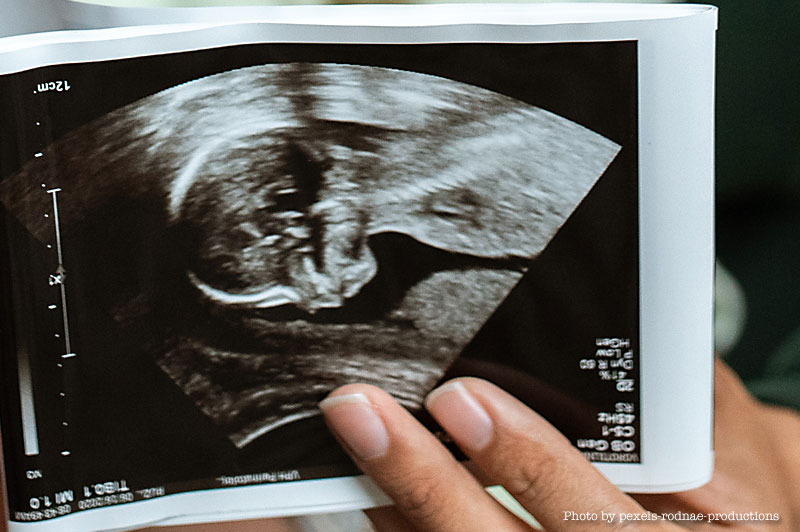
    Ohio law had allowed abortions until 20 weeks of pregnancy. Now, with only limited exceptions for the life and the health of the mother, no abortions were allowed after fetal cardiac activity could be detected by ultrasound.

    In the affidavits, clinic workers said that usually happens after five to six weeks of pregnancy — a point at which as many as a third of women and girls don’t know they’re pregnant.

    The new, much-earlier cutoff sent clinic workers scrambling.

    “In the days after S.B. 23 took effect, we had to cancel over 600 appointments,” Sharon Liner, medical director of Planned Parenthood Southwest Ohio, said in her affidavit. “Many patients broke down in tears in our office. Many patients that we could not reach by phone who came to our health center expecting to have their appointment were extremely upset; some threatened to hurt themselves because they were so distraught.”

    Liner added, “We have had at least three patients threaten to commit suicide. Another patient said she would attempt to terminate her pregnancy by drinking bleach. Another asked how much Vitamin C she would need to take to terminate her pregnancy.”

    In July, 60% of patients at the clinic had to be turned away because fetal cardiac activity had been detected by the initial ultrasound, Liner said. 

    The Ohio law requires a 24-hour waiting period and a second negative ultrasound before an abortion can be performed. Because things are changing so quickly at that stage of development, another 16% of women who’s fetuses had no cardiac activity during the first exam were turned away in July because it was detected in the second, Liner said.

    The Ohio law requires a 24-hour waiting period and a second negative ultrasound before an abortion can be performed. Because things are changing so quickly at that stage of development, another 16% of women who’s fetuses had no cardiac activity during the first exam were turned away in July because it was detected in the second, Liner said.

    “When we tell patients we cannot help them, they are extremely distressed, and all we can offer them is resources, information and emotional support,” Liner said in her affidavit, which was taken while S.B. 23 was still being enforced.

    Ohio clinics have been referring patients who were ineligible for abortions here to clinics and hospitals in Michigan, Pennsylvania, Illinois and New York to get them. 

    Planned Parenthood of Greater Ohio and other organizations have announced stepped-up assistance to help patients get to those states. But many — including at least one homeless woman — said problems with things like transportation, child care, poverty and getting time off work make the trips virtually impossible, according to the affidavits.

    Allegra Pierce, a medical assistant at Preterm-Cleveland, doubted that most women turned away at Ohio clinics during the 11 weeks S.B. 23 was enforced ever made it out of state.

    “The majority of patients I talk to say that they can’t travel out of state to access abortion care,” Pierce said in her affidavit. “Even though many patients can access sources of funding for seeking an abortion, there are so many barriers that make traveling out of state inaccessible for many of our patients, including the cost of travel, child-care responsibilities, and difficulty getting time off of work, just to name a few. Even those patients who are able to travel out of state often have a hard time getting an appointment due to increasingly long wait times at clinics in states where abortion is still legal.”

    More victims

    In July, when Ohio Attorney General Dave Yost was raising unfounded doubts about the existence of a 10-year-old rape victim, there were plenty of data indicating that the story was all too plausible.

    In 2021, Ohio’s Children’s Advocacy Centers saw 6,717 cases of sexual abuse against Ohioans between infancy and adulthood. And in 2020, the most recent year for which statistics are available, 571 girls aged 17 or younger received abortions in Ohio, according to the state department of health. Fifty-two of them — or one a week — were 14 or younger.

    Sadly, the affidavits filed in late August and early September by workers at abortion clinics provide further evidence that child and teen rape and subsequent pregnancy is a problem in Ohio. But so long as fetal cardiac activity is detected, S.B. 23 requires such victims to either have those babies or scramble out of state and try to find an abortion.

    Adarsh E. Krishen, chief medical officer for Planned Parenthood of Greater Ohio, told of a minor who had been sexually assaulted and had to travel to Michigan for an abortion because of S.B. 23. Krishen’s organization operates clinics in Columbus and Cleveland.

    “This patient experienced immense trauma from the assault itself and then endured further trauma from a forensic interview alongside a physical exam to collect evidence for the ongoing police investigation,” Krishen said in his affidavit. “This trauma was further exacerbated by needing to wait over three weeks for her appointment. In each step of this process she felt the complete denial of bodily autonomy and safety, something all people, especially children, should unequivocally have at all times.”

    Another example shows how S.B. 23 makes police investigation of child and teen rapes more difficult.

    Aeran Trick, operations manager of Women’s Med Center of Dayton, told of “a 16-year-old girl living in Southwestern Ohio who had become pregnant after being sexually assaulted by a family member.”

    As with the 10-year-old from Columbus, Trick said this teenager was forced to go to Indianapolis for an abortion.

    “The local Ohio law-enforcement agency — which was already involved at the time the clinic was contacted about the patient — had to drive to our Indianapolis clinic to retrieve the tissue for crime lab testing related to the sexual assault investigation,” Trick’s affidavit says. “I am concerned that Ohio’s ban and the need to travel increasingly far distances to obtain abortion care not only causes unimaginable harm to these young victims, but could also hamper law enforcement’s ability to investigate and prosecute these cases in the future.”

    Cornered by cancer

    The affidavits filed as part of the effort to stop S.B. 23 describe two cancer patients put in the most impossible of situations by the law. 

    Both seem to illustrate doctors’ reluctance to terminate pregnancies despite the law’s exceptions for maternal health — exceptions that doctors say are woefully ill-defined. With potential penalties that include felony charges and the loss of professional licenses, some doctors have refused to terminate even though their patients’ health is at risk.

    In the days after S.B. 23 took effect, a pregnant 25-year-old went to a clinic operated by Planned Parenthood of Southwest Ohio, said Liner, the medical director there. The patient had recurrent cancer and was undergoing chemotherapy when she learned that she was pregnant.

    Chemotherapy is dangerous during the first 12 weeks of pregnancy and this patient had already skipped one treatment. But when the clinic determined that she was eight weeks pregnant, workers there said they couldn’t perform an abortion, Liner said.

    “Due to the patient having cancer while pregnant, we sought documentation to support a medical exception to S.B. 23 for this patient,” Liner said in her affidavit. “Her provider of care did not feel comfortable providing this and the patient had to travel out of state for an abortion to resume her cancer treatment, which caused further delay.”

    The effect of delaying chemotherapy on the patient’s health might be hard to determine, but it seems unlikely that it was good.

    Just three days after S.B. 23 took effect, a 37-year-old suffering stage III melanoma went to Women’s Med Center in Dayton, Trick, the operations manager there, said. The woman was told by her doctors that she had to terminate her pregnancy before they could treat her, so she, too, would have to leave the state, Trick said. 

    “Upon learning that she would need to travel out of state to have her abortion, the patient broke down and cried inconsolably despite the attempts of multiple staff members, including myself, to console her,” Trick said in her sworn affidavit.

    Other illnesses

    In addition to those cases, women with conditions that made successful pregnancies impossible had problems getting doctors outside the clinics to treat them, David Burkons, medical director of Northeast Ohio Women’s Center said. Two patients at the clinic said they had tubal, or “ectopic,” pregnancies “but the doctors (at emergency rooms) were afraid to treat them without being absolutely certain there was no intrauterine pregnancy,” Burkons wrote in his affidavit.

    “In one case, the patient’s fallopian tube ruptured, and surgery (was needed) rather than medical management, which would have been possible if they had acted sooner,” he said. “In the other, my nurse intervened to convince a physician to treat the patient, but only several days later, which was emotionally wrenching for the patient.”

    The affidavits also detail cases of fetal abnormalities and other problems so severe that pregnancies can’t result in a successful birth. One patient at a Planned Parenthood clinic in Southwest Ohio had a fetus with abnormalities including “a lack of lower extremities and the contents of the fetus’s abdomen, including possibly the heart, protruding through a defect in the abdominal wall,” Liner, a doctor, said in her sworn statement.

    Because S.B. 23 doesn’t allow women in such cases to abort their pregnancies if they don’t pose an imminent threat to their health, they either have to leave the state for an abortion or carry the fetus to term — even though that “can be extremely distressing for patients,” Liner said.

    In another case, this one in Dayton, a woman was 13 weeks pregnant but had no amniotic fluid, prompting her doctor to tell her the pregnancy was “nonviable.”

    “However, because the fetus still had fetal heart tones, the physician discharged her with instructions to call the office if she developed a fever,” Trick said in her affidavit. “The patient was very distressed and expressed to (clinic) staff that she felt abandoned by her physician during an incredibly difficult experience. I’m concerned that confusion over the meaning of S.B. 23’s health exceptions has led physicians to avoid providing medically necessary care out of caution, and I worry about patients in similar positions who aren’t able to independently find an accessible abortion provider without their physician’s help.”

    Clinic workers also reported cases of incessant vomiting caused by pregnancy, including in a high-school senior who found it impossible to attend class and finish her diploma. 

    Another girl, 16, had vomited so much that she lost 20 pounds, Trick, of the Dayton clinic, reported. The girl’s mother didn’t have a reliable car, so she had to rent one to take her daughter to Indianapolis for an abortion, Trick said.

    At the same clinic, another patient was “so sick she was lying on the floor vomiting into a bucket,” Trick wrote. 

    The woman wasn’t only afraid that her condition would prevent her from making it to Indianapolis, Trick said. The woman had four kids to care for and she was the manager of a large retail store.

    “She was concerned that she was going to lose her job because of all the time she had to take off to travel to and from the clinic for abortion care in addition to her repeated absences due to being hospitalized for her condition,” Trick wrote.

    Undermining its own purpose

    Proponents of S.B. 23 meant to dramatically curtail the number of abortions in Ohio. But the clinic workers said that for some patients, it’s having the perverse effect of rushing them to terminate pregnancies before they’ve had a chance to decide whether that’s what they really want.

    Pierce of Preterm-Cleveland said that at five to six weeks, “these patients are very early on in their pregnancies and many of them have not had a chance to wrap their minds around the fact they are pregnant. A number of patients have told me that they wish they had more time to think about whether to continue the pregnancy.

    “For example, I recently spoke with a patient with a young baby at home who had become pregnant again only months after giving birth,” Pierce’s affidavit continues. “She had experienced many postpartum health issues, and she was not sure if she was physically or mentally ready to go through a pregnancy again so soon. She wanted time to work through this decision but was terrified that if she waited she would no longer be able to have an abortion.”

    In their lawsuit, the abortion clinics seem to be contending that in forcing such an early decision, S.B 23 denied that woman’s due-process rights under the Ohio Constitution. They seem to be asserting the same rights for the other women they describe in the affidavits as being injured by S.B. 23.

    Whether Ohio’s court system agrees will be decided in the coming months.

    Follow Marty Schladen on Twitter.

  • Ohio Republicans’ attempted erasure of a 10-year-old rape victim is incredibly sick and disturbed

    Ohio Republicans’ attempted erasure of a 10-year-old rape victim is incredibly sick and disturbed

     Left to right: Republican Ohio Gov. Mike DeWine, Republican Ohio Attorney General Dave Yost, and Republican U.S. Congressman Jim Jordan. Official photos.
    Ohio Capital Journal Editor-in-Chief David DeWitt

    A Guest Column by David Dewitt

    The first and most important thing to recognize right now is that a heinous, violent crime was committed on a 10-year-old Ohio child, and thankfully justice has now found the alleged perpetrator.

    Columbus man was indicted Wednesday in a case that made national and international headlines about 10-year-old girl who had to travel to Indiana for an abortion after Ohio’s abortion ban went into effect following the U.S. Supreme Court overturning Roe v. Wade.

    The story is horrifying and tragic. She has experienced enormous trauma. My heart breaks for her, and I’m very grateful to all the hard-working professionals out there providing her and her family assistance in what must be a truly awful time.

    Republican Ohio Gov. Mike DeWine and his spokesman responded to the story by ignoring questions about whether children should be forced to have their rapists’ babies. Then DeWine allies contacted members of the press, asking how sure they were that the case of the pregnant 10-year-old even happened.

    The Washington Post, the conservative Daily Caller and other media outlets published stories saying that the case was unverified. The Wall Street Journal Editorial page suggested the story was a “fanciful tale.” The National Review’s Michael Brendan Dougherty referred to the case as “a fictive abortion and a fictive rape.”

    Republican Ohio Attorney General Dave Yost went on Fox News Monday to raise further doubts. He said he works closely with law enforcement authorities and he’d gotten “not a whisper” about the case.

    Hamilton County Republican Party Chair Alex Triantafilou on Twitter called the case, “A garbage lie that a simple google search confirms is debunked.”

    State Rep. Brian Stewart tweeted the Washington Post story saying he “wouldn’t trust an abortionist to tell me whether the sky is blue.”

    Ohio U.S. Rep. Jim Jordan tweeted, “Another lie. Anyone surprised?

    None of them had the patience to verify for themselves with certainty the truth of the matter before going public on a massive, self-serving scale.

    The propaganda erasing this 10-year-old’s existence was so swift it spread out over right-wing social media like a blanket. Those advocating the truth of her story — privately already confirmed for some of us, and crushing to hear about — were subjected to wild-eyed mockery and ridicule.

    It’s incredibly disturbing that the default position of so many sick and twisted people — including Ohio’s most prominent Republican elected officials — is to very vocally and very publicly question whether the rape and impregnation of a 10-year-old child ever happened.

    DeWine, Yost, and other Ohio Republicans hurt a traumatized child once by forcing her to flee the state in order to receive health care; then they hurt her again by peddling propaganda erasing her; now they’re hurting her a third time by refusing to acknowledge and apologize for their actions.

    This case was never implausible. In 2020, the most recent year for which statistics are available, 52 girls aged 14 and younger had abortions in Ohio, according to the state department of health. A review of just the city of Columbus’ police log since March 15 uncovered 59 reports of sexual assaults of girls 15 and younger that, based on the information available, could have resulted in pregnancy.

    Nevertheless, the wheels and integrity of local journalism spun and uncovered the truth, with the Columbus Dispatch breaking the news of confirmation of the case.

    But after the confirmation broke Wednesday, DeWine’s spokesman, Dan Tierney, again refused to comment on whether child rape victims should be forced to carry their pregnancies to term.

    Ten-year-olds who become pregnant are by definition rape victims. But Ohio’s abortion law signed by DeWine doesn’t make exceptions for rape and incest.

    Yost’s office didn’t respond Wednesday when asked whether he believes child rape victims should be forced to carry pregnancies, nor whether it was important to believe stories about sexual violence. Instead he put out a statement applauding the arrest.

    Yost offered no correction, no apology, and showed no contrition for going on national television to try to erase the lived experience of a child rape victim.

    They behave on a base level so repugnant and removed from the general good-heartedness of most Ohioans it’s almost unfathomable.

    “Apologize for what? Questioning a newspaper story?” Yost, Ohio’s top law enforcement officer, said about a case in his own county.

    DeWine, Yost, and other Ohio Republicans hurt a traumatized child once by forcing her to flee the state in order to receive health care; then they hurt her again by peddling propaganda erasing her; now they’re hurting her a third time by refusing to acknowledge and apologize for their actions.

    These powerful Ohio Republican politicians have thoroughly and completely shed themselves of any sense of shame or conscience.

    They’re disgusting and disgraceful; callous, careless and cruel.

    This is a matter of basic human decency, good faith and sensitivity on the most fundamental level of society.

    If they are willing to try to erase the traumatic story of a 10-year-old rape victim, whose pain and suffering will they not try to ignore and erase?

    They behave on a base level so repugnant and removed from the general good-heartedness of most Ohioans it’s almost unfathomable.

    I honestly don’t know how they sleep at night, or look at themselves in the mirror in the morning.

  • Support their right to have some control over what largely feels like something happening TO them, not just IN them.

    Support their right to have some control over what largely feels like something happening TO them, not just IN them.

    “If you can’t bring yourself to do that, then please, try to listen a little longer, and seek to somehow, in some way, understand.”

    by Stefanie Badders Laufersweiler

    I’ve been pregnant 7 times. Four progressed successfully; three did not. 

    Half of the times I’ve been in the ultrasound room, the news was bad. The first time, a heartbeat was no longer detectable at 10 weeks, but my body didn’t naturally miscarry, so ultimately I opted for a D&C, where my OB removed the fetus. The few weeks that I waited for natural miscarriage were traumatic and sad. I was 28.

    The second time I got pregnant, I went in for an ultrasound and a very slow heartbeat was detected—too slow. My OB told me it didn’t look good, but he couldn’t say for certain at that point. I went home and later that evening, miscarried at home, at 6 weeks. I was 29.

    I had a healthy pregnancy with our first child, Amy, when I was 30. But, the entire time I fretted. When you have your first pregnancy at that age or older, more odds, complications and viability testing options are shared with you. More risk is involved, and though you aren’t nudged in any direction, they (and you) want to progress with eyes wide open.

    I had two more healthy pregnancies, with Paul and Em. Then, at age 39, a chemical pregnancy. I had had some bleeding before that ultrasound; I didn’t bother telling Matt to meet me there. “What’s your due date?” the doctor (not my usual OB) asked me as she prepped me for the scan. “I’ve no idea,” I said. “I don’t do that anymore, because I’ve not always walked out of this room with good news.”

    Ben came last, a beautiful blindside, at age 42. It’s the only time I had to sit down to catch my breath after taking a pregnancy test. I was old. We were blessed, everyone would say, but few knew what that pregnancy was like for us. You don’t really ready for a child; you prepare yourself for whatever may come. Miscarriage. Birth defects. Potential loss. And any pregnancy-related trauma you’ve ever felt, mental and physical, comes roaring back. You count on nothing, and brace for anything.

    We all have different experiences and opinions. We all live this life differently, not always by choice. I’m not foolish enough to think my experience will change your mind. I had miscarriages, after all, not abortions. But, every time, I had choices. Choices I’m grateful for, because they were mine to make.

    Every time prior to Ben, after we had a pregnancy or a pregnancy loss, we had to make a decision—not whether to have another child, but whether to put ourselves through the process that may or may not end with a child. And once I was pregnant with Ben—whose conception happened by failed contraception—we had another decision to make: whether to risk future pregnancies, in middle age with a body that had served me well but suffered complications along the way.

    We chose a vasectomy for Matt while I was in my seventh month of pregnancy with Ben. I say that out loud because society in general doesn’t do that enough, although we are quite comfortable speaking of contraception and prevention in regards to women.

    By age 45, I had fully entered menopause, and I no longer had to worry about getting pregnant. After all of my adult life having to weigh the risks and benefits of taking birth control pills, or using condoms, or trying “natural” prevention, or considering surgery, or taking chances, or hoping the vasectomy “took,” I didn’t have to worry anymore. At 45.

    I share this, perhaps oversharing, because many people think they know how they feel about pregnancy. And contraception. And having babies. And abortion. And, most importantly, what they would do. What others should do. What they DID do. Their own experiences. My own experience. 

    Others speak from experience they don’t personally have, but think they know enough about to judge someone else’s.

    We all have different experiences and opinions. We all live this life differently, not always by choice. I’m not foolish enough to think my experience will change your mind. I had miscarriages, after all, not abortions. But, every time, I had choices. Choices I’m grateful for, because they were mine to make.

    Give an ear and perhaps some grace to those who’ve been there. Who’ve been in that room where your odds of coming out with a due date are 50/50. Who’ve had a pregnancy they terminated under unimaginable circumstances. Who’ve carried the trauma of losing, or being faced with a painful choice; of having to explain something so personal to others who may not understand or ever have to experience what you did; of having to piece together a life afterward. 

    Look around you. Talk to women you know, and maybe some you don’t. Ask questions about what pregnancy is like. Better yet, just listen. Hear their stories. Learn their experiences. Not just the happy endings or desired outcomes.

    Then support them. Support their right to have some control over what largely feels like something happening TO them, not just IN them. If you can’t bring yourself to do that, then please, try to listen a little longer, and seek to somehow, in some way, understand.

  • Abortion ‘trigger bill’ coming to Senate committee

    Abortion ‘trigger bill’ coming to Senate committee

    BY: and Ohio Capital Journal

    A piece of legislation meant to go into effect if federal abortion rights protections are overturned will start its path through the Ohio legislature this week.

    Senate Bill 123 is set to appear in the Ohio Senate Health Committee on Wednesday morning.

    If passed, the bill would then await court challenges of the U.S. Supreme Court’s Roe v. Wade decision, the ruling that legalized abortion nationwide. If challenges to Roe were successful, Ohio could then quickly ban abortion.

    There is an exception in the bill for abortions when there is serious risk to the pregnant person’s life, but written certification of the necessity is required, and “appropriate neonatal services for premature infants must exist at the facility where the physician performs or induces the abortion.”

    Currently, abortion is legal in the state of Ohio up to 22 weeks gestation.

    The proposed legislation would also ban “as the crime of promoting abortion” possessing, selling or advertising “drugs, medicine, instrument or device to cause an abortion”

    “Promoting abortion” is one of a few crimes defined under the bill, and would be a first-degree misdemeanor if passed. “Abortion manslaughter” would be a crime under the bill, treated as a first-degree felony punishable with a minimum of four to seven years in prison for “purposely taking the life of a child born by attempted abortion who is alive when removed from the…uterus.”

    As with other attempted legislation on abortion in the state, the punishment primarily lands on the physicians, leaving those having the abortions legally cleared and even able to file a wrongful death lawsuit if an abortion is performed in violation of the proposed legislation.

    A physician could have their license revoked if found guilty of “abortion manslaughter,” “criminal abortion,” or “promoting abortion.”

    The language regarding “abortion manslaughter” is reminiscent of language in a different abortion-related bill seeking to punish doctors after “botched abortions.” That bill seeks to prohibit inaction by doctors in the case of “failed” abortions, however, state data shows failed abortions are very rare.

    Of abortions reported at 19 weeks or more gestation in the state’s most recent data — which was available at the time the botched abortion bill was presented — only one pregnancy was found to be viable.

    The Senate legislation isn’t the first “trigger ban” that has been introduced in the General Assembly in the recent past. Last spring, a House bill was introduced by former state Rep. John Becker, also aiming to take effect if Roe v. Wade was overturned.

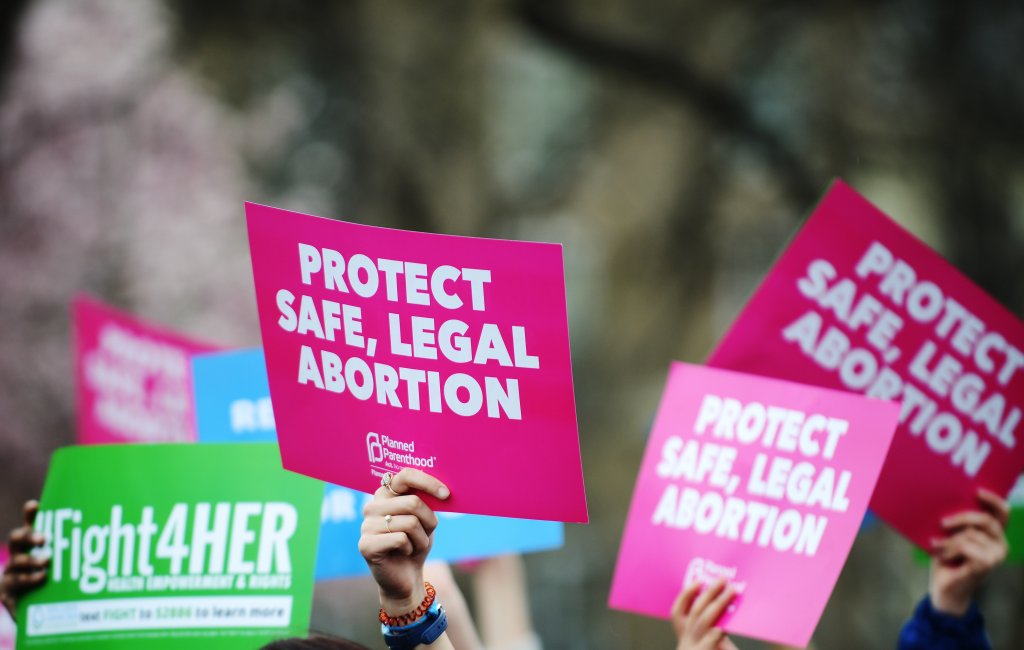
    Abortion-rights advocates are planning to rally together at the Ohio Statehouse at 12:30 p.m. on Tuesday, the day before the committee meets to consider the trigger ban.

    “With the stark reality that Ohio could be the next state where abortion is entirely inaccessible, now is the time to show up and fight for our communities,” said Aileen Day, communications for Planned Parenthood Advocates of Ohio, in a statement.


    Susan Tebben is an award-winning journalist with a decade of experience covering Ohio news, including courts and crime, Appalachian social issues, government, education, diversity and culture. She has worked for The Newark Advocate, The Glasgow Daily Times, The Athens Messenger, and WOUB Public Media. She has also had work featured on National Public Radio.

  • Planned Parenthood sues Ohio over telemedicine abortion law

    Planned Parenthood sues Ohio over telemedicine abortion law

    By Susan Tebben and Ohio Capital Journal

    The national and state chapters of Planned Parenthood sued the state of Ohio Thursday over a law set to go into effect in mid-April that prohibits abortion services conducted through telemedicine.

    The lawsuit regards Senate Bill 260, signed into law in January and banning an available telehealth option for what’s called a medication abortion. In a medication abortion, a two-pill regimen is given to a patient, as opposed to removing a fetus or fetal tissue surgically.

    The telemedicine abortion law prohibits physicians from conducting abortions or providing abortion-inducing drugs to a pregnant person without the physical presence of a physician. Violating the law could result in a fourth-degree felony charge for the physician.

    Currently, abortion in Ohio is legal up to 22 weeks gestation.

    Ohio currently requires at least two visits to a health center before an abortion can take place, once for an ultrasound and discussion with a physician about the procedure, and another at least 24 hours later for the actual abortion.

    With medication abortion, the second visit does not have to occur at one of Planned Parenthood’s ambulatory surgical clinics, but can instead happen at one of the health centers that may be closer to the patient, staffed with a nurse practitioner, midwife or advanced practice registered nurse on site, according to the clinics.

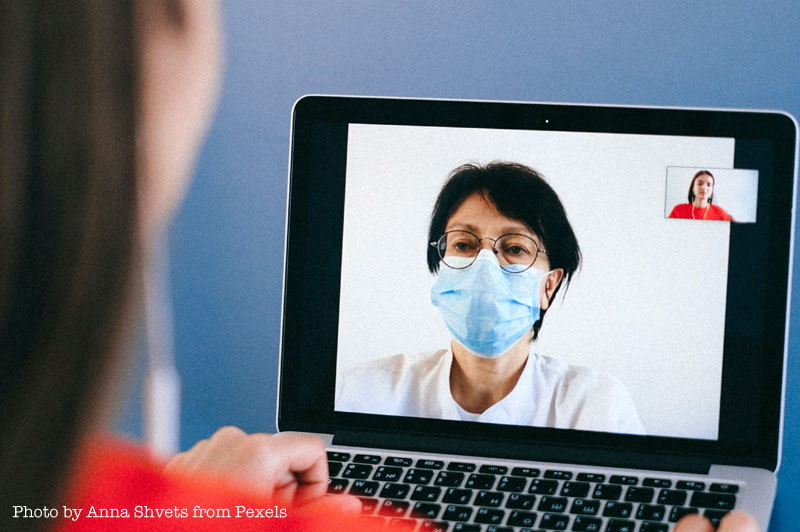
    “Once at a health center services as a telemedicine medication abortion site, a patient is connected by videoconference with a physician located in Cincinnati, or in East Columbus, or Bedford Heights,” the lawsuit states.

    The medicine is ingested “under observation by the physician,” and a health center staff member is present in person.

    According to Planned Parenthood, the telehealth option helps, as it does in other medical fields, with medical care that could be limited in certain communities.

    “Ohio is one of the most medically underserved states in the country, a problem particularly felt by Black communities, people of color, as well as the LGBTQ+ community in our state,” said Iris Harvey, president and CEO of Planned Parenthood of Greater Ohio, in a statement. “Telemedicine is key tool to address those disparities.”

    The suit, filed in Hamilton County Court of Common Pleas because of the Planned Parenthood Southwest Ohio Region listed as a party, claims the law “irrationally prohibits abortion providers from using telemedicine to provide medication abortion to Ohioans.”

    “SB 260 carries felony criminal penalties and draconian civil and professional sanctions for abortion providers who violate it,” the suit states.

    The suit was filed against the Ohio Department of Health, ODH director Stephanie McCloud, the State Medical Board of Ohio, along with prosecutors of Hamilton County, Franklin County and Cuyahoga County, all of which have Planned Parenthood clinic locations.

    The system of clinics is asking the court to prevent local prosecutors and state agencies from enforcing the law because it “blatantly violates the Ohio Constitution’s guarantees of substantive due process, equal protection and free choice in health care,” according to court documents.

    The suit even claims abortion access would be cut off completely in Butler, Mahoning and Richland counties, which would go against current Ohio law allowing abortions for pregnancies up to 22 weeks.

    The clinics also noted state officials’ praise of telemedicine in other types of medicine. The state has also passed legislation to lessen telemedicine regulations as they were attempting to ban the use of it in abortion services.

    Telemedicine has become a hot topic amid the pandemic, as use of the services for everything from primary care to dentistry increased during stay-at-home orders and precaution protocols.

    The lawsuit cited the federal Centers for Medicare and Medicaid Services, which called telemedicine “a cost-effective alternative” to traditional medical care.

  • Ohio Department of Health urges earlier vaccination as flu season approaches

    Ohio Department of Health urges earlier vaccination as flu season approaches

    With the approach of flu season, the Ohio Department of Health (ODH) is recommending all Ohioans 6 months and older get a flu shot as soon as possible. The Centers for Diseases Control and Prevention (CDC) is urging vaccination by the end of October.

    Flu activity traditionally begins to increase in October.

    Flu activity traditionally begins to increase in October and can last as late as May, with cases typically peaking between December and February. CDC recommends a yearly flu vaccine as the best protection against seasonal flu viruses. Flu vaccines have been updated this year to better match circulating flu viruses.

    Flu vaccines have been updated this year to better match circulating flu viruses.

    “Flu vaccination can help keep you from getting sick, missing work or school, and prevent flu-related hospitalization and death,” said Sietske de Fijter, State Epidemiologist and Chief, Bureau of Infectious Diseases. “Getting your flu shot helps protect all, including older adults, very young children, pregnant women, and people with certain long-term health conditions who are more vulnerable to serious flu complications.” Symptoms of influenza can include fever, cough, sore throat, body aches, headache, chills, and fatigue.

    “If you are sick with the flu, stay home from work or school to prevent spreading it to others,” said de Fijter.

    Although most people fully recover from the flu, some experience severe illness like pneumonia and respiratory failure, and the flu can sometimes be fatal. People who think that they may have the flu and are pregnant, have an underlying medical condition, or who are extremely ill should contact their healthcare provider immediately.

    Other effective ways to avoid getting or spreading it include: washing hands frequently or using alcohol-based hand sanitizer; covering coughs and sneezes with tissues or coughing or sneezing into elbows; avoiding touching eyes, nose and mouth; and staying home when sick and until fever-free for 24 hours without using fever-reducing medication.

    Flu vaccines are offered by many doctor’s offices, clinics, health departments, pharmacies and college health centers, as well as by many employers and some schools. While vaccination provides the greatest protection against the flu, other effective ways to avoid getting or spreading it include: washing hands frequently or using alcohol-based hand sanitizer; covering coughs and sneezes with tissues or coughing or sneezing into elbows; avoiding touching eyes, nose and mouth; and staying home when sick and until fever-free for 24 hours without using fever-reducing medication.

    CDC recommends that healthcare providers administer prescription antiviral medication as a second line of defense as soon as possible to patients with confirmed or suspected flu who are hospitalized, have severe illness, or may be at higher risk for flu complications.

    More information about influenza and flu activity in Ohio is available at www.flu.ohio.gov.


    New classes starting September 4th at Sangha Yoga in Historic Downtown

    Advertisement Sangha Yoga Studio in Loveland is offering 60 minute AM Yoga classes on Tuesday and Thursday mornings, beginning September 4th at 9:30 AM.


  • With the Arrival of Warm Weather in Ohio, Be Sure  to Prevent Tick, Mosquito Bites and the Diseases They Carry

    With the Arrival of Warm Weather in Ohio, Be Sure to Prevent Tick, Mosquito Bites and the Diseases They Carry

    Diseases spread by ticks and mosquitos include Lyme disease and West Nile virus

    As Ohioans spend more time outdoors with the arrival of warm weather, the Ohio Department of Health (ODH) is urging people to take precautions to prevent bites from ticks and mosquitos and the diseases they may carry.

    There were 270 Lyme disease cases and 34 Rocky Mountain spotted fever cases reported in Ohio last year.

    Most diseases in Ohio that are caused by the bite of infected ticks and mosquitos happen between spring and fall when they are most active during warmer months. The most common diseases caused by tick bites in Ohio include Lyme disease and Rocky Mountain spotted fever. There were 270 Lyme disease cases and 34 Rocky Mountain spotted fever cases reported in Ohio last year. The most common diseases caused by mosquito bites in Ohio include West Nile virus and La Crosse virus. There were 34 West Nile virus cases including five deaths, and 13 La Crosse virus cases reported in Ohio last year.

    “You can take some simple precautions at home and when traveling to prevent potentially serious diseases caused by the bite of infected ticks and mosquitos,” said ODH Medical Director Dr. Clint Koenig. He recommends that people who get sick after being bitten by a tick or mosquito contact their healthcare provider, particularly if they have symptoms like a fever, headache, nausea, vomiting, joint pain, muscle aches, fatigue or a rash.

    Here are some tips to avoid tick bites: 

    • Walk in the middle of trails. Avoid tall grass, brush and leaf litter.
    • Use EPA-registered repellents labelled for use against ticks on skin. Always follow the label instructions. EPA-registered repellents are safe and effective, even for pregnant and breastfeeding women. 
    • Treat clothing and gear such as pants, boots, socks and tents with a product containing permethrin, or buy permethrin-treated clothing and gear. Do not apply permethrin directly to skin.
    • Wear long pants, long sleeves and long socks. Tuck pant legs into socks.
    • Wear light colors to make it easier to see ticks.

    Check yourself, your children and pets thoroughly for ticks after spending time in areas that may contain ticks.  If you find a tick attached to the body, here are some tips for safely removing them:Tick removal diagram

    • Use fine-tipped tweezers to grasp the tick as close to the skin’s surface as possible.
    • Pull it away from your skin with steady, even pressure.
    • Do not twist or jerk the tick which can cause the mouth-parts to break off and remain in the skin.  If this happens, remove the mouth-parts with tweezers.  If you are unable to remove the mouth-parts easily with clean tweezers, leave it alone and let the skin heal.
    • Do not use petroleum jelly, a hot match, nail polish or any other “folk” remedies to remove a tick as these methods do not work.
    • Dispose of a live tick by putting it in alcohol, placing it in a sealed bag/container, wrapping it tightly in tape or flushing it down the toilet.  Never crush a tick with your fingers.
    • Wash your hands and the bite area with soap and water.

    Mosquitoes can live indoors and outdoors, and some types bite during the day while others bite at dusk and dawn. Here are some tips to avoid mosquito bites:

    • Use EPA-registered repellents according to label instructions.  
    • Wear long sleeves, long pants and long socks when outdoors.
    • Mosquitoes may bite through thin clothing, so spraying clothes with an EPA-registered repellent will give extra protection. 
    • Treat clothing and gear such as pants, boots, socks and tents with a product containing permethrin, or buy permethrin-treated clothing or gear. Do not apply permethrin directly to skin.
    • Mosquito-proof your home:
      • Install or repair screens on windows and doors to keep mosquitoes outside.
      • Help reduce the number of mosquitoes around your home by emptying standing water on a regular basis from flowerpots, gutters, buckets, pool covers, pet water dishes, discarded tires and birdbaths.

    Additional information and resources are available on the ODH website at “Ohio.gov/ticks” and “Ohio.gov/mosquitos.”


    StartTalking

    Did You Know: Children of parents who talk to their teens about drugs are up to 50% less likely to use. Start the conversation:StartTalking.Ohio.Gov