Tag: President Joe Biden

  • Biden signs law making Juneteenth a new federal holiday

    Biden signs law making Juneteenth a new federal holiday

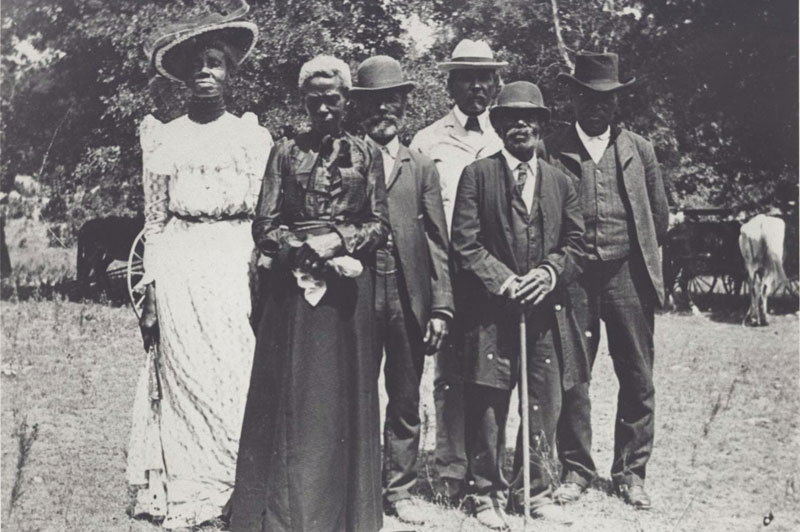
    Celebration of Emancipation Day (Juneteenth) in 1900, Texas

    (By Mrs. Charles Stephenson (Grace Murray) – The Portal to Texas History Austin History Center, Austin Public Library., Public Domain)

    By Jane Norman and Ohio Capital Journal

    Washington – President Joe Biden on Thursday signed into law legislation declaring a legal public holiday annually on June 19, the date of the end of slavery in the U.S. known as Juneteenth.

    “Throughout history, Juneteenth has been known by many names—Jubilee Day, Freedom Day, Liberation Day,” Vice President Kamala Harris said at the White House signing ceremony. “And today, a national holiday.”

    She noted that the White House was built by enslaved people, and the ceremony was taking place footsteps away from where President Abraham Lincoln signed the Emancipation Proclamation.

    “Today is a day of celebration. It is not only a day of pride. It’s also a day for us to reaffirm and rededicate ourselves to action,” Harris said.

    Formally called the “Juneteenth National Independence Day Act,” the bipartisan legislation sped through the U.S. Senate earlier this week without objection and passed the House on a 415-14 vote on Wednesday night. It means Juneteenth will be recognized as a federal holiday, like Memorial Day or July Fourth. Many states already designate it as a holiday as well.

    All 14 House votes in opposition were from Republicans and included Andy Biggs and Paul Gosar of Arizona; Andrew Clyde of Georgia; Scott DesJarlais of Tennessee; Matt Rosendale of Montana; and Tom Tiffany of Wisconsin. All of Ohio’s U.S. Congressional representatives voted in favor.

    The Office of Personnel Management said the holiday would be observed beginning this year, and so federal offices will be closed on Friday since June 19 falls on a Saturday.

    Also called Emancipation Day, the holiday commemorates the day in 1865 that Union soldiers arrived in Galveston, Texas, and ensured that enslaved people there would be freed. Lincoln had issued the Emancipation Proclamation in 1863, but the news took years to reach Texas and many other places.

    Rep. Sheila Jackson Lee, a Texas Democrat, pushed the legislation for years in the House and gained more than 170 cosponsors.

    “It has been a long journey,” she said on the House floor. “It has not been an easy journey. When we stand here today, we should be reminded of the fact that there were people who continued to experience the whips of a whip for two more years, even as Abraham Lincoln stood in the shining sun in the aftermath of Gettysburg to unite the Union and proclaim the slaves free in 1863.”

    A cosponsor, Rep. Kweisi Mfume, a Maryland Democrat, said that the recognition of Juneteenth “is a reminder that we must continue to move forward in honor and in recognition of ourselves, our families, our neighbors, and the nameless and faceless generations of African Americans that we will never know.”

    Some House Republicans raised questions about the holiday’s cost and the name of the bill.

    Republican Rep. James Comer of Kentucky said that while he would back the measure, the House panel that oversees federal holidays did not have a chance to review it and there was no Congressional Budget Office estimate of the cost.

    He said that a 2014 analysis by the Office of Management and Budget found it cost federal taxpayers $660 million in payroll and holiday premium costs when federal employees were given an extra holiday on the day after Christmas that year by executive order.

    Rep. Danny K. Davis, an Illinois Democrat, responded that “whatever the cost, it will not come close to the cost of slavery.”

    Other Republicans objected to using the term “Independence Day” in connection with Juneteenth, saying it would cause confusion with July Fourth. They suggested instead calling it Emancipation Day or Freedom Day.

    “We support the holiday. But why would the Democrats want to politicize this by co-opting the name of our sacred holiday of Independence Day?” said Rep. Clay Higgins of Louisiana.

    “Why would it not be named the Juneteenth National Emancipation Day? Why would we want to inject conflict about this? I don’t understand this body and the way it moves forward contrary to the best interests of the American people.”

    At the signing ceremony, Biden noted Juneteenth would be the first new national holiday since Martin Luther King Day was enacted nearly 40 years ago, and that signing the bill was “one of the greatest honors I’ve had as president.”

    Lawmakers gathered around Biden as he signed the bill included Democratic Sens. Raphael Warnock of Georgia and Tina Smith of Minnesota, and Rep. Joyce Beatty of Ohio, the chair of the Congressional Black Caucus.

    Also present was Opal Lee, a 94-year-old activist from Texas who has campaigned for the holiday’s recognition for years. Harris put her arm around Lee as Biden signed the bill.

    Biden pointed out that Thursday was the sixth anniversary of the slaying of nine parishioners at Mother Emanuel AME Church in Charleston, S.C., all African Americans, by a 21-year-old man who called himself a white supremacist.

    Biden said the anniversary is “a reminder that our work to root out hate never ends.”
  • U.S. gun violence an ‘international embarrassment,’ Biden says in rolling out executive action

    U.S. gun violence an ‘international embarrassment,’ Biden says in rolling out executive action

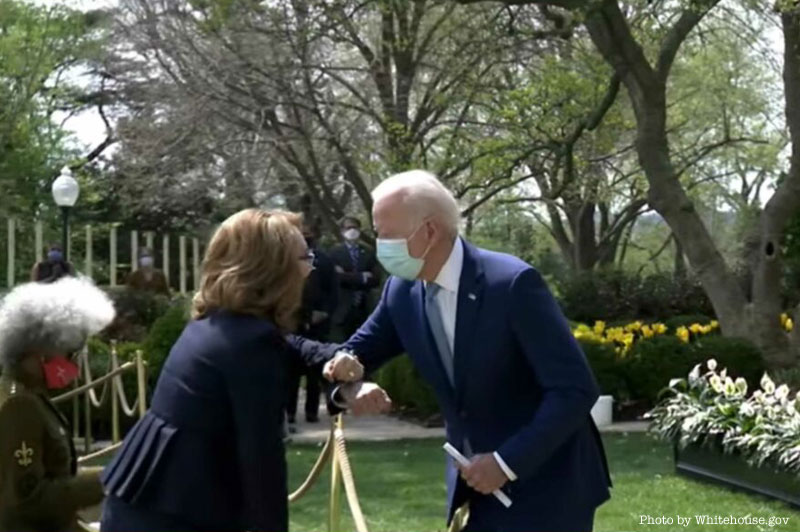
    President Joe Biden elbow bumping with Gabby Giffords.

    By Ariana Figueroa and Ohio Capital Journal

    Washington D.C. – President Joe Biden on Thursday reiterated his call on Congress to pass stalled gun legislation reform but also outlined executive action he’s taking on several gun control measures, following deadly mass shootings last month in Colorado and Georgia.

    “Gun violence in this country is an epidemic and it’s an international embarrassment,” Biden said in remarks in the Rose Garden outside the White House.

    In attendance were gun control advocates, lawmakers and relatives of victims of gun violence, including Fred Guttenberg, whose daughter was killed in the February 2018 mass shooting at Marjory Stoneman Douglas High School in Parkland, Fla.

    Biden said he had met many of the friends and family members in the audience and knows they have had to “bury a piece of their soul deep in the earth” due to gun violence.

    “Last night, as I was coming to the Oval Office, I got the word that, in South Carolina, a physician with his wife, two grandchildren, and a person working at his house was gunned down— all five,” Biden said. “So many of the people sitting here today know that well, unfortunately.  You know, they know what it’s like when the seconds change your life forever.”

    The Associated Press reported that the suspect in the South Carolina murders was a former NFL football player later found dead with a self-inflicted gunshot wound to the head.

    Biden urged the Senate to ban assault rifles, which are weapons typically used in mass shootings.

    The president also wants Congress to require background checks for guns bought at gun shows, close loopholes in gun laws and reauthorize the Violence Against Women Act—a law that protects people from domestic and sexual violence that passed the U.S. House in March. It lapsed in 2018.

    Movement on gun control legislation has been uphill in the Senate, even after mass shootings like those in Colorado, Georgia and Florida.

    But Senate Majority Leader Chuck Schumer, a New York Democrat, said in a statement that he plans to soon bring legislation to the Senate floor, along with quickly confirming the president’s nominee to lead the Bureau of Alcohol, Tobacco, Firearms and Explosives, Michigan native and gun violence prevention advocate David Chipman.

    “While the president’s executive actions are critical, they are not a substitute for meaningful legislation to address the gun violence epidemic,” Schumer said.

    More than 11,000 people this year have died due to gun violence, according to Gun Violence Archive, a nonpartisan group that documents gun deaths in the U.S.

    U.S. Attorney General Merrick Garland confirmed those numbers, adding that the Justice Department is already in the process of carrying out several executive orders directed by Biden. 

    The Justice Department, within 60 days, will publish model “red flag” legislation for states, which will allow law enforcement or family members to petition courts to temporarily remove any firearms from an individual who either poses a risk to themselves or others. Currently, 19 states and the District of Columbia have “red flag” laws.

    The department will also release a report on firearm trafficking. The last report was conducted in 2000.

    The Biden administration will also direct the DOJ to issue a proposed rule within 30 days that will stop the proliferation of “ghost guns,” which are homemade guns that lack a serial number, making them difficult for law enforcement to trace.

    And the administration said DOJ will issue a proposed rule that would “make clear when a device marketed as a stabilizing brace effectively turns a pistol into a short-barreled rifle subject to the requirements of the National Firearms Act,” an administration fact sheet said.

    Among the lawmakers in attendance at the Rose Garden was Rep. Lucy McBath, a Georgia Democrat who ran for Congress after her 17-year-old son, Jordan Davis, was killed in a Florida gas station.

    “This gun violence is unacceptable, it is unconscionable, and we must do better,” McBath said in a statement. “A majority of Americans support common-sense measures to help stop this violence, and today, I am truly proud to stand with the President as he fights for future generations, for survivors, and for mothers like me.”

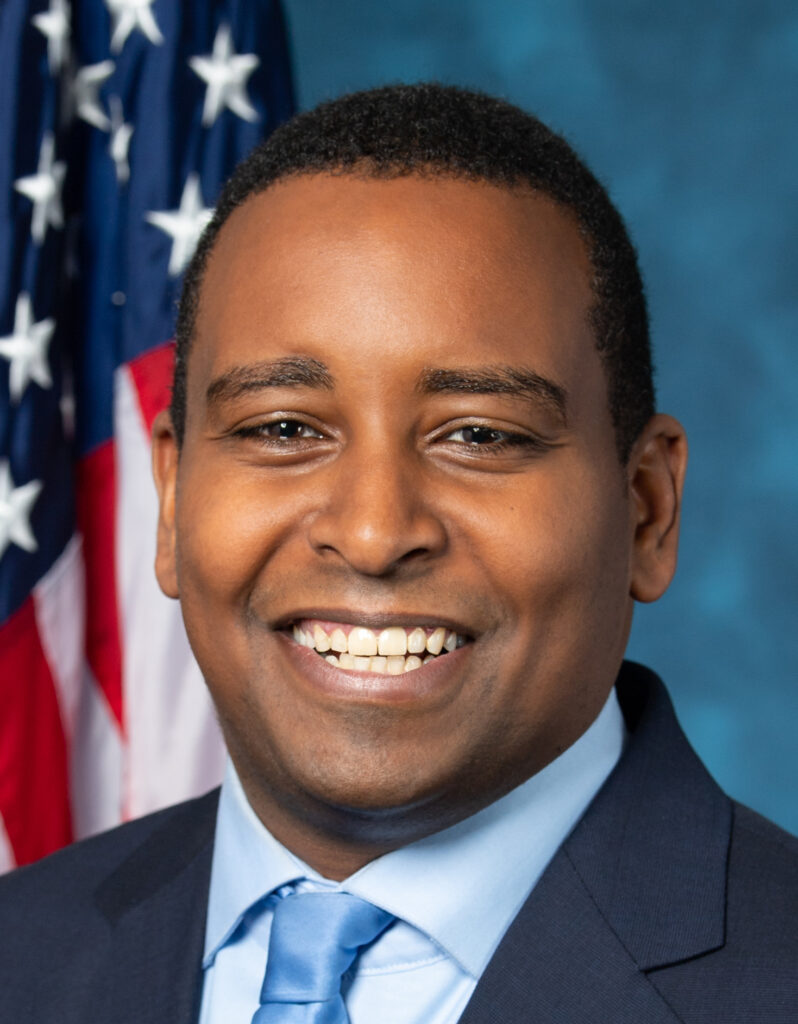
    Rep. Joe Neguse (D-Colo.), who represents the congressional district where at least 10 people were killed in March at a King Soopers supermarket in Boulder, was also expected to be in attendance. That mass shooting followed another earlier in March that left six Asian American women dead in Atlanta, as well as two other people.

    Rep. Joe Neguse (D-Colo.) photo wikimedia.org

    “Every day in this country, 316 people are shot.  Every single day.  A hundred and six of them die every day,” Biden said.  “Our flag was still flying at half-staff for the victims of the horrific murder of eight primarily Asian American people in Georgia when 10 more lives were taken in a mass murder in Colorado.

    “You probably didn’t hear it, but between those two incidents, less than one week apart, there were more than 850 additional shootings—850—that took the lives of more than 250 people, and left 500—500—injured.  This is an epidemic, for God’s sake.  And it has to stop.”

    Former Rep. Gabby Giffords (D-Ariz.), who in 2011 was shot in the head by a gunman while at a constituent event in Tucson and now leads a gun violence prevention advocacy group, was also present for Biden’s remarks. Six people died in that shooting, along with one member of her staff, Gabe Zimmerman.

    Biden acknowledged that it’s difficult to have a conversation around guns, but stressed that most of his executive orders and gun legislation reform could be bipartisan.

    “The idea that we have so many people dying every single day of gun violence is a blemish on our character as a nation,” Biden said.

    Sen. Pat Toomey, a Pennsylvania Republican, has teamed up with Sen. Joe Manchin, a conservative Democrat from West Virginia, to sponsor legislation on gun background checks. The senators have advocated for background checks on all commercial sales of guns, but have also pushed for exemptions for known buyers, such as family and friends.

    In a statement Toomey said he and his staff were  reviewing the executive orders from the Biden administration.

    “Lasting progress though is made through the legislative process,” he said. “If done in a manner that respects the rights of law-abiding citizens, I believe there is an opportunity to strengthen our background check system so that we are better able to keep guns away from those who have no legal right to them.”

    A Grinnell College national poll conducted in March found that 81 percent of Americans said the right to bear and keep arms is very or somewhat important to them personally. That included 99 percent of Donald Trump voters and 95 percent of Republicans, compared to 62 percent of Biden voters and 63 percent of Democrats, the results from the poll at the liberal arts college in Grinnell, Iowa, said.

  • Ohio on track to meet Biden push to make all adults eligible for COVID-19 vaccines by May 1

    Ohio on track to meet Biden push to make all adults eligible for COVID-19 vaccines by May 1

    By Laura Olson and Ohio Capital Journal

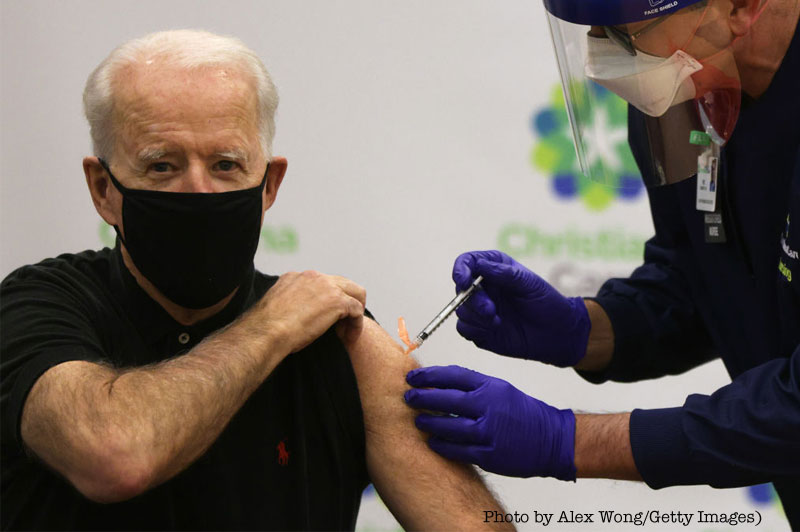
    President Joe Biden is directing states to make all adults eligible for the COVID-19 vaccine by May 1, and Ohio Gov. Mike DeWine said over the weekend the state is on track to do that or better.

    Biden’s COVID-19 advisers are projecting that enough Americans in priority groups will be able to access the vaccine by the end of April to allow for the lifting of restrictions on who can access the vaccine.

    Alaska on Tuesday became the first state to open eligibility to anyone age 16 or older.

    The announcement came Thursday on the one-year anniversary of the World Health Organization declaring the COVID-19 outbreak to be a pandemic.

    Earlier on Thursday, Biden signed into law a massive pandemic stimulus bill that includes $20 billion to boost vaccination efforts across the country.

    He also announced Wednesday that his administration secured another 100 million of the one-dose Johnson & Johnson vaccine, after helping to broker a deal in which Johnson & Johnson will team up with drugmaker Merck to produce doses faster.

    More than 81 million vaccines have been administered since Biden took office in January. But state officials seeking to get those shots into arms have been hamstrung by too few doses, antiquated technology for coordinating appointments, and the challenge of securing enough manpower and other resources to meet the demand for vaccinations.

    The administration has launched federally run vaccination sites across the country, and will more than double the number of federal mass vaccination centers. More than 4,000 active duty troops will deploy to support those vaccination efforts.

    The Biden administration also will expand who is qualified to administer shots, adding dentists, advanced and intermediate emergency medical technicians, midwives, optometrists, paramedics, physician assistants, podiatrists, respiratory therapists, and veterinarians.

    The Department of Health and Human Services will launch a new website for individuals to check if they are eligible to volunteer to administer shots.

    Biden also will seek to make it easier for Americans to find a vaccination appointment, announcing plans to launch a federal website by May 1 that will show nearby locations that have vaccines, as well as a 1-800 number for those who lack internet access.

    The administration also says it will deploy technology teams to states that need assistance in improving the websites they’re using to schedule vaccinations.