New report says debt-related suspensions affect poor and minorities
BY: MARTY SCHLADEN – Ohio Capital Journal
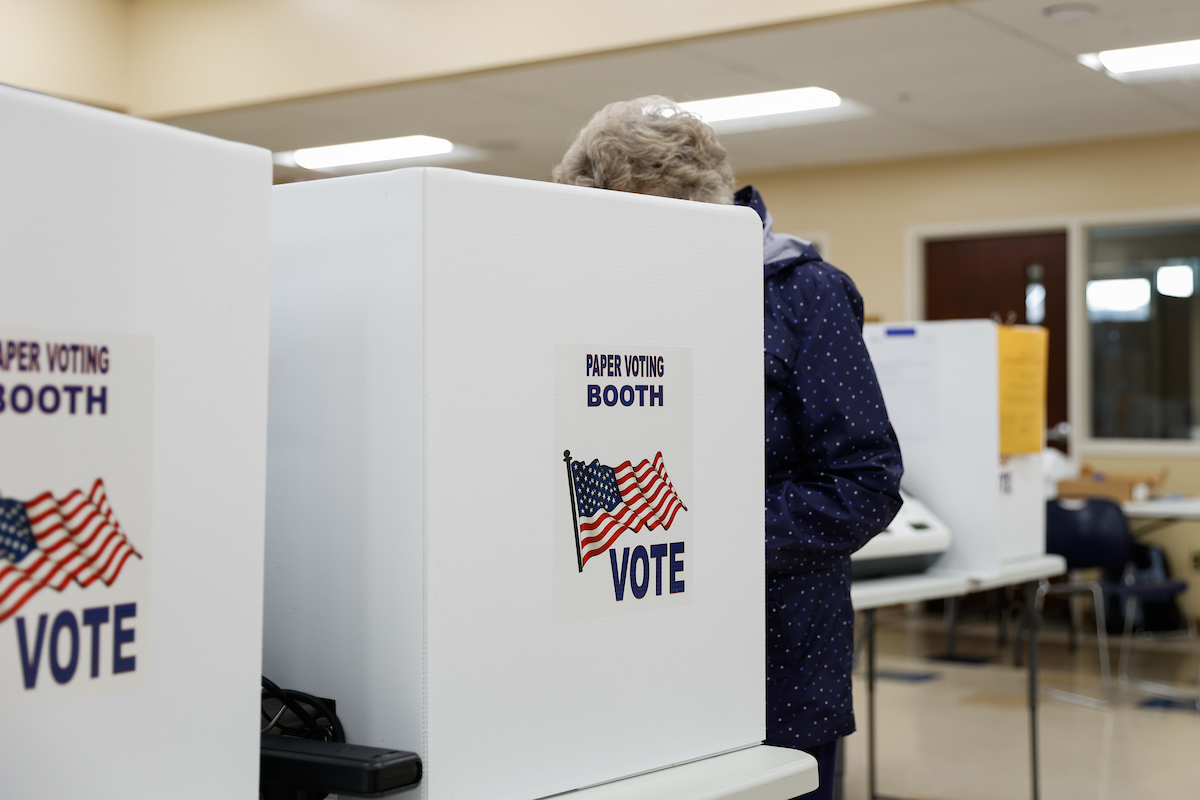
When Gov. Mike DeWine last week signed what’s been called the nation’s strictest voter ID law, it raised fears that it would disenfranchise large numbers of voters in poor communities where people are less likely to meet the new requirements.
Those fears seem to be supported by a September report that estimates 1 million Ohioans have suspended licenses because of debts from things such as a lack of insurance, unpaid fines, and court costs. That’s in a state with 8 million registered voters.
The analysis, by the Legal Aid Society of Cleveland, said the suspensions by far fall most heavily on impoverished urban communities of color. In other words, debt-related suspensions disproportionately affect some of the communities least likely to vote for the Republican officials who passed and signed the voter ID law.
DeWine and legislative sponsors sold the state’s controversial law by saying that it would boost public confidence in elections. That confidence, however, has likely been undermined by numerous lies by former President Donald Trump, and by dubious voting claims by Secretary of State Frank LaRose, Ohio Auditor Keith Faber, and others.
Meanwhile, LaRose found the rate of possible fraud in the 2020 Ohio General Election to be a vanishingly small 0.0005%.
“There is absolutely no evidence that we need a voter ID law to prevent voter fraud,” said Collin Marozzi, deputy policy director of the American Civil Liberties Union of Ohio, which opposes the law.
Even so, the voter ID law, House Bill 458, makes it considerably harder for many of the poorest to vote in Ohio. While voters previously could use documents such as bank statements and utility bills to establish their identity, they now must have a driver’s license, state ID, passport or military ID to cast a vote.
Perhaps tellingly, college and university IDs didn’t make the list of acceptable IDs approved by Ohio’s heavily gerrymandered Republican legislature. College students were credited with helping to deliver victories to Democrats in key races around the country in the November election.
Ohio’s voter ID law is already facing a legal challenge, which remains pending.
Afflicting the afflicted
While of questionable necessity, it’s unclear whether voter ID laws suppress turnout among the poor and communities of color as much as some advocates claim. MIT’s Election Data and Science Lab says research into the matter has produced mixed results, citing “deficiencies in data quality and sensitivity of results to choices made in statistical estimation.”
However, the analysis Legal Aid Society of Cleveland report shows that huge numbers of Ohioans have licenses that are suspended for debt-related reasons — and they face a steep climb in getting their licenses reinstated or to get a state-issued ID.
“We have many examples of clients who are trapped by debt-related suspensions,” said Anne Sweeney, one of the report’s authors.
The researchers issued open records requests to the Ohio Bureau of Motor Vehicles to gather data showing that for each year between 2016 and 2020, more than 1 million drivers had licenses suspended because of debts related to traffic fines and fees and unpaid child support. In addition, the average suspended driver has multiple suspensions, with 3 million suspensions a year in the state, the report said.
“Debt-related suspensions trap drivers with limited resources in a vicious cycle,” the report said. “Fines and fees related to seemingly minor traffic stops can easily spiral into thousands of dollars owed to the State. Drivers unable to pay these debts cannot get their licenses back, which for most Ohioans means they cannot drive to work to earn the money needed to pay down the debt, without risking even more driving restrictions, fines, fees, or even jail.”
Unsurprisingly, such suspensions are concentrated most heavily in impoverished urban communities of color.
For example, 53% of the residents in Cleveland’s 44104 zip code live below the federal poverty line, 98% are people of color, and there are 1,535 suspensions per 1,000 people old enough to drive (because a given person can have more than one suspension), the report said.
Voters in that zip code likely support Democrats far more than they do Republicans. While DeWine won the 2022 governor’s race by a whopping 25 percentage points statewide, he lost Cuyahoga County by 14 points.
The Legal Aid Society report was written before DeWine signed the voter ID bill and it focuses on the cycle of debt in which Ohio’s system places ever-greater burdens on people who can’t pay fees and fines related to their driver’s licenses and vehicle registrations.
“The way it steamrolls is hugely problematic,” Sweeney said as she described how unpaid debts often compound from the hundreds to the thousands of dollars and sometimes into criminal penalties.
And, she pointed out, most Ohioans with suspended licenses have to choose between quitting their jobs, finding a ride, or driving to them illegally and risking still more fines and fees. All of which can sap a person’s ability to pay the debts he or she already has.
“For someone who has no way to get to a job, you can’t make payments to get your license back so you can get to the job you do not have,” she said.
Overall, the analysis said Ohio’s system placed the biggest burden by far on the communities with the least ability to shoulder it. Zip codes with the highest rates of people of color experienced more than 100 times as many suspensions as the areas with the fewest people of color — 6.9 million versus fewer than 51,000, the report said.
It added, “Debt-related suspensions cost residents of Ohio’s highest poverty zip codes an average of $7.9 million each year. Debt-related suspensions cost residents of Ohio’s zip codes with the highest percentages of people of color an average of $12 million each year.”
In all, total outstanding debt across the state each year totals nearly $1 billion, the report said.
Asked about Ohio’s system that catches up so many Ohioans, DeWine Press Secretary Dan Tierney said, “The General Assembly could certainly debate whether to change the ability of courts to issue such sanctions, I am not aware of any movement to remove these penalties.”
Are existing reforms adequate?
Tierney was asked whether the governor was concerned that the Ohio system condemns the state’s poor and communities of color to a debt trap and now — with the voter ID law DeWine just signed — disenfranchisement. He responded by sending an article from The Columbus Dispatch about a state amnesty program that BMV officials say put 100,000 drivers back on the road — or roughly a tenth of the number of Ohioans the Legal Aid Society analysis says have suspended licenses in a given year.
In addition, the Legal Aid Society analysis points out, “Drivers are not eligible (for amnesty) until 18 months have passed since the end of their court-ordered suspension and must provide proof of insurance to utilize the program. The BMV automatically notifies eligible drivers of the reduction; drivers eligible for a complete amnesty waiver of reinstatement fees must complete an application and provide proof of qualifying benefits, such as Medicaid or (Supplemental Nutrition Assistance Program benefits.)”
Sweeney added that producing the documentation required by the amnesty program also is much harder for the poor.
“Access to documents and identification is a huge problem for our clients all the time,” she said. “The amount of time it takes to navigate the system when you have limited means is inordinately longer.”
Asked about the limited reach of the program, Tierney said one should “remember that these are court-imposed fees and punishments issued by courts. They amnesty program is intended to help those in specific situations and provide them an opportunity to comply with the court-ordered sanctions on terms that can pay-off the debt and eventually restore license privileges, ultimately bringing these citizens in compliance with the law.”
While some GOP officials have said the availability of a state ID card will enable Ohioans without valid driver’s license to vote, critics cite several obstacles. One is the just-cited difficulty in getting the needed documents. Another is the fact that one need get them from the BMV — an agency that people with outstanding fines and fees might be reluctant to deal with. And a third is that people struggling just to be able to drive legally might have more pressing things to do than get a state ID so they can vote.
Marozzi of the ACLU, said that it stands to reason that a disproportionate number of license suspensions are in urban communities of color.
“It happens most frequently in urban areas that are over-policed,” he said.
And while DeWine’s spokesman didn’t address whether the new law will take away voting rights from many Ohioans with suspended licenses, Marozzi said, “I think there’s a very good chance that a significant number of Ohioans are going to get disenfranchised because of this bill.”