Lawmakers ignored a variety more moderate restrictions proposed by secretary of state and law firm
BY: ZURIE POPE – Ohio Capital Journal
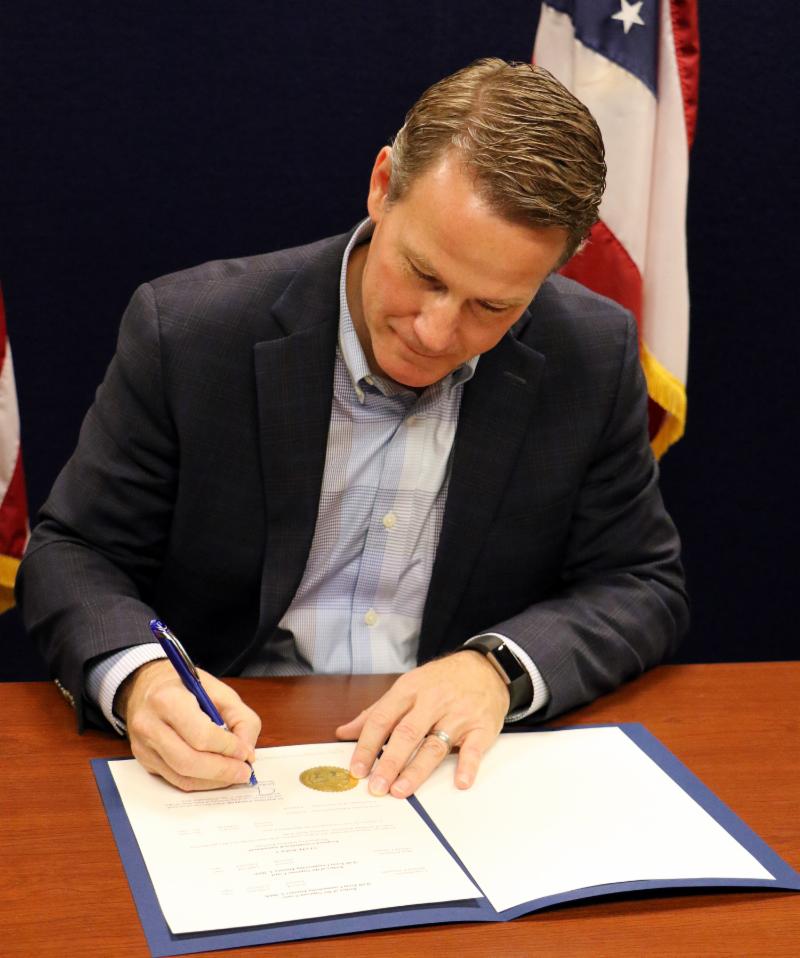
Ohio Gov. Mike DeWine signed House Bill 458 on Jan. 6, enacting what’s been called one of the most restrictive voter-ID laws in the country.
Public records obtained by the Ohio Capital Journal show how the law moved through the process, with lawmakers often ignoring moderation suggestions proposed by the Ohio Secretary of State’s Office and a law firm that lobbied on the law.
Taking elements from two election bills previously introduced in the Statehouse — House Bill 294, and Senate Bill 320 — House Bill 458 instituted sweeping changes to how elections are administered in Ohio.
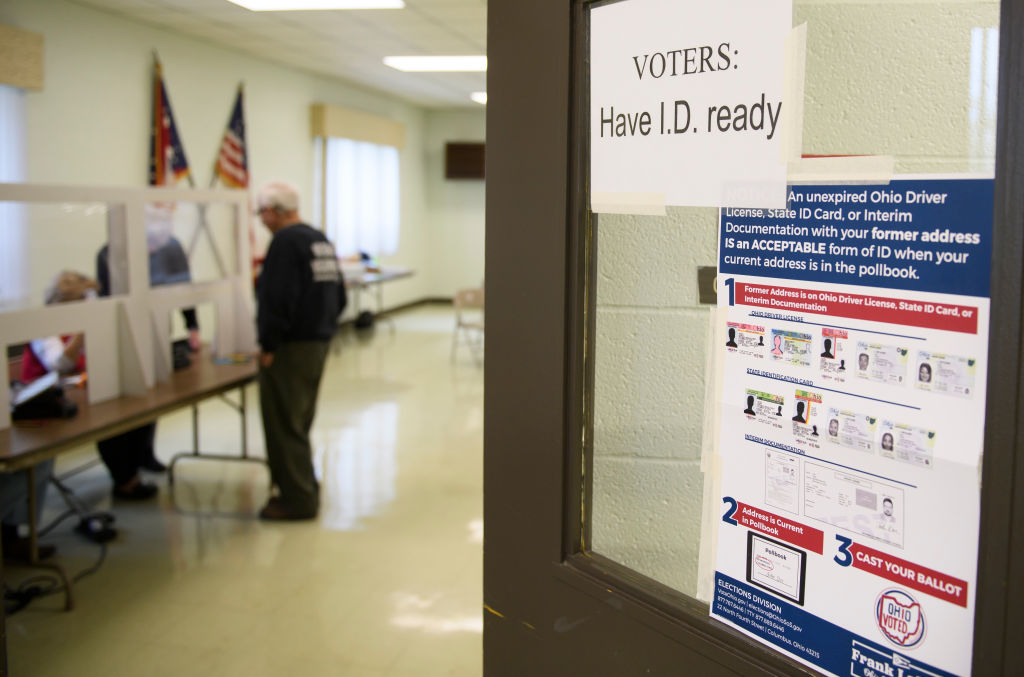
Alterations include mandating the use of photo IDs, passports, or driver’s licenses to vote, and limiting counties to one ballot drop box. The law also mandated citizenship status on IDs and excludes county-issued veterans’ identification and college IDs from the list one can use to vote.
Such restrictions received significant backlash, with Democratic law firm the Elias Law Group filing a lawsuit the day the law was passed.
Regardless, Ohio’s Republican leaders insist the new voting restrictions were necessary, despite no evidence of significant voter fraud, by impersonation or otherwise. Total possible voter fraud in the 2020 election was a microscopic 0.0005%.
Nevertheless, DeWine said the new restrictions were needed to combat concerns about voter fraud, which have been pushed politically by his own party without evidence.
“Election integrity is a significant concern to Americans on both sides of the aisle across the country,” DeWine claimed in a statement.
DeWine also touted what he sees as moderation of the law’s voting restrictions, congratulating the general assembly for “working with my Administration on changes to House Bill 458 to ensure that more restrictive proposals were not included in the final bill.”
Ohio Secretary of State Frank LaRose’s Press Secretary Rob Nichols similarly touted the DeWine administration’s involvement in the process.
“While no legislation is ever perfect, the House and Senate leaders listened to many of our concerns and made some improvements to the bill,” Nichols wrote in an email responding to OCJ when asked the extent of SOS’s work on election reform. “Overall, the legislature approved some much-needed reforms that will benefit both voters and elections officials, while continuing to make Ohio one of the most honest and accessible voting states in the nation.”
But documents obtained by the Ohio Capital Journal through a public records request reveal a complex web of bureaucrats, lawmakers, lobbyists, and outside powerbrokers, united in their efforts to pass the new voting restrictions, including the Ohio Secretary of State’s Office.
Records show that the Secretary of State’s Office supported most of the House GOP’s voting restrictions, haggling out various details. In some cases where the office pushed for more moderation, their recommendations were not followed by lawmakers.
Regardless, LaRose has been publicly supportive of the law as passed.
Ohio Secretary of State input

On Dec. 9, 2022, Frank LaRose’s Chief of Staff Jason Mauk submitted a memo to Senate GOP legal Counsel Frank Strigari, outlining the secretary’s issues with HB 458.
Since Dewine signed the law, military families have voiced opposition to it, saying the mail-in ballot rules curtail the ability of service members to vote.
Mauk appears to have foreseen the blowback that the law’s rigid deadline for mail-in ballots would cause, especially among the armed services, and warned against it.
“We have concerns with restricting the return of such ballots by election day,” Mauk wrote. “This provision has the potential to disenfranchise voters, particularly those living and serving overseas.”
Mauk asked the Senate to “allow for ballots to be returned by the postal service for at least five days after election day.”
Eventually, lawmakers settled on a four-day cutoff.
Asked if his colleagues in the secretary’s office were concerned that the four day cutoff — below the deadline recommended by Mauk — might endanger voters, press secretary Rob Nichols indicated it could have been worse.
“They wanted zero,” Nichols said. “We said that might disenfranchise voters, asked for at least a five day return deadline, and they cut it down to four.”
Asked again if the four-day cutoff would harm voters, Nichols replied, “We enforce the laws; we don’t make them.”
Asked for comment, Ohio House Republican Majority Leader Bill Seitz responded in an email, “I do not think there will be any impact on service members being disenfranchised by our new law.”
In communications, Mauk from the Secretary of State’s Office also argued counties should be allowed to have multiple ballot drop boxes on site, writing they “respectfully ask the Senate to allow up to three drop boxes on board office property.”
He also fought against immediate disclosure of drop box surveillance.
“This office has serious concerns about the burden placed on the county boards of elections in requiring immediate disclosure of drop-box video surveillance records,” Mauk wrote. “The immediacy of this requirement is problematic.”
Nevertheless, the provision remained in the final bill and drop boxes were limited to one.
Likewise, Mauk recommended creating a “secure, electronic method of verifying voter registration data,” using information from the Bureau of Motor Vehicles.
One of the benefits from this system, Mauk claimed, is that it could deter non-citizens from voting.
“It also helps to ensure non-citizens are not able to submit a voter registration accidentally, or intentionally,” he wrote.
The final bill mandates all driver licenses and state IDs held by a non-citizen “include a notation designating that the licensee or cardholder is a noncitizen,” which civil rights advocates believe may endanger immigrants.
Byers Minton & Associates
Another aspect of the election law process made clear by the records is the involvement of the Columbus law firm Byers, Minton & Associates.
Byers Minton is one of Ohio’s largest lobbying firms, with clientele ranging from Apple to the Cleveland Browns, and the Girl Scouts. Byers Minton’s public position on election reform is rarely mentioned on its website, social media, or other communications.
The firm’s weekly update on events at the Statehouse failed to mention HB 458, instead prioritizing DeWine signing a spending bill. The election bills are referenced once, at the bottom of a list including everything passed by the Statehouse during its lame duck session.
But behind the scenes, records show an apparently close relationship between Byers Minton’s lawyers and the lawmakers producing the election legislation.
Founder Bill Byers was involved at the earliest stages of the eventual law’s development. Records show Byers helped arrange favorable testimony, though some of his suggestions for election law changes, such as automated voter registration, were not followed by lawmakers.

For the original bill, House Bill 294, Byers helped arrange witness testimony from former Kentucky Secretary of State Trey Grayson to speak on its behalf.
“Please find a witness slip and proponent testimony for Trey Grayson on HB294,” Byers wrote in an email June 9, 2021, to one of Seitz’s policy advisers. “Please let me know if there’s anything else you need.”
One month earlier, Byers was included in an email from Seitz’s legislative aide going over the bill analysis for 294. “Let us know if you have any questions/comments,” the aide wrote.
Byers would also be included in a thread on the final draft of HB 294 from Oct. 5 of last year, featuring multiple revisions.
Asked about this, another legislative aide for Seitz said Byers’ actions were within the purview of Byers Minton’s regular duties.
“Bill Byers lobbied on behalf of the Secure Elections Project,” wrote the legislative aide in a response email to OCJ. “Byers simply offered valuable input on the bill on behalf of his client.”
Byer’s interest in election law would later extend to SB 320, the other predecessor bill to the one that was eventually passed, which was introduced by Republican state Sen. Teresa Gavarone.
On Oct. 13, 2022, Byers sent an email to a Gavarone staffer as a “follow up to our discussion.”
In it, Byers argues for the cost-saving potential of automated voter registration and verification, and the wastefulness of provisional ballots.
“Processing provisional ballots imposes significant costs on county election officials,” Byers said.
Byers also portrayed decreasing the amount of provisional ballots as a financial windfall.
“Reducing the number of provisional ballots cast in the 2016 and 2018 election cycles, would have resulted in an additional $830,721 in savings to county BOEs,” Byes said.
According to the Massachusetts Institute of Technology’s Election Lab, 1.7 million provisional ballots were counted in 2016 nationally, and accounted for 1.2% of all votes in the 2018 midterm election.
“Thank you!,” the aid replied to Byers.
Six days later, the aide emailed Byers once more, saying Gavarone “would like to meet with you to get more Info,” and requested “Frank(LaRose)’s attendance during that meeting with us.”
Asked to discuss the details of these meetings, no one from Gavarone’s offices responded.
As for Byers Minton, asked for comment, Andrew Minton replied, “My firm does not give comment to the press on any issue or for any reason.”
Cincinnati NAACP President Joe Mallory submitted testimony against House Bill 294, writing it “creates unnecessary boundaries to the vote.”
Speaking about the election reform bills as a whole, Mallory was livid when asked for comment.
“These anti voter policy changes are not about improving the election process, it’s about erecting barriers and decreasing access,” Mallory said. “What we have is a super majority rushing anti voter bills through a lame duck session. They are perpetuating a fraud on Ohio voters and the democratic process, with the false narrative of Election security and modernization. It is disingenuous.”