Tag: Public libraries

  • House budget document will hurt Ohioans

    House budget document will hurt Ohioans

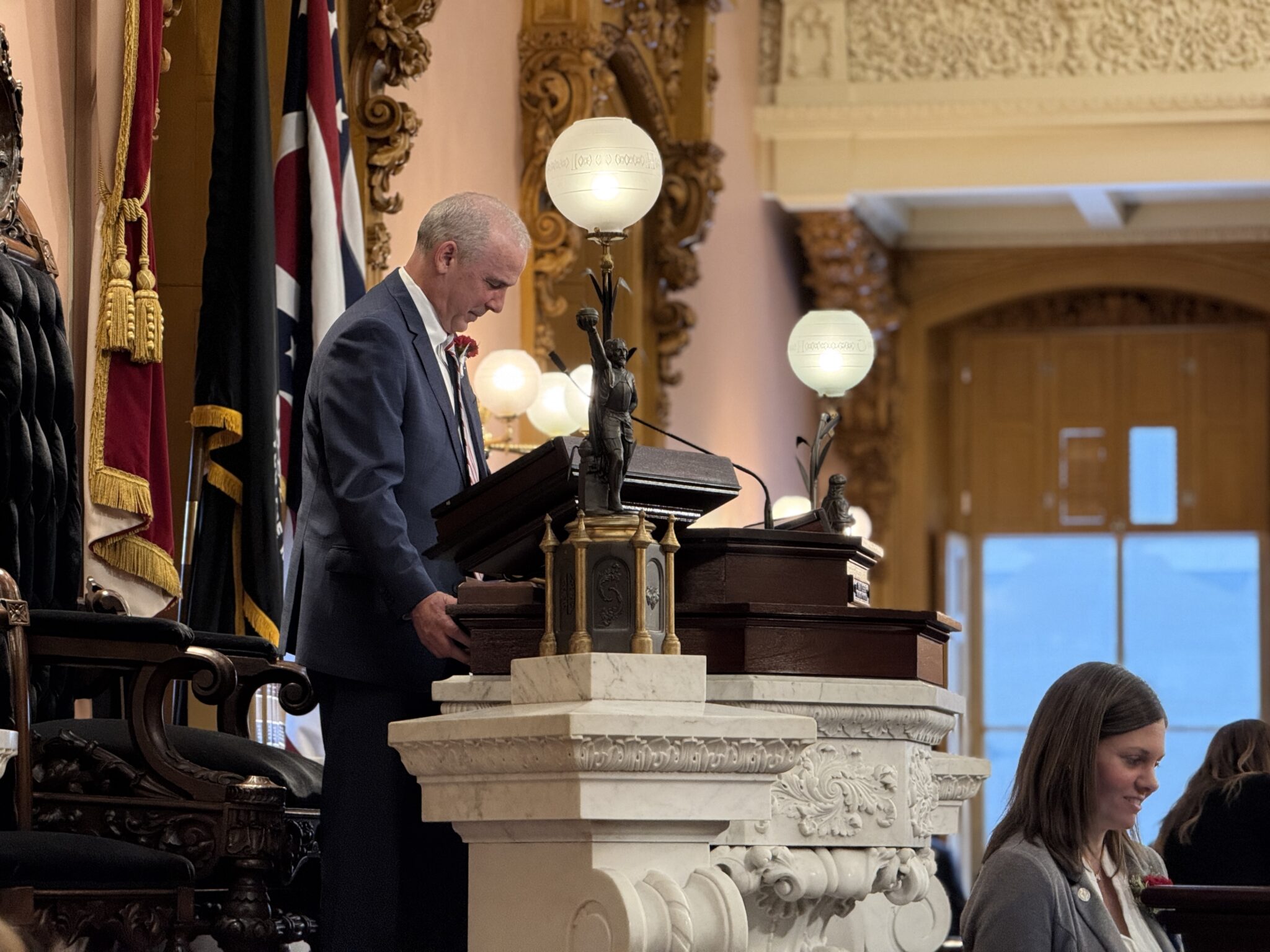
    Ohio House Speaker Matt Huffman. (Photo by Morgan Trau, WEWS.)

    by Marilou Johanek – Ohio Capital Journal

    Just as Elon Musk’s so-called Department of Government Efficiency (DOGE) was never really about improving government efficiency – quite the opposite, in fact – the 5,000-plus page biennial budget rewrite the Ohio House slapped together and sent to the Ohio Senate was never really about improving the common good of everyday Ohioans.

    It was about advancing the hard-right priorities of powerful politicians who answer to big money – not constituents in gerrymandered voting districts.   

    Yet even for the supremely arrogant kingpin of state government, Ohio House Speaker Matt Huffman, the budget bill passed out of the General Assembly’s lower chamber on April 9 was beyond the pale in cruelty and cunning.

    It is the Ohio version of Project 2025 with all the unsparing, exacting hallmarks of the Trumpian blueprint, recklessly destroying federal institutions and agencies that, however imperfectly, protect, serve and promote the welfare of we, the people.

    But that’s the MAGA nihilistic way and Ohio Republicans are doing their part in tearing down what made Ohio great. Huffman, the Lima Republican who runs the state under the one party rule he rigged with unconstitutional redistricting, is in the catbird seat calling the shots. The speaker (and former Ohio Senate president) lords over the GOP supermajority in the Ohio House while his political protégé, Ohio Senate President Rob McColley, accommodates the boss.

    Huffman, who once said the quiet part out loud about GOP gerrymandering (“We can kind of do what we want”), now has a straight runway to enact his blueprint on Ohioans whether they like it or not. I suspect his budget proposal will survive, largely intact, with the House caucus he controls and the one he led with an iron fist for four years in the Senate.

    Local public schools, public libraries, clean drinking initiatives, lead poisoning prevention, pediatric cancer funding, home visits for new mothers, food assistance programs and health care coverage for the poor are all on the chopping block in Huffman’s House Bill 96.

    What wasn’t on his slash-and-burn budget list were government handouts (taxpayer-funded vouchers) to upper-income private school families. But doling out unlimited government subsidies to the affluent, whose darlings are already attending and affording elite high schools and religious institutions, is Huffman’s thing.

    He is on a crusade to shower hundreds of millions of public education dollars on unaccountable private and predominantly religious schools – despite clear prohibitions against such a diversion of public money in the Ohio Constitution.

    “No religious or other sect, or sects, shall ever have any exclusive right to, or control of, any part of the school funds of this state,” the state constitution reads.

    But Huffman has defied the state constitution before with impunity (on gerrymandering) and did so again by ramrodding his universal voucher bonanza through the legislature for everyone, regardless of income. Never mind that the giant state giveaway – to offset private school costs for the well-off – blew a $1 billion dollar hole in the general revenue budget its first year.

    Never mind that public schools in the state, forever cash-strapped and dependent on tapped out property owners, labored under an unequal, inadequate school funding formula (ruled unconstitutional by the Ohio Supreme Court) for 26 years before a bipartisan coalition agreed to a phased-in funding solution over six years. The final two-year phase was expected to be fully funded in the current biennial budget negotiations.

    Not under Huffman. Not in a state where the Republican lock on power is absolute and the Statehouse heavyweight has free, unchecked rein to flout the law and grossly defund the public schools that educate the vast majority of Ohio students (approximately 1.6 million) while greatly expanding appropriations for private school tuitions, homeschooling expenses and even unchartered, nonpublic schools with deeply held religious beliefs that are virtually unregulated by the state!

    Funding for the “thorough and efficient system of common schools” state government is constitutionally obligated to secure – and that would have been secured under the Fair School Funding Plan from 2021 – shrank by over $400 million. House Republicans added insult to injury by robbing fiscally prudent school districts of surplus revenue for future planning to give uneven, one-time property tax relief in some districts and not others. They also ensured that property tax owners will face more school levies from local districts forced to deplete that surplus operating revenue. Sound policymaking (or genuine property tax relief) this is not.

    But it is a gut punch to public schools, just as a $100 million reduction in funding to Ohio’s public libraries is, or cutting over $22 million from the Help Me Grow program is for in-home visits to newborn babies to mitigate the state’s infant mortality problem. But Matt Huffman’s Ohio-centric Project 2025 is also a kick in the teeth to democratic self-governance.

    Last budget go-around Republican lawmakers stripped the Ohio Board of Education of most of its power and gave it to the governor. This two-year budget proposes cutting all 11 elected members of the board and shrinking the gubernatorial appointments from nine to five. This is Matt Huffman removing voters entirely from state education policy as he engineers total opaque privatization of Ohio schools.

    How is silencing the electorate improving the common good?


    Marilou Johanek

    Marilou Johanek is a veteran Ohio print and broadcast journalist who has covered state and national politics as a longtime newspaper editorial writer and columnist.

    MORE FROM AUTHOR

  • Ohio public libraries, State Library of Ohio, brace for funding uncertainty, hope for budget relief

    Ohio public libraries, State Library of Ohio, brace for funding uncertainty, hope for budget relief

    President Donald Trump signed an executive order March 14, 2025, imposing dramatic cuts on seven federal agencies, including the Institute of Museum and Library Services. (Catherine McQueen/Getty Images)

    By:  Ohio Capital Journal

    Public libraries in Ohio have taken on many identities over the last 25 years, from literature distributors and internet hubs, to social services researchers and providers of basic needs like free food. But funding has stagnated, failing to match growing demands.

    The Toledo Lucas County Public Library works to cultivate reading skills and technology access. But along with those services, the system works with partners to distribute meals to children in the community. It also hosts a small business and non-profit team, a program that has provided training, education, research services, technology and physical space, equating to more than $3.1 million in value to entrepreneurs and businesses, according to Jason Kucsma, executive director and fiscal officer for the library system.

    “Folks tend to think of their libraries as where they grew up and had their story times,” Kucsma told the Capital Journal. “But we’re part of the public infrastructure.”

    Libraries are also jumping in as potential funding cuts and actual job cuts to agencies like the IRS and the Social Security Administration leave Ohioans with questions and a lack of answers.

    “When it comes to federal agencies, that’s probably something we’re going to see more of,” said Michelle Francis, executive director of the Ohio Library Council.

    Ohio libraries are in the thick of it with tax season going strong, as they partner with organizations like the AARP to help people finish their filings.

    “We can’t keep up with the demand for tax services,” Kucsma said. “Once we open that up, those slots fill up pretty quickly.”

    In one year, Ohio public libraries saw visits from enough people to fill Ohio Stadium 434 times, according to council data.

    However, over the last 25 years, the funding from the state hasn’t always matched the influx of roles libraries have included in their portfolio.

    State funding

    The Public Library Fund, which is the state’s funding source for all public libraries dropped by $27 million last year, putting the funding at the same level it was 25 years ago.

    “When you’re funding libraries at the same level you were 25 years ago, but yet the demand, the expectation is growing, something’s gotta give,” Francis said.

    The local libraries have significant support from their communities in the form of property tax levies, but there are still 48 library systems of the 251 in the state that rely solely on state funding for their main revenue, according to Francis.

    “We see our relationship with the state as one where when we receive funding from the Public Library Fund, it goes straight to those services on the local level,” she said.

    GET THE MORNING HEADLINES.

    The state also provided $4.5 million to the State Library of Ohio in the last budget, money which supports the research areas of the library, including conservation of things like the official photograph of the Ohio House from 1890, documents about the state dating back to 1876 and even a celebration of the 35th birthday of the United States


    The SLO gets some funding from libraries with which the it collaborates, but the biggest chunk, $5.4 million, comes from the federal Institute for Museum and Library Services.

    “We’ve been here for 200 years, we have to plan like we’re going to be here for 200 more years,” Knapp said.

    Without help from both the federal and state sides, the library is going to have trouble, particularly with its current facility.

    In asking for a one-time increase in the 2026 operating budget of $525,000, Mandy Knapp, who heads the state library, told the Ohio House Workforce and Higher Education Committee their current facility is “no longer suitable” with the work needed to remediate HVAC issues threatening the preservation of “one-of-a-kind and rare materials” that include medieval manuscripts and writings from state political leaders.

    “Due to the condition of our facility, we are unable to correctly preserve and care for these materials,” Knapp told the committee in February.

    Federal funding

    Along with the battle for state funding, the state library is facing potential cuts on a federal level after an executive order from President Donald Trump listed the Institute of Museum and Library Services as part of a group of governmental entities to be “eliminated to the maximum extent consistent with applicable law,” and ordered to “reduce the performance of their statutory functions and associated personnel to the minimum presence and function required by law,” according to the executive order, which was released March 14.

    Among the other entities listed for elimination with the library-services agency were the United States Interagency Council on Homelessness, the Minority Business Development Agency, the Community Development Financial Institutions Fund, the Woodrow Wilson International Center for Scholars in the Smithsonian Institution, and the United States Agency for Global Media and the Federal Mediation and Conciliation Service.

    The museum and library services institute provides funding to libraries and museums nationwide, including the State Library of Ohio. The library was praised by Francis and Kucsma as an entity that provides statewide benefits from those federal funds, including resource-sharing, summer learning programs, reading programs for the blind and deaf, and the Ohio Digital Library, which helps local libraries big and small provide audiobooks and e-books.

    “These resources are not large amounts of money, but they go to help support projects and programs that the people of Ohio benefit from every day,” Francis said.

    As of Friday afternoon, the State Library of Ohio hadn’t heard whether or not its funding would be cut, specifically the Grants to States Program, which is where the state library receives most of its funding.

     Source: State Library of Ohio 

    The $5.4 million from the federal Institute of Museum and Library Services is a drop in the bucket among the trillions of dollars the U.S. Congress handles, as Knapp looks at it.

    “It’s like finding $20 in your wallet that you didn’t know was there, that’s what it is to Congress,” she said.

    But for the State Library and the local libraries who work with it, that money is the difference between needed partnerships – digital services, consortiums for smaller libraries, the conservation of historic materials including parts of the state’s founding history – and being reduced to one singular role as a research library without the ability to help fellow libraries.

    “It would totally and utterly devastate the State Library of Ohio,” Knapp said.

    As it happens, the Toledo Lucas County Public Library was one of the recipients of the National Medal for Museum and Library Services, given out by the Institute of Museum and Library Services to “institutions that make significant and exceptional contributions to their communities.”

    Part of that contribution includes opening its meeting rooms to local governments and elected officials. At Toledo’s libraries, 27% of their meeting space usage in the last year was government-related, according to Kucsma, something the library encourages as a way to “meaningfully engage with people.”

    “As we see people’s trust in general institutions erode, especially in the last 10 years, that hasn’t happened with people’s trust in libraries,” Kucsma said. “I think it’s only grown.”

    Gov. Mike DeWine’s executive budget proposal had an increase to the Public Library Fund from 1.7% to 1.75%. But Francis said “we still have a long way to go with the budget,” and they plan to push even harder to show the importance of public libraries.

    “I’m optimistic that (legislators) see the value,” Francis said.

    YOU MAKE OUR WORK POSSIBLE.

    ____________
    Susan Tebben
    Susan Tebben

    Susan Tebben is an award-winning journalist with a decade of experience covering Ohio news, including courts and crime, Appalachian social issues, government, education, diversity and culture. She has worked for The Newark Advocate, The Glasgow (KY) Daily Times, The Athens Messenger, and WOUB Public Media. She has also had work featured on National Public Radio.

    Ohio Capital Journal is part of States Newsroom, the nation’s largest state-focused nonprofit news organization.

    MORE FROM AUTHOR

  • COVID deniers take vandalism case to Ohio Supreme Court

    COVID deniers take vandalism case to Ohio Supreme Court

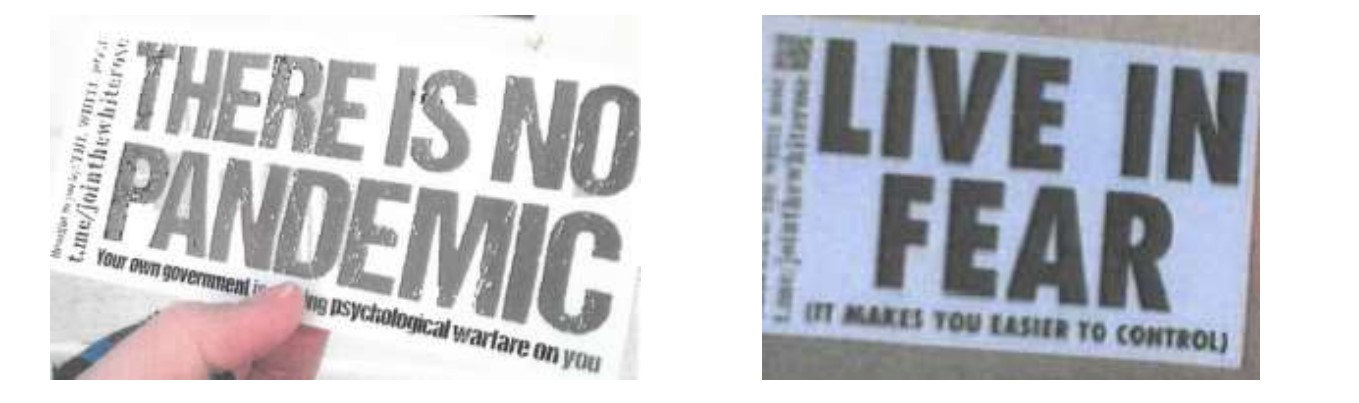
     Photos from court documents of stickers placed on the Plain City Public Library.

    BY: JAKE ZUCKERMAN – Ohio Capital Journal

    The Plain City Public Library asked her to leave in January 2021 for repeatedly refusing to wear her mask, as was state policy at the time.

    Court records indicate Julie Dean’s “unruly behavior had been a continual issue for the library.” Two months later she came back with her husband and some hard-to-remove stickers.

    “THERE IS NO PANDEMIC,” reads the first one. “Your own government is waging psychological warfare on you.”

    “LIVE IN FEAR,” reads the other. “(It makes you easier to control.)”

    Julie and Samuel Dean were subsequently accused and convicted of misdemeanor criminal charges of trespassing and criminal mischief. Their case set off a bizarre bout of trials and appeals that distill some of the anger and paranoia that continues to dog the coronavirus pandemic.

    Their case, which led to a $250 fine and two-day prison sentence, is now pending with the Ohio Supreme Court. The stickers, placed on a library drop box installed during the pandemic, have since only been partially removed.

    After the court appointed the Deans an attorney, the couple fired him and chose to represent themselves. They soon filed near-identical motions a judge found nearly impossible to decipher but mentioned an objection to “undertake a medical intervention without any informed consent and without any medical necessity.”

    In a pre-trial hearing, Samuel Dean asked that the court dismiss the charges against him, claiming in prepared remarks that his rights under the Americans With Disabilities Act were violated. However, court records state he repeatedly “refused” to say what kind of accommodations he sought. When a judge said he can’t help if he doesn’t know how, Samuel Dean read the same prepared statement again.

    “That does nothing for me,” the judge said.

    He later found Samuel Dean in contempt for talking over him and fined him $250. The judge then called Julie Dean’s case. She then read the same prepared remarks as her husband before telling the judge that he had “been served.”

    “Well, I haven’t,” the judge responded before setting the matter for trial.

    The deans then both filed affidavits with the Ohio Supreme Court seeking to disqualify the judge from their case. Those were denied.

    The case then went to trial. The Deans acted as their own attorneys. After 20 minutes of deliberation, a jury found each of them guilty on two counts. They each received a $250 fine and 90 days in jail, but they only needed to serve two. They haven’t yet served those sentences.

    The trespassing charge against Samuel Dean was dismissed on appeal earlier this month. Judge Stephen Powell of the Twelfth Appellate District found that because he hadn’t been previously banned from the library, he wasn’t trespassing. (A dissenting judge argued his criminal intent to deface the library should have waived his privilege to be on its property.)

    On Monday, the Deans appealed their case to the Ohio Supreme Court. L. Bradfield Hughes, an attorney with Porter, Wright, Morris and Arthur, said in court filings that the case raised “questions of public and great general interest.”

    They argued they have been improperly denied the use of an ADA coordinator at lower court proceedings. An attorney with the Madison County Prosecuting Attorneys office denied this, noting that both state and federal courts who reviewed the matter ruled there has been no such violation. In the related federal lawsuit, Julie Dean claimed she suffers from hearing and memory loss. Samuel Dean said he suffers PTSD. These disabilities, they said, “substantially limit their life activities” and were ignored by the court. The claims were dismissed.

    Attorneys for both sides didn’t respond to phone calls.

    Chris Long, director of the library, said in an interview that it’s easy to focus on the loudest blips on the radar. But far more prevalent are ordinary bookworms staying positive in a difficult era.

    “Public libraries, we see a lot everyday, pandemic and no,” she said. “For every difficult situation, we encounter dozens more of people wanting to help.”