Tag: Public News Service

  • Ohio’s Minimum-Wage Increase Largest in 15 Years

    Ohio’s Minimum-Wage Increase Largest in 15 Years

    The federal minimum wage has been $7.25 since 2009. (Artur/Adobe Stock)

    by Mary Schuermann KuhlmanPublic News Service

    Monday, January 3, 2022

    LISTEN

    An annual pay raise has kicked-in for Ohio’s minimum-wage workers, who will now earn $9.30 per hour, about $2 more than the federal minimum wage.

    The $0.50 hourly increase is the largest since 2006, when a ballot initiative indexed the minimum wage to inflation.

    Hannah Halbert, executive director of Policy Matters Ohio, noted had Congress done the same when it set the federal minimum wage in 1968, it would now be worth about $13 an hour, and she pointed out $9.30 amounts to just over $19,000 annually for a full-time worker.

    “That’s still more than $2,000 under the poverty guidelines for a family of three,” Halbert explained. “Even if they’re working full time, playing by the rules, doing what they can, they’re still not going to be able to break that poverty threshold.”

    Ohio is among nine states where a 2022 minimum-wage increase is tied to the cost of living. California’s hit $15 Jan. 1, as part of an incremental increase. Eight other states are also in the process of incrementally raising their minimum-wage amounts to $15 an hour.

    According to Policy Matters Ohio, raising Ohio’s minimum hourly wage to $15 by 2026 would benefit 1.6 million workers. Halbert is convinced it would help the overall economy and reduce income inequality.

    “Thirty-six percent of working women in Ohio would see a pay increase, and 44% of Black working Ohioans would also see an increase,” Halbert outlined. “Raising the wage really does help clear up some of these drivers of inequality in the low-wage system.”

    Halbert emphasized the impact of the pandemic on job market data makes it difficult to determine just how many Ohioans are affected by the 2022 increase. Some 84,000 workers benefited from a $0.15 minimum-wage adjustment in 2019.

    Reporting by Ohio News Connection in association with Media in the Public Interest and funded in part by the George Gund Foundation.

    References:  Ohio minimum wage information Ohio Dept. of Commerce 2022
    Federal minimum wage history U.S. Dept. of Labor 2022
    Ohio minimum wage history Federal Reserve 2022
    Amendment 2 (2006) 11/07/2006
    Minimum wage analysis Policy Matters Ohio 04/13/2021

  • White House Outlines Ohio’s Infrastructure Needs

    White House Outlines Ohio’s Infrastructure Needs

    Presidents Barack Obama and Donald Trump failed on promises to secure funding to repair the 50-year-old Brent Spence Bridge spanning the Ohio River at Cincinnati. (Atony-22/Wikimedia Commons)

    By Mary Schuermann Kuhlman, Public News Service – OH – Producer, Contact

    Nick Bates, outreach director for One Ohio Now

    The White House is detailing its goals for improving Ohio’s infrastructure through the American Jobs Plan.

    According to a fact sheet released Monday, Ohio has more than 1,300 bridges and nearly 5,000 miles of highway in poor condition that would benefit from the proposal’s $115 billion national investment road and bridge repair. A 2021 infrastructure report card gave Ohio a grade of “C-minus.”

    Nick Bates, outreach director for One Ohio Now, said the president’s proposal to include $85 billion for public transportation is a welcome investment.

    “So many people, in not just urban areas but rural areas as well, rely on public transit to go to and from work, to get to the grocery store and to be connected to their community,” Bates explained. “So those investments to make sure that people around the state can stay connected will be essential.”

    According to the White House, Ohio will benefit from $13 billion for drinking water infrastructure over the next two decades and a national investment of $200 billion to increase the availability of affordable housing.

    Critics question the use of corporate tax increases to pay for the $2.7 trillion plan, which they argue is too broad.

    Bates is also excited to see the plan will invest $100 billion to expand broadband, which is out of reach for 14% of Ohioans. 

    “Infrastructure is more than just bridges and roads,” Bates contended. “It has to include things like broadband access. I have two kids, and watching them and their classmates struggle to learn digitally with the pandemic, having spotty internet connections and no internet connections, made that task even more difficult.”

    Ohio passed an increase in the state fuel tax in 2019 for road and bridge repairs, which Bates argued was just the first of many steps needed to address the state’s crumbling infrastructure.

    He pointed out infrastructure often requires the federal government to step in.

    “Public projects of the 1930s and ’40s built up a lot of the infrastructure, expanding electricity into parts of the country that never had it before,” Bates recounted. “We can look at the original development of our interstate highway system.”

    The plan also invests in clean-energy jobs, manufacturing, home energy, child care and caregiving jobs.

    Reporting by Ohio News Connection in association with Media in the Public Interest and funded in part by the George Gund Foundation.Citation: American Jobs PlanCitation: Ohio fact sheetCitation: Infrastructure report cardCitation: Ohio broadband reportCitation: State fuel tax increase 2019

  • Groups call for budget that “Cares for All Ohioans”

    Groups call for budget that “Cares for All Ohioans”

    By Mary Schuermann Kuhlman, Public News Service – OH

    Columbus, Ohio – As state lawmakers work on Ohio’s budget for fiscal years 2022 and 2023, there’s a grassroots call for the budget to reflect policies that protect and care for all Ohioans and communities.

    The Ohio Organizing Collaborative and Policy Matters Ohio unveiled their “People’s Budget” on Tuesday, which the groups say will ensure the government is working for its people. (You can read the People’s Budget below)


    Portage County Treasurer Brad Cromes joined the release, saying budgets are moral documents and should reflect that.

    “For too long, we have been saying that the financial wellness of a very few is more important than the financial wellness of everybody in the state,” he said, “and that’s got to change if we’re ever going to start moving our state forward.”

    The People’s Budget features seven demands: quality education, safe communities, economic dignity, care for caregivers, stability for families, a working health-care system, and a category known as “Funding Our Lives.” It’s an alternative to Gov. Mike DeWine’s budget proposal released in February.

    Tia Ferguson shared her struggles working as a substitute teacher in Columbus without paid leave. After giving birth to a stillborn son, Ferguson said she had to return to work before she was emotionally ready. She contended that with economic stability, other aspects of life will fall into place.

    “If your child care is funded, that’s a worry that you don’t have,” she said. “So, you can make sure that you’re taking the time to go back to school and get your education, so you can further your career. But if you don’t have that foundational piece set, then all the other aspects don’t even come into play.”

    State Rep. Stephanie Howse, D-Cleveland, said a “people’s budget” is about paying attention and being flexible enough to make adjustments when people really need them. She said she thinks state leaders should take the lead in addressing the discrimination faced by people of color in education, health care, housing, and more.

    “Declaring racism as a public health crisis is needed more now than any time, ever,” she said. “We could be on the forefront of what it really looks like to lift up racial equity and social justice.”

    Specific provisions of the People’s Budget include tax code reforms, increased funding for education, and investments in housing, anti-hunger programs, and maternal health.


    This story was produced in association with Media in the Public Interest and funded in part by the George Gund Foundation.

    A budget that cares for all of us

    The future of Ohio depends on a fair, equitable, and people-centered budget that cares for all of us — no exceptions.

    We Ohioans believe in taking care of one other, no matter our skin color, our ability, or how much money we have. But for nearly two decades, our elected officials have passed a state budget that does not meet our needs or provide us with opportunities to thrive.

    Instead, the wealthy few and corporations have hoarded wealth, lining their pockets at the expense of our schools, hospitals, and child care centers. That is why we are demanding a People’s Budget.

    Our Seven Demands

    1. Quality Education

    For all Ohio students to thrive and pursue their dreams, regardless of how much money they have or what they look like.OUR DEMANDS

    Photo by   Charlotte May   from   Pexels

    2. Safe Communities

    For Ohio to be a place of freedom and justice for all, where our families can be whole and safe.OUR DEMANDS

    Rights Reserved

    3. Economic Dignity

    For all Ohioans to have a home to make memories, see a doctor when we are sick, and put food on the table.OUR DEMANDS

    Rights reserved

    4. Care for Caregivers

    An Ohio that respects and lifts up BIPOC women and the people who care for our families.OUR DEMANDS

    Photo by  Hush Naidoo  on  Unsplash

    5. Stability For Our Families

    For every Ohioan regardless of color or income to be cared for if and when they fall on hard times.OUR DEMANDS

    Rights reserved

    6. A Working Health Care System

    For all Ohioans to receive the very best care and see a doctor when we are sick, no exceptions.OUR DEMANDS

    Rights Reserved

    7. Funding Our Lives

    An Ohio where everyone has the opportunity for a better life, no matter what we look like or how much money we have.OUR DEMANDS

    Rights Reserved

    Tell our elected state leaders why you support The People’s Budget

    SIGN OUR PETITION

  • 2021 Brings Reforms to Ohio Redistricting Process

    2021 Brings Reforms to Ohio Redistricting Process

    by Mary Schuermann Kuhlman, Public News Service – OH

    Columbus, Ohio – Ohio’s 134th General Assembly opens today, and a key task for 2021 is congressional redistricting.

    Voters approved a constitutional amendment in 2018 that creates a multi-step, transparent process for drawing congressional districts. New maps are made every 10 years.

    Catherine Turcer, executive director for Common Cause Ohio, said the reforms were badly needed to prevent lines from being manipulated to favor one party.

    “Map-making in the past was like the wild, wild West,” Turcer asserted. “They created a district that looks like a duck. The beak is in Lorain County, which is on Lake Erie, and the tailfeathers are on the Indiana border. So, there’s these really unusually-shaped districts.”

    State legislative maps will also be redrawn under a new process this year.

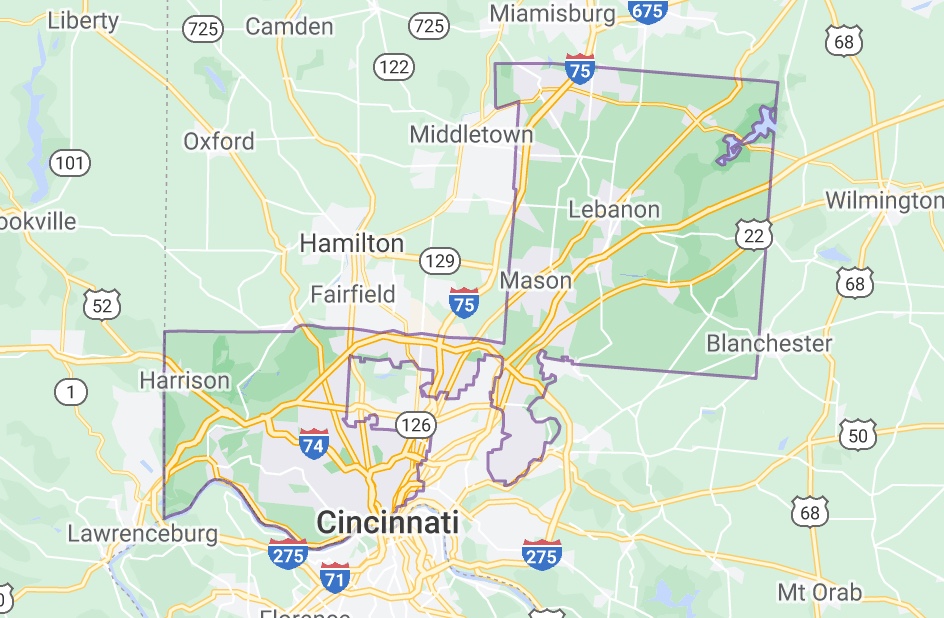
    Ohio 1st U.S. Congressional District Map (Chabot)

    Voters in 2015 approved creating the Ohio Redistricting Commission, a bipartisan group focused on creating maps that keep communities together and also increasing transparency. 

    Turcer explained the map-making process will be somewhat delayed, since the U.S. Census Bureau missed a Dec. 31 deadline to turn in the apportionment numbers used to determine congressional seats.

    “We don’t have all the information that we would normally have,” Turcer maintained. “As we begin this process, we need to be patient, because we really want the census to do a good job. You want those numbers to be right, so that there’s fair representation across the country.”

    Turcer contended gerrymandering has been a powerful political tool since 1812. And while the new rules encourage good behavior, she noted there are no guarantees. 

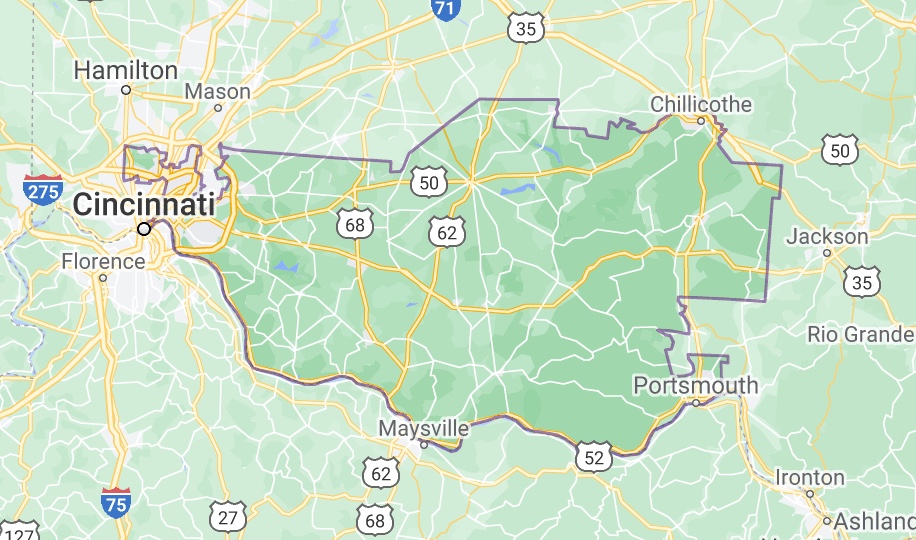
    Ohio 2nd U.S. Congressional District Map (Wenstrup)

    “We will need to watchdog the process and be as engaged as possible,” Turcer confirmed. “Because it’s much easier to do damage if people are not paying attention.”

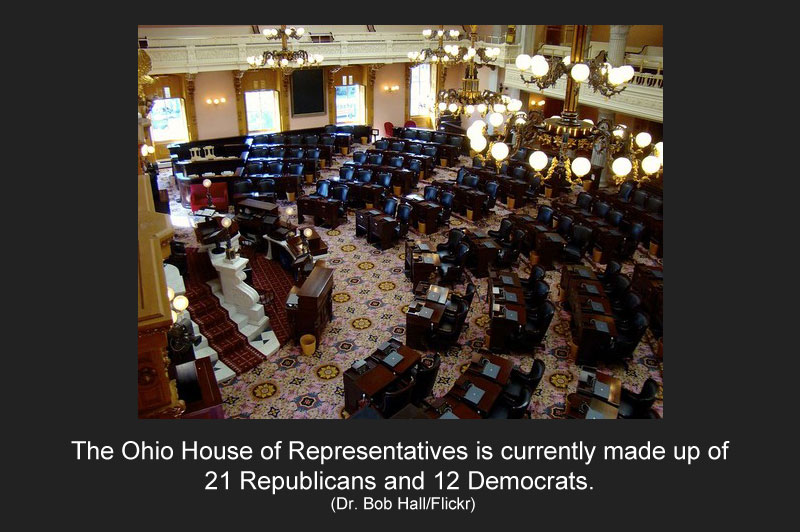
    Ohio is expected to lose one of its 16 congressional seats, 12 of which are currently held by Republicans. And at present, the 33 state legislative districts are held by 21 Republicans and 12 Democrats. 

    This story was produced in association with Media in the Public Interest and funded in part by the George Gund Foundation.