Tag: public school

  • [WATCH] Loveland Schools State Budget Town Hall

    [WATCH] Loveland Schools State Budget Town Hall

    Loveland, Ohio – This LOVELAND MAGAZINE TV video is of the Loveland Schools State Budget Town Hall that was held at the media center of the Loveland Middle School on Wednesday evening. The state budget that will determine spending for the next two years in Ohio is making its way through the Ohio General Assembly. Governor Mike DeWine’s budget proposal could cut funding for the Loveland City School District and many other public schools. The District says that their five-year forecast is that the district could receive $2.5 million less in state funding.

    Since the Ohio House has already passed their proposed spending bill, attention is now focused on what the Senate will propose, and thus the District has now amended  their lobbying priorities and what they are asking the public to do that might influence the State House decisions. You can read their amended lobbying priorities HERE.

    The District is asking the Loveland community to continue reaching out to state lawmakers. They say, “It’s important lawmakers and Governor DeWine receive messages from as many people in our community as possible, and that they receive repeated messages throughout the budget process from now until the budget bill is signed at the end of June.”

    Loveland’s Lobbying Priorities:

    • Protect the “Guarantee” – if the guarantee were to be eliminated, Loveland would suffer a catastrophic loss of $25 million in state funding over the next four years. The governor’s suggested reductions in the guarantee will mean a loss of about $2.5 million.
    • Ensure state funding keeps pace with inflation – Inflation is projected at 2.3% and we are requesting that state funding increase at or near the same rate during the two-year budget. Failure to increase state funding in line with inflation shifts more of the burden for public education to local taxpayers.
    • Remove the cash balance provision – Limits on carry-over balances will have unintended consequences for school districts and create more confusion for local taxpayers. We request that the state study the issue and consider separate legislation regarding cash balances.

    [pdf-embedder url=”https://lovelandmagazine.com/wp-content/uploads/2025/04/LovelandLobbyingFlyer.pdf”]

  • Religious release time bill added to parents’ bill of rights during Ohio Senate Education Committee

    Religious release time bill added to parents’ bill of rights during Ohio Senate Education Committee

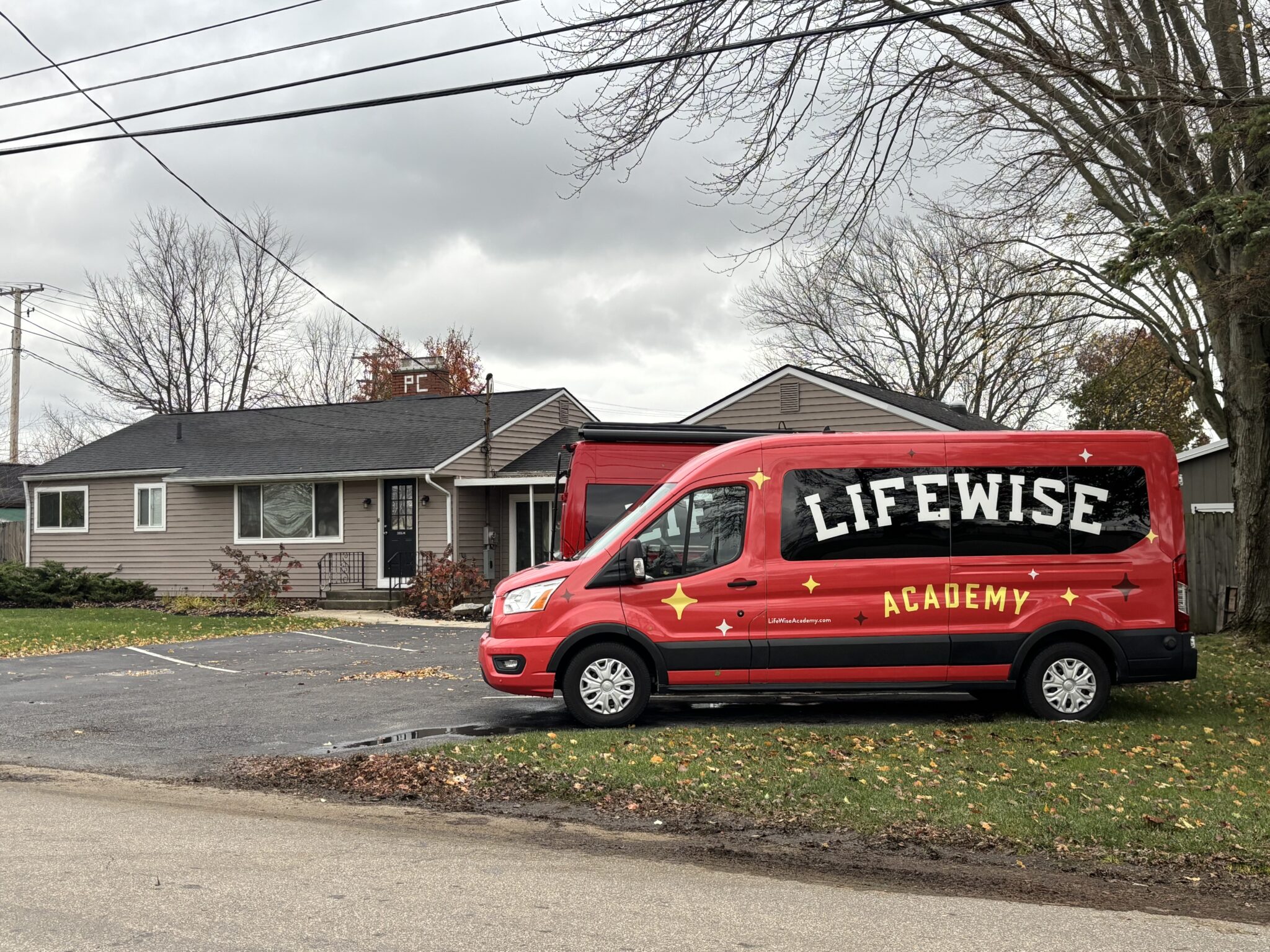
    LifeWise Academy is a Hilliard-based religious instruction program that started in 2019 and now enrolls 50,000 students across 29 states. (Photo by Megan Henry, Ohio Capital Journal.)

    House Bill 8 passed the Ohio House last summer

    By:  Ohio Capital Journal

    Ohio Senators have added a public school mandatory religious release time policy bill to a piece of legislation that would force educators to out a students’ sexuality to their parents.

    The amendment to require Ohio public school districts to put a policy in place to release students for religious instruction was added to House Bill 8 during last Tuesday’s Senate Education Committee Meeting. The two Democrats on the committee, Catherine Ingram and Vernon Sykes, voted against the amendment.

    “A school district shall, rather than may, have a policy governing religious release time instruction,” said state Sen. Sandra O’Brien, R-Ashtabula.

    Ohio law currently permits school district boards of education to make a policy to let students go to a course in religious instruction, but this would change the wording in the Ohio Revised Code from “may” to “shall” — meaning this would be a mandate for Ohio school districts.

    State Reps. D.J. Swearingen, R-Huron, and Sara Carruthers, R-Hamilton, introduced H.B. 8, which passed in the Ohio House last year. The bill would require public schools to let parents know about sexuality content materials ahead of time and give them the option to request alternative instructions.

    GET THE MORNING HEADLINES.


    It would also ban any sexuality content from being taught to students in kindergarten through third grade. The bill defines sexuality content as “oral or written instruction, presentation, image, or description of sexual concepts or gender ideology.”

    Senate Minority Leader Nickie Antonio, D-Lakewood, said H.B. 8 is not what Ohio needs.

    “It’s certainly not what the children and the teachers and the parents of Ohio need,” she said. “I think we need to maintain the ability of children to be able to talk to teachers, social workers, counselors, with some confidentiality, and parents need to be able to be involved with their children, but also know that sometimes children need somebody to talk to.”

    There were 62 parental-rights bills in 24 states last year, according to FutureEd, an independent think tank at Georgetown University’s McCourt School of Public Policy.

    More amendments were added to H.B. 8 during Wednesday’s Senate Education Committee meeting.

    “This amendment creates exceptions for disclosure requirements where they would conflict with federal law,” O’Brien said. “It also clarifies that nothing in House Bill 8 prohibits mandatory reporting under state law. Lastly, the amendment clarifies that nothing in House Bill 8 prohibits or limits career and academic mentoring between a teacher and student.”

    Religious release time

    The amendment language was taken from two companion bills regarding religious release time — Senate Bill 293 and House Bill 445. Hundreds of people have submitted opponent testimony against both bills, which are in committee.

    Two central Ohio school districts, Westerville and Worthington, recently rescinded their religious release time policy. Both districts formerly allowed LifeWise Academy to take public school students off-campus for Bible classes during school hours.

    LifeWise Academy is a Hilliard-based religious instruction program that enrolls 50,000 students across 29 states — including  about 160 Ohio school districts.

    The United States Supreme Court upheld released time laws during the 1952 Zorach v. Clauson case, which allowed a school district to have students leave school for part of the day to receive religious instruction.

    Release time in the middle of the school day is problematic, Antonio said.

    “It disrupts the flow of (students) dealing with their studies,” she said. “I think it needs to be on an individual school district basis to make those kinds of decisions.”

    About 170 people submitted opponent testimony against the newly amended H.B. 8 at Tuesday’s Senate Education Committee. H.B. 8 was up for a possible committee vote, but no vote was taken. The bill has had six hearings in the Senate Education Committee.

    The two-year General Assembly wraps up at the end of the month, so any bill that doesn’t pass will die and would have to be reintroduced in the next General Assembly. The final House and Senate sessions of the year are currently scheduled for next week.

    Follow OCJ Reporter Megan Henry on X.

    YOU MAKE OUR WORK POSSIBLE.

  • Ohio Supreme Court will hear Senate president’s fight against deposition in private school vouchers case

    Ohio Supreme Court will hear Senate president’s fight against deposition in private school vouchers case

    BY:  Ohio Capital Journal

    The Ohio Supreme Court has agreed to hear arguments as part of a lawsuit against private school vouchers in the state, to decide whether or not Senate President Matt Huffman needs to answer questions on the topic.

    The court announced on Tuesday that it would take up the case, in which Huffman is asking to avoid answering questions related to the state’s private school voucher program challenge taking place in the Franklin County Court of Common Pleas.

    Huffman appealed to the high court in April, invoking Article 11 of the Ohio Constitution, which states during a session of the General Assembly, senators and representatives are protected from treason, felony, or breach of the peace, “and for any speech, or debate, in either house, they shall not be questioned elsewhere.”

    “This appeal raises significant – and, to date, unanswered – questions about the scope of the constitutional protections provided to the Ohio General Assembly’s members that ‘for any speech, or debate, in either house, they shall not be questioned elsewhere,’ which is commonly referred to as the Speech and Debate Clause,” Columbus attorney Mark D. Wagoner wrote on behalf of Huffman.

    Huffman was one of many parties asked to participate in a deposition or answer questions about the program and its funding. The Senate president was subpoenaed – and is now fighting the subpoena – for an April 2023 deposition “on his knowledge of school funding in Ohio and his involvement in the enactment and expansion of the EdChoice program.”

    The case for which Huffman doesn’t want to provide a deposition is an effort to eliminate the private school voucher program in the state, a program that provides subsidies for public school students enrolled in what are considered by the state to be underperforming schools, allowing those students to attend private schools, often religiously affiliated.

    Huffman was Senate president when when the budget bill that included the private voucher expansion was passed in 2021.

    The program and its most recent expansion have been criticized for taking funding out of public school coffers, funding higher income white students more than the original program’s goal to assist lower income students and minorities, and violating the state constitution which requires the state to properly fund a system of public schools throughout Ohio.

    In December of last year, Franklin County Common Pleas Judge Jaiza Page said Huffman did not need to submit to the in-person deposition, but instead could answer questions “that do not implicate legislative privilege” in a written form.

    The judge ruled that the legislative privilege Huffman argued didn’t extend to everything done or related to a legislative process, “but attaches only to meetings, processes, conversations and documents which are an integral part of the deliberative and communicative process by which legislators participate in legislative or committee proceedings.”

    Page also said if the written deposition demonstrated “that an in-person oral deposition of Huffman is likely to provide additional information,” the judge would reconsider the written deposition order.

    Huffman appealed to the Tenth District Court of Appeals in January of this year, asking to be released from the order for written deposition answers, citing the same “legislative testimonial privilege” in the Speech and Debate Clause.

    The appellate court dismissed Huffman’s appeal in March, saying the lower court’s order “permits (voucher challengers) to submit questions but stops short of compelling (Huffman) to answer.”

    The appellate decision said Huffman could again sue on legislative privilege grounds after the questions were submitted to him, “and the trial court will have the opportunity to review (Huffman’s) concerns in the context of the questions being posed.”

    In his appeal to the state supreme court, Huffman’s attorney said “the importance of this language is clear.”

    “The Speech and Debate Clause does not require President Huffman to jump through the additional hoops suggested by the Tenth District Court of Appeals,” the appeal stated.

    Justice Michael Donnelly, Melody Stewart and Jennifer Brunner all voted against accepting the case. Ninth District Court of Appeals Judge Jill Flagg Lanzinger sat in for Justice Joe Deters.

    The court will now set deadlines for documents to be submitted to the court, and oral arguments will be scheduled in the case.


    Susan Tebben
    SUSAN TEBBEN

    Susan Tebben is an award-winning journalist with a decade of experience covering Ohio news, including courts and crime, Appalachian social issues, government, education, diversity and culture. She has worked for The Newark Advocate, The Glasgow (KY) Daily Times, The Athens Messenger, and WOUB Public Media. She has also had work featured on National Public Radio.

    Ohio Capital Journal is part of States Newsroom, the nation’s largest state-focused nonprofit news organization.

    MORE FROM AUTHOR

  • More than 91,000 have applied for Ohio private school voucher expansion

    More than 91,000 have applied for Ohio private school voucher expansion

    Getty Images.

    87,312 scholarships have been awarded as of March 18 — amounting to $394 million in allocated funding, according to the Ohio Department of Education and Workforce.

    BY:  Ohio Capital Journal

    There have been more than 91,100 applications for Ohio’s private school voucher expansion program so far this school year — a dramatic increase compared to previous years.

    Out of 91,157 voucher expansion applications, 87,312 scholarships have been awarded as of March 18 — amounting to $394,015,641 in allocated funding, according to the Ohio Department of Education and Workforce. Applications are continuing to be accepted through the end of the fiscal year.

    There were 26,390 voucher expansion applications submitted in 2023 with 24,323 scholarships awarded, and 25,011 applications submitted and 21,873 scholarships awarded in 2022.

    Ohio lawmakers expanded private school voucher eligibility to 450% of the poverty line — or a household income of $135,000 or less for a family of four — in the state budget that was signed into law last summer. Families above the $135,000 threshold can still be eligible for at least 10% of the maximum scholarship.

    K-8 students can receive a $6,165 scholarship and high schoolers can receive a $8,407 scholarship in state funding under the expansion. 63,798 K-8 students were awarded a voucher scholarship and 20,495 high school students were awarded a scholarship, according to ODEW.

    When it comes to traditional EdChoice private school vouchers for this year, 43,330 families submitted applications and 42,477 were awarded scholarships — $270,987,877 in allocated funding, as of March 18, according to ODEW. 40,629 students were awarded traditional voucher scholarships in 2023 and 38,543 received traditional voucher scholarships in 2022.

    Ohioans are divided on this issue. Private school families who use the vouchers are obviously fans, but public school advocates oppose it.

    “Our number one concern about the expansion of school vouchers is that it means significant resources are going to private schools at the expense of the nearly 90% of Ohio kids who are attending our public schools,” said Ohio Education Association President Scott DiMauro.

    Ohio Lt. Gov. Jon Husted, who was the Ohio House speaker when the private school voucher program called EdChoice passed in 2005, recently visited St. Mary’s School in the Catholic Diocese of Columbus as part of a statewide tour of private schools.

    “It’s fantastic because more kids are getting the opportunity to get a great education and a school of their choice,” Husted said during his stop.

    St Mary’s School

    Eighth grader Sorcha Sweeney has attended St. Mary’s in Columbus’ German Village neighborhood since she was in preschool and is on an EdChoice scholarship.

    “I’ve never really been interested in going anywhere else,” she said during a recent roundtable discussion during Husted’s visit to the school.

    She will receive a full scholarship to attend Bishop Hartley High School next school year.

    “I wouldn’t have ever been able to afford (St. Mary’s),” Sorcha mom’s Megan Sweeney said. “Without a scholarship, it just wouldn’t be possible. … Without a private education, she wouldn’t be anywhere close to where she is.”

    St. Mary’s tuition for preschool through eighth grade costs $7,750 and 97% of St. Mary’s families use EdChoice Scholarships, said principal Gina Stull. Between 60-70% of students couldn’t afford the tuition without the scholarships, she said.

    The school currently enrolls about 400 students and expects to have 500 students next year and a waitlist, Stull said.

    “Through those initiatives, EdChoice has been a conduit for the big word of evangelization — trying to spread God’s love,” said St. Mary’s Pastor Vince Nguyen. “… With the EdChoice voucher program we have tried to love every single kid, catholic or not catholic, that comes through our doors here at St. Mary’s School.”

    Despite the explosion of private school vouchers in Ohio, DiMauro said there has been little impact on Ohio’s public school enrollment.

    “The evidence is very clear that the vast majority of those vouchers are going to students who are already attending private schools,” DiMauro said. “… It is about subsidizing private schools.”

    Husted said the vouchers have “accountability and oversight” safeguards in place so something like the Electronic Classroom of Tomorrow online charter school scandal from 2018 will never happen again.

    ECOT was forced to shut down after the Ohio Department of Education said Ohio’s first online charter school needed to repay much of its state aid for the 2015-16 and 2016-17 school years after the school inflated enrollment numbers. ECOT still owed the state $117 million in 2022.

    “I actually just spoke with (Ohio Department of Education and Workforce) Director (Steve) Dackin about this the other day, and I asked him whether he felt the safeguards are in place to make sure something like that didn’t happen again and he reassured me he thought there were,” Husted said.

    Follow OCJ Reporter Megan Henry on X.


    Megan Henry
    MEGAN HENRY

    Megan Henry is a reporter for the Ohio Capital Journal and has spent the past five years reporting in Ohio on various topics including education, healthcare, business and crime. She previously worked at The Columbus Dispatch, part of the USA Today Network.

    Ohio Capital Journal is part of States Newsroom, the nation’s largest state-focused nonprofit news organization.

    MORE FROM AUTHOR