Tag: Public Utilities Commission

  • [BREAKING] Ex-First Energy executives, Ohio utility regulator charged by state in bailout and bribery scandal

    [BREAKING] Ex-First Energy executives, Ohio utility regulator charged by state in bailout and bribery scandal

    From left to right: Former PUCO Chair Sam Randazzo, former FirstEnergy CEO Chuck Jones, former FirstEnergy VP Michael Dowling. (Mugshots from the Summit County Sheriff’s Office. Graphic by WEWS.)

    BY:  AND  Ohio Capital Journal

    Ohio law enforcement authorities on Monday filed numerous felony charges against two former First Energy executives and a former top utility regulator in what has been called the biggest bribery and money-laundering scandal in Ohio history.

    Ohio Attorney General Dave Yost announced scores of felony charges against a former regulator who also has been charged federally, and against two people who haven’t — former top executives for Akron-based FirstEnergy whom the company admitted paid more than $60 million in bribes between 2016 and 2020 in exchange for a $1.3 billion ratepayer bailout.

    Charged were Sam Randazzo, former chairman of the Public Utilities Commission. Already facing felony charges in federal court, the state indictment charges him with 22 more, including grand theft, bribery, and money laundering. The indictment accuses him of taking bribes from FirstEnergy from 2010 until just before he became chairman of the commission in 2019.

    Also charged were former FirstEnergy CEO Chuck Jones and Vice President Michael Dowling. Between them, they face 22 felony charges similar to those faced by Randazzo.

    “This indictment is about more than one piece of legislation,” Yost said Monday. “It is about the hostile capture of a significant portion of Ohio’s state government by deception, betrayal, and dishonesty.”

    The state charges that were announced Monday didn’t deal with much of the activity addressed in the federal case. They instead focused on the relationship between Jones, Dowling, and Randazzo between 2010 and early 2019, when they paid him $4.33 million just as he was becoming the state’s top utility regulator.

    The House Bill 6 scandal

    Back in 2019, former Ohio House Speaker Larry Householder took $61 million in bribes in exchange for legislation to give FirstEnergy a $1 billion bailout, named House Bill 6, all at the expense of the ratepayers.

    The scheme was revealed in three main ways — two separate whistleblowers and a phone wiretap.

    In March 2023, a jury found Householder and former Ohio Republican Party leader Matt Borges guilty beyond a reasonable doubt for their involvement in the racketeering scheme that left four men guilty and another dead by suicide.

    In late June that year, federal judge Timothy Black sentenced Householder to 20 years in prison. Borges got 5 years. The two surviving defendants took plea agreements early on, helping the FBI, and are still awaiting their sentencing. The feds are asking for 0-6 months for them.

    Until Monday, only federal indictments had been handed out.

    HB 6 mainly benefited FirstEnergy’s struggling nuclear power plants, but those provisions were later repealed. There are aspects of the bill still in place, though.

    The Ohio Valley Electric Corporation (OVEC) got a handout from the scheme. It expanded a bailout of the OVEC plants and required Ohioans to pay for two 1950s-era coal plants— one in the Southern area of the state and the other in Indiana. The main beneficiaries of this are American Electric Power Company (AEP), Duke Energy and AES Ohio.

    Despite this scandal becoming public years ago, ethics laws in the state have not changed to prevent schemes like this from happening.

    There are numerous bipartisan efforts to repeal HB 6 totally and to put forward ethics laws. None are going anywhere, it seems.

    Monday’s indictments

    AG Yost was joined by Summit County Prosecutor Sherri Bevan Walsh and Sheriff Kandy Fatheree for the announcement Monday.

    “The crimes committed by these individuals impacted the pocketbooks of every hard working Ohioan and further shook our faith in the institutions and organizations that we count on to represent us and to provide us with essential services,” Fatheree said. “Today, we take another important step in ensuring that justice is served for these crimes and that those who took advantage of the public’s trust are held accountable.”

    FirstEnergy as a company has already admitted in a deferred prosecution agreement to bribing public officials in Ohio, including a $4.3 million bribe to Randazzo. Jones and Dowling allegedly paid this to him.

    Randazzo pleaded not guilty to the federal charges against him in December.

    The Sustainability Funding Alliance of Ohio and IEU-Ohio Administration Company are also named in the filing. Randazzo controlled each of them, and they were allegedly shell companies created to further his criminal activity.

    Reactions

    While Monday was probably not the best day for Randazzo, Jones and Dowling, it was a great day for whistleblower Tyler Fehrman.

    Fehrman is the Republican operative-turned-FBI informant who is credited with exposing this mass public corruption at the Statehouse — and he is cheering the AG and Summit County for these arrests.

    “These guys deserve to have everything taken away from them,” Fehrman said. “They deserve it.”

    Borges attempted to bribe Fehrman, and threatened him, to be a part of the scandal — even at one point telling him that if he snitches, Borges would “blow up his house.”

    That conversation was actually set up and recorded by the feds. Instead of staying quiet, Fehrman testified, helping the jury to return guilty verdicts in the federal trial.

    Fehrman ended up having to change careers and flee the state due to fears of retaliation — and because he was ostracized — but now he gets to watch as the scheme continues to unravel.

    “You can hide your actions in the dark for a little bit,” Fehrman said Monday. “But the sun always rises and the truth always comes out. Every time one of these guys gets indicted, especially the people that made it possible for Matt and Larry to have the opportunity to do what they did to me — to see them get in trouble, it’s extremely vindicating.”

    He agreed with Yost’s statement that there can be no justice without holding the check-writers and the masterminds accountable.

    Case Western Reserve University law professor Mike Benza believes these charges are going to be hard to fight. When asked the best possible scenario for them, other than pleading guilty, he said their best bet could be to argue this is politics as usual.

    “It seems that the focus from the defense side is going to be much like the focus from Householder and Borges — this is just how things get done in Columbus,” Benza said. “This is just the normal sausage-making of public policy and it may not be pretty and you may not like it, but this is the reality and it doesn’t equal corruption.”

    Clearly, that wasn’t a winning argument in federal court.

    Part of the reason why it may have worked so poorly in Black’s federal courtroom is because Householder went against the advice of the vast majority of criminal defense attorneys and decided to testify in his defense.

    The now-convicted felon used the bribe money to put himself and his allies into power, demolishing and threatening anyone in his path, as well as paying off credit card debt and renovations to his home in Florida.

    Benza believes Randazzo, Jones, and Dowling are facing difficult days ahead.

    “Randazzo is probably going to be looking at dying in prison,” Benza responded. “Jones and Dowling are probably in that same boat.”

    Ferhman is hoping for more indictments, including high-profile names.

    “The clock is ticking for the other people that were involved,” Fehrman said.

    He named Gov. Mike DeWine Lt. Gov. Jon Husted as people of interest for him.

    DeWine has been complying with a subpoena he received in a civil case connected to the scandal, he said.

    FirstEnergy investors are suing for being negatively impacted financially by the scandal. They have subpoenaed documents from DeWine, and they’re scheduling a sworn deposition with Husted.

    In a one-on-one interview with the governor, DeWine was asked if he was nervous about the scandal, or, more importantly — if was he worried for Husted. DeWine said no to both.

    Randazzo has been named as the mastermind behind HB 6, due to him being one of the creators of it — according to the feds. But DeWine was how he came into power.

    DeWine was asked in the same interview if he regretted naming Randazzo the state’s top utility regulator.

    “Oh, look, if I knew what I know now, if I knew that — I certainly would not have appointed Sam Randazzo to that position,” DeWine responded.

    DeWine said he was the best person for the job, claiming that he wasn’t aware that Randazzo was FirstEnergy’s handpicked man.

    “While our office was not privy to the indictment and have not yet reviewed it, the indictment alleges very serious acts,” DeWine’s spokesperson Dan Tierney said Monday afternoon. “Our office has full faith in the criminal justice system to adjudicate these serious allegations in an appropriate manner.”

    ________________

    Marty Schladen
    MARTY SCHLADEN

    Marty Schladen has been a reporter for decades, working in Indiana, Texas and other places before returning to his native Ohio to work at The Columbus Dispatch in 2017. He’s won state and national journalism awards for investigations into utility regulation, public corruption, the environment, prescription drug spending and other matters. MORE FROM AUTHOR

    Morgan Trau
    MORGAN TRAU

    Morgan Trau is a political reporter and multimedia journalist based out of the WEWS Columbus Bureau. A graduate of Syracuse University’s S.I. Newhouse School of Public Communications, Trau has previously worked as an investigative, political and fact-checking reporter in Grand Rapids, Mich. at WZZM-TV; a reporter and MMJ in Spokane, Wash. at KREM-TV and has interned at 60 Minutes and worked for CBS Interactive and PBS NewsHour. MORE FROM AUTHOR

  • Federal judge blasts disgraced Ohio House speaker as a “bully,” sends him straight to jail

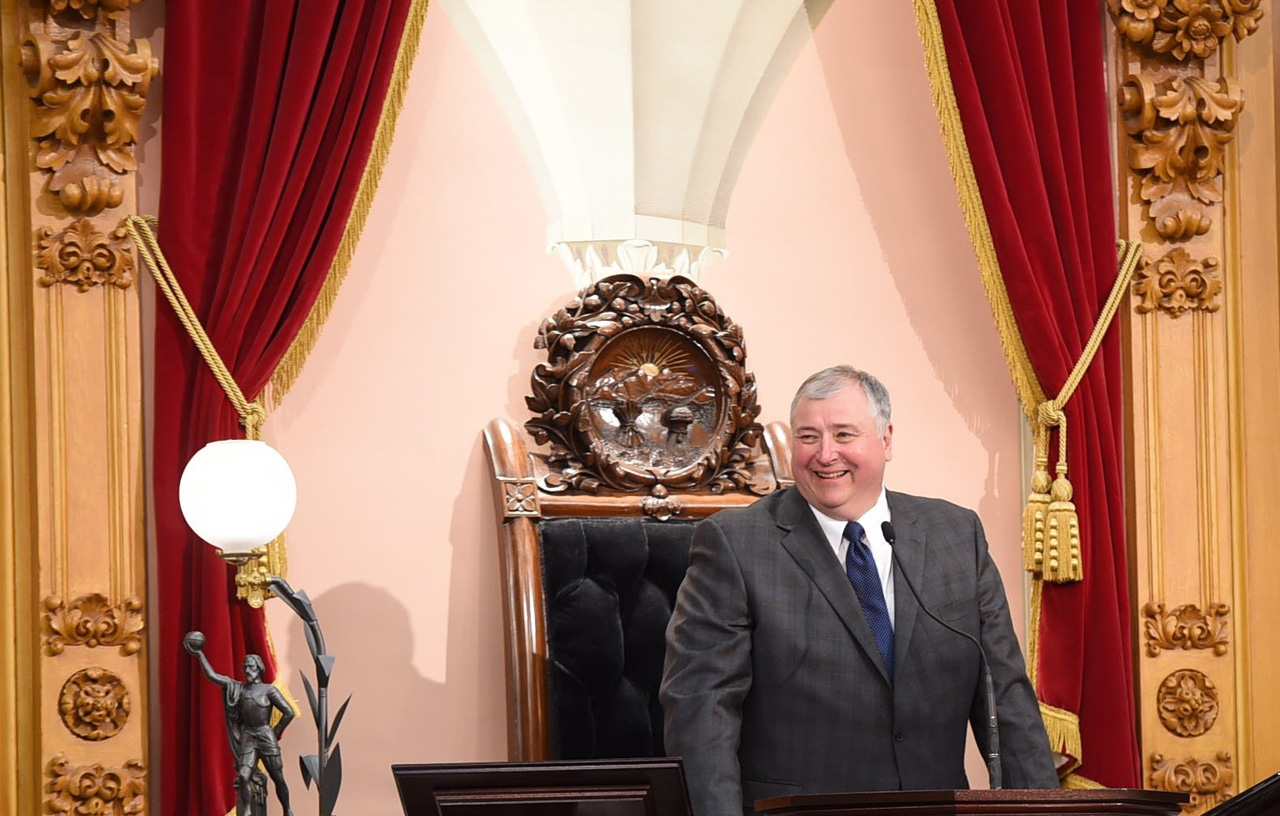
    Federal judge blasts disgraced Ohio House speaker as a “bully,” sends him straight to jail

    Former House Speaker Larry Householder, R-Glenford. Source: Ohio General Assembly.

    BY:  Ohio Capital Journal

    CINCINNATI — Former Ohio House Speaker Larry Householder spent possibly his last moments as a free man around 2:30 p.m. Thursday and they couldn’t have been pleasant.

    U.S. District Judge Timothy Black gave the Glenford Republican the maximum possible sentence of 20 years and then ordered blue-shirted U.S. Marshals to immediately take him into custody. He rose, put his hands behind his back, the marshals cuffed him and led the once-powerful pol away.

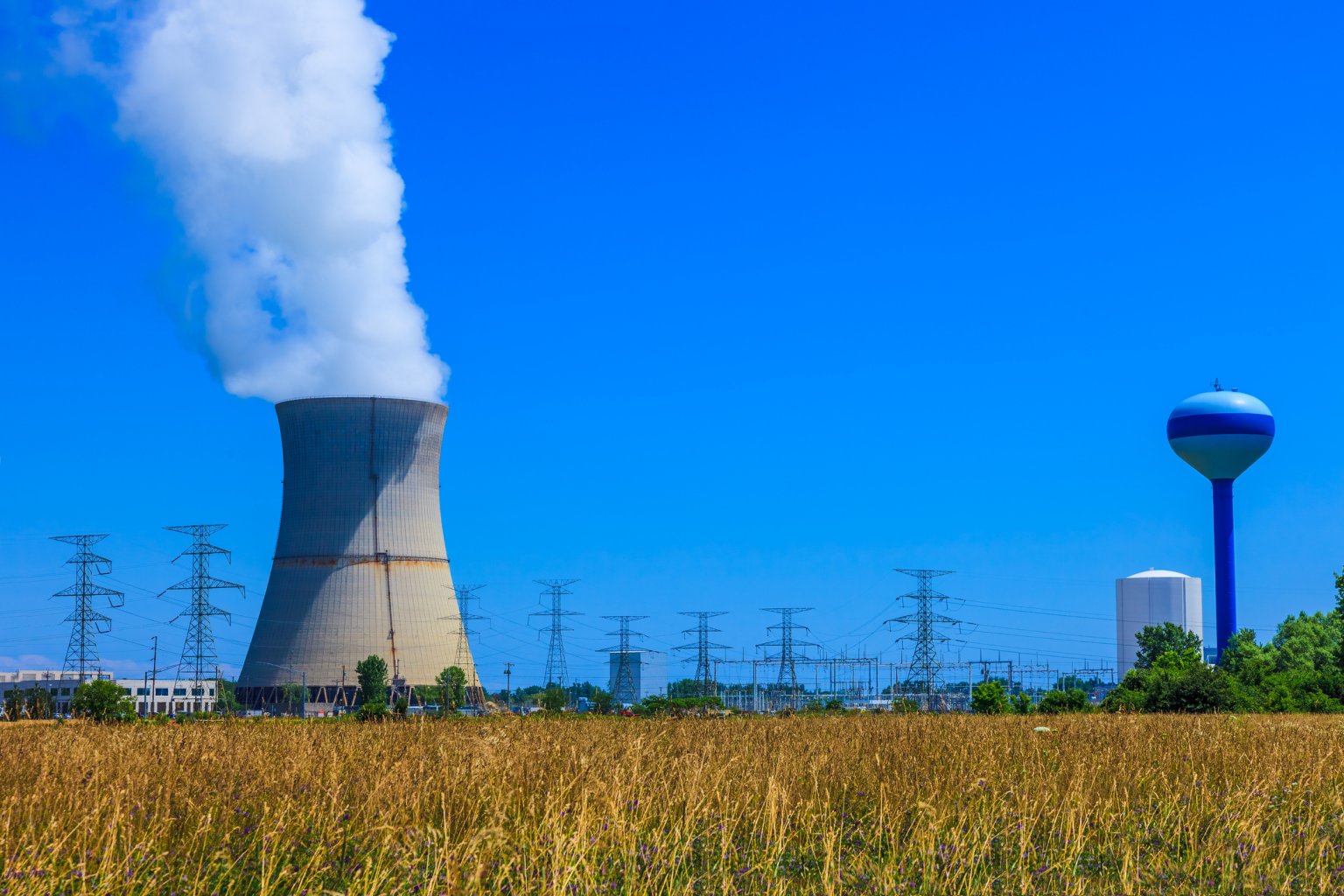
    But before that humiliation, the judge blistered Householder for being the ringleader of a racketeering scandal in which Akron-based FirstEnergy paid him more than $59 million in bribes in exchange for a $1.3 billion bailout, most of which was intended to save two failing nuclear plants in Northern Ohio.

    Ratepayers could have used that money for things like education, health care or to start businesses, the judge said.

    “You handed that money to suits in private jets,” Black said.

    The judge made the speech and imposed the sentence after saying Householder clearly perjured himself during his criminal trial, which lasted from late January until mid-March.

    In it, Householder claimed to barely know FirstEnergy executives as federal prosecutors put on a mountain of evidence that Householder flew on their corporate jets, sat in their luxury boxes and dined in fancy restaurants as they plowed tens of millions of the corporation’s dollars into dark-money accounts.

    “You conned the people of Ohio and you tried to con the jury, too,” Black said in his gravely voice as Householder, clad in a gray suit and red tie, slumped his bulk back in his chair.

    The money from FirstEnergy and one of its subsidiaries was used to elect fellow Republicans in 2018 who would vote to make Householder speaker in early 2019. More than $500,000 of it was used to pay off Householder’s credit card bills, settle a lawsuit and to repair a house he owned in Florida.

    Tens of millions more went to pass the corrupt bailout — House Bill 6 — and to fund a thuggish campaign to thwart a citizen-initiated repeal.

    Earlier in the hearing, Assistant U.S. Attorney Emily Glatfelter said Householder used FirstEnergy’s dark money to crush a “citizen veto” and “because of this House Bill 6 remains in effect today.”

    That’s also because Republican supermajorities in Ohio’s gerrymandered legislature have refused to repeal the corrupt law even after arrests were made, and as they try to make it virtually impossible for citizens to initiate amendments to the Ohio Constitution.

    Also arrested in the scandal were lobbyists Juan Cespedes and Jeffrey Longstreth — who cooperated with prosecutors within days of their arrests — and Neil Clark, who died by suicide. Former Ohio GOP Chairman Matt Borges is slated for sentencing at 11 a.m. today, Friday.

    Steven Bradley, Householder’s attorney, sought leniency for his client. Referring to the possibility of a 20-year sentence, he said “That is effectively a life sentence for Larry Householder given his age and health situation.”

    Householder is 64 and overweight.

    Bradley argued that his client was around 60 when the racketeering conspiracy began in late 2016 and that prior to that, Householder did “innumerable” good deeds “for decades.” A 20-year sentence would “effectively give no consideration” to those good deeds, Bradley said.

    But when he spoke on his own behalf, Householder appeared to do more to harm his case than to help it, just as he did at trial.

    “My greatest commitment is to my creator… My next commitment is to my family,” he read from a prepared statement as he stood at the podium.

    Householder said that in the course of 38 years of marriage, “I can count on one hand” the number of nights he spent away from his wife, Taundra. Householder also described the crushing pain they suffered when they lost a four-year-old daughter.

    But then he pushed his claims past the point of plausibility.

    He said Taundra was planning to retire from her teaching position and next year, when he turns 65, he wanted to retire as well, saying he planned to “hang up my suit and tie.”

    Householder made that statement in the same courtroom where, only three months earlier, prosecutors put on testimony and displayed bank records and written messages from early 2020 that showed FirstEnergy and AEP putting money into dark money groups intended to fund an effort to change the state’s term limits so Householder could stay in office for as long as 16 more years.

    The former House speaker also implied that he wanted a lenient sentence not for himself, but for his family. Taundra, he said, would be alone while “I’ll be in a cold cell hours away.”

    But what might really have set Judge Black off was Householder’s profession of selfless public service.

    “My life has been a total and full dedication to making life better for those I serve,” he said.

    Black described voters who put out Householder yard signs, donated their hard-earned money to his campaigns, and pushed a button for him in the voting booth.

    “I’m not talking about some corporation or the (former FirstEnergy CEO) Chuck Joneses of the world,” Black said. Householder’s constituents who supported him “were saying, ‘I’m choosing to trust you,’ and you betrayed that trust,” the judge said.

    Black used Householder’s own words to give the lie to his claims. He quoted several recordings of Householder that were surreptitiously made during the conspiracy and played at trial.

    “If you’re going to fk with me, I’m going to fk with your kids,” Householder said in one of them.

    “Bottom line, you were a bully,” the judge said.

    If the federal racketeering statute didn’t cap sentences for a single count at 20 years, sentencing guidelines would have recommended life for the former House speaker, Black said. One reason for that is because Householder’s use of a mountain of hidden corporate money to elect a legislature, pass an exponentially bigger bailout for the company, and to crush a citizen repeal is “an assault on democracy,” the judge said.

    Black explained the special harm done by public corruption like that committed by Householder and his co-conspirators. To do so, he quoted former President Theodore Roosevelt, who ironically advocated the citizen-initiated amendment process in Ohio that Householder’s former Republican colleagues in state government are now trying to gut.

    “There can be no crime more serious than bribery,” Roosevelt said in a 1903 message. “Other offenses violate one law while corruption strikes at the foundation of all law.”

    When Borges, the former GOP chair, is sentenced today, it’s unclear what he’ll face. His involvement in the conspiracy was considerably less than Householder’s, but Judge Black showed that he’s not much in the mood for leniency when it comes to Ohio’s corrupt political culture.

    Also uncertain is when — or if — others might be charged.

    Former FirstEnergy CEO Chuck Jones and Vice President Micheal Dowling — as well as former FirstEnergy Solutions President John Kiani — directed the flood of corporate dollars into the Householder-controlled dark money groups, according to prosecutors.

    And FirstEnergy admitted in a deferred prosecution agreement that it paid  a $4.3 million bribe to Sam Randazzo just as Gov. Mike DeWine was appointing him to chair the Public Utilities Commission. Randazzo the helped draft the corrupt bailout law, according to trial testimony.

    On the steps of the Potter Stewart U.S. Courthouse just after the sentencing, U.S. Attorney Kenneth Parker was asked when or whether those men or others might be charged.

    “We continue to look through evidence and we continue to listen to recordings and speak to individuals, so if something’s there we’re going to go there, too, and address it,” he said.


    Marty Schladen
    MARTY SCHLADEN

    Marty Schladen has been a reporter for decades, working in Indiana, Texas and other places before returning to his native Ohio to work at The Columbus Dispatch in 2017. He’s won state and national journalism awards for investigations into utility regulation, public corruption, the environment, prescription drug spending and other matters.

    MORE FROM AUTHOR

  • Consumer advocate wants to know where utility got $60M from in alleged bribery scandal

    Consumer advocate wants to know where utility got $60M from in alleged bribery scandal

    cccc

    Ohio’s official utility watchdog wants to know where Akron-based FirstEnergy got the $60 million that federal prosecutors say fueled the largest bribery scandal in Ohio history.

    The Office of Ohio Consumers’ Counsel on Tuesday evening filed several motions with the Ohio Public Utilities Commission

    • A request for an investigation and a management audit of FirstEnergy.
    • A requirement that the company show that it hadn’t misused consumer money to support the passage of a nuclear bailout. 
    • And that the regulator reopen a probe into how FirstEnergy spent money intended to upgrade the electricity grid.

    In July, the U.S. Attorney’s office charged then-House Speaker, Larry Householder, R-Glenford, in an alleged scheme to funnel FirstEnergy money through 509(c)(4) “dark money” groups in a corrupt effort to elect supportive lawmakers and make Householder speaker. 

    The feds say the goal was to pass House Bill 6, a $1.3 billion bailout that went primarily to two failing nuclear power plants, but also subsidized two failing coal-powered generators. In addition, the money was used to fund a xenophobic campaign to stop a voter repeal of HB 6 and to line the pockets of Householder and his alleged conspirators, federal officials said.

    Also charged were Matt Borges, a lobbyist who was formerly chairman of the Ohio Republican Party, Neil Clark, a lobbyist who owns Grant Street Consulting, Juan Cespedes, also a lobbyist, and Householder’s aide, Jeffrey Longstreth.

    In its filing, the consumers’ counsel said it was asking the utilities commission to do its job.

    “The (Public Utilities Commission of Ohio) has the right and duty to regulate public utilities, for the protection of the public,” it said. “The PUCO should require FirstEnergy to show that money it collected from consumers, including the distribution modernization charge money, was not improperly used regarding House Bill 6 and that it did not violate any utility regulatory laws or PUCO orders regarding House Bill 6.”

    A FirstEnergy spokeswoman said her company will comment through official channels.

    “We are unable to comment on pending litigation, but we will respond to the motion by September 23 as required,” External Communications Manager Jennifer M. Young said in an email.

    In its filings, the consumers’ counsel noted that “Long before the House Bill 6 subsidies, FirstEnergy was authorized to charge its consumers nearly $7 billion for these and other FirstEnergy power plants as part of the transition to power plant competition (and a supposed end to future power plant subsidies) under Ohio’s 1999 electric deregulation law.”

    The documents also focused on $465 million FirstEnergy was allowed to collect from Ohio ratepayers in 2017 and 2018 as a “distribution modernization rider.” In other words, the charge was meant to fund improvements to the lines and poles and other equipment needed to efficiently deliver electricity in Ohio.

    The consumers’ counsel pointed to an independent audit showing that at least some of the money was used for other purposes. For example, it was placed in FirstEnergy’s “Regulated Utility Money Pool,” where its out-of-state utilities could borrow from it.

    The dividends FirstEnergy paid shareholders also took a big jump once the company started collecting more from ratepayers, supposedly to improve the power grid. The money for dividends from FirstEnergy’s Ohio utilities went from $141 million in 2016 to $350 million in 2017 — the first year of the subsidy — to $400 million in 2018.

    The Ohio Supreme Court subsequently declared the charge to be unlawful, but the money wasn’t refunded to ratepayers. 

    After the court ruling, the utilities commission shut down an investigation into the extra charge and how the money was used. But now the consumers’ counsel says it “should be reopened in light of the new information alleged in the U.S. Criminal Complaint about FirstEnergy’s use of extraordinary amounts of money in its efforts for the passage of House Bill 6.”

    After other interested parties have a chance to respond to the consumers’ counsel motions the utilities commission will decide whether to approve them.


    Marty Schladen

    Marty Schladen has been a reporter for decades, working in Indiana, Texas and other places before returning to his native Ohio to work at The Columbus Dispatch in 2017. He’s won state and national journalism awards for investigations into utility regulation, public corruption, the environment, prescription drug spending and other matters.