Tag: quality education

  • Groups call for budget that “Cares for All Ohioans”

    Groups call for budget that “Cares for All Ohioans”

    By Mary Schuermann Kuhlman, Public News Service – OH

    Columbus, Ohio – As state lawmakers work on Ohio’s budget for fiscal years 2022 and 2023, there’s a grassroots call for the budget to reflect policies that protect and care for all Ohioans and communities.

    The Ohio Organizing Collaborative and Policy Matters Ohio unveiled their “People’s Budget” on Tuesday, which the groups say will ensure the government is working for its people. (You can read the People’s Budget below)


    Portage County Treasurer Brad Cromes joined the release, saying budgets are moral documents and should reflect that.

    “For too long, we have been saying that the financial wellness of a very few is more important than the financial wellness of everybody in the state,” he said, “and that’s got to change if we’re ever going to start moving our state forward.”

    The People’s Budget features seven demands: quality education, safe communities, economic dignity, care for caregivers, stability for families, a working health-care system, and a category known as “Funding Our Lives.” It’s an alternative to Gov. Mike DeWine’s budget proposal released in February.

    Tia Ferguson shared her struggles working as a substitute teacher in Columbus without paid leave. After giving birth to a stillborn son, Ferguson said she had to return to work before she was emotionally ready. She contended that with economic stability, other aspects of life will fall into place.

    “If your child care is funded, that’s a worry that you don’t have,” she said. “So, you can make sure that you’re taking the time to go back to school and get your education, so you can further your career. But if you don’t have that foundational piece set, then all the other aspects don’t even come into play.”

    State Rep. Stephanie Howse, D-Cleveland, said a “people’s budget” is about paying attention and being flexible enough to make adjustments when people really need them. She said she thinks state leaders should take the lead in addressing the discrimination faced by people of color in education, health care, housing, and more.

    “Declaring racism as a public health crisis is needed more now than any time, ever,” she said. “We could be on the forefront of what it really looks like to lift up racial equity and social justice.”

    Specific provisions of the People’s Budget include tax code reforms, increased funding for education, and investments in housing, anti-hunger programs, and maternal health.


    This story was produced in association with Media in the Public Interest and funded in part by the George Gund Foundation.

    A budget that cares for all of us

    The future of Ohio depends on a fair, equitable, and people-centered budget that cares for all of us — no exceptions.

    We Ohioans believe in taking care of one other, no matter our skin color, our ability, or how much money we have. But for nearly two decades, our elected officials have passed a state budget that does not meet our needs or provide us with opportunities to thrive.

    Instead, the wealthy few and corporations have hoarded wealth, lining their pockets at the expense of our schools, hospitals, and child care centers. That is why we are demanding a People’s Budget.

    Our Seven Demands

    1. Quality Education

    For all Ohio students to thrive and pursue their dreams, regardless of how much money they have or what they look like.OUR DEMANDS
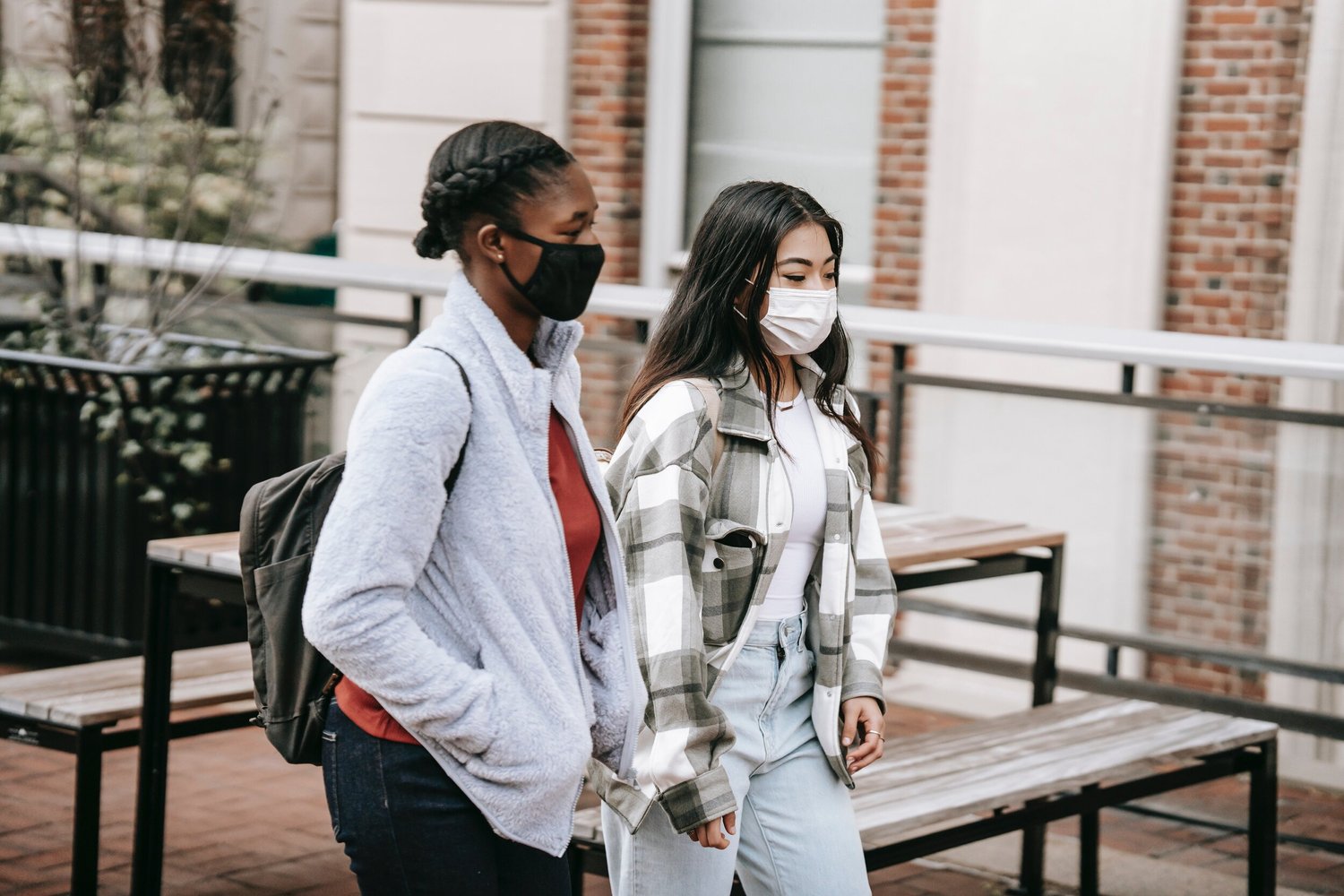
    Photo by   Charlotte May   from   Pexels

    2. Safe Communities

    For Ohio to be a place of freedom and justice for all, where our families can be whole and safe.OUR DEMANDS

    Rights Reserved

    3. Economic Dignity

    For all Ohioans to have a home to make memories, see a doctor when we are sick, and put food on the table.OUR DEMANDS

    Rights reserved

    4. Care for Caregivers

    An Ohio that respects and lifts up BIPOC women and the people who care for our families.OUR DEMANDS
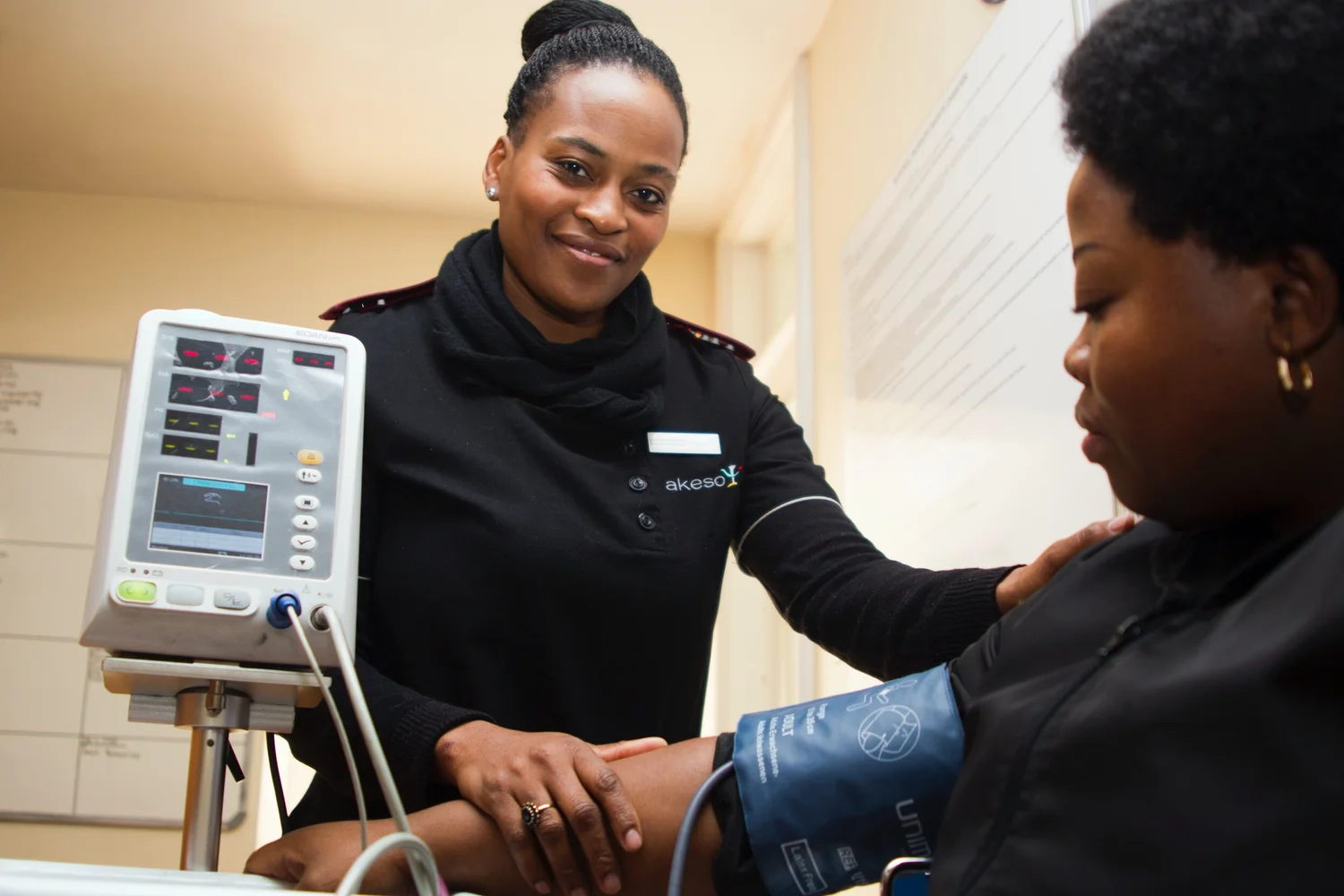
    Photo by  Hush Naidoo  on  Unsplash

    5. Stability For Our Families

    For every Ohioan regardless of color or income to be cared for if and when they fall on hard times.OUR DEMANDS

    Rights reserved

    6. A Working Health Care System

    For all Ohioans to receive the very best care and see a doctor when we are sick, no exceptions.OUR DEMANDS
    Rights Reserved

    7. Funding Our Lives

    An Ohio where everyone has the opportunity for a better life, no matter what we look like or how much money we have.OUR DEMANDS
    Rights Reserved

    Tell our elected state leaders why you support The People’s Budget

    SIGN OUR PETITION

  • Our Top 5 Reasons to Vote Against the Loveland Levy

    Our Top 5 Reasons to Vote Against the Loveland Levy

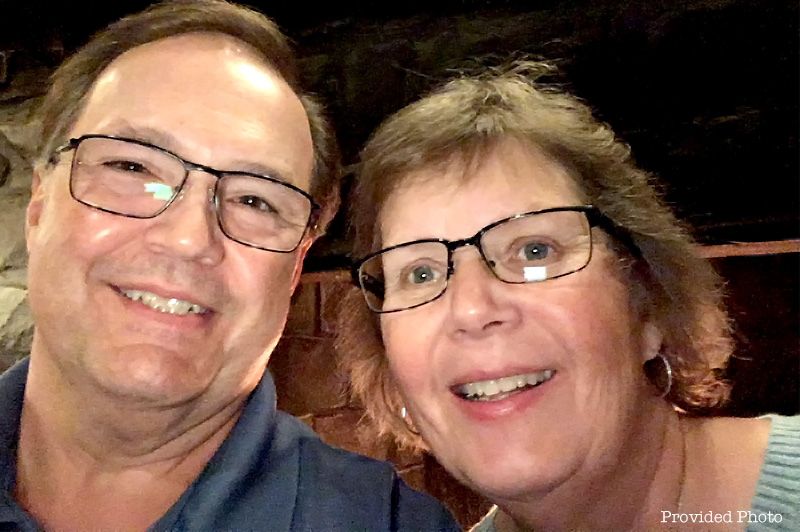
    by Kim and Rick Donaldson

    We firmly believe that providing a quality education for our children is of utmost importance to the community, and hence deserving of adequate public financial support. However, we also believe it is incumbent on our elected representatives

    Kim and Rick Donaldson live in the Grailville neighborhood of Miami Township

    and the administrators they hire to ensure that funding is used efficiently to provide a quality education for our children. So, even though we have supported school levies in the past, we will be voting against the bond issue and tax levies on November 5th. 

    Here are our top 5 reasons:

    Reason #5

    When you are given a slick sales pitch and rushed to a decision, it’s usually a bad deal.  We were first made aware of the high cost of this levy in August, less than 3 months before the vote, by means of a slick postcard. At a mid-September community meeting, we were given a sales pitch claiming an urgent need to act now. We later learned that the board had hired a consultant to help them sell their plan. Caveat emptor!

    Reason #4

    It piles a laundry list of “wants” on top of a relatively small number of “needs” with no apparent regard for cost. The buildings most in need of repair, pre-K to grade 5, get just over half of the budget (52.4%). The remainder of the budget includes things like a $16M fine arts center at the high school, $10M turf athletic fields, an 8-lane track at the middle school … not exactly necessities in our opinion. The planning process does not appear to have seriously considered renovation as an option to address the real needs. We will not get a plan that addresses the school’s real needs within a reasonable budget unless we demand it.

    Reason #3

    Total funding growth has outpaced inflation by 21% from 2006 to 2018. The school board quoted a much lower growth rate in its 12 September presentation by focusing on 2016 through 2019, a period between levies. Now they are asking for another 26%, with a promise that they won’t come back for more for another 3 years. Unless inflation skyrockets in the interim, they’ll be on track to outpace it yet again. (Note: Total revenue includes federal and state revenue in addition to local property tax revenue, so it takes a 42% increase in school property tax to yield a 26% increase in total revenue, i.e. 16.78 mil = 42% school property tax = 26% total revenue.) This does not look like fiscal responsibility or accountability to us.

    Reason #2

    It’s bad for the community. Loveland’s school property tax is already high. According to the Ohio Department of Education data, our 2018 effective residential millage rate was higher than 85% of the districts in the state, including Indian Hill, Lakota, Mason, Milford & Sycamore. The additional 16.78 mil tax would move us above over 95% of the districts in the state, including Kings, Madeira & Wyoming. From a property value perspective, a 16.78 mil tax increase will cost an additional $48.94 per month on a $100,000 home. A prospective buyer would then have that much less to apply to a mortgage payment, which equates to having $10,251, or 10.3% less to spend. High taxes reduce home values and drive out businesses.

    Reason #1

    It’s bad for our children. More money does not necessarily mean a better education. A 2014 Cato Institute study showed Ohio SAT scores did not improve from 1972 to 2012 despite increasing inflation-adjusted per-pupil spending by 150%. Current Ohio public school comparisons show no correlation between spending and performance after correcting for the strongest factor, % disadvantaged students, which accounts for 71% of the differences among Ohio public school districts. Other studies, summarized by Professor Bruce Baker, show some positive impact of increased spending to reduce class size and/or increase teacher pay, primarily in poorer school districts where both were seriously deficient. Unfortunately, the proposed levy is focused on facilities, not teachers. Unnecessary facilities draw funding away from the classroom. To borrow a phrase from Margaret Thatcher: “… you eventually run out of other people’s money.”

    One final thought: We believe that this levy and the manner in which it has been presented are indicative of unconscionable fiscal irresponsibility on the part of the school board and administration. Consequently, no current member of this board will ever again receive our vote. Since they are running unopposed on November 5th, we will leave the school board portion of our ballots blank in the hope that a low vote count will encourage more responsible members of the community to run next time around.

    In the spirit of Dr. W. Edwards Deming, who said: “In God we trust, all others bring data”, we have posted a brief presentation of these points with supporting data and source references on Nextdoor.com.


    EDITOR’S NOTE:

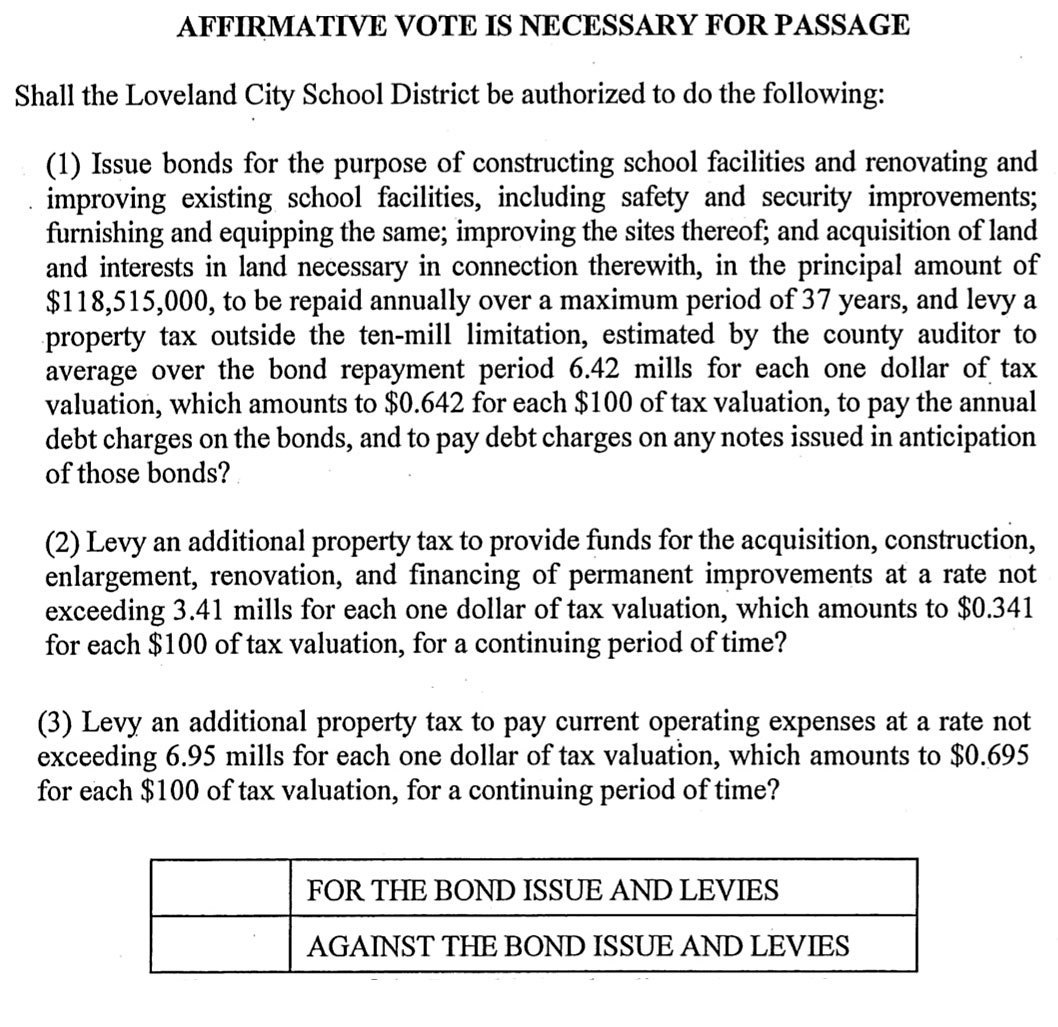
    Read the official ballot language…

  • Gathering the facts to make an informed decision

    Gathering the facts to make an informed decision

    by Dr. Amy Crouse

    As the superintendent of the Loveland City School District, it is my responsibility to ensure that every child in our district has access to quality education while managing our tax dollars wisely and providing a good value to residents. I take this responsibility seriously.

    Dr. Amy Crouse is Superintendent, Loveland City School District

    Another responsibility I take very seriously is the dissemination of facts. This is why we have been hosting community chats and forums, such as the event held on September 12; it’s why we are constantly updating our website and addressing frequently asked questions; and it’s why we are so intent on engaging with our community. It is imperative that our residents have the facts in order to make an informed decision at the ballot on November 5. And some of what we’re seeing out there, well, it’s simply not accurate.

    What is accurate is that Loveland City Schools have reached a critical juncture: We have overcrowding, with some classes being held in hallways and in trailers, we have three old buildings for which repair costs have reached the threshold where industry standards recommend replacement over renovation, and we have a need to secure additional operating dollars. The needs facing our schools are very real and immediate.

    Over these last several years, we have spent time working with the community on a plan that is cost-efficient and meets the school district’s needs. This is the ballot issue facing voters with the Tuesday, November 5 election.

    We realize that this ballot issue is no small ask. We also realize, like the community members who helped identify and prioritize the needs, that it is more cost effective to do the work all at once and that the longer we wait, the more expensive it will be to remedy the needs facing our schools.

    Large amounts of money would have to be spent on other temporary solutions, like trailers, instead of putting the dollars toward real solutions for the long term.

    When considering this ballot issue, it is important to note that there is no zero-cost option with our facilities and the needs do not go away over time if we continue with the status quo. In fact, continuing to do so with our facilities comes at a substantial cost – we would need to divert funds from the classroom to pay for critical repairs, which are still only temporary fixes to problems that don’t go away. We would need to put off important safety and security updates in the buildings and continue to make do with antiquated science and technology laboratories and learning spaces. Large amounts of money would have to be spent on other temporary solutions, like trailers, instead of putting the dollars toward real solutions for the long term.

    I encourage you to visit the “Frequently Asked Questions” section on our website.

    These are important considerations for our community – it comes down to how we want our schools to operate. So that you can be informed about the facts regarding the district work, planning and needs, I encourage you to visit the “Frequently Asked Questions” section on our website. Among other facts on this page, we have also included the updated cost information that shows the board’s intent to structure the financing so that the overall impact of the tax is phased in for residents over three years. This helps residents and it helps meet the school district’s needs.

    In service to our Tigers.