by Danielle V. Minson, CEO, Jewish Federation of Cincinnati
We are deeply disturbed by the reprehensible display of hate witnessed today at the Vision Way overpass on I-75, where individuals openly displayed Nazi symbols. Such acts of antisemitism, racism, and bigotry are an affront to the values of inclusion, respect, and unity that define our community. Hate has no place in Cincinnati or anywhere in our society.
Thanks to the vigilance of our community members, we were promptly alerted to this incident and immediately contacted law enforcement. This underscores the critical importance of community diligence in maintaining our collective security.
At this time, we have received no information indicating an imminent, credible threat against local Jewish organizations or congregations. The safety and security of our community remain our highest priority, and we continue to work closely with law enforcement through SAFE Cincinnati, our community-wide security initiative designed to improve readiness against security threats and natural disasters.
We will not be intimidated. Our response to hate is to reaffirm our commitment to strengthening community bonds, advancing education, and advocating for a society free of antisemitism and all forms of hate and bigotry. We urge all citizens of Cincinnati to stand with us in rejecting hate and building a community where all people can live without fear or intimidation.
We are grateful to our community partners, law enforcement, and local officials for their ongoing support. Together, we will continue to uphold our shared values of dignity, respect, and inclusion for all.
Danielle V. Minson
CEO, Jewish Federation of Cincinnati
# # #
About the Jewish Federation of Cincinnati
The Jewish Federation of Cincinnati envisions an exceptional Cincinnati Jewish community and, through the community-wide strategic plan Cincinnati 2030, brings diverse groups together to build it. We raise money and use a volunteer-driven, transparent process to distribute it to the local, national, and global programs that need it most. We connect our community agencies with the leaders and expertise they need to thrive. And we work to protect Jewish security by educating the community and advocating for Israel. We do all of this to help people in need, create an engaged community, assure our Jewish future, and support the Jewish people in Cincinnati, in Israel, and throughout the world.
Recently, the Jewish Federation of Cincinnati’s Jewish Community Relations Council learned that on September 5 the West Chester Tea Party hosted a speaker who disseminated numerous extreme antisemitic conspiracy theories. The West Chester Tea Party subsequently repeated many of these ideas in an email sent to their membership on September 9.
Since this came to our attention, we have discovered that the West Chester Tea Party has a long history of sharing vitriolic antisemitic rhetoric through its Facebook page and Gab account. A non-exhaustive list of conspiracy theories propagated by the group include that Jews: control the media, finance, and politicians; manipulate African Americans; are imposters who have replaced the “real Jews”; engage in child sacrifice; and are disloyal to the United States.
We are keenly aware of how antisemitism is on the rise in our country. The normalization of antisemitism by an active, local political organization makes this worse and is absolutely unacceptable.
We are grateful for the Republican elected officials who have voiced their support to the Jewish community, making clear that they do not condone this group’s behavior. Likewise, given that this speaker was hosted at St. Gertrude the Great Catholic Church, we thank the Archdiocese of Cincinnati for helping us confirm that the church that hosted this event is not formally affiliated with the Roman Catholic Church. The Archdiocese has affirmed that they would not allow such behavior within one of their facilities. The Cincinnati Jewish community is lucky to have leaders in the Republican and Catholic communities who will stand up to hate such as this, which is purportedly committed in their names.
Until such a time as the West Chester Tea Party has not just deleted this material, but demonstrates a commitment to opposing antisemitism, we call on those who consider themselves allies to the Jewish community not to seek their endorsement, appear at their programs, or work with them. Doing anything less normalizes this behavior and makes our community less safe.
About the Jewish Community Relations Council
The Jewish Community Relations Council (JCRC) is the non-partisan public affairs arm of the Jewish Federation of Cincinnati. Its mission is to protect Jewish security, recognizing that Jewish security depends on a just society for all. To achieve this mission, it advocates for the local Jewish community through Israel education; fighting antisemitism, discrimination, and racism; and building understanding with other ethnic, religious, and civic organizations. For more information, please visit jewishcincinnati.org/jcrc
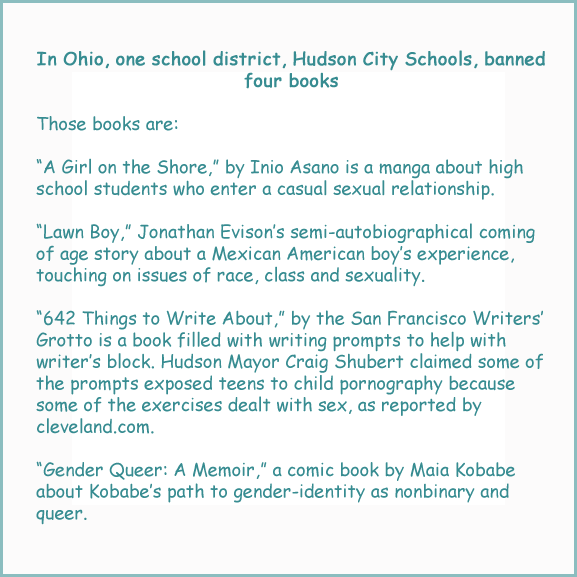
Students in one Pennsylvania school district were not allowed to read a biography of the first Black President, Barack Obama. (The ban was reversed following student protests.)
In some Tennessee classrooms, a nonfiction comic book about the atrocities of the Holocaust is banned.
And one school district in Wisconsin banned from libraries a picture book about a gay rights activist who was assassinated.
In the last nine months, hundreds of books across dozens of states are being banned at an alarming rate. A majority of the bans feature books written by authors who are people of color, LGBTQ+, Black and Indigenous, and feature characters from marginalized groups.
And now, state Republicans lawmakers are joining the movement, spurred by ultra conservative groups, to ban books from public schools and libraries.
This year in Arizona, state Republicans put forth a measure that would ban schools from teaching or directing students to study any material that is “sexually explicit.” In Florida, Gov. Ron DeSantis recently signed a bill to allow parents greater opportunity to review, and potentially object to, school library books that they find “inappropriate.”
And in Idaho, state House Republicans passed a bill that would allow librarians to be prosecuted for allowing minors to check out material deemed harmful.
Some of the states with the most aggressive book bans include Texas with 713 bans, Pennsylvania with 456 bans and Florida with 204 bans.
Deborah Caldwell-Stone, the director of the American Library Association’s Office for Intellectual Freedom, said book bans the last 10 years have dealt “with the lives of LGBTQIA persons, either reflecting their experiences, or talking about issues of concern to the LGBTQIA community.”
She said those bans have ranged from picture books depicting same-sex couples to young adult books talking about gender identities.
Caldwell-Stone said, “the one thing that has interrupted this” trend of banning books centered around LGBTQ+ themes comes after the 2020 murder of George Floyd by Minnesota police officer Derek Chauvin.
“There was an increased number of challenges to books dealing with race and racism that accelerated when we started seeing complaints from organized groups about critical race theory,” she said.
“And so when I say critical race theory, I’m not using it in the sense that it actually should be used, which is to describe a graduate level academic analysis of law and political systems, but this use of it to describe books and materials that offer alternative perspectives on American history that reflect the lives of Black persons and their experience of slavery, their experiences with police violence, and so we’ve seen a rising number of challenges to those books.”
Some of those groups that have challenged school boards include Moms for Liberty, an organization that has strong GOP ties and has local chapters that “target local school board meetings, school board members, administrators, and teachers” to push right-wing policies, as reported by Media Matters. Moms for Liberty has more than 100 local chapters across 35 states.
“We’re seeing nationally organized groups create local chapters, and use social media to amplify their demands,” Caldwell-Stone said. “They will tell you that they’re asserting parental rights to direct their children’s education, but the impact of their activities is to deny other parents the right to make decisions about their own children’s education, and particularly for older adolescents denying the First Amendment rights and agency for elder adolescents to read and access the materials they find important for their lives.”
Congressional Democrats have also raised concerns about the increase in book bans across the country. At a recent hearing, Maryland Democrat Rep. Jamie Raskin, cited a report by PEN America — an organization that advocates for the protection of free speech — that found from July 2021 to the end of March this year, more than 1,500 books were banned in 86 school districts in 26 states.
Ruby Bridges, a civil rights icon who was the first Black child to desegregate an all-white Louisiana school, was a key witness at the hearing. Children’s books about her story – “Brand New School, Brave New Ruby,” and “The Story of Ruby Bridges” – have been banned from classrooms in Pennsylvania.
“The truth is that rarely do children of color or immigrants see themselves in these textbooks we are forced to use,” Bridges told lawmakers. “I write because I want them to understand the contributions their ancestors have made to our great country, whether that contribution was made as slaves or volunteers.”
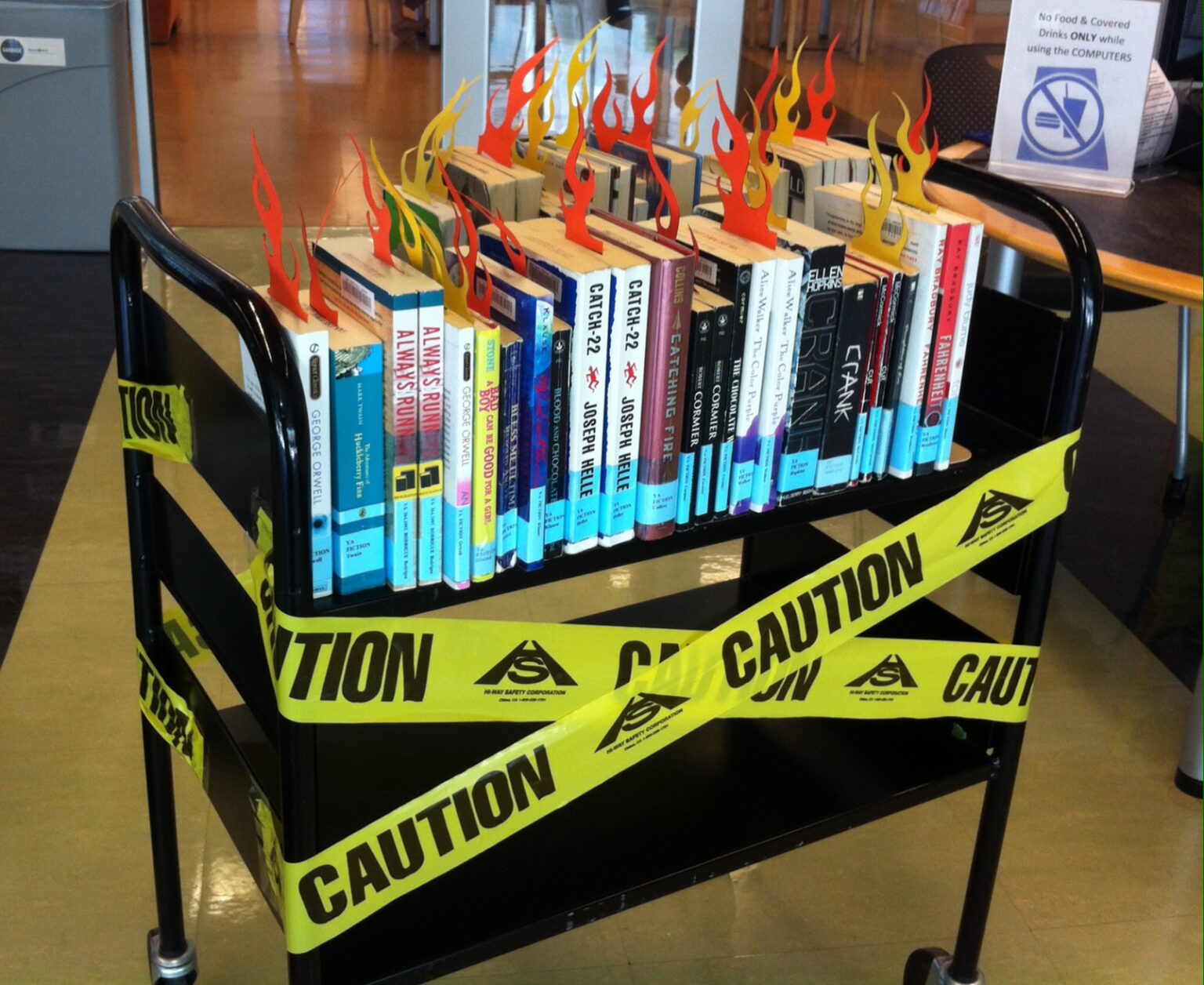
Banning books is not a new thing, and since the 1980s, the American Libraries Association has celebrated those books that are taken off the shelves for its yearly “Banned Books Week.”
Books have been banned for racist depictions or language, such as “Huckleberry Finn” by Mark Twain and “Of Mice and Men” by John Steinbeck because of its racial slurs. And in 2021, Dr. Seuss Enterprises announced it would no longer reprint six Dr. Seuss books, including “And to Think That I Saw It on Mulberry Street,” and “If I Ran the Zoo.”
“These books portray people in ways that are hurtful and wrong,” Dr. Seuss Enterprises said in a statement.
But the uptick and rate at which books are now being challenged and banned in schools, has alarmed many freedom of speech advocates such as Jonathan Friedman, the Director of PEN’s Free Expression and Education program, and author of the report Raskin referred to during a House hearing.
“It’s not just a parent getting angry about a book in a one off fashion,” he said in an interview with States Newsroom.
Friedman said some parents or local activists will submit hundreds of books to be challenged and removed off shelves.
“It’s happening all over, so it’s not just one part of the country. A list of books that might be deemed illicit by a group of parents in one state is being used in other states as well,” he said.
Friedman said he’s noticed most of the escalation of book banning happened in the fall of 2021, and pointed to a large swath of book bans that started in Leander, a school district in Texas.
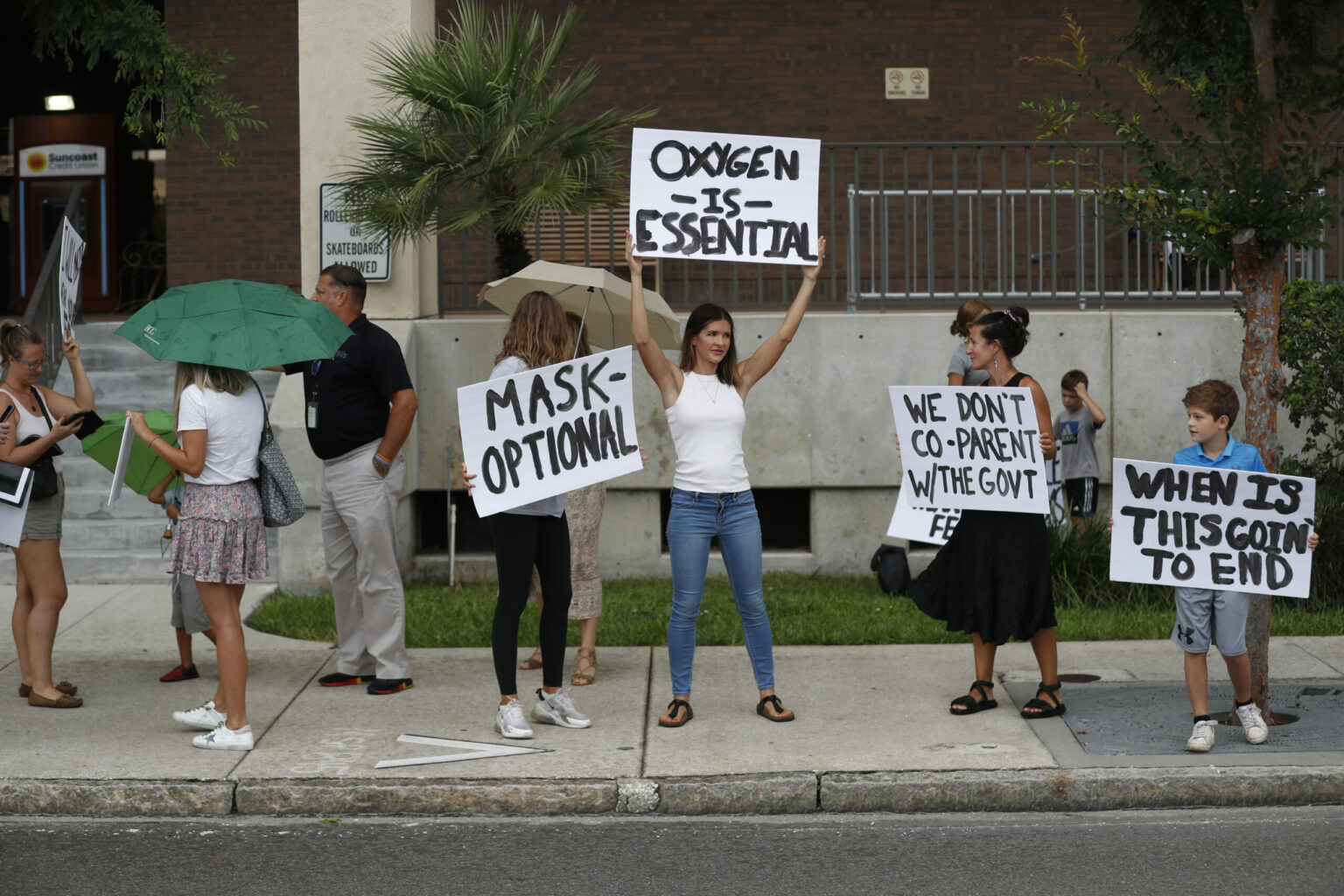
“I think a lot of the energy around that (trend), set off of anti-mask energy, and you know, sort of frustrations of a pandemic,” Friedman said.
During a school board meeting, a parent read an excerpt of “Out of Darkness” by Ashley Hope Pérez that has a euphemism for anal sex that is historically accurate for the time the book takes place in, which is the 1930s.
That book was one of 120 that students could choose from based off of an optional curriculum, such as a book club.
“And in response, the district suspended the entire curriculum and launched a review, a kind of book by book review, much of it seemingly developing on the fly,” he said. “So they went through a year-long process, but some have serious questions about how much that process was conducted in a way that was fair.”
Banning books in the classroom is an issue the Supreme Court took up in 1982 in Island Trees School District v. Pico. In a 5-4 decision, the Court ruled in the student’s favor, affirming that the First Amendment limits the power of junior high and high school administrative officials to remove books from school libraries based on the books’ content.
But in that court decision, because “given the sensibilities of young people” schools were given discretion to remove books that were deemed “pervasively vulgar,” or “educationally unsuitable,”Caldwell-Stone said.
“Because the court really didn’t define these terms, they become a kind of magic word,” she said. “If we say those magic words that will make it legal for us to remove this book when, in fact, the actual motivation behind removing the book is because the book is about two gay teens finding each other and falling in love.”
The National School Boards Association is walking back its letter to President Joe Biden asking for federal help for school board members who have been harassed and threatened over masking requirements and discussions of race in public schools.
The shift came after Republican members of Congress led by Iowa Sen. Charles Grassley raised strong objections to a Department of Justice investigation that was launched in response to the association’s letter. The Ohio School Boards Association (OSBA) announced Tuesday it would end its affiliation with the national group, saying it had no input into the original letter.
GOP senators said that the government was trying to police the speech of parents, and it was “entirely inappropriate” for the association to ask for a review of whether crimes are being committed by parents or others under various statutes including the PATRIOT Act, which is aimed at deterring terrorism.
Some conservative groups and local school boards also sharply criticized the DOJ investigation and the national association.
“(The Ohio School Boards Association’s) decision to terminate membership and affiliation with the NSBA Association is a direct result of the letter sent by you to President Joe Biden late last month,” the Ohio board informed the national group in a letter Monday. “The letter purported to be sent on behalf of state associations and school board members across the nation. This assertion could not be further from the truth. OSBA was not notified of the letter, nor were we asked for our thoughts on the matter. If we had been consulted, we would have strongly disagreed with NSBA’s decision to request federal intervention as well as your claims of domestic terrorism and hate crimes.”
In a memorandum dated Friday and provided to States Newsroom, NSBA’s Board of Directors wrote to its members that “we regret and apologize for the letter.” NSBA did not answer questions about the specific language the organization regretted.
“As we’ve reiterated since the letter was sent, we deeply value not only the work of local school boards that make important contributions within our communities, but also the voices of parents, who should and must continue to be heard when it comes to decisions about their children’s education, health, and safety,” according to the memo.
According to its website, NSBA’s Board of Directors includes John Halkias of the Plain Local School District in Ohio, Donald Hubler of Macomb Intermediate School District in Michigan, Steven Chapman of Tolleson Union High School District in Arizona, Kathy Gebhardt of Boulder Valley School District in Colorado, Kathryn Green of Austin Public Schools ISD 492 in Minnesota, Ronald Hopkins of Jefferson City Schools in Georgia and Beverly Slough of St. Johns County School District in Florida, among others.
The six-page Sept. 29 NSBA letter to Biden asked for federal assistance and detailed, at length, threats and harassment that school board officials and teachers across the country are facing. It was signed by Viola M. Garcia, association president, and Chip Slaven, the interim executive director and CEO.
“As these acts of malice, violence, and threats against public school officials have increased, the classification of these heinous actions could be the equivalent to a form of domestic terrorism and hate crimes,” the letter said.
The vitriol stems from controversy surrounding teaching about the history of racism as well as requirements for students and staff to wear masks to mitigate the risk of spreading COVID-19.
In the last year, conservative activists and some parents have targeted school board meetings, protesting “critical race theory,” which generally is not taught at the K-12 level and is instead an academic theory of the intersection of race and U.S. law that is studied in college.
U.S. Attorney General Merrick Garland directed the FBI earlier this month to meet with local law enforcement officials to strategize how to deal with the threats.
Garland is also set to appear before the U.S. Senate Judiciary Committee Wednesday during a hearing about the oversight of the Justice Department, where he will likely be asked questions about the DOJ and FBI’s handling of threats to school board officials.
The memo from NSBA did not ask the Justice Department to end its investigation into threats.
The OSBA said in a news release Tuesday morning that the association believes in the value of parental and community discussion at school board meetings, and “there is tremendous value in allowing and encouraging the public to have meaningful input into the decision-making process.”
“However, that participation should not come at the expense of interfering with the board’s ability to conduct its business or subjecting individual board members to threats of violence, abuse, or harassment,” said OSBA Chief Executive Officer Rick Lewis. “But dealing with such interference should be dealt with at the local level, not by federal officials.”
The NSBA had praised the decision to begin the investigation in an Oct. 4 press release. “The U.S. Department of Justice’s swift action in response to NSBA’s request is a strong message to individuals with violent intent who are focused on causing chaos, disrupting our public schools, and driving wedges between school boards and the parents, students, and communities they serve,” the association said in a statement.
But Republicans in Congress criticized Garland’s decision to have the FBI look into the threats and called the move an attack on parents for exercising their right to free speech.
“Violence and true threats of violence should have no place in our civic discourse, but parents should absolutely be involved in public debates over what and how our public schools teach their children, even if those discussions get heated,” according to a letter led by Grassley, the top Republican on the U.S. Senate Judiciary Committee.
NSBA in its original letter cited disruptions at school board meetings in Georgia, Florida, Michigan, Ohio, New Jersey, Virginia, Wisconsin, Tennessee and Nevada.
For example, in Florida, the Florida Phoenix reported that several school board members detailed threatening text messages, vandalism and harassment they continue to face over masking requirements amid the pandemic.
“When these behaviors are ignored, when there’s no accountability for these actions, they become normalized and acceptable, and they get reinforced,” Brevard County School Board member Jennifer Jenkins said during a Monday Zoom conference, the Phoenix reported.
Jenkins also detailed in a Washington Post opinion piece how someone outlined the letters “FU” in weedkiller on her front lawn and she said that someone falsified a report accusing her of abusing her child.
“My 5-year-old daughter was on a play date last month when an investigator from the Florida Department of Children and Families sat at my kitchen table to question me about how I disciplined her, then accompanied me to the play date to check for nonexistent burn marks beneath her clothes,” Jenkins wrote.
“Someone had falsely reported that I abused my child. The report was quickly dismissed, but this was the low point in the short time I have been a Brevard County School Board member.”
The NSBA said in its Friday memo that it would “do better going forward” and review its policies and procedures.
“To be clear, the safety of school board members, other public school officials and educators, and students is our top priority, and there remains important work to be done on this issue. However, there was no justification for some of the language included in the letter. We should have had a better process in place to allow for consultation on a communication of this significance. We apologize also for the strain and stress this situation has caused you and your organizations,” the memo said.
A true story by a Loveland resident presented by Loveland Magazine in collaboration with the Loveland Diversity Advisory Board. Contact them if you’ve a story to share.
The family in this story has chosen to remain anonymous for fear of retaliation against their children.
You may want to read Part I first or re-read it to remember the story we are telling.
Part I of II
As the years passed our family had more brushes with racism and the talks my husband and I had with our sons became, both by choice and necessity, more regular. As they grew from children into tweens and teens, we had to remind them that in the eyes of others they were no longer perceived to be cute, unthreatening little boys. For a Black child, that shift in perception can be the difference between life and death. While their Caucasian friends were in the habit of wearing the hoods of their sweatshirts over their heads when walking around town, their dad and I recognized the danger inherent in this scenario for boys of color. And that was just the beginning. Every news story became another talk we had to have.
Still, despite the increasing frequency of our family talks and growing awareness of society’s bigotry, one can never quite be prepared when racism rears its ugly head.
She wanted to go to the park. My daughter, only five, was not yet included in these family conversations. The innocence my sons were cruelly stripped of that final day of school was still intact in her, as evidenced by her bright eyes, sweet giggles, and the ambient toothy grin she had for everyone she met. Like so many moms that day, I tied her soft brown curls in a ponytail, gave her breakfast and got her dressed before setting out for our walk to the park, just around the corner from our house. It was an unremarkable walk, one we’d taken a thousand times.
Upon arrival we encountered several boys. They appeared to be aged 12 or 13, and like so many boys their age they were roughhousing, laughing, and hollering. I half-smiled and shook my head remembering how boys that age could be, before turning my attention back to my little girl.
The rowdiness didn’t bother us, but I winced as one spewed a series of obscenities, hoping my daughter’s attention was focused on the playground and not the words her young ears were hearing. A quick glance around showed no parents or elder siblings in attendance and so apparently, as tween boys are apt to do, they were in relishing their temporary emancipation, saying things they knew better than to say.
They’ll stop this behavior now that I’m here. Kids don’t act like this in front of adults, I deduced. I’ll just keep her on the far side of the park where she’s less likely to hear them.
“ Mommy!” I was jerked back into reality by my daughter’s excitement. “Can you help me get up there?” she asked, motioning to the play structure.
I had done it a thousand times. I’d fit my hands around her waist, giving her a boost. I’d watch as her small hands smoothly and confidently scaled the rungs. But before I could lift her I heard a mocking shout coming from the direction of the boys.
“Why are YOU calling HER that? She’s not YOUR mom,” he chortled.
Now is the part of the story where I let you, the reader, know that I am, in fact, Caucasian. My husband is Black and, thus, our childrens’ richly hued complexions do not match mine. And while there has been more than one instance where children (and the occasional adult) are curious about how one pale-skinned mother comes to have three darker-skinned children, the tone in this boy’s voice told me this was not childhood confusion.
This was antagonistic.
This was unmistakable cruelty.
My daughter let go of the play structure, whipping her head around to face me. Loose curls softly grazed her cheek. We locked eyes. On her face was an eerily familiar expression. It was one I’d seen years earlier and in many nightmares since. It was the same look my sons had given me on the last day of school.
That last day of school.
“Have a good summer, you N——s!”
The feeling came rushing back, the unadulterated terror where my stomach flips, my heart drops, my breath quickens, and I can feel the color draining from my face.
Oh, not again.
“Mommy?” my daughter looked at me, baffled.
“Stop calling her your mom!” The boy scoffed. “She can’t be your mom. She’s white!” The boy sneered at us, before glancing at his buddies with a snicker and a smile, seeking approval for what he must have thought were his superior skills of observation. One of his friends joined in on the cackling. The other stood silently, head down.
The old adage of “sticks and stones” isn’t always accurate. One look at my daughter’s collapsed expression told me these words, while not breaking her proverbial bones, threatened to break her spirit.
“Don’t you talk to my daughter that way,” I snapped. “I am her mother.”
“Mom–”
“She’s not your mom! SHE”S NOT YOUR MOM! She’s white!”
Laughter. Jeers.
I walked toward the boys slowly, the soft earth yielding beneath my sandaled feet.
Imagine, for a moment, you are standing in my shoes.
What do you do in a situation like this? Do you unleash your wrath on someone else’s kids? Do you completely lose your composure in front of your daughter who is already visibly shaken? Or do you ignore such a blatant and dangerous transgression? And where did these kids learn this behavior anyway? Why would they think this sort of racially-charged rhetoric is acceptable? What emboldened them, still children, to speak this way around me, an adult? And of all places for this to happen, why did it have to be on a playground, a place of childhood innocence? A magical place meant to foster youthful wonder and unbridled imagination?
The questions rang in my ears while a whirlwind of emotions bubbled to the surface. Though seemingly intertwined, my feelings were in direct juxtaposition with each other. I felt sorrow, but also anger. Despair, but also rage.
“You know,” I began, measuring my words carefully, “I wish your moms were here so they could see how you’re behaving.”
I didn’t know what else to say. I still don’t. Would you?
I took my daughter’s small hand and led her out of the park, back to our house, back to the embrace of the four walls that felt comforting and familiar. The sun swelled in the sky, casting shadows as it fought to rise above the clouds.
As we walked, my daughter begged insistently for answers.
“Mommy, why are those boys saying you’re not my mommy?” The loose brown curls now stuck to her face, plastered in place by tears. “You are my mommy, right? You’re my mommy?”
Explaining a nuanced topic like racism to my school-aged sons felt like too soon and even then I felt guilty somehow. Like I hadn’t broached the subject enough and had somehow failed them. But my daughter was five. How do I explain this situation to a five year-old? And why should I have to? I resented those boys. I resented the situation. I resented everything that put me in the position of having to reassure a five year-old little girl that I am her mother, to explain why she and I look different, and to address how that will be an issue for her in the future.
If I have learned anything from the events involving my children it’s that everyone, regardless of the color of their skin, needs to be having conversations about race with their families. These talks, whether organic and casual in nature or full-fledged sitdown discussions, must happen regularly. Not only that, but the topic needs to be addressed in a manner that honors and celebrates our differences while still acknowledging our similarities. And because so much of racism is learned behavior, modeling acceptable treatment of others can’t start and end when the conversations do. It isn’t the sole responsibility of families of color to teach their kids about prejudice and racism; Eradicating hatred is a group effort that has to include everyone to be successful.
I have replayed that day in my mind a thousand times.
Fortunately, in the years since, my daughter’s memory of the incident has somewhat faded. I’m thankful that she doesn’t have to carry that burden around anymore, a veritable boulder on her tiny back.
But I carry it everyday.
I carry it when I see the news.
I carry it when I think of my own school experience. The cruel taunts of classmates calling me a “N—-rlover” leave me wondering what onslaught the teen years have in store for my own children.
I carry it when I see comments on social media that assert prejudice does not exist in Loveland, or does not exist in Loveland today, or does not exist with “my child.”
I carry it when I’m sitting on my porch watching my daughter play and from a yard within earshot I hear someone commenting on the election. Well I hope all those dumb Black people are happy now that they got what they wanted.
Racism is here, in Loveland, whether we want to admit it or not. It’s here today and everyday, and it’s all around us whether we want to admit it to others or to ourselves.
But what gives me hope is that once we acknowledge the issue, we can unburden ourselves of this unnecessary weight. By taking that first step, we can commit to doing better. We can do what is needed to learn and to grow, and we can do that learning and growing together. I hope that by sharing my family’s experiences others will be empowered to take that first step.
In Part I of this Diversity Story, we see that the trouble was only beginning.
Read our first installment of a true story by a Loveland resident presented by Loveland Magazine in collaboration with the Loveland Diversity Advisory Board
For engaging story times on diversity (including race) for young learners, join the Loveland Diversity Advisory Board and the Cincinnati Hamilton County Library the 2nd Monday of every month for Bedtime Book Talks.
Support for those feeling fearful, vulnerable, or uncomfortable upon reading these accounts:
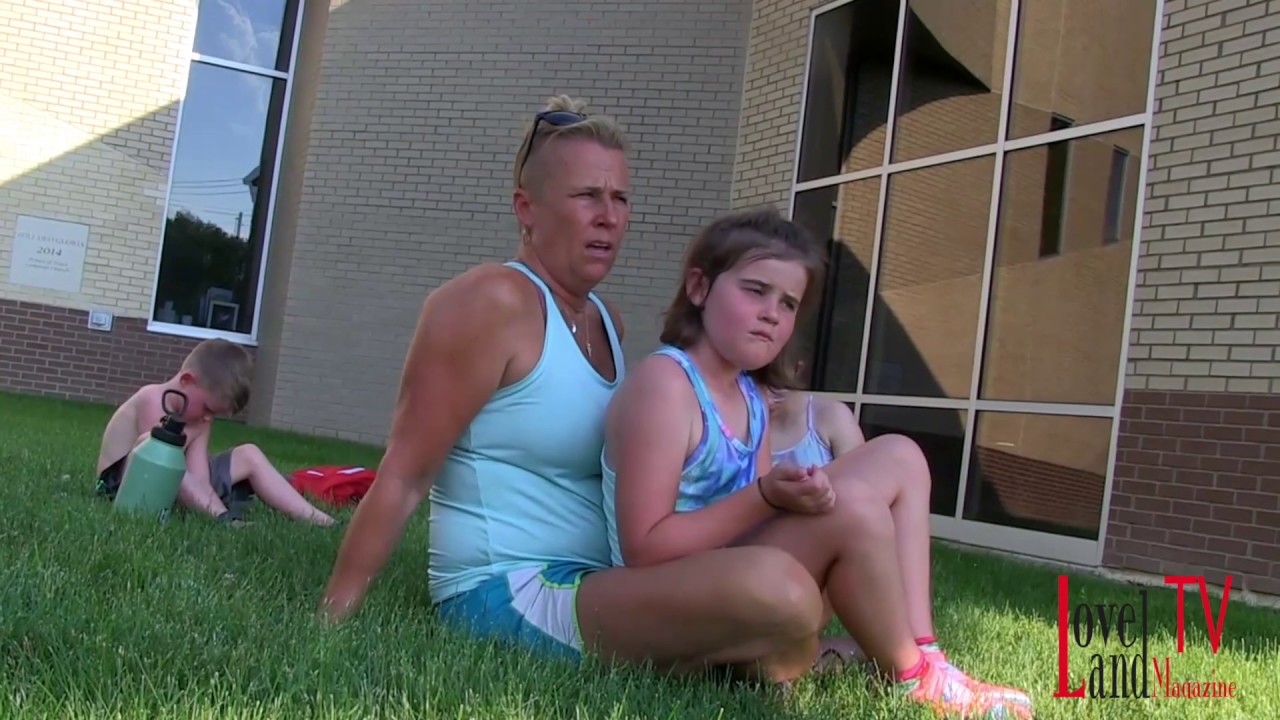
Loveland, Ohio – This is an interview with Kristy McNally just after she came back from one of the Prayer Peace Walks that have been organized by Desmon Gault all last week.
The walks through Loveland neighborhoods were in response to the death of George Floyd who died in police custody on May 25 in the Powderhorn community of Minneapolis, Minnesota. While Floyd was handcuffed and lying face down on a city street during an arrest, Derek Chauvin, a white American Minneapolis police officer, kept his knee on the right side of Floyd’s neck for 8 minutes and 46 seconds; according to the criminal complaint against Chauvin, 2 minutes and 53 seconds of that time occurred after Floyd became unresponsive.
McNally lives in the West Loveland Historic District with her husband Mike and their children.
Inwood Park, Cincinnati OH – Sunday, March 31st, 2020 After a handful of changes in location, the Facebook-organized rally labeled as “Be Heard, Be Safe;…
CLEVELAND, OH – U.S. Sen. Sherrod Brown (D-OH) condemned violence today in Charlottesville, VA.
“The bigotry and violence we’ve seen in Virginia have no place in America. I am grateful to those who put themselves in harm’s way today to peacefully protest against racism and hate,” Brown said. “As we learn more, my thoughts are with all those injured and their families. I am grateful to Virginia law enforcement and first responders. Ohio stands behind Virginia as the state copes with this senseless violence. We must not tolerate racism, threats, intimidation or violence.”