Tag: rape

  • New report looks at underlying causes of Ohio’s violent crimes

    New report looks at underlying causes of Ohio’s violent crimes

    Photo by Brandon Bell/Getty Images

    More than 30,000 violent crimes — including homicide, rape, robbery and aggravated assault — were reported in Ohio in 2023.

    BY:  Ohio Capital Journal

    Many societal structures and systems can be drivers of violent crimes, according to a new report by the Health Policy Institute of Ohio.

    More than 30,000 violent crimes — including homicide, rape, robbery and aggravated assault — were reported in Ohio in 2023.

    “Even with laws and penalties such as arrest and incarceration in place, violent crime persists and causes significant harm to victims and communities,” the report states. “Community conditions and societal structures can support or prevent violent crime. Since the research evidence is clear that arrests and incarceration are detrimental to the health of individuals, families and communities, it is important to take an upstream approach for violence prevention.”

    There’s lots of opportunities as a state to mitigate violence, said Tonni Oberly, one of the authors of the report, titled Criminal Justice and Health: Social Drivers of Violent Crime.

    “We can then also be preventative and treat it as a public health issue by addressing those underlying root causes of violence,” she said.

    Violent crimes in Ohio

    Ohio ranks 34th in the nation in homicides and 80% were gun-related in 2022, according to the report.

    Homicides peaked in Ohio during the COVID-19 pandemic, but have not returned to pre-pandemic rates, according to the report. Two of Columbus’ deadliest years on records were 2021 with 204 homicides and 2020 with 175 homicides. Cleveland had 192 homicides in 2020 and 165 in 2021.

    Columbus and Dayton both recently had mass shootings in the same weekend.

    There were 18,742 incoming domestic violence cases in Ohio in 2014 — a number that has increased almost every year since with the exception of 2020 — and there were 24,534 cases in 2023.

    Societal Structures and Systems

    Racism, income inequality, zoning and neighborhood planning, gender-related social norms, education, employment, healthcare, housing and criminal justice are all structures and systems that can contribute to violent crime, according to the report.

    “All of these structures and systems are also interconnected and interrelated, whether we have typical and current ongoing racist policies that have shaped the way communities are structured and the resources that people have access to,” Oberly said. “All of that aligns with income inequality, with how neighborhoods are shaped, and funding that goes into them, and that, of course, ties into the systems that drives violent crime as well.”

    Redlining and the building the Interstate Highway System through communities of color in the 1950s are two examples of historical policies and practices.

    “These … resulted in poor community stability, lower home valuations, increased foreclosures and limited economic mobility in majority-Black, Hispanic and Asian neighborhoods,” the report said. “As a result, many of these communities experienced concentrated disadvantage, which includes limited educational and employment opportunities and higher rates of poverty, unemployment and food insecurity that continue today.”

    Ohio ranks 30th when it comes to income inequality, which puts people at risk for a shortened life span, poor health and increased neighborhood and interpersonal violence.

    The report illustrates that increases in income supports — such as increased minimum wage, Earned Income Tax Credits and the Supplemental Nutrition Assistance Program — have been shown to lower violence and result in less firearm homicides.

    Zoning and neighborhood planning can also play a role in the amount of violence in a particular area.

    The report explained the relationship between alcohol outlet density and violent crime in a neighborhood. Off-premise outlets such as liquor and convenience stores are associated with higher rates of violent crime compared to on-premise outlets such as bars and restaurants.

    “Alcohol outlet density is a prime example of how zoning impacts violence,” according to the report. “Due to inequitable zoning codes and weakened political power, communities of color and low-income neighborhoods are more likely to have a high density of alcohol outlets.”

    Ohio’s liquor sales have increased 98% in the past two decades while the state’s adult population has gone up 8%. Ohio ranks 34th in the nation for excessive drinking.

    Legislative actions

    There have been legislative attempts to curb violent crimes.

    The DeWine administration gave $20 million in grants to support more than three dozen community-based intervention programs to reduce violence and help victims of crime as part of the Community Violence Prevention Grant Program, according to the report.

    An Ohio law will go into effect in August that bans all forms of spousal rape.

    DeWine recently signed a bill into law that will go into effect in September that aims to help formerly incarcerated people find stable housing.

    House Bill 420 would create the Office of Firearm Violence Prevention within the Ohio Department of Children and Youth which would administer grant programs to reduce firearm violence. Reps. Darnell T. Brewer, D-Cleveland, and Munira Abdullahi, D-Columbus introduced the bill earlier this year, which is in the House Finance Committee.

    The report recommends implementing evidence-based firearm safety policies that includes child access prevention laws and firearm licensing laws.

    Ohio is not one of the 30 states with child-access prevention laws nor is Ohio one of the 14 states that require checks at the point of transfer for all firearms.

    The report also recommends increasing housing affordability, alcohol policies, including density zoning and pricing; and education, employment and criminal justice reform.

    Follow OCJ Reporter Megan Henry on Twitter.


    Megan Henry
    MEGAN HENRY

    Megan Henry is a reporter for the Ohio Capital Journal and has spent the past five years reporting in Ohio on various topics including education, healthcare, business and crime. She previously worked at The Columbus Dispatch, part of the USA Today Network.

    Ohio Capital Journal is part of States Newsroom, the nation’s largest state-focused nonprofit news organization.

    MORE FROM AUTHOR

  • Bill to rid Ohio of spousal rape exception receives support in state Senate

    Bill to rid Ohio of spousal rape exception receives support in state Senate

    BY:  Ohio Capital Journal

    This story mentions rape and sexual assault. If you or someone you know needs help, the National Sexual Assault Hotline is 1-800-656-4673.

    Survivors of sexual assault perpetrated by their spouses had a simple request for the Ohio Legislature with regard to a loophole in state law that keeps their spouses from being held accountable.

    “Please help us,” Sarah Tucker said.

    Tucker said she not only endured rape from her former husband, but also a lack of action by law enforcement because of an exception for married couples within Ohio sex offense laws.

    While she was finally able to separate herself from her spouse, Tucker still has not received the justice she demands for herself and for her kids. Her journey out of the situation included mental health treatment and other assistance to deal with the “lasting effects of this trauma.”

    “Going through something like this changes a person, changes them to lose faith in the justice system, changes how they see themselves, changes how they face new relationships,” Tucker told the Ohio Senate Judiciary Committee.

    The committee heard proponent testimony recently on House Bill 161, which would eliminate spousal exceptions to rape, sexual battery, unlawful sexual conduct with a minor, gross sexual imposition and sexual imposition, according to the language of the bill.

    “The spousal exception for rape is distinct from the others because it currently applies only if the spouse lives with the offender,” according to an analysis of the bill by the Legislative Service Commission. “Under the bill, a person could be convicted of rape involving the spouse, regardless of whether the spouse lives with or apart from the offender.”

    HB 161 would also allow an individual to testify against their spouse in the prosecution of one of the crimes listed in the bill, and allows testimony “concerning a communication made by one to the other in a case involving any of those offenses, as well as public indecency,” the LSC analysis stated.

    Ohio currently stands as one of only 11 states who still holds an exception for marriage in rape and sexual assault cases, according to the bill’s sponsors.

    Those who advocate for rape and sexual assault survivors see the bill as necessary closure of loose ends that can leave law enforcement without options, and survivors with even less.

    “There can be many obstacles in the path of justice for survivors of sexual violence, but to not even have the option of justice is negligent and re-traumatizing for Ohio survivors,” said Rebecca Peckinpaugh, a licensed social worker and director for Allen County and Putnam County’s Crime Victim Services, and regional director of the Ohio Alliance to End Sexual Violence.

    Maria York, policy director for the Ohio Domestic Violence Network said in her 10 years as a victim advocate prior to working for ODVN, intimate partner sexual assault and spousal sex offenses were seen “repeatedly.”

    “The law enforcement, the prosecutor’s office, did a fantastic job trying to get justice for victims, but unfortunately the law isn’t there,” York told the Senate committee.

    She cited data from the National Institute of Justice, which found 40% to 45% of women in abusive relationships experience sexual assault from a partner.

    The need for a resolution is increasing in the state as well, according to Davina Cooper, director of rural services for Women Helping Women, a rape crisis center serving Adams, Brown, Butler, Clermont and Hamilton counties.

    “Intimate partner violence is a public health epidemic that impacts the lives of survivors, their children, family members and the community,” Cooper said.

    The center saw a 25% increase in “hospital response for sexual assault by a spouse” in 2023, according to Cooper. That number was the highest in WHW’s history, and necessitated an increase in staff for rural programming, she said.

    HB 161, which has bipartisan sponsors, has already passed the Ohio House, and approval from the state Senate would take the bill to the governor’s desk for signature.


    Susan Tebben
    SUSAN TEBBEN

    Susan Tebben is an award-winning journalist with a decade of experience covering Ohio news, including courts and crime, Appalachian social issues, government, education, diversity and culture. She has worked for The Newark Advocate, The Glasgow (KY) Daily Times, The Athens Messenger, and WOUB Public Media. She has also had work featured on National Public Radio.

    Ohio Capital Journal is part of States Newsroom, the nation’s largest state-focused nonprofit news organization.

    MORE FROM AUTHOR

  • Loveland Area lawmaker says baby born of rape, incest ‘still has the right to life’

    Loveland Area lawmaker says baby born of rape, incest ‘still has the right to life’

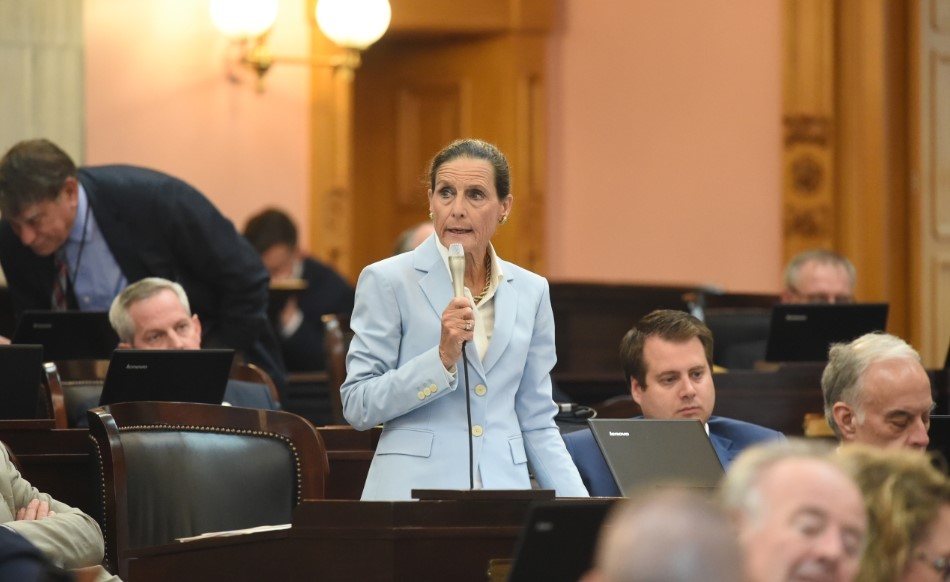
    State Rep. Jean Schmidt speaks on the floor of the Ohio House. Photo from the Ohio House website.

    BY: JAKE ZUCKERMAN –  Ohio Capital Journal

    The sponsor of legislation that would ban nearly all abortions in Ohio said babies conceived via rape or incest still have a right to life.

    Rep. Jean Schmidt, a Loveland area Republican, said on conservative talk radio earlier this week that her bill is likely to pass in the legislative session after the November elections.

    “I do believe we have the votes in both chambers, and we have the full support of the governor on this bill,” she said.

    The bill also creates a new misdemeanor crime of “promoting” abortion, for those who make, sell or distribute drugs or devices used to perform illegal abortions. Schmidt said in the interview this could be used to target some of the companies (including in Ohio) that have announced they will cover costs of employee travel to seek an abortion as needed.

    When pressed by 700WLW host Bill Cunningham on whether Ohio should pass legislation banning birth control pills or condoms, she said she’ll listen to both sides of the debate.

    House Bill 598, which Schmidt introduced, would ban most abortion in Ohio. Current Ohio law allows for abortions up to six weeks after a woman’s last period. The proposed legislation does not provide exceptions for pregnancies conceived by rape or incest.

    Providing any abortion under the bill could lead to a fourth degree felony charge. The law allows the accused to mount a defense, however, if they only did so to save the life of the mother. That physician would need to provide written certification of the woman’s medical need along with that of another physician from a separate practice.

    Likewise, the legislation requires at least two physicians present during the abortion: one to perform the abortion in the manner that provides the “best opportunity for the unborn child to survive,” and another to care for the fetus.

    Schmidt drew national attention in April when she referred to a hypothetical 13-year-old’s pregnancy spawned by rape as an “opportunity.” Her recent comments, however, come after the U.S. Supreme Court last week overturned a landmark 1973 ruling that established a constitutional right to abortion. That decision wiped out the federal protection and returned control over abortion to the states.

    A spokesman for Gov. Mike DeWine did not dispute Schmidt’s characterization of DeWine’s support for her bill, and noted that the governor has previously expressed support for conceptually similar legislation. Senate President Matt Huffman, R-Lima, said this week he expects an abortion ban of some sort to pass in late 2022.

    Schmidt’s remarks indicate no signs of a softened position, and a sense of opportunity after the removal of a major roadblock to restrictive abortion laws. They, and Cunningham’s questions, have been edited here for length and clarity.

    Cunningham: What about rape and incest [as a potential exception to a ban on abortion]?

    Schmidt: “Rape and incest is an ugly, ugly, ugly act of violence, and that woman is truly harmed and scarred, and those wounds will never go away and we need to make sure that she has all of the love and help and support. But to end the pregnancy of the child is not going to erase those wounds or those scars. That child still has the right to life.”

    So, as a leader in the House of Representatives, you would not vote to ban birth control pills in Ohio?

    “You know, that’s another issue for another day, and I’m going to have to listen to both sides of that debate. But right now, what I’m really concerned about is the life of the child, and the fact that we have the opportunity in Ohio to protect it from its conception until its natural death. That’s what I’m most excited about.”

    Would you vote against gay marriage in Ohio?

    “You know, Bill, that’s another decision for another day. The issue right now is abortion, and that’s one I want to make sure sees its end in Ohio in a very quick fashion.”

    [Cunningham for 90 seconds talks about various alternatives to surgical abortion, ending in a statement that companies are starting to “pay” their employees $4,000 to travel to more liberal states that allow them to obtain an abortion and other “workarounds”.]

    Do you know what I’m saying?

    “If those companies want to do that, they better make sure that they’re complying with the laws of the states that allow them to do that. Because in House Bill 598, it says anybody that promotes an abortion will be under the issues of criminal activity. They might have a problem with sending somebody outside the state with a paycheck in hand, because that would be – in some legal eyes – promoting abortion.”

    Follow OCJ reporter Jake Zuckerman on Twitter.

  • Former Loveland Police Officer Anthony Pecord pleads down to three counts of Gross Sexual Imposition

    Former Loveland Police Officer Anthony Pecord pleads down to three counts of Gross Sexual Imposition

    Pecord faced 88 years in prison – Sentenced to 4

    by David Miller

    Loveland, Ohio – Police officer Anthony Pecord was put on administrative leave on January 25 after he was notified by Police Chief Sean Rahe that the City had begun a “formal investigation” on on the same day related to a claim of sexual assault that occurred on January 24. Pecord was ordered not to conduct City business or enter City property. He remained on “paid status” with benefits. Pecord was ordered not to communicate to other City employees or access emails, City accounts, or other City services.

    Loveland Police Chief Sean Rahe (City of Loveland Photo)

    The City retained the services of attorney Patricia Pryor to conduct an investigation.

    On February 25, Rahe issued a statement to the press that said, “A police officer was placed on administrative leave as soon as allegations involving him related to off-duty conduct were reported to the City. Once notified of the allegations, the City immediately retained an outside investigator.” Rahe said that as the matter progressed, the City requested and received the officer’s resignation.

    Pecord was subsequently indicted by a Hamilton County Grand Jury on March 15 on 16 counts; 8 counts of Rape, and 8 counts of Sexual Battery, for an incident that occurred on January 24, 2021. If convicted on all charges, he would have faced the possibility of 88 years in prison.

    In the original complaint filed by Hamilton County detective Jack Losekamp, Pecord was charged with raping the victim while the victim was unconscious and unable to consent due to intoxication. Losekamp said that the victim was surreptitiously given an intoxicant, a first-degree felony. The complaint alleged there was forensic evidence on Pecord’s cell phone that he committed the crime. Pecord was booked into the Hamilton County Justice Center.

    At the time, Hamilton County Prosecutor Joseph Deters commented, “We take all cases of sexual assault seriously.  But when acts like this are committed by someone in a position of power and public trust, it is especially sickening.” Deters also said that once this behavior was reported, the City of Loveland and the Loveland Police Department “cooperated fully” with the investigation.

    Hamilton County Prosecutor Joseph Deters

    As a result of a plea agreement, Pecord has now been convicted of three counts of Gross Sexual Imposition and has been sentenced to 4 years in prison. Pecord will also be required to register as a Tier I sex offender for a period of 15 years. Gross Sexual Imposition is a fourth-degree felony.

    Deters said in a press release after the trial, “Thanks to Sheriff Deputy Jack Losekamp’s work, the photographic evidence of this crime was discovered, despite Pecord’s attempts to destroy it. Without the efforts of Detective Jack Losekamp and Assistant Prosecutor Christina Dattilo, we could not have pursued this case and Pecord would still be free.”

    Deters also made a statement about why Pecord’s plea of guilty on the lesser charges was accepted. “We are especially sensitive to the victim’s wishes in sexual assault cases. As a result of this plea, we were able to provide justice to this victim while allowing the victim to close this chapter of his life and begin the healing process,” Deters said in the press release.”

    Chief Rahe said in his original release to the press, “Our focus and concern has been, and continues to be, for the safety and well-being of the injured party.”

    “We are concerned that more victims may be out there, and ask anyone who may have been victimized by Pecord to contact the Hamilton County Sheriff’s Detective Losekamp at 513-595-7484,” said Deters.

    Deters concluded his statement by saying, “What is absolutely clear is Pecord should never, and will never, work in law enforcement again.”

  • Domestic violence survivors fear for their lives, but still want to vote

    Domestic violence survivors fear for their lives, but still want to vote

    By Susan Tebben

    When trying to get away from a violent abuser and keep food on the table, the next election is usually isn’t a priority.

    For survivors of domestic violence, keeping their identities and locations a secret is vital for their own livelihood. Survivors don’t always think to grab a driver’s license or their latest utility bill when they’re leaving an abusive situation.

    When identification is needed at a polling place and voter registration is public, those who have been abused are hesitant to exercise that particular right.

    When identification is needed at a polling place and voter registration is public, those who have been abused are hesitant to exercise that particular right.

    “This is one of those barriers to voting that most people don’t think about,” said Audrey Starr, of the YWCA Dayton, which runs the only domestic violence shelters in Montgomery and Preble counties.

    Montgomery County ranks third in the state for domestic violence-related law enforcement calls, according to the YWCA. While calls to their 24/7 crisis hotline are down from last year, Starr said the likelihood that callers’ situations end in death or serious injury has tripled.

    The most recent domestic violence report released by the Ohio Bureau of Criminal Identification and Investigation is from 2018. It showed a total of 65,845 “reported victims” of domestic violence, 20.6% (13,566 people) of those being live-in partners, and 13.23% (8,714) were wives.

    On top of feeling unsafe going to the polls or providing identifying information, some survivors believe elections don’t bring them the change they need.

    “I think many of the people we work with often do not feel that either party has their interests at heart,” said Kelly Cooke

    “I think many of the people we work with often do not feel that either party has their interests at heart,” said Kelly Cooke, executive director of the Southeast Ohio domestic violence agency My Sister’s Place. “They have experienced a great deal of disappointment with our elected officials, who they see as ignoring their needs.”

    Ohio’s domestic violence programs are funded through competitive federal grants and a small portion of county marriage and divorce license fees, according to the Ohio Domestic Violence Network.

    In the last Ohio General Assembly, domestic violence received its first ever line-item in the state budget, for a total of $1 million a year for all state programming.

    In the last Ohio General Assembly, domestic violence received its first ever line-item in the state budget, for a total of $1 million a year for all state programming. Surrounding states have devoted more money to the cause, with West Virginia allocating $2.5 million from the general fund and Indiana providing $5 million. Kentucky gives $6.7 million and Pennsylvania funds the programs with $15.63 million from government funds, according to ODVN data.

    “Our programs have relied on federal grant funding for so long that the Ohio legislature has gotten away with not funding our programs,” said Micaela Deming, policy director and staff attorney for the Ohio Domestic Violence Network.

    Safe At Home program

    One thing the state has joined other states in doing is creating the Safe At Home program, a confidentiality program run through the Secretary of State’s office.

    Through the program, survivors of domestic violence, stalking, human trafficking, rape or sexual battery can get a substitute Post Office box address designated through the Secretary of State’s office to shield an actual residence from public records.

    Private entities aren’t required to accept the substitute address, but state governmental entities should, according to the Secretary of State’s office.

    The state program was created through an Ohio House bill, and a more recent bill wants to expand the legislation. Currently, the Safe at Home program doesn’t address confidentiality needed when a survivor owns or is purchasing a home, or the use of the substitute address in child support or custody proceedings.

    House Bill 429 seeks to address those issues. It was passed in the House in June, and is awaiting consideration by the Senate Local Government, Public Safety and Veterans Affairs Committee.

    Voting safely

    Even with the potential risks, advocates and shelter coordinators say this year has been a little different. More clients and shelter residents have been asking how they can vote.

    The YWCA in Dayton has worked to educate survivors on their rights and the empowerment that can come from voting in a safe way. The Dayton facility works to make transportation available for those that need or want it to get to the polls.

    “We know that when people commit to voting and look at ‘what does that look like for me’ … walking through those steps and writing down the plan makes them much more likely that they’ll go through with it,” Starr said.

    Agencies that break down voting into plans and simple steps just as they do getting employment, education or permanent housing, are able to make the task less overwhelming, Starr said.


    Susan Tebben

    Susan Tebben is an award-winning journalist with a decade of experience covering Ohio news, including courts and crime, Appalachian social issues, government, education, diversity and culture. She has worked for The Newark Advocate, The Glasgow Daily Times, The Athens Messenger, and WOUB Public Media. She has also had work featured on National Public Radio.