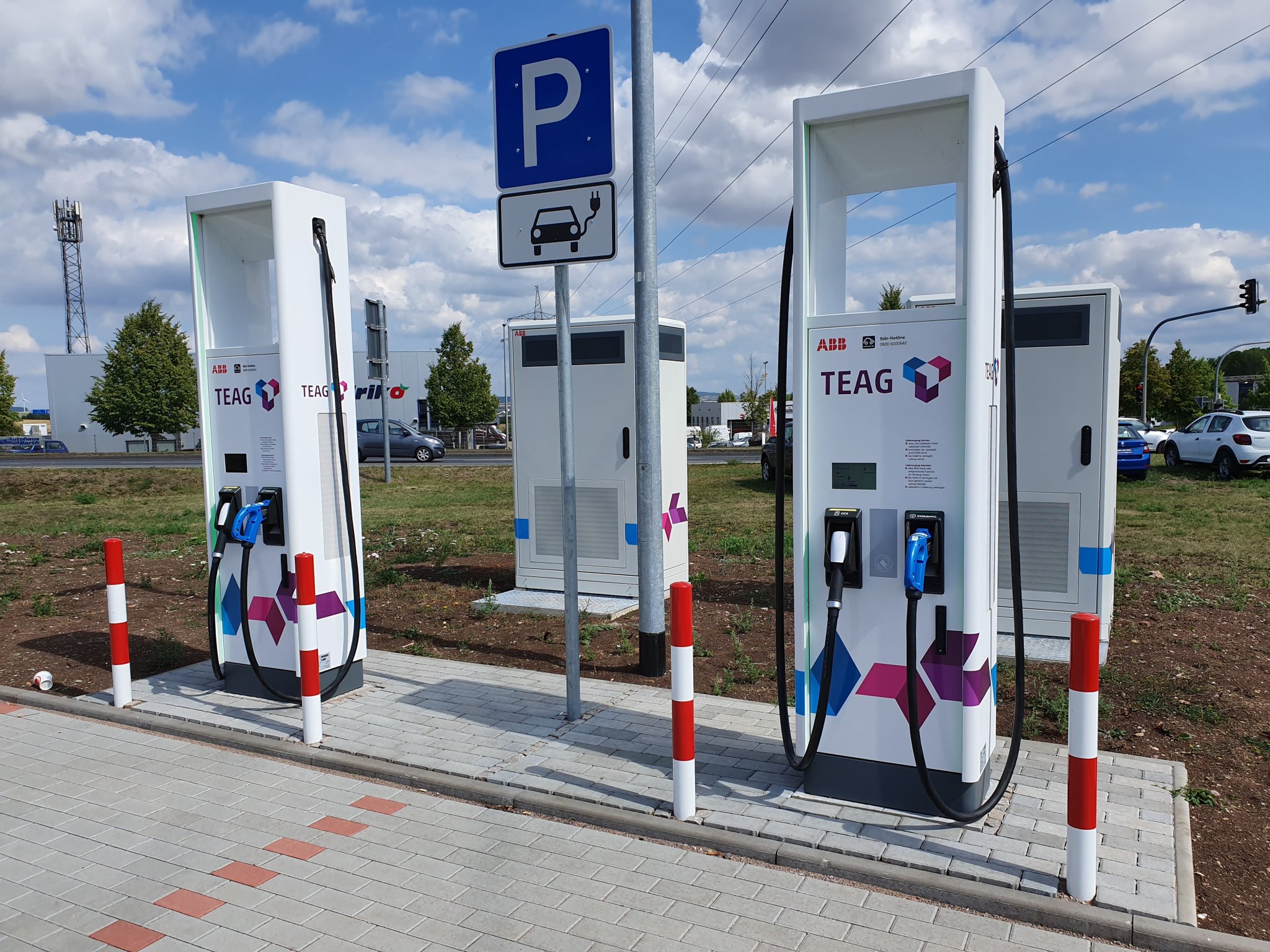
The number of electric vehicles on U.S. roadways is expected to ramp up dramatically in the coming years, and with it the number of charging stations will have to grow as well.
Now groups representing Ohio utility consumers and manufacturers are trying to kill a plan that would force ratepayers to finance the electricity infrastructure needed to serve those charging stations. The people who will be profiting from those stations or the utilities themselves should bear those costs, they said.
In addition, they said, the way the language is written “is generally lacking in consumer protections.” That’s famously been a problem with Ohio utilities and the agency that’s supposed to be regulating them.
A provision in House Bill 33, a draft state budget, would allow monopoly utilities to impose higher rates to fund economic-development activities such as supplying EV stations even though subsidies for such activities are already available from the state and local governments, the advocates said.
“The federal government is making substantial funds available to local governments for electric vehicle charging stations,” Maureen Willis, legal director for the Ohio Consumers’ Counsel, told the House Finance Committee last week, according to a written copy of her testimony. “That is occurring under the federal infrastructure bill. Ohio’s share of the funding is significant.”
Driving such high expectations are a $7,500 tax credit for electric vehicles under last year’s Inflation Reduction Act. And earlier this month, President Joe Biden proposed two new EPA rules aimed at dramatically reducing greenhouse-gas emissions from vehicles by 2030.
And, because nobody wants to drive a battery powered vehicle out into the boonies without being sure they’ll be able to charge it, $7.5 billion was built into last year’s Bipartisan Infrastructure Law to subsidize building out a national network of charging stations.
Building out the system might seem laudable in the face of catastrophic climate change. But Ohio’s electric utilities and the Public Utilities Commission that’s supposed to be regulating them have a history of abusing ratepayers.
The PUCO has allowed more than $1 billion in rate hikes that were later ruled illegal by the state Supreme Court. But, because of the way the “riders” were written, there’s no way to make the utilities refund the money. In one instance, Akron-based FirstEnergy collected $460 million and then couldn’t show whether the money was spent on bribes, much less whether any of it was spent on its stated purpose.
Now, consumer and manufacturing representatives say, someone is again trying to give Ohio utilities broad latitude to raise rates on their customers.
Ryan Augsburger, president of the Ohio Manufacturers’ Association, this week told the House Finance Committee that the provision in the draft budget would allow Ohio utilities to collect from ratepayers for expenses that taxpayers are already subsidizing. And, he said, the wording of the provision is so loose that utilities would have great flexibility in applying it.
“The electric utilities are already poised to benefit from recovery of costs associated with infrastructure expansion,” Augsburger said, according to a written copy of his comments. “This new language grants electric utilities swift cost recovery from customers for all net costs associated with infrastructure development and economic development projects… Cost recovery from customers is to make the electric utility whole after (the utilities) have already received funds from the All Ohio Future Fund for the economic development projects.”
Willis of the Consumers’ Counsel said the language allowing for utility increases “is generally lacking in consumer protections.”
___________________________
MARTY SCHLADEN
Marty Schladen has been a reporter for decades, working in Indiana, Texas and other places before returning to his native Ohio to work at The Columbus Dispatch in 2017. He’s won state and national journalism awards for investigations into utility regulation, public corruption, the environment, prescription drug spending and other matters.
Electric customers across Ohio collectively spent an estimated $211 million via add-on bill charges over the last two years to cover for losses from two coal-fired power plants that continue to bleed millions annually, according to new data from state regulators.
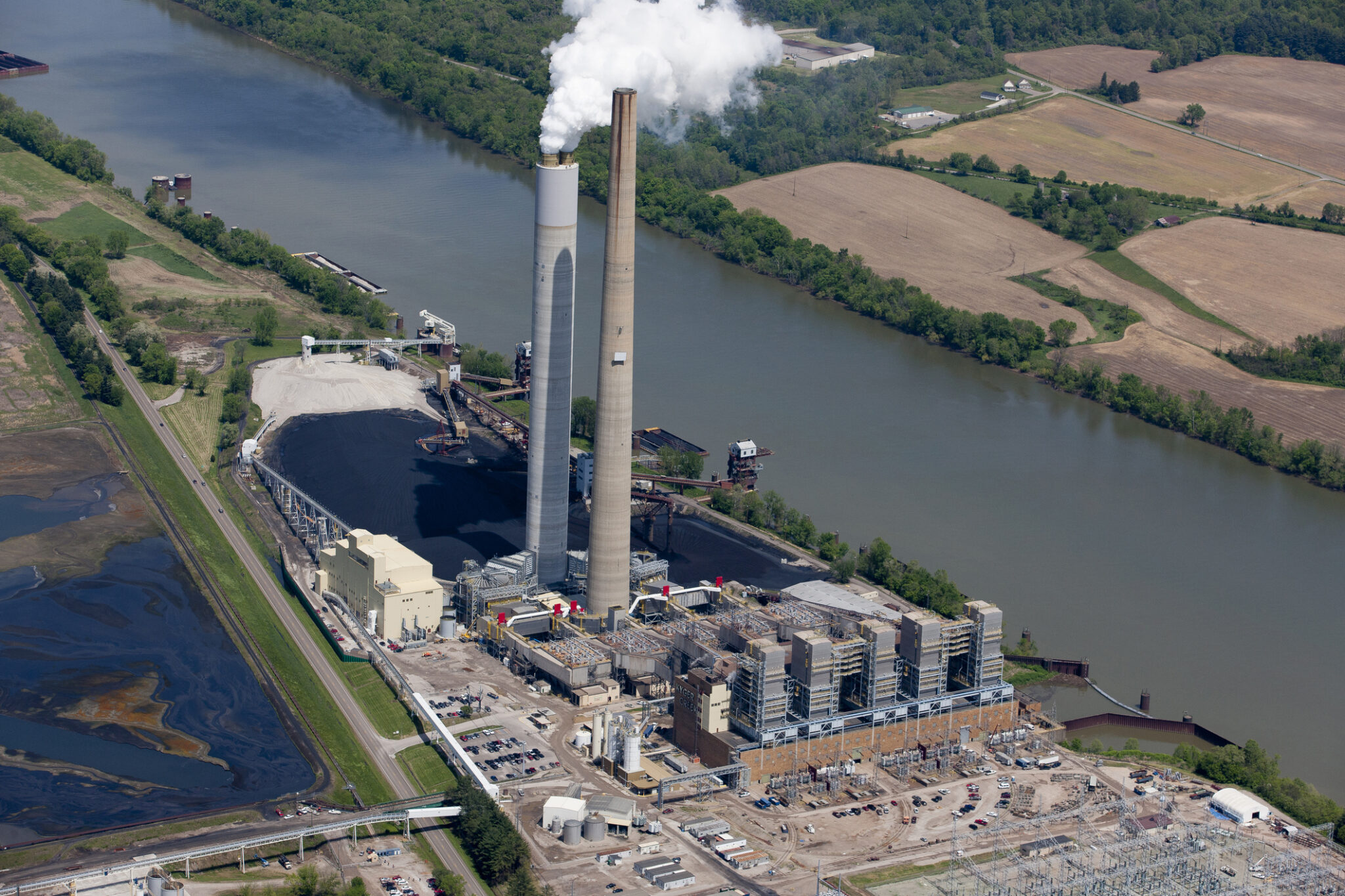
The money to the Ohio Valley Electric Corp. (OVEC) — an entity comprised of several investor-owned utilities from multiple states that operates the plants — flows thanks to a 2019 state law now at the center of a criminal bribery prosecution.
The Public Utilities Commission of Ohio began to allow three of the utilities that own and are contractually obligated to buy power from OVEC — American Electric Power (43% equity stake), Duke Energy (9%), and AES Ohio (4.9%) — to pass on their losses on OVEC to their customers, starting in the mid-2010s. The payments were originally only allowed through 2024. Through 2019, the three utilities’ customers were charged an estimated $159 million on OVEC.
House Bill 6, a law passed in 2019 that’s now the focal point of what prosecutors have said is the largest political corruption investigation in state history, extended the subsidies through 2030 and spread the three utilities’ (AEP, Duke and AES) losses to electric customers of all Ohio utilities (not just those that own OVEC).
In 2020, Ohio electric customers statewide paid $115 million to OVEC’s owners to cover their losses on the deal, according to data provided by a PUCO spokesman. In 2021, they paid about $97 million (July through December 2021 costs are estimates). Under the law, residential customers pay a maximum $1.50 per month to utilities to cover their OVEC losses. Industrial customers pay a maximum of $1,500.
OVEC operates two 1950s-era coal plants in Cheshire, Ohio and Madison, Indiana, originally built to power the federal government’s uranium enrichment facilities near Portsmouth. That agreement ended in 2003. The utility companies that own OVEC last renegotiated their contract in 2011 extending its life through 2040.
Technically, the OVEC plants could save utility customers money if OVEC could generate and sell electricity at below-market costs. However, a mix of market forces, environmental regulations and recently spending more than $1 billion on a “scrubber” system designed to limit emissions have left the plants selling electricity at costs well above those of PJM, an energy marketplace serving utilities in 13 states including Ohio.
“[Our] analysis shows that at this time, the OVEC plants cost customers more than the cost of energy and capacity that could be bought on the PJM wholesale markets,” wrote London Economics International, a firm the PUCO commissioned to audit the subsidies, in December.
A draft version of a 2020 PUCO-commissioned audit by the same firm found that “keeping the plants running does not seem to be in the best interests of the ratepayers.” The line was removed from the final version at the request of a PUCO staffer who asked the auditors to use a “milder tone and intensity of language,” according to emails obtained by the Ohio Consumers’ Counsel (OCC), which represents ratepayers in PUCO cases and has advocated ending the OVEC subsidies.
Along with the raw finances, Ohio consumers are subsidizing plants that have belched nearly 21 million tons of carbon dioxide, 21,000 tons of nitrogen oxide, and 12,000 tons of sulfur dioxide into the atmosphere since January 2020, plus smaller discharges of arsenic, lead, and mercury, according to data from the U.S. Environmental Protection Agency provided by the OCC.
“Why the hell is this still in place?” said Neil Waggoner, an advocate with the Sierra Club’s Beyond Coal campaign. “I think that this is utility capture in practice. This is the utilities in this state having a death grip on the regulators and people in power to the point that they’re getting exactly what they want.”
The Clifty Creek Power Plant, in Madison, Indiana, which is operated by OVEC. Photo taken by Rep. Casey Weinstein, D-Hudson, who visited the plant and has called for a repeal of state law forcing Ohio ratepayers to subsidize it.
A sticky bailout
FirstEnergy Corp. admitted in July to paying more than $60 million to an account controlled by the former House Speaker and his allies to ensure passage of HB 6. The prosecutors’ allegations have focused in court documents on an estimated $1.3 billion nuclear bailout and other non-coal related provisions of the sweeping bill that are favorable FirstEnergy. Former speaker Larry Householder, accused of using the money to engineer passage of the bill and shore up his own political aims, has pleaded not guilty. Two Householder allies involved in the alleged scheme have pleaded guilty to racketeering.
State lawmakers in early 2021 passed legislation repealing the nuclear bailout and “decoupling” provision (a ratepayer-backed revenue guarantee for FirstEnergy). However, the OVEC bailout was left intact.
There are bipartisan efforts in the House and Senate to repeal the OVEC bailout from state law, and the narrower PUCO-approved bailout that preceded them. Neither has come up for a vote and the sponsors are pessimistic on their chances.
Sen. Mark Romanchuk, R-Ontario, perhaps the plants’ most prominent critic and co-sponsor of the Senate legislation, said he is in negotiations with the utilities that own the plants and is not giving up. He declined an interview.
“Not sure where things will go but we’re not giving up,” Romanchuk said.
House Democrats have called for a repeal of the OVEC subsidies, though they only control 34 of 99 seats in the chamber. Rep. Jeff Crossman, a Parma Democrat who recently announced plans to run for attorney general, said the OVEC charges should be repealed but as much is unlikely.
“There’s probably not a will to undo the OVEC charges,” he said. “They donate gobs of cash to the right folks. There’s just no other reason to support these plants.”
House Speaker Bob Cupp, R-Lima, said in October he doesn’t believe there’s support in the House Republican caucus to repeal the coal bailout.
House Majority Leader Bill Seitz, R-Green Twp., has told several state media outlets the bailouts aren’t going anywhere. He did not respond to written questions about the uneconomic nature of the plants, or why ratepayers should cover their owners’ losses on them.
“We’ve beat this [OVEC] horse to death. It’s not going to change,” Seitz said to Cleveland.com in October. “They’ve introduced God knows how many bills — none of them are going anywhere, in my humble opinion.”
Michigan takes action
AEP is by far OVEC’s largest shareholder, with a roughly 43% equity stake in the company, and the two share several executives.
While repeal efforts in Ohio are at a lull, other states have signaled resistance to allowing utilities to continue to pass OVEC’s owners’ losses to customers.
The Michigan Public Service Commission in a November order noted that OVEC’s costs exceed the market price of electricity by tens of millions. It warned that AEP’s local utility may not be able to pass on all its OVEC losses to customers that are “incurred because of imprudent” decisions.
“The order today put I&M [an AEP unit] on notice that the Michigan share of these excess costs are unlikely to be permitted without additional evidence that continuing to purchase power from the units was in the best interest of its customers,” the Michigan regulators said in a news release.
AEP spokesman Scott Blake said in an email the OVEC plants are “critical resources that help ensure the reliability of the grid and offer protection from increases in the costs of other fuels.” He said AEP Ohio customers for decades benefitted from OVEC’s power via affordable electricity and good jobs. OVEC, he argued, insulates customers from cost spikes caused by things like a surge in natural gas prices or a shortfall of renewable energy supply.
“AEP Ohio customers benefited for decades from the power provided by OVEC in the form of affordable electricity and good jobs,” he said. “While there may be years where power from OVEC is more expensive than the market, as generation from natural gas and other sources becomes more expensive, customers could see refunds from OVEC in the future.”
Fitch Ratings determined OVEC’s outlook is “stable” in February — just one step above “speculative.” However, its analysts found that repealing HB 6 wouldn’t necessarily harm OVEC’s prospects. The analysts reasoned that for one, in the event of a repeal, AEP, Duke and AES would still be able to pass on their OVEC losses to customers. For two, the “sponsoring” utilities have already contractually agreed to purchase the power OVEC generates, regardless of who eats the losses.
Meanwhile, in a Virginia appeal of a public service commission rate case, Virginia Attorney General Mark Herring accused OVEC of charging an AEP utility in Virginia well beyond market costs for electricity. The case is ongoing.
Despite several plea deals with federal prosecutors regarding bribery on a massive scale to pass legislation providing a windfall to nuclear and coal companies, Ohio utility customers continue to fund bailouts of failing coal-fired power plants in Ohio and Indiana.
In the first half of 2021, Ohio utility customers paid $51 million to subsidize the plants, which are jointly owned by Ohio utility companies like American Electric Power, Duke Energy, AES Ohio and others. That’s on top of the $115 million ratepayers paid last year, according to data from state utility regulators.
Sen. Mark Romanchuk, R-Ontario, has spearheaded efforts within the GOP on a piece-by-piece strategy to repeal the remnants of House Bill 6, which codified the coal bailout through 2030.
HB 6 passed via the muscle of $61 million that utility giant FirstEnergy Corp. paid into an account secretly controlled by House Speaker Larry Householder, R-Glenford. That money funded the bill’s passage and enriched those in on the scheme, according to a statement of facts the company proffered to the U.S. Department of Justice. (Householder has pleaded not guilty to a count of racketeering and awaits trial.)
Romanchuk said Tuesday he’s facing resistance from his counterparts on the Senate Energy and Public Utilities Committee as far as repealing the coal plant bailouts.
“You need votes to get it out of committee; the votes probably aren’t there right now,” he said to reporters after a hearing.
State Sen. Mark Romanchuk, R-Ontario. Official photo.
“The legislation has some other things in it like refunds that are probably, in the minds of committee members, not what they want to vote for.”
Senate Energy Chairman Rob McColley, R-Napoleon, said Tuesday he has no update on timing regarding a vote to repeal the coal bailouts. He said Romanchuk is working behind the scenes to prepare the bill for a vote, but he’s not involved in specific details.
“You know how I feel about House Bill 6. I voted no because I thought it stunk from the very beginning,” he said. “But at the same time, we’ve got to work this through the committee process and that’s what we’re trying to do.”
Tuesday’s hearing: solar credits
The Senate Energy and Public Utilities Committee met Tuesday to consider Senate Bill 118, a Romanchuk bill that would repeal a lesser-discussed piece of HB 6: a $20 million annual credit, funded by utility customers, for certain solar projects.
SB 118 has support from opponents of HB 6: the conservative group Americans for Prosperity, the Ohio Manufacturing Association, and the Ohio Consumers Counsel, which represents ratepayers.
Lobbyists representing OMA and AFP described the credit structure as a form of cronyism, alleging HB 6 was narrowly tailored to ensure the payments made it to a select few solar projects.
A spokeswoman from the Ohio Air Quality Development Authority, which oversees the solar credit program, confirmed collections from consumers won’t begin until Nov. 1. Five projects in Highland, Brown, Hardin and Vinton counties have been approved to receive payments within the program.
He has maintained his innocence throughout. He’s scheduled to appear for a status conference before a federal judge Oct. 5.
“I have not, not have I ever, taken a bribe or solicited or been solicited for taking a bribe. Never,” Householder said.
Two alleged Householder co-conspirators — his political strategist Jeff Longstreth and lobbyist Juan Cespedes — pleaded guilty in October 2020 to one count each of racketeering. Neil Clark, a high power GOP lobbyist, was charged as well. He died by suicide earlier this year.
In July, FirstEnergy admitted in court documents that it paid $61 million into an account that Householder controlled to pass HB 6. The company agreed to pay a $230 million penalty and plead guilty to a charge of wire fraud.
The documents state the company paid $22 million to Sam Randazzo, an energy lawyer appointed by Gov. Mike DeWine to lead the PUCO, in the decade before his appointment. This includes a $4.3 million payment just before he assumed the post.


 MARTY SCHLADEN