Tag: Republicans

  • LaRose pushes unfair, inaccurate language for voters on November Ohio reproductive rights amendment

    LaRose pushes unfair, inaccurate language for voters on November Ohio reproductive rights amendment

    COMMENTARY

    by Marilou Johanek

    Play fair or play dirty. Issue 1 showed Ohio voters how state Republicans play when they can’t persuade. Extremists know most Ohioans support the right to abortion within limits. The outright ban on abortion gerrymandered pols seek is wildly unpopular. Convincing rational minds otherwise is pointless. So Ohio’s GOP overlords cheat to win.

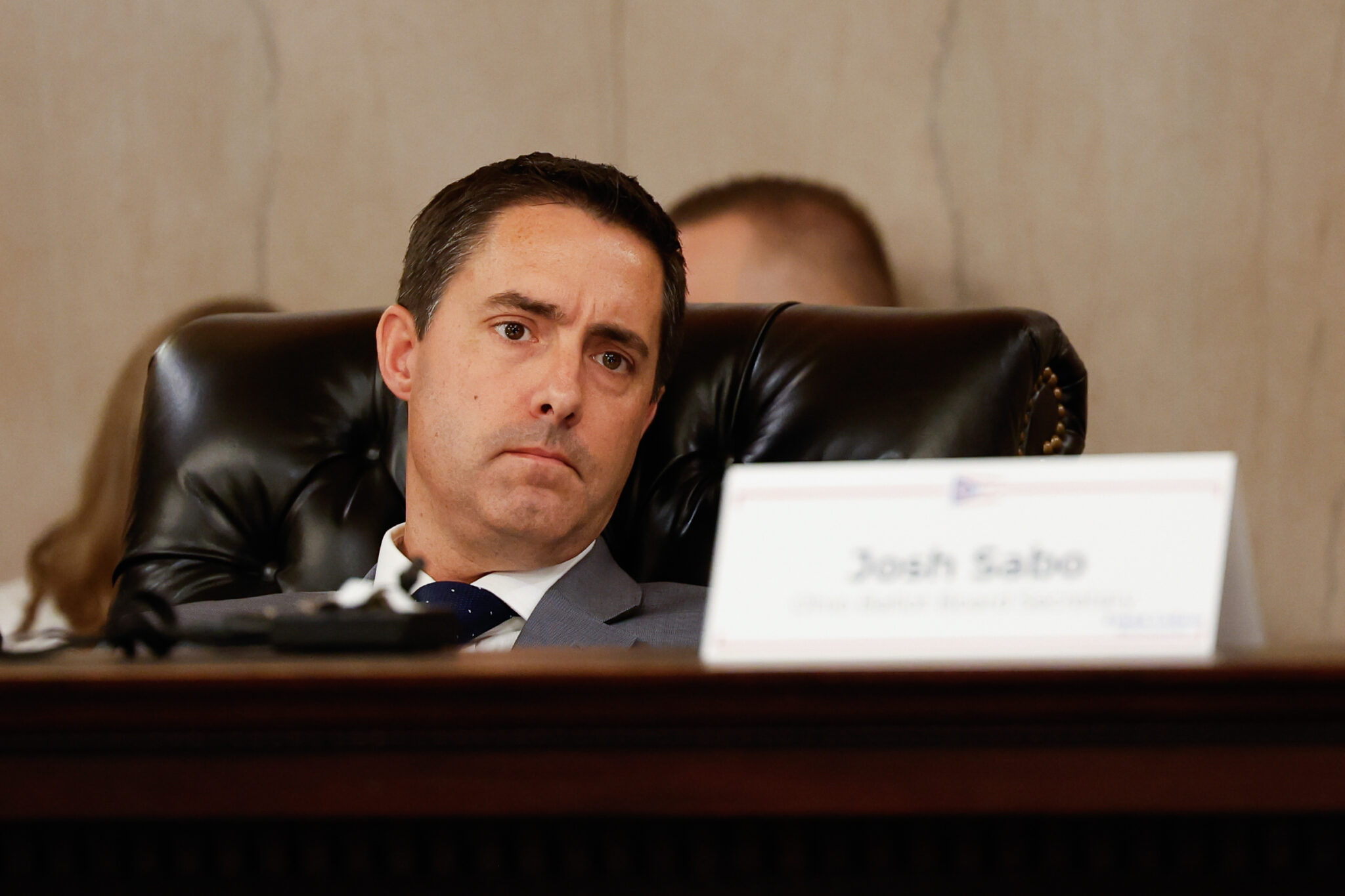
    Lawmakers rushed a game-changing ballot amendment to an August election (in violation of state law) to sabotage the abortion rights amendment in November. Ohio Secretary of State Frank LaRose spearheaded the shady maneuver to cancel self-governance by majority vote — just to keep a majority of Ohio voters from having their say on abortion access as a constitutional right.

    The state’s elections chief actively campaigned to end the only enduring recourse of ordinary citizens to circumvent a crooked government because he didn’t want an abortion rights amendment to pass. Sit with that for a minute. The guy who administers the electoral system in Ohio tried to undercut the electorate.

    That’s how amoral LaRose has become as he angles for attention as the greatest MAGA candidate in the U.S. Senate race. Burnishing his anti-abortion bona fides with the pro-Issue 1 crowd, in partnership with a leading anti-abortion lobbyist, was more important than upholding majoritarian democracy. Stumping for minority rule on the hollow pretense of “protecting” the constitution was a new low for LaRose.

    But the integrity-is-overrated elections boss and Republican kingpins in the Statehouse badly mistook the masses for rubes. All the misleading, fear-mongering, coming-after-your-children TV ads (out-of-state money could buy) didn’t fool an overriding majority of ticked-off Ohio voters who showed up in record numbers to beat back an egregious political power grab on Aug. 8.

    The beaten cheerleader for Issue 1 refused to concede the people had spoken (a Trumpian reflex?) and last week rolled out another snow job to derail the abortion rights amendment through ballot language subterfuge. LaRose chairs the Republican-dominated Ohio Ballot Board that voted along party lines Thursday to approve the summary language voters will read on their November ballot about the proposed abortion amendment.

    Under state law, LaRose could have used the full text of the amendment as written, and attorneys for Ohioans United for Reproductive Rights urged him to so “there can be no dispute about whether legal standards have been satisfied, or whether the condensed text misleads, deceives, or defrauds voters.” Instead, LaRose recast the amendment to purposely mislead and deceive.

    His draft is slanted with such routinely deployed anti-abortion propaganda it could have been dictated, word for word, by Ohio Right to Life President Mike Gonidakis. LaRose’s specious interpretation of the proposed amendment to enshrine reproductive freedom in the state constitution is deliberately deceptive with provocative wording to unfairly prejudice outcome.

    The revisions he engineered on an amendment he campaigned against are so beyond the pale of “fair and accurate,” as the secretary ludicrously declared, that stunned amendment backers filed suit Monday with the state supreme court for fairness and accuracy. LaRose omitted actual provisions of the original amendment.

    He deleted a description of reproductive choices an individual should have the “right to make and carry out” such as “decisions on contraception, fertility treatment, continuing one’s own pregnancy, miscarriage care, and abortion.” LaRose’s altered the language stipulating an individual right to “one’s own reproductive decisions” to just “a right to one’s own reproductive medical treatment, including but not limited to abortion.”

    Perhaps most blatant was the secretary of state’s pointed replacement of the medical term “fetus” throughout the amendment with “unborn child,” employing the same weighted rhetoric seeded over decades by the anti-abortion movement. He also curiously substituted “the citizens of the State of Ohio” for amendment prohibitions specifically targeting “The State,” defined in the language “as any governmental entity and political subdivision.”

    So what was originally worded “The State shall not, directly or indirectly, burden, penalize, prohibit, interfere with, or otherwise discriminate against” Ohioans exercising their reproductive rights became “the citizens of the State of Ohio” prohibited for doing the same. Different meaning. Why?

    Original language allows that “abortion may be prohibited after fetal viability” or when the fetus can survive outside the womb — a standard restriction for decades under Roe. With a six-week ban on hold by the courts, abortion is currently legal in Ohio up to 22 weeks of pregnancy, a measured limitation widely acceptable.

    LaRose flipped that reasonable allowance upside-down with inflammatory assertions that the amendment would “always allow an unborn child to be aborted at any stage of pregnancy, regardless of viability, if, in the treating physician’s determination” the applicable life and health exceptions are met. The glaring prejudicial language and selective editing of the fall abortion amendment to intentionally distort an initiative petition so it fails should infuriate every Ohioan — regardless of their beliefs about abortion.

    Frank LaRose, the public servant responsible for conducting free and fair elections in Ohio is playing dirty to win. It’s wrong. But it’s only the beginning. Issue 1 was a preview of the depths Ohio Republicans will go to when they can’t persuade. They cheat.

    The devious battle to deny abortion access in Ohio, despite the wishes of a majority of voters, will be epic.


    Marilou Johanek
    MARILOU JOHANEK

    Marilou Johanek is a veteran Ohio print and broadcast journalist who has covered state and national politics as a longtime newspaper editorial writer and columnist.

    MORE FROM AUTHOR

  • Republicans in Congress shy away from campaigning on national abortion platform

    Republicans in Congress shy away from campaigning on national abortion platform

    BY: JENNIFER SHUTT – Ohio Capital Journal

    WASHINGTON — Republicans, hoping to flip control of Congress in the November elections, appear to have decided against campaigning on a unified abortion platform that would specify exactly what conservatives plan to do if given control of the U.S. House and Senate.

    Yet Republicans in Congress have written dozens of proposals that, if passed, would restrict abortion nationwide. GOP lawmakers this session have introduced more than 153 abortion-related bills that party leaders could point to as evidence of what Republicans would try to pass on the national level if they trounce Democrats at the polls.

    They include legislation that would define life as beginning at the moment of fertilization, prohibit insurance coverage for abortions, and make it a crime punishable to up to five years in prison for doctors who perform abortions after a heartbeat is detected, generally at about six weeks.

    But so far, Republicans have opted against a cohesive national campaign strategy on abortion, following the decision by the U.S. Supreme Court in June to overturn the landmark 1973 Roe v. Wade case. Many Senate Republicans are brushing aside questions about whether they would take up a nationwide abortion bill, citing as a hurdle the Senate filibuster that means bills need 60 votes to advance.

    Republican leaders are leaving it up to each House or Senate candidate to tout their own bills and views while the party wrestles with whether the matter should be left solely to state lawmakers or if Congress has a role to play.

    “It’s one thing that we are debating within the conference,” Iowa Republican Sen. Joni Ernst said of a nationwide abortion bill. “But at the same time, most of us do believe that the Dobbs decision was the right decision, and it’s returning that authority to our state and local governments. That’s our system of federalism.”

    Rep. Cathy McMorris Rodgers, a Washington Republican who has become one of her party’s leading voices on abortion, said during a brief interview the GOP won’t put forward a nationwide abortion policy ahead of the midterms.

    “We’re not in a position to move anything and the U.S. Supreme Court really sent it back to the states,” she said.

    But McMorris Rodgers didn’t rule out Republicans pushing nationwide legislation after the election if they regained control of Congress.

    “Not before the election,” she said, later adding “Well, yeah,” when asked if Republicans would put forward legislation afterward if they won.

    Back to the states

    Some Republicans have repeatedly said their opinion of the ruling on abortion in Dobbs v. Jackson Women’s Health Organization is that it sent the issue back to the states. Others have said it’s a topic for Congress to debate as well.

    The Supreme Court’s decision overturning the constitutional right to an abortion that stood for nearly 50 years said “the authority to regulate abortion is returned to the people and their elected representatives.”

    House GOP Whip Steve Scalise, a Louisiana Republican, said during a press conference in June shortly after the ruling was released that the decision “finally allows states and Congress to” pass new abortion legislation.

    But House GOP Leader Kevin McCarthy, of California, when asked what exactly Republicans would do on abortion, was vague, saying “we will continue to look wherever we can go to save as many lives as possible.”

    McCarthy did mention a bill from Missouri Republican Rep. Ann Wagner, though he didn’t say exactly which of her bills he’d bring up.

    Wagner is the primary sponsor of legislation that would require doctors to provide health care to “any infant born alive after an abortion” or attempted abortion. But she’s also sponsored several other bills related to abortion.

    Congress passed a similar bill, from Ohio GOP Rep. Steve Chabot, two decades ago. The legislation, titled the Born-Alive Infants Protection Act of 2002, passed the House on a voice vote and the Senate by unanimous consent.

    Senate Republicans insist there’s little chance of abortion legislation moving ahead.

    Florida GOP Sen. Rick Scott, chair of the National Republican Senatorial Committee, said he expects every candidate will decide how they want to talk about abortion.

    Fellow Floridian Sen. Marco Rubio, who is in a tight race against Democratic House Rep. Val Demings, said “Republicans will have different views about what restrictions and what the law should be.”

    “There are issues that are relevant to it that we can have a debate on here, but we have a filibuster that would make it impossible to pass a bill into law,” Rubio said.

    Louisiana Republican Sen. John Kennedy, who faces a relatively easy reelection campaign in the deeply red state, agreed with Rubio that any GOP abortion legislation is unlikely to move past the filibuster.

    “There aren’t 60 votes to do anything on the floor of the United States Senate with respect to abortion, pro abortion, anti-abortion, just anything to do with abortion,” Kennedy said.

    “What folks who feel strongly on both sides of the issues need to do now is go back to their states and, not put on a show, but put on the case,” he continued. “They’ve got to convince their state legislatures.”

    Retiring Missouri Sen. Roy Blunt said the issue belongs at the state, not the federal level.

    “I’ve always thought the best place to deal with this was at the state legislative level and that’s what I still think,” Blunt said.

    Senate Minority Leader Mitch McConnell, a Kentucky Republican, has said it’s “possible” that a GOP-controlled Congress could pass a nationwide abortion ban, though he’s sought to downplay the likelihood.

    McConnell said he would absolutely keep the chamber’s legislative filibuster in place, meaning the only way a nationwide abortion bill could get through is with a Republican super majority or some Democratic support.

    “We don’t want to break the Senate and that’s breaking the Senate,” he said of removing the filibuster.

    Referendum on abortion?

    The vastly different views on abortion as well as party leaders’ approach to campaigning on the issue has led Democrats to turn the midterm elections into something of a referendum on abortion.

    “This fall, Roe is on the ballot,” President Joe Biden said the day the Supreme Court released its decision overturning the 1973 Roe v. Wade ruling that established abortion as a constitutional right. “Personal freedoms are on the ballot. The right to privacy, liberty, equality, they’re all on the ballot.”

    Biden added that this November, voters “must elect more senators and representatives who will codify a woman’s right to choose into federal law once again, elect more state leaders to protect this right at the local level.”

    Tying the results of the midterm elections to abortion could be risky for Democrats, especially considering the president’s party almost always loses seats during the midterm elections.

    But the vast majority of Democrats have echoed Biden, telling voters that this November has become about more than who controls the U.S. House and Senate.

    “This is the future that MAGA Republicans clamor for; where women and same-sex couples are branded as second-class citizens,” Senate Majority Leader Chuck Schumer said on the floor. “If they succeed, they’ll take our country down a dark path from which there may be no return.”

    Democrats in Congress have voted on bills showing exactly how the party hopes to ensure patients throughout the country can terminate a pregnancy, or travel freely to states where the procedure remains legal.

    They’ve also brought up bills to ensure the right to same-sex and interracial marriages as well as the right to decide if and how to use contraception.

    Republican leaders, for the moment, don’t plan to say exactly which bills they’d vote on if they regain control of Congress.

    “They’re very nervous,” Virginia Democratic Sen. Tim Kaine told States Newsroom. “And their polling should tell them that, because we’re seeing this as dramatically affecting the polls in a number of our races.”

    Kaine played down the idea that making the midterms something of a referendum on abortion access could be problematic if Republicans regain control of Congress and then say the results show American voters want a nationwide abortion law.

    “Oh, they’re gonna do that anyway. Rock solid guarantee, no matter how the election goes,” Kaine said. “We’re very certain that’s coming and we’re trying to do all we can electorally and otherwise to head that off.”

    While Kaine expects voters will pick representatives based on more than abortion, he does expect the Supreme Court’s decision will drive voter turnout for Democrats.

    “And that’s why my Republican colleagues do not want to be talking about this or create any kind of a party plan that everybody’s supposed to go for,” he said.

    Senate Majority Whip Dick Durbin, an Illinois Democrat, criticized Republicans for not being clear with voters about how they plan to address abortion if given control of Congress.

    “The Republicans, if you’ll notice, have been surprisingly quiet, in my estimation, in reaction to Dobbs,” Durbin said. “I think they understand that these opinions may serve their base, but they don’t serve the party or the electorate at large.”

    Maryland Democratic Sen. Chris Van Hollen said the abortion ruling is one of a number of critical issues that voters will focus on this year, though he added, “it’s not the only issue on the ballot.”

    “I think the Dobbs decision is one of them, reproductive freedom is certainly a part of that. But it will also be a referendum on the kind of government you want, whether you want extremists like the MAGA crowd in the Congress,” Van Hollen said. “And it’s also going to be a debate on what we’re doing that’s within our power to reduce prices, like cutting the costs of prescription drugs.”

    Sen. Bob Casey, a Pennsylvania Democrat, said “most Americans know there’s a fork in the road and there’s basically two choices.”

    151 bills

    So far this Congress, Republicans have introduced 153 bills addressing abortion, with 94 in the House and 59 in the Senate.

    Wagner’s bill has the most co-sponsors with 203 GOP backers.

    Other legislation with broad Republican backing includes a bill from New Jersey Rep. Christopher Smith that would permanently prevent the federal government from spending money on abortions with an exception for rape, incest or the patient’s life. The legislation would also prohibit qualified health plans from including coverage for abortion, according to a summary.

    West Virginia Rep. Alexander Mooney sponsored a bill that would define life as beginning at “the moment of fertilization, cloning, or other moment at which an individual comes into being.” The bill clarifies that “nothing in this Act shall be construed to authorize the prosecution of any woman for the death of her unborn child.”

    And legislation from Pennsylvania Rep. Mike Kelly would make it a crime for health care providers to perform abortions after a heartbeat is detected, typically around six weeks. Doctors who perform the procedure would face up to five years in prison, a fine, or both if convicted.

    The bill creates an exception for a patient whose life is endangered by a physical diagnosis or injury, but not a “psychological or emotional” one.

  • House to vote on removing training, background check requirements for concealed carry

    House to vote on removing training, background check requirements for concealed carry

    File photo from Wikimedia Commons attributed to St. Louis Circuit Attorney’s Office.

    “Guns don’t kill people, people kill people”

    House Speaker Bob Cupp

    BY: JAKE ZUCKERMAN – Ohio Capital Journal

    The Ohio House will vote, once again, on legislation to remove training and permitting requirements to carry a concealed handgun in the state.

    House Speaker Bob Cupp, R-Lima, said the legislation, which a House committee passed out on Tuesday, will be up for a passage vote at a floor session Wednesday afternoon.

    Because the House adopted two amendments to the bill, it will need to return to the Senate for approval. Cupp said it will “hopefully” pass over in time for a Senate concurrence vote, meaning the bill could be sent to the governor’s desk come Wednesday afternoon.

    However, Senate President Matt Huffman, R-Lima, indicated the Senate would not vote on the bill Wednesday so members could analyze the changes. The Senate passed the legislation in December in a 23-8 vote, with all but one Republican in support. All Democrats opposed the legislation.

    Senate Bill 215, sponsored by Republican Sen. Terry Johnson of McDermott, would remove the requirement under current law that gun owners obtain a license to carry a concealed weapon from their local sheriff. The application requires completion of an 8-hour training course and clearing a background check.

    Instead, any Ohioan aged 21-and-up who can lawfully possess a gun would be allowed to conceal and carry the weapon.

    Between 3,000 and 5,000 concealed carry applications are typically denied per year, according to data from the attorney general’s office. Possible reasons for denial include certain felony and misdemeanor convictions, a previous court finding of mental illness, being the subject of a civil protection order and others.

    Looming passage of the bill comes as 2021 has overtaken 2020 as the record-setting year for gun deaths in Ohio, according to data from the state health department. GOP Rep. Shane Wilkin, R-Hillsboro, who leads the committee that passed the legislation Tuesday, said he “doesn’t really understand the question” about how he thinks about passing a gun rights expansion amid a surge in gun violence.

    Cupp brushed aside a similar question.

    “Guns don’t kill people; people kill people,” he said. “Also it was the deadliest year for the highways, as I understand it. So not sure there’s a connection.”

    Several activists with Moms Demand Action, an anti-gun violence organization that formed in the wake of the Sandy Hook School Shooting that left 20 children dead, pleaded with lawmakers Tuesday to drop the bill in something of a last-ditch effort.

    Rebecca Gorski cited a June 2021 incident in which a local TV station reported a man accidentally shot himself in the face at a Geauga County gun range. Scott Hildenbrand, the local sheriff, was quoted encouraging the man to go through some gun training. Hildenbrand has since spoken out against the proposed legislation.

    At the hearing, Republicans voted down a series of amendments from Democrats generally aimed at reducing gun violence. One would have created an “extreme risk protective order” mechanism, in which families or law enforcement can petition a judge to temporarily seize weapons from a person experiencing a mental health crisis. Another would close a loophole that allows the purchase of firearms in some settings like gun shows without a background check. Another would have required licensed gun sellers to issue a one-page pamphlet to buyers about Ohio’s gun carrying, possession and use laws.

    Democrats — citing opposition testimony on the legislation from the Fraternal Order of Police, Hamilton County Sheriff Charmaine McGuffey and others — emphasized law enforcement opposition to the legislation and characterized it as a threat to the general welfare.

    “SB 215 is anti-public safety and anti-police,” said Rep. Tavia Galonski, D-Akron. “This legislation puts Ohio law enforcement officials in the line of fire and makes them less safe. We need to be taking steps to make our communities safer, and this dangerous bill does the opposite.”

    The Buckeye Firearms Association, a prominent gun lobby group, has declared the bill (informally known as “constitutional carry” or “permitless carry”) to be a major priority issue as primary elections near.

    As such, both the House and Senate, under firm Republican control, have passed dueling yet substantively similar versions of the bill. With the Senate legislation as the vehicle of choice, the House must pass the legislation and send it to the Senate. The Senate can either accept the House’s changes (minor in nature) or bring the matter to a conference committee to iron out any differences.

    However, Rep. D.J. Swearingen, R-Huron, who offered the amendments, indicated Tuesday that they were introduced with the sponsor’s blessing. The Ohio House passed a different but nearly identical bill in November on a party line, 60-32 vote.

    Should the Senate pass the legislation, it goes to the desk of Gov. Mike DeWine. The governor has reserved comment publicly on the bill, but he privately told Buckeye Firearms during his 2018 campaign that he would sign constitutional carry legislation if it reached his desk.

    Public health researchers and anti-gun violence researchers draw links between relaxed gun policies and homicide rates and others. For instance, researchers with the American Journal for Public Health found states with permitless carry laws were associated with an 11% increase in handgun homicide rates. The National Bureau of Economic Researchers found states experienced about a 14% higher rate of violent crime after adopting a new concealed carry permitting system similar to Ohio’s current one.

    Gun advocates argue that those who plan to illegally carry a weapon or use it for nefarious purposes will already do so, regardless of any permitting requirement. Additionally, they say Ohio laws already allow for the open carry of firearms, so it’s somewhat incongruous that the law doesn’t allow for the concealed carry of firearms.

    Some bill supporters, including Senate President Huffman, have argued the legislation is a logical extension of the Second Amendment to the U.S. Constitution. However, the Ohio Supreme Court ruled in 2003 that “there is no constitutional right to bear arms.”

    Susan Tebben contributed to this report.

  • Who funded Ohio Statehouse politics in 2021?

    Who funded Ohio Statehouse politics in 2021?

    Getty Images.

    BY: JAKE ZUCKERMAN – Ohio Capital Journal

    Education and construction unions, natural gas utilities, the beer and wine industry, optometrists, car dealers, telecommunications firms, nursing home operators, doctors’ associations and others dumped money into lawmakers’ accounts in 2021.

    These funds set the stage for the maiden elections on yet-to-be finalized maps setting the district lines. (The Ohio Supreme Court overturned the GOP-passed maps last month, determining them to be an unlawful gerrymander. The court is currently reviewing a revised proposal).

    Republicans trounced Democrats in terms of fundraising by just about any measurement.

    The largest donors contribute disproportionately to Republicans. The largest fundraisers in the General Assembly are all Republicans. And bank accounts controlled by the party itself tower over their Democratic counterparts.

    Political campaigns cost money. Sometimes, a lot of money. Here’s who’s providing it.

    Largest PAC contributors 

    These are some of the largest, non-individual donors to Ohio lawmakers through 2021. This list doesn’t include accounts affiliated with the state Democratic and Republican parties.

    • Political Education Patterns, an arm of the International Union of Operating Engineers, is typically one of the most prominent Ohio donors but has not yet filed a full 2021 report. Using data reported by candidates (instead of the PAC itself), the organization contributed about $564,000.
    • Affiliated Construction Trades, comprised of several different unions, contributed about $561,000.
    • The Ohio State Association of Plumbers and Pipefitters gave $338,625.
    • The Wholesale Beer & Wine Association, through its PAC, gave $280,000.
    • The Ohio Credit Union Legislative Action Committee gave $203,718
    • NiSource PAC, whose namesake is the parent company of Columbia Gas, gave $144,225
    • The Ohio Bank PAC gave $121,000
    • The Ohio Optometry PAC gave $109,000.

    Biggest fundraisers

    These are the largest fundraisers in the House and Senate in 2021. They are all Republican, part of a pattern of the party significantly outraising Democrats by almost any measure.

    The filings can give an indication of who may be jockeying for influence or a leadership position within their caucuses.

    • Senate President Matt Huffman, R-Lima: $875,000
    • Rep. Jay Edwards, R-Nelsonville: $429,000
    • Sen. Stephanie Kunze, R-Hilliard: $370,000
    • House Speaker Bob Cupp, R-Lima: $331,000
    • Rep. Tom Patton, R-Strongsville: $300,000
    • Sen. Kristina Roegner, R-Hudson: $233,000
    • Rep. Jason Stephens, R-Kitts Hill: $233,000
    • Sen. Jay Hottinger, R-Newark: $228,000
    • Rep. Phil Plummer, R-Dayton: $219,000
    • Sen. George Lang, R-West Chester Twp.: $218,000.

    Big individual donors

    As has been true in the past, several nursing home operators have served as the General Assembly’s largest benefactors.

    For instance, the Ronald Wilheim, CEO of the Communicare nursing home chain, and his wife contributed $92,000 to six Republicans through the year. Brian Colleran, CEO of Foundations Health Solutions chain of nursing homes, and his wife contributed $80,400. Colleran’s business partner Daniel Parker contributed nearly $27,000. (These donations come atop contributions from three separate PACS representing the industry.)

    Other notable, large donors to legislative and statewide candidates include:

    • Members of the Haslam family, some of whom own the Cleveland Browns, contributed more than $58,000 to various Republicans. James Johnson, another Browns owner, contributed another $13,000 as well.
    • The namesake family of The George Group (real estate) gave $42,000 to Republicans — $40,000 of which went to Rep. Jay Edwards
    • Virginia “Ginny” Ragan, one of the most prolific GOP donors in Ohio politics, gave $65,000, all to Republicans.
    • Regina Mitchell, of Warren Fabrication, gave $43,000 to three Republicans
    • Albert Ratner, of RMS Investment Group, and his wife gave nearly $59,000, almost exclusively to Republicans
    • Abigail and Leslie Wexner, who gave $54,000 to Republicans

    Republicans clobber Democrats

    Whichever way you cut it, Republicans wield a powerful cash advantage over Democrats.

    As Cleveland.com reported, Republicans running for the Supreme Court outraised Democrats on a sixfold margin. In the Legislature, it’s a tenfoldmargin.

    The filing period captures the year leading up to redistricting but before the Ohio Supreme Court overturned a map proposal that would have likely expanded and cemented in a Republican supermajority.

    In the gubernatorial race, incumbent Gov. Mike DeWine raised about $7 million compared to his primary challengers: about $1.2 million from Renacci (roughly $1 million of which came from personal funds) and $624,000 from Joe Blystone. On the Democratic side, former Dayton Mayor Nan Whaley raised $2.4 million, compared to former Cincinnati Mayor John Cranley, who raised about $1.9 million.

    In the race for chief justice of the Ohio Supreme Court, Justice Sharon Kennedy raised about $332,000 compared to about $164,000 for Justice Jennifer Brunner.

  • Ohio budget amendment now includes severe abortion restriction

    Ohio budget amendment now includes severe abortion restriction

    Columbus, Ohio – The Republican leadership in the Ohio Senate has added an amendment (134HB110-SC4502X2/JF) that would restrict the distance for physicians to be able to work with an abortion clinic and restricts physicians’ ability to work with state-funded medical facilities, medical schools, and teaching hospitals if they also sign onto a variance application with an Ambulatory Surgical Facility.

    Kellie Copeland has served as the Executive Director of NARAL Pro-Choice Ohio since 2002. 

    NARAL Pro-Choice Ohio Executive Director Kellie Copeland said: “Republicans in the Ohio Senate have yet again hijacked the budget process to further their anti-abortion agenda by adding an amendment that would add even more medically-unnecessary licensing restrictions on abortion providers. Abortion providers are a critical part of Ohio’s medical community. Across the state trusted medical providers work hand in hand with abortion clinics, medical schools, and hospitals to ensure patients get access to comprehensive reproductive health care they deserve. This amendment is about stigmatizing and isolating abortion providers. Let’s be clear about what this amendment does: closes the doors to doctors in an effort to close the door to patients. No patient has ever been helped by a closed door. A clear majority of Ohioans support access to safe and legal abortion care, and do not support this restriction.”

  • U.S. Supreme Court rejects Texas suit that tried to overturn election results

    U.S. Supreme Court rejects Texas suit that tried to overturn election results

    The U.S. Supreme Court. Photo from Supreme Court website.

    By Ariana Figueroa and Ohio Capital Journal

    The Supreme Court on Friday turned aside a Texas lawsuit that sought to derail the presidential election results from four battleground states, despite pressure on the justices from President Donald Trump on social media.

    “Texas has not demonstrated a judicially cognizable interest in the manner in which another State conducts its elections,” according to the unsigned court order. “All other pending motions are dismissed as moot.”

    A second paragraph from Justice Samuel Alito that was joined by Justice Clarence Thomas stated: “In my view, we do not have discretion to deny the filing of a bill of complaint in a case that falls within our original jurisdiction. See Arizona v. California, 589 U. S. ___ (Feb. 24, 2020) (Thomas, J., dissenting). I would therefore grant the motion to file the bill of complaint but would not grant other relief, and I express no view on any other issue.”

    More than half of the Republicans in the U.S. House — 126, with 20 added on Friday after they were left out earlier by a “clerical error” — had signed on to back a brief put forth earlier this week by Texas Attorney General Ken Paxton. Paxton sued to invalidate the voting results of Michigan, Georgia, Wisconsin and Pennsylvania.

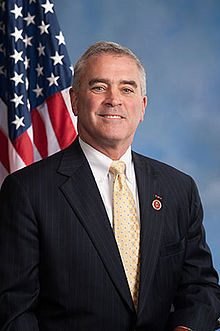
    From Ohio, the signers included Republican Congressmen Bob Gibbs, Jim Jordan, Bill Johnson, Bob Latta and Brad Wenstrup.

    Brad Wenstrup

    The new GOP signers included a member of leadership—House Minority Leader Kevin McCarthy of California, who joined a push spearheaded by Louisiana Rep. Mike Johnson.

    Other Republicans added Friday included Bill Posey of Florida; Doug Collins, Jody Hice and Barry Loudermilk of Georgia; Jim Hagedorn and Pete Stauber of Minnesota; Billy Long of Missouri; Mark Walker of North Carolina; Scott DeJarlais of Tennessee; and Morgan Griffith, Carol Miller and Alex Mooney of Virginia.

    Many Republicans in Congress have refused to directly state whether they believe  Trump was defeated by President-elect Joe Biden on Nov. 3. Some have instead said that they support the president’s decision to challenge the election results in the courts.

    Paxton alleges that officials in Michigan, Georgia, Wisconsin and Pennsylvania illegally changed voting laws, which caused voting irregularities and changed the outcome of the 2020 presidential election.

    Trump made similar allegations on Twitter and on Friday he told the justices what they should do.

    “If the Supreme Court shows great Wisdom and Courage, the American People will win perhaps the most important case in history, and our Electoral Process will be respected again!,” he tweeted.

    Trump earlier this year nominated Justice Amy Coney Barrett to the high court, shifting it to a conservative majority.

    Due to the pandemic, many states lobbied voters to submit absentee ballots, so Americans could maintain safety guidelines.

    The FBI, U.S. Attorney General and Department of Justice have repeatedly stated that there is no evidence of voter fraud or election irregularities. On Monday, members of the electoral college will meet in statehouses to cast their ballots, confirming Biden’s win.

    Members of the U.S. Senate on Friday failed to mount a drive to back the Texas suit similar to that of the House GOP.

    Sen. Susan Collins, (R-Maine), expressed doubt to reporters on Capitol Hill that the lawsuit would succeed.

    “I don’t think it’s likely to prevail given what the Supreme Court did in the Pennsylvania case, but I’m not familiar with the details of the lawsuit,” she said, according to pool reports.

    Sen. Josh Hawley, (R-Mo.), told reporters that the Supreme Court could possibly find that the case has no standing.

    He added that there’s not an attempt among Senate Republicans to do the same.

    “My guess is it’s just nobody here sort of rounded up the troops,” he said. “Usually the way these things work on the amicus brief side… is somebody takes the lead and then says ‘I’ll write it and then I’ll get people to sign on.’ This was a pretty short fuse thing.’”

    But some Senate Republicans said that the lawsuit is baseless and that states should not attempt to meddle in the affairs of other states.

    “I’m never surprised by the House of Representatives,” Sen. Lamar Alexander of Tennessee said, according to pool reports.

    Earlier Friday, he appeared on NBC’s “Meet the Press,” where he questioned the legal argument underlying the Texas suit.

    “I mean, our position, my position, Republicans believe that states are in charge of elections. And Texas is a big state, but I don’t know exactly why it has a right to tell four other states how to run their elections,” said Alexander.

    A senior New Jersey Democrat, Rep. Bill Pascrell, chastised House Republicans who supported the Texas suit. Pascrell called for Speaker of the House Nancy Pelosi (D-Calif.), to not swear in the returning and new GOP members who signed the brief into the 117th Congress.

    “Simply stated, men and women who would act to tear the United States government apart cannot serve as Members of the Congress,” he said in a statement.

  • Repeal of Hamilton County sales tax increase inches closer to ballot

    Repeal of Hamilton County sales tax increase inches closer to ballot

    Hamilton, County, Ohio – On June 18, Democratic County Commissioners, Todd Portune, and Denise Driehaus, voted to raise the Hamilton County’s sales tax by 0.2 percent for 18-months to balance the budget.

    Today a group of Hamilton County Republicans presented petition signatures of 38,000 residents to the County Auditor hoping that voters in November will prevent the tax from taking effect. In announcing their success they said they needed 23,629 valid signatures to get the Referendum on the ballot. The petitions will remain in the Auditior’s office for 10-days for public inspection and them go to the Board of Elections where the signatures will be checked for accuracy.

    Alex Triantafilou, the Hamilton County Republican Party chairman said in a press release today, “While the counting and confirming of the validity of these signatures will take several weeks, we are very pleased with the overwhelming support we received from every corner of Hamilton County and from citizens of all political stripes.”

    Todd Portune and Denise Driehaus said the County faces a $28 million structural deficit and they were not willing to lead a county that cannot provide basic services. They blamed actions of the State House for their budget woes.


    Paxton’s Grill

      Relaxed atmosphere and friendly service welcomes you back time and time again! Located in the heart of the Historic Loveland District Just outside Cincinnati, Ohio.