Tag: Roe v Wade

  • Despite one response, recent polling indicates abortion-rights amendment has a good chance

    Despite one response, recent polling indicates abortion-rights amendment has a good chance

    BY:  Ohio Capital Journal

    A poll released last week received attention because a response to one of its questions. It seemed to show a close contest for an abortion-rights amendment that’s on the ballot next Tuesday.

    But a closer look at that and another recent poll indicate that opponents of the amendment still face an uphill fight.

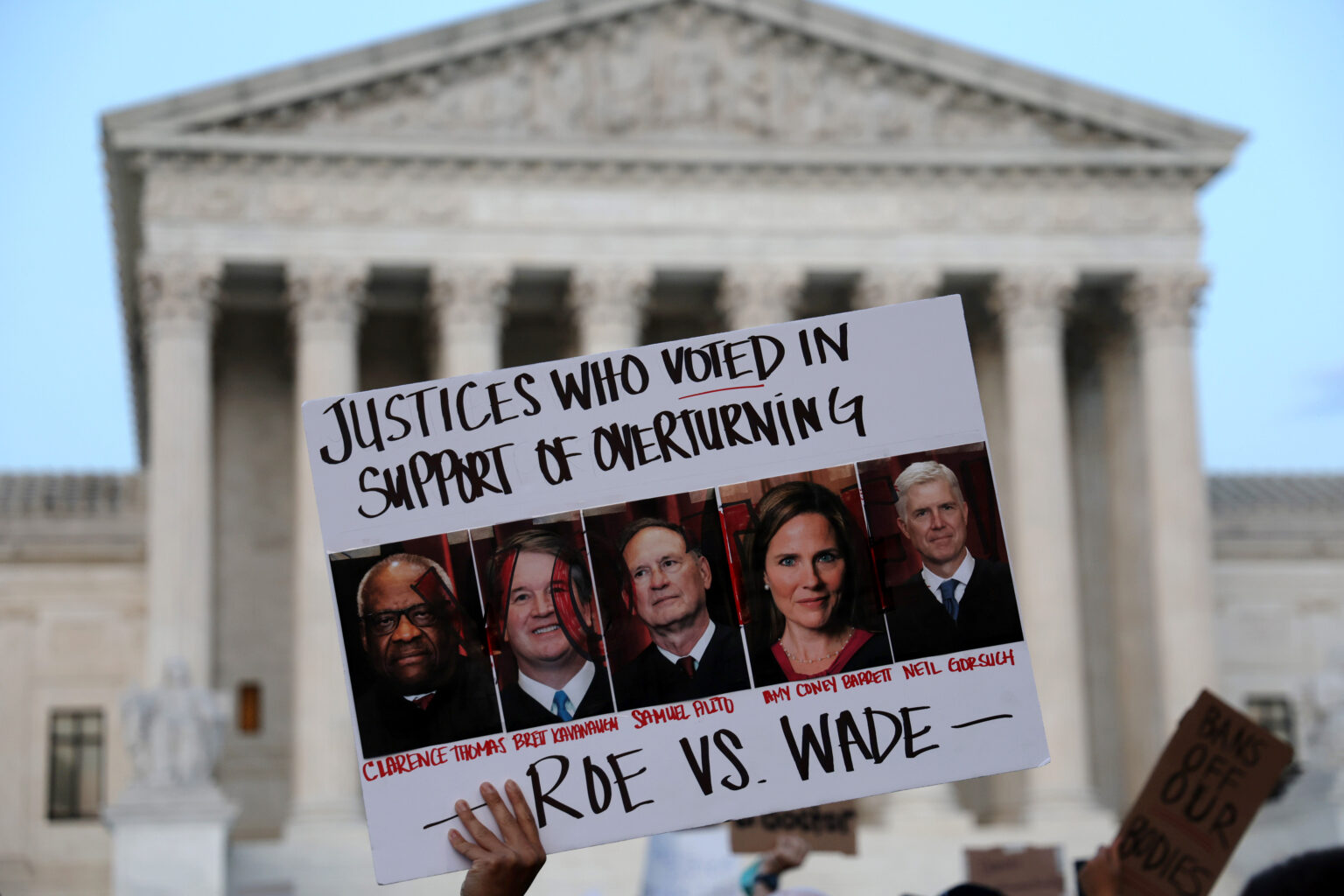
    Issue 1 would build abortion rights into the Ohio Constitution up to the point of fetal viability outside the pregnant person’s body. It comes after the U.S. Supreme Court last year overturned Roe v Wade, clearing the way for enforcement of harsh state abortion limits already on the books.

    In Ohio’s case, that means banning the overwhelming majority of abortions after about six weeks of pregnancy — even when the pregnancy is the result of rape or incest.

    As horror stories stemming from enforcement of such laws proliferated, state ballot measures protecting abortion rights have been on an unbroken winning streak, with a measure last year carrying conservative Kansas by a gobsmacking 19-point margin.

    Those results leave abortion opponents desperate for a win and abortion-rights advocates eager to continue building momentum.

    So, when Ohio Northern University last week released a poll, one of its findings drew keen interest. It asked whether respondents agreed with the summary language of Issue 1 that will appear on the ballot. While that might sound like a technicality, the exact wording that will be on the ballot is important.

    In August, Secretary of State Frank LaRose, an abortion opponent, led a split Ohio Ballot Board in adopting a ballot “summary.” Not only is the “summary” roughly the same length as the amendment itself, it differs from the amendment in ways that critics say are intended to mislead.

    For example, it substituted the term “unborn child” for “fetal viability.”

    In an attempt to capture the effect that might have on the vote, pollsters at Ohio Northern asked some respondents whether they agreed with that amendment language and asked others whether they agreed with the language proposed by the League of Women Voters. The disparity was big.

    An overwhelming 68% agreed with the amendment as described by the League of Women Voters. But that number shrank to just 52% for the respondents who were asked about the language that will actually be on the ballot, thanks to LaRose and two others on the Ballot Board.

    But what does that mean practically?

    “Change in Ballot language may have big effect on support for Issue 1,” reads the title of that section of the Ohio Northern poll report.

    However, the same poll found that 65% of respondents think that abortion should be legal in most circumstances and 57% believed the Supreme Court shouldn’t have overturned Roe v Wade.

    More to the point, 70% said they had heard “quite a lot about Issue 1” and another 24% said they had heard some about it. That means that almost all respondents know something about the matter and presumably many will have formed opinions before going into the voting booth and seeing the Ballot Board’s language.

    “If this were a more obscure issue, the language would matter vastly more,” said University of Cincinnati political scientist David Niven. “But when this is the headline act of the entire election, almost no one is going to the polls to read the language on the ballot and make up their mind there.”

    If, as their detractors claim, LaRose and two others on the ballot board intended to dampen support for Issue 1 by using the language they did, they picked the wrong topic, Niven said.

    “There’s a boatload of good research that says language matters,” he said. “But it’s entirely based on the idea that you’re confronting this issue based on the language presented to you rather than confronting the issue based on deeply held beliefs.”

    The idea that the controversial ballot language will crash up against already-formed opinions also seems bolstered by another of the poll’s findings: When asked how they planned to vote on Issue 1, 60% said yes.

    That jibes with the results of the Baldwin Wallace University Ohio Pulse Poll released earlier in October. In it, 58% said they would vote in support of Issue 1.

    However, these are just polls — imperfect predictors in the best of circumstances. The fates of Issue 1, marijuana-legalizing Issue 2 and other matters on the ballot depend heavily on what happens Tuesday. That’s because more than 52% of respondents to the Baldwin Wallace poll said they’d wait until Election Day to cast their ballots.


    Marty Schladen
    MARTY SCHLADEN

    Marty Schladen has been a reporter for decades, working in Indiana, Texas and other places before returning to his native Ohio to work at The Columbus Dispatch in 2017. He’s won state and national journalism awards for investigations into utility regulation, public corruption, the environment, prescription drug spending and other matters.

    MORE FROM AUTHOR

  • Abortion amendment ballot language submitted, Ballot Board set to meet Thursday

    Abortion amendment ballot language submitted, Ballot Board set to meet Thursday

    Abortion rights groups request full text on November ballots

    BY:  Ohio Capital Journal

    Gearing up for an Ohio Ballot Board meeting where constitutional amendment language regarding reproductive health will be considered, groups pushing for the measure want to see the entire text of the amendment on November ballots.

    In a letter received by the Ohio Secretary of State on Monday, attorney Donald McTigue represented petitioners for the constitutional amendment in asking the board to use full text of the proposed amendment or a condensed version, so that voters can read the entire thing on their ballots in the general election this year.

    “By using the full text, voters will see for themselves the language they are being asked to approve and can make a free and independent decision on this fundamental question,” McTigue wrote.

    The abortion rights groups also argued that, in using the full text, “there can be no dispute about whether legal standards have been satisfied or whether the condensed text misleads, deceives or defrauds voters,” according to the letter.

    The ballot measure’s title, as submitted by the groups for approval by the ballot board, is “To Establish the Right to Reproductive Freedom with Protections for Health and Safety.”

    Because of the rejection of Issue 1 earlier this month at the polls, which would have raised the threshold to approve a constitutional amendment, a simple majority is needed to pass the measure.

    In the language of the amendment, it specifies that “every individual has a right to make and carry out one’s own reproductive decisions, including but not limited to” contraception, fertility treatments, pregnancy, miscarriage care and abortion.

    It prohibits the state from doing anything to “directly or indirectly burden, penalize, prohibit, interfere with or discriminate against” the exercise of the rights in the amendment, or those who assist in the exercise of the rights.

    The amendment makes exceptions in terms of abortion, in which it would be “prohibited after fetal viability.”

    “But in no case may such an abortion be prohibited if in the professional judgment of the pregnant patient’s treating physician it is necessary to protect the pregnant patient’s life or health,” the amendment states.

    “Any attempt to alter wording away from the text of the amendment should be seen for what it is: an attempt to confuse and mislead voters,” said Lauren Blauvelt, of Ohioans United for Reproductive Rights, in a statement announcing the submission of the ballot language.

    Opposition groups have claimed the amendment would impact parental rights and allow “late-term abortion,” neither of which are included in the language submitted to the ballot board. “Late-term abortion” is not considered a legitimate medical term.

    Two different lawsuits attempting to keep the amendment from going before voters have been rejected by the Ohio Supreme Court.

    Most recently, a former state legislator and a Catholic Ohio resident asked that the measure be blocked because it was unclear what laws it sought to change. A separate previous lawsuit argued the Ohio Ballot Board abused its power by improperly considering, and thus moving the ballot measure forward so that signatures could be collected in support of it.

    That signature collection amounted to nearly 500,000 valid Ohio voter signatures, which allowed the measure to head to the ballot.

    Another abortion-related lawsuit is still in the process of making it through the state’s highest court. That lawsuit was filed by Ohio Attorney General Dave Yost, challenging a Hamilton County court’s right to pause a six-week abortion ban implemented almost immediately after the Dobbs decision overturned Roe v. Wade.

    That law was passed in 2019, but has since been entangled in court cases. It bans abortion after six weeks gestation and was in place for several months following the Dobbs decision before being halted by the courts.

    The Ohio Ballot Board is scheduled to consider and vote on the language on Thursday, where they will also consider language regarding a proposed statute for recreational marijuana.


    Susan Tebben
    SUSAN TEBBEN

    Susan Tebben is an award-winning journalist with a decade of experience covering Ohio news, including courts and crime, Appalachian social issues, government, education, diversity and culture. She has worked for The Newark Advocate, The Glasgow (KY) Daily Times, The Athens Messenger, and WOUB Public Media. She has also had work featured on National Public Radio.

    MORE FROM AUTHOR

    ___________________
    [pdf-embedder url=”https://lovelandmagazine.com/wp-content/uploads/2023/08/The-Right-to-Reproductive-Freedom-with-Protections-for-Health-and-Safety.pdf”]
  • Despite reports of harm, DeWine refuses comment on abortion ban law

    Despite reports of harm, DeWine refuses comment on abortion ban law

    BY: MARTY SCHLADEN – Ohio Capital Journal

    With Gov. Mike DeWine’s blessing, Ohio is in court, fighting to reimpose strict abortion regulations under a law he signed in 2019. But he’s refusing to publicly comment on the numerous stories of suffering it caused during the 11 weeks it was enforced.

    The law DeWine signed, Senate Bill 23, bans abortion after fetal cardiac activity can be detected. That’s about five or six weeks into a pregnancy — a point so early that many women and girls don’t yet know they’re pregnant.

    The law makes no exceptions for rape and incest. It includes some protections for the life and health of the mother, but doctors — who can be charged with felonies under the law — say they’re too vague to be workable.

    SB 23 was unenforceable until June 24 because it violated the 1973 U.S.  Supreme Court decision in Roe v Wade. But then the U.S. Supreme Court conservative majority handed down its decision in Dobbs v Jackson Women’s Health, overturning Roe and its protections of the right to an abortion.

    Almost immediately, SB 23 went into effect and just a week later, the Indianapolis Star reported that the law had forced a 10-year-old rape victim from Columbus to travel there for an abortion. The incident made for international news, but DeWine refused to comment on it, other than to say child rape is “gut wrenching.”

    After that, more horror stories came in the form of sworn affidavits filed by doctors and other workers in Ohio abortion clinics. 

    They included two more minors who had been impregnated by rapists and cancer patients who couldn’t get abortions needed for treatment because their doctors were afraid of being charged with crimes and losing their medical licenses. 

    Other women were diagnosed with fetal abnormalities so severe that their pregnancies couldn’t be successful. Under SB 23 they had to leave Ohio for abortions if they didn’t want to carry those fetuses for months.

    On Sept. 14, enforcement of SB 23 was paused when a Cincinnati judge granted a temporary restraining order against it and then later issued a preliminary injunction. The case is expected to make its way to the Ohio Supreme Court, on which DeWine’s son, Pat, sits as a justice.

    In the face of news of medical and emotional problems caused by SB 23, Gov. DeWine has been steadfastly silent. 

    “Our office has no new comments on the issue or the ongoing litigation at this time,” Press Secretary Dan Tierney said in an email Monday. He said something similar 10 days earlier.

    Also, some of the governor’s recent conduct might be seen partly as an attempt to avoid questions about the impact the abortion law he signed is having on some women and girls. 

    He has refused to debate his Democratic challenger in the Nov. 8 election, Nan Whaley. Also in recent weeks, DeWine has made few appearances in central Ohio, where he’d be likely to face the Capitol press corps.

    At the same time, he may be quietly signaling his support for even more sweeping abortion measures.

    After the Dobbs decision, state Rep. Jean Schmidt, R-Cincinnati, introduced a bill that would ban abortions at any point in a pregnancy with only narrow exceptions to protect the life and health of the mother. She said she had the governor’s support.

    DeWine apparently hasn’t spoken publicly about the measure, House Bill 598. But a spokesman didn’t dispute Schmidt’s claims.

    Follow Marty Schladen on Twitter.

  • A “Women’s Wave” happened Sunday in Loveland

    A “Women’s Wave” happened Sunday in Loveland

    David Miller is the Managing Editor of Loveland Magazine

    by David Miller

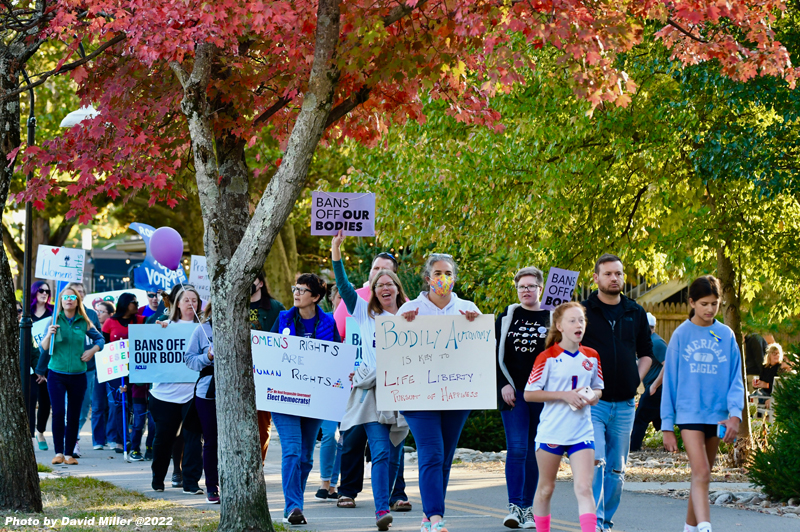
    Loveland, Ohio – Adults and children from across the tri-state gathered in Nisbet Park along the Little Miami River in Historic Downtown on a sunny and warm Fall Sunday afternoon to be part of a “Women’s Wave” of activists out to change the course of voting patterns in our community. After speeches, they walked for an hour throughout our business district and along the Loveland Bike Trail engaging locals and tourists with the refrain of the sentiments they were so adamant about. It was a demonstration for human rights and as odd as that sounded throughout the streets of this quaint community nicknamed, “The Sweetheart of Ohio” it happened. “Human Rights” that have been taken away from themselves, their children, and those they love. The political agenda on most minds was the U.S. Supreme Court overthrowing Roe v Wade and a woman’s right to have an abortion, reproductive rights such as birth control, and how that decision led to even more extreme legislation and proposals from some elected officials at the Ohio Statehouse, and in D.C.

    Health care, including the sometimes life-saving medical care of needed abortions and the tangled net that women and their healthcare providers are caught in, gun violence, mass shooting in schools, the right to gender equality, LGBTQ people’s rights, and a safer future for young girls were all talking points throughout the afternoon.

    Many Democratic candidates for local and state offices spoke and a candidate for the U.S. House. Parts of Loveland are in Ohio Representative Jean Schmidt’s district and the local organizer, Bailey Moak, said that is why she chose downtown Loveland for the event location. She wants to show Schmidt where the unemployment line is. She believes that Schmidt and other currently serving politicians don’t align with Loveland’s values.

    I asked organizer Moak on Monday to send me some of her thoughts after the event had ended. You can also watch her speaking at the event and watch a photo essay of photos from the event below. The rally was certainly an appeal for local “pro-choice” residents to get to the polls on November 8 and vote for “pro-choice” candidates, however, the photo essay will explain why so many people gathered in the park, their myriad reasons, and then marched.

    I found the event to be a huge success. We met our goals to engage and educate voters, raise awareness to threats against women’s rights in our community and shed light on dangerous politicians like Jean Schmidt from Loveland who proposed legislation to ban medical care to women and children across Ohio (HB598), and ban access to curriculum on diversity and inclusion to students across our state (HB616). 
    
    We rallied, we celebrated the promise of what new leadership can do to preserve and expand our freedoms, and we marched in protest of extremism and hate. 
    
    During the March we disrupted some nice family dinners occurring on the patios of local businesses in Downtown Loveland with our passionate demonstration. This disruption is NECESSARY. All too often we side-step important discussions with our families, friends and community members to avoid feeling uncomfortable. The only way individuals, families and communities can grow is through engagement and vulnerability, which can result in a bit of discomfort. As demonstrators passed, families and friends breaking bread together were compelled to address important topics, which in my experience, leads to understanding and connection. 
    
    This is why we Listen. This is why we Speak. This is why we Act. We do it for our communities and families. 
    
    I want to thank our passionate volunteers and our speakers: Brian Flick, Dr. Jeanne Corwin, Dr. Vanessa Enoch, Dr. Nabila Babar, Joy Bennett, Jen Perez and Rep. Jessica Miranda, and our partnering organizations: Ohio Physicians for Reproductive Rights, Ohio ACLU, Ohio Red Wine and Blue, the Ohio Democratic Women’s Caucus and Democracy in Action for participating in this event.
    
    I also want to thank the City of Loveland, the Loveland Fire Department, and Loveland PD Chief, Michael Gabrielson for their support in working with event organizers to ensure this was a safe and successful event that this community can be proud of.
    

  • Affidavits: More pregnant minors who were raped denied Ohio abortions

    Affidavits: More pregnant minors who were raped denied Ohio abortions

    Documents describe dozens of painful situations under Ohio abortion restrictions

    BY: MARTY SCHLADEN – Ohio Capital Journal

    At least two more minors made pregnant by sexual assault were forced to leave Ohio to avoid having their rapists’ babies, according to sworn affidavits filed by abortion providers.

    The affidavits were filed in Cincinnati as part of a lawsuit aimed at stopping enforcement of Ohio’s strict new abortion law, which it temporarily did last week. Originally paused for two weeks, on Tuesday the enforcement delay was extended to at least Oct. 14.

    If true, the affidavits show that a Columbus 10-year-old was not the only child or teen rape victim forced to leave the state. They also describe more than two dozen other instances in which the abortion law put women under extreme duress.

    The descriptions include those of three women who threatened suicide. They also include two women with cancer who couldn’t terminate their pregnancies and also couldn’t get cancer treatment while they were pregnant. 

    Another three examples were of women whose fetuses had severe abnormalities or other conditions that made a successful pregnancy impossible. Even so, they couldn’t get abortions in Ohio. 

    And in three cases, debilitating vomiting was caused by pregnancy — so bad in one case that a woman couldn’t get off the clinic floor. But neither could these women get abortions in Ohio, the affidavits said.

    The documents were filed in the case Preterm-Cleveland v (Ohio Attorney General) Dave Yost. Having already gotten a temporary order restraining enforcement of the abortion law — Senate Bill 23 — clinics across Ohio are now seeking a preliminary injunction.

    In doing so, they’re arguing that SB 23 is so onerous that it violates women’s due-process rights under the Ohio Constitution. 

    Disrupted clinics

    Gov. Mike DeWine signed the law in 2019, but it couldn’t be enforced until the U.S. Supreme Court overturned Roe v Wade on June 24. Many of the affidavits describe how, as soon as the decision overturning Roe was announced that Friday, work at Ohio clinics was thrown into chaos.

    Ohio law had allowed abortions until 20 weeks of pregnancy. Now, with only limited exceptions for the life and the health of the mother, no abortions were allowed after fetal cardiac activity could be detected by ultrasound.

    In the affidavits, clinic workers said that usually happens after five to six weeks of pregnancy — a point at which as many as a third of women and girls don’t know they’re pregnant.

    The new, much-earlier cutoff sent clinic workers scrambling.

    “In the days after S.B. 23 took effect, we had to cancel over 600 appointments,” Sharon Liner, medical director of Planned Parenthood Southwest Ohio, said in her affidavit. “Many patients broke down in tears in our office. Many patients that we could not reach by phone who came to our health center expecting to have their appointment were extremely upset; some threatened to hurt themselves because they were so distraught.”

    Liner added, “We have had at least three patients threaten to commit suicide. Another patient said she would attempt to terminate her pregnancy by drinking bleach. Another asked how much Vitamin C she would need to take to terminate her pregnancy.”

    In July, 60% of patients at the clinic had to be turned away because fetal cardiac activity had been detected by the initial ultrasound, Liner said. 

    The Ohio law requires a 24-hour waiting period and a second negative ultrasound before an abortion can be performed. Because things are changing so quickly at that stage of development, another 16% of women who’s fetuses had no cardiac activity during the first exam were turned away in July because it was detected in the second, Liner said.

    The Ohio law requires a 24-hour waiting period and a second negative ultrasound before an abortion can be performed. Because things are changing so quickly at that stage of development, another 16% of women who’s fetuses had no cardiac activity during the first exam were turned away in July because it was detected in the second, Liner said.

    “When we tell patients we cannot help them, they are extremely distressed, and all we can offer them is resources, information and emotional support,” Liner said in her affidavit, which was taken while S.B. 23 was still being enforced.

    Ohio clinics have been referring patients who were ineligible for abortions here to clinics and hospitals in Michigan, Pennsylvania, Illinois and New York to get them. 

    Planned Parenthood of Greater Ohio and other organizations have announced stepped-up assistance to help patients get to those states. But many — including at least one homeless woman — said problems with things like transportation, child care, poverty and getting time off work make the trips virtually impossible, according to the affidavits.

    Allegra Pierce, a medical assistant at Preterm-Cleveland, doubted that most women turned away at Ohio clinics during the 11 weeks S.B. 23 was enforced ever made it out of state.

    “The majority of patients I talk to say that they can’t travel out of state to access abortion care,” Pierce said in her affidavit. “Even though many patients can access sources of funding for seeking an abortion, there are so many barriers that make traveling out of state inaccessible for many of our patients, including the cost of travel, child-care responsibilities, and difficulty getting time off of work, just to name a few. Even those patients who are able to travel out of state often have a hard time getting an appointment due to increasingly long wait times at clinics in states where abortion is still legal.”

    More victims

    In July, when Ohio Attorney General Dave Yost was raising unfounded doubts about the existence of a 10-year-old rape victim, there were plenty of data indicating that the story was all too plausible.

    In 2021, Ohio’s Children’s Advocacy Centers saw 6,717 cases of sexual abuse against Ohioans between infancy and adulthood. And in 2020, the most recent year for which statistics are available, 571 girls aged 17 or younger received abortions in Ohio, according to the state department of health. Fifty-two of them — or one a week — were 14 or younger.

    Sadly, the affidavits filed in late August and early September by workers at abortion clinics provide further evidence that child and teen rape and subsequent pregnancy is a problem in Ohio. But so long as fetal cardiac activity is detected, S.B. 23 requires such victims to either have those babies or scramble out of state and try to find an abortion.

    Adarsh E. Krishen, chief medical officer for Planned Parenthood of Greater Ohio, told of a minor who had been sexually assaulted and had to travel to Michigan for an abortion because of S.B. 23. Krishen’s organization operates clinics in Columbus and Cleveland.

    “This patient experienced immense trauma from the assault itself and then endured further trauma from a forensic interview alongside a physical exam to collect evidence for the ongoing police investigation,” Krishen said in his affidavit. “This trauma was further exacerbated by needing to wait over three weeks for her appointment. In each step of this process she felt the complete denial of bodily autonomy and safety, something all people, especially children, should unequivocally have at all times.”

    Another example shows how S.B. 23 makes police investigation of child and teen rapes more difficult.

    Aeran Trick, operations manager of Women’s Med Center of Dayton, told of “a 16-year-old girl living in Southwestern Ohio who had become pregnant after being sexually assaulted by a family member.”

    As with the 10-year-old from Columbus, Trick said this teenager was forced to go to Indianapolis for an abortion.

    “The local Ohio law-enforcement agency — which was already involved at the time the clinic was contacted about the patient — had to drive to our Indianapolis clinic to retrieve the tissue for crime lab testing related to the sexual assault investigation,” Trick’s affidavit says. “I am concerned that Ohio’s ban and the need to travel increasingly far distances to obtain abortion care not only causes unimaginable harm to these young victims, but could also hamper law enforcement’s ability to investigate and prosecute these cases in the future.”

    Cornered by cancer

    The affidavits filed as part of the effort to stop S.B. 23 describe two cancer patients put in the most impossible of situations by the law. 

    Both seem to illustrate doctors’ reluctance to terminate pregnancies despite the law’s exceptions for maternal health — exceptions that doctors say are woefully ill-defined. With potential penalties that include felony charges and the loss of professional licenses, some doctors have refused to terminate even though their patients’ health is at risk.

    In the days after S.B. 23 took effect, a pregnant 25-year-old went to a clinic operated by Planned Parenthood of Southwest Ohio, said Liner, the medical director there. The patient had recurrent cancer and was undergoing chemotherapy when she learned that she was pregnant.

    Chemotherapy is dangerous during the first 12 weeks of pregnancy and this patient had already skipped one treatment. But when the clinic determined that she was eight weeks pregnant, workers there said they couldn’t perform an abortion, Liner said.

    “Due to the patient having cancer while pregnant, we sought documentation to support a medical exception to S.B. 23 for this patient,” Liner said in her affidavit. “Her provider of care did not feel comfortable providing this and the patient had to travel out of state for an abortion to resume her cancer treatment, which caused further delay.”

    The effect of delaying chemotherapy on the patient’s health might be hard to determine, but it seems unlikely that it was good.

    Just three days after S.B. 23 took effect, a 37-year-old suffering stage III melanoma went to Women’s Med Center in Dayton, Trick, the operations manager there, said. The woman was told by her doctors that she had to terminate her pregnancy before they could treat her, so she, too, would have to leave the state, Trick said. 

    “Upon learning that she would need to travel out of state to have her abortion, the patient broke down and cried inconsolably despite the attempts of multiple staff members, including myself, to console her,” Trick said in her sworn affidavit.

    Other illnesses

    In addition to those cases, women with conditions that made successful pregnancies impossible had problems getting doctors outside the clinics to treat them, David Burkons, medical director of Northeast Ohio Women’s Center said. Two patients at the clinic said they had tubal, or “ectopic,” pregnancies “but the doctors (at emergency rooms) were afraid to treat them without being absolutely certain there was no intrauterine pregnancy,” Burkons wrote in his affidavit.

    “In one case, the patient’s fallopian tube ruptured, and surgery (was needed) rather than medical management, which would have been possible if they had acted sooner,” he said. “In the other, my nurse intervened to convince a physician to treat the patient, but only several days later, which was emotionally wrenching for the patient.”

    The affidavits also detail cases of fetal abnormalities and other problems so severe that pregnancies can’t result in a successful birth. One patient at a Planned Parenthood clinic in Southwest Ohio had a fetus with abnormalities including “a lack of lower extremities and the contents of the fetus’s abdomen, including possibly the heart, protruding through a defect in the abdominal wall,” Liner, a doctor, said in her sworn statement.

    Because S.B. 23 doesn’t allow women in such cases to abort their pregnancies if they don’t pose an imminent threat to their health, they either have to leave the state for an abortion or carry the fetus to term — even though that “can be extremely distressing for patients,” Liner said.

    In another case, this one in Dayton, a woman was 13 weeks pregnant but had no amniotic fluid, prompting her doctor to tell her the pregnancy was “nonviable.”

    “However, because the fetus still had fetal heart tones, the physician discharged her with instructions to call the office if she developed a fever,” Trick said in her affidavit. “The patient was very distressed and expressed to (clinic) staff that she felt abandoned by her physician during an incredibly difficult experience. I’m concerned that confusion over the meaning of S.B. 23’s health exceptions has led physicians to avoid providing medically necessary care out of caution, and I worry about patients in similar positions who aren’t able to independently find an accessible abortion provider without their physician’s help.”

    Clinic workers also reported cases of incessant vomiting caused by pregnancy, including in a high-school senior who found it impossible to attend class and finish her diploma. 

    Another girl, 16, had vomited so much that she lost 20 pounds, Trick, of the Dayton clinic, reported. The girl’s mother didn’t have a reliable car, so she had to rent one to take her daughter to Indianapolis for an abortion, Trick said.

    At the same clinic, another patient was “so sick she was lying on the floor vomiting into a bucket,” Trick wrote. 

    The woman wasn’t only afraid that her condition would prevent her from making it to Indianapolis, Trick said. The woman had four kids to care for and she was the manager of a large retail store.

    “She was concerned that she was going to lose her job because of all the time she had to take off to travel to and from the clinic for abortion care in addition to her repeated absences due to being hospitalized for her condition,” Trick wrote.

    Undermining its own purpose

    Proponents of S.B. 23 meant to dramatically curtail the number of abortions in Ohio. But the clinic workers said that for some patients, it’s having the perverse effect of rushing them to terminate pregnancies before they’ve had a chance to decide whether that’s what they really want.

    Pierce of Preterm-Cleveland said that at five to six weeks, “these patients are very early on in their pregnancies and many of them have not had a chance to wrap their minds around the fact they are pregnant. A number of patients have told me that they wish they had more time to think about whether to continue the pregnancy.

    “For example, I recently spoke with a patient with a young baby at home who had become pregnant again only months after giving birth,” Pierce’s affidavit continues. “She had experienced many postpartum health issues, and she was not sure if she was physically or mentally ready to go through a pregnancy again so soon. She wanted time to work through this decision but was terrified that if she waited she would no longer be able to have an abortion.”

    In their lawsuit, the abortion clinics seem to be contending that in forcing such an early decision, S.B 23 denied that woman’s due-process rights under the Ohio Constitution. They seem to be asserting the same rights for the other women they describe in the affidavits as being injured by S.B. 23.

    Whether Ohio’s court system agrees will be decided in the coming months.

    Follow Marty Schladen on Twitter.

  • DeWine: No comment on abortion ban that forced a child to Indiana

    DeWine: No comment on abortion ban that forced a child to Indiana

    BY: MARTY SCHLADEN – Ohio Capital Journal

    t appears that a 10-year-old rape victim had to leave Ohio for an abortion. But Ohio Gov. Mike DeWine isn’t commenting on the fact that a law he signed making that necessary if she didn’t want to become a mother.

    Shortly after the U.S. Supreme Court overturned Roe v Wade and cleared the way for the law to take effect, the child was on her way to Indiana for an abortion because she couldn’t get one in Ohio, an Indianapolis OB-GYN told the Indianapolis Star. The doctor, Caitlin Bernard, told the paper that an Ohio child-abuse doctor had called, saying the child was six weeks and three days pregnant and needed help.

    That was three days after the six-week limit the DeWine-signed law places on abortion in Ohio. It makes no exceptions for women and children who are victims of rape and incest.

    The story has made national news. But DeWine seemed unprepared Wednesday to discuss whether legislation he championed is forcing children out of state if they don’t want to have their rapists’ babies.

    “Yeah, first of all, I have no more information than you do or anybody does. Reading in the in the paper, it came came as you know, from a story out of out of Indiana from from a doctor over there,” he said as part of a rambling answer to a question from the Cincinnati Enquirer, according to a transcript.

    DeWine went on to say it was “gut-wrenching” as a father and grandfather to think about a 10-year-old being raped, and that he hoped the doctors caring for her reported the assault to law enforcement. But he didn’t address the fact that a law he signed put girls like her in such an onerous situation.

    In a follow-up on Thursday, DeWine Press Secretary Dan Tierney was asked whether the governor thinks juvenile rape victims who become pregnant should be able to get abortions, or whether he believes they should be forced to carry their pregnancies to term. Tierney didn’t answer directly.

    “You have access to Governor DeWine’s recent comments on these issues, including that the only information available on the Indiana matter was from Indiana media reports,” Tierney said in an email. “I do not have further comment for you beyond yesterday’s remarks and the Governor’s numerous and extensive comments since the” Supreme Court decision overturning Roe v Wade.

    While DeWine and his spokesman underscored that media reports were all they knew about the incident involving the Ohio 10-year-old, there have been warnings that something like this was likely to happen.

    Shortly after DeWine signed the six-week ban in 2019, CBS News reported on an Ohio 11-year-old who was repeatedly raped by a 26-year-old, impregnating her. If the Ohio law was cleared by the Supreme Court, the story said, the girl could be left with few options after six weeks of pregnancy. 

    The story also describes victim-blaming the child experienced at a “pregnancy care center.” It cited a police report quoting an employee describing the 11-year-old rape victim as “rebellious” and that she “refuses to listen to her mother and runs away from home all the time.”

    At six weeks, as many as a third of women don’t know they’re pregnant, and it’s a safe bet that even fewer girls do. And while statistics on pregnancies resulting from rape are sparse, it seems likely that Ohio and other states that don’t allow abortions in cases of rape or incest are going to force more children into the most difficult of situations.

    The U.S. Centers for Disease Control and Prevention estimates that about 18 million women experience vaginal rape in their lifetimes and that almost 3 million become pregnant from it. The 2018 research from which those statistics were drawn said it was “the first in over 20 years to offer a nationally representative prevalence estimate of (rape-related pregnancy) of U.S. women…”

    That’s an apparent reference to a 1996 paper published in the American Journal of Obstetrics and Gynecology. It was based on a three-year survey of 4,008 women that sought to determine “the prevalence and incidence of rape and related physical and mental health outcomes.”

    Its findings relating to young rape victims are not reassuring.

    “Among 34 cases of rape-related pregnancy, the majority occurred among adolescents and resulted from assault by a known, often related perpetrator,” an abstract of the study said. “Only 11.7% of these victims received immediate medical attention after the assault, and 47.1% received no medical attention related to the rape.” 

    It added that almost a third of adolescent rape victims didn’t know they were pregnant for 12 weeks — more than double the point at which their abortions would now be illegal in Ohio.

    “A total 32.4% of these victims did not discover they were pregnant until they had already entered the second trimester; 32.2% opted to keep the infant whereas 50% underwent abortion and 5.9% placed the infant for adoption; an additional 11.8% had spontaneous abortion,” the paper said.

    DeWine and his spokesman were reluctant this week to say whether he thinks young rape victims should be forced to carry pregnancies to term. But his office earlier this month confirmed his support of a bill restricting abortion in Ohio even further — and also making no exceptions for rape and incest.

    For Aileen Day, communications director for Planned Parenthood Advocates of Ohio, DeWine owns the consequences of the abortion bills he signs — whether he addresses them directly or not.

    “DeWine signed the six-week ban into law and he is the reason the 10-year-old Ohioan had (to) jump through repeated obstacles to get the health care she needed,” Day said in an email. “It is truly disgusting that he’s not being held accountable for all the harm he has caused Ohio. DeWine’s team has bragged that he is the most anti-abortion governor in Ohio’s history and his history backs that up by signing 10 dangerous abortion restrictions and bans into law.” 

    Follow OCJ Reporter Marty Schladen on Twitter.

  • The bedeviling details: Roe decision leaves Ohio health providers scrambling

    The bedeviling details: Roe decision leaves Ohio health providers scrambling

    BY: MARTY SCHLADEN – Ohio Capital Journal

    Abortion foes celebrated victory in a 50-year fight on June 24, when the U.S. Supreme Court overturned Roe v Wade and allowed states to severely restrict — or even eliminate — women’s access to abortion. But for those who care for pregnant women, the ideological victory posed a swarm of burdensome questions they haven’t begun to answer.

    Jason Sayat, a Central Ohio OB-GYN, said the Friday the decision came down started as any other. He and his colleagues juggled a full office load with duties in the labor-and-delivery ward. 

    “Then we were hit with the information that Roe v Wade was reversed,” he said, describing how through the rest of the day they dealt with not just patients’ medical conditions, but also their fears about what the cancellation of a constitutional right to abortion meant for them.

    Within hours, the confusion increased when Attorney General Dave Yost filed a motion to lift an injunction against a 2019 Ohio law prohibiting abortions after six weeks of pregnancy — a point at which as many as a third of women don’t even know they’re pregnant

    Sayat said “it really put things dramatically and quickly into focus in terms of how these restrictions were well in place within hours.”

    The six-week ban is far from the only abortion restriction that could be coming down the pike in Ohio. One lawmaker says she has the votes and support of Gov. Mike DeWine to ban almost all abortions, even in the case of rape or incest.

    The flurry of anti-abortion laws and proposals has Ohio’s major health systems on their heels. 

    Individual practitioners such as Sayat, who declined to name his employer, are saying they need to know that Ohio health systems will have their backs in the months ahead. But he said that as of last week, “we’re still waiting for directives.”

    He explained that while the political debate over abortion tends toward the simplistic, caring for pregnant women in the real world is anything but.

    For example, Ohio’s six-week law allows later abortions if there’s a “medically diagnosed condition that so complicates the pregnancy of the woman as to directly or indirectly cause the substantial and irreversible impairment of a major bodily function.” But who determines whether those conditions have been met? The Department of Health? The police?

    “What this has all come down to is the violation or disruption of personal medical decision-making between the decisions of the patient and their trusted health care team or physician,” Sayat said. “It’s so individualized and complex that laws like this can’t apply to that. It’s not as black-and-white.”

    And, he said, in situations where continuing a pregnancy is incompatible with the health of the mother, doctors and patients need to be able to make decisions “without fear of reprimand or imprisonment on felonious charges.”

    The American Medical Association didn’t mince words in the wake of the Supreme Court decision overturning Roe v Wade.

    The organization “is deeply disturbed by the U.S. Supreme Court’s decision to overturn nearly a half century of precedent protecting patients’ right to critical reproductive health care — representing an egregious allowance of government intrusion into the medical examination room, a direct attack on the practice of medicine and the patient-physician relationship, and a brazen violation of patients’ rights to evidence-based reproductive health services,” AMA President Jack Resneck Jr. said the day of the decision. “States that end legal abortion will not end abortion—they will end safe abortion, risking devastating consequences, including patients’ lives.”

    Ohio’s major hospital systems — operating in a state dominated by anti-abortion officeholders — have been much more cautious in their public statements. 

    The Capital Journal last week asked them four questions:

    • Will your organization provide out-of-state abortion care to your employees should they need it?
    • Will it defend practitioners making medically sound decisions — for example, terminating a pregnancy to protect the mother — to the fullest extent should they be accused of violating current or future restrictions on abortion in Ohio?
    • Are you concerned that current or future restrictions might make it more difficult to attract and retain talented practitioners?
    • Does your organization believe that, in restricting abortion, lawmakers and the courts are inserting their religious beliefs into the doctor-patient relationship?

    Many responded by saying they don’t have any answers yet. Tausha Moore of Toledo-based ProMedica gave a typical response.

    “Regarding your inquiry, we are in the process of evaluating recent changes to better understand the impact they will have on health care in the communities we serve,” she said in an email.

    Marti Leitch of Ohio State’s Wexner Medical Center made a similar statement.

    “Ohio State is closely examining the decision from the Supreme Court and changes in state law,” she said. “If necessary, the medical center and College of Medicine will make adjustments to be in compliance with the law.”

    Dorsena Drakeford of Cleveland’s MetroHealth also said her system is also reviewing the situation.

    Amanda Nageleisen of the University of Cincinnati Health System also said it was continuing to review the situation, but “We remain deeply committed to the sanctity of the patient-health care provider relationship and will balance patients’ and health care providers’ interests in accordance with all federal and state laws.”

    It appears that a big question the state’s hospital systems are grappling with involves ending pregnancies when they’re deemed medically necessary.

    “While OhioHealth hospitals and clinics have not and do not provide elective termination procedures, we acknowledge that there are times when the life and safety of a patient may be threatened by acute medical complications, even early in pregnancy,” spokeswoman Stephanie Stanavich said in an email. “We will continue to offer care to our patients within the confines of any new regulatory landscape and always within the best practice standards of care.”

    As the big hospital systems formulate their policies, Sayat, the OB-GYN, said he hopes they keep practitioners in mind.

    “I think that the biggest part is that we as providers need to feel supported and feel like we have the resources to navigate the complexity of scenarios we’re presented with,” he said.