Tag: school vouchers

  • Trump order prioritizes school choice and vouchers, which Ohio has been expanding for decades

    Trump order prioritizes school choice and vouchers, which Ohio has been expanding for decades

    Getty Images

    By:  Ohio Capital Journal

    An executive order signed by President Donald Trump directs an emphasis on school choice and private school voucher programs when it comes to education funding, something that’s been happening in Ohio for several decades now.

    While it’s unclear how much power the executive order will have with spending decisions decided by Congress, the executive order directs to the U.S. Department of Education to prioritize “school choice” programs in grant funding, and requires the U.S. Department of Health and Human Services to guide states on block grants that can be used for private schools.

    The executive order also directs the U.S. Department of Education to release guidance on using federal funding formulas for private school scholarship programs, and for military families in particular to be given information on scholarships.

    It’s not yet clear how this will affect individual states, but Ohio has already vastly expanded its private school voucher programs over the last two decades, and recently passed near-universal levels eligibility.

    Ohio House Speaker Matt Huffman began 2025 by saying the six-year phase-in of the public school funding model in Ohio was “unsustainable,” which received massive pushback from public school supporters, especially after the lawmakers poured nearly $1 billion into private school scholarships last year.

    Huffman called the future of the current funding model – also called the Fair School Funding Plan or the Cupp-Patterson plan – a “fantasy,” but has seemingly softened his stance for now after hearing from members of his own party.

    A spokesperson for Huffman and the House Majority Caucus did not respond to a request for comment on the executive order.

    GET THE MORNING HEADLINES.


    The president and CEO of EdChoice, Ohio’s private voucher program, praised the order in a statement, saying prioritizing and expanding such programs “is a crucial step toward empowering families and giving them greater control over their children’s education.”

    “This initiative reflects a commitment to funding students not systems and to ensuring the proper role of the federal government in education,” EdChoice President and CEO Robert Enlow said in the Wednesday statement. “It recognizes both the appropriate role of the federal government on education and the fact that education is primarily a state function.”

    Public school advocates feel the same way about a federal push for private school funding expansion as they do about state-level funding increases, for which a lawsuit was filed in Franklin County Common Pleas Court to eliminate the private school voucher program.

    The lawsuit argues that funding for private schools is coming out of the coffers of the public school system, something the state is constitutionally obligated to fund properly.

    “Diverting public money to unaccountable and ineffective private schools is a failed strategy that runs counter to public opinion,” Ohio Federation of Teachers head Melissa Cropper told the Capital Journal.

    2024 survey done by All4Ed, Lake Research Partners and the Tarrance Group, found a majority of American voters support public education, and an increase in funding to improve public schools. This included 58% of Republicans surveyed. Only 34% of GOP voters polled said funding for voucher programs should be increased.

    “Voters view public schools, including their local public school, more favorably than charter, private or religious schools,” the study stated.

    Cropper called the move by the Trump administration “a strategy straight of Project 2025,” the playbook written and supported by right-wing Heritage Foundation members, some of whom have become players in the Trump administration, including the White House budget office.

    “Regardless of what politicians do, Ohio educators and school staff will continue fighting for the resources that our students deserve,” Cropper said.


    YOU MAKE OUR WORK POSSIBLE.

    _______________
    Susan Tebben
    Susan Tebben

    Susan Tebben is an award-winning journalist with a decade of experience covering Ohio news, including courts and crime, Appalachian social issues, government, education, diversity and culture. She has worked for The Newark Advocate, The Glasgow (KY) Daily Times, The Athens Messenger, and WOUB Public Media. She has also had work featured on National Public Radio.

    Ohio Capital Journal is part of States Newsroom, the nation’s largest state-focused nonprofit news organization.

    MORE FROM AUTHOR

  • Ohio spent nearly a billion dollars on private school voucher scholarships in 2024

    Ohio spent nearly a billion dollars on private school voucher scholarships in 2024

    Getty Images.

    By:  Ohio Capital Journal

    Ohio spent nearly a billion dollars on private school scholarship programs for the 2024 fiscal year, the first full year with near-universal school vouchers.

    The total scholarship amount for Ohio’s five private school scholarship programs was $970.7 million, according to final data from the Ohio Department of Education and Workforce. Well more than a third that money ($406.7 million) was from Education Choice Expansion scholarships.

    “I think this does have potentially a negative impact on students, on public schools around the margins, as you see those enrollment trends, but then in the big picture, when you have close to a billion dollars in public money that’s going to private schools, that means a billion dollars in state money that’s not available to meet the needs of the nearly 90% of kids that attend our public schools,” said Ohio Education Association President Scott DiMauro.

    The $970.7 million number is higher than the estimated $964.5 million the nonpartisan Ohio Legislative Service Commission predicted when it came to the scholarship programs.

    The five private school scholarship programs are the Autism Scholarship Program, the Jon Peterson Special Needs Scholarship Program, the Cleveland Scholarship, the Education Choice Scholarship and the Educational Choice Expansion Scholarship Program.

    Students on the autism spectrum are eligible to receive vouchers up to $32,455 for the Autism Scholarship Program. Students who have an Individualized Education Program (IEP) from their district are eligible for the Jon Peterson Special Needs Scholarship. The Cleveland Scholarship is for all students living in the boundaries of Cleveland Metropolitan School District. Students living in the boundaries of a low-performing school district are eligible for Education Choice scholarships.

    Lawmakers expanded the Education Choice-Expansion eligibility to 450% of the poverty line last year through the state budget — creating near-universal school vouchers. This means a family of four above the $135,000 income threshold can still be eligible for at least 10% of the maximum scholarship.

    K-8 students can receive a $6,165 scholarship and high schoolers can receive a $8,407 scholarship in state funding under the expansion.

    There were 93,159 applicants for the EdChoice Expansion scholarships and 89,794 were awarded scholarships, according to ODEW data. The amount of EdChoice-Expansion scholarship payments more than tripled from fiscal year 2023 to fiscal year 2024.

    For the traditional EdChoice scholarships, there were 44,020 applicants and 42,779 were awarded scholarships — totaling $273.1 million, according to ODEW data.

    During this time, nonpublic school enrollment increased about 2%, going from 169,807 in fiscal year 2023 to 173,156 in fiscal year 2024, according to ODEW data.

    Public school enrollment declined slightly — dropping about 6,000 students from the 2022-23 school year to the 2023-24 school year.

    Most of these new EdChoice Expansion scholarships are students who were already attending private schools, DiMauro said. Ohio’s voucher program started with the Cleveland Scholarships back in 1996.

    “This was intended to help students who didn’t have the resources to have options outside of public schools,” DiMauro said. “(The EdChoice Expansion) is clearly intended to benefit people that had long ago made the decision to send their kids to private schools.”

    In some cases, the universal vouchers have allowed private schools to increase tuition, he said.

    GET THE MORNING HEADLINES.


    “The increased revenue comes at the expense of the state,” DiMauro said. “It’s the private schools themselves that are directly being subsidized through this program, even more than families are.”

    If private schools are going to accept vouchers, DiMauro wishes there was more transparency when it comes to private school tuition.

    The OLSC predicts the five scholarship programs’ payment total will exceed a billion dollars next year.

    Aaron Churchill, Ohio’s research director for the Thomas B. Fordham Institute, thinks these scholarship payment figures are sustainable year-to-year.

    “I do think we can walk and chew gum at the same time,” he said. “We can support great public schools. We can provide the resources for them. … We can also empower families with greater choice. And I think that’s the direction that Ohio is moving.”

    Total payments for the five scholarship programs for the past five fiscal years, according to ODEW data:

    • $610.2 million in fiscal year 2023
    • $554.5 million in fiscal year 2022
    • $444.5 million in fiscal year 2021
    • $394.2 million in fiscal year 2020
    • $346.6 million In fiscal year 2019

    Remaining scholarships

    For the Cleveland Scholarship this fiscal year, there were 8,626 applicants and 8,361 scholarships were given — totaling $53.6 million, according to ODEW data.

    There were 5,610 applicants for the Autism Scholarship and 5,385 were awarded for $141.7 million, according to ODEW data.

    For the Jon Peterson Scholarship, there were 9,439 applicants and 9,082 scholarships were awarded, totaling $95.6 million, according to ODEW data.

    Follow OCJ Reporter Megan Henry on X.


    Megan Henry
    Megan Henry

    Megan Henry is a reporter for the Ohio Capital Journal and has spent the past five years reporting in Ohio on various topics including education, healthcare, business and crime. She previously worked at The Columbus Dispatch, part of the USA Today Network.

    Ohio Capital Journal is part of States Newsroom, the nation’s largest state-focused nonprofit news organization.

    MORE FROM AUTHOR

  • Three Ohio Supreme Court races on the November ballot will have a huge impact in the coming years

    Three Ohio Supreme Court races on the November ballot will have a huge impact in the coming years

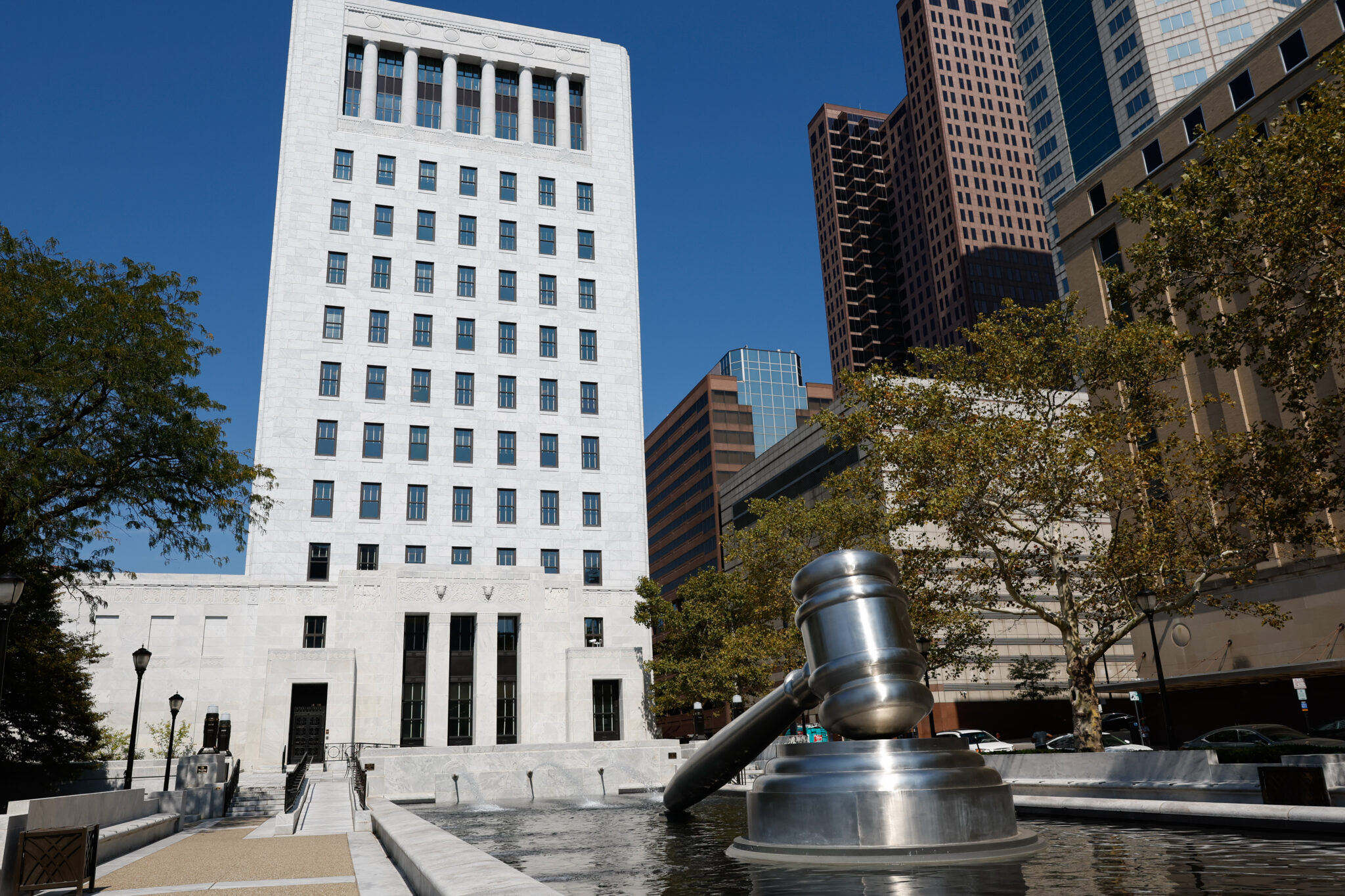
    The Gavel outside the Supreme Court of the State of Ohio, September 20, 2023, at 65 S. Front Street, Columbus, Ohio. (Photo by Graham Stokes for Ohio Capital Journal. Republish photo only with original article.)

    Ohio’s highest court currently has a 4-3 Republican majority

    By:  Ohio Capital Journal

    Three Ohio Supreme Court seats will be up for grabs during the November election. The outcomes will decide the balance of the court and have major impacts on a wide variety of issues that affect the lives of Ohioans, from education and environmental issues to gerrymandering and elections to civil and reproductive rights.

    Partisan labels were added to the previously-nonpartisan races by the state legislature in 2021.

    This year, incumbent Democratic Justice Michael P. Donnelly is being challenged by Republican Hamilton County Court of Common Pleas Judge Megan Shanahan.

    Incumbent Democrat Justice Melody Stewart is being challenged by incumbent Republican Justice Joseph Deters, who opted not to run for his current seat and decided to go up against Stewart.

    Vying for Deters’ open seat is Democratic candidate Lisa Forbes, of the Eighth District Court of Appeals, and Republican candidate Dan Hawkins, of the Franklin County Court of Common Pleas.

    Deters decided to run for a full-term seat by challenging Stewart, rather than a partial term for the seat Ohio Gov. Mike DeWine appointed him to on Jan. 7, 2023. Because of this, whichever candidate wins Deters’ current seat will have to run again in 2026 for a full six-year term.

    Ohio’s highest court currently has a 4-3 Republican majority. If all three Republicans are elected, the Republicans would hold all but one seat on the bench, for a 6-1 majority. On the flip side, if all three Democrats win their elections, the Democrats would hold a 4-3 majority. The Ohio Supreme Court has been under Republican control since 1986.

    Democratic Justice Jennifer Brunner’s seat will be up in 2026. Republican Chief Justice Sharon Kennedy, Republican Justice Pat DeWine and Republican Justice Pat Fischer’s seats will be up in 2028.

    The Ohio Supreme Court could make decisions on a plethora of critical issues: reproductive rights, gerrymandering, school vouchers, home rule, and environmental issues, among others.

    “If there’s a law around it, it could end up in the Supreme Court and have a real, tangible impact on each of our lives,” said Elisabeth Warner, spokesperson for the League of Women Voters of Ohio.

    Even though 57% of Ohio voters approved an amendment last year to enshrine reproductive rights in the state’s constitution, the court will inevitably rule on abortion access.

    “There are still a lot of anti-abortion laws on the books, so that’s something that the Supreme Court is going to be ruling on,” Warner said.

    Ohio’s anti-abortion laws were not automatically nullified when last year’s amendment passed, so abortion advocates are working to undo those laws.

    Franklin County Court of Common Pleas recently issued a temporary pause on Ohio’s 24-hour waiting period and the minimum two in-person visits required before an abortion.

    Another lawsuit is currently pending in Hamilton County Court of Common Pleas over whether Ohio’s six-week abortion ban is unconstitutional after voters passed last year’s amendment.

    Those lawsuits will likely make their way to the Ohio Supreme Court — meaning the seven justices will end up deciding to what extent reproductive rights are protected.

    “At the end of the day, the Ohio Supreme Court will determine whatever’s in the Ohio Constitution that voters put into the Ohio Constitution,” said Catherine Turcer, Common Cause Ohio’s executive director. “It is interpreted by the Ohio Supreme Court.”

    The Ohio Supreme Court has made many rulings on redistricting before and it will likely come before the court again — especially with the amendment on this year’s ballot to create a citizen commission to redraw districts.

    A lawsuit against school vouchers is making its way through the court system and will likely go before the state’s high court.

    Even boneless chicken wings wound up in front of Ohio’s seven justices. The court recently made national headlines with their 4-3 ruling that boneless chicken wings can have bones in them — appearing in a bit on “The Late Show with Stephen Colbert.”

    Turcer and Warner both criticized the 2021 law that requires party affiliation listed on the ballot for Ohio Supreme Court candidates. More than 1 million Ohio voters left the two Supreme Court races blank during the 2020 election.

    “We shouldn’t actually be thinking Democrats and Republicans because at the end of the day, what you want is a referee who’s independent and impartial,” Turcer said.

    Follow OCJ Reporter Megan Henry on X.


    Megan Henry
    Megan Henry

    Megan Henry is a reporter for the Ohio Capital Journal and has spent the past five years reporting in Ohio on various topics including education, healthcare, business and crime. She previously worked at The Columbus Dispatch, part of the USA Today Network.

    Ohio Capital Journal is part of States Newsroom, the nation’s largest state-focused nonprofit news organization.

    MORE FROM AUTHOR