Tag: schools

  • Reading Recovery lawsuit trying to prevent science of reading implementation in Ohio schools

    Reading Recovery lawsuit trying to prevent science of reading implementation in Ohio schools

    BY:  Ohio Capital Journal

    A lawsuit is trying to prevent a new law from changing how Ohio students learn how to read.

    Reading Recovery Council of North America, located in Worthington, filed a lawsuit on Oct. 3 in the Franklin County Court of Common Pleas to block the science of reading from being implemented in schools across the state.

    The science of reading is based on decades of research that shows how the human brain learns to read and incorporates phonemic awareness, phonics, fluency, vocabulary, and comprehension.

    Reading Recovery Council of North America’s reading intervention programs would be banned under the new law.

    The association has seen a decline in Ohio school district memberships since the state budget was signed into law and a major portion of its operating revenue comes from annual membership fees paid by Ohio members, according to the lawsuit.

    “The unconstitutional, improper and unlawful teaching, instructional and educational policy directives of the Ohio Legislature … directly and significantly impact RRCNA’s mission and outreach,” wrote David Yeagley, an attorney with Ulmer & Berne that filed the lawsuit.

    DeWine’s press secretary Dan Tierney said the governor is disappointed this lawsuit has been filed.

    “I truly believe there’s nothing more important than the science of reading, and making sure that every single child in the state of Ohio, as they are learning to read, has the benefit of the science,” DeWine said at a March 23 event. He has visited several schools to learn about how the science of reading method has been implemented in lessons.

    State budget

    A chunk of the state’s two-year operating budget goes towards implementing the science of reading — $86 million for educator professional development, $64 million for curriculum and instructional materials, and $18 million for literacy coaches.

    DeWine, who first began advocating for the science of reading during his state of the state address back in January, signed the state budget in July. He originally put the science of reading in his proposed state budget and it remained, with some tweaks, as it went through the budget process.

    “If permitted to take effect, it will allow the General Assembly to disguise a policy-based law in a must-pass appropriations bill,” the lawsuit said.  “The literacy curriculum statute intrudes on classroom teaching and learning programs, models, methodologies and materials.”

    The lawsuit argues the General Assembly is trying to set education policy and curriculum, infringing on the Ohio State Board of Education’s authority to oversee the Ohio education system.

    Three-cueing

    The budget bans teachers from using the “three-cueing approach” in lessons unless a district or a school receives a waiver from the education department or a student has an individualized education program that specifically includes the “three-cueing approach.”

    However, the lawsuit argues the budget fails to clearly articulate “a clear standard for assessing what teaching models or methods might be categorized under the “three-cueing” approach.”

    The budget defines the “three-cueing approach” as any model of teaching students to read based on meaning, structure and syntax, and visual cues. The three-cueing method encourages children to read words by asking three questions: Does it make sense? Does it sound right? Does it look right?

    Reading recovery is “often referred to or perceived as a “three-cueing” approach, and therefore is targeted as being anti-science of reading,” according to the lawsuit. “There are no recognized or established teaching, instructional or educational approaches that strictly and exclusively fall within either the “science of reading” or the “three-cueing approach.”

    Louisiana, Arkansas and Virginia have laws that ban curriculum that includes three-cueing.

    Other education lawsuit

    This is the second education lawsuit filed against DeWine that relates back to the budget bill. Seven members of the Ohio State Board of Education filed a lawsuit against DeWine on Sept. 19 to block the transfer of power over Ohio K-12 education from the board to the governor’s office.

    On Sept. 21,Franklin County Judge Karen Held Phipps issued a temporary restraining order that currently remains in place and is set to expire on Friday.

    The lawsuit is trying to prevent the Ohio Department of Education from transitioning to the Ohio Department of Education and Workforce, which would create a cabinet-level director position and puts the department under the governor’s office. These changes would also limit the State Board of Education’s power to teacher disciplinary and licensure cases and territory disputes.

    Follow OCJ Reporter Megan Henry on Twitter.


    Megan Henry
    MEGAN HENRY

    Megan Henry is a reporter for the Ohio Capital Journal and has spent the past five years reporting in Ohio on various topics including education, healthcare, business and crime. She previously worked at The Columbus Dispatch, part of the USA Today Network.

    MORE FROM AUTHOR

  • Grailville: Know what you’ve got before it’s gone

    Grailville: Know what you’ve got before it’s gone

    A statue of a child at Grailville – photo provided by Kevin and Laurie Kiley

    Introduction by Kevin Kiley

    What’s going on in Loveland this week?

    Kevin Kiley

    The City of Loveland is currently reviewing an application for a large housing development on the east side of Loveland. This 111 acre parcel of land, a historic property currently owned by Grailville, was recently annexed into Loveland and is under contract to Drees Homes “with an option to buy” for $7.3 million. Drees has requested that Loveland re-zone the site to a special planning district (SPD) and approve an exception to build more than twice the number of homes permitted by current zoning. This same property was offered to Loveland Schools but failed to pass levies in the months preceding the pandemic.

    Why does this matter?

    Several concerns have been addressed to the Loveland Planning and Zoning Comission on how this new development will impact Loveland, including its effect on traffic, parking, schools, and other taxpayer expenses. This proposed new housing development borders 100 acres of nature preserve now owned by the Clermont County Parks District. A growing number of forward-thinking residents see this additional 111 acres as an incredible opportunity for Loveland to build something amazing for all who live in Loveland, not just a select few.

    How can I get involved?

    The next Loveland Planning and Zoning meeting is Wednesday, May 4th at 7 PM at Loveland City Hall.  Please attend to learn more and show support—help us pack the room. There will be a sign-in sheet in the room for anyone who wishes to speak.

    To residents and elected decision makers of Loveland

    by Laurie Kiley

    Laurie Kiley

    As I sit to put my feelings about the development of the Grailville property into writing, Joanie Mitchell’s lyrics are stuck in my head…

    Don’t it always seem to go
    That you don’t know what you got ’til it’s gone
    They paved paradise and put up a parking lot

    While I am a tree hugger in my soul I am also realistic that as humankind continues to evolve nature will always be at risk. We must be diligent to make personal choices—and choices as a community—that result in the greatest legacy for those who come after us. We cannot be shortsighted.  

    That being said, my biggest concern here today is actually about accountability. Loveland residents elect our Council to have privileged access to information on our behalf. We expect that they are making decisions holistically and with the future in mind well beyond their tenure.  

    As accountable Council members, we implore you to not make easy compromises today that lead to deeper issues for our community tomorrow. The full impact of every rezoning decision, every parking garage, and every field that is eliminated must be considered.  

    In our personal lives, it is irresponsible to spend beyond our means or to act now and think later. 

    Likewise, it would be irresponsible for our Council to make decisions that put Loveland’s future at risk.

    The Grail is entitled to sell the property they cannot afford to hold. Drees is entitled to request an exception to maximize its profits and create a space to benefit 209 new households.  Loveland Council, however, is not obligated to create new laws to make it possible.  

    I want to go back to my previous point about encouraging holistic decision-making. Here is a summary of inter-related concerns from my point of view:

    • The Drees proposal outlines lot dimensions that equate to .16 acres that are 70% covered by house at worst, and .27 acre lots that are 60% covered by house at best. In contrast, Loveland’s current zoning stipulates 1 acre per lot for new development. If Drees accepts current zoning then it’s a done deal and within our regulations.
    • The traffic studies—limited as they were—confirm that this development would increase traffic through downtown by over 2,000 trips daily. Loveland residents know that the true impact of congestion is felt most a peak times like the school commute, rush hour, and all weekend long when good weather brings visitors to our bike trail for hours of entertainment outside our borders.  Council should avoid decisions that worsen our traffic problems before a viable solution has been identified.
    • Tearing up East Loveland Avenue to install bigger sewage pipes would be necessary and the treatment plant may or may not already be maxed out. Loveland’s taxpayers require clarity and full disclosure about who would absorb the cost to resolve these concerns before any new SPD zoning exceptions are approved. 
    • More houses will result in more tax income and the majority would go to our schools but it would also add more kids and related expenses. This will overburden our situation. If the reputation of our schools degrades then everything else in the ecosystem will start failing also.

    If Council is contractually obligated to respond to this SPD then the answer must be “no” until we can thoughtfully consider the big picture.

    Yes, “something must be built here”.  Let’s build something that benefits the entire community. Let’s build something that will make Loveland even more cherished by its citizens and inspires hope for its future.

    Please don’t cite failed levies of the past. There’s no need for blame in any direction. Those levies only indicate that the expectations of the planners and the voters were not in line. Time has certainly moved on, so must we. We need to learn from those experiences and move forward together.  

    Loveland needs to stand up for itself. We need to be bold and brave and involved in order to maintain our character and identity as a community. By NOT approving this SPD our elected Council would give Loveland a huge opportunity to help The Grail and Loveland find an optimal solution to the benefit of all.


    The Grailville Archive

    Because posterity may wish to know.

  • Governor DeWine announces Phase 1B vaccination plan

    Governor DeWine announces Phase 1B vaccination plan

    Phase 1B

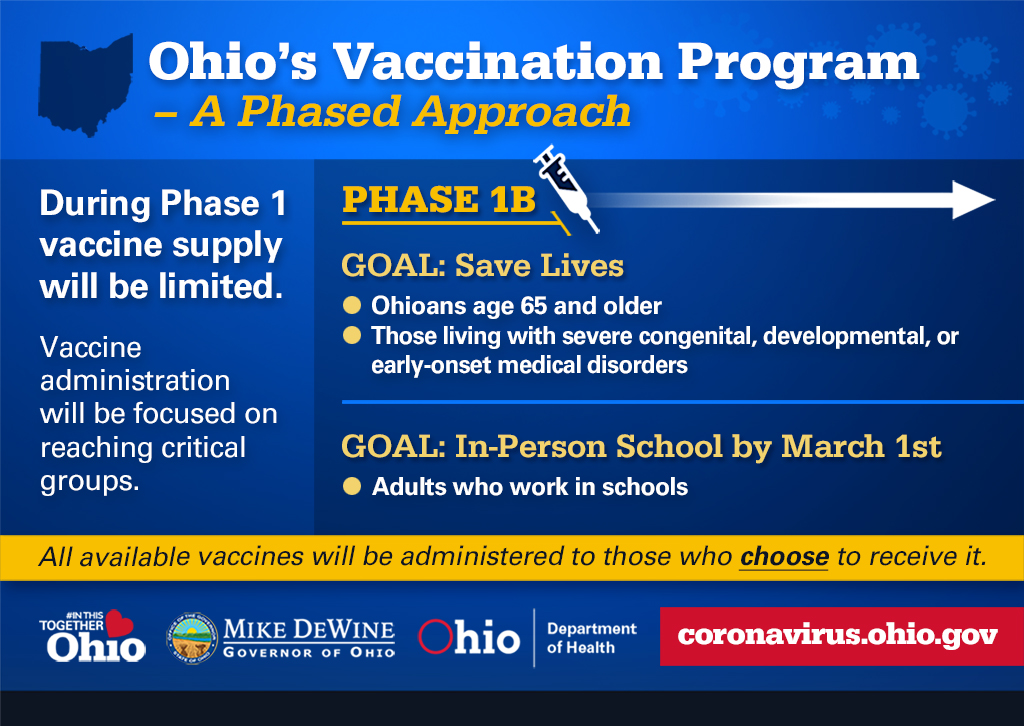
    Today, Governor DeWine announced that people in phase 1B of Ohio’s vaccination distribution plan will be able to receive vaccinations beginning on Tuesday, January 19.

    Those 80 years of age and older will be prioritized first in this next phase, roughly totaling 420,000 Ohioans. Ohio is expected to receive 100,000 doses during the first week of distribution to Phase 1B.

    “With up to 420,000 people 80 years and above, and only 100,000 doses available the first week, it will take several weeks to vaccinate those 80 years of age and older,” said DeWine. “Phase 1B will take a few weeks, and a lot of coordination in distribution.”

    DeWine says that vaccines for Ohioans 80 years of age and older will be administered by physicians, local health departments, hospitals, federally qualified health centers, in-home health service providers, and some retail pharmacies.  As of today, the Ohio Department of Health said that approximately 1,700 providers have registered to distribute vaccines. 

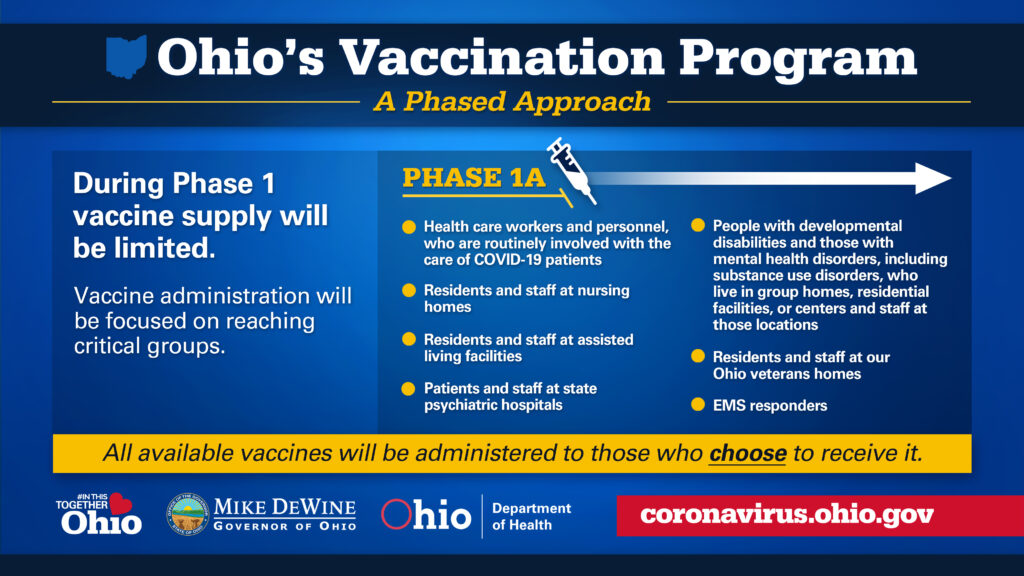
    Phase 1A

    Additionally, the Ohio Department of Health will be hosting a webinar for registered providers to discuss expectations, and instructions for distribution. Additional details will be shared with registered providers in the coming days.

    Governor DeWine anticipates vaccinations will be available to Ohioans 75 years of age and older beginning Monday, January 25. The following week, vaccinations will be available to those 65 years of age and older.

    “As we include other age ranges, please know that does not mean vaccinations will be complete for the previous age range,” said Governor DeWine.  

    The week of January 25 will also include vaccinations for Ohioans with severe congenital, developmental, or early onset medical disorders.  Additional details about distribution for this group is not yet available.

    CURRENT CASE DATA

    In total, there are 753,068 confirmed and probable cases of COVID-19 reported in Ohio and 9,462 confirmed and probable COVID-19 deaths. A total of 40,469 people have been hospitalized throughout the pandemic, including 6,092 admissions to intensive care units. In-depth data can be accessed by visiting coronavirus.ohio.gov.

    Schools

    DeWine also announced that during the week of February 1 that vaccinations will be available for personnel in Ohio schools. The Ohio Department of Heath will send forms to Ohio superintendents to indicate their school plans to go back to in full in-person and hybrid learning by March 1, as well as indicate the number of staff they believe will choose to take the vaccination. Superintendents will also be asked if a community partner has been identified to help with the administering of the COVID-19 vaccines to school personnel.


    Questions and Answers

    COVID-19 Vaccination: Ohio’s Phased Approach

    COVID-19 Vaccination: Phase 1A Distribution

    COVID-19 Vaccination: Phase 1B Distribution

    CDC Resources

    Fact Sheets


    VIRUS VARIANT

    Dr. Bruce Vanderhoff, Chief Medical Officer for the Ohio Department of Health, provides this statement related to the coronavirus variation that was first seen in the United Kingdom.

    “Although virus variations are normal, and most do not impact the behavior of a virus, this variation is notable because it appears to be more contagious than other variants of the coronavirus,” said Dr. Vanderhoff. “Fortunately, this variant doesn’t appear to be more severe or to impact those who are already immune, but it worries us because a more contagious variant could lead to more people getting sick, more people being hospitalized, and more people dying.”

    Ohio currently has three times the number of COVID-19 hospitalizations that it had on November 1 and nearly seven times the number of COVID-19 hospitalizations that it had on October 1. 

    Dr. Vanderhoff stressed the importance of continuing Ohio’s coronavirus protocols of social distancing, avoiding crowds, washing hands, wearing masks, and accepting the vaccine when available to prevent the spread of all variants of the coronavirus and to prevent further increases in hospitalizations. 

  • Dear Fellow Residents of Loveland School District from a “New Guy”

    Dear Fellow Residents of Loveland School District from a “New Guy”

    by Tony Mackzum

    Tony Mackzum lives in Paxton Woods – (Photo Provided)

    I am a lifelong West Sider who moved his young family to Paxton Woods last summer. Since I am new to this side of town, I wanted to share some of my thoughts and feelings with you regarding the recent ongoing Loveland School District Levy debate. (Loveland Board of Education asks for combined 16.78-mill levy)

    While my family is younger in nature, my football and soccer friends in Loveland call me the Old Dad, which I wear with great pride. A few extra years of doing things well and not so well at times has allowed me a history perspective to see both sides of this debate.  

      1. First and foremost, everyone’s economic situations are fluid and unique, but either way, both sides should try to respect the other side’s opinion and show class at all times while debating this topic on all social media formats and in person.  
      2. If you don’t spend at least 30 minutes researching the topic, then your opinion loses value and can’t be supported by anything other than emotions or a popularity contest trying to fit in.
      3. If you don’t have children in the past, now, or planned future within the district then it is OK for you to vote NO, but remember if the levy fails you will not realize as much on the sale of your residence when you want to sell and that is a fact no matter where you live or what you do within the district. It is a proven equation that better schools equal better property values for all, just look at the demand for Loveland recently vs surrounding school districts.  
      4. If you vote NO now because you think there will be a better plan or idea later, You’re Mistaken, we chose to leave the West Side because once levies fail they almost never get going again as strong as the last one voted NO.
      5. If you think we don’t need three schools then you haven’t comparative shopped school systems lately. My wife and I spent months reading and visiting school districts around the city, and we chose to overlook the fact that only the high school was comparable because we figured the funding was already in place for replacements due to the outstanding history of the school district. Trust me we noticed, and it plays a role in future decisions that go back to school systems providing the demand for your house if and when you choose to sell it.  
      6. I am an accountant, and the cost of capital currently being offered to the school district at this point in time is the lowest it will ever be, and will cost us more in the long run if we pass on this chance or nickel and dime it because we don’t see the need for certain things of benefit to all of us in some fashion monetarily or in benefit of use.  

    Sincerely, 

    The New Guy


  • School safety training grants available for schools in Ohio

    School safety training grants available for schools in Ohio

    Schools will have the flexibility to use these grants for things like training for school resource officers, safety and security materials, and programs to identify and help students who may be struggling with their mental health.

    Ohio Attorney General Mike DeWine has announced that he is awarding $12 million in grants to help enhance safety and security at schools across the state.

    All of Ohio’s public schools, chartered nonpublic schools, and schools operated by county boards of developmental disabilities will receive the greater of $2,500 or $5.65 per student to spend toward school safety programs and training.

    “Schools will have the flexibility to use these grants for things like training for school resource officers, safety and security materials, and programs to identify and help students who may be struggling with their mental health,” said DeWine

    The grants are funded with appropriations made by the Ohio legislature as part of House Bill 318. The bill, which was sponsored by state representatives Sarah LaTourette (R-Chesterland) and John Patterson (D-Jefferson), appointed the Ohio Attorney General’s Office to develop the school safety training grant program in consultation with the Ohio Department of Education and the Ohio Department of Mental Health and Addiction Services.

    The law requires that participating schools and county boards work with law enforcement in their jurisdictions to determine the best use of the grant funding.

    A full list of grant awards can be found on the Ohio Attorney General’s website.

    Other Resourses

    • Active Shooter Response: An Educator’s Guide: This 25-part video series was produced by the Attorney General’s Ohio Peace Officer Training Academy (OPOTA) to aid educators in preparing for and reacting to a potentially violent school incident, such as a school shooting. The brief videos are an update to the training offered by OPOTA beginning in 2013 that provided guidance to nearly 15,000 educators on how to intervene with students who could pose a danger and how to respond in a crisis situation.
    • Emergency Management Plan Aerial Photographs: Special agents with the Attorney General’s Ohio Bureau of Criminal Investigation (BCI) are available to take free aerial photographs of school buildings for inclusion in school emergency management plans. BCI currently has six drones that are used primarily to document crime scenes and assist in missing persons cases, but BCI is offering to use its drones to take aerial photos of school campuses to help law enforcement plan for and respond to an emergency. School administrators, in coordination with local law enforcement, can request photographs by calling 855-BCI-OHIO (855-224-6446).

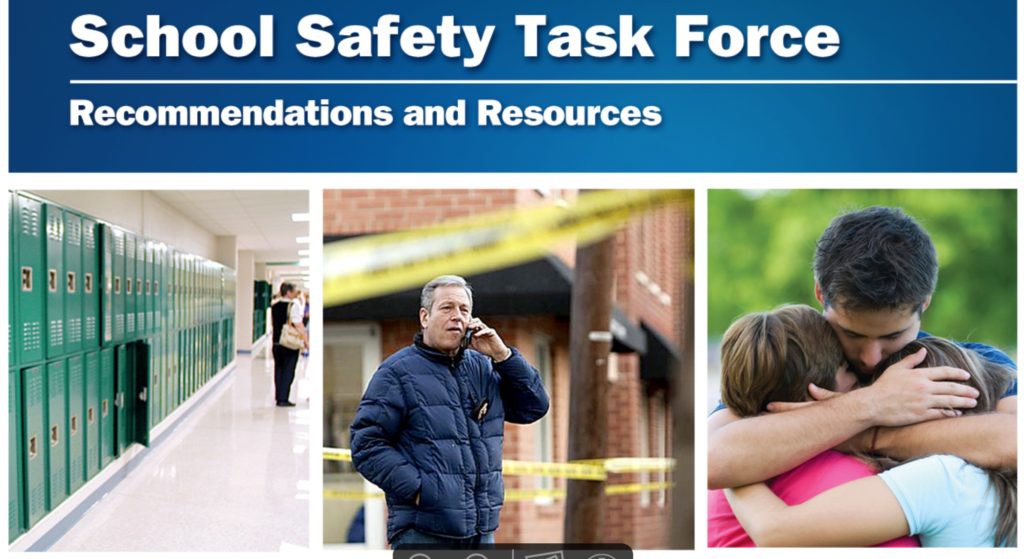
    Attorney General DeWine also worked with schools across the state to achieve greater compliance on school safety plans and convened a School Safety Task Force that issued dozens of school safety recommendations. The task force recognized that mental health awareness was essential for schools to identify and intervene with students who may be at risk.

  • Spirit Wear Days at RP Diamond

    Spirit Wear Days at RP Diamond

    RP DIAMOND IS THE EXCLUSIVE RETAILER OF LOVELAND HIGH SCHOOL SPIRIT WEAR

    RPDiamond_New_LCWelcome to  RP Diamond Printing & Embroidery located at 370 Loveland Madeira Road

    horiz-rpdiamondWe specialize in spirit wear for schools, sports, clubs and organizations of any size, as well as community events. From screen printing to embroidery, promotional items to names and numbers for your uniforms, we can take care of your needs.

    We invite you to browse through our store in the Loveland Shopping Center at 370 Loveland Madeira Road and shop with confidence. We invite you to create an account with us if you like, or shop as a guest. Either way, your shopping cart will be active until you leave the store.

    Please visit our Web Site


  • Sycamore and Country Day systems are experiencing high levels of influenza

    Sycamore and Country Day systems are experiencing high levels of influenza

    The Loveland District has not noticed any unusual flu-related illnesses, “Outside of a normal school year during flu season.”

    Schools in the Sycamore and Country Day systems are experiencing high levels of influenza (flu) and influenza-like illnesses, according to Hamilton County Public Health surveillance. Sycamore has reported 40 cases, while Country Day has reported 80.

     “As we all know, we are in the midst of a tough flu season,” says Hamilton County Health Commissioner, Tim Ingram.  “It’s important to remain vigilant and practice good prevention techniques, especially for seniors, the very young and school-aged children.”

    Vicki Falconi-Young, the District Nurse at Loveland High School told Loveland Magazine this morning that the District has not noticed any unusual flu-related illnesses, “Outside of a normal school year during flu season.”


    Hamilton County Public Health recommends:

    1. Get a flu vaccination
    2. Take everyday preventive actions, including:
      1. Stay away from sick people;
      2. Avoid touching your eyes, nose and mouth;
      3. Cough or sneeze into a tissue or your elbow;
      4. Wash hands frequently – clean hands prevent the spread of illness;
      5. Stay home if you are ill. In schools, separate sick children from the rest of the school population until they are able to get home. Keep children and staff home until they are without fever for 24 hours.
      6. For schools, clean and disinfect frequently-touched surfaces such as desks, door handles, keyboards, etc.
    3. Take antiviral drugs if your doctor prescribes them.

    According to the Health District, “It’s not too late to get vaccinated. As long as flu viruses are circulating, vaccination should continue throughout the flu season, even in February or later. There are many reasons to get a flu vaccine.”

    1. While flu vaccine can vary in how well it works, it is the best way to prevent flu illness and serious flu complications, including those that can result in hospitalization.
    2. Even with vaccine effectiveness in the range of 30 to 60 percent, flu vaccination prevents millions of illnesses and tens of thousands of flu-related hospitalizations each year.

    For more information on seasonal influenza and its prevention, visit hcph.org.


    Wards Corner Chiropractic & Sports Rehab

      Loveland chiropractor Douglas Portmann, DC at Wards Corner Chiropractic & Sports Rehab is one of the best chiropractors in the Loveland area
  • 2016 – 2017 Report Card for Loveland City School District

    2016 – 2017 Report Card for Loveland City School District

    A message from the Ohio Department of Education:

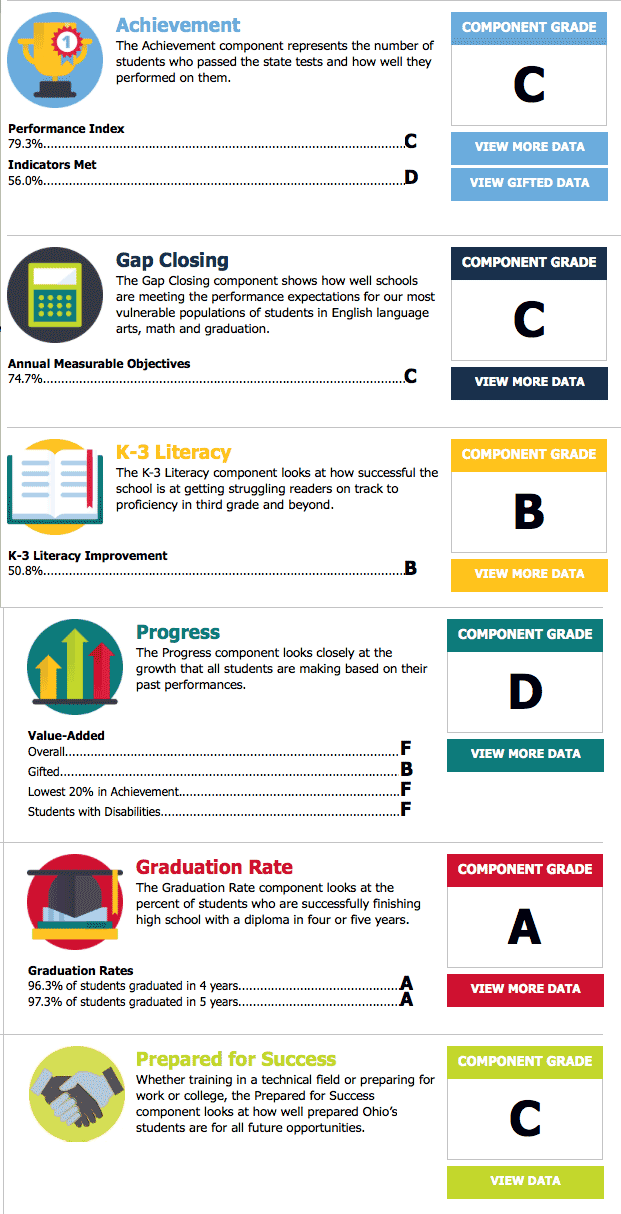
    Ohio School Report Cards give your community a clear picture of the progress of your district and schools in raising achievement and preparing students for the future. The information measures district and school performance in the areas most critical to success in learning. Ohio School Report Cards data shows educators, school administrators and families where their schools are succeeding as well as areas where they need to improve.

    Schools and districts report information for the Ohio School Report Cards on specific marks of performance – called measures – within six broad categories or components. The components are Achievement, Progress, Gap Closing, Graduation Rate, K-3 Literacy and Prepared for Success. The Department gives letter grades on each of the six components and most of the individual measures. This will help give Ohio parents and schools an even more complete snapshot of the quality of education they are providing their children.

    Click to read the Report Card for Loveland City School District


    Now Enrolling at All About Kids at Wards Corner today!


  • A message to the Tiger Family: It’s personal

    A message to the Tiger Family: It’s personal

    By Dr. Amy Crouse,

    Greetings from the office of the Loveland City School District superintendent. When I joined the Tiger Family in 2014 as assistant superintendent of teaching and learning this was not the seat on the school bus I intended to occupy. Most of my work has been “behind the scenes” so I haven’t had the chance to really get to know many of you.  So, for my debut message as this district’s interim superintendent and educational leader I thought it best to begin by getting personal.

    There is a reason I have dedicated 20-plus year to serving students and families at public schools.

    There is a reason I worked to earn advanced degrees in education.

    It is the very reason why I am here working for you: I want to see your child succeed.

    It’s personal.  My parents both worked in public schools, and I’ve wanted to be a teacher since I was in the first grade.

    For me – the entire business of education is very personal. I love each and every young Tiger who walks through our doors, and – like the bus drivers who transport your child to and from our buildings, to the secretaries who greet them at the door, to the teachers who expand their world both inside and outside of the classroom, the food service professionals who nourish their bodies, and the custodians who clean and organize their space – I want nothing but their success. Together – we make up the Tiger Family – your student’s home away from home. Each of us feels privileged to host them as they grow and develop into who they are meant to become.

    For the 2017-18 school year our district is focused on three key areas: Tiger academic growth, Tiger innovation and Tiger care. We will strive to ensure every Tiger will demonstrate personal academic growth, every Tiger will experience an innovative education environment, and every Tiger will be cared for and supported. It is our collective promise to you. It’s what a “job well done” means in this business of education that is so very personal for every professional who enters into it.

    No – I hadn’t planned to move into the big office – but I want you to know that I am both humbled and honored to take the keys as a member of this special Tiger Family. We will make this a year for your student to remember – you have my word. Welcome back.   

    In service to our Tigers,

    Dr. Amy Crouse,

    Dr. Crouse is the Interim Superintendent of the Loveland City School District