Tag: Scott DiMauro

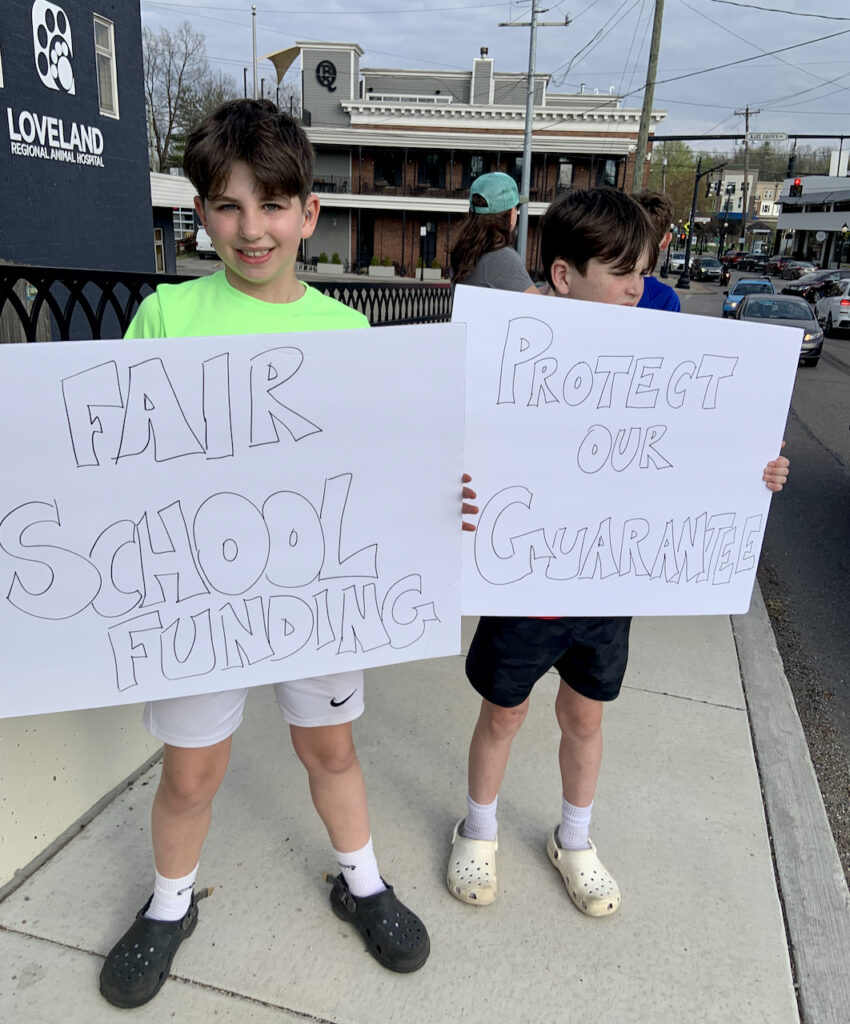
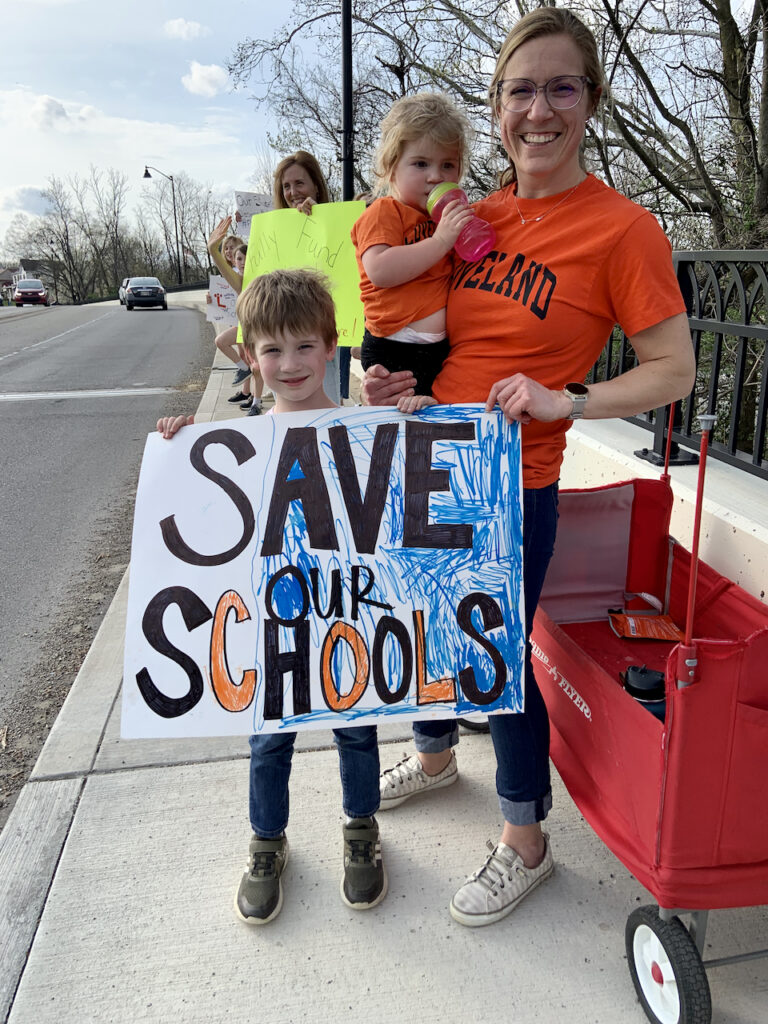
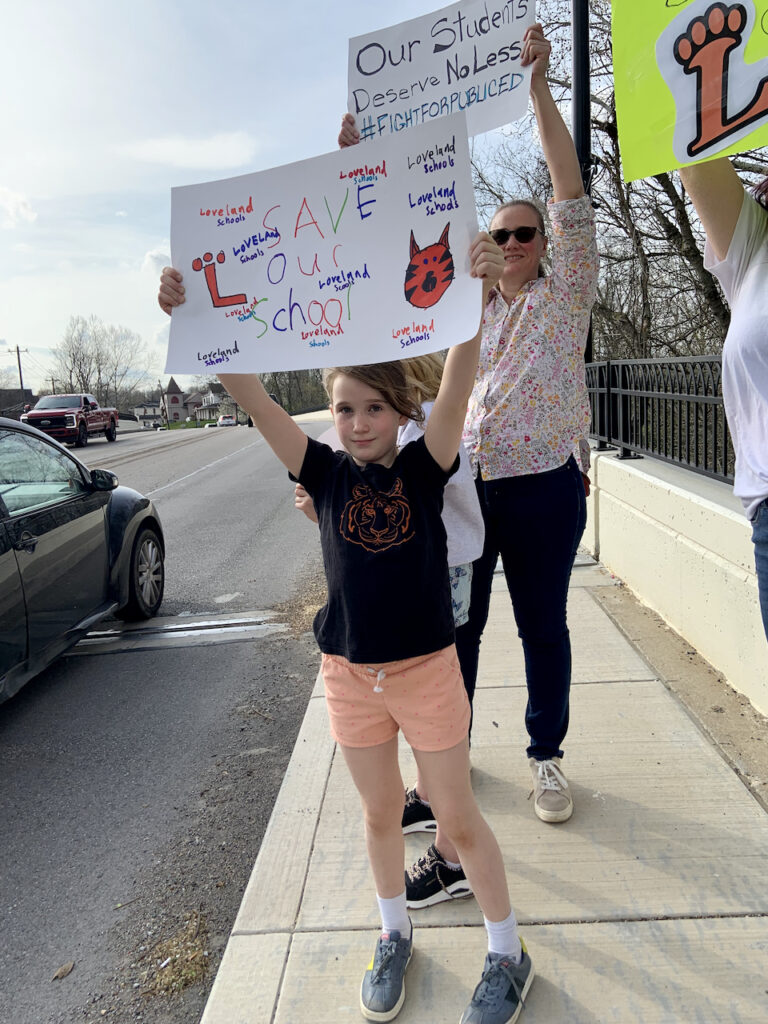
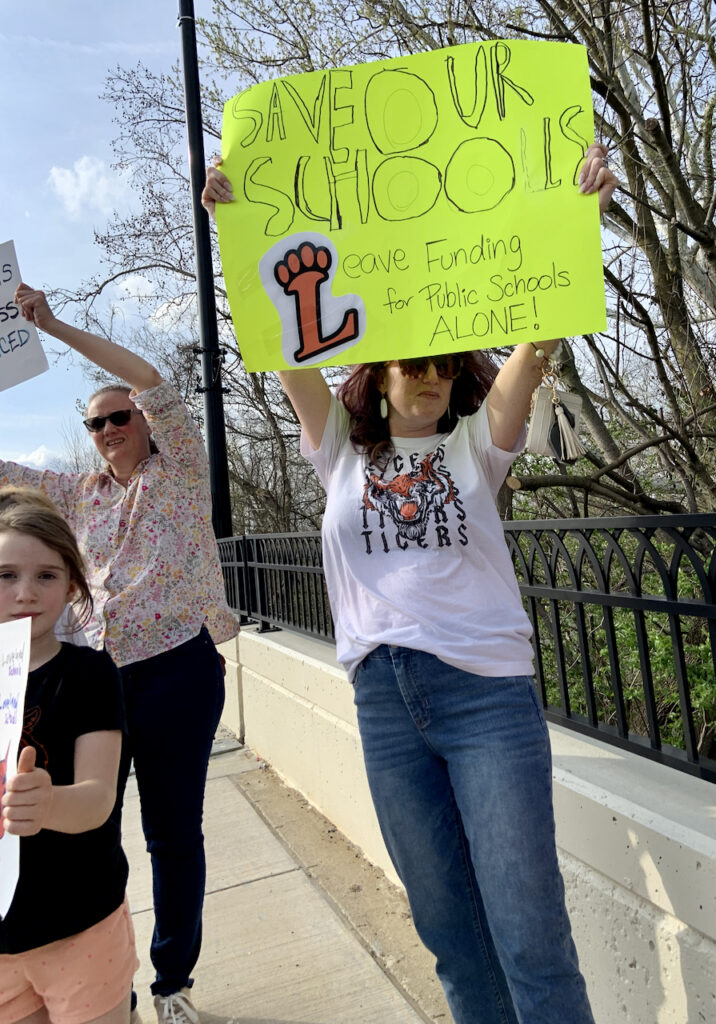
  • [VIDEO] Loveland parents and children rally on Col. Thomas Paxton bridge for fair school funding

    [VIDEO] Loveland parents and children rally on Col. Thomas Paxton bridge for fair school funding

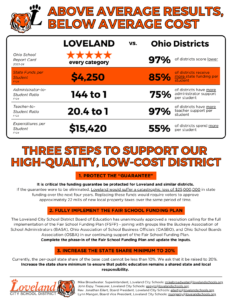
    Loveland, Ohio – Becca Moates and Cindy Daumeyer were on Loveland’s Col. Thomas Paxton bridge Wednesday evening along with many supports to send a message to Ohio Governor Mike DeWine and State legislators. The message was to urge the lawmakers to fully fund Ohio’s Fair School Funding Plan (FSFP) for public schools. They say that if the plan isn’t fully funded, the Loveland City School District may lose $2.5 million over the next five years. The FSFP is commonly referred to as the Cupp-Patterson plan. Backers are urging the full completion of its phase-in.

    Scott DiMauro, president of the Ohio Education Association, pointed out the potential effect on public schools, which he said serve 95% of Ohio students. He told the Public News Service in late March, “The governor has proposed a budget that would cut public schools by over $100 million, while at the same time increasing funding for vouchers for private schools and charter schools by $500 million. We know that is just absolutely unfair.”

    Becca Moates said on March 18 in a guest column published in Loveland Magazine, “The current budget proposal from Governor DeWine leads to lost funds for Loveland schools which will undoubtedly lead to additional revenue requests from the school district. Let’s continue to build the unity we have as community members to support the students who are the heart of our vibrant community.”

    In 2021, Governor DeWine signed the Fair School Funding Plan, which was supposed to be implemented three phases to support public school funding in Ohio. Over 90% of children in the State attend public schools. Only 66.67% of the planned funding levels have been implemented. The phase-in was set to reach full funding by fiscal year 2027. Once fully phased in, the FSFP is supposed to provide constitutionally appropriate funding levels for traditional school districts, Career Tech Centers, and Education Service Centers.

    Moates also said in her column, “It is time for our legislators to hear from all of us. We need Governor DeWine to endorse a bill that benefits our schools. We need to come together. Write letters, call legislators, and call the Governor.”

    DiMauro said that he worries such major shifts in funding could lead to larger class sizes and reduced services in public schools, placing additional burdens on local taxpayers to fill the gaps. He emphasized now is the time for Ohioans who are concerned about the issue and how it might affect their communities to contact their representatives in Columbus.
    Provided by Loveland Schools

    Who To Contact

    Download the list or click below PDF to enlarge.

    What to Say?

    Here are Moates’ suggestions for what to include in your phone calls, emails, and letters to state lawmakers:

    • Your name
    • Your role (parent, student, staff member, community member) in the Loveland City School District.
    • Your story (explain why you support Loveland City Schools, your family’s experience with Loveland City Schools, and why you are concerned about funding cuts for our district. Make it clear that decisions about funding impact children and communities.)
    • Your request (for example: protect the “guarantee” because reducing it would hurt funding for our district, fully implement the Fair School Funding Plan with updated inputs, and increase the state share minimum to 20%)
    • Your appreciation (thank them for their work in Columbus and their attention to this issue that is important to you and our community.)

    We suggest you write an email message to lawmaker, then use that message as a script for a phone call. The message can then be printed and mailed to lawmakers for an additional contact point.

    Read the Loveland District’s Lobbying Request.

    [pdf-embedder url=”https://lovelandmagazine.com/wp-content/uploads/2025/03/Loveland-State-Legislators-136th-General-Assembly-2025.pdf” title=”Loveland State Legislators – 136th General Assembly 2025″]

    _______________

  • Advocates, legislators want more from governor’s education budget

    Advocates, legislators want more from governor’s education budget

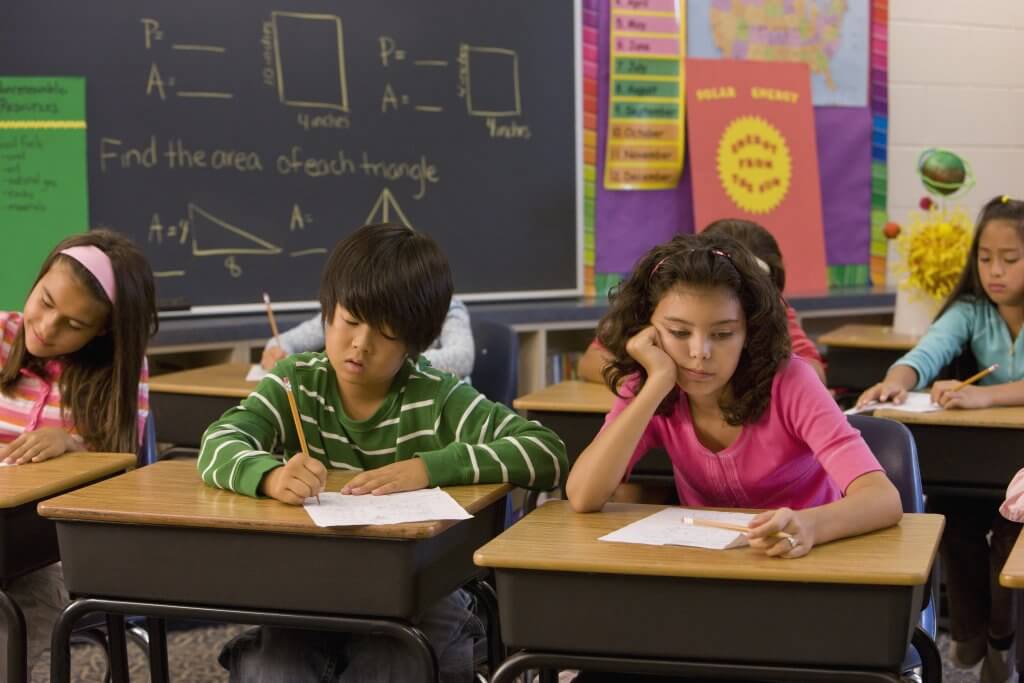
    Students in a classroom. Getty Images

    By Susan Tebben and Ohio Capital Journal

    With no changes planned for the state education funding formula included in Gov. Mike DeWine’s proposed budget, education advocates and some state legislators are left wanting more.

    “The devil is always in the details,” said Scott DiMauro, head of the Ohio Education Association, in a statement after the release of the budget. “Education spending must be a top priority in Ohio to ensure our students, educators and communities receive the resources they need to succeed.”

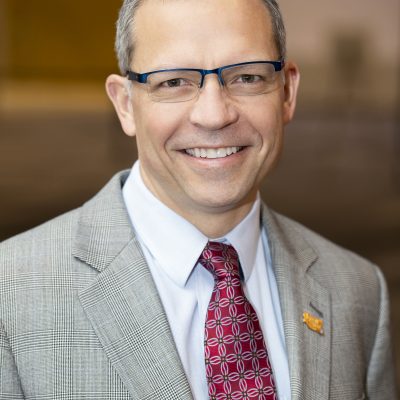
    Scott DiMauro

    DeWine’s budget proposal brings funding back to pre-pandemic levels and includes a jump in non-academic wraparound services, but saves the bulk of changes to education funding for the legislature to figure out.

    The OEA said they were encouraged by an expansion to broadband access and mental health services as part of the support for schools.

    “However, OEA is disheartened to see the same amount of general revenue fund money is going into the state’s foundation formula as in (fiscal year) 18,” the association wrote in their statement.

    Another of Ohio’s biggest teachers unions, the Ohio Federation of Teachers, agreed that DeWine “chose to punt” on overhauling the school funding system without acknowledging the Cupp-Patterson plan, some of which went into the capital budget last year, but for the most part stays in limbo as the General Assembly begins anew.

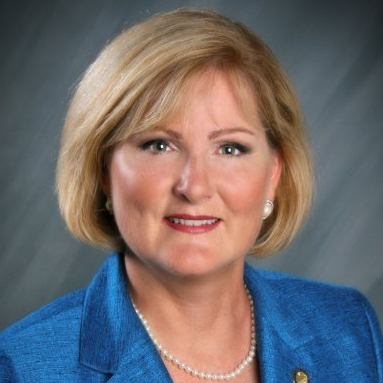
    Melissa Cropper

    “Additionally, the governor’s budget maintains the disastrous local funding deductions for charter and private schools that have been draining public school budgets,” said OFT President Melissa Cropper in a statement.

    The non-profit Ohio Children’s Alliance praised the “key investments for Ohio’s children and families” that the governor carried over from the previous biennial budget, and said they were pleased to see more money go toward student wellness and youth services.

    “With the unprecedented challenges COVID-19 has caused to communities and providers, targeting investments in telehealth and the child and family services workforce are critical parts of a comprehensive solution,” said Mark Mecum, CEO of the OCA.

    State Sen. Teresa Fedor

    State Sen. Teresa Fedor, D-Toledo, called the governor’s proposal “shortsighted” when it comes to education and support for children.

    “We should be fixing our unconstitutional funding formula — not continuing to siphon more public school dollars to private education,” Fedor said after the budget proposal was released.

    With the school funding now in the legislature’s hands, House Minority Leader Emila Strong Sykes, D-Akron, said it would be a primary issue as the House Democrats begin their work, including “fully and fairly funding our public schools.”

    “We look forward to digging into the details of the governor’s proposal to see how it makes sense long-term without one time money and that it delivers on the promise of opportunity for all Ohioans,” Sykes wrote.

  • Ohio Education Association urges statewide suspension of in-person classes

    Ohio Education Association urges statewide suspension of in-person classes

    By Susan Tebben and the Ohio Capital Journal

    The state’s largest public schools union is asking that all public schools suspend in-person instruction until mid-January “in light of the alarming explosion in community spread of the coronavirus in recent weeks.”

    The Ohio Education Association said in a statement that they plan on calling “state leaders and school districts” to discuss a new plan they have related to the COVID-19 pandemic.

    As part of the plan, the OEA wants all districts to go back to remote learning until Jan. 11, including a 14-day quarantine after Christmas.

    As part of the plan, the OEA wants all districts to go back to remote learning until Jan. 11, including a 14-day quarantine after Christmas.

    “This reset period, whether schools delay instruction educate student in a fully remote model, is critical not only to ensure student and staff safety, but also to give schools time to refine their delivery model and make other necessary adjustments to execute their instructional plan so students can receive the best education possible in the face of all the challenges the pandemic presents,” said Scott DiMauro, president of the OEA, in the statement.

    Currently, student cases in schools have surpassed 20,000 in the state, according to data from the Ohio Department of Health. As of Monday, children accounted for 37,623 reported COVID-19 cases in the state, or 8% of all cases. A total of 434 children have been hospitalized with COVID-19 and three children have died, according to state data.

    Scott DiMauro, president of the OEA

    Franklin County reported the most cases in children, with 5,432, followed by Hamilton (3,256), Cuyahoga (3,210) and Montgomery (2,231).

    Franklin County reported the most cases in children followed by Hamilton County

    The OEA board of directors adopted the recommended steps on Dec. 3. Along with the pushing districts to go online, the OEA’s plan would require approval of their “instructional model and staff safety plan” from the local board of health before reopening.

    “Schools that are unable to obtain sign-off must be required to operate fully remote and shall not hold extracurricular activities,” according to the plan.

    The Ohio Department of Education said the decision to hold classes in person or remotely “remains a local decision.”

    The ODE recently released “considerations for schools and districts in purple counties” on the state’s Public Health Advisory System. The map showed a total of seven purple counties as of Monday.

    “Ohio’s education system must continue to be flexible and responsive to ensure the health and safety of all students, teachers and employees,” the department said in it’s directive for districts in purple counties.

    The other two steps in the OEA recommendations are for state and local governments rather than school districts.

    The plan calls on governmental bodies to “do whatever is necessary to slow the spread of this disease and diminish its impact on the delivery of instruction.”

    “OEA fully supports maintaining the authority of the Governor and Ohio Department of Health to implement and enforce efforts to contain community spread, including but not limited to expanding contact tracing and testing programs and strict enforcement mask orders, limits on large gatherings, and closure of non-essential businesses and services that are known to increase the risk of community spread of the virus,” the OEA board of directors stated.

    The union also pushed for the funding of a new federal coronavirus relief bill, something Gov. Mike DeWine also did at a Monday press conference.

    14 new positive cases of COVID-19 in Loveland schools

    Loveland Magazine –  Dec 7, 2020

  • Educators battle misinformation in run-up to November election

    Educators battle misinformation in run-up to November election

    File photo from Wikimedia Commons by Tom Arthur.

    We are living in the age of fake news. No, not the “deep state is out to get the president” kind. The real “fake news” is all around us, spreading partially by word of mouth and at certain political rallies, and much more so on Facebook and Instagram, as people pass along rumors and myths that fit their world view. 

    So what?  

    Scott DiMauroScott DiMauro, a high school social studies teacher from Worthington, was elected President of the Ohio Education Association in 2019 after having served as vice president for six years. Over his 29-year career as an educator, Scott has worked to provide students the critical thinking and decision-making skills they need to be successful citizens in our democratic society. He has likewise advocated for students, educators and strong public schools at all levels of his union.

    Well, for one thing, it is frustrating. As educators, we teach facts — the laws of physics, the branches of government, grammar rules, math formulas — things that don’t change, no matter how you feel about them. More importantly, we teach critical thinking. It is a reflection of the era in which we live that the children in our classrooms can separate fact from fiction better than some adults. 

    The widespread misinformation circulating among adults is threatening the foundation of our democracy. There is a chance a considerable number of Americans will not vote in the coming election or will cry foul over the results because of lies they have read online.  

    To be clear, the long-standing method of absentee voting by mail is safe and secure, and any attempt to say otherwise is misinformation.

    In one recent Facebook post I came across, a well-respected community leader falsely claimed that a) there was no way of ensuring that someone who votes by mail can’t also vote in person, b) ballots sent to wrong addresses based on voter records could be cast by the current resident, and c) someone who receives a ballot they shouldn’t have could cast a second vote for their candidate of choice if that candidate was behind in votes. 

    None of this is true. 

    Ohio keeps track of who requests absentee ballots and those voters are not allowed to vote on Election Day. If you requested an absentee ballot and still show up to vote in person — whether because you never received your

    The widespread misinformation circulating among adults is threatening the foundation of our democracy.

    ballot, never mailed your ballot or, as some would claim, you’re trying to vote a second time in the same election — you would need to cast a provisional paper ballot which goes through layers of verification before it is counted after Election Day. Any attempt to vote twice will be caught and that person would likely face prosecution.

    Procedures in Ohio prevent ballots from being sent to the wrong addresses. Voters must submit an absentee ballot application by mail or in-person at their local board of elections. The absentee ballot application requires voters to provide their address, as well as their name, date of birth, and either their driver’s license number or the last four digits of their Social Security number. Each application is compared with voter registration records to ensure the person requesting the ballot is who they say they are and is eligible to vote. 

    The notion that someone would cast a second ballot based on the current vote tally is ludicrous. While absentee ballots can be scanned into the system before Election Day in Ohio, they are not tabulated until polls close at 7:30 p.m. on Nov. 3. Absentee ballots must be postmarked by Nov. 2.

    Bottom line: For as long as there has been absentee voting, there have been safeguards in place to prevent fraud.

    It is worth noting, though, that ballots sent by the correct deadline will be accepted and counted up to ten days after Election Day to allow for delivery time. Because of the high volume of absentee ballots expected to be cast this year, we probably will not receive the full election results until at least mid-November. This does not mean the final, certified tally is not legitimate; it simply means every legitimate vote counts. 

    Bottom line: For as long as there has been absentee voting, there have been safeguards in place to prevent fraud. Ohio has had no-fault absentee voting since the 2006 Gubernatorial Election, and members of both political parties have enjoyed using it since then. Incidents of voter fraud are exceedingly rare to the point of being essentially non-existent in Ohio, despite the calumny on the internet claiming otherwise.  

    What is true is that there will be more absentee ballot applications and returns going through the mail this fall than usual because of safety concerns amid the global pandemic. Couple that with operational changes handed down from a political appointee who has vowed to run the U.S. Postal Service like a business, rather than the public service it was always intended to be, and it’s not hard not to envision delivery delays this election season.  

    That makes it absolutely critical that you request and return your absentee ballot as early as possible, if you intend to vote by mail. 

    You can apply now to receive a ballot in the first batch of mailings, which will go out Oct. 6. Fill it out and return it right away, taking care to fully complete the information on the ID envelope, which will again be compared with voter registration records to ensure no nonsense has occurred. Ballots can be returned by mail or in secure drop boxes provided by every county board of elections the state. 

    I’m alarmed by the current misinformation epidemic that will dissuade some Americans from casting their ballots and the resulting impact that will have on our system of government. 

    Ohio will also offer four weeks of early in-person voting in every county, for those who do not want to contend with the process by mail but want to avoid long Election Day lines that could be COVID-19 hotbeds.

    Ohio’s educators care deeply about ensuring free and fair elections. As a social studies teacher with three decades of experience, I’m alarmed by the current misinformation epidemic that will dissuade some Americans from casting their ballots and the resulting impact that will have on our system of government. 

    No matter how you choose to vote – absentee by mail, early in-person, or on Nov. 3 — the most important thing is that you cast your ballot. Our democracy depends on it.


    Check out these two voter guides recently published by Loveland Magazine with information about requesting absentee ballots. Keep in mind that Ohio officials are recommending you stay ahead of these absolute dates to ensure your mail coming to and from the post office is delivered in time for your vote to count.

    Sidebar: What You Need to Know to Vote This Year

    Loveland Area November Voting Guide: What you need to know to…