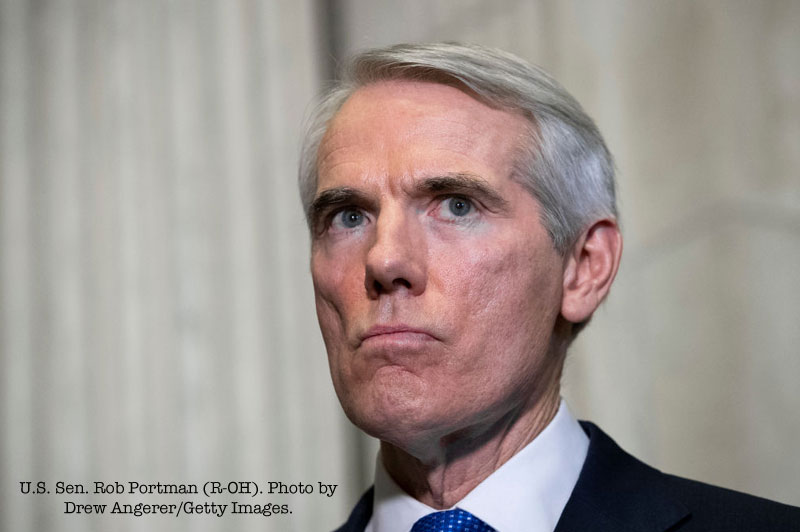
Sen. Rob Portman announced Monday he would not be running for a third term in the U.S. Senate in 2022.
The Cincinnati Republican said he intends to use his final two years in public office to “get a lot done,” noting a hopefulness of working with the Biden administration on the COVID-19 pandemic response and other legislative priorities. This would cap off a decades-long career in public service for Portman, 65, who previously served as U.S. Representative as well as budget chief and U.S. trade representative under President George W. Bush.
Portman’s announcement opens the door for a Republican primary in 2022 and for Democrats to face another non-incumbent instead of a well-financed incumbent who won his 2010 and 2016 Senate elections comfortably.
“I feel fortunate to have been entrusted by the people of Ohio to represent them in the US Senate,” Portman said in a statement, calling it “an honor” to have served.
Various Ohio political figures issued statements Monday in support of Portman. Gov. Mike DeWine called the senator a “key partner” during the pandemic response and Secretary of State Frank LaRose described him as being “what our founders hoped for in a public servant when they wrote our Constitution — a statesman.”
Sen. Sherrod Brown, an Ohio Democrat who has served alongside Portman since 2011, noted the two have not always agreed with each other on policy but have “always been able to put our differences aside to do what’s best for Ohio.”
A more detailed report from the Ohio Capital Journal on Sen. Portman’s announcement is forthcoming.
In accordance with the Constitution and federal law, the Electoral College cast their votes for President today. The Electors met in their respective state following certification of the results. I think we need to respect this process the Founding Fathers established, and we must respect the will of the voters.
As I’ve said previously, the Trump campaign had every right to pursue recounts and legal challenges. That has now happened over the past six weeks, and although there were instances of fraud and irregularities, it has not been shown to be widespread enough to change the result of the election.
States must take seriously the proven examples of fraud and irregularities, prosecute anyone who engaged in it, and review voting systems to maintain the integrity of our elections.
The transition process and briefings for the Biden team began three weeks ago at the direction of President Trump, and I commend him for that. The orderly transfer of power is a hallmark of our democracy, and although I supported President Trump, the Electoral College vote today makes clear that Joe Biden is now President-Elect.
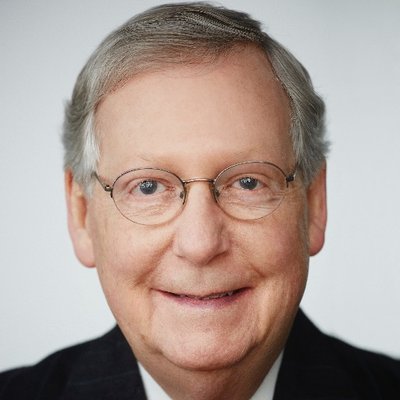
Meanwhile, The A.P reports that Senate Majority Leader Mitch McConnell congratulated his former colleague, Joe Biden, as president-elect. The two men spoke later in the day. “Many of us had hoped the presidential election would yield a different result,” McConnell said. “But our system of government has the processes to determine who will be sworn in on Jan. 20. The Electoral College has spoken.”
A year of Gov. Mike DeWine defending the president’s pandemic response and supporting his reelection effort was undone by a brief acknowledgment of reality on cable TV.
To President Donald Trump, one comment is all it takes for someone to go from political ally to persona non grata.
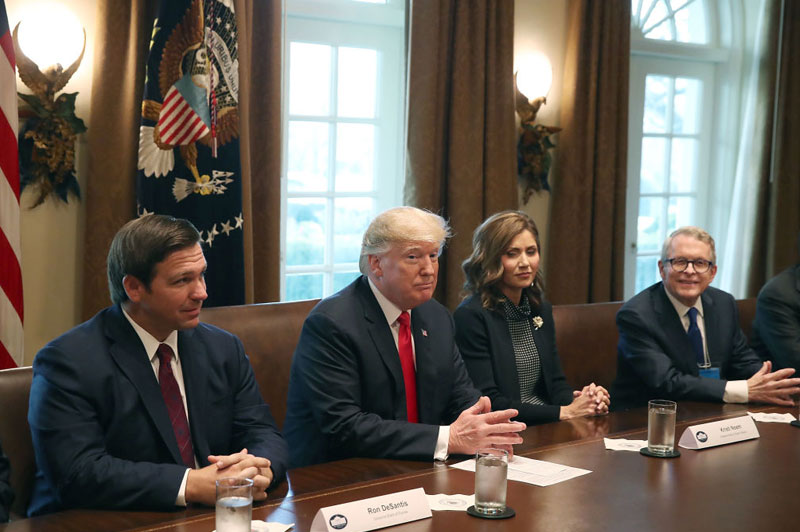
On Sunday, DeWine said on CNN that Trump has a right to legally challenge the 2020 election result, but should begin working toward a transition for President-elect Joe Biden. That clip was aired Monday morning on Fox News, a network Trump frequently watches at the White House, leading the president to target DeWine’s own reelection hopes in 2022:
Who will be running for Governor of the Great State of Ohio? Will be hotly contested!
This tweet to the president’s 89 million followers bookends a year in which DeWine has consistently praised Trump and frequently dodged questions related to the president’s handling of the pandemic.
DeWine’s office issued this statement in response to the president’s tweet: “I have always had a great working relationship with the President. I am proud to have served as President Trump’s Campaign Co-Chairman in Ohio where we won by the largest margin of any swing state in the country. And I intend to run a winning campaign for governor in 2022.”
DeWine served as an honorary co-chair to Trump’s campaign in Ohio and recorded a video in support of Trump for the 2020 Republican National Convention. His lieutenant governor, Jon Husted, spoke at a Trump rally in September in favor of the president’s reelection — though the crowd of Trump supporters booed Husted for promoting mask-wearing to prevent COVID-19 spread.
While DeWine has emphasized the need for masks and social distancing, Trump has often undercut this public health message by hosting large campaign rallies and downplaying the effectiveness of face coverings.
DeWine has sidestepped questions from reporters about these contradicting messages, instead choosing to praise the White House for its conference calls with governors and for its work in helping develop a vaccine.
I just got off the phone with @VP Pence. I am grateful for the Administration’s help as we continue to fight COVID-19. pic.twitter.com/cmJvSDlICm
The president’s suggestion of a Republican primary comes as DeWine faces increasingly sharp attacks from seemingly all sides regarding his handling of the COVID-19 pandemic. Democratic leaders, who have generally been supportive of the Republican governor and the Ohio Department of Health, want him to take more aggressive steps to slow the spread as Ohio sees record numbers of infections and hospitalizations.
Republican legislators have dialed up their own criticism of their party’s leader, insisting DeWine should refrain from issuing any further health orders such as business shutdowns.
DeWine earned very high marks from the general public early in the pandemic for his aggressive response in partnership with then-Ohio Department of Health Director Dr. Amy Acton. That support led to widespread cooperation in the early weeks as the two enacted business closures and a stay-at-home order.
Support for DeWine has gradually waned in the months since, though a Great Lakes poll in September found a majority of Ohioans still viewed DeWine’s coronavirus response favorably.
Hours after Trump’s tweet, DeWine did receive a compliment from President-elect Joe Biden at a Monday afternoon press conference. Biden referred to DeWine as a leader in having “stepped up” to issue a mask mandate in Ohio.
Outside of the electoral ramifications of Trump’s tweet, the public sentiment over the Ohio pandemic approach may impact DeWine’s ability to amass future cooperation for any health orders still to come.
DeWine has hinted that orders pertaining to bars, restaurants and social gatherings could come as soon as this week.
The governor spent early Monday in West Virginia speaking to TV stations which broadcast to the southern and eastern portions of Ohio. DeWine has offered region-specific messages to Ohioans about the virus spike and how residents can slow the spread in their areas.
With this year’s election now over, some Ohio Republicans have begun turning their attention to 2022. Among them is Jim Renacci, a former Congressman from Medina County and fervent Trump supporter who ran for governor against DeWine in 2017. Renacci quit the Republican primary to instead campaign for U.S. Senate against Democratic incumbent Sherrod Brown, who defeated Renacci in the 2018 General Election.
State Rep. Jena Powell, R-Arcanum, has offered a similar view.
“The solution today is taking away (DeWine’s) emergency powers,” Powell wrote on Facebook after the governor’s statewide address on Nov. 11. “The solution in two years is to not re-elect Mike DeWine.”
Powell shared Trump’s tweet in agreement.
“Even President Donald J. Trump knows Governor Mike DeWine is doing a terrible job,” she posted. “Ohio needs conservative leadership that actually represent the people first.”
Some Ohio Democrats see the Trump tweet as a political lesson.
Loveland, Ohio – To supplement the story below (4 Ohio Republicans join House Dems to pass bill to boost post office funding by $25B) from the Ohio Capital Journal, Loveland Magazine visited two of the closest local U.S. Post Offices to document the number of mailboxes placed outside the buildings. We also documented the days and hours of operation of each.
While unlikely that the Trump Administration would attempt to interfere with the delivery of election-related mail in our heavily Republican voting area, nearly all Loveland mail does go to or from the Dalton Street processing center in Cincinnati. Interfering with mail delivery in the heavily Democratic voting urban areas of Cincinnati’s urban core is not beyond reasonable suspicion. And, the President may use mail problems in any part of the country to delegitimize and dispute the November election results.
One day ago the President tweeted, “The greatest Election Fraud in our history is about to happen. This may top the Democrats illegally spying on my campaign!”
On August 20 the President tweeted this, “They are sending out 51,000,000 Ballots to people who haven’t even requested a Ballot. Many of those people don’t even exist. They are trying to STEAL this election. This should not be allowed!”
Trump said last week on Fox News that he opposes some funding because he doesn’t want it used for mail-in votes, repeating his claim that it would lead to “fraudulent” election results.
WCPO has reported that processing machines from Cincinnati’s Dalton Street post office have been removed and remain offline and unusable.
The Cincinnati Enquirer recently reported that according to Jim Sizemore, president of the American Postal Workers Union in Cincinnati that in May and June, the USPS “pulled the plug on eight mail processing machines in Cincinnati, accounting for 19% of the processing center’s capacity.” The eight machines could process collectively 243,000 pieces of mail an hour according to the Enquirer. Mail is piling up on the floor at the Queensgate facility according to Sizemore.
WCPO’s John Matarese says the VA is now notifying veterans that they should order their medicine earlier than usual because at this time it cannot guarantee on-time delivery. And, by law, it cannot ship medication via private services.
Sen. Rob Portman said on August 21 on his FaceBook page, “A number of veterans have reached out to my office recently expressing concern about delays in the USPS delivery of their critical prescription medications. This is not acceptable. This morning I pressed Postmaster General DeJoy for answers.” And on August 19 Portman said, “We must protect Ohioans right to vote during to the ongoing COVID-19 pandemic. That’s why I sent a letter to the Postmaster General with Congressman Bob Latta calling on the USPS to ensure the timely & accurate delivery of election-related materials in Ohio.”
Rep. Brad Wenstrup told constituents in an email on Monday that the postal service has enough money on hand, “$14 billion cash” and that he voted to “open a $10 billion line of credit through the CARES Act” to help with any COVID-19 issues. Wenstrup said the USPS has enough money on hand to remain “fully function” until August of next year and that Speaker Pelosi has “manufactured a crisis and rushed the House back to vote on an irresponsible and unneeded amount of money on a problem that does not currently exist.”
Paige Pfleger reported in a Cincinnati Public Radio story on August 20 that, “Since the pandemic, even more Ohioans have opted to receive their medications by mail, to avoid possible exposure or to save money.”
Antonio Ciaccia of the Ohio Pharmacists Association is quoted in the story, “We have heard some extreme anecdotes over the last couple weeks where patients are waiting one, two, three weeks for their medications,” and adds that he’s never heard so many complaints about delivery delays.
On August 18, Senator Sherrod Brown is quoted in a Cleveland.com article about mail sorting equipment being dismantled in Cleveland. Brown said, “As the U.S. Postal Service has warned Ohio and other states that it may not be able to meet mail-voting deadlines this November, the visibly idle equipment along with mail delays and post office budget shortfalls have fueled fears that the upcoming election will be undermined.”
Reporter Sabrina Eaton writes in the Cleveland.com article:
President Donald Trump’s assaults on mail-in balloting, even as he has requested an absentee ballot to vote from his new residence in Florida, have raised questions over whether he’s deliberately trying to sabotage an election that will likely have more mail-in ballots than ever because of reluctance to vote in person during the coronavirus pandemic.
In a news conference over the weekend, Trump said universal mail-in voting would be “catastrophic. It’s going to make our country a laughingstock all over the world.”
“The ballots are lost, there’s fraud, there’s theft, it’s happening all over the place,” said Trump. “Now we’re going to do it with this whole, vast, big section of the country? It’s crazy.
Check out these two voter guides recently published by Loveland Magazine with information about requesting absentee ballots. Keep in mind that Ohio officials are recommending you stay ahead of these absolute dates to ensure your mail coming to and from the post office is delivered in time for your vote to count.
Loveland Magazine is interested in hearing from readers if they have experienced any delays in receiving mail (timely delivery of medicine, paychecks and other essentials) or about concerns they may have about receiving absent ballot requests or sending their ballot back to the local Boards of Elections. Please send us your thoughts.
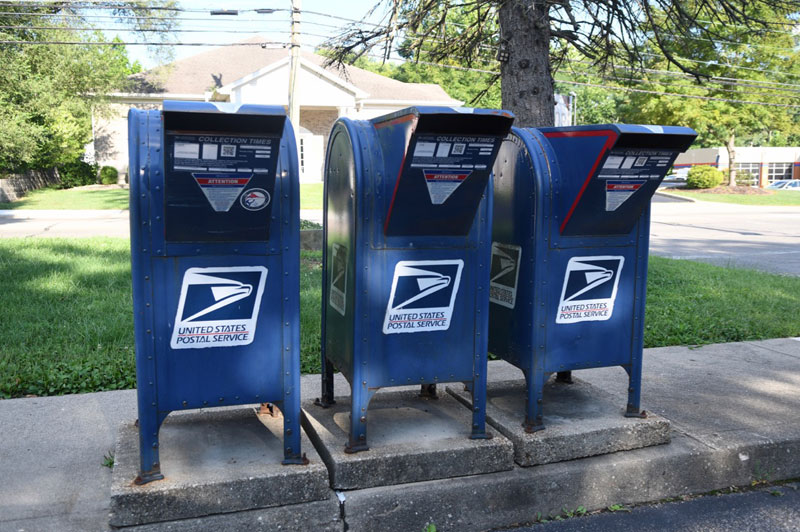
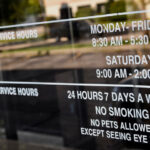
These photos were taken on the evening of August 16 at the Loveland and Symmes post offices. We do not know if any additional boxes were recently removed but is does not appear so. Although the quantity of mailboxes and hours of operation at these locations would not necessarily reflect current delays in mail delivery, we did want to document current conditions in advance of the November 3rd Presidential Election.
Mail boxes at the Symmes Township Post Office at 9370 Fields Ertel Road
Mail boxes at the Loveland Post Office at 200 Loveland Madeira Road
Loveland Post Office at 200 Loveland Madeira Road
Collection times on the mailboxes at the Loveland Post Office at 200 Loveland Madeira Road
Service times at the Symmes Township Post Office at 9370 Fields Ertel Road
Service times at the Loveland Post Office
4 Ohio Republicans join House Dems to pass bill to boost post office funding by $25B
House Speaker Nancy Pelosi said Saturday that mail delays are depriving Americans of timely delivery of medicine, paychecks and other essentials. Photo by Justin Sullivan | Getty Images
WASHINGTON — The U.S. House convened a rare weekend session Saturday in an attempt to stop the U.S. Postal Service from allegedly disrupting mail service to sabotage the November elections.
The Democratic-led chamber passed a bill 257-150 that would infuse $25 billion into the agency as it prepares for a surge in mail-in ballots and bar it from changing operations or service levels in place at the beginning of the year.
The prohibition would remain in effect through January 2021 or for the duration of the coronavirus crisis — whichever is later.
The bill passed largely along party lines, though more than two dozen Republicans joined Democrats in backing the legislation, including four Ohio Republicans: Reps. Troy Balderson (12th District), David Joyce (14th District), Steve Stivers (15th District) and Mike Turner (10th District). Rep. Bob Gibbs (R-7th District) did not vote. No Democrats voted against the bill.
One Republican in favor was Rep. Brian Fitzpatrick of Pennsylvania, who said the post office needed to be funded so his constituents could get their mail delivered on time. “Republicans and Democrats must come together and address the serious challenges that USPS has been facing for some time now,” he said.
Senate Majority Leader Mitch McConnell (R-Ky.) is not expected to take up the measure. He told his hometown paper Tuesday that he doesn’t think a stand-alone bill funding the postal service would pass the chamber.
The White House threatened Friday to veto the post office boost, calling it “an overreaction to sensationalized media reports that have made evidence-free accusations that USPS has undertaken reforms to achieve political rather than operational objectives.”
But House Speaker Nancy Pelosi (D-Calif.) maintains that the administration is trying to suppress votes as the nation heads into a fraught election season in which the postal service will serve as “election central.”
In addition to undermining the integrity of the elections, the delays are depriving Americans of timely delivery of medicine, paychecks and other essentials, Pelosi said at a press conference Saturday.
Democratic lawmakers made similar allegations on the House floor.
The administration has mounted a “sabotage campaign” to manipulate the vote, Rep. Debbie Dingell, a Michigan Democrat, said Saturday morning.
Democratic Rep. Brenda Lawrence of Michigan and a member of the House Oversight and Reform Committee, said the bill would prohibit the postmaster general from making any changes that would undermine the post office. She said the postmaster general has “tried to rip it apart from the inside” and “our democracy is hinging” on delivery of the mail.
“Don’t mess with the USPS,” said Rep. Debbie Wasserman Schultz (D-Fla.).
Republicans charged Democrats with ginning up a manufactured crisis intended to deny the president a second term. House Minority Leader Kevin McCarthy (R-Calif.) said postal problems predate 2020 and the Trump administration.
GOP Rep. Rob Woodall of Georgia called Saturday’s vote a “punctuation mark” at the close of last week’s Democratic National Convention. This “wasteful partisan exercise” will “go nowhere” in the GOP-controlled Senate and “help no one,” he added.
Rep. Debbie Lesko, a Republican from Arizona, echoed the sentiment, calling the controversy “phony political theater.” Pelosi has gone “politically postal,” she said, quoting a recent Wall Street Journaleditorial.
The House approved $25 billion for the postal service in a $3 trillion coronavirus relief package approved in May. Pelosi pointed out Saturday that the USPS board of governors — a bipartisan group of members appointed by Trump — backs the funding.
Trump said last week on Fox News that he opposes some funding because he doesn’t want it used for mail-in votes, repeating his claim that it would lead to “fraudulent” election results.
He said changes to overtime, retail hours and the location of mail processing machines and blue mailboxes were made to save costs and streamline operations but said earlier this week he would suspend some of his moves until after the elections to avoid the appearance of impropriety. He also said he wouldn’t close existing mail processing facilities and would use “standby” resources in October to meet mail surges.
On Friday, he insisted that secure elections are his “sacred duty” and top priority this fall.
But Pelosi on Saturday called DeJoy’s promise into question, pointing to his decision not to replace mail infrastructure that has already been removed. She also pointed to Trump’s comment earlier this week calling for law enforcement officers at polling places.
“It is all designed to suppress the vote,” Pelosi said.
DeJoy is slated to testify again on Monday in a hearing before the Democratic-led House Oversight and Reform Committee, where he is expected to face more withering questioning. Robert Duncan, chair of the U.S. Postal Service Board of Governors, will also appear before the committee.
Allison Stevens is a Washington D.C. reporter for States Newsroom, a network of state-based nonprofit news outlets that includes the Ohio Capital Journal.
Washington, D.C. – The U.S. Senate voted on June 20 against an effort to pass the so-called “rescission package,” which would have slashed the fund that is supposed to pay for construction of Cincinnati’s new NIOSH facility by half. The rescission package would have taken back federal dollars intended for a wide range of projects and programs – including Cincinnati’s NIOSH construction – in order to pay for the $1 trillion deficit created by Republican tax cuts. With U.S. Senator Sherrod Brown’s (D-OH) opposition, the package failed on the floor by a vote of 48-50.
“We made a commitment to Cincinnati, and we shouldn’t be putting southwest Ohio jobs and economic development at risk to pay for tax cuts that benefit companies shipping American jobs overseas,” said Brown.
In May, Brown called on the Administration to tell Ohio how it will keep its commitment to move forward with the NIOSH project after the fund is cut.
In 2015, Brown helped secure $110 million in federal funds to advance construction and site consolidation for NIOSH’s new facility in Cincinnati.That money is supposed to come from the nonrecurring expense fund (NEF) at the Department of Health and Human Services, which currently has about $500 million for NIOSH and other projects.
Brown’s office said he had worked to protect that fund from cuts for years in order to ensure the NIOSH construction continues moving forward. And up until now, the project had been proceeding on schedule. In fact, the CDC recently solicited bids for a design-build contract. The Administration’s rescission package would take $220 million away from the nonrecurring expense fund – cutting he fund by about half and threatening the future of the project, according to a statement issued by Brown.
Sen. Rob Portman (R-OH) voted for the rescission package.
As part of the Centers for Disease Control and Prevention (CDC), NIOSH is responsible for conducting research and making recommendations to prevent work-related injury and illness. The NIOSH facilities in Cincinnati employ more than 500.
The new construction project is intended to consolidate NIOSH’s Cincinnati facilities into one central location to improve and enhance scientific collaboration, as employees conduct research and make recommendations to prevent work-related injury and illness. The funding will also ensure that there are appropriate and adequate research facilities for NIOSH’s scientific program and will reduce operating costs by consolidating multiple campuses.