Tag: separation of powers

  • Ohio Attorney General Dave Yost jumps into Florida abortion fight

    Ohio Attorney General Dave Yost jumps into Florida abortion fight

    Ohio Attorney General Dave Yost. (Photo by Justin Merriman/Getty Images)

    Question hinges around whether local prosecutors can be removed for saying they won’t bring charges under abortion bans

    BY:  – Ohio Capital Journal

    Ohio Attorney General Dave Yost and 14 other attorneys general are arguing in federal court that Florida Gov. Ron DeSantis was within his powers when he removed a local prosecutor who had spoken out against the state’s restrictive new abortion law.

    But the group that represents Ohio’s local prosecutors doesn’t seem comfortable with that claim, expressing worries that the Florida case threatens the principle of “prosecutorial discretion” — that faced with many possible crimes and limited time and resources, prosecutors need great latitude to decide which cases are most wisely brought.

    Yost said his friend-of-the-court brief doesn’t violate that principle. He said that he doesn’t want to impinge on prosecutors’ decisions about individual cases, but only to allow for their removal when they make blanket statements that they won’t enforce laws they don’t agree with.

    “This case is about a ‘prosecutor’s veto’ — the nullification of a democratically passed law by the act of an executive,” Yost said in an email Thursday. “The application of discretion to a single case is proper; the application of discretion to every case arising under a statute eliminates the legislative act itself, the core function of a democratically elected government.”

    Sunshine State spat

    Yost on Wednesday led the Republican attorneys general in filing a friend-of-the-court brief with the 11th U.S. Circuit Court of Appeals in Atlanta. It argues that DeSantis — who is widely thought to be seeking the Republican presidential nomination — had the power to remove Hillsborough County prosecutor Andrew Warren last August over positions Warren took regarding the state’s new abortion law and other matters.

    Warren, whose jurisdiction includes Tampa, signed declarations by a group of progressive prosecutors opposing charging people under laws restricting abortion and transgender care, the Florida Phoenix reported. DeSantis also objected to a Warren policy that his office usually would not bring low-level cases arising from bike or pedestrian stops in which a disproportionate number of minorities have historically been prosecuted, the Phoenix reported.

    Warren sued DeSantis in U.S. district court in an attempt to be reinstated.

    Judge Robert Hinkle found that DeSantis violated Warren’s First Amendment rights and separate provisions in the Florida Constitution by removing Warren. But, the judge ruled, the 11th Amendment to the U.S. Constitution barred him from reversing the removal because it was based solely on state law. In making the ruling, the judge looked past the First Amendment violation, saying DeSantis would have removed Warren even if he hadn’t violated the prosecutor’s free-speech rights.

    Warren appealed to the 11th Circuit, arguing that Judge Hinkle’s reasoning was “perverse.”

    “DeSantis’s violation of one (of Warren’s rights) cannot be permitted to excuse the violation of the other,” said a friend-of-the-court brief signed by Warren’s attorney. “The district court erred by ignoring the deeply intertwined nature of these protections. The decision below contributed to the disenfranchisement of Hillsborough County voters and allowed the governor to censor the speech of another duly elected official.”

    Separation of powers

    In their brief, Yost and the other Republican AGs argued that Warren and prosecutors like him jeopardize another constitutional principle when they say they’re not interested in bringing cases under laws with which they don’t agree — the separation of powers between the legislative and judicial branches of government. As part of the executive branch, it’s not a prosecutor’s job to decide which laws have force and which don’t, they said.

    The attorneys general of Alabama, Arkansas, Georgia, Kentucky, Louisiana, Mississippi, Missouri, Montana, Nebraska, South Carolina, South Dakota, Texas, Utah and West Virginia joined Yost in signing the brief. All of the states have some abortion restrictions on the books and most have laws that the Guttmacher Institute rates as “very restrictive” or “most restrictive.”

    Local prosecutors can’t unilaterally decide not to enforce those or other laws, the amicus brief said.

    “Those prosecutors have considerable discretion to decide whether to prosecute violations in particular cases,” the brief said. “They do not have the power to effectively repeal laws by categorically suspending enforcement.”

    It added, “The states can properly remove from office prosecutors who make non-prosecution pledges. These pledges violate the traditional separation of powers between government branches.”

    However, there are some devilish details involved. For example, how do you define “pledge” and how do you reconcile removing prosecutors for signing such documents with their right to free speech?

    Lou Tobin, executive director of the Ohio Prosecuting Attorneys Association, slammed prosecutors who make such pledges.

    He singled out Philadelphia District Attorney Larry Krasner, who survived an impeachment attempt after Krasner said the office would no longer prosecute marijuana possession, would slash prosecutions of sex workers, sought reduced sentences for other crimes and called to abolish Pennsylvania’s death penalty. Tobin also slammed Los Angeles County District Attorney George Gascon, who survived a recall attempt that started just when he took office. Like Krasner, Gascon did things like slash marijuana prosecutions and worked to end cash bail.

    But perhaps tellingly, Tobin didn’t mention the Florida prosecutor DeSantis removed and he said such an action is exceedingly grave.

    “Ohio has processes in place for the removal of public officers who refuse or willfully neglect to enforce the laws or to perform any official duty imposed by law,” Tobin said in an email Thursday. “It is a process that has been in place since before the General Code became the Revised Code in 1953, it does not involve the attorney general, it should not involve the attorney general, and it is a process that should be used rarely and with extreme caution.”

    Tobin also seemed to call out DeSantis for acting out of political motives.

    “Threats to unilaterally and summarily remove prosecutors from office are just as damaging to the justice system as people like Larry Krasner and George Gascon,” Tobin said. “We’re heading down a very dangerous road when those threats are made to score political points.”

    More than abortion

    In entering the dispute, Yost is again wading into national abortion politics. Last year, just after rushing to enact Ohio’s strict six-week abortion ban, the attorney general went on Fox News to question the existence of a 10-year-old rape victim who reportedly had to go to Indiana for an abortion. Days later, her existence was confirmed when Columbus police made an arrest in the case.

    While the Ohio law was in effect, obstetricians and maternal fetal medicine doctors said that aspects of it sometimes conflicted with what was in the best interest of their patients. DeSantis signed a similar law in Florida earlier this month.

    But Yost said that in filing the brief in the Florida case he wasn’t trying push local prosecutors to charge doctors every time they think abortion laws might have been violated. He was asked if he thought prosecutors should be able to bring a strong violent-crime or public-corruption case over a weak abortion case if they don’t have the resources to bring both.

    “Of course,” Yost replied. “… this is a case about one politician’s arrogance to cancel an entire category of criminal prohibition that was enacted by the elected Legislature. If you don’t see the danger in that, imagine your own most hated politician — whomever that might be — vowing that they will not prosecute Clean Water Act violations because it’s a violation of private property rights. Should such arrogance be without redress? Of course not.”

    Yost and his colleagues are arguing that prosecutors who say they won’t enforce abortion restrictions and other laws are abusing their power. But some critics argue that many of the post-Dobbs restrictions are themselves abuses of power. A majority of Americans don’t support them and many — such as Ohio’s six-week ban — were passed by gerrymandered legislatures.

    But Yost said his effort isn’t solely about enforcement of Ohio’s abortion law, under which doctors could be charged with felonies.

    “This is not an argument about abortion, although that was the individual motivation of the prosecutor who was removed,” he said. “But this same principle applies to prosecutors (who) would refuse to prosecute all thefts under a $1,000, or those who refuse to prosecute any firearms offense. Prosecutors do not get to make up the law, or revoke it — they only get to enforce it.”

    ____________________

    MARTY SCHLADEN

    Marty Schladen has been a reporter for decades, working in Indiana, Texas and other places before returning to his native Ohio to work at The Columbus Dispatch in 2017. He’s won state and national journalism awards for investigations into utility regulation, public corruption, the environment, prescription drug spending and other matters.

    MORE FROM AUTHOR

  • Court challengers push contempt charges against redistricting commission

    Court challengers push contempt charges against redistricting commission

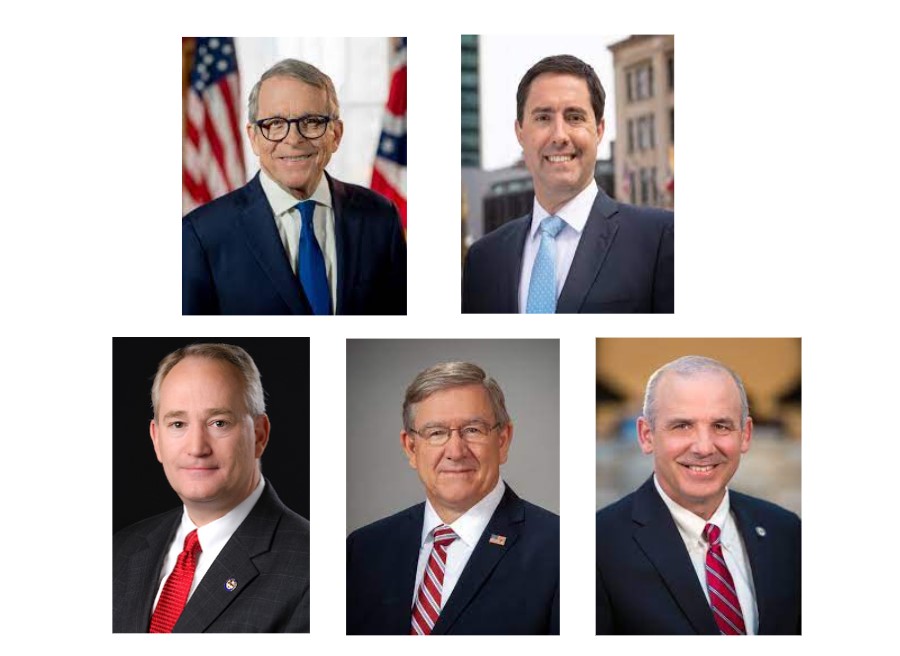
    The Republican majority members of the Ohio Redistricting Commission. Top row from left, Ohio Gov. Mike DeWine and Secretary of State Frank LaRose. Bottom row from left Ohio Auditor Keith Faber, House Speaker Bob Cupp, and Senate President Matt Huffman. Official photos.

    BY: SUSAN TEBBEN – Ohio Capital Journal

    Anti-gerrymandering groups are again asking the Ohio Supreme Court to determine if the Ohio Redistricting Commission should be held in contempt, and to force the commission to meet by the end of the week to redraw legislative maps.

    The ACLU, on behalf of several groups including the League of Women Voters of Ohio and the A. Philip Randolph Institution of Ohio and some individual Ohio voters, asked the court to yet again demand answers from the Ohio Redistricting Commission as to why they shouldn’t be held in contempt for making no moves to meet a deadline to draw “entirely new” legislative maps.

    The fourth effort by the ORC was rejected by the Ohio Supreme Court on April 14, and found not to be an “entirely new map” they were ordered to create, but merely a tweak of the third attempt, which was also rejected as unduly partisan.

    The commission has until May 6 to adopt and submit a map, but the groups say the urgency of the situation has “dramatically increased” because of a federal court’s decision to implement the third map found unconstitutional by the supreme court as the map to use during the 2022 election season. The U.S. District Court said they would order the use of the map, which was found to be unduly advantageous to Republicans, if no plan was adopted by May 28.

    “Based on the commission’s conduct to date, this appears to be exactly what the commission is trying to do,” the ACLU wrote to the supreme court. “The Court should not allow the commission to intentionally avoid its constitutional obligations.”

    GOP members of the commission argued that the court did not have the authority to hold them in contempt for several reasons, most important of which was the fact that the commission had passed a map by the court-ordered March 28 date. They said they conducted their legislative duties, and also were protected by the separation of powers doctrine from being held in contempt.

    One member of the state supreme court, Justice Sharon Kennedy, has consistently sided with the Republican members in saying they should not be held in contempt and the court does not have the power to do so.

    The Ohio Supreme Court rejected a previous request to hold the ORC in contempt at the same time they rejected the fourth map by the group.

    The ACLU, however, argues in their most recent challenge for contempt that legislative immunity is not “unlimited” and separation of powers principles do not “constitute an insurmountable barrier to a contempt order against the majority of the commission.”

    “In ordering (the ORC) to reconvene and to draft and adopt a constitutionally valid General Assembly-district plan, this Court is not ‘asserting control’ over purely legislative duties … but simply ensuring that the commission itself undertake those duties,” attorneys said in their Monday filing.

    GOP members of the ORC told the court in the last debate over contempt that they could not be charged as individuals for something decided by the commission as a whole.

    The ACLU called the argument an “improper attempt to evade responsibility” in their Monday filing. The argument also does not hold when it comes to calling a meeting of the commission, the court challengers said. Calling a meeting only requires three commission members, leaving five others “fully responsible for the defiance of the court’s order,” court documents stated.

    Attorneys urged the court to force the commission to convene no later than Friday if they are held in contempt, as a way to “purge” their contempt charges.

    The commission has not announced any plans to meet on or before the May 6 deadline. Democrats, including commission co-chair state Sen. Vernon Sykes, attempted to bring a meeting together on Monday, but ended up alone in front of the room where the ORC has met in the past, having had their offer rejected by every other member of the commission.

    A representative with House Speaker and commission co-chair Bob Cupp said no meetings have been scheduled, and a spokesperson for Senate President Matt Huffman said meeting dates were up to the co-chairs.

  • Ohio Secretary of State says he didn’t call for Supreme Court chief’s ouster

    Ohio Secretary of State says he didn’t call for Supreme Court chief’s ouster

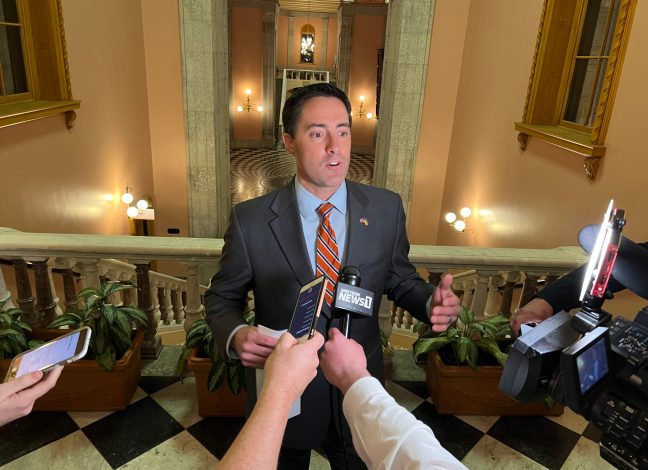
    (Photo by Susan Tebben, OCJ.) 

    BY: MARTY SCHLADEN – Ohio Capital Journal

    Ohio Secretary of State Frank LaRose on Tuesday denied that he had called for the impeachment of Ohio Supreme Court Chief Justice Maureen O’Connor after she had repeatedly ruled against LaRose and the rest of her fellow Republicans on the Ohio Redistricting Commission.

    LaRose’s comments come four days  after he told a group of Union County Republicans that Justice O’Connor had “violated her oath of office” and that for the legislature to impeach her  “may be the right thing to do”.

    Audio obtained by the OCJ of Secretary Frank LaRose speaking at a Union County Republicans breakfast last week.

    The state’s top elections official was at the Franklin County Board of Elections on Tuesday as he kicked off early voting for most of this year’s primaries. It won’t include ballots for state legislative candidates because of a dispute over gerrymandering — a fracas over the boundaries of the districts in which members of the state House and Senate will run. 

    Tired, apparently, of partisan gerrymandering, Ohio voters in 2015 overwhelmingly approved a constitutional amendment that requires districts be drawn so that the partisan makeup of the legislature resembles the partisan breakdown in recent statewide elections. 

    That’s not how things stand now. Republicans have won recent elections with about 54% of the vote, but they control 65% of the seats in the state House and 78% of the state Senate.

    This year, using the new system for the first time, the five Republicans on the seven-member redistricting commission have passed four sets of maps that O’Connor and the three Democrats on the Supreme Court have ruled are too partisan.

    Republican Justice Pat DeWine has continued to sit in the case even though several ethics experts have said he has a clear conflict because his father, Gov. Mike DeWine, is a member of the redistricting commission. Justice DeWine has voted in favor of upholding the maps that his father and the other Republicans have passed.

    Meanwhile, Republican frustration with O’Connor, who will leave the court at the end of the year, has been boiling over. Some Republican members of the legislature last month floated the idea of impeachment.

    Gov. DeWine called the notion “extraordinary” and said it’s a bad idea to talk about removing judges whenever one disagrees with their decisions. But LaRose, the secretary of state, wasn’t so reticent on Friday when asked at a Union County Republican breakfast if O’Connor should be impeached.

    “I think that she has not upheld her oath of office, and that to me is a basic test of a public servant,” he said. “That’s up to the state legislature, whether they want to impeach the chief justice or not. I certainly wouldn’t oppose it.”

    LaRose stipulated that any impeachment would take so long that “it may feel really good, and it may be the right thing to do because she’s violated her oath of office by making up what she wants the law to say instead of interpreting what it actually says. But I don’t know if it would accomplish much, but I’d be fine with it if they did.”

    At Tuesday’s event, LaRose tried to draw a distinction between saying impeachment may be the right thing to do and actually calling for it.  

    “The thing that I did was not call for anybody to be impeached,” he said. “I answered a question that was asked at a little breakfast gathering where I was with a group of supporters in Union County and what I said was, ‘It’s up to the state legislature.’ There are 33 senators and 99 representatives. If they gather evidence and hold that trial for an impeachment, if they decide as the people’s representatives to do that, then I don’t oppose that.”

    LaRose and some legislative Republicans are not alone in being frustrated by the redistricting battle. For the second time, the Supreme Court has ordered members of the commission to show why they shouldn’t be held in contempt for failing to pass maps that comply with the court’s interpretation of the state Constitution. Responses were submitted on Monday.

    Some members have argued that they shouldn’t be held individually liable for the actions of a seven-member body they don’t control. And some have argued for the court to simply impose maps on the commission would overstep its powers as a judicial body.

    LaRose on Tuesday said holding contempt proceedings is another overreach.

    “It’s a ridiculous idea that a co-equal branch of government would be held in contempt for doing our job in a way that the court doesn’t like,” he said. “What we have attempted to do all throughout this process is follow the rules that are set out in the Constitution — and not just the one part of the Constitution that the court seems to be focusing on, but all of the line-drawing rules in the Ohio Constitution.”

    LaRose was asked if he was attacking a co-equal body by publicly saying that he, a statewide official, was OK with the impeachment of a Supreme Court justice who had ruled against him.

    “Certainly not,” he said. “The Constitution lays out the process for impeaching and removing a justice from the Ohio Supreme Court or other elected officials. That’s not a power I have. I can express my opinion as a citizen just like any of us can and what I was telling this group of supporters in Union County a couple days ago is that if the state legislature found evidence and carried out that process, then I wouldn’t stand in the way of that.

    “And I certainly have concerns that the court has delved into really the politics of this more than they should have. But that’s a choice up to the General Assembly and certainly not a choice I get to make. I was simply expressing my opinion,” he said.

    Democratic Secretary of State candidate Chelsea Clark said LaRose’s comments about O’Connor make him unfit for his office.

    “It’s now obvious to anyone that Frank LaRose can’t be trusted to administer organized elections and now when he’s called out for the chaos, he wants to blame the referees,” she said in an email. “To claim ‘it would feel good’ to impeach the chief justice because he disagrees with the court’s rendering is pathetic. For someone who claims to believe in separation of powers, Secretary LaRose has no problem trying to overturn the will of the people.”

    LaRose on Tuesday said primary elections for legislative seats most likely will take place in August.

  • Judge Jerry R. McBride: Why Issue One should be opposed

    Judge Jerry R. McBride: Why Issue One should be opposed

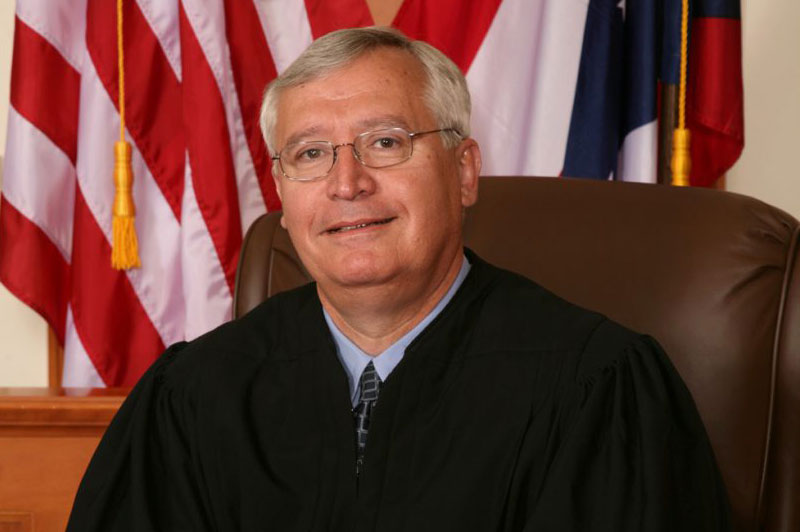
    by Judge Jerry R. McBride

    If you are concerned about neighborhood safety, then you should NOT support Issue One on the ballot this fall. It will hinder law enforcement, prosecutors, and judges in their ability to deal with the biggest drug crisis in this state’s history.As a result, it will result in more drugs on the streets, more crime, more deaths from overdoses, and more costs to local communities and taxpayers.

    Jerry R. McBride is a Clermont County, Ohio, Common Pleas Court Judge

    Judges have the ability to comment on issues that affect the administration of justice. Issue One will have a devastating effect on the administration of justice on Ohio. As one trial judge, this is my take on Issue One:

    ISSUE ONE DOES NOT BELONG IN THE STATE CONSTITUTION

    A state constitution should set forth the powers and functions of the branches of government, certain general values and principles upon which the citizens of the state generally agree, and the basic rights which are afforded to the citizens of the state. It should set forth matters which are so fundamental and important that they will not be subject to change over time. This proposed constitutional amendment does not in any way belong in a state constitution. It seeks to change sentencing law as it exists in the state of Ohio based on an assumption that change needs to be made. If change does need to be made, then it should be made through the process of enacting legislation, as is done on a regular basis in this state, and not through a constitutional amendment.

    ISSUE ONE DIRECTLY CONTRADICTS THE CONCEPT OF TRUTH IN SENTENCING AND IGNORES THE RIGHTS OF VICTIMS.

    There should be truth in sentencing, not lip service to truth in sentencing. Issue One allows a credit to be given by the Department of Rehabilitation and Correction for participation in rehabilitative, work, or educational programming of up to 25% of a sentence plus 30 days. While this may sound good at first glance, it is contrary to the concept of truth in sentencing. When a victim is told what a sentence will be, he/she should be able to rely on that being the sentence unless a hearing is scheduled on a possible reduction in the sentence. Why should a sentence be reduced just because an inmate “participates” in programming? Isn’t that the bare minimum that should be expected from an inmate? Why should an inmate be rewarded for doing the bare minimum? If a sentence is to be reduced, it should be reduced by the sentencing judge based upon an assessment that the risk of recidivism has been reduced, not because somebody has shown up to work. And if the judge makes the assessment that the sentence should be reduced, a hearing will be required and the victim will have an opportunity to be present and to be heard, which is the way it should be. Additionally, what does it mean to “participate” in these activities? This essentially allows the prison authorities to reduce a judge’s sentence,and it should be the judge who imposed a sentence who determines whether that sentence should be reduced.

    ISSUE ONE IS DANGEROUS IN THAT IT INTERFERES WITH THE JUSTICE SYSTEM’S ABILITY TO DEAL WITH THE DRUG CRISIS

    It is highly inappropriate in the midst of the biggest crisis in this state in terms of drug abuse for the possession and use of dangerous drugs to be treated essentially the same as minor traffic and criminal offenses. Possession of dangerous drugs leads to overdoses, to more serious criminal offenses, to deaths. The possession and use of dangerous drugs are not minor offenses to the persons who are addicted to drugs, to the victims of crime involving persons under the influence of drugs, to the parents and family members who are praying that their loved ones will not overdose and die. To suggest that we need to include treatment in our approach to this drug crisis is highly appropriate, and in fact it is already being done routinely across this state. However, to suggest that we should reduce the level of these offenses so that they are no longer classified as serious offenses is highly inappropriate.

    ISSUE ONE TREATS USE OF DANGEROUS DRUGS AS LESS SERIOUS THAN JUST ABOUT EVERY OTHER CRIME

    The proponents of the constitutional amendment, in saying that a jail sentence cannot be imposed, are saying that possession and use of such drugs as heroin, methamphetamine, and cocaine should be treated more lightly than reckless driving, shoplifting, lying to a police officer, gambling, and persistent disorderly conduct, all of which can result in the imposition of jail sentences. Is this really the message that we should be sending to drug addicted adults who represent a risk of committing more serious offenses as long as they persist in the use of dangerous drugs?

    ISSUE ONE ELIMINATES THE ABILITY OF A JUDGE TO IMPOSE A JAIL SENTECE FOR A FIRST OR SECOND POSSESSION OFFENSE, EVEN IF THE DRUG IS HEROIN, METHAMPHETAMINE, OR COCAINE

    In all likelihood, probation will be appropriate for a person who commits a drug possession offense which is the first or second within a 24-month period. However, that will not always be the case. For instance, probation may not be appropriate at all if the offense is committed at the same time as a more serious offense such as a burglary or an assault. Similarly, probation may not serve the purpose of protecting the public if the drug possession or use offense is committed by a convicted sex offender for whom use of a dangerous drug or alcohol represents a significant risk of reoffending and for whom intermediate sanctions may provide no real protection to the community. As for the term probation, does that include treatment in a halfway house or in a lock-down community based correctional facility?

    If it doesn’t include residential treatment, including lockdown residential treatment, ittakes away some of the most effective tools which can be used in trying to rehabilitate an offender. Needless to say, the problem with creating an absolute standard that requires that a person who uses or possesses drugs receive the lowest level of sanction available is that applying that standard under the facts of given case may not be consistent with the seriousness of the offense or the likelihood of recidivism.

    ISSUE ONE PUTS HANDCUFFS ON JUDGES IN THEIR ABILITY TO GET OFFENDERS TO STOP USING DRUGS

    The proposed amendment would eliminate the possibility of imposing a jail sentence at all for a violator on a first or second drug possession or use offense within 24 months and would eliminate the possibility of a court imposing a prison sentence for a felony violator unless the violator commits a new criminal offense. However, this leads to some very real dilemmas. If that is to be the law, what is a court to do with someone who simply refuses to attend treatment or to comply with any of the intermediate sanctions or who simply says that he/she will not comply with anything that the court orders? What is a court to do with someone who says he/she will comply with community control sanctions but then refuses to do anything which is ordered? Under the language of the proposed constitutional amendment, a felony offender could simply tell a judge at the time of the sentencing hearing that he/she will comply with the community control sanctions that are ordered, and then after being placed on community control, refuse to do anything that the court orders. At that point, a prison sentence could not be imposed. What is the possible sense in that? How does that serve to protect the public? The probation department has a statutory duty to report violations to the court, but if the offender continually absconds or fails to comply with the sanctions that are ordered, how can the probation department perform that function? The answer is very simple- it can’t.

    ISSUE ONE JUST GIVES LIP SERVICE TO THE CONCEPT OF GRADUATED SANCTIONS

    Issue One strips away the full range of tools which enable a judge or probation department to be effective in not only rehabilitating an offender, but also in protecting the public. It is difficult to argue with the concept of graduated responses, and the use of intermediate sanctions, by courts and probation departments. It is consistent with the use of evidence-based practices. However, the application of graduated responses or intermediate sanctions to a violator in a given case will depend on the seriousness of the original offense, the risk of recidivism, and the nature of the violation. In this regard, a graduated response policy will typically include probation (monitored or with conditions), intermediate sanctions (which may include such things as house arrest, residential or outpatient treatment, day reporting, a short jail term, or other requirements), and jail or prison. Issue One, however, arbitrarily takes away the option of jail or prison even for someone who thumbs his or her nose at the system and who refuses to undergo treatment or to make other changes that are necessary to reduce the likelihood of recidivism. It also arbitrarily takes away the option of jail or prison for someone for whom lesser sanctions are simply not appropriate.

    ISSUE ONE CONTRADICTS THE IMPORTANT CONCEPT OF SEPARATION OF POWERS

    The proposed amendment provides that each court must prepare guidelines for graduated responses that may be imposed in sentencing offenders and that the guidelines must be approved by the Department of Rehabilitation and Correction, which is part of the executive branch. Such a provision, which is proposed to be part of the state constitution, violates an already existing constitutional principle, which is the separation of powers. Additionally, there is no reason to believe that the Department of Rehabilitation and Correction has any expertise in deciding what factors a court should consider in determining which graduated response should be applied in a given case in sentencing an individual. That is pure and simple a judicial function.

    UNDER ISSUE ONE, THERE WILL BE LESS, NOT MORE, MONEY FOR TREATMENT

    The proponents of this constitutional amendment assume that the costs of their proposal will be covered by a substantial reduction in the number of prison beds. However, since the cost of housing fourth and fifth degree felons in the prison system is a very small part of the overall prison cost, since the projections as to cost reductions by the Department of Rehabilitation and Corrections have been inaccurate in the past, and since the increase in prison population has primarily resulted from longer sentences, and that is not addressed at all by the constitutional amendment, there is no real reason to believe that the assumptions of the proponents in this regard are correct.

    ISSUE ONE WILL RESULT IN GREATER COSTS TO LOCAL COMMUNTIES WITH WORSE RESULTS

    In the unlikely possibility that the proponents of Issue One are correct that there will be more money for treatment, and that appears to be fool’s gold, the most significant costs of this proposed constitutional amendment are the following- it undermines the efforts being made by courts and the law enforcement community to deal with the drug crisis, it undermines the ability of courts to effectively sentence offenders, and worst of all, it will not make the public any safer at all, and given the problems identified above, will likely lead to the public being more at risk. The cost of the proponents of Issue One pursuing their ill-conceived political agenda will be to put more people at risk of being victims, will not result in more or better treatment for drug users, and will result in greater cost- both human and monetary- to local communities. That is the reason that law enforcement, prosecutors, and judges throughout Ohio are opposing Issue One as being both ill-conceived and dangerous.


      Relaxed atmosphere and friendly service welcomes you back time and time again! Located in the heart of the Historic Loveland District Just outside Cincinnati, Ohio.