Tag: SEXUAL ASSAULT SURVIVORS

  • Rape survivor advocates push for ‘right to know’ provisions in state budget

    Rape survivor advocates push for ‘right to know’ provisions in state budget

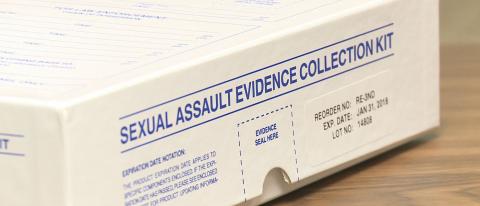
    Sexual assault examination kit. (photo from Department of Justice, Office of Justice Programs, Bureau of Justice Assistance)

    Ohio already tracks rape kits, but the House included a more robust system for keeping survivors informed. The Senate pulled it, arguing it should pass as a standalone bill.

    BY:  Ohio Capital Journal

    The Ohio House put language in the state budget granting sexual assault survivors the “right to know” what’s happening with their rape kit and developments in their case. The state Senate pulled that provision out. Not because they oppose the idea, but because they contend it should advance as a standalone bill. The state has taken numerous steps to track kits already, they add.

    But as budget negotiators prepare for what could be a long scuffle, advocates are working behind the scenes to get the proposal back into the finished product.

    The right to know

    Rep. Michele Grim, D-Toledo, submitted the budget amendment establishing the right to know. The language allows survivors to request updates about the testing of their kit including the date, results, whether they got a DNA profile and whether it matched one in the database, as well as the estimated date of destruction. Survivors can also request updates about the progress of their case, for instance if investigators decide to close or reopen it.

    “Removing that provision, I think that’s really disheartening to a lot of survivors,” she said. “They need a sense of closure, they need to make sure that they have the right to know the status of their rape kits, and the status of where it is and making sure that it’s processed in a timely manner.”

    “It’s a piece of them, you know?” Grim explained. “It’s something that, they feel like they own, because it’s a piece of them. It’s their DNA.”

    Ohio has a tracking system for kits. But Grim said survivors need to know more than just where it is — they need to know where their case stands.

    Thirty one states around the country have passed their own versions of right to know legislation, Ilse Knecht explained. The Joyful Heart Foundation policy and advocacy director heads up the organization’s effort to end the backlog of untested rape kits.

    The organization tracks states according to six pillars relating to how states inventory and test kits as well as inform survivors. Ohio has five of those six covered. The only one missing? Legislation ensuring a survivor’s “right to know” about their kit and case.

    Most survivors, Knecht said, leave the hospital having just gone through an intrusive, uncomfortable procedure right after a traumatic experience. And then they never hear what happened with their kit.

    “Think about if you went in to get a test for cancer or something, right?” Knecht said. “And you left and you could never get a hold of anybody who will tell you what the result was. I mean, it’s a little different — that’s a life and death kind of your medical situation, but I think that survivors feel like that.”

     Ohio Senate President Matt Huffman (R-Lima) and state Sen. Matt Dolan. (Photo by Graham Stokes for Ohio Capital Journal. Republish photo only with original story.) 

    Senate reticence

    In an emailed statement, Senate spokesman John Fortney explained why lawmakers removed the language.

    “Determining the best practice is paramount to these cases and to finding justice for survivors,” he said. “That discussion would be better served by a thorough debate and discussion devoted to a stand-alone bill.”

    Senate President Matt Huffman made a similar point while defending the inclusion of a higher-ed overhaul in the budget. He said lawmakers have looked to the budget as a vehicle for policy changes for years.

    “And my answer to that, and I think when I was Speaker Pro Tem the answer in the House was, we’re not just going to put a bill in the budget, a piece of policy, because we don’t want to talk about it, or it’s easier than having lots of committee hearings and witnesses and things like that,” Huffman explained.

    “Don’t just show up two weeks before the budget and say I got a good bill, throw it in there,” he added.

    It’s worth noting the Senate’s budget maintains a $1 million earmark to fund kit testing and related expenses for local law enforcement. The Senate also included a modest increase beyond the governor and House’s proposal to double spending on rape crisis centers.

    Carrying out the right to know changes would largely fall on the Attorney General’s office. The office didn’t request the changes in its budget request, and it already operates a kit tracking system.

    Didn’t we just do this?

    That tracking system comes from work that began under then-Attorney General Mike DeWine. As recently as 2018, Ohio had a backlog of untested rape kits that ran into the thousands. DeWine’s administration cleared that backlog, and Sen. Stephanie Kunze, R-Dublin, and Rep. Dorothy Pelanda, R-Marysville backed legislation directing the AG’s office to establish a tracking system.

    The system allows survivors to use a unique reference number to track the path of their kit from law enforcement agency to testing lab and back. That puts the onus on survivors to track their kit rather than requiring agencies to inform survivors at their request.

    Grim’s proposed changes also grant survivors more visibility into the investigative process.

    And although Ohio cleared its backlog of untested kits, the fact that the state had one at all gives Grim pause. “We need to make sure that there isn’t that issue again,” she said. To that end, her amendment would also require an annual audit and summary report prepared by the Attorney General’s office.

    The removal of the amendment is a setback, but Grim and Knecht say they’ll keep pushing for its inclusion in the final budget package.

    “It definitely needs to go back (in) in conference committee,” Grim said. “It’s a really important provision.”

    Follow OCJ Reporter Nick Evans on Twitter.


    Nick Evans
    NICK EVANS

    Nick Evans has spent the past seven years reporting for NPR member stations in Florida and Ohio. He got his start in Tallahassee, covering issues like redistricting, same sex marriage and medical marijuana. Since arriving in Columbus in 2018, he has covered everything from city council to football. His work on Ohio politics and local policing have been featured numerous times on NPR.

    MORE FROM AUTHOR

  • How a Proposed First Amendment Law Would Protect Survivors of Domestic Violence and Sexual Assault in Ohio

    How a Proposed First Amendment Law Would Protect Survivors of Domestic Violence and Sexual Assault in Ohio

    The Ohio Citizen Participation Act will help prevent frivolous lawsuits against all Ohioans

    Evan Mascagni is the Policy Director for the Public Participation Project

    by Evan Mascagni,

    Immediately following a report by the New York Times that he allegedly sexually assaulted numerous women throughout his career, Harvey Weinstein threatened to sue the Times for defamation. For First Amendment legal scholars, this comes as no surprise. There’s a long history of powerful bullies attempting to use the legal system to silence their critics.

    These types of lawsuits, most commonly called Strategic Lawsuits Against Public Participation (SLAPPs), are used to silence and harass critics by forcing them to defend these baseless but costly suits. SLAPP filers don’t go to court to seek justice. Rather, SLAPPS are intended to intimidate the target by draining their financial resources and dragging them through years in the court system. 

    The Act will also help protect the domestic violence and sexual assault survivors who are afraid to speak out for fear of their abusers.

    Luckily for residents of Ohio, a new bill introduced by State Sen. Matt Huffman (R-Lima), would protect Ohioans from frivolous lawsuits that chill their First Amendment rights.  Senate Bill 206, The Ohio Citizen Participation Act, would allow Ohio to join 28 other states that have already enacted anti-SLAPP laws of their own, and put Ohio at the forefront of protecting free speech and petition activity.

    These retaliatory lawsuits can arise in many contexts.

    The Ohio Citizen Participation Act will not only protect journalists who are threatened for reporting on sexual harassment and assault allegations, as occurred with the Times’ Weinstein investigation. The Act will also help protect the domestic violence and sexual assault survivors who are afraid to speak out for fear of their abusers, who can use the courts as a weapon of retaliation. As Nancy Neylon, Executive Director of the Ohio Domestic Violence Network, pointed out, “court proceedings can provide a tool for abusers to exert and reestablish control over a domestic violence survivor long after the relationship has ended.”

    These retaliatory lawsuits can arise in many contexts, including suing survivors for defamation if a survivor reports the abusers to law enforcement or speaks out publicly about the abuse they have suffered. This turns our legal system on its head, as the very place to which a survivor turns for protection becomes a weapon used against them.

    Evan Mascagni is the Policy Director for the Public Participation Project, a non-profit organization working to strengthen the First Amendment rights of all Americans by enacting strong anti-SLAPP legislation at the state and federal level.


    The Ohio Citizen Participation Act will help prevent frivolous lawsuits against all Ohioans, including domestic violence and sexual assault survivors, and help ensure that bullies don’t use the legal system as a tool of intimidation and retaliation.   

    For these reasons, I applaud Sen. Huffman for introducing the Ohio Citizen Participation Act. I hope that it passes through the state legislature quickly and is signed by the governor.  


    WHAT IS A SLAPP?

    The rights to speech and petition are enshrined in the First Amendment to the United States Constitution. Free speech and healthy debate are vital to the well-being of a democracy. In fact, the United States Supreme Court has said that the right to petition the government is the very foundation of our democracy.

    SLAPP = Strategic Lawsuit Against Public Participation

    SLAPPs are Strategic Lawsuits Against Public Participation.  These damaging suits chill free speech and healthy debate by targeting those who communicate with their government or speak out on issues of public interest.

    SLAPPs are used to silence and harass critics by forcing them to spend money to defend these baseless suits.  SLAPP filers don’t go to court to seek justice.  Rather, SLAPPS are intended to intimidate those who disagree with them or their activities by draining the target’s financial resources.

    SLAPPs are effective because even a meritless lawsuit can take years and many thousands of dollars to defend.  To end or prevent a SLAPP, those who speak out on issues of public interest frequently agree to muzzle themselves, apologize, or “correct” statements.


    Learn how SLAPPs affect your area of interest.

    For recent news on SLAPPs.  

    SLAPP-related cases, legal articles, etc.

    Information about anti-SLAPP laws your state.


    Read More at the web site of The Public Participation Project