

Tag: shareholders

  • Judge boots lawyers from FirstEnergy bribery suit for failure to ‘diligently prosecute’

    Judge boots lawyers from FirstEnergy bribery suit for failure to ‘diligently prosecute’

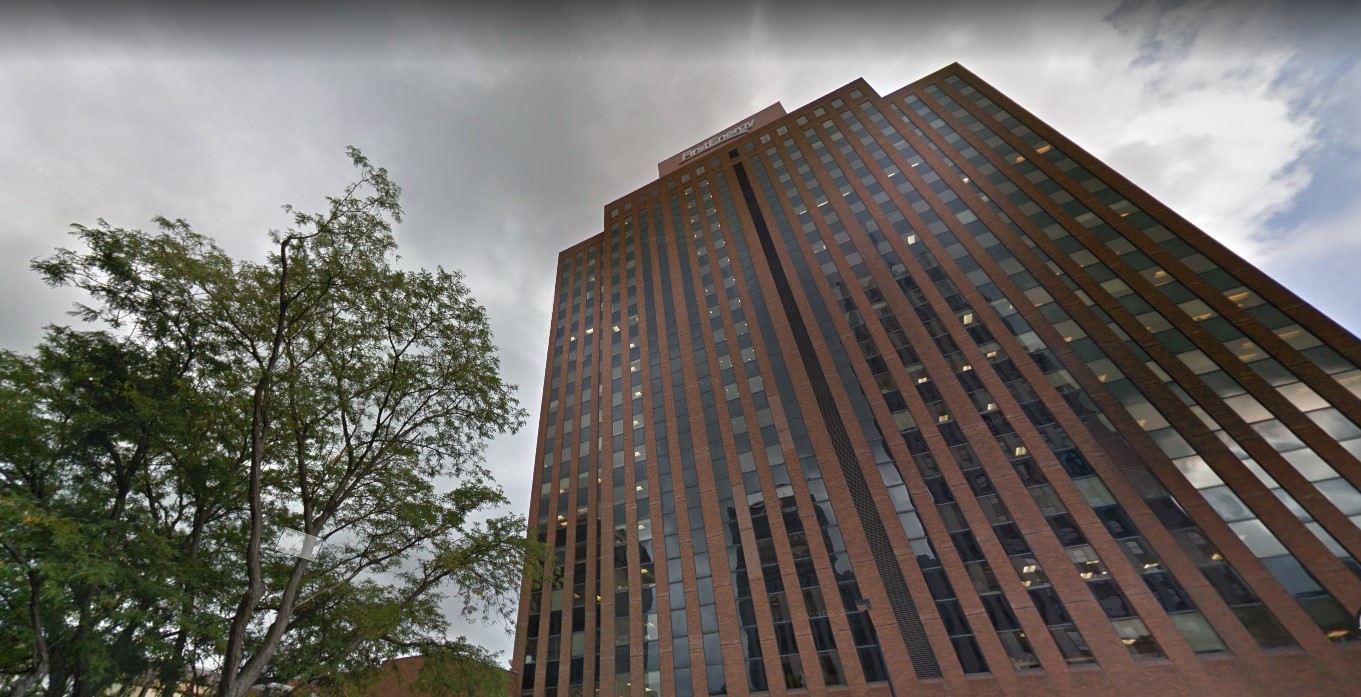
    FirstEnergy’s headquarters in Akron. Source: Google Maps.

    BY: JAKE ZUCKERMAN – Ohio Capital Journal

    In an unusual move in a high-profile lawsuit, a federal judge booted lawyers from a lawsuit they filed against FirstEnergy Corp. for their failure to “diligently prosecute” the case against the scandal-mired company.

    U.S. District Judge John Adams said Wednesday he would appoint counsel on behalf of the shareholders who sued the company in connection with what federal prosecutors have called the largest bribery scandal in state history.

    Both the shareholders and FirstEnergy publicly announced that they’d reached a settlement in March that called for insurers to pay the company $180 million and for the ouster of six board members. One federal judge preliminarily approved the settlement in May, but said he had no authority over the two other judges overseeing the related cases.

    Adams has for months lambasted the plaintiffs for agreeing to settlements without deposing witnesses, reviewing evidence, and shirking other typical fact-finding efforts.

    “As the parties have made clear that they do not intend to prosecute the matter before this Court, the Court will appoint counsel,” he said Wednesday. “Consistent with the Court’s authority to oversee this derivative action to its conclusion, the Court will appoint counsel that will be willing to diligently prosecute this matter and seek approval from this Court of any potential resolution, if one is reached.”

    The lawsuit traces back to the 2019 passage of Ohio House Bill 6 — an energy policy overhaul worth about $1.3 billion to FirstEnergy. In 2020, federal prosecutors arrested then-Ohio House Speaker Larry Householder and accused him and four allies of secretly accepting about $60 million from FirstEnergy and using it for personal enrichment, political gain, and to engineer passage and enactment of HB 6.

    Last summer, FirstEnergy Corp. admitted in federal court to the operation, also stating it paid Sam Randazzo, then Ohio’s top utility regulator, a $4.3 million bribe. FirstEnergy paid a $230 million penalty in connection with the filing and agreed to cooperate in related criminal investigations to possibly avert a federal charge of wire fraud.

    Householder has pleaded innocent and awaits trial. Two of four alleged conspirators have pleaded guilty. One died by suicide. Randazzo has not been charged with a crime and denied wrongdoing.

    FirstEnergy’s shareholders filed a derivative action against the company. This entails the shareholders suing the board of directors on behalf of a corporation for an alleged breach of duties, according to the Legal Information Institute at Cornell University. This allows shareholders to benefit as a derivative of the company’s corrective action.

    Adams called on a clerk to post the order in the court’s “News & Announcements” page. Interested lawyers can write him to express interest by July 25.

    His colorful outbursts have pockmarked the lawsuit. In the first hearing after the proposed settlement was announced, Adams demanded someone in the case answer a simple question: “Who paid the bribe?”

    After repeated attempts went nowhere, Adams told a lawyer for the plaintiffs that the attorney was wasting his time. Adams then stormed from the bench, according to an Akron Beacon Journal report.

    He later threatened to dismiss lawyers from the case if someone didn’t answer his question. An attorney for the plaintiffs later identified the alleged orchestrators of the bribery operation — two FirstEnergy executives — for the first time publicly.

    Last week, he denied a request from both the company and its shareholders that he dismiss the case, which could have cleared the way for the settlement. He cited uncomplete exchange of evidence between parities, no testimony under oath from any defendants, and an incomplete forensic examination to identify “possible missing communications” from FirstEnergy CEO Charles Jones’ phone.

    He also noted that of the $180 million, the settlement allows plaintiff’s lawyers to seek nearly $49 million in fees. Thus, he said it’s “hardly surprising” that they’d prefer the case handled by a judge who’s warmer to the settlement proposal.

    Two attorneys representing the shareholders did not respond to inquiries.

    A FirstEnergy spokeswoman declined to comment, citing pending litigation.
  • Both FirstEnergy and its shareholders seek secrecy around company’s bribes

    Both FirstEnergy and its shareholders seek secrecy around company’s bribes

    BY: JAKE ZUCKERMAN – Ohio Capital Journal

    Both FirstEnergy Corp. and its shareholders argued to a federal judge that they shouldn’t be forced to publicly disclose which executives ordered the payment of political bribes that the company admitted to in a related criminal case.

    The two parties are awaiting judicial approval of a proposed settlement from a derivative lawsuit filed by FirstEnergy’s shareholders. The settlement would call for FirstEnergy’s insurers to pay the company $180 million for damages incurred via the company’s role in what prosecutors have described as the largest public corruption manifestation in state history.

    In an agreement with prosecutors reached in July 2021, FirstEnergy as a company admitted to a $60 million bribery scheme anchored by the then-Speaker of the Ohio House, and another $4.3 million bribe to Ohio’s then top utility regulator.

    The statement of facts in that agreement, however, anonymizes the FirstEnergy officials involved in the scandal. The agreement also called for FirstEnergy to pay a $230 million penalty and cooperate with investigators to possibly avert a charge of wire fraud against the company.

    Delaying any possible approval in the shareholder’s derivative case, U.S. District Judge John A. Adams asked the shareholders’ attorneys last week to state who at FirstEnergy ordered the bribe payments,

    Jeroen van Kwawegen, an attorney representing the plaintiffs, demurred and didn’t answer the question, prompting Adams to cut short the hearing. Adams then issued an order calling for any “interested parties” to either provide an answer to his question or offer a good reason why they can’t divulge the information. He threatened the lawyers with contempt and possible expulsion from the case for failure to answer.

    The shareholders, in arguments submitted Wednesday, offered to privately tell the judge who at FirstEnergy ordered the bribes. They said they couldn’t do so publicly because doing so would breach confidentiality rules associated with discovery (the pre-trial evidence exchanging process) and mediation.

    The shareholders’ lawyers said their obligations are to their clients and to FirstEnergy itself — not the public.

    “Such public disclosure could also be harmful to FirstEnergy considering the myriad related criminal and civil proceedings, the ongoing regulatory investigations, and the securities class action pending in the Southern District of Ohio where FirstEnergy is a defendant,” they wrote.

    Kwawegen attached emails attached to the filing showing he asked lawyers FirstEnergy and its former executives if they’d agree to voluntarily disclose some of the information. He was rejected by the company, its former CEO Chuck Jones, Dennis Chack, and Mike Dowling (whose lawyer said they are not inclined to provide a “blanket waiver” but asked for specifics). Jones, Chack and Dowling were all fired in October 2020 amid an internal investigation.

    FirstEnergy made similar arguments. The lawsuit and settlement, its lawyers said, are aimed to recover for harm done to the company because of its actions. Any public accountability, they argued, “risks harm to the interests of FirstEnergy and its stockholders, which is exactly the opposite of what a derivative litigation is supposed to do.”

    Notably silent on the issue: federal prosecutors. They didn’t weigh in either way before the court. A spokeswoman for U.S. Attorney for the Southern District of Ohio Kenneth Parker didn’t respond to an inquiry.

    The derivative lawsuit traces back to the passage of House Bill 6 in 2019. The energy overhaul legislation, among other provisions, provided a massive bailout of two nuclear power plants owned at the time by a FirstEnergy subsidiary. Federal prosecutors said the legislation was worth $1.3 billion to the company.

    To ensure it passed and thwart a referendum attempt to repeal it, FirstEnergy admitted to providing $60 million to a nonprofit secretly controlled by then House Speaker Larry Householder, R-Glenford. Householder allegedly used the funds to elect a slate of candidates that would support his bid to become the House Speaker, engineer the bill’s passage, thwart a repeal effort, and enrich himself personally. He has pleaded not guilty and awaits trial, scheduled for January 2023.

    FirstEnergy also admitted to secretly paying $4.3 million to energy attorney Sam Randazzo just before Gov. Mike DeWine named him chairman of the Public Utilities Commission of Ohio. Randazzo has not been accused of a crime and has denied wrongdoing.