

Tag: Sickle cell disease

  • Red Cross: Donors needed now to address historically low blood supply

    Red Cross: Donors needed now to address historically low blood supply

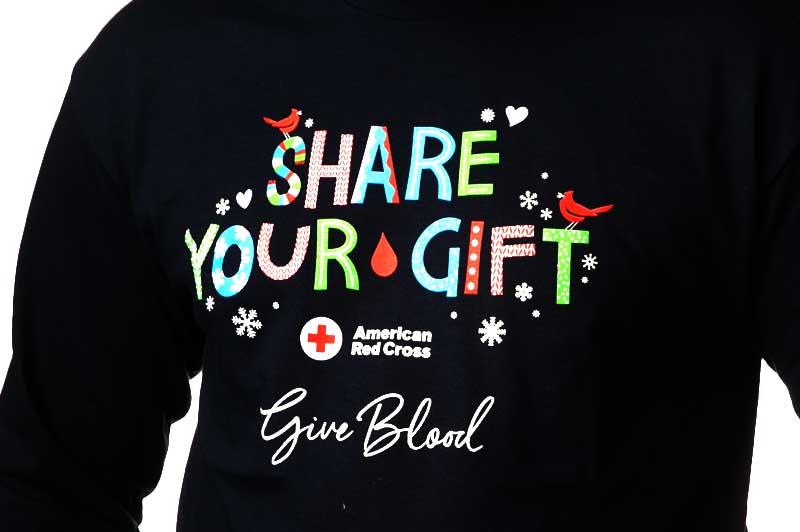
    To encourage donors to help address the historically low blood supply this holiday season, all who come to give Dec. 17-Jan. 2 will receive an exclusive Red Cross long-sleeved T-shirt, while supplies last.

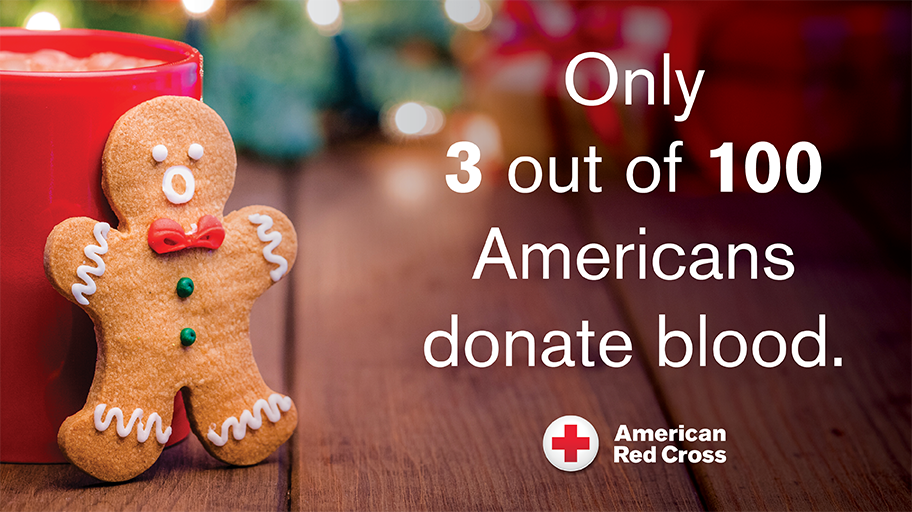
    Nearly two years into the pandemic, everyone has earned a holiday break with their family and friends. But as the nation gathers again for celebrations this season, the American Red Cross, which provides 40% of the country’s blood, is facing historically low blood supply levels. 
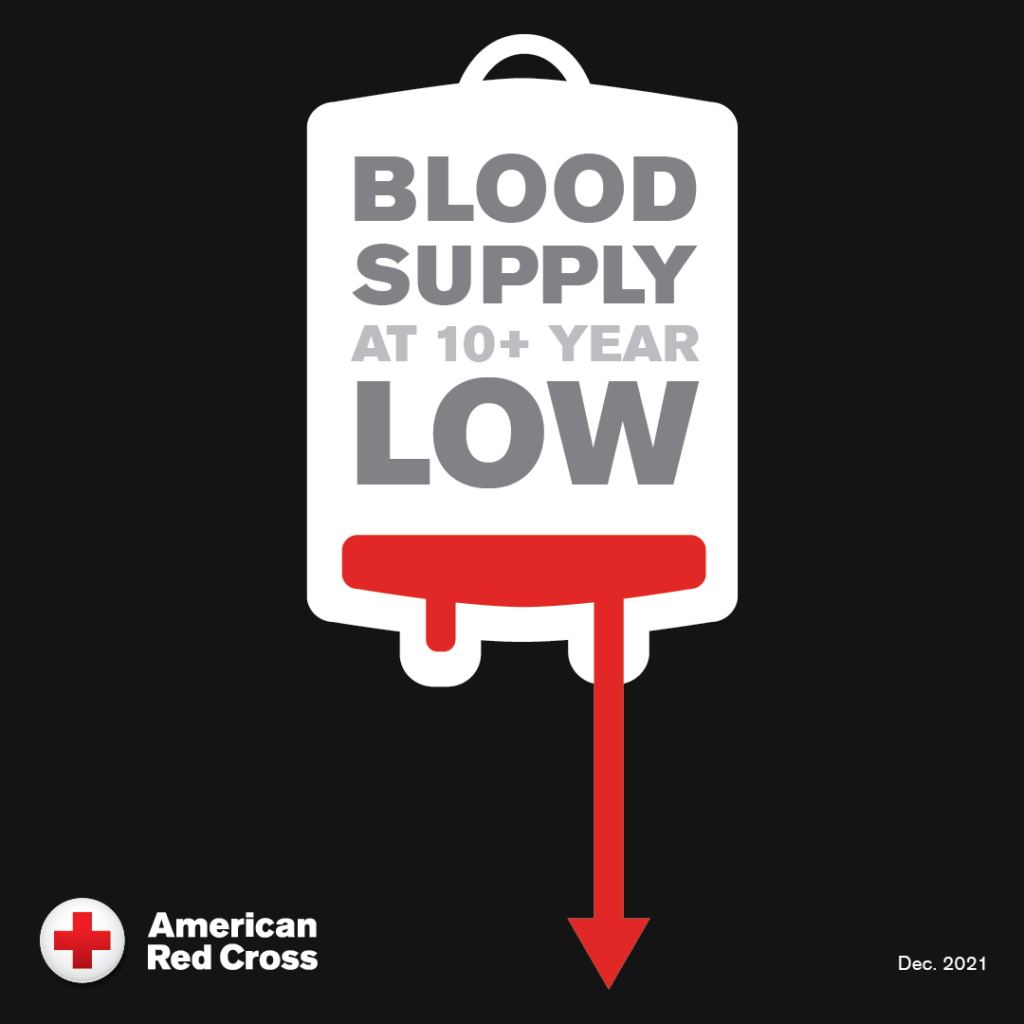
    Busy holiday schedules, breaks from school and winter weather all contribute to a drop in blood and platelet donations this time of year. Those factors, combined with the ongoing challenges of COVID-19, make it vital for donors to make an appointment to give as soon as possible. If more donors don’t come forward to give blood, some patients requiring a transfusion may potentially face delays in care. 

    Donors are urged to schedule an appointment now by using the Red Cross Blood Donor App, visiting RedCrossBlood.org or calling 1-800-RED CROSS (1-800-733-2767). There is no blood donation waiting period for those who have received a flu shot or a Moderna, Pfizer or Johnson & Johnson COVID-19 vaccine or booster, so long as they are symptom-free.   

    To encourage donors to help address the historically low blood supply this holiday season, all who come to give Dec. 17-Jan. 2 will receive an exclusive Red Cross long-sleeved T-shirt, while supplies last.

    Blood drive safety 

    Each Red Cross blood drive and donation center follows the highest standards of safety and infection control, and additional precautions – including face masks for donors and staff, regardless of vaccination status – have been implemented to help protect the health of all those in attendance. Donors are asked to schedule an appointment prior to arriving at the drive. 

    Upcoming blood donation opportunities Dec. 17-Jan. 2

    KYBoone County

    Florence

    12/20/2021: 1 PM – 6:30 PM, Florence Mall, 2028  Mall Road

    12/21/2021: 2 PM – 7 PM, Vineyard Church, 7101 Pleasant Valley Road

    OHHamilton County

    Cincinnati

    12/23/2021: 9 AM – 2 PM, Greater Cincinnati American Red Cross, 2111 Dana Avenue

    12/30/2021: 9 AM – 2 PM, Greater Cincinnati American Red Cross, 2111 Dana Avenue
    Donors can also save up to 15 minutes at the blood drive by completing a RapidPass®. With RapidPass®, donors complete the pre-donation reading and health history questionnaire online, on the day of donation, from a mobile device or computer. To complete a RapidPass®, follow the instructions at RedCrossBlood.org/RapidPass or use the Red Cross Blood Donor App.

    To donate blood, individuals need to bring a blood donor card or driver’s license or two other forms of identification that are required at check-in. Individuals who are 17 years of age in most states (16 with parental consent where allowed by state law), weigh at least 110 pounds and are in generally good health may be eligible to donate blood. High school students and other donors 18 years of age and younger also must meet certain height and weight requirements.

    Health insights for donors 

    At a time when health information has never been more important, the Red Cross is screening all blood, platelet and plasma donations from self-identified African American donors for the sickle cell trait. This additional screening will provide Black donors with an additional health insight and help the Red Cross identify compatible blood types more quickly to help patients with sickle cell disease who require trait-negative blood. Blood transfusion is an essential treatment for those with sickle cell disease, and blood donations from individuals of the same race, ethnicity and blood type have a unique ability to help patients fighting sickle cell disease.    

    Donors can expect to receive sickle cell trait screening results, if applicable, within one to two weeks through the Red Cross Blood Donor App and the online donor portal at RedCrossBlood.org.  

    About the American Red Cross

    The American Red Cross shelters, feeds and provides comfort to victims of disasters; supplies about 40% of the nation’s blood; teaches skills that save lives; distributes international humanitarian aid; and supports veterans, military members and their families. The Red Cross is a not-for-profit organization that depends on volunteers and the generosity of the American public to deliver its mission. For more information, please visit www.redcross.org/Cincinnati or cruzrojaamericana.org, or join us on social media @ARCcsor

  • High risk conditions for COVID-19 span far and wide in Ohio

    High risk conditions for COVID-19 span far and wide in Ohio

    Along with diseases known to increase risk, the CDC lists 12 other conditions that “might” increase the risk of people who have them. These include other massively common conditions like hypertension, liver disease, pregnancy, smoking and others.

    By Jake Zuckerman and Ohio Capital Journal Edited by Loveland Magazine

    cccccc

    The underlying health conditions that lay a path for severe COVID-19 complications are widespread in Ohio, potentially affecting as much as half the population, according to experts, state data and government research.  

    Take obesity: Ohio Department of Health 2017 survey data estimates that 34% of Ohioans are obese. Similarly, more than 74,000 Ohioans were diagnosed with cancer that same year.

    Dr. Peter Pronovost (Photo by University Hospitals)

    “The statistics are about 60% of the public has one or more chronic diseases,” said Dr. Peter Pronovost, a University Hospitals physician. “Four in 10 have two or more diseases.”

    The ubiquity of chronic disease in Ohio complicates any policy response when there’s no easy-to-draw line between people at low-risk for COVID-19 and those at higher risk levels.

    It also illuminates the reality of a “herd immunity” strategy, as reportedly offered by an influential adviser to President Donald Trump. This would entail allowing the virus to run its course through the population unimpeded, purportedly allowing healthier people to develop antibodies at a large enough volume to break down chains of transmission.

    The CDC lists eight diseases known to increase risk of severe illness from COVID-19. The list, coupled with data from the Ohio Annual Cancer Report, Behavioral Risk Factor Surveillance System annual report from 2018, and other state and federal sources, shows how deep chronic disease runs in the Buckeye state.

    • Cancer: 74,000 cases diagnosed in 2017
    • Chronic kidney disease: About 15% of U.S. adults have chronic kidney disease, per the CDC
    • COPD (chronic obstructive pulmonary disease): 8.3% of Ohio adults have COPD
    • Immunocompromised state from solid organ transplant: 1,916 Ohioans received organ transplants in 2019
    • Obesity: 34% of Ohio adults are obese. An additional 34% are overweight
    • Serious heart conditions: Heart disease is the leading cause of death in Ohio
    • Sickle cell disease: Not tracked population wide, but 181 newborns in 2019 tested for the disease, and another 3,444 newborns are carriers
    • Type 2 diabetes: 11.3% of Ohio adults are diabetic — about 1 million people

    According to recent CDC research analyzing survey data from more than 3,000 U.S. counties, nearly half the population had at least one condition placing them at high risk for COVID-19 complications.

    In rural counties, it’s even higher.  

    Dr. Nirav Vakharia (Photo by the Cleveland Clinic)

    “When we go beyond age as a risk factor … if we’re just thinking about these chronic diseases, they’re so prevalent, it’s hard to isolate a young, healthy cohort,” said Dr. Nirav Vakharia, a physician from the Cleveland Clinic.

    Health care groups in Ohio are undertaking different efforts to help residents with some of these conditions to stay at home.

    LifeCare Alliance, an in-home health care agency, has seen a spike in the number of meals it has delivered to the homes of its diabetic patients since the pandemic began.

    “If you have diabetes, the chances of you having a mild case of the coronavirus is much less — you’re gonna have a harder case, because your immune system just can’t fight it off,” said CEO Charles Gehring. “Patients have been scared to death by coronavirus.”

    Similarly, Pronovost, the chief clinical transformation officer with University Hospitals, said the health care network recently accelerated its efforts to provide proactive care for people with chronic diseases.

    He said staff is reaching out to patients to ensure they’re properly managing and controlling their diseases, like keeping insulin or blood pressure at healthy levels.

    “The idea is we want to make sure chronic disease people are doing all they can to avoid being hospitalized and avoid needing to go to the [emergency room],” he said.

    Early data shows the network reduced hospital admissions of certain chronic disease patients by 28%, and emergency visits by 79%, he said. 

    “The idea is we want to make sure chronic disease people are doing all they can to avoid being hospitalized and avoid needing to go to the [emergency room],” he said.

    Along with diseases known to increase risk, the CDC lists 12 conditions that “might” increase the risk of people who have them. These include other massively common conditions like hypertension, liver disease, pregnancy, smoking and others.

    As of Wednesday, COVID-19 has killed 4,176 Ohioans. The virus has infected nearly 120,000 state residents and put more than 13,500 in the hospital.

    Jake ZuckermanJake Zuckerman is a statehouse reporter. He spent three years chronicling the West Virginia Legislature for The Charleston Gazette-Mail after covering cops and courts for The Northern Virginia Daily.