Tag: Signature gathering

  • Voter rights groups say Ohio GOP voting overhaul threatens the state’s citizen initiative process

    Voter rights groups say Ohio GOP voting overhaul threatens the state’s citizen initiative process

    The proposals have gotten more attention for requiring proof of citizenship and eliminating ballot drop boxes, but they carry significant changes to signature gathering, too

    By:  Ohio Capital Journal

    A coalition of government watchdog groups are warning state legislation could hobble Ohio’s initiative process. Direct democracy has been available to Ohioans since 1912, and citizen-led groups can organize initiated statutes or constitutional amendments.

    The proposals would create strict new paperwork requirements and add other administrative hurdles like requiring many circulators wear a badge identifying themselves as “paid” even if they’re given something as small as a pen for signature collection.

    Above and beyond changes to the initiative process, the bills would also eliminate ballot drop boxes and require all voters to show proof of citizenship to cast a ballot.

    “Bottom line, this is attack on direct democracy,” Jen Miller from Ohio’s League of Women Voters argued. “This is an attack on local control. It’s an attempt to bully, intimidate, harass, and possibly prosecute people just because they want to take part in democracy,”

    Nitty-gritty

    Common Cause Ohio Executive Director Catherine Turcer praised the people who grab clipboards and collect signatures to put proposals on the ballot.

    “This extreme legislation is an attempt to bully, intimidate, and hassle these front-line heroes,” she argued.

    The paperwork involved in signature gathering is already complex and time consuming. She explained circulators have to fill out a standard form — name, address, employer, etc. — when they turn in petitions. But the new bills would ratchet up the stakes of that relatively banal procedure. Right now, if the circulator messes something up, they can cross it out and write their initials.

    “And it is accepted as a change that was legally made,” Turcer explained. “House bill 233, and Senate bill 153, would make it so that any error here, anything that you made a mistake on, it would mean that the entire booklet would be invalid. And just, I can’t imagine the number of signatures that would just get tossed out.”

    She added that provisions requiring circulators to wear a badge identifying themselves as “paid” if they accept “anything of value,” sets an unrealistic standard.

    “If I were to give a clipboard and a pen to a volunteer, and a t-shirt that says the name of the campaign,” she explained, “anything of value would then mean that a circulator would have to get a badge.”

    That’s more paperwork, she said, and thus more chances for something to go wrong.

    Turcer also criticized a provision requiring an individual to be registered to vote prior to signing a petition, rather than by the time the petition gets filed with election officials.

    “One of the things that we often do is check registration before people sign,” Turcer explained, “so that we can get somebody registered as we’re doing a ballot measure.”

    Taking that opportunity away doesn’t just reduce their signature count, Turcer argued, “it also stops that opportunity for a voter-to-voter conversation about, well, this is why you should get registered. These are the things that are coming up on the upcoming ballot.”

    Stakes

    Ohio Unity Coalition Executive Director Petee Talley drew a straight line from 2023’s Issue 1 defeat, which rejected a GOP-led effort to make it harder to amend the state constitution, and the current slate of legislation. She argued the latest bills are “retribution” for that defeat.

    Talley took particular offense at the provision requiring signature gatherers wear a badge if they’re compensated.

    “If I wanted to give a can of cold pop and a slice of pizza to someone and maybe even a t-shirt that (Turcer) alluded to, suddenly they’re going to have to add wearing a badge to all of that stuff?” she asked.

    “It’s nothing but intimidation. It’s nothing but bullying,” she argued. “It’s voter harassment, and this is an attack on our voice and our rights, and we’re not going to stand for it.”

    Miller walked through the follow-on consequences of requiring paid circulator badges. Some voters will mistakenly think volunteers who got a slice of pizza are actually getting a paycheck, she said.

    “We should expect opposition trackers attempting to catch circulators without their badges,” she added. “And with the increase in uncivil and polarized rhetoric in political venues, this could result in intimidation or even violence against circulators or voters signing those petitions.”

    What’s more, Miller said, “boards of elections would have to become badge police.” It’s a task they don’t have the money, manpower or expertise to carry out, she argued. The requirement voters be registered before signing a petition? Miller said that might be a problem, too.

    “We don’t even know if boards of elections have the technical capacity right now to verify that a voter registration was valid on the date that the voter signed,” she said.

    One reason that might not have come up is that, so far, county boards haven’t been able to weigh in. The bill’s first and second hearing happened during the early voting period for this May’s primary election. The third hearing landed on the day boards had to certify the election.

    Asked whether she thought that was intentional, Miller said, “I don’t think it matters. It’s shameful, either way. There is no more important constituent when it comes to democracy bills than the boards of elections.”

    Follow Ohio Capital Journal Reporter Nick Evans on X or on Bluesky.


    Nick Evans
    Nick Evans

    Nick Evans has spent the past seven years reporting for NPR member stations in Florida and Ohio. He got his start in Tallahassee, covering issues like redistricting, same sex marriage and medical marijuana. Since arriving in Columbus in 2018, he has covered everything from city council to football. His work on Ohio politics and local policing have been featured numerous times on NPR.

    Ohio Capital Journal is part of States Newsroom, the nation’s largest state-focused nonprofit news organization.

    MORE FROM AUTHOR

  • Ohio Ballot Board approves anti-gerrymandering amendment. Proposal to go forward

    Ohio Ballot Board approves anti-gerrymandering amendment. Proposal to go forward

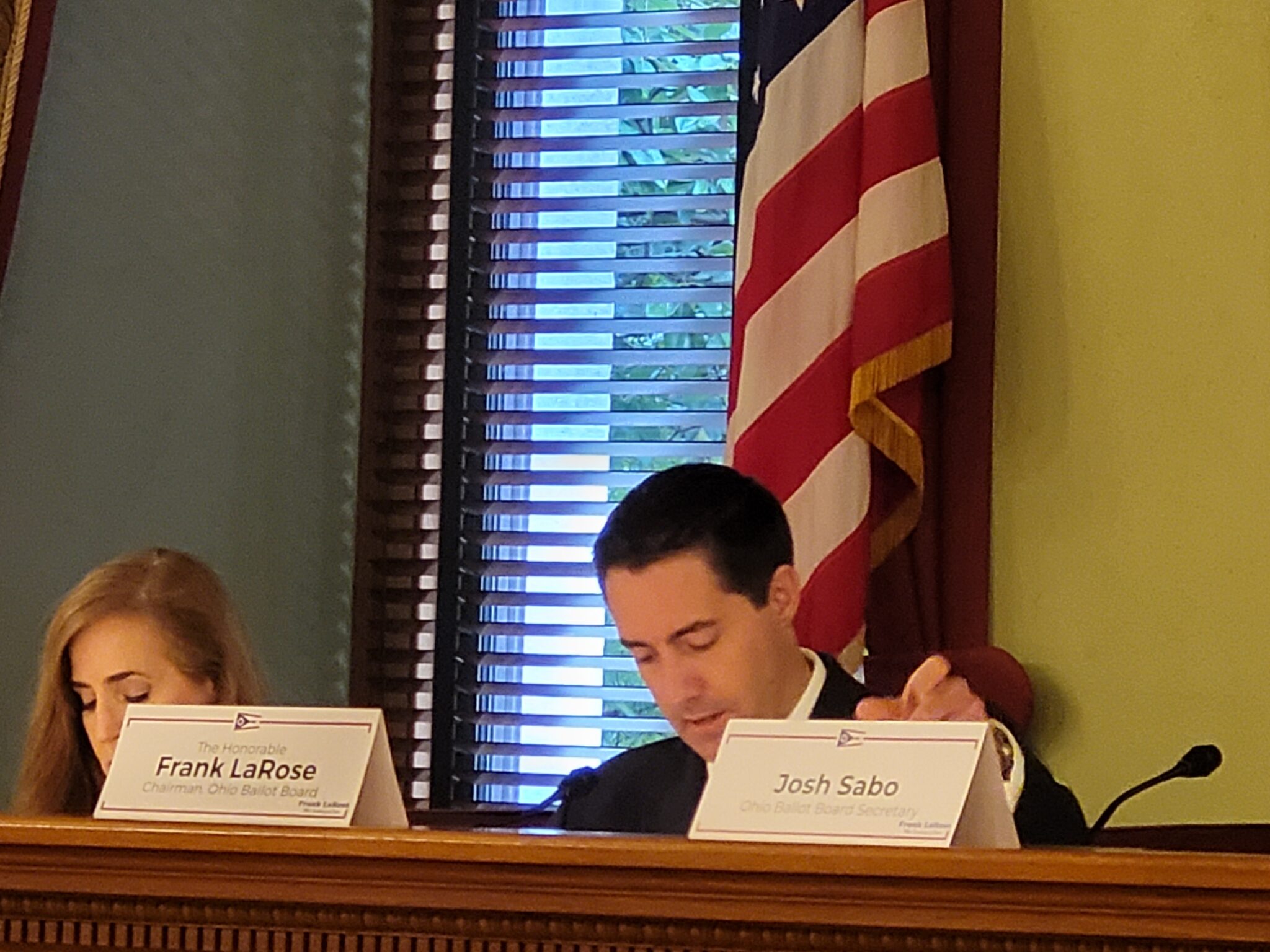
    Ohio Secretary of State Frank LaRose and the rest of the Ohio Ballot Board approve the language of a proposed anti-gerrymandering amendment that is likely to appear on the ballot next year. (Photo by Marty Schladen, Ohio Capital Journal.)

    Signature gathering can proceed

    BY:  Ohio Capital Journal

    Activists who hope to pass an anti-gerrymandering amendment to the Ohio Constitution can now begin gathering the nearly half-million signatures on the need to get the measure on the November 2024 ballot after the amendment was approved as a single issue by the Ohio Ballot Board Thursday.

    Without much ceremony, the board unanimously agreed that the proposed amendment pertains to a single subject, which is required under Ohio law.

    The timing of the approval is significant because early voting on two other measures that are on this year’s ballot started yesterday (Thursday.) Voting has begun on Issue 1, a constitutional amendment protecting abortion rights, and Issue 2, a voter-initiated statute legalizing recreational marijuana. The general election for those measures is Nov. 7.

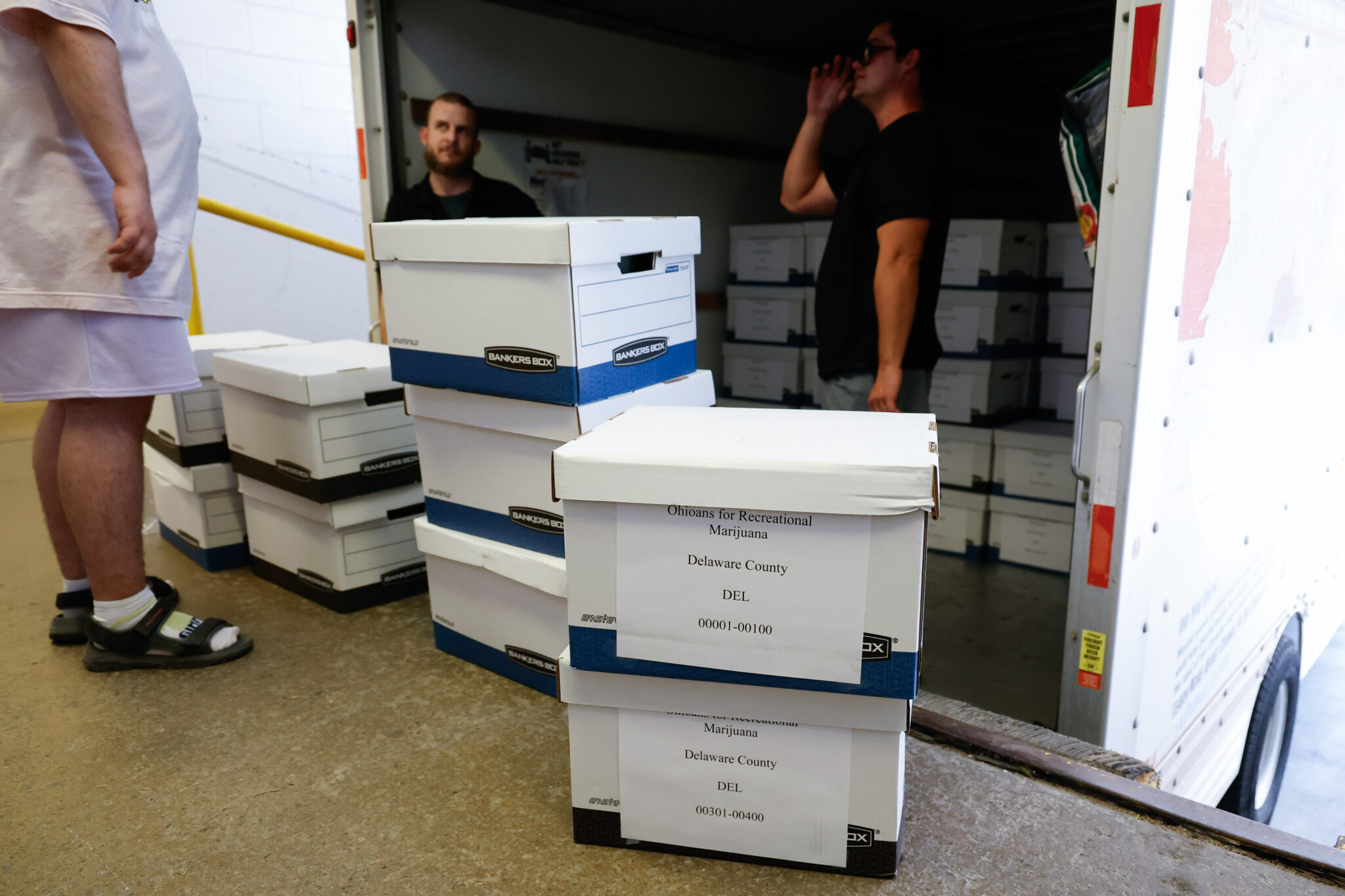
    Activists trying to get the anti-gerrymandering amendment on next year’s ballot have to gather about 415,000 verified signatures of registered voters. And because of a relatively high rate of rejections in previous efforts, they want to gather hundreds of thousands more than that.

    They say that having the summary language approved now enables them to do their work at county boards of election, where registered voters are gathering to cast ballots on this year’s abortion and marijuana measures. Petition circulators will also be able to work voter-rich environments near polling places on Election Day.

    The approval comes in the nick of time for the activists. Attorney General Dave Yost twice rejected the summary language for the petitions as not adequately reflecting the proposed amendment itself before approving it on its third attempt.

    Ohio is regarded as one of the most extremely gerrymandered states in the country. While Donald Trump carried the state with less than 54% of the vote in 2020, Republicans control 68% of seats in the state House, 78% in the state Senate and 66% of the state’s seats in the U.S. House of Representatives.

    That’s despite the fact that in 2015 and 2018, amendments to curb extreme partisan gerrymandering in the legislature and Congress both passed with more than 70% of the vote.

    After the 2020 Census, the Republican-dominated Redistricting Commission created by those amendments seven times ignored rulings by a bipartisan majority of the Ohio Supreme Court. The rulings said the districts the commission had drawn violated the anti-gerrymandering provisions of those same amendments.

    So now Ohio’s lawmakers are representing districts that the state’s highest court has ruled unconstitutional.

    Former Chief Justice Maureen O’Connor, a Republican, voted with the court’s three Democrats in ruling that the districts were unconstitutional, but she was forced to retire last year because of her age.

    Now she’s working with anti-gerrymandering activists to try to get the latest proposed amendment on next year’s ballot. It attempts to eliminate power grabs when district lines are drawn by creating an independent commission to draw them. That’s in contrast to the current one, which is composed entirely of elected officials.

    Ohio Secretary of State Frank LaRose voted with the other Republicans on the Redistricting Commission in support of the current, unconstitutional maps. In his role as head of the Ballot Board, on Thursday he voted to approve the latest proposed anti-gerrymandering amendment. But he emphasized that it was only a vote on whether its language regarded a single subject.

    “I will remind you again that we are not here today to debate the merits of the proposal, but only whether it constitutes a single proposed amendment to the Ohio Constitution,” he said.

    But Sen. Paula Hicks-Hudson, D-Toledo, commented on the merits, anyway.

    “I’d like to recognize and support the citizens of Ohio who have moved to create a fair opportunity… for their districts to be drawn to reflect all the things Ohioans believe are important and to have a government that is responsive to the citizens of the state of Ohio,” she said.

    After that, LaRose again emphasized that the vote wasn’t on the merits of the proposed anti-gerrymandering amendment.


    Marty Schladen
    MARTY SCHLADEN

    Marty Schladen has been a reporter for decades, working in Indiana, Texas and other places before returning to his native Ohio to work at The Columbus Dispatch in 2017. He’s won state and national journalism awards for investigations into utility regulation, public corruption, the environment, prescription drug spending and other matters.

    MORE FROM AUTHOR