

Tag: slow the spread of COVID-19

  • Ohio Department of Health stresses that teens and young adults are crucial in fight against COVID-19

    Ohio Department of Health stresses that teens and young adults are crucial in fight against COVID-19

    Columbus, Ohio – Lance D. Himes, interim director of the Ohio Department of Health (ODH), is calling on Ohio teens and young adults to take precautions to protect themselves and others against the dangers of COVID-19.

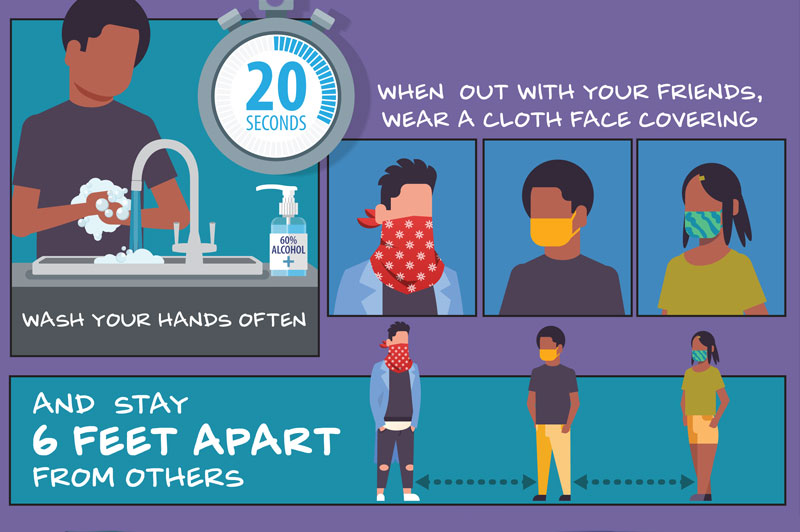
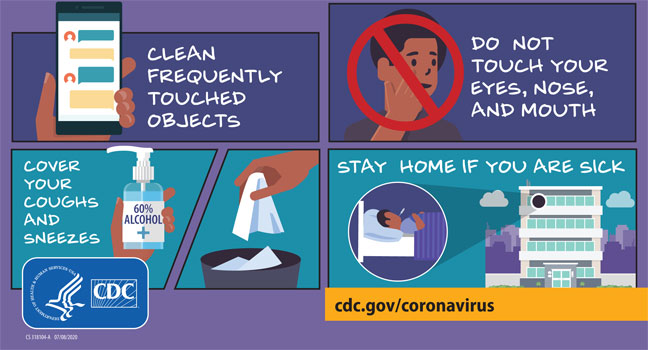
    Himes said it is essential that young people stay home and away from others if they are sick, adhere to 6-foot social distancing, and wear facial coverings when they go out. Avoid gathering in large crowds, huddling in groups, and sharing hugs or drinks.
    “Young people have given up a great deal since this pandemic first hit and are eager to get back to normal,” Himes said. “I thank them for their sacrifices and urge them to create a new normal in which they find ways to safely socialize, wear masks, keep a safe distance, and look out for one another.”

    ODH has prepared guidelines for parents and others for talking with young people about COVID-19. The guidelines include tips for preventing the spread and navigating new social norms. The Centers for Disease Control and Prevention also has produced a series of fact sheets for young adults:

    The average age of people with COVID-19 in Ohio has been steadily decreasing, showing that more and more young people are being exposed, and have become ill. Even those who don’t experience symptoms or only mild ones can unknowingly carry the disease and pass it to parents, grandparents, or other family and friends who may become seriously ill.

    “Teens and young people must do everything in their power to protect themselves, their families and friends, and all Ohioans against this very real and very serious threat,” Himes said.

    Taking steps to prevent COVID-19 also shows appreciation and offers protection for essential workers who provide healthcare and deliver food, packages, and other items. Further, reducing the spread of the pandemic is critical to prevent hospitals from becoming overcrowded. Overcrowded hospitals and overburdened healthcare workers make it more difficult to care for patients in critical need—a grandparent suffering from COVID-19, an aunt having complications delivering a baby, a father with chest pain, or a friend hurt in a car crash.

    “Teens and young people must do everything in their power to protect themselves, their families and friends, and all Ohioans against this very real and very serious threat,” Himes said. “You will save lives, prevent suffering, and help tame a pandemic that places all of us at risk.”
  • Dewine: “We’re in a crisis S/state in Ohio”

    Dewine: “We’re in a crisis S/state in Ohio”

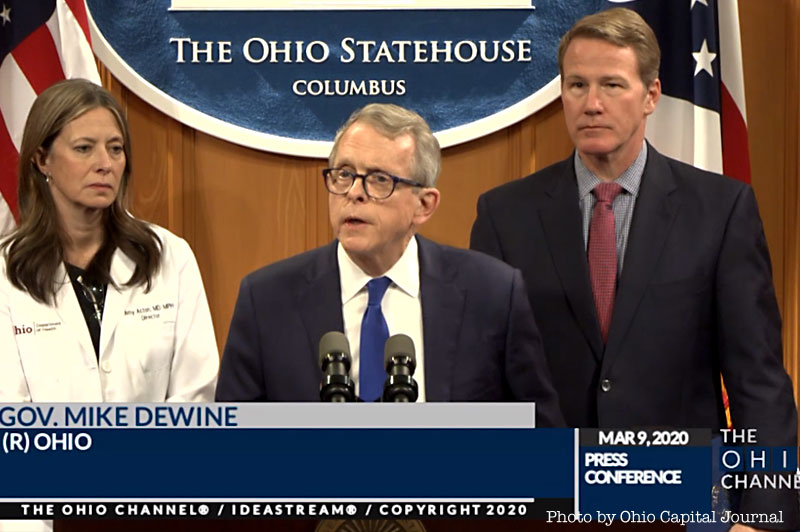
    Columbus, Ohio – Governor Mike DeWine Thursday declared that “We’re in a crisis S/state in Ohio.” He was speaking at a COVID 10 news briefing in Columbus.

    The Ohio Capital Journal reported yesterday:

    Ohio Capital Journal

    A resident waits in line to vote at a polling place. Photo by Scott Olson | Getty Images.

    The state said no to masks. Now, Ohio cities are saying yes


    The governor dithered. The state legislature said no way.

    So on Tuesday, the Springfield City Commission took it upon itself to pass a resolution (which lacks the force of law) calling for all residents to cover their faces while indoors, a practice research says will slow the spread of COVID-19 through Ohio.

    By Wednesday, Dayton became the first major city in Ohio to require masks by law. Similarly, Yellow Springs passed a resolution and Bexley passed a local ordinance requiring masks.

    “The mask is a symbol of freedom,” said David Estrop, a Springfield city commissioner, at a hearing, echoing comments from the governor. “It allows us to continue to reopen this state, yet do so in a way that’s safe.”

    By Wednesday, Dayton became the first major city in Ohio to require masks by law. Similarly, Yellow Springs passed a resolution and Bexley passed a local ordinance requiring masks.

    On Wednesday, the Ohio Department of Health reported more than 1,000 new cases, the first time that stat has reached quadruple digits since officials mass-tested inmates in three state prisons in late April. Wednesday marks 16 days of the coronavirus accelerating its spread, as measured by the 10-day average new caseload.

    Despite the worsening coronavirus outlook in Ohio and nationwide, state lawmakers continue to whip up anti-mask fervor. While Gov. Mike DeWine encourages everyone to wear masks, he has refrained from issuing any statewide mandate as the national epidemic worsens and states pause their economic re-openings.

    DeWine demurs

    In April, Gov. Mike DeWine took a hardline stance on masks, saying they’d be the only way business can reopen after he lifted the stay-at-home order.

    Facing pressure from fellow Republican officeholders, he reversed after he realized how “offended” people were by the concept.  

    Last week, referencing worsening outbreaks in Montgomery and Hamilton counties, DeWine floated the idea of implementing a mask mandate on a county-by-county basis.

    However, he has yet to issue any such order. A spokesman declined to say whether DeWine will announce any mask requirement at his next briefing.

    In a statement Wednesday, DeWine applauded Dayton Mayor Nan Whaley, a Democrat, for requiring the use of face coverings.

    “Wearing a mask will allow us to help keep businesses open and help prevent further spikes,” he said. “I encourage other communities to consider following Dayton’s lead.”

    Voted down

    Where masks have found friends in the public health community and Ohio cities, they found enemies in the GOP-controlled state General Assembly.

    Where masks have found friends in the public health community and Ohio cities, they found enemies in the GOP-controlled state General Assembly.

    Both the Speaker of the House and the Senate President have refused to wear masks at legislative functions.

    House leadership voted down a requirement in May that lawmakers and staff wear masks at the Capitol. With exceptions, masks have fallen along party lines — Democrats wear them and Republicans do not.

    In a Facebook post last week, Rep. Jon Cross, R-Kenton, campaigned on refusing to wear masks, let alone supporting legislation requiring them.

    “It’s my RIGHT not to wear a mask, and I do NOT support a government that tries to quarantine the healthy,” he wrote.

    Rep. Nino Vitale, R-Urbana, takes to social media regularly to promote baseless conspiracy theories about masks limiting blood oxygen or how they “force virus into the brain.”

    Rep. Candice Keller, R-Middletown criticizes Bureau of Workers’ Compensation for distributing masks to Ohio businesses.

    Rep. Candice Keller, R-Middletown, produced a Facebook video June 25 criticizing Ohio’s Bureau of Workers’ Compensation for distributing masks to Ohio businesses.

    Despite the lawmakers’ claims, research suggests masks are an effective, inexpensive and non-invasive way to slow the spread of COVID-19.

    An early June study published in The Lancet, a premier medical journal, analyzed 172 observational studies to gauge the efficacy of mitigation strategies. Researchers found wearing face masks results in a “large reduction” in the risk of infection.