COLUMBUS, Ohio — OCTOBER 06: Republican Ohio U.S. Sen. J.D. Vance speaks during the Ohio March for Life rally against November’s Issue 1 reproductive rights amendment, October 6, 2023, outside the Statehouse in Columbus, Ohio. (Photo by Graham Stokes for Ohio Capital Journal. Republish photo only with original article.)
Ohio U.S. Sen. J.D. Vance will become the next vice president, thus creating a vacancy in the U.S. Senate.
Former President Donald Trump and his running mate Vance defeated Vice President Kamala Harris and Minnesota Gov. Tim Walz in the presidential election that was called Wednesday morning by the Associated Press. Vance will have to resign from his Senate seat before being sworn in as vice president during Inauguration Day on Jan. 20.
It is now up to Ohio Gov. Mike DeWine to pick a Republican to fill Vance’s open Senate seat until a special election is held in 2026. Whoever DeWine appoints must run in the 2026 special election if they want to keep their seat.
Vance is currently serving his first term in the U.S. Senate after being elected over Democratic Rep. Tim Ryan in 2022. Whoever wins the 2026 special election will serve the remainder of Vance’s term, which expires in 2028.
DeWine has yet to give any indication as to who he is considering as a replacement to fill Vance’s Senate seat, but there are several potential names that have been circulating including state Sen. Matt Dolan, Lt. Gov. Jon Husted, Republican National Committee Committeewoman for Ohio Jane Timken, former Republican presidential candidate Vivek Ramaswamy, and Ohio Sec. of State Frank LaRose, among others.
Republican Bernie Moreno defeated incumbent Democratic U.S. Sen. Sherrod Brown in a hotly contested Senate race on Tuesday. Some have speculated whether Brown might seek the Ohio U.S. Senate seat in 2026.
Megan Henry is a reporter for the Ohio Capital Journal and has spent the past five years reporting in Ohio on various topics including education, healthcare, business and crime. She previously worked at The Columbus Dispatch, part of the USA Today Network.
Ohio Capital Journal is part of States Newsroom, the nation’s largest state-focused nonprofit news organization.
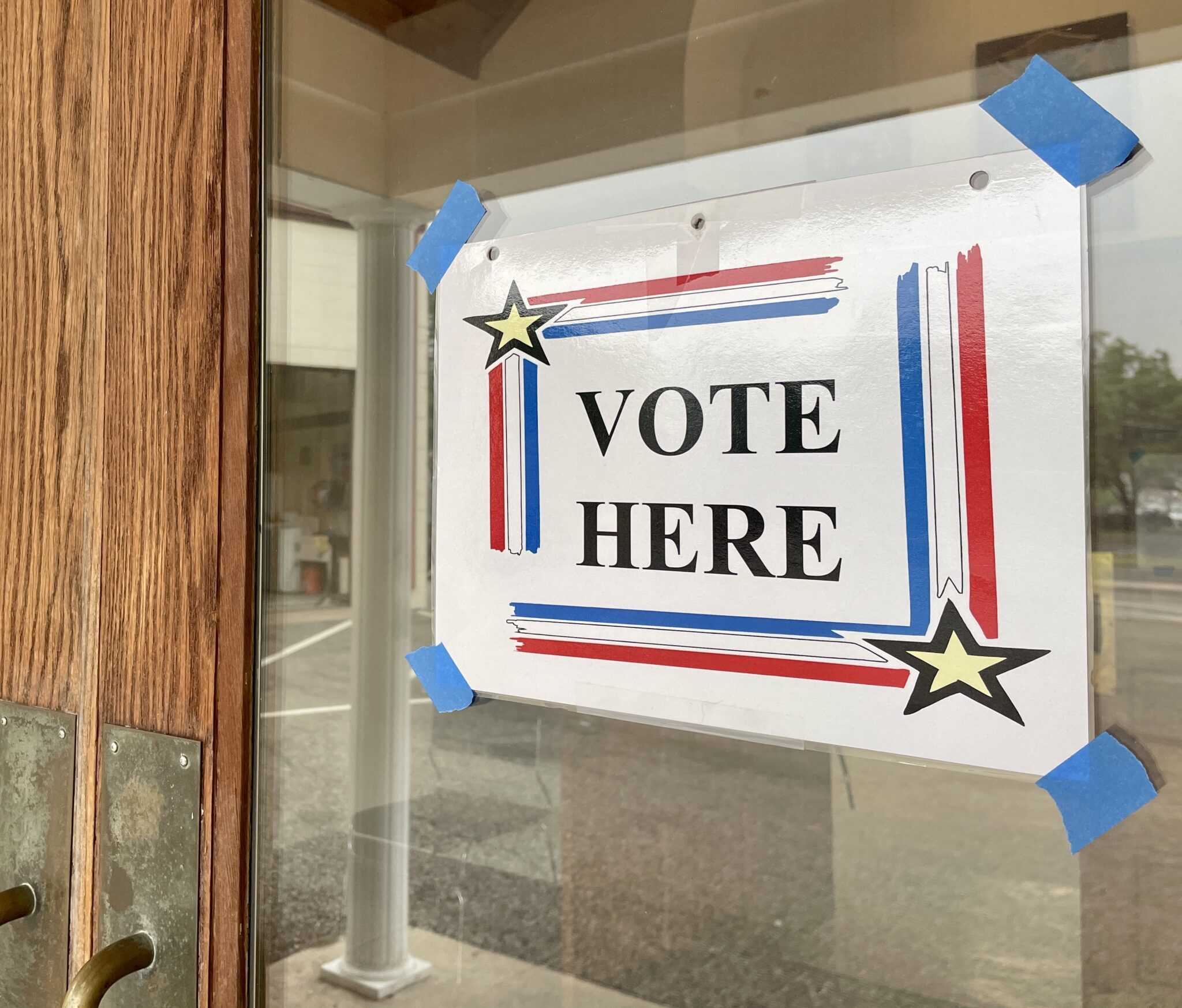
Twenty-three Ohio counties don’t have the minimum number of poll workers needed for Tuesday’s special election.
These counties don’t have enough poll workers as of Thursday morning: Ashtabula, Clermont, Columbiana, Coshocton, Defiance, Fulton, Greene, Harrison, Highland, Huron, Jefferson, Knox, Licking, Madison, Mahoning, Marion, Montgomery, Shelby, Stark, Trumbull, Van Wert, Warren, and Washington.
Currently, 32,310 poll workers have signed up to help, according to the Ohio Secretary of State’s Poll Worker Tracker. That surpasses the statewide needed minimum, but some counties haven’t met their local goal.
“While many Ohio counties have passed the minimum number of poll workers needed to conduct the election, Ohio Secretary of State Frank LaRose set a goal of 115% of the minimum needed to ensure a sufficient number of poll workers is available in every county in case of an unforeseen circumstances,” the secretary of state said in a news release.
Fifty counties have not met their goal for poll workers as of Thursday morning: Ashtabula, Athens, Auglaize, Butler, Clark, Clermont, Clinton, Columbiana, Coshocton, Darke, Defiance, Delaware, Erie, Fayette, Fulton, Greene, Hamilton, Hancock, Harrison, Highland, Huron, Jackson, Jefferson, Knox, Lake, Licking, Lorain, Madison, Mahoning, Marion, Meigs, Montgomery, Noble, Paulding, Pike, Ross, Sandusky, Scioto, Seneca, Shelby, Stark, Summit, Trumbull, Van Wert, Vinton, Warren, Washington, Wayne, Williams, and Wood.
Of those 50 counties, 27 have met the minimum requirements of poll workers needed.
Megan Henry is a reporter for the Ohio Capital Journal and has spent the past five years reporting in Ohio on various topics including education, healthcare, business and crime. She previously worked at The Columbus Dispatch, part of the USA Today Network.
David Miller is the Managing Editor of Loveland Magazine
by David Miller
Loveland, Ohio – Jane Gonzales from Loveland and Patty Lawrence from Miami Township sat with me this morning in the LOVELAND MAGAZINE TV studio to talk about current politics and the activities they have been engaged in in recent months in the community.
Both have circulated petitions to place a constitutional amendment on the Ohio ballot that they say if passed would protect women’s reproductive rights and health. The petitions they asked local residents to sign were earlier in the week delivered to the Ohio Secretary of State where it will be determined if the petitions contain enough valid signatures to place the amendment before voters in the November general election. (Ohio abortion rights supporters submit signatures for November ballot)
After Ohio citizens began collecting signatures, the Ohio legislature passed their own legislation, Issue 1, which will be before voters in a special election in August that directly affects the amendment both Lawrence and Gonzales have collected signatures for.
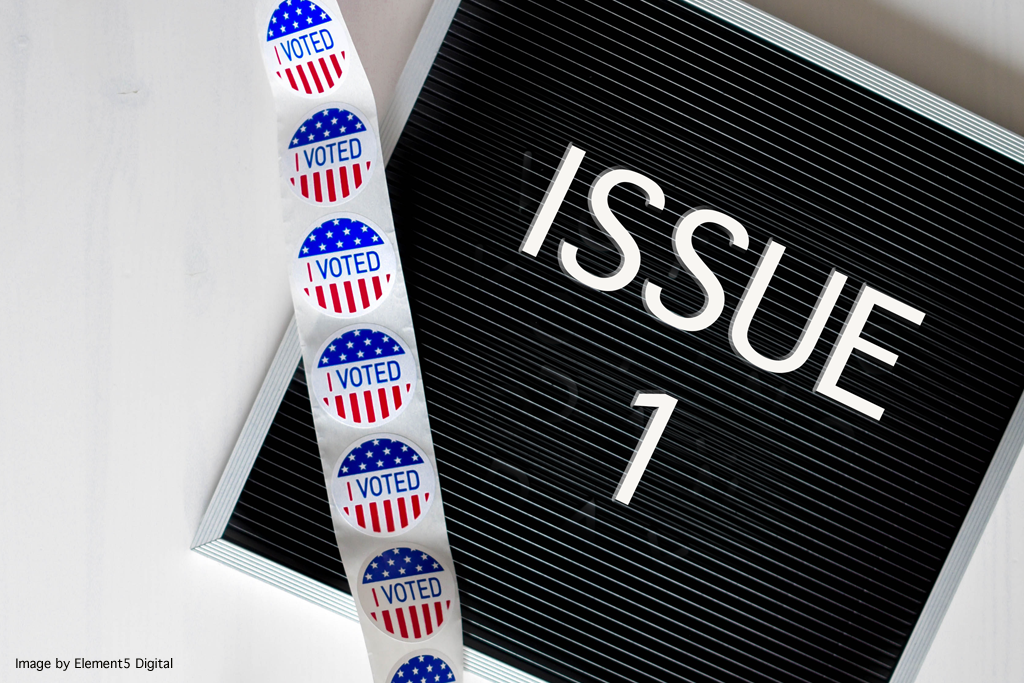
Issue 1 will be the only issue on the August special election ballot.
Loveland, Ohio – Loveland Magazine seeking Issue 1 proponents for a sit-down video interview in our LOVELAND MAGAZINE TV studio. Must be a Loveland Area resident and preferably actively working in the community to get Issue 1 passed.
Ohio Issue 1, is a ballot measure regarding the process for proposing and approving amendments to the Ohio state constitution. It will be before voters in a special election on August 8.
David Miller is the Managing Editor of Loveland Magazine
by David Miller
Loveland, Ohio – Jane Gonzales from Loveland and Patty Lawrence from Miami Township sat with me this morning in the LOVELAND MAGAZINE TV studio to talk about current politics and the activities they have been engaged in in recent months in the community.
Both have circulated petitions to place a constitutional amendment on the Ohio ballot that they say if passed would protect women’s reproductive rights and health. The petitions they asked local residents to sign were earlier in the week delivered to the Ohio Secretary of State where it will be determined if the petitions contain enough valid signatures to place the amendment before voters in the November general election. (Ohio abortion rights supporters submit signatures for November ballot)
After Ohio citizens began collecting signatures, the Ohio legislature passed their own legislation, Issue 1, which will be before voters in a special election in August that directly affects the amendment both Lawrence and Gonzales have collected signatures for.
Issue 1 will be the only issue on the August special election ballot.
The Ohio Chamber of Commerce is supporting a proposed amendment to the state Constitution that has huge implications for such issues as abortion, gun control, and even democracy itself.
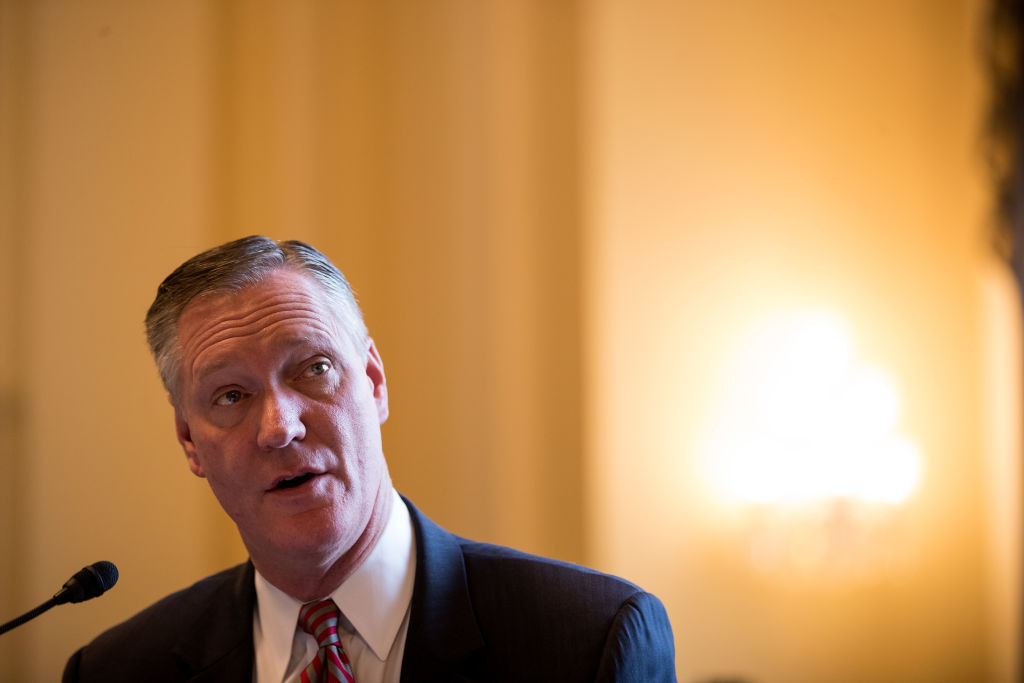
But Steve Stivers, president and CEO of the chamber, isn’t willing to talk about those things as his organization joins the effort to make it much harder for voters to amend the Ohio Constitution.
The Chamber last month came out in support of a proposal by Ohio’s Republican-controlled legislature that would make it far harder for voters to gather enough signatures to put a constitutional amendment on the ballot. It would also require a majority of at least 60% to pass it instead of the current 50%. In doing so, the Chamber is joining forces with Ohio Right to Life, the Buckeye Firearms Association, and an out-of-state, election-denying billionaire.
The measure, Issue 1, will be on the ballot Aug. 8 because Republicans in the legislature last month reversed a ban on such elections that they passed just last year because voter turnout in the dog days of summer is typically abysmal. In August 2022 it was 7.9%.
On May 11, Stivers issued a statement saying the Chamber takes no position on abortion rights — even though the measure it’s supporting is intended to block a voter-initiated abortion-rights amendment that is expected to appear on the November ballot. Stivers also said the group isn’t taking a position on other “social” issues that are popular with voters, but the Republican supermajority in the state legislature — declared an unconstitutional gerrymander multiple times by a bipartisan Ohio Supreme Court — seems determined to stymie.
“The Ohio Chamber Board voted today to take no position on the November election’s reproductive rights issue,” Stivers said. “The Ohio Chamber is a business association and takes positions on business issues, not social issues. While we support protecting our constitution in August, this has everything to do with subjects like minimum wage, employment at-will, and other business issues.”
That ignores businesses’ interest in avoiding unpopular legislation such as Ohio’s harsh abortion restrictions passed out of an extremely gerrymandered legislature. A survey conducted last August indicated that a third of job seekers wouldn’t even consider working in states with strict abortion limitations and that 27% percent of workers in states with the most restrictive abortion laws wanted to leave.
But Stivers, a former Republican congressman, has declined to discuss such things. Since issuing the May 11 statement, the Chamber hasn’t responded to requests for an interview with Stivers, and it ignored written questions that were sent as a follow-up.
Lack of transparency
The refusal of the state’s most prominent business organization to discuss the ramifications of a constitutional change it’s supporting adds another undemocratic layer to an initiative that already has many, said Catherine Turcer, executive director of Common Cause Ohio, which opposes State Issue 1. She said the Chamber and its members will sink lots of corporate money into the fight to cut voters’ power, but it doesn’t want to be open with them.
“One of the challenges with corporate donations and business organizations is that the money does the talking,” Turcer said. “It gets spent on elections, but we don’t hear directly from the people behind it. And we should expect to hear that because at the end of the day, a corporation doesn’t get to vote. At the end of the day, a corporation is an artificial entity. (Behind them are) human beings making decisions and we should understand what is happening. Or at least the press should have an opportunity to ask questions.”
The position the Chamber is taking in favor of State Issue 1 is out of step with four former governors of both parties, five former Ohio attorneys general, and more than 240 organizations — such as Turcer’s — who are adamantly opposed to the measure because they believe it would effectively lock Ohio voters out of their state Constitution.
The provision Issue 1 seeks to change was championed by former President Theodore Roosevelt as a way to force an unresponsive government to address the public’s concerns.
Adopted in 1912, it sets a high bar for voters to gain access to the Ohio Constitution. It requires supporters of an amendment to gather a large number of voter signatures (413,000 for the abortion-rights amendment planned for the November ballot) and it requires that a given number of them be gathered in each of 44 counties in the various regions of the state. After all that, it also has to gain a majority of the vote to become part of the Constitution.
Under Issue 1, Republicans in the legislature, anti-abortion groups, pro-gun groups — and the Chamber — want to require 60% of the vote for an amendment to pass, even as they try to pass the restriction under the current, 50% requirement. In other words, they’re trying to get a simple majority in a low-turnout Aug. 8 election to pass an amendment saying that a 40% minority can quash future amendments supported by 59.9% of Ohio voters.
Issue 1 “is a proposal to substantially diminish the most significant power held by the people, the power of initiative petition to amend the Ohio Constitution. Our Constitution leaves no doubt about this,” Ohio Supreme Court Justice Jennifer Brunner, wrote in a partial dissent published on Monday. She was dissenting because she thought the court didn’t go far enough in ruling that parts of Issue 1 are “likely to mislead voters.”
Like Brunner, Turcer argues that the effort to enhance the power of the gerrymandered legislature relative to the voters is undemocratic. And — along with former Republican Gov. Bob Taft — she argues that even from the standpoint of its supporters, the measure is shortsighted.
“It’s problematic that organizations decided to make it harder for citizens to change the Constitution because they don’t like specific policies. But it’s not always going to be 2023,” Turcer said. “There are a number of different ways we can improve the state and leaving that to a minority of Ohio voters is really scary. It’s really scary to think that a majority of voters — whether it’s 55% or 58% — approve of something, but they can’t actually put that policy in place.”
Misleading claims
Adding to accusations that the proposed change is anti-democratic are the misleading reasons proponents have given for needing it.
Stivers, Ohio Secretary of State Frank LaRose, and other proponents argue that voter access needs to be ratcheted down to “protect” the Ohio Constitution from monied out-of-state interests. But when he announced an earlier version of the measure last year, LaRose couldn’t point to any examples of such interests amending the Constitution in the past.
At the same press conference last year in which LaRose claimed he was trying to protect the Constitution, he also claimed that he was thinking long-term. He said he wasn’t trying to block the expected amendment protecting abortion rights.
The Republican majority members of the Ohio Redistricting Commission in 2021 and 2022. Top row from left, Ohio Gov. Mike DeWine and Secretary of State Frank LaRose. Bottom row from left Ohio Auditor Keith Faber, then-House Speaker Bob Cupp, and Senate President Matt Huffman. Official photos.
LaRose also denied that he wanted to foil another attempt by Ohio voters to stop extreme gerrymandering after he and other Republicans on the state Redistricting Commission ignored repeated orders by the state Supreme Court to follow earlier amendments passed with 70% of the vote. The Republican commissioners last year ran out the clock on the process and lawmakers in the consequently unconstitutional districts voted to put the amendment that would make it much harder for Ohio voters to amend the Constitution on the Aug. 8 ballot.
In her dissenting opinion Monday, Justice Brunner said that by ignoring constitutional prohibitions against gerrymandering, Republican leaders make it easy to come up with the needed votes for the legislature to put a constitutional amendment on the ballot while making it almost impossible for voters to do the same.
“If the General Assembly continues to ignore (anti-gerrymandering) orders of this court regarding the state legislative redistricting process, gaining a three-fifths vote should not be difficult for it to accomplish,” she wrote.
Lack of candor
Turcer of Common Cause said that business groups such as the Chamber ignore issues like gerrymandering at their peril. That’s because lawmakers from gerrymandered districts have every incentive to cater to the most charged-up elements of their base and ignore everybody else. It‘s an engine that produces extreme legislation that can prompt boycotts, protests and require businesses to provide special benefits to protect employees.
“The folks who do support Issue 1 and the special election clearly don’t care about gerrymandering — the manipulation of district lines to manipulate elections and policy,” Turcer said. “Gerrymandering has a profound consequence for our business leaders and the business community. It is extremely short-sighted to not think about how challenging it will be to do a citizen initiative with the news rules that are in place.”
LaRose again demonstrated in May that he was being less than forthright when he claimed his support for the effort was only out of concern for the future integrity of the Ohio Constitution, and not current fights over abortion and gerrymandering.
“That’s not what this kind of a change should ever be about,” LaRose said last November.
The lack of candor about their reasons for wanting to effectively lock Ohio voters out of the state Constitution seems to extend even to the name of the campaign committee supporting the measure: Save Our Constitution.
It’s possible that Stivers, the Chamber, and other business interests are narrowly focused on stopping a minimum wage hike to $15 an hour — which enjoys the support from 60% of the public.
The Chamber might also be responding to pressure from legislative Republicans. The Cleveland Plain Dealer reported that GOP leaders last month put the arm on corporate lobbyists to contribute to the Issue 1 push as they draw up a multi-billion dollar state budget that is of great interest to the companies the lobbyists represent.
Either way, Turcer said, the Chamber and its members are trying to water down democracy for their own, narrow purposes.
“For political expediency, they would like to make it harder for us to participate in direct democracy,” she said. “They would prefer to dilute the power of voters rather than promote their own policy agenda with voters.”
MARTY SCHLADEN
Marty Schladen has been a reporter for decades, working in Indiana, Texas and other places before returning to his native Ohio to work at The Columbus Dispatch in 2017. He’s won state and national journalism awards for investigations into utility regulation, public corruption, the environment, prescription drug spending and other matters.
Less than half a year after proclaiming August elections to be too expensive for the turnout they attract, the Senate Republican majority expanded the use of a special election this year, complete with $20 million in funding.
“This is legislative whiplash, and we do it really well here in Columbus,” said state Sen. Kent Smith, D-Euclid.
In a mostly party-line vote, Senate Bill 92 was passed Wednesday by the body. The only Republican to vote against SB 92 was state Sen. Nathan Manning, R-North Ridgeville.
The vote came immediately after the state senate also passed an increase in the threshold for passing a constitutional amendment from 50% to 60% along party lines.
The threshold bill, SJR 2, is a companion bill to HJR 1, which has been making its way through the Ohio House, but has yet to come up for a floor vote. The House resolution passed its committee after three hours of testimony on Wednesday, most of which spoke in opposition to the bill.
Both bills could lead to a ballot measure where voters would approve or deny a constitutional amendment to raise that threshold.
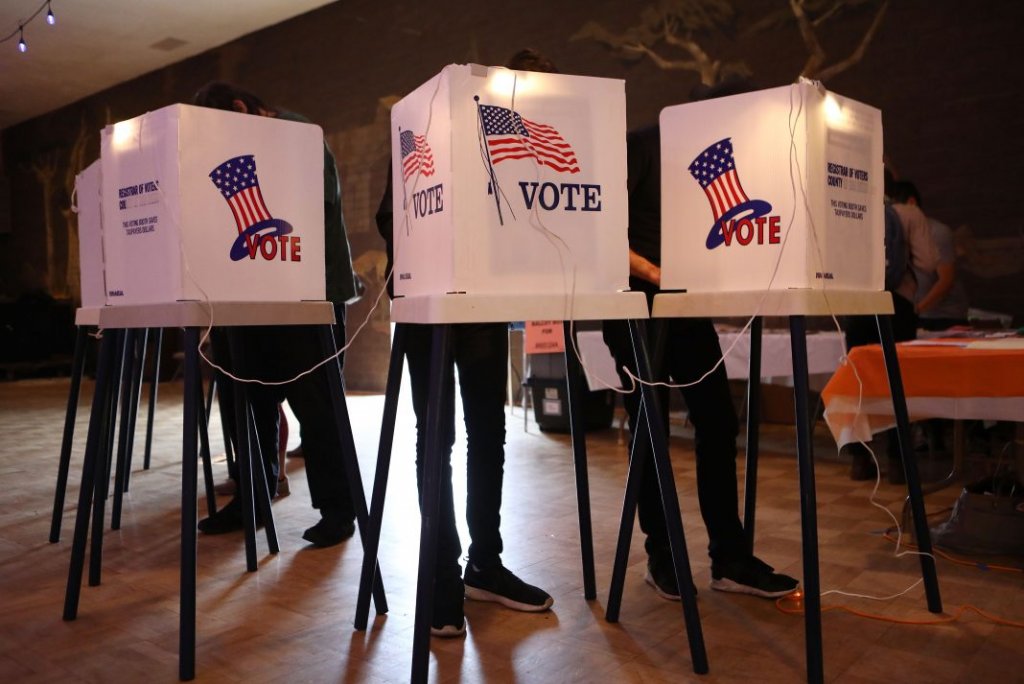
With the approval of SB 92, August special elections will now be held “for consideration of a General Assembly proposed constitutional amendment,” to fill a congressional vacancy or hold a special primary for congressional party candidates.
The bill also appropriates $20 million to conduct “a one-time August special election on August 8, 2023,” a funding influx made while the bill was in committee.
That August election would be to send a constitutional voter threshold to the ballot for voters to approve an legislature-initiated amendment to raise the threshold from 50% to 60%.
Republicans pushed back on comparisons between previous August elections, including last year’s that saw an abysmal 8% turnout, with the argument that this time around, voters will care.
“With this being a bonafide, statewide question, and with it being an important question … I would say the turnout is going to be markedly higher in this August election,” McColley told his colleagues on the Senate floor.
The legislative measures seem to be direct hits at a potential constitutional amendment that would codify abortion rights if it makes it to the ballot box and is approved by voters in November. Abortion rights advocates are currently collecting the needed signatures. State law currently requires more than 400,000 in 44 of the 88 states.
One of the pro-abortion rights groups helping with the ballot measure, Pro-Choice Ohio, called the passage of SB 92 “both expected and incredibly disappointing” in a post on Twitter.
Last year, after redistricting confusion rocked the legislature, Republicans all-but eliminated the August election in a move that they said would save the state money and get rid of an unneeded annual election date that historically had low voter turnout.
In August of last year, the special primary election included statehouse races because the redistricting maps were rejected by the Ohio Supreme Court before they could be included in the May election. A U.S. District Court then intervened in the legal snarl that swept up the redistricting process, and allowed the state to use a map previously deemed unconstitutional by the Ohio Supreme Court as the map for the August primary.
That map is still in effect currently.
Speaking in opposition for SB 92, state Sen. William DeMora, D-Columbus, quoted Ohio Secretary of State Frank LaRose who spoke in support of reducing August special election usage last year, when he said they “aren’t good for taxpayers, election officials, voters or the civic health of our state.”
“(SB 92) is so bad that (LaRose) Secretary LaRose couldn’t even find the time to come and testify about it in committee,” DeMora said.
State Sen. Theresa Gavarone, R-Bowling Green, said claims that the August special elections were eliminated last year was an exaggerated claim.
“We’re not reinventing the wheel on this legislation,” Gavarone said, pointing out that certain occasions allowed for an August special election.
SB 92 now moves to the House for consideration.
_____________________
Susan Tebben is an award-winning journalist with a decade of experience covering Ohio news, including courts and crime, Appalachian social issues, government, education, diversity and culture. She has worked for The Newark Advocate, The Glasgow (KY) Daily Times, The Athens Messenger, and WOUB Public Media. She has also had work featured on National Public Radio.




![[Video Interview] Jane Gonzales and Patty Lawrence talk about reproductive and voting rights ballot issues](https://lovelandmagazine.com/wp-content/uploads/2023/07/patty-jane-1.jpg)




 Susan Tebben is an award-winning journalist with a decade of experience covering Ohio news, including courts and crime, Appalachian social issues, government, education, diversity and culture. She has worked for The Newark Advocate, The Glasgow (KY) Daily Times, The Athens Messenger, and WOUB Public Media. She has also had work featured on National Public Radio.