Symmes Township resident and Great Oaks Director of Student Services Nancy Mulvey was honored this month with the Distinguished Service Award from the National Council of Local Administrators NCLA, a national association for career and technical administrators. She was recognized for her service to career-technical education and for her professional accomplishments.
Mulvey has served the students of Great Oaks Career Campuses for more than 30 years as a math teacher, counselor, career specialist, campus dean, and district administrator. In her current role as Director of Student Services, she has strengthened both physical health and mental health services for students, led the effort to rewrite Board policies, began a summer camp program for younger students, and helped guide the district to record levels of high school enrollment.
The nomination read in part, “Nancy recognizes best practices in the field, and shares, adapts, and improves those practices to benefit current and future students as well as the organizations she serves. She freely shares her own ideas and innovations and champions those practices that others have developed, for the benefit of career-technical education as a whole.”
The award was presented virtually during the NCLA Best Practices Conference, which was held online this year.
“When we try to pick out anything by itself, we find it hitched to everything else in the Universe,” John Muir, a transcendentalist, wrote of nature’s connectedness in his 1911 book, My First Summer in the Sierra.
In 1997, Nature journal published ecologist Suzanne Simard’s Ph.D. theses, describing newfound proof of how plants within communities can be interconnected through an underground system, called a mycorrhizal network, to interact with each other.
This is Part 2 of a series Loveland resident and Ohio University student, Joe Timmerman wrote for The Post in Athens, Ohio. The Post is an award-winning, student-run media outlet that publishes online daily and also prints a weekly tabloid. They cover local and Ohio University news, sports, Athens life, entertainment and everything in between. The series is re-published here in Loveland Magazine with permission of The Post and Loveland High School graduate, Joe Timmerman a frequent contributor to Loveland Magazine.
“All trees all over the world, including paper birch and Douglas fir, form a symbiotic association with below-ground fungi … They compete with each other, but our work shows that they also cooperate with each other by sending nutrients and carbon back and forth through mycorrhizal networks,” Simard said in an interview with Yale Environment 360.
In this sense, trees communicate with one another on a deeper level than what is seen in the overstory and the understory of a forest.
From mothers and fathers sharing memories of trees they have grown to love with their kids to a lifelong woodworker who discovered a new relationship with wood as time went by, people are connecting with nature in new and old ways, as COVID-19 has brought a global feeling of social disconnection. People and their trees alike have a story to be told.
Phil Ping and his dog, Bandit, of Loveland, Ohio, with his logs and boards of maple, oak, walnut and pine. Ping has been a full-time woodworker for 35 years and has lived in his home for the same amount of time. The wood in the foreground are boards and slabs he cut from the logs that now have to air dry for one year per one-inch thickness before Ping will make them into tables, benches, shelves and more.
“The wood in the piles here are just waiting for their project,” Ping said. “Most of the wood I use in my built-in projects is from Paxton Lumber in Cincinnati. I use a lot of poplar, oak and maple. I use a sawmill to custom-cut local wood from dead trees that people bring by the shop. It’s been a great business to be in. Wood is a wonderful thing. I have a degree in agriculture, but I started in botany, so I’ve always loved plants and trees and have a real appreciation for trees and different species. When I first got my sawmill, it really changed my whole attitude for trees, so now not only do I love the outside, but I started to take them apart and learn how to use them in my craft. It’s been an ongoing relationship knowing how to handle the wood from the log all the way to the finished piece that I would sell to a client.”
Part 3 will introduce you to Iris Wilson of Hamilton Township, Ohio, with her pin oak tree. Wilson takes care of her dad, who still lives in this farmhouse.
Jake Zuckerman is a statehouse reporter. He spent three years chronicling the West Virginia Legislature for The Charleston Gazette-Mail after covering cops and courts for The Northern Virginia Daily.
This story was written by Jake Zuckerman with local news added by Loveland Magazine staff.
–
Thursday was Ohio’s worst day of the pandemic and all evidence suggests things are likely to worsen, according to interviews and new state data.
Nearly 2,200 new COVID-19 infections were reported Thursday, the state’s third record breaking day last week.
There were 1,041 Ohioans in the hospital with COVID-19 — about 100 shy of the all-time high set in late July. The COVID-19-hospitalized population has nearly doubled since mid-September.
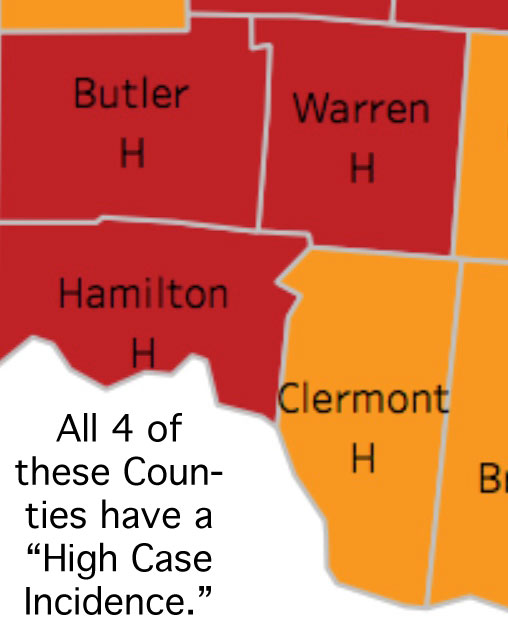
A “Public Emergency” has been declared in RED counties – with very high exposure and spread.
On Thursday, Governor DeWine released Ohio’s updated Public Health Advisory System map. New health data compiled by the Ohio Department of Health found that 29 counties currently have a very high risk of exposure and spread (Level 3): Hamilton, Butler, and Warren are among the “RED” counties.
“We’ve gone up dramatically in a relatively short period of time,” Gov. Mike DeWine said to reporters Thursday.
“What you’re seeing in today’s numbers should get our attention,” DeWine said. “There’s a red tide flowing all over the state of Ohio.”
Thirteen new counties turned red this week indicating “very high exposure and spread” on the Ohio Public Health Advisory System — a product of seven inputs like hospital visits, outpatient care visits in a county, population-adjusted infection rates and others. Twenty-nine counties are red, spanning about two-thirds of the state’s population.
“What you’re seeing in today’s numbers should get our attention,” DeWine said. “There’s a red tide flowing all over the state of Ohio.”
DeWine said some of the newly-turned red counties are slated to host community events like political rallies, pub crawls and social gatherings and that “now is really the time to rethink whether these are in the best interest of the community.”
He did not address his own administration’s decision to exempt recent rallies for President Donald Trump from the statewide mask requirement.
While DeWine said there are no plans in store for any kind of statewide stay-at-home order, he declined to promise against instituting the policy down the line.
All told, nearly 176,000 Ohioans have contracted COVID-19. Nearly 17,000 have been hospitalized, and 5,038 have died since March.
In red counties, health department staff said they continue to see spread at family gatherings like bonfires, birthday parties and barbeques.
Jennifer Hiestand, a public information officer at the Zanesville-Muskingum County Health Department, estimated 60% of people in public are wearing masks. Contact tracers have found “mini outbreaks” that are seemingly the result of people letting their guards down.
In red counties, health department staff said they continue to see spread at family gatherings like bonfires, birthday parties and barbeques.
“People just made the decisions not to social distance or not to wear a mask, those things that they probably should have,” she said.
Mahoning County Health Commissioner Ryan Tekac said he is seeing a lot of the county’s progress this summer start to erode as cold weather drives people inside.
“I think there are some concerns right now that individuals are putting their guards down,” he said.
Ohio’s recent case surge fits in with a national trend. The New York Times reports cases are trending upward in 41 states, especially in the Midwest.
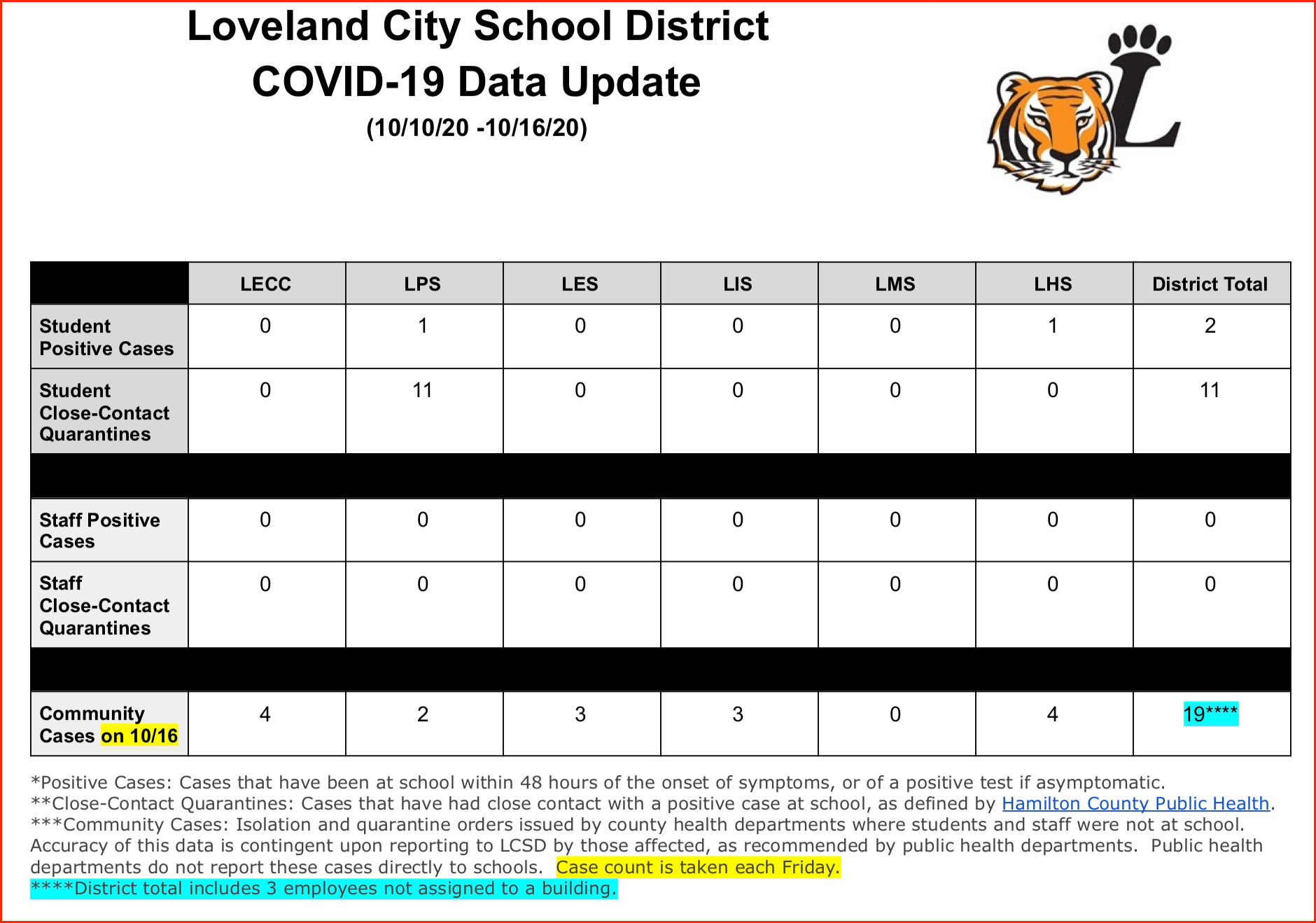
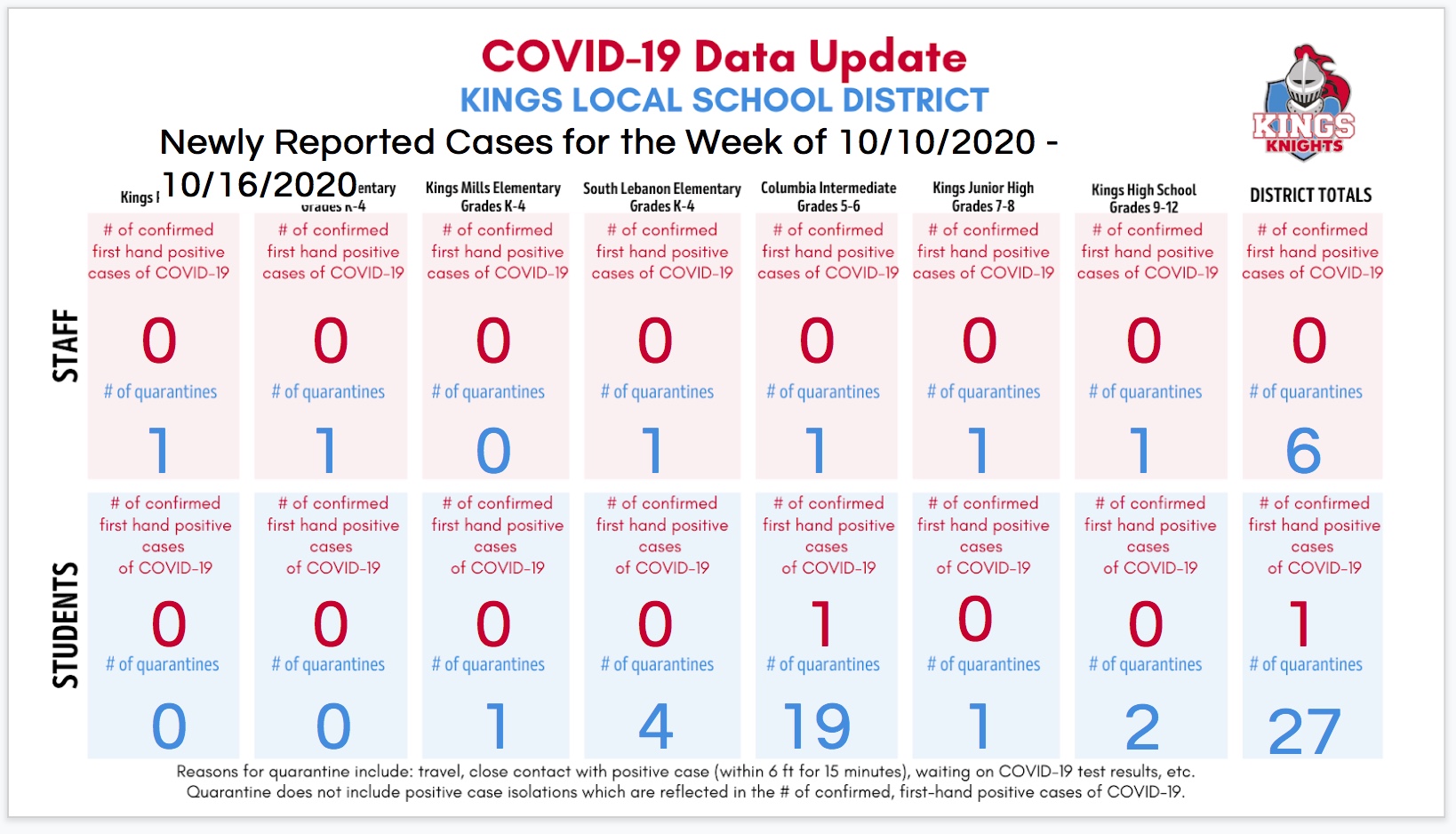
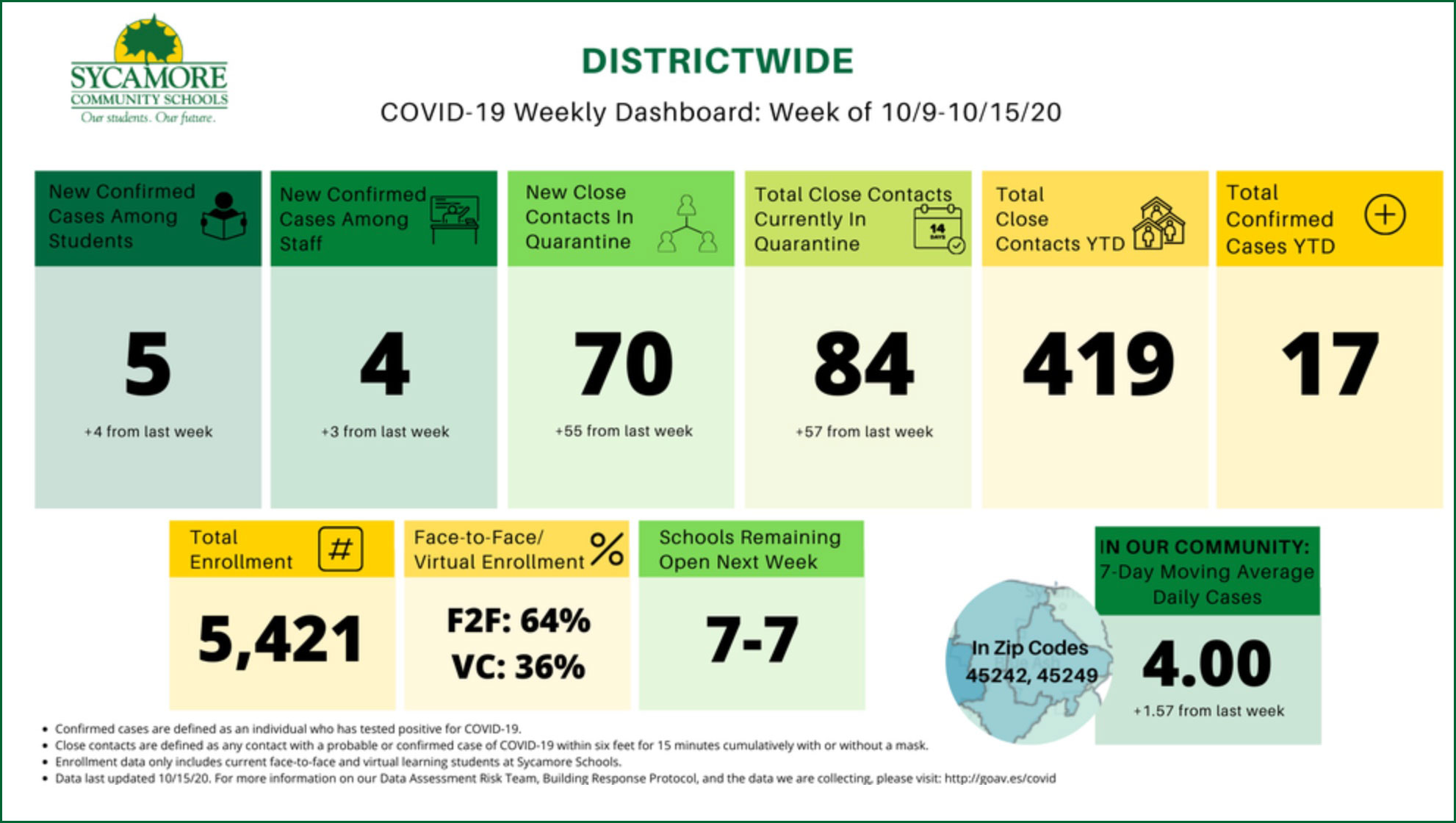
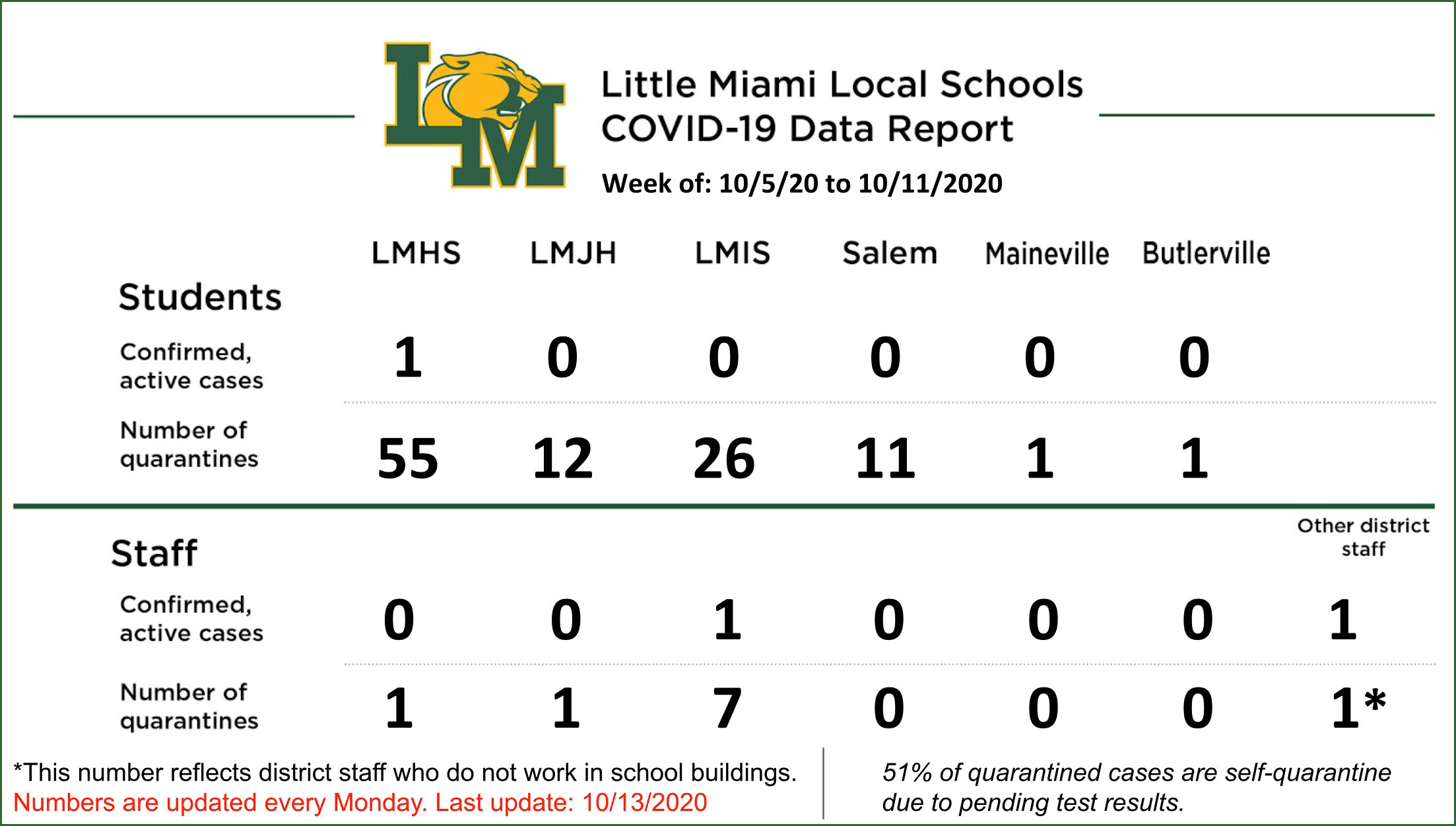
Sycamore Aves mom reminds us of the importance to stay home if you’re experiencing COVID-19 symptoms. These next few weeks will be crucial. Please do your part so we can stay in school!
Two holidays are coming up that will test Ohio’s public health discipline — Halloween and Thanksgiving.
Tekac said there’s a lot of concern, especially with Thanksgiving, about the potential for outbreaks. However, he said people know the guidance; wear masks, keep your distance, wash your hands, outside is better than inside.
He said at a certain point it comes to individuals making their own good decisions.
Dr. Anthony Fauci, the top infectious disease expert at the National Institute of Health, told CBS News it’s an “unfortunate fact” that Thanksgiving will cause a lot of spread and suggested skipping out on the tradition this year.
“I think given the fluid and dynamic nature of what’s going on right now and the spread and uptick of infections, I think people should be very careful and prudent about social gatherings,” he said.
Loveland, Ohio – City Council voted to move ahead with the sale of the city-owned Christman Farm on Butterworth Road after a public hearing on October 13. Taxpayers bought the former Warren County horse farm from Terry and Mary Christman in 2007 for $800,000. The property is within the boundary of the Little Miami School District. Loveland Schools will receive no property tax income from the development.
The next Community Improvement Corporation Meeting is at 5:30 PM Tuesday, October 20. The sale of the Christman Farm property is on their agenda.
The property consists of 9.8389 acres. The developer of the property will be the Campbell Berling Development Company. The proposed use of the property is for a single-family residential development of “no more” than 35 single-family homes. The company address is 333 Madison Pike, Suite C in Ft. Write Kentucky. The owner of the property will be CB Butterworth, LLC.
CB Butterworth, LLC was incorporated on September 16. Here is the business filing: Business_Details.
City Manager Dave Kennedy started the public hearing by spelling out what he believes are the advantages of the sale. Kennedy said that most of the “Estate Homes” will sell in the $1.2 M range with side entry garages. The empty-nester homes to be on the Christman Farm would not be built until after the 2022 HOMEARAMA was over. Kennedy said that Council wanted him to come up with a home product they could be proud of.
Kennedy proposed the transfer of the 9.8 acres to the Loveland Community Improvement Corporation (CIC) for eventual purchase by CB Butterworth, LLC, and prepared the legislation that was presented to City Council as an emergency measure. Emergency legislation cannot be overturned at the ballot box as they become effective immediately. Kennedy said the urgency was so he could begin constructing the sewers that will serve the development as soon as possible.
Bethany Wiegand spoke about the ways the proposal will affect her home and urged the Council to address traffic problems. She said it currently take her 20-25 minutes to leave her home in Butterworth Glen and get through the traffic in Historic Downtown. Wiegand grew up in Loveland, moved back – and asked that Council take care of the people that already live here and have already invested in the City. “Let’s solve the current issues for the current residents like myself,” said Wiegand. She also expressed interest in having a park on the property so she doesn’t have to go through Historic Downtown to use other recreation spaces.
Kennedy said in a memo to Council on October 13, “Per City regulations, all funds from the sale of the property from the CIC to CB Butterworth, LLC, will be transferred back to the City.” The sale will be contingent upon Planning and Zoning Commission approval of a re-zone to a Special Planning District.
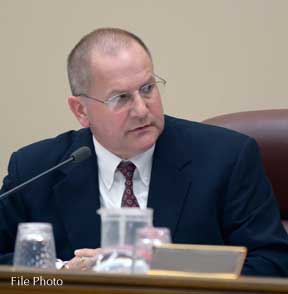
Loveland City Manager Dave Kennedy (Loveland Magazine file photo)
There will be a request for a zone change and the “Estate” homes built on the Crane property will be a 2022 HOMEARAMA site.
CIC has been presented with a draft “Real Estate Purchase Agreement”.* $5,000 in earnest money will be due upon execution of the agreement. The sale will be continent upon Planning and Zoning Commission approval of a re-zone to a Special Planning District. The purchase price will be $350,000.
HOMEARAMA is an annual event that is billed as the “latest and greatest” in home and landscape design.
HOMEARAMA® offers you the opportunity to not only see the latest trends in home design and decorating, but also learn why buying a new home continues to represent an excellent value. Today’s new homes offer the latest trends in technology and more energy-saving features than ever before.
(Right-Click to open these images in a new tab or window to see a larger view.)
Resident Todd Osborn spoke in favor of the sale during the public hearing.
Taxpayers originally bought a total of 10.737 acres. The justification given at the time was that it would be the last chance for Loveland to have recreation space in fast-developing southern Warren County. In 2010, 0.8981 acres of the property, which included a home, was portioned off and sold to Judith Lund for $102,000.
A Recreation Tax Increment Financing District (TIF) was created by Ordinance 2008-38 to pay off the financing. The TIF consists of approximately 27 acres and includes the taxpayer-owned property known generally as the Christman Farm as well as the Crane property which is privately owned.
The Christmas Farm and the Crane properties are within the boundaries of the Little Miami School District. City Manager Dave Kennedy told Loveland Magazine on Friday that the District is “made whole” by the Recreation TIF. He said, “ Little Miami School District receives 100% of revenue as if there had been no TIF.” Read the TIF ordinance that Council passed in 2008. REC TIF
The TIF provides financing for the property purchase that the City recoups through increased property tax revenues generated from future development within its boundaries. Kennedy said during the public hearing that the debt service that has been paid out of the general fund over the years is $632,000 and that when the TIF funds start coming into the Recreation TIF fund, it will be transferred back out and returned to the general fund. He said that to finish the debt service will require an additional $347,000.
Tom Carroll, the City Manager at the time of the purchase, said, “The City will continue to slowly retire the debt on this property and the remaining ten acres of the Christman Farm will be land-banked until the Crane property is developed and a municipal park can be constructed. Continued patience is therefore necessary before Loveland can build its first park in Warren County.”
Taxpayers have been paying around $50,000 annually in debt service for the Christman Farm purchase.
In their offer letter, Campbell Berling says the development will have a buildout value of $25,250,00 with an assessed valuation of $6,860,000.
Campbell Berling will be paying $350,000.00 for the land. They plan to build fifteen $550,000 and up “empty nester” homes on the parcel they would like to buy from Loveland taxpayers. The lots would be between 11,000 and 18,000 sq. ft.
The Crane property would have 20 homes and two styles of “Estate Homes” valued at $850,000 and up on lots that would average 32,000 sq. ft.
Campbell Berling is proposing that future homeowners be allowed to pay the cost of sewer line extensions over 20-years.
Access to the development would be from Butterworth Road across from the Brandywine subdivision. The developer already has a “Crane family property”, parcel number 16074000240 under a purchase contract.
There have been 57 previous HOMEARAMA showcases
The 28th was in 1989 at The Glen of Claiborne(Loveland)
The 29th was in 1990 at Chatham Woods (Symmes Township)
After the public spoke about the sale council members asked questions to the City Manager and shared their views before voting unanimously to transfer the land to the CIC leading the way for the sale. Kennedy outlined a possible timeline of CIC action, constructing the sewers, and Planning and Zoning Commission approval. Kennedy suggested that the $350,00 taxpayers receive from the sale could be used to improve traffic in Historic Downtown, instead of repaying the principal on the current loan.
Section 4 of the emergency legislation states:
That this Ordinance is hereby declared to be an emergency measure necessary for the immediate preservation of the public peace, health, safety and general welfare and shall be effective immediately upon its passage. The reason for said declaration of emergency is to allow for the property to be transferred and sold as soon as possible so that infrastructure can be installed to allow for its development for the benefit of the City.
The CIC is a quasi-government arm of the City. Once they take possession of the land their actions are not subject to Council approval and their actions cannot be overruled by a vote at the ballot box.
CIC Members
Jay Stewart, Chair
Kathy Bailey, Mayor
Neal Oury, City Council Member
Kent Blair, City Council Member
Dr. Jeffrey Kemmet, Chamber Representative
David Parker
Michele Pettit, Board of Education Representative
A 2007 proposed development, Summit Pointe, was for 70 attached units, and later reduced to 58 units, however, it never came to fruition.
Kennedy in a memo to City Council said, “Proposals also included multiple high-density townhome type projects which would be rental occupied. These proposals were never accepted, due to the fact that City Council and staff did not see high density, much less rental type projects, as a good fit for the surrounding neighborhoods of Brandywine on the Little Miami and Butterworth Glen.”
Kennedy says in the memo that he and staff met with numerous Cincinnati area home builders in the hopes of creating a low-density project, and that one message from the developers that continued to surface was that the cost of bringing utilities to the properties was expensive. Therefore, most developers saw a higher density project as a way to recoup those expenses.
“With that consistent message from developers, and a low-density project clearly being the choice of City Council and staff, a possible option was created,” said Kennedy. The option is to include the City extending the sanitary sewer collection main up State Route 48 to the properties and placing an assessment on the parcels within the residential development so that the City would be reimbursed for the project costs.
An assessment on each parcel, for 20 years would allow for Loveland taxpayers to recoup their subsidy of the sanitary sewer main extension and to the Campbell Berling Development Company. Kennedy has not said what the sewer extension will cost nor said how the initial sewer construction will be financed. It remains unclear if Loveland taxpayers can recoup the cost of borrowing money for sewer construction.
After the taxpayers bought the land to be used as recreation and formal proposals for how it would be developed as ballfields and passive recreation came forward, opposition from many in the Brandywine subdivision doomed its development. Traffic concerns and “strangers” coming to a public park in their neighborhood distressed many homeowners. Many said they did not want to come across strangers as they were on walking trails and said they would not let their children play where strangers would be using the public park as well. Currently, anyone wishing to use city or school recreational fields, tennis and basketball courts, etc., in the immediate neighborhood must drive through Historic Downtown to facilities in Clermont or Hamilton County.
Kennedy told Council, “The proposed legislation, (was) being requested as an emergency to allow infrastructure work and planning to begin immediately.” Normally passed ordinances must be read at two separate council meetings and don’t become law until 30-days after the vote at the second meeting.
The developer wants to rezone all of the property as a Special Planning District which would require Planing and Zoning Commission and City Council approval.
Kennedy presented this “Fiscal Impact” study in the package of information he presented to City Council:
The agreed purchase price for the property is $350,000. As the project begins to develop it will begin to produce TIF revenues until the TIF expires in 2037. TIF revenue is calculated based upon an increasing scale as the development is completed and placed on the tax rolls. After the development is completed, TIF calculations include a 0.5% to 1% appreciation over the life of the TIF. Based on these calculations, the TIF at buildout, will produce revenue for the City in the range of $135,000 to $143,000 annually. If the project goes as scheduled, it will produce a total revenue over $2,000,000 to the City over the life of the TIF. A summary of projected TIF revenues to the City is shown below.
Ordinance 2020-_____
Ordinance transferring the real property on Butterworth Road located in the City of Loveland, Warren County, Ohio to the Community Improvement Corporation of Loveland and declaring an emergency
WHEREAS, the City of Loveland (the “City”) desires to see certain undeveloped real property owned by the City located on Butterworth Road known as Parcel No. 16072000550 used for a combination of residential and recreational purposes; and
WHEREAS, the City has determined that the Property is no longer needed for municipal purposes; and
WHEREAS, the Property should be transferred to the Community Improvement Corporation of Loveland without competitive bidding pursuant to Codified Ordinance Section 107.01(f) to dispose of as that organization shall best determine; and
WHEREAS, City Council conducted a public hearing on October 13, 2020 as to the disposition of the Property.
Now, Therefore, Be It Ordained by the Council of the City of Loveland, Hamilton, Clermont and Warren Counties, Ohio.
Section 1. Council of the City of Loveland (“City Council”) hereby determines that the undeveloped real property located on Butterworth Road known as Parcel 1607200055 and further described in Exhibit A attached hereto (the “Property”) is no longer needed for municipal purposes.
Section 2. City Council hereby authorizes the Property be transferred to the Community Improvement Corporation of Loveland to be used to promote the welfare of the people of the City, stabilize the economy, provide employment, assist in the development of industrial, commercial, distribution, and research activities to the benefit of the people of the City, provide additional opportunities for their gainful employment or will promote the reclamation, rehabilitation, and reutilization of vacant, abandoned, tax- foreclosed, or other real property in the City. The City Manager is authorized to execute any and all documents on behalf of the City consistent with this transfer.
Section 3. Council hereby finds and determines that all formal actions relative to the passage of this legislation were taken in an open meeting of this Council, and that all deliberations of this Council and of its committees, if any, which resulted in formal action, were taken in meetings open to the public, in full compliance with applicable legal requirements, including Section 121.22 of the Ohio Revised Code.
Section 4. That this Ordinance is hereby declared to be an emergency measure necessary for the immediate preservation of the public peace, health, safety and general welfare and shall be effective immediately upon its passage. The reason for said declaration of emergency is to allow for the property to be transferred and sold as soon as possible so that infrastructure can be installed to allow for its development for the benefit of the City.
* DRAFT
REAL ESTATE PURCHASE AGREEMENT
This Real Estate Purchase Agreement (“Agreement”) is entered into this _____ day of October, 2020, by and between the Community Improvement Corporation of Loveland, an Ohio not-for-profit corporation, whose address is 120 West Loveland Avenue, Loveland, Ohio 45140 (“Seller”), and CB BUTTERWORTH, LLC, an Ohio limited liability corporation, whose address is 3333 Madison Pike, Suite C, Ft. Wright, Kentucky 41017 (“Buyer”).
WITNESSETH:
1. Purchase and Sale: Subject to the terms, conditions and provisions hereinafter set forth, and good and valuable consideration, the sufficiency of which is hereby acknowledged, Seller agrees to sell and Buyer agrees to purchase a certain parcel of land containing approximately 9.8389 acres, known as Parcel No. 1607200055 and located in the City of Loveland, Warren County, Ohio, more particularly described in the attached Exhibit A, together with all improvements thereon and all appurtenant rights, privileges and easements (“Property”).
2. Purchase Price and Terms: The purchase price for the Property (“Purchase Price”) shall be Three Hundred Fifty Thousand and No/100 Dollars ($350,000.00). The Purchase Price shall be paid as follows:
a. Buyer shall pay the amount of Five Thousand and No/100 Dollars ($5,000.00) upon the execution of this Agreement as earnest money (“Earnest Money”) to apply toward the Purchase Price, and the Earnest Money shall be held by the Seller, without interest, pending the closing of the transaction contemplated herein. Except as otherwise provided herein, if the transaction contemplated herein does not close for any reason, other than the title to the Property not being marketable or a default by Seller, the Earnest Money shall be retained by Seller as liquidated damages and Buyer shall not be entitled to a refund of the Earnest Money; and
b. The balance of the Purchase Price shall be paid in cash or certified or cashier’s check, and shall be payable upon delivery of the deed at the closing time set forth herein, or at such sooner time as is mutually agreeable by the parties.
3. Property to be Conveyed: The Property shall include the land, together with any improvements thereon, all appurtenant rights, privileges, and easements.
4. Personal Property. No personal property shall be included in the sale of the Property.
5. Closing:
a. The closing shall occur at the location selected by Seller, on or before thirty (30) days after Buyer obtains zoning as provided for in paragraph 8, or May 7, 2021, whichever occurs sooner, or at such date, time and place as mutually determined in writing by the parties. At closing, title to the Property herein described shall be conveyed by Seller to Buyer, by a General Warranty Deed, in fee simple, and shall be transferable, recordable, marketable and shall be free, clear and unencumbered, and shall be subject to easements, restrictions and reservations of record, and real estate taxes and assessments of record.
b. Buyer shall be responsible for payment of any and all fees or costs of closing with respect to the Property, including, but not limited to, transfer taxes (if any), escrow fees, settlement fees, and recording fees.
6. Real Estate Taxes and Assessments: All real estate taxes and assessments, if any, shall be prorated effective as of the date of closing.
7. Occupancy and Possession: Subject to further terms, conditions, and provisions of this Agreement, Seller shall grant Buyer possession and occupancy of the Property herein described on the date of closing.
8. Contingencies: The purchase of the Property is contingent on Buyer obtaining zoning approval to the satisfaction of the Buyer from the City of Loveland for the construction of a single family residential development. Any such zoning shall include an obligation for payment of the sewer assessment provided for in paragraph 9 of this Agreement.
Buyer shall have the right to enter the Property and conduct any environmental testing deemed necessary by Buyer for Buyer’s proposed use of the Property. In the event the Property is not able to be used for Buyer’s proposed use of the Property as a result of any environmental conditions discovered prior to Closing, Buyer shall have the right to terminate the Agreement.
9. Sanitary Sewer Assessment by the City of Loveland: It is understood and agreed to by the Buyer that there shall be a twenty (20) year assessment placed on the Property as a lien, or on each of the parcels making up the Property if it is subsequently subdivided by Buyer, for all costs and fees associated with the construction of a sanitary sewer line by the City of Loveland to provide sanitary sewer service to the Property. The payment of the sewer assessment shall be due and payable to the City of Loveland by each property owner located within the Property.
10. Warranties and Representations: Seller makes no certifications of any representations or warranties with respect to the Property; as such, the Property is being sold “AS-IS, WHERE-IS AND WITH ALL FAULTS”, and without any representation and/or warranty from Seller whatsoever. Notwithstanding the above, Seller represents it is not aware of any adverse environmental conditions on the Property.
11. Brokers: Buyer and Seller each hereby represent to the other that it has not involved or worked with any brokers, agents or finders in the negotiation of this Agreement or the consummation of this transaction and that there are no brokers, agents or finders that have any right to claim a commission or fee due to the consummation of this transaction.
12. Notice: All notices, communications, requests, approvals, consents, and demands are herein required to be given or made in writing and shall be deemed to be served when delivered personally or when deposited in the U.S. mail, registered or certified mail, postage prepaid, to the address of the appropriate party as set forth above.
13. Miscellaneous:
a. Time of Essence: Time is of the essence hereof. 2
b. Governing Law: This Agreement is made and shall be construed under and in accordance with the laws of the State of Ohio without regard to its conflicts of law principles.
c. Entire Agreement; Modification: This Agreement supersedes all prior discussions and agreements between Seller and Buyer with respect to the Property and contains the sole and entire understanding between Seller and Buyer with respect to the Property. All promises, inducements, offers, solicitations, agreements, commitments, representations, and warranties heretofore made between such parties are merged into this Agreement. This Agreement shall not be modified or amended in any respect except by written instrument executed by or on behalf of each of the parties to this Agreement.
d. Counterparts: This Agreement may be executed in one or several counterparts, each of which constitute an original and all of which together shall constitute one and the same instrument.
e. Rights Cumulative: Except as expressly limited by the terms of this Agreement, all rights, powers, and privileges conferred hereunder shall be cumulative and not restrictive of those given by law.
f. Benefit: This Agreement shall inure to the benefit of and shall be binding upon the parties hereto and their respective representatives, successors and assigns, as the case may apply.
g. Survival of Provisions: All representations, covenants, warranties and agreements set forth in this Agreement, if any, shall survive the execution or delivery of any and all deeds and other documents at any time executed or delivered under, pursuant to, or by reason of this Agreement, and shall survive the payment of all monies made under, pursuant to, or by reason of this Agreement.
h. Severability: If any provision of this Agreement is judged by a court of competent jurisdiction to be illegal or unenforceable, that provision is severed from this Agreement and the remaining provisions remain in force.
i. No Waiver: Either party’s failure to object to any default on the part of the other party shall not be construed as a waiver of such default.
IN WITNESS WHEREOF, the parties hereto have executed this Agreement as of the last date written below (“Effective Date”).
SELLER:
The Community Improvement Corporation
of Loveland, an Ohio not-for-profit corporation
By:________________________________ Name: Jay Stewart
Title: President
Date:__________ 100029.001.14180797.1
BUYER:
CB Butterworth, LLC, an Ohio limited liability
Loveland Magazine is one of the many media organization in Ohio who have joined to share this one-hour debate by candidates for the Ohio Supreme Court presented by the Ohio Debate Commission.
ODC Ohio Supreme Court Judicial Candidates Forum program was recorded live-to-tape this past Friday, October 9, 2020
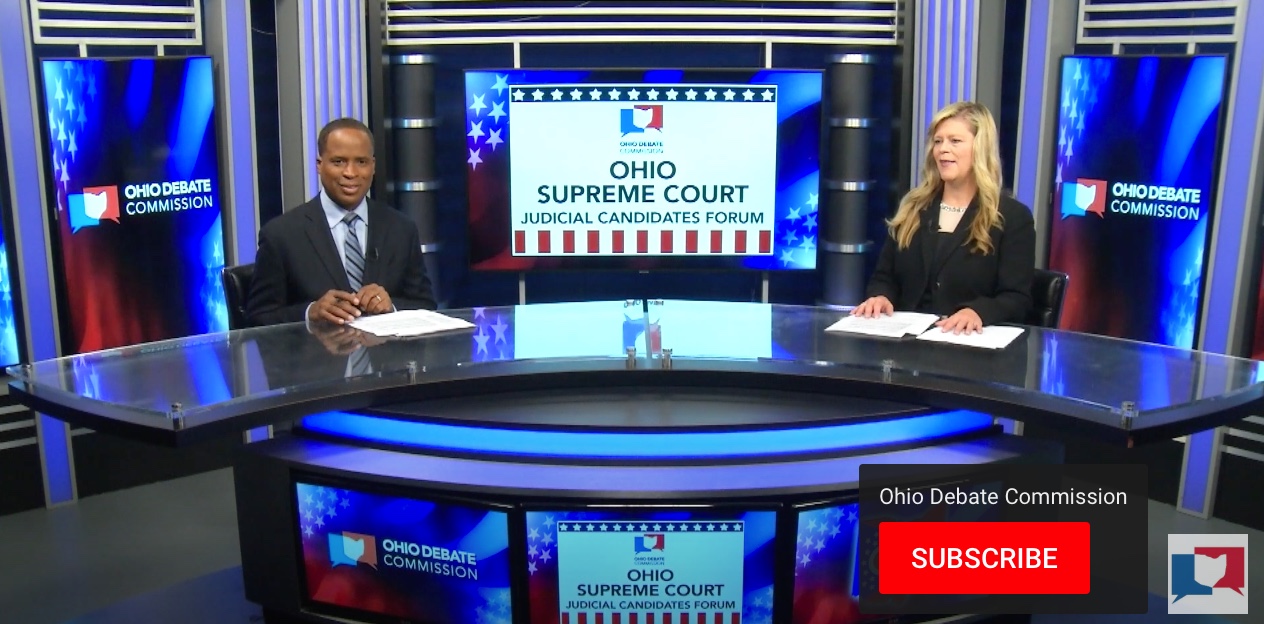
The Ohio Supreme Court Judicial Candidates Forum was presented by The Ohio Debate Commission, a coalition of news organizations, universities and civic groups that encourage respectful civic dialogue.
The moderators are Curtis Jackson, anchor at Spectrum News, and Karen Kasler, Ohio Public Radio and TV Statehouse News Bureau Chief.
The forum was virtual, with candidates joining via the web.
Four candidates are in races for two seats on the Supreme Court of Ohio.
Incumbent Justice of The Supreme Court of Ohio Sharon Kennedy is challenged by Judge John P. O’Donnell of the Cuyahoga County Court of Common Pleas. And incumbent Justice Judi French of The Supreme Court of Ohio faces challenger Judge Jennifer Brunner of the Ohio Tenth District Court of Appeals.
Michael Hamper III is a partner at Lemire & Hamper LLC, a firm in Jefferson, Ohio that focuses on the areas of bankruptcy, oil and gas, probate, real estate, and municipal law. Michael has served as the Solicitor for the Village of Jefferson since 2016 and has a passion for helping his local community that inspired him to run for office in 2018.
Turn on the news or read a newspaper today and you will see political candidates and public officials making the rounds throughout the country trying to earn your vote. While the issues and formats are much different today, those candidates and public officials are participating in America’s time-honored tradition of democracy.
When it comes to elections, both the voter and precinct election officials have responsibilities to protect voting rights. It is important to be prepared when you vote and to know what your rights are at the polling place in order to ensure a smooth Election Day.
Voter Responsibilities
In Ohio, you are generally eligible to vote if you are a citizen of the United States, a resident of Ohio for at least 30 days prior to the election in which you desire to vote, at least 18 years old on or before the next general election, and if you are not currently incarcerated for a felony conviction.
In order to cast your ballot on Election Day, you must bring one of the following proofs of identification (note, though an option, it does not have to be a photo ID):
Current photo ID card with your name and address, such as a driver’s license or state ID;
Other government ID (but not a U.S. Passport or student ID as those do not prove current address);
S. Military ID card with your name and photo (address is not required); or
A form of identification that shows your name and address, such as a utility bill, bank statement, paycheck, government check or other government document, such as a benefits letter from the Social Security Administration or the Ohio Department of Job & Family Services.
On Election Day, it is also your responsibility to show up at the correct precinct to vote. If you do not know this information, you can look it up on the Ohio Secretary of State’s website.
Precinct Responsibilities: Protecting Your Rights
If you are at the proper precinct, have registered to vote at least 30 days before the election and brought a proper form of identification (see list above), then you should have no problems at the polling place. However, it is still helpful to know some more details about your rights and the duty of precinct election officials to enforce them.
If you are at the correct precinct and are eligible to vote, but you do not have the proper identification or are not on the poll list, then the precinct election official has the responsibility to allow you to vote by provisional ballot. You also have the right to vote by provisional ballot if you moved to a different precinct within Ohio in the 30 days before the election. A provisional ballot is like a regular ballot, except the board of elections will review the information for the voter and determine if the voter was eligible and should have their vote counted. Each provisional ballot voter must receive a provisional ballot notice that details how a voter can determine if their vote was counted and why or why not.
There are several other voting rights that you should also be aware of, such as:
It is the responsibility of the polling place to allow you to vote as long as you are in line before the polls are scheduled to close.
You are not required to provide proof of citizenship in order to vote.
If you need assistance to vote due to blindness, disability or illiteracy, you are permitted to receive assistance from a person of your choice, so long as that person is not your employer, representing your union or a candidate whose name is on the ballot. You can also receive assistance from two precinct election officials (one from each political party).
It is also important for you to know that polling places are neutral ground. This means there should be no election official wearing campaign materials, attire or paraphernalia. Election officials cannot advise, instruct or educate voters on candidates or the issues. They are there to ensure a fair, unbiased voting process, and it is not their goal to influence voters in any way. Voters should also follow these rules and should not wear campaign materials, attire or paraphernalia. Candidates and volunteers are also not permitted to campaign within 100 feet of the polling place, which is often marked by small American flags.
What Should You Do if You Believe Your Rights Are Being Violated?
If you believe you are being wrongfully denied the ability to vote, ask to speak to the voting location manager and they will work with you to fill out the form to report the issue (Form 10-U) and then have you vote by provisional ballot.
If you believe there are violations of voting laws occurring at a polling place, whether by candidates, advocates, precinct election officials or voters, you should report the violations to the local board of elections.
How an Attorney Can Help
Should you run into problems, an attorney can help you determine whether your voting rights have been violated and to decide on an appropriate course of action. An attorney can also help you make contact with the appropriate local and state officials to notify them of how your rights were violated and seek to resolve the matter and correct the issues before the next election so that no other voter experiences the same hardship. An attorney will also be able to advise you of the different methods of reporting election complaints to the local board of elections, Ohio Secretary of State and United States Department of Justice.
A Note on COVID-19 and Voting
In-person voting may look different this year in response to COVID-19. Be sure to check your polling place in advance, as it may have changed. You may also be required to wear a face mask, and there will likely be markers to keep you distant from the other voters. If you have questions, be sure to check with your county’s Board of Elections. For more information about voting by an absentee ballot, read this article.
“When we try to pick out anything by itself, we find it hitched to everything else in the Universe,” John Muir, a transcendentalist, wrote of nature’s connectedness in his 1911 book, My First Summer in the Sierra.
In 1997, Nature journal published ecologist Suzanne Simard’s Ph.D. theses, describing newfound proof of how plants within communities can be interconnected through an underground system, called a mycorrhizal network, to interact with each other.
This is Part 1 of a series Loveland resident and Ohio University student, Joe Timmerman wrote for The Post in Athens, Ohio. The Post is an award-winning, student-run media outlet that publishes online daily and also prints a weekly tabloid. They cover local and Ohio University news, sports, Athens life, entertainment and everything in between. The series is re-published here in Loveland Magazine with permission of The Post and Loveland High School graduate, Joe Timmerman a frequent contributor to Loveland Magazine.
“All trees all over the world, including paper birch and Douglas fir, form a symbiotic association with below-ground fungi … They compete with each other, but our work shows that they also cooperate with each other by sending nutrients and carbon back and forth through mycorrhizal networks,” Simard said in an interview with Yale Environment 360.
In this sense, trees communicate with one another on a deeper level than what is seen in the overstory and the understory of a forest.
From mothers and fathers sharing memories of trees they have grown to love with their kids to a lifelong woodworker who discovered a new relationship with wood as time went by, people are connecting with nature in new and old ways, as COVID-19 has brought a global feeling of social disconnection. People and their trees alike have a story to be told.
Pat Hill, 66, Norah Jane Hill, 9 months, and Becky Hill, 69, of Loveland, Ohio, with their Oak Trees on Wednesday, Sept. 23, 2020.
Pat, Norah Jane and Becky Hill of Loveland, Ohio, with their oak trees. Pat Hill grew up in the house next door and used to farm the land across the street.
“I’ve always wanted to name this property ‘Twin Oaks,’ one for her and one for me,” Hill said. “As a kid, I always liked a good swing, so I had that swing put up by a tree company. The cable goes from one oak to the other. I’ve always thought that the swing hung from the two parents, and it was a symbol of the family that we created. Our boys all thrived and spent a lot of time on that swing. I bought excellent chains and a high-quality steel cable to create that swing because I want it to last for a long, long time. I think the trees are about 60 years old.”
Part 2 will introduce you to Phil Ping and his dog, Bandit, of Loveland and their logs and boards of maple, oak, walnut and pine.
Ohio Attorney General Dave Yost offers these consumer protection tips.
It’s already October and before you know it, the holiday shopping season will begin. As like many things this year, in-person shopping on Black Friday, Cyber Monday and other holiday promotions may be different than in years past.
This holiday shopping season, consumers should keep these tips in mind:
Check store hours: Stores that have previously been open may have reduced hours or may have limits on the number of customers in the store. Be sure to call or check the store’s website to confirm their hours and regulations.
Research products and sellers carefully: Search for complaints filed with the Ohio Attorney General’s Office and the Better Business Bureau. Also, look up customer reviews online and find out what previous customers have said about the product or seller especially if it’s your first time shopping with a particular seller.
Beware of scams: Watch out for phony Black Friday coupons, such as those offering hundreds of dollars to spend at a store and other claims that sound too good to be true. Be wary if someone asks you to pay using high-amount gift cards, which are commonly requested by scam artists.
Know stores’ return policies: Under Ohio’s consumer protection laws, sellers can choose to set their own return policies, including policies of no returns, but they must clearly tell you their policies before you complete the purchase. Also, ask if a return policy is different due to COVID or around the holiday season, as some stores increase their return periods during this time.
Important exclusions and limitations should be disclosed: Ads should clearly disclose important exclusions and limitations of an offer, so check to see if limited quantities are available, if a sale is valid only during certain hours or if other terms and conditions apply.
Rain checks apply only in certain situations: If a seller advertises a product at a certain price but sells out of that product by the time you respond to the ad, you may have the right to a rain check. However, sellers are not required to provide rain checks if they clearly disclose the number of goods available at that price or if they clearly state that no rain checks will be given.
Understand differences between gift cards: Gift cards are the most requested type of gift, according to the National Retail Federation, but not all gift cards carry the same protections. A gift card that is branded by a credit card company and can be used almost anywhere may reduce in value faster than a single-store gift card. Also, promotional cards, such as those that come free with a purchase, may not carry the same protections as other cards and may last only a short period of time. If you receive a gift card, it’s generally best to use it as quickly as possible to reduce the chance it will be lost, stolen or diminish in value. Be aware that if a business stops operating, you may not be able to use the gift card or receive a refund.
Keep cybersecurity in mind: When shopping for deals online, don’t use free public Wi-Fi when entering sensitive information like your credit card number. Keep apps, software and operating systems up to date and use secure websites when you need to enter personal information.
Paying with a credit card usually offers greater protection: In general, with a credit card, your responsibility for unauthorized charges is limited to $50, and you have certain rights to dispute charges that you may not have with a debit card or other forms of payment.
If you suspect a scam or an unfair business practice, contact the Ohio Attorney General’s Office at www.OhioProtects.org or 800-282-0515.
With the global pandemic, many parents and their children are turning more often to online resources using devices such as tablets, smartphones and laptop computers. Read on to apply cybersmart tips to help keep you and your children safe while online.
Whether they want them or not, many consumers are receiving robocalls telling them they are eligible for a lower interest rate on their credit card. Most likely, these calls are more than annoying – they’re also part of a scam. Read about these calls and what to do if you are really interested in a lower rate.
Ohioans should be on the alert for scammers posing as utility company representatives, and threatening to discontinue service to the customer unless the consumer provides personal information or immediate payment for utility service. Read on to learn more about these utility scams as well as where to turn if you need payment assistance.
After hitting a historically low rate in 2016, the number of uninsured children has gradually grown to eliminate progress made in the country. Ohio, alone, had a double-digit jump in the three-year study.
Susan Tebben is an award-winning journalist with a decade of experience covering Ohio news, including courts and crime, Appalachian social issues, government, education, diversity and culture. She has worked for The Newark Advocate, The Glasgow Daily Times, The Athens Messenger, and WOUB Public Media. She has also had work featured on National Public Radio.
In 2019, the rate had jumped to 5.7%, an increase of 726,000 more children since the Trump Administration took office in 2016, the study showed.
“Much of the gain in coverage that children made as a consequence of the Affordable Care Act’s major coverage expansions implemented in 2014 has now been eliminated,” the study noted in its key findings.
The data was collected from single-year estimates by the U.S. Census Bureau’s American Community Survey from the three years.
Ohio was one of several states that saw an increase of more than 20,000 uninsured children from 2016 to 2019.
Ohio’s uninsured rate went up 26% from 2016 to 2019. Data from 2019 show 131,000 Ohio children without insurance, up from 104,000 in 2016.
Ohio child health advocates say a lack of health insurance contributes to worse life outcomes, which extend to education and societal shortcomings.
“This damaging trend will have long-term consequences for children and communities across Ohio because without health coverage, children cannot access the care they need to grow and thrive,” said Tracy Najera, executive director of the Children’s Defense Fund Ohio, in response to the study.
The study attributed declines in Medicaid enrollment as the start of the decrease in insured children. Public coverage for children includes Medicaid and the Children’s Health Insurance Program (CHIP).
The largest national increase in uninsured children, 320,000, came between 2018 and 2019, and represents the largest annual jump in more than a decade, the authors of the study said.
“Moreover, since this data was collected prior to the pandemic, the number of uninsured children is likely considerably higher in 2020, as families have lost their jobs and employer-sponsored insurance, though it is impossible to know yet by precisely how much,” the study stated.
The study comes as some K-12 schools see spikes in COVID-19 rates, and cases in ages 0-19 represent the fifth highest age group in the state, according to state data.
Texas and Florida had the highest rates, representing 41% of the overall increase in child non-coverage, with about 1 million children in Texas lacking health insurance in 2019, and an estimated 343,000 uninsured children in Florida.



 Mulvey has served the students of Great Oaks Career Campuses for more than 30 years as a math teacher, counselor, career specialist, campus dean, and district administrator. In her current role as Director of Student Services, she has strengthened both physical health and mental health services for students, led the effort to rewrite Board policies, began a summer camp program for younger students, and helped guide the district to record levels of high school enrollment.

 This is Part 2 of a series Loveland resident and Ohio University student,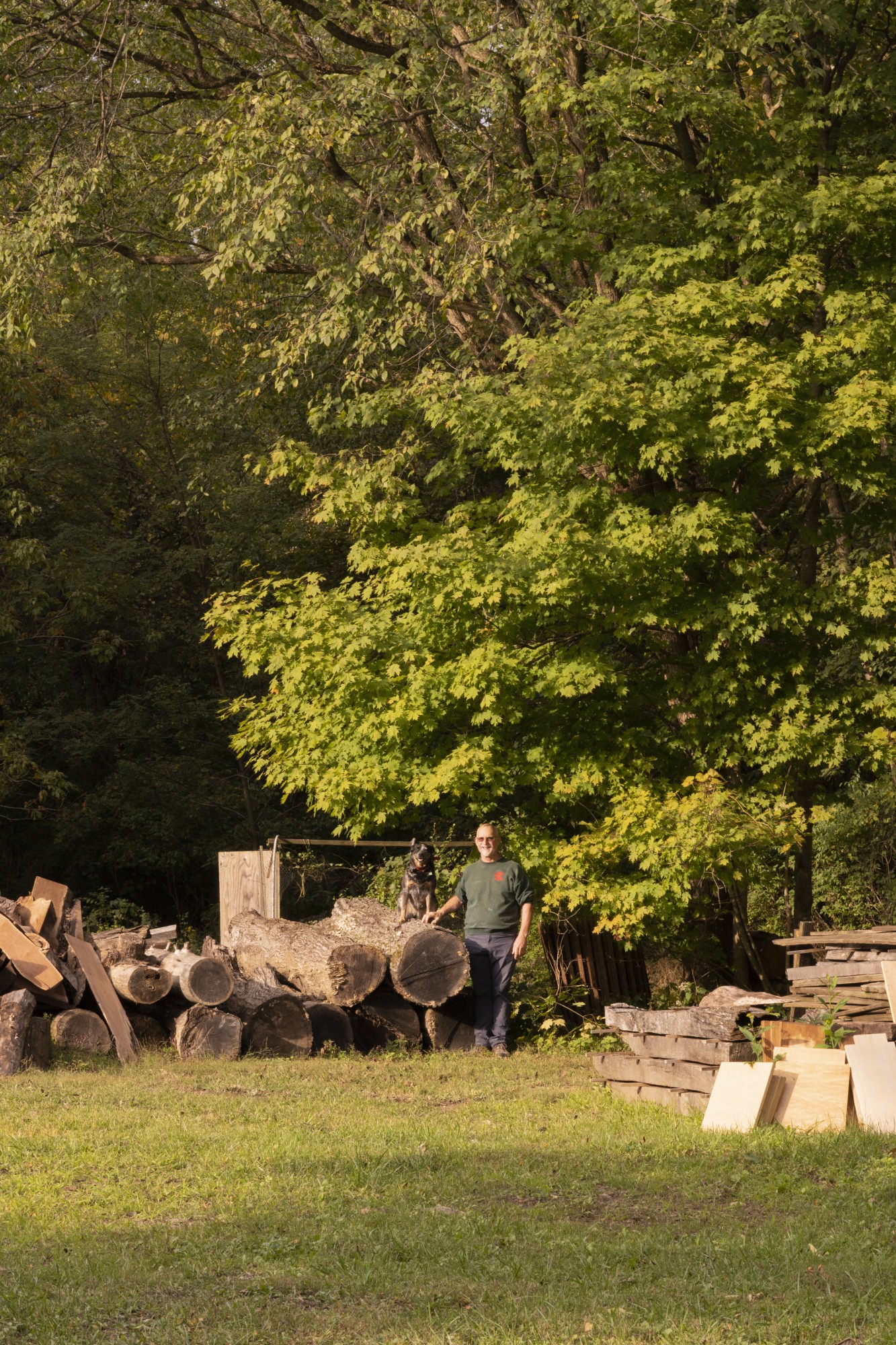



![[Meeting Videos] Christman Farm sale moves forward after public hearing](https://lovelandmagazine.com/wp-content/uploads/2020/10/feature-HOMEARAMA-1.jpg)

 A Recreation Tax Increment Financing District (TIF) was created by Ordinance 2008-38 to pay off the financing. The TIF consists of approximately 27 acres and includes the taxpayer-owned property known generally as the Christman Farm as well as the Crane property which is privately owned.
 The Crane property would have 20 homes and two styles of “Estate Homes” valued at $850,000 and up on lots that would average 32,000 sq. ft.
 Campbell Berling is proposing that future homeowners be allowed to pay the cost of sewer line extensions over 20-years.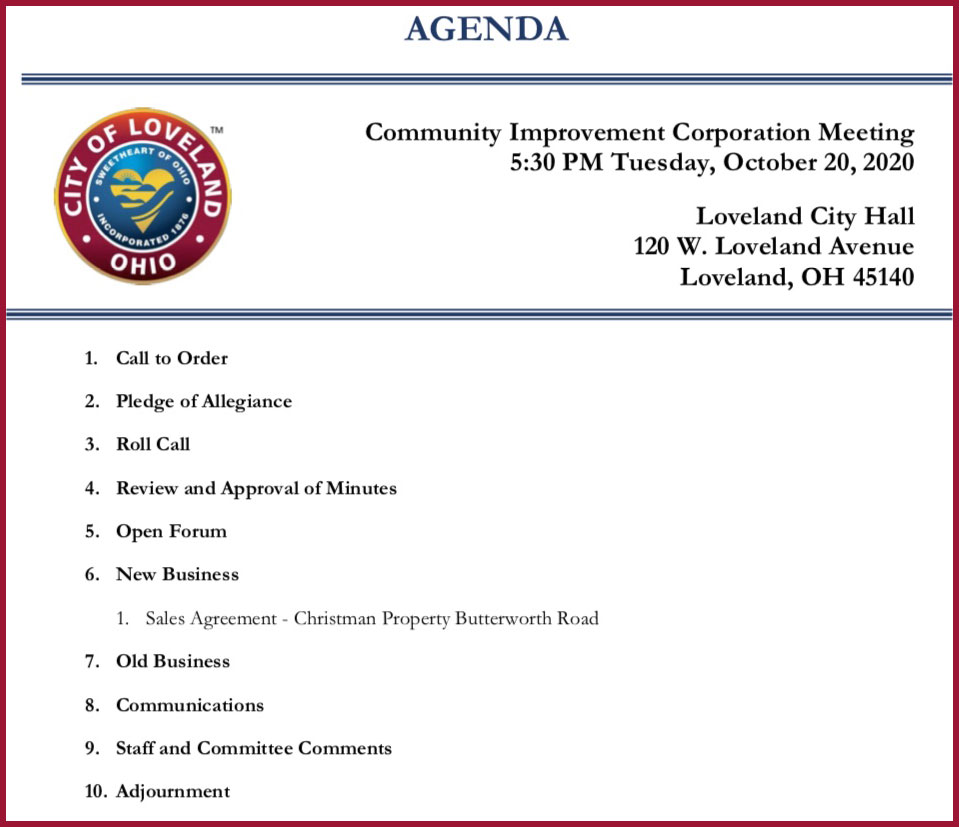
 Kennedy presented this “Fiscal Impact” study in the package of information he presented to City Council:
 The Ohio Supreme Court Judicial Candidates Forum was presented by The Ohio Debate Commission, a coalition of news organizations, universities and civic groups that encourage respectful civic dialogue.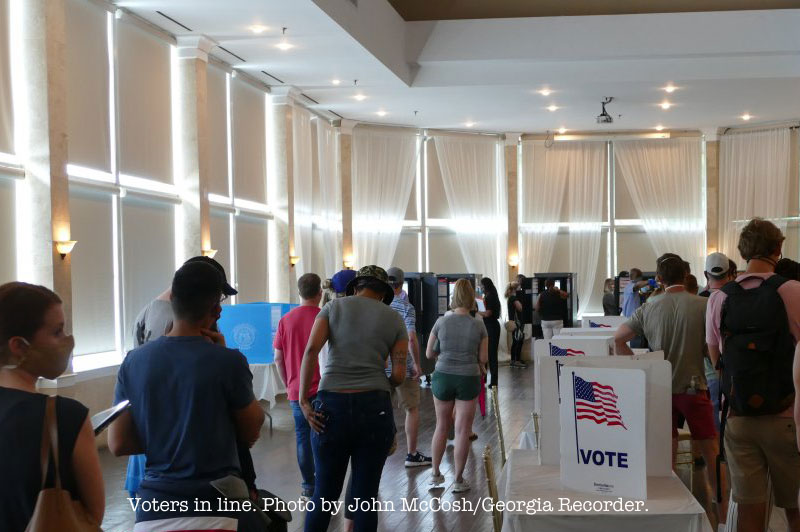
 Commentary by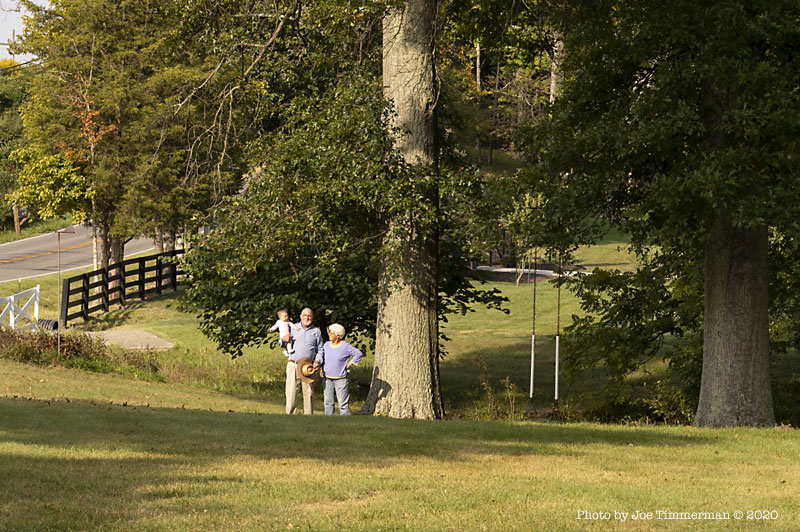


 Contact our Ad Executive