Tag: Statehouse

  • Ohio redistricting slated for later this summer, maps in September, Senate president predicts

    Ohio redistricting slated for later this summer, maps in September, Senate president predicts

    Redistricting ahead with budget cycle’s end, Alabama decision could have impacts

    BY:  Ohio Capital Journal

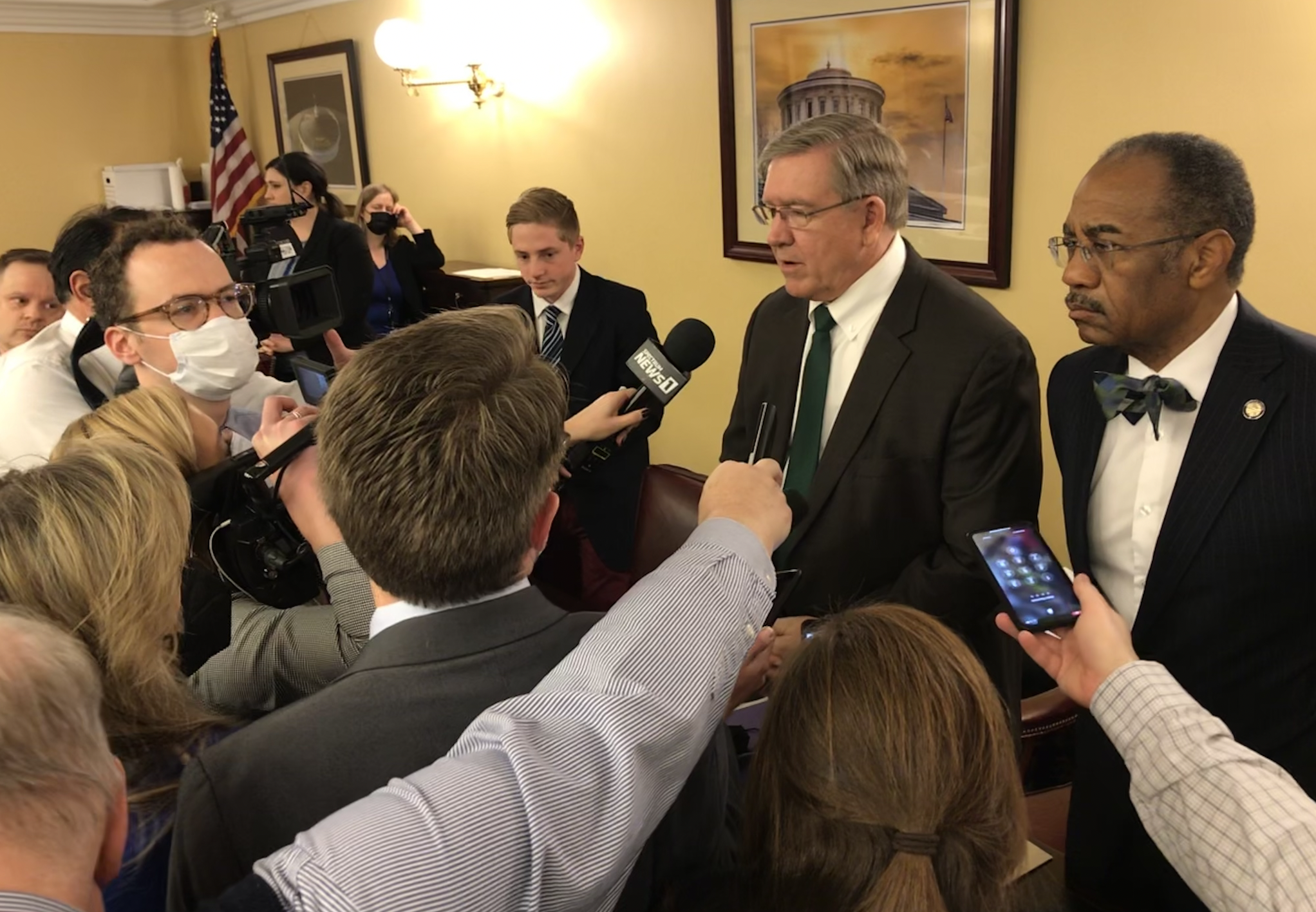
    Once the Ohio two-year budget cycle is finished by June 30, Ohio Senate President Matt Huffman expects work to begin again on redistricting for Statehouse maps, with September as a likely date for them, he told reporters recently.

    Both Ohio’s U.S. Congressional district maps and Statehouse maps were declared unconstitutional gerrymanders multiple times by a bipartisan majority of the former Ohio Supreme Court, but voters were nevertheless forced to vote under them in 2022 after Republicans on the Ohio Redistricting Commission ran out the clock and appealed to a federal court.

    With swing vote former Ohio Supreme Court Republican Chief Justice Maureen O’Connor forced to retired due to age, Republicans added partisan labels to the 2022 Ohio Supreme Court races and won a majority of justices. Gov. Mike DeWine then appointed a family friend to an open seats after Justice Sharon Kennedy was elected chief justice.

    The new right-wing 4-3 majority on the court is not expected by analysts to have a swing vote on the issue of gerrymandering going forward. O’Connor has called for further anti-gerrymandering reform by Ohio voters, which had passed such reform in 2015 and 2018 with more than 70% of the vote. That system left politicians in charge of the process, however. O’Connor has since called for an independent commission.

    Ohio Republicans have also brought a case to the U.S. Supreme Court over the congressional district maps, seeking the court to declare under a theory called “independent state legislature doctrine” that the Ohio General Assembly has total control over the maps and the Ohio Supreme Court does not have jurisdiction.

    Because the high court has yet to decide whether or not it will review the case, Huffman told reporters last week that the congressional maps could stay the same for the 2024 election.

    “(The congressional map’s) a little bit more uncertain, it may simply be that we have the same congressional districts for the 2024 race as the one we have now,” Huffman said.

    As for the Statehouse maps, it’s up to the governor to call the Ohio Redistricting Commission back into session, Huffman said. The commission is made up of a majority of Republican leaders, including the governor, Auditor of State Keith Faber and Secretary of State Frank LaRose, as well as a Republican and Democrat from each chamber of the state legislature.

    Huffman – who was on the commission until he and then-House Speaker Bob Cupp removed themselves, saying they were needed for other legislative duties – sees a mid-September date as a likely end date for the Statehouse district discussion.

    “The plan in my head…is that we would start in earnest after June 30, have hearings and all of the other negotiations and things that are to be done and to try to have a map by mid-September,” Huffman said.

    He said he doesn’t know “how much all the districts will change” in the General Assembly maps, but action will be needed on them.

    One change that could come into play for the Statehouse maps has to do with a recent U.S. Supreme Court decision in an Alabama redistricting case.

    In the case, the court upheld a lower court decision that the state had likely violated the Voting Rights Act with a congressional map that had one majority Black district.

    Amid redistricting deliberations in Ohio, a staffer who helped draw some of the earliest maps in the process said he was directed to ignore racial data in drawing state districts.

    A lawsuit was filed by two Youngstown residents accusing redistricting officials of racial discrimination. The lawsuit did not see further action as maps were redrawn several times, and a federal court ordered the commission to redraw maps after they were used for the 2022 election.

    Though the Alabama decision was considered a general win for the Voting Rights Act, it’s not clear how much change it will make in Ohio.

    “It may prompt the legislature or the commission to approach the redraw differently, but I don’t see anything in the lawsuit that necessitates that change,” said Yurij Rudensky, senior counsel for the Democracy Program at the Brennan Center for Justice.

    The Alabama decision upheld existing Voting Rights Act language that bars states from ignoring demographics.

    “If it is such that the conditions on the ground could lock out voters of color from being able to participate in the process … there has to be an eye to how voters of different races are being grouped together,” Rudensky said.

    Rudensky is also counsel in a lawsuit between the Ohio Organizing Collaborative and the ORC challenging district maps in the state.

    A spokesperson for Ohio House Speaker Jason Stephens did not respond to requests for comment on the status of the redistricting process.

    Asked whether Gov. Mike DeWine had a plan when it came to redistricting post-budget cycle, a spokesperson said “it is accurate we are focused on the biennial budget due June 30th, as is the General Assembly.”

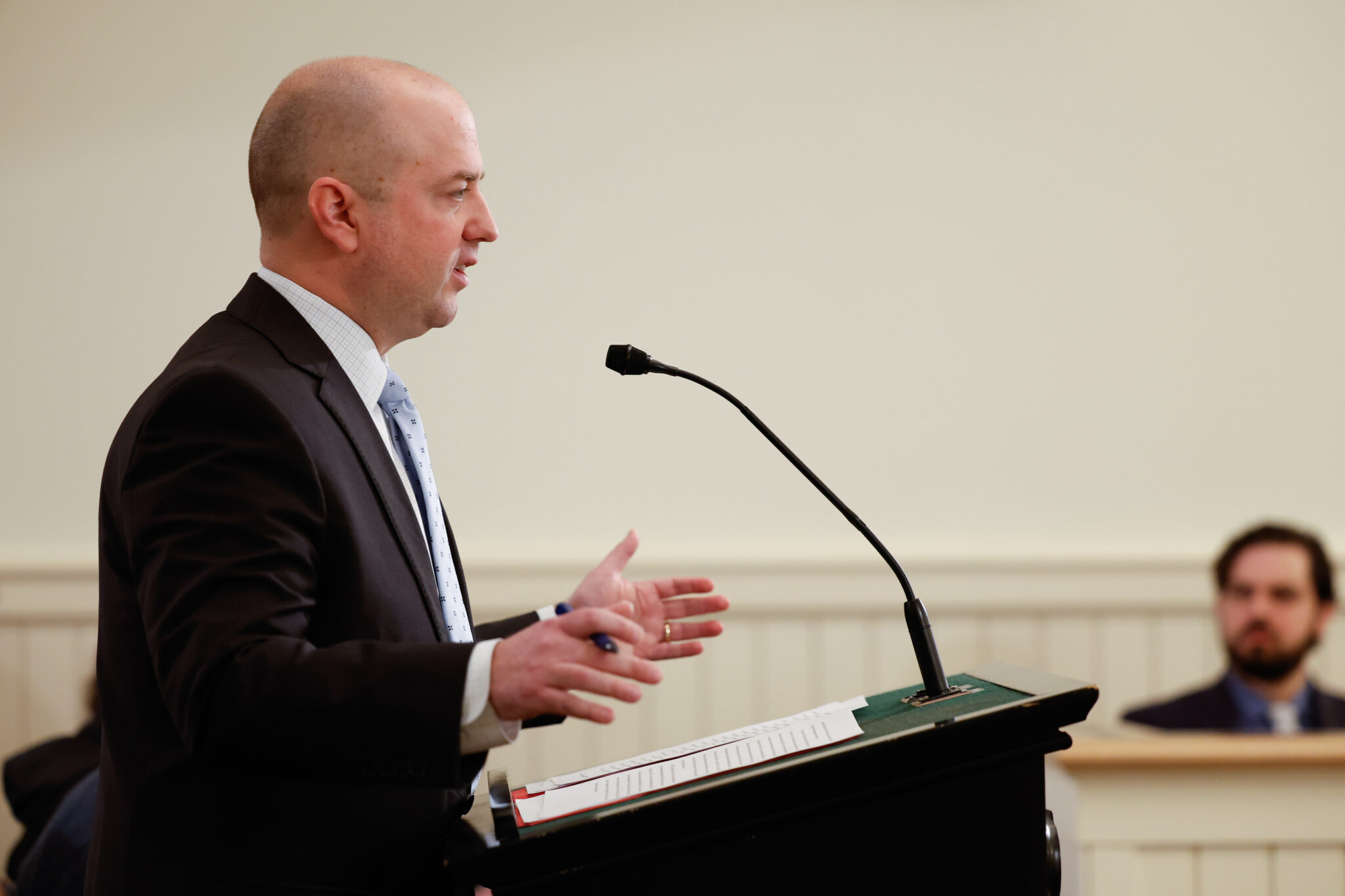

    Susan Tebben
    SUSAN TEBBEN

    Susan Tebben is an award-winning journalist with a decade of experience covering Ohio news, including courts and crime, Appalachian social issues, government, education, diversity and culture. She has worked for The Newark Advocate, The Glasgow (KY) Daily Times, The Athens Messenger, and WOUB Public Media. She has also had work featured on National Public Radio.

    MORE FROM AUTHOR

  • Ohio House committee narrowly advances 60% supermajority provision despite opposition

    Ohio House committee narrowly advances 60% supermajority provision despite opposition

    House Speaker Stephens cancels Wednesday session
    BY:  Ohio Capital Journal

    In an Ohio House committee, witnesses pleaded with lawmakers to reject the effort to install a 60% threshold for future constitutional amendments. The joint resolution they’re considering would put the question to voters on an upcoming ballot. After breaking for an extended recess around lunch time, lawmakers heard more testimony and voted to advance the resolution.

    But the 7-6 margin was probably tighter than supporters wanted. All five Democrats on the committee voted against it, and of the eight Republicans on the committee, only state Rep. Brett Hudson Hillyer, R-Ulrichsville, who previously floated amendments to make the resolution more palatable to opponents, voted against it.

    Elsewhere in the Statehouse, a different House committee set to vote on restoring August elections Tuesday morning delayed its start. Almost six hours later, the chair canceled the hearing.

    The same conservative lawmakers pushing to bring back August elections got rid of them just a few months ago. At the time, they argued they’re too costly and generate meager voter turnout. But now, an August election day suits their plan to advance the supermajority amendment.

    Taken together the two proposals represent a last-ditch effort by some Republican lawmakers to hobble an abortion rights amendment ahead of November’s election. More than 200 interest groups have come out against the effort. Four previous governors and five previous attorneys general — Republican and Democratic — have also publicly criticized the plan.

    But the proposal’s opponents got a reprieve of sorts from House Speaker Jason Stephens. The Kitts Hill Republican scrapped Wednesday’s House session after declining to schedule the 60% supermajority or August special election measures.

    That puts an exceptional amount of pressure on the House session scheduled for May 10 — the last day lawmakers can approve the measures in time for an August election.

    SJR 2 opposition

    During Tuesday’s hearing, opponents harped on what they called the hypocrisy of lawmakers pushing the supermajority resolution forward. From the outset, Republicans backing the proposal have contended their effort is a way to discourage “out of state special interests” from buying the state constitution, and that it has nothing to do with undermining an abortion rights amendment on the horizon.

    A group called Save Our Constitution PAC is now running ads targeting five GOP members perceived as insufficiently supportive. The funding for those ads comes, not from Ohio, but from Illinois billionaire Richard Uihlein. The owner of the shipping supplies company Uline, has previously funded far-right candidates around the country and groups promoting election denialism.

    Dorsey Hager from the Columbus Central Ohio Building and Construction Trades Council criticized Uihlein’s involvement.

    “An idea introduced to protect the Ohio constitution — our Constitution — from special interest is actually being promoted by a group funded by an Illinois billionaire who’s trying to change Ohio’s constitution,” he said.

    Save Our Constituion PAC’s treasurer is David Langdon, the same Cincinnati attorney who’s behind the non-profit Protect Women Ohio. That organization is currently running spurious attack ads against the abortion rights amendment.

    The ACLU’s Gary Daniels drew a bright line between efforts in favor of the joint resolution and those in opposition of abortion rights.

    “Soda taxes, casinos, former House Speakers, monopolies and evil special interests are among the list of reasons supporters have cooked up to argue SJR 2 is necessary,” Daniels argued.

    “But Ohioans know — and very few supporters are left pretending — this involves anything but abortion and gerrymandering.”

    All 88 Counties

    Opponents also keyed in on a less discussed, but potentially even more consequential set of restrictions added to the resolution.

    Not only would organizers seeking a constitutional amendment need to clear 60% at the ballot, they’d first need to gather signatures from 5% of the electorate in all of Ohio’s 88 counties. Current law requires that percentage from at least 44 counties and grants organizers a “cure period” to gather valid signatures if the ones they turn get rejected.

    “To cover all 88 counties, and then be denied that cure period,” Trevor Martin argued, “is again, it’s devastating to the citizen initiative process.”

    Mia Lewis from Common Cause Ohio explained legitimate signatures can get rejected for mundane discrepancies. Say you’ve moved but haven’t updated your voter registration — using your current address would scrap your signature. Sometimes organizers gather signatures for close to year. If you move in the interim and update your registration, that old signature gets thrown out.

    “It’s blindfolding the people that are trying to collect the signatures and telling them to take this leap of faith,” she argued. “There is no way for them to know how many of those signatures won’t be valid. They don’t know how many people are going to move. They don’t know how many people have put the wrong address that doesn’t match the registration.”

    She called requiring signatures from all 88 counties and eliminating the cure period “punitive.”

    Bonds

    Opponents also took aim at the supermajority threshold’s impact on bond issues. Hager, from the Trades Council, brought up a school bond issue in his hometown of Marysville.

    “If this passes, they’re gonna be able to add on to the STEM school in Marysville where they’ll be able to produce more kids in science, technology that will go to work at Scott’s, go to work at Honda (and) keep those industries growing and thriving,” Hager argued.

    Requiring a 60% supermajority, he contended, would endanger those investments.

    But Rep. Brian Stewart, R-Ashville, argued bonds aren’t a big issue. Stewart, who’s sponsoring the House version of the 60% threshold measure, argued every bond for the last 15 years would clear the bar.

    “Why are you in your sort of fear mongering over 1990 bond issues when we’ve passed every bond issue for the last 15 years with over 60% of the vote?” Stewart asked Jen Miller from the Leauge of Women Voters of Ohio.

    Miller acknowledged Stewart is correct about the most recent bond proposals. But taking a longer view the track record gets murky.

    Former state representative and Dispatch editor Mike Curtin analyzed bond issues going back to 1980. Under a simple majority, two thirds passed, but with a 60% supermajority the record flips. Of the eighteen bond issues only eight would pass, and two of those just barely.

    Noting how that picture changes with a broader view, Miller pressed Stewart on the growing opposition for his legislation.

    “If this were such a great proposal, would we have so many former AGs and governors of both political parties coming out in opposition? Would you have to 240 organizations and growing come out in opposition? Would you need a million dollars from an out-of-state megadonor billionaire?” Miller asked.

    “You wouldn’t.”

    Follow OCJ Reporter Nick Evans on Twitter.

    ______________________

    NICK EVANS

    Nick Evans has spent the past seven years reporting for NPR member stations in Florida and Ohio. He got his start in Tallahassee, covering issues like redistricting, same sex marriage and medical marijuana. Since arriving in Columbus in 2018, he has covered everything from city council to football. His work on Ohio politics and local policing have been featured numerous times on NPR.

    MORE FROM AUTHOR

  • Ohio Ballot Board fights back against abortion amendment lawsuit

    Ohio Ballot Board fights back against abortion amendment lawsuit

    Voters casting ballots. | Mario Tama/Getty Images

    BY:  Ohio Capital Journal

    The Ohio Ballot Board submitted its comments to the Ohio Supreme Court, pushing back against claims they abused their power in verifying a proposed abortion amendment to the state constitution.

    The Ohio Attorney General’s Office wrote a brief on behalf of the ballot board, saying its members “correctly refused to usurp the people’s power by splitting the petition … into multiple amendments.”

    The lawsuit, filed on behalf of two members of Cincinnati Right to Life, argued that the amendment contains more than one constitutional issue, therefore should be split, and should not have been unanimously approved by the ballot board.

    The ballot board’s OK allowed pro-abortion rights groups to move forward with signature collection, in which they must collect more than 400,000 valid voter signatures by July 5.

    Because the proposed amendment mentions reproductive health and abortion, attorney Curt Hartman argued the ballot measure involved two different issues, a claim pro-abortion rights groups and the Ohio Ballot Board members deny.

    “The weakness of (Right to Life members Margaret DeBlase and John Giroux’s) claim is best exemplified by their failure to argue how many proposed amendments are supposedly included within the petition and what those amendments are,” Assistant Attorney General Julie Pfeiffer wrote on behalf of the ballot board.

    The ballot board is made up of legislative members, citizens, and the Ohio Secretary of State, who chairs the board. Currently, the legislative members are state Sen. Theresa Gavarone, R-Bowling Green; state Sen. Paula Hicks-Hudson, D-Toledo; and state Rep. Elliot Forhan, D-South Euclid.

    Secretary of State Frank LaRose is the chair, and Stoutsville resident William Morgan completes the board.

    One of the arguments made in the lawsuit is that no discussion was held when the board met to consider the amendment. LaRose asked for discussion before he asked for a vote, and none happened.

    Gavarone was the only one to make a comment, speaking against the amendment, but voting yes to the move, calling it a “procedural” vote.

    “(Giroux and DeBlase) fail to show how any alleged failure by the ballot board members to conduct a fulsome discussion amongst themselves before voting to certify the proposed amendment led to a decision that was ‘unreasonable, arbitrary or unconscionable,” the AG’s office wrote in defense of the board.

    LaRose made several comments during the meeting explaining that the vote did not represent any comments on the merits of the initiative, and instructed the public not to speak on the merits, as the vote was only to decide whether the measure only involved one constitutional issue.

    In response to the lawsuit, Pfeiffer brought up Giroux, who spoke during the public comment portion of the meeting. Giroux called the amendment “intentionally unjust and misleading,” but he “did not offer any specific proposal splitting up the petition or further opine as to the number or content of the separate amendments contained therein,” the board argued to the court.

    The ballot board did not need to analyze facts in the case, Pfeiffer argued, only whether the petition contains one amendment “on the face of the document.”

    ____________________________

    Susan Tebben
    SUSAN TEBBEN

    Susan Tebben is an award-winning journalist with a decade of experience covering Ohio news, including courts and crime, Appalachian social issues, government, education, diversity and culture. She has worked for The Newark Advocate, The Glasgow (KY) Daily Times, The Athens Messenger, and WOUB Public Media. She has also had work featured on National Public Radio.

    MORE FROM AUTHOR

  • Ohio citizen-led abortion rights amendment takes next step after petition language certified

    Ohio citizen-led abortion rights amendment takes next step after petition language certified

    Getty Image

    BY: OHIO CAPITAL JOURNAL STAFF 

    The Ohio Attorney General’s Office has certified petition summary language for a proposed amendment to protect abortion rights in the state constitution, which organizers hope to place on the November ballot.

    The Ohio Ballot Board will now determine whether or not the initiative only involves changing only one amendment, as required. If approved by the Ballot Board, it gets sent back to the Attorney General, who turns it in to the Ohio Secretary of State’s Office, at which point full signature-gathering can begin.

    Advocates must collect signatures from 44 out of 88 counties equal to at least 5% of the total vote cast for the office of governor in that county at the last gubernatorial election. Overall, the petition must gather at least 10% of the total vote cast statewide for the office of governor at the last gubernatorial election. This math means that the group needs at least 442,958 valid signatures.

    The drive to protect access to abortion care in Ohio is being spearheaded by Ohioans for Reproductive Freedom and Ohio Physicians for Reproductive Rights.

    Right now, Ohio’s six-week abortion ban is unenforceable due to a Hamilton County judge blocking it indefinitely as the lawsuit against it continues. The bill does not have an exception for rape or incest.

    However, once it gets out of court, it will likely head to the Ohio Supreme Court. An OCJ/WEWS investigation revealed how those justices already told Right to Life groups that abortion isn’t a Constitutional right.

    If the proposed amendment gets to the ballot and is approved by voters, this amendment wouldn’t change existing laws automatically, but it would be the law that applies in all of the pending litigation.

    If passed by voters, Article 1 of the Ohio Constitution would be amended to allow “the right to reproductive freedom,” in a change similar to one approved by Michigan voters last year.

    The groups supporting the ballot initiative are racing to bring the issue before voters before any changes can be made to the threshold needed to place a measure on the ballot. A GOP effort to raise the bar from 50% plus one to 60% plus one has been ongoing, though it’s unclear how long that might take.

    Michigan’s amendment passed with 56.6% of the vote.

    Percentage abortion was protected in other states last year:

    • Kentucky — 52.3%
    • Montana — 52.5%
    • Michigan — 56.6%
    • Kansas — 59%
    • California — 66%
    • Vermont — 76.7%

    Reporting from OCJ’s Susan Tebben and WEWS’ Morgan Trau contributed to this article.

  • What will DeWine sign? Lawmakers passed more than 30 bills on last day of session

    What will DeWine sign? Lawmakers passed more than 30 bills on last day of session

    BY: NICK EVANS – Ohio Capital Journal

    Barring an emergency, Ohio’s lawmakers have headed home for the holidays. That puts the ball in Gov. Mike DeWine’s court to sign or veto the final burst of legislation passed in the Statehouse. If the governor does nothing, legislation will take effect without his signature. But he has ten days after receiving the bills — not counting Sundays — to take action if he chooses.

    He’ll have a lot to work through between now and then. During the legislature’s overnight final session, they approved more than 30 pieces of legislation now heading to the governor. The highlights have gotten extensive coverage, but there was a lot of other legislative action as well.

    Thursday, DeWine’s office received a raft of 24 bills. The deadline for action on those is January 3.

    Here’s what passed:

    HB 513: Tax deduction for cigarette wholesalers when retailers fail to pay. A late amendment tacked on prohibitions for local tobacco regulations.

    HB 45: Began as a two month amnesty window for delinquent state taxes. Amendments appropriated $6 billion in federal COVID relief.

    HB 66: Numerous tweaks to local taxing authority and reporting as well as $30 million for minor league sports teams.

    HB 254: Established domestic violence fatality review boards.

    HB 558: Modified state’s donated drug repository program

    HB 107: Revised Ohio’s elevator laws

    HB 343: Modified crime victim’s rights

    HB 353: Ohio’s “Testing Your Faith Act” which directs higher ed institutions to develop accommodations for students who need to be absent for religious reasons.

    HB 392: Authorized transport of police dogs injured in the line of duty. An amendment made provisions for riding in a fifth wheel trailer and mounting safety devices on a windshield.

    HB 578: Created new specialty license plates and memorial highway designations.

    HB 567: Required common pleas courts post their docket online.

    HB 504: Raised penalties for disrupting religious services.

    HB 545: Privileged peer support communications.

    HB 554: Allowed state board of education to issue temporary licenses to teachers with expired certificates or licenses.

    HB 281: Updated statutory terms related to people with disabilities or suffering from mental illness.

    HB 569: Allows higher ed institutions to offer scholarships to people serving as family caregivers.

    HB 575: Set policy for regulating the solvency of fraternal benefit societies.

    HB 35: Permitted Ohio mayors to solemnize marriages.

    HB 279: Shortened timeline for filing certain wrongful death claims.

    HB 487: Altered bidding process for Ohio ballot printing contracts to allow out of state vendors/printers to participate.

    HB 462: Prohibited “swatting

    HB 150: Establish a rural practice incentive program to pay student loans for attorneys working in public offices or underserved communities.

    SB 63: Allowed county probation offices to accept credit card payments. A House amendment added on a new liquor permit for auto-sports facilities.

    SB 131: Required the issuance of certain occupational licenses if a person has experience in that field in a different state.

    SB 202: Prohibited restricting parental rights due to the parent’s disability. House amendments gave lawyers credit toward judicial eligibility for out of state practice time and created a bail study task force.

    SB 302: Made changes to the state unemployment compensation system.

    SB 288: Made numerous changes to the criminal code.

    SB 33: Changed Community Reinvestment Area policy to allow greater deduction to 529 education savings plans.

    SB 164: Altered animal cruelty laws and prohibited shelters from using gas chambers to put down pets.

    SB 16: Increased penalties for assault or menacing when the victim is a first responder. The measure also gave local governments explicit authorities when dealing with a riot or mob and prohibited any limitations on firearm rights due to a state of emergency.

    HB 405: Clarified rules of county hospital boards, gave coroners access to a law enforcement database and allowed treasurers to send bills electronically.

    HB423: Designated the American Soap Box Derby Ohio’s official gravity racing program.

    HB 501: Made a series of changes related to township authorities including allowing them to regulate small solar facilities.

    HB 509: Updated numerous occupational licensing provisions.

    HB 458: Began as a measure eliminating August special elections except for Congress. The Senate amended the bill to include strict new photo-ID requirements for voters as well as tighter limitations on returning absentee ballots.

    HB 364: Changed application process for sewer and water infrastructure surcharges

    Plaudits and veto calls

    Already, forces are gearing up inside the statehouse and out urging Gov. DeWine to veto certain measures. Others are lending their support.

    Attorney General Dave Yost applauded the anti-swatting legislation saying, “these prank calls are designed to do one thing — cause a panic.” The Ohio Association of Election Officials meanwhile thanked lawmakers for a $7.5 million appropriation for electronic poll books.

    Democrats zeroed in on a different part of the same bill. The measure would disqualify developments using the federal low income housing tax credit from using a state credit for rehabbing historic buildings.

    “These provisions, added at the eleventh hour of a lame duck session, were added with zero input from developers and affordable housing advocates. The policies are bad for Ohioans and bad for Ohio business,” they wrote in a press release.

    Democrats also urged DeWine to veto HB 458 which would impose strict new photo ID requirements for voters.

    At the city level, mayors have criticized the bill barring local tobacco regulations. The city of Columbus approved a flavored tobacco ban just days before state lawmakers acted. And the mayors might be in luck. DeWine has hinted at a potential veto, citing his past work fighting big tobacco.

    Clarification: an earlier version of this story stated DeWine’s deadline for vetoing any legislation was December 26. That calculation was incorrectly based on when the legislature passed legislation rather than when DeWine receives it.

    Follow OCJ Reporter Nick Evans on Twitter.

  • Poll: 60% of Ohio GOP primary voters say election was stolen

    Poll: 60% of Ohio GOP primary voters say election was stolen

    BY: JAKE ZUCKERMAN – Ohio Capital Journal

    Nearly two in three Ohio Republicans likely to vote in the upcoming primary election believe the election was “stolen” from President Donald Trump, according to polling conducted late last month.

    Of 800 “likely” voters sampled in late January, 62% said they believed the election was stolen and 29% believed there was “some fraud” but President Joe Biden won. Only 8% indicated Biden won with “no fraud.”

    Top issues from voters in the poll, conducted by the firm Fabrizio Lee on behalf of a PAC supporting U.S. Senate Candidate J.D. Vance, included “border security and immigration” (16%), followed by “election and voting security” (13%) and several economic areas like inflation, taxes, government spending and jobs (all around 11%).

    “While every single message tests well, the best of the bunch are cutting federal aid to localities that allow non-citizens to vote, requiring proof of citizenship to get public assistance, and allowing border states to complete the border wall with Mexico,” the polling states, in advice to Vance.

    There’s no evidence to suggest the election was stolen. Trump’s administration officials have said there was no fraud at enough scale to sway the election, as have state audits and media investigations. However, Trump and his allies in politics and media have insisted the 2020 election was fraudulent regardless.

    In the U.S. Senate GOP primary for the open seat to be abdicated by incumbent Sen. Rob Portman, nearly all the leading candidates — Josh MandelVanceMike Gibbons, and Jane Timken — have embraced Trump’s claim that the election was stolen.

    Only Sen. Matt Dolan, R-Chagrin Falls, has unequivocally rejected the election fraud theory and called out leaders who “perpetuated lies.” The recent polling shows 15% of his likely voters believe the election was stolen.

    “Dolan voters differ greatly from the rest of the electorate, but they are only 3% of the vote,” the polling states.

    The polling was first reported and obtained by Politico last week. Fabrizio Lee earned a “B/C” grade from FiveThirtyEight, a data-driven politics blog that rates pollsters based on their methodology and historical accuracy.

  • Confidence wanes in legislature’s ability to pass new congressional map

    Confidence wanes in legislature’s ability to pass new congressional map

    BY: SUSAN TEBBEN – Ohio Capital Journal

    House Speaker Bob Cupp, center right, and state Sen. Vernon Sykes, far right, co-chairs of the Ohio Redistricting Commission, speak to media after a January meeting to restart the legislative redistricting process. The process is set to start again next week. (Photo: Susan Tebben, OCJ)

    The tide seems to be turning on congressional redistricting, with legislative leaders saying the process lacks needed support in the General Assembly, and will likely head back to the Ohio Redistricting Commission.

    A day after legislative maps were sent back to the ORC for a third time, a co-chair of that commission says the congressional map is headed that way as well.

    House Speaker Bob Cupp told media at the Statehouse on Tuesday that a two-thirds vote would not be possible in the legislature, which is necessary to be able to pass a congressional map in the General Assembly.

    Because of that lack of support, a redistricting plan could not include an emergency clause, which would be needed for the plan to take effect immediately. The legislature was on the clock to pass a revised plan by Feb. 13 (Super Bowl Sunday), and for that plan to become effective in time for the May primary.

    Bills typically take effect 90 days after the governor’s signature, which would conflict with the primary deadlines.

    A spokesperson for Senate President Matt Huffman said because a commission vote doesn’t need an emergency clause, “it makes sense for the congressional map to go to the commission” if a two-thirds vote isn’t possible.

    House Democrats said the GOP made agreement difficult, having never shared a Republican proposal with the other party.

    “Democrats cannot support a map that we have not seen,” Maya Majikas, deputy communications director for the House Democratic Caucus, told the OCJ.

    Yesterday, House Minority Leader Allison Russo spelled out her expectations for the congressional redraw, which included work by the General Assembly.

    “There is a clear path to producing a fair, constitutional map that allows for the equal representation that all Ohio voters deserve. Now, it is the duty of this General Assembly to uphold our Constitutional responsibility and deliver a fair map,” Russo said in a statement.

    Democrats in both chambers spent Tuesday pushing their proposal for congressional districts, releasing a map with a GOP majority 8-7 split. One district covering Cuyahoga County is considered Dem-leaning, according to the caucus numbers, but only gives Dems a 50.9% to 49% advantage.

    Should the legislature continue to hold until the Feb. 13 deadline, the Ohio Redistricting Commission will have 30 days to come up with a congressional plan to replace the one rejected by the court.

    This deadline comes alongside a Feb. 17 deadline for the commission to submit a third version of the legislative district plan to the Ohio Secretary of State’s office, and submit it back to the court for review.

    In their Monday decision striking down the newest version of the legislative maps, the Ohio Supreme Court said they maintain jurisdiction over the maps. They also addressed the timeline for the May primary and 2022 elections in their decision.

    Republican members of the redistricting commission had asked the court to decide the case by Feb. 11 or to hold their decision until after the 2022 general election, using the now-rejected plan until that time.

    In their 4-3 decision, the majority justices on the court said the General Assembly “has the authority to ease the pressure that the commission’s failure to adopt a constitutional redistricting plan has placed on the secretary of state and on county boards of elections by moving the primary election, should that action become necessary.”

    Secretary of State Frank LaRose’s office confirmed that it is solely on the legislature to decide when an election conducted, though the secretary of state can advise them on “cascading events” that would be impacted by changing an election, according to spokesperson Rob Nichols.

    There is precedent for moving an election day, as LaRose did during the COVID-19 pandemic.

    In the ORC response to objections to the legislative maps, the commission laid out the impact the redistricting maelstrom may have on the 2022 election season.

    “Ohio’s expansive early voting framework amounts to an election season that begins with early in-person and absentee voting 29 days before the primary,” they wrote in court documents.

    That date would be April 5 this year, meaning before that date county boards of election need to print and prepare ballots under Uniformed and Overseas Citizen Absentee Voting Act (UOCAVA), for which federal law requires boards to begin mailing the ballots at least 45 days before the primary.

    Those ballots need to be sent by March 19 this year.

    “Though the General Assembly can, and has, temporarily amended Ohio law to move some of Ohio’s election deadlines for the primary election, the federal UOCAVA deadline is set by federal statute (and) it cannot be moved by the General Assembly or the Secretary,” the ORC wrote.

    Without districts to determine the voting precincts for those uniformed and overseas citizens, the ballots can’t be sent.

    Still, LaRose has only asked the General Assembly for the authority to shift some administrative deadlines having to do with the primary, not to move the election entirely.

    “His job right now is to administer an election on May 3,” Nichols told the OCJ.

    LaRose is also a member of the Ohio Redistricting Commission, so he’ll be multi-tasking as the redistricting process continues.

  • Honoring Black history and fighting for the future of education in Ohio

    Honoring Black history and fighting for the future of education in Ohio

    A Guest Column by Melissa Cropper and Ohio Capital Journal

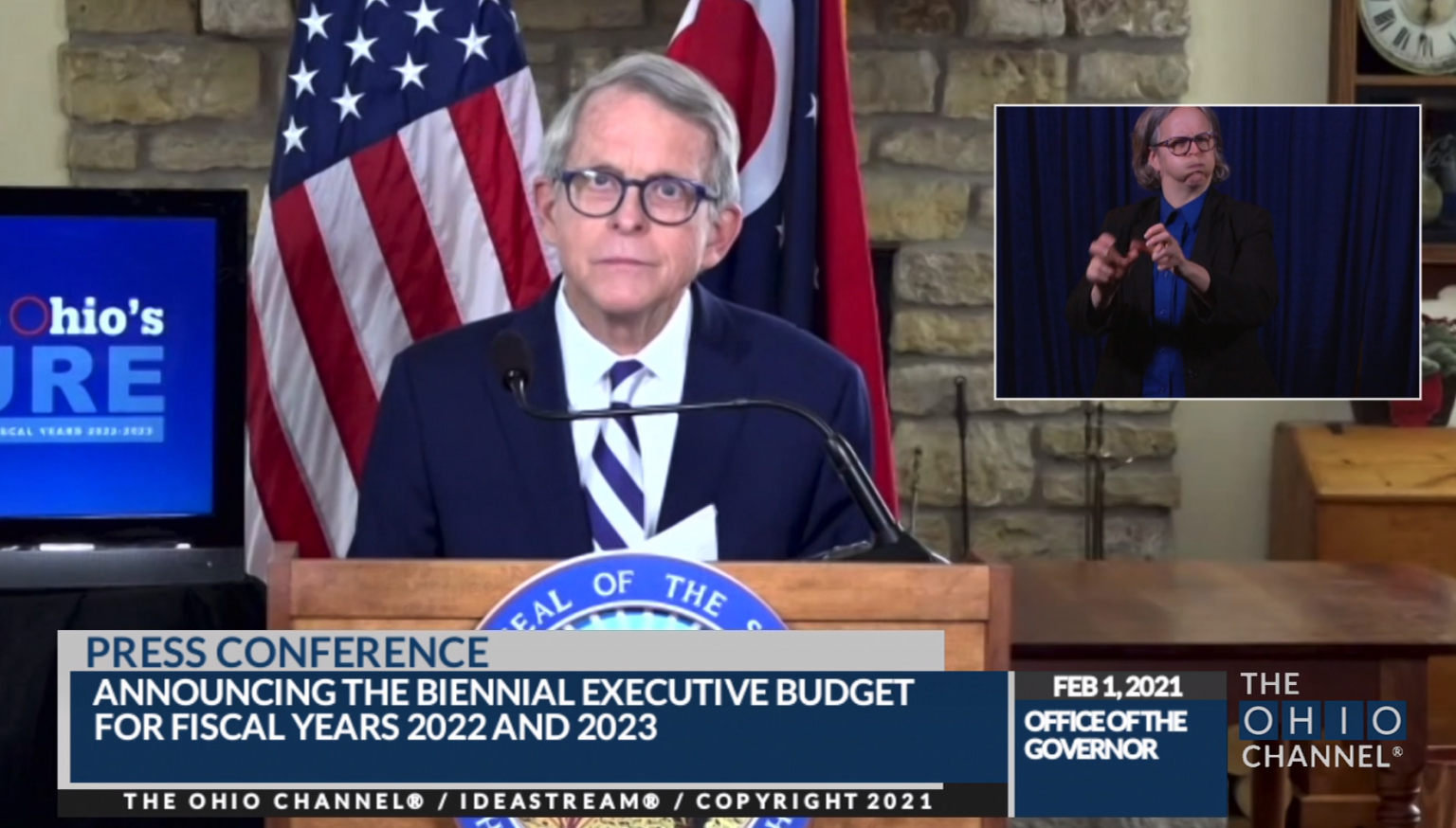
    On Feb. 1, as Black History Month began in Ohio’s classrooms and virtual classrooms, Gov. Mike DeWine unveiled his proposed budget for the next two years, which continues the education funding policies that systematically underfund public schools that educate Black students and even shift some of that funding away toward unaccountable, for-profit private schools. 

    Black History Month is an important time for our nation’s educators to focus their curriculum around the contributions that African Americans have made in government, industry, art, science, literature, and every field of human endeavor. However, we do a disservice to our students if we don’t also teach about the harder, more painful history of slavery, segregation, disenfranchisement, and racist violence, and if we do not weave it into our everyday curriculum as deeply as it is woven into the fabric of our country.

    Even then, we are not telling the full story if we teach about these topics as relics of the past, as dark chapters of our country’s past that have ended. Racist structures in our society didn’t cease to exist when the Thirteenth, Fourteenth and Fifteenth Amendments were ratified following the Civil War, or after Brown vs. the Board of Education desegregated schools, or after the 1964 Civil Rights Act, or even after Barack Obama’s historic election. 

    Each of those events has been an important step along the way, but as we are reminded all too often, the vestiges of white supremacy live on in our current institutions. We see it in the over-policing and incarceration of Black, brown, and immigrant communities, we see it in our city neighborhoods that were shaped by redlining, and we see it in Ohio’s school funding system. 

    When we teach Black history, educators can make the connections about how the racial injustices of the past have turned into the systemic racial disparities of the present, and how we can demolish the underpinnings of injustice. There is no better place to start than with our broken school funding policies which underfund and segregate schools with large populations of Black students.

    In Ohio, we underfund schools in Black communities with a school funding formula that was found unconstitutional by the Ohio Supreme Court more than 20 years ago because it relied so heavily on local property taxes that it denied an equitable and adequate education to students in low-income areas. 

    We segregate schools in Black communities with voucher and charter policies that divert students and drain funding from local public schools. Often cloaked in the language of racial justice, vouchers and charter schools have the opposite effect when put into practice. The NAACP has often opposed these policies because they “divert much needed funding for public education to private or charter schools, thereby further dismantling the viability of the public education system and limiting the number of children who would be afforded the opportunity of an adequate and effective education.”

    This vicious cycle of underfunding schools in communities of color, and then punishing them for not being able to meet their students’ needs by underfunding them further, must end. We must stop pitting parents and communities against one another, and instead renew our commitment for high quality public schools for all Ohio students. 

    Last year, the Ohio House passed the Fair School Funding Plan with an overwhelming bipartisan majority, yet the Senate refused to take the issue up. The Plan would have put Ohio on a six-year path toward equitable funding of public schools in Ohio, and would have immediately ended punitive and harmful deductions for vouchers and charter schools from local public school funds. 

    This would ensure that public school districts receive money only for the students who are enrolled to attend but without the added penalty of deducting money due to students opting for private or charter schools. These changes would strengthen schools in Ohio’s cities and in our rural areas, giving students from all backgrounds increased opportunities. Despite the Fair School Funding Plan receiving an 84-8 vote in the House, the Ohio Senate allowed the bill to die without even receiving a vote. 

    DeWine had the opportunity to take the hard work and bipartisan agreement for this new school funding formula and insert it as a framework into his budget proposal. Instead, his proposal continues the status quo which is actively undermining our ability to provide an equitable education.  

    As educators, we can not teach Black History without also being activists in our own realm, fighting for an education system that gives every child, no matter their race or where they live, equal access to a high quality, free public education.

  • What to know about Gov. DeWine’s proposed state budget

    What to know about Gov. DeWine’s proposed state budget

    Funding for Ohio schools would return to levels seen before the pandemic hit

    by By Tyler Buchanan and Ohio Capital Journal

    Ohio Gov. Mike DeWine outlined his administration’s proposed state budget on Monday, calling his plan “truly an investment into our future.”

    Acknowledging this as being an “extremely challenging time in Ohio,” DeWine nevertheless offered an optimistic view of the coming two years and said 2021 in particular would be a year of recovery. 

    The governor emphasized the need for targeted investments toward Ohio businesses, communities and workers as the state continues to deal with a pandemic that has left thousands dead and more than a million seeking unemployment aid at some point in the past year. 

    “We see a bright future ahead,” said Kimberly Murnieks, the state’s chief budget officer, in helping to roll out the budget plan.

    The proposal kicks off months of negotiating with the Ohio legislature, which is tasked with approving a state budget this summer.

    Here are some main takeaways of how the budget affects everyday Ohioans and some details about the next steps in the budget process:

    Big investments in small businesses, expanding broadband access

    At the centerpiece of DeWine’s budget proposal is a new economic recovery plan referred to as the “Investing in Ohio Initiative.”

    The one-time spending plan includes more than $1 billion toward business grants, community infrastructure projects and workforce development. 

    A total of $460 million in grants would go toward bars, restaurants, entertainment venues and other small businesses hit hard by the pandemic, DeWine said. Of this money, $20 million would be specially allocated for new businesses started since the beginning of 2020. 

    Lt. Gov. Jon Husted outlined a number of proposed investments toward improving the state’s workforce training opportunities, benefiting high school students and adult workers alike:

    Another major component of the Investing in Ohio Initiative is $250 million for broadband expansion throughout the state of Ohio. This is an “incredibly important” priority, Husted said, noting that Ohioans without adequate internet access at home have fewer education, health care and telework opportunities. 

    This proposed spending is made available, DeWine said, due to money saved by the state government during the pandemic as well as increased federal spending in Ohio that has freed up additional money. 

    There is one other aspect of the Investing in Ohio Initiative plan.

    DeWine wants $50 million public relations campaign 

    This is a component of the governor’s proposed recovery plan that turned some heads. 

    DeWine hopes to see the state embark on a $50 million marketing campaign to promote the virtues of Ohio to the rest of America.

    The idea, he said, is to convince residents and entrepreneurs living elsewhere to relocate to the Buckeye State. 

    “We want to position Ohio as the place to be,” DeWine said, saying the campaign should highlight the state’s cultures, cities, universities and workplace opportunities.

    No new taxes, but some new fees

    The governor and chief budget officer repeatedly made note of the effort to not propose any new taxes with this budget.

    It does, however, call for increasing some fees that Ohio residents have to pay at the Bureau of Motor Vehicles. The budget proposes a $10 increase on motor vehicle registration fees and a $2 increase on title fees. 

    This would raise millions of dollars benefitting the Ohio State Highway Patrol, which Murnieks said is in need of additional funding to pay for its operations and security responsibilities. (The Patrol provides security at the Ohio Statehouse.)

    Health and Education

    Public health should remain a major funding priority going forward as Ohio navigates the COVID-19 pandemic, DeWine said.

    He mentioned a particular need to invest in better data systems for health departments to process and report public health information. 

    The governor will talk in future detail about the proposed public health spending in his Tuesday pandemic press conference, Murnieks told reporters. 

    Gov. DeWine said his budget would allocate funding toward improving Ohio health departments’ ability to process data and information. The Ohio Department of Health’s COVID-19 dashboard is seen in a screenshot from Monday afternoon.

    The budget proposes a notable increase in state Medicaid spending. Murnieks said this is due to a rise in the number of Ohioans relying on Medicaid during the ongoing health crisis and an expected decrease in federal funding.

    Regarding education, DeWine did not include any changes with the K-12 funding formula in his budget proposal, noting that lawmakers are still debating the issue.

    In sum, funding for Ohio schools would return to levels seen before the pandemic hit. (OCJ covered the education budget proposals in a separate article which you can read here.)

    ‘Rainy day fund’ still untouched

    Throughout the pandemic, DeWine has said the state would not tap into its $2.7 billion “rainy day fund” unless it was absolutely necessary.

    The state opted against doing so for all of 2020, even while instituting hundreds of millions of dollars in cuts to public education last May. 

    Likewise, the state evidently has no intention of using that money in 2021. DeWine did not propose any funds be used from the rainy day fund in his budget proposal.

    Murnieks told reporters that it’s beneficial for Ohio to continue saving it for any future budget catastrophe. She said the state likely would have relied on this money had it not been for the funding assistance provided by the federal government. 

    What’s next?

    The state legislature will now start reviewing the budget proposal.

    The negotiating process begins in the two chambers’ Finance Committees. Eventually, the budget will come to a full vote in the Ohio House of Representatives and the Ohio Senate. Members from both chambers will then hash out any differences before a final budget bill heads to the governor’s desk for approval.

    The budget must be approved by the start of the new fiscal year (July 1), though it’s not uncommon for negotiations to continue past that date with a temporary budget in place.

    More information about the budget proposal is available online at budget.ohio.gov, with information about current state spending available at checkbook.ohio.gov.

  • Ohio Republicans slammed over coronavirus enforcementBy Marty Schladen – July 13, 2020

    Ohio Republicans slammed over coronavirus enforcementBy Marty Schladen – July 13, 2020

    Columbus, OhioThe coronavirus is raging in Ohio, but the state’s Republican leaders seem disinclined to enforce rules intended to protect against it. (How does Hamilton County avoid Level 4 Alert)

    Attorney General Dave Yost won’t say whether he’ll support enforcement of new orders to wear masks in the state’s hardest-hit counties. And the official who issued them, Gov. Mike DeWine, has made several statements indicating that he doesn’t want to see anybody punished for not following measures intended to slow the spread of the deadly disease.

    Mike Samet the Public Information Officer for Hamilton County Public Health told Loveland Magazine on Friday that from an enforcement perspective, as a county agency, the Health Department is not able to issue citations. “Nobody wants to be the mask police. This is education over enforcement, he said. Samet added that he wants people to understand why masks are important now, not punish them for non-compliance.

    Ohio set a record for new cases Friday — 1,525 — after seeing them trend sharply upward over the past few weeks. The case count was nearly triple the three-week average of 531.

    Gov. Mike DeWine, has made several statements indicating that he doesn’t want to see anybody punished for not following measures intended to slow the spread of the deadly disease.

    The news comes as six other states — Alabama, Idaho, Missouri, Montana, Oregon and Texas — set new single-day records of their own on Thursday. It also was the sixth day out of the past 10 in which the United States set one-day records for new cases of the coronavirus, which now has killed more than 3,000 in Ohio and more than 130,000 nationwide.

    Also last week, a New York Times data analysis showed that the disease in the United States is taking on a disturbing racial dimension, with Blacks and Latinos around three times as likely as whites to get the new coronavirus.

    The World Health Organization and the U.S. Centers for Disease Control both have said that widespread mask wearing would reduce the spread of the disease. One study indicated that if 80% of people wore them, the spread would plummet to one twelfth what it would be if nobody did.

    Yet Yost, the state’s top law-enforcement officer, last week didn’t respond to questions about whether he supports enforcement of last week’s orders that people in Ohio’s 12 hardest-hit counties must wear masks inside public buildings.

    In late March, Yost ordered that many abortions be halted in Ohio, arguing that the move was intended to conserve healthcare resources in the face of the coronavirus pandemic.

    In June, he urged a municipal court to drop charges against a couple accused of opening their Cambridge-area restaurant in defiance of an earlier, DeWine-issued health order that it remain closed.

    Then earlier this week, Yost said that the Columbus city government doesn’t have the power to enforce mask orders in state buildings — places where many Republican lawmakers have refused to wear them.

    On Monday, a spokeswoman for Yost explained that the attorney general can’t have any official involvement in cases relating to health orders unless asked by local prosecutors. “We don’t have the authority,” the spokeswoman, Bethany McCorkle, said in a text message.

    She added, however, that Yost has worn a mask since before there was a health order and encourages others to do the same.

    The attorney general and his staff haven’t responded to subsequent questions about the order DeWine issued on Wednesday evening requiring masks in the worst-hit counties.

    David Pepper (Photo from Ballotpedia)

    Ohio Democrats are already up in arms about Republican legislative leaders’ refusal to share details about the spread of coronavirus in the Statehouse and surrounding office towers. David Pepper, the party chairman, on Friday slammed the attorney general for his apparent reluctance to support the enforcement of mask orders.

    “As far as Dave Yost is concerned, refusing to enforce health orders is just one more example that the Ohio GOP has become the party of Donald Trump, Nino Vitale and John Becker,” Pepper said in a text message. “Sadly Ohio COVID cases are spiking because of it.”

    “Even though initially it appeared that Mike DeWine was being guided by scientists and public health experts, it seems that politics and the desires of the business community are driving more of the governor’s decision making now,” party chairman David Pepper said.

    President Donald Trump has repeatedly downplayed the pandemic, floated unproven cures for it and refused to appear in public wearing a mask. Among his other statements, Ohio Rep. Nino Vitale, R-Urbana, last Tuesday took to Facebook to urge Ohioans to stop even getting tested for coronavirus. And Ohio Rep. John Becker, R-Union Township, has introduced legislation that would strip state officials of the power to enforce any health order.

    Meanwhile, in the absence of much support from his party, DeWine has said he doesn’t plan to use his authority under his mask order to arrest people for not following it.

    Ohio Governor Mike DeWine

    “We’re not talking about throwing people in jail,” DeWine said during a press conference Thursday. “This is a law to advise people what to do.”

    DeWine has enjoyed overwhelming, bipartisan support over his handling of the coronavirus. But at least for Ohio’s top Democrat, patience might be wearing thin.

    “Even though initially it appeared that Mike DeWine was being guided by scientists and public health experts, it seems that politics and the desires of the business community are driving more of the governor’s decision making now,” Pepper said. “Even with fewer cases, even West Virginia and Kentucky are being more proactive in addressing the pandemic.”


    The Ohio Capital Journal is a hard-hitting, independent, nonprofit news organization dedicated to connecting Ohioans to their state government and its impact on their lives. The Capital Journal combines Ohio state government coverage with relentless investigative journalism, deep dives into the consequences of policy, political insight and principled commentary.