

Tag: stay at home order

  • Hamilton County Public Health modifies syringe  and harm reduction services during Covid-19 Pandemic

    Hamilton County Public Health modifies syringe and harm reduction services during Covid-19 Pandemic

    Clients can schedule an appointment to receive Narcan via a drive-through service.

    Hamilton County, Ohio – Before COVID-19 commanded the lion’s share of headlines, Hamilton County Public Health (HCPH) was in the midst of another battle — fighting the disease of addiction.

    “We have made some modifications to our program to ensure the health and safety of our clients and our harm reduction team.”
    “We certainly haven’t lost sight of those struggling with addiction,” says Greg Kesterman, interim health commissioner at Hamilton County Public Health. “But we have made some modifications to our program to ensure the health and safety of our clients and our harm reduction team.”

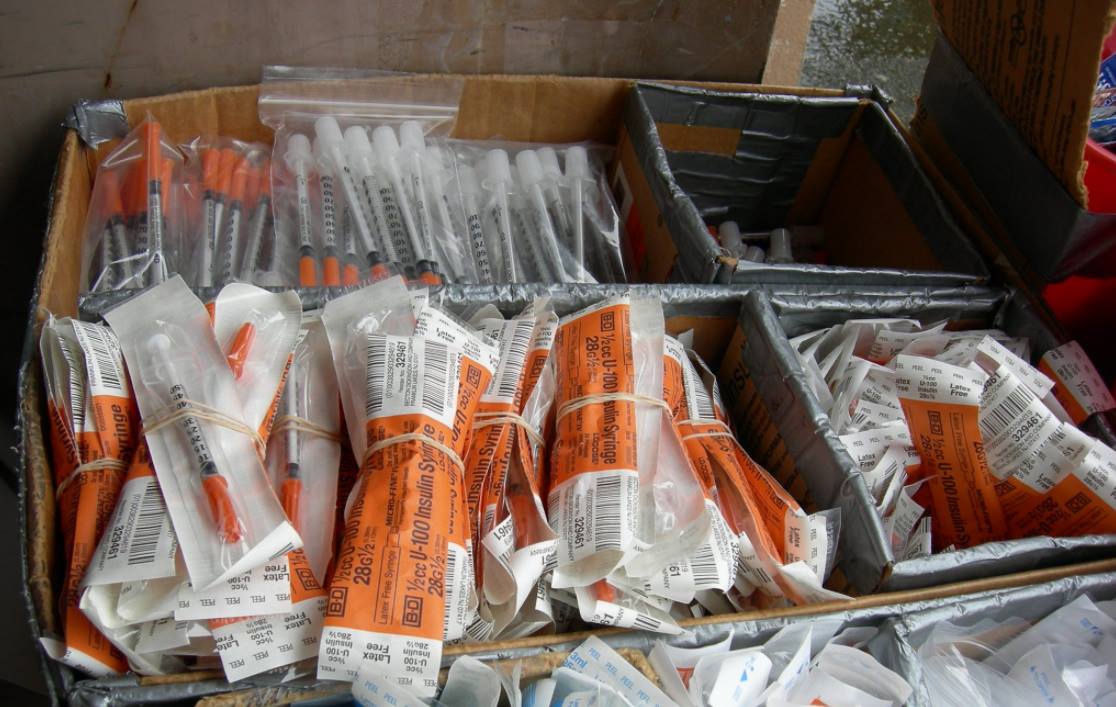
    Syringe services are now available only through an appointment.  Clients will receive a one-month supply of all items offered through the service. Clients can schedule appoints by phone, text, e-mail or through Facebook. Call or text 513-316-7725; log onto Facebook: @hc.xchange; or e-mail ExchangeProject@hamilton-co.org.

    These calls will help clients find healthcare, housing, food or other needed resources.

    In addition to syringe and other exchange service items, the HCPH team implemented a text service for its clients with alerts and messages covering a number of health and safety issues. The team is also reaching out through clients’ preferred communication mediums to check in during the stay-at-home order. These calls will help clients find healthcare, housing, food or other needed resources.

    The HCPH Harm Reduction team is also continuing its distribution of Narcan®.

    The HCPH Harm Reduction team is also continuing its distribution of Narcan®, the overdose-reversing drug. Clients can schedule an appointment to receive Narcan via a drive-through service. To schedule an appointment, call or text 513-946-7676; log on to Facebook: facebook.com/hc.narcan; or e-mail narcan@hamilton-co.org.

    The HCPH team is also working closely with the Hamilton County Justice Center to ensure inmates released from incarceration have the appropriate resources. Each inmate will receive resource information in their property bags upon release. Finally, addiction treatment providers are operating during the COVID-19 pandemic.  The HCPH team is available to help clients navigate the referral process to enter treatment.

    “These are difficult times for all of us, but certainly for those with additional medical challenges,” Kesterman adds.  “Even though we are all working to comply with stay-at-home requirements, our clients’ needs don’t go away. That’s what we’re here for.”


     

  • Brown, colleagues urge administration to help victims and survivors of domestic violence during coronavirus pandemic

    Brown, colleagues urge administration to help victims and survivors of domestic violence during coronavirus pandemic

    Washington, DC – U.S. Senator Sherrod Brown (D-OH) joined 23 of his Senate colleagues in writing a letter expressing concern for the wellbeing of families who face an increased risk of domestic violence during the outbreak of the novel coronavirus and urged the administration to ensure service providers have the flexibility and resources to help victims and survivors of domestic violence. 

    Click image or call 1-800-799-7233 1-800-787-3224 (TTY) -En Español

    “We write to express our concern for the wellbeing of families who face an increased risk of domestic violence during the outbreak of the novel coronavirus (COVID-19). We also ask that the Administration for Children and Families (ACF) and the Office on Violence Against Women (OVW) ensure that the organizations that help victims and survivors of domestic violence have the resources and information needed to continue to provide these critical services during the pandemic. The senators wrote:

    Dear Assistant Secretary Johnson and Acting-Director Rogers:

    We write to express our concern for the wellbeing of families who face an increased risk of domestic violence during the outbreak of the novel coronavirus (COVID-19). We also ask that the Administration for Children and Families (ACF) and the Office on Violence Against Women (OVW) ensure that the organizations that help victims and survivors of domestic violence have the flexibility, resources, and information needed to continue to provide these critical services during the pandemic.

    In recent weeks, states and cities across the country have taken a variety of steps to mitigate the spread of the virus, including closing schools, limiting access to public spaces and restaurants, and instructing people to shelter in place. Many people are now working from home, while others have been required to take unpaid leave or have lost their jobs.

    An unintended but foreseeable consequence of these drastic measures will be increased stress at home, which in turn creates a greater risk for domestic violence. According to one recent article, emergency situations have “historically led to increased reports of domestic abuse” to the National Domestic Violence Hotline. In addition, domestic violence service providers expect an increase in the need for emergency childcare and domestic violence shelters, as well as for supplies to keep centers and program sites safe and secure.

    Many of these programs are administered by your offices and funded through grants authorized by the Family Violence Prevention and Services Act and the Violence Against Women Act. It is critical that your agencies ensure that victims and survivors of domestic violence continue to have access to these vital services. Accordingly, we request answers to the following questions, as well as a telephonic briefing with members of our staff, regarding actions ACF and OVW are taking no later than March 31, 2020:

    1. Have the domestic violence programs that ACF and OVW administer seen an increase in need over the past 60 days, as a result of the COVID-19 mitigation efforts in place at the local, state, and federal level? If so, please provide detail, to the extent possible, broken down by state or territory.

    2. How have the domestic violence programs administered by your offices been strained as a result of the ongoing COVID-19 pandemic?

    3. What steps have ACF and OVW taken to prepare for a potential rise in the need for domestic violence programs or services?

    4. What will ACF and OVW do to provide organizations an opportunity to request additional financial support to respond to an increased demand for services?

    5. What steps has ACF and OVW taken to ensure that survivors continue to have to access to judicial proceedings, including the opportunity to seek a protective order?

    6. What steps will ACF and OVW take to provide greater flexibility for service providers who may be required to alter their programs without risking their eligibility for funding?

    7. If programs have to close or suspend services due to COVID-19, will ACF and OVW offer grantees flexibility to continue to support the programs’ employees?

    8. What information or resources have you made available to domestic violence organizations, particularly with regard to ensuring the safety of front line employees?

    9. Have ACF and OVW provided guidance about how organizations should alter their operations in order to maintain services while providing for the safety of staff, including remote or mobile operations?

    10. What additional guidance or resources are ACF and OVW providing domestic violence organizations that serve American Indians / Alaska Natives, rural, and underserved communities?

    Thank you for your attention to this important matter. We urge you to take immediate action to prepare for a potential increase in incidents of domestic violence and look forward to your prompt response.

    Sincerely,

    Along with Sen. Brown, Senators Amy Klobuchar (D-MN), Lisa Murkowski (R-AK), Bob Casey (D-PA), Chris Coons (D-DE), Bernie Sanders (I-VT), Richard Blumenthal (D-CT), Kirsten Gillibrand (D-NY), Ed Markey (D-MA), Mazie Hirono (D-HI), Jack Reed (D-RI), Jacky Rosen (D-NV), Tina Smith (D-MN), Kamala Harris (D-CA), Dick Durbin (D-IL), Maggie Hassan (D-NH), Bob Menendez (D-NJ), Elizabeth Warren (D-MA), Catherine Cortez Masto (D-NV), Mark Warner (D-VA), Jon Tester (D-MT), Cory Booker (D-NJ), Ron Wyden (D-OR), and Sheldon Whitehouse (D-RI), joined in signing the letter.


    When survivors are forced to stay in the home or in proximity to their abuser, it can create circumstances where their safety is compromised, and they may need to alter their safety plan.

    For any victims and survivors who need support, we are here for you, 24/7.

    Call 1-800-799-7233 or if you’re unable to speak safely, you can log onto the hotline.org or text LOVEIS to 22522