Former NFL player Dale Moss, center, with Special Olympics athletes Madi Madory, left, and Joshua Olds wearing sweatshirts that are part of the new “Yeah, I am Special” campaign. (Special Olympics)
With a new campaign, Special Olympics wants to take back the word “special” and other language that they say has been turned against people with disabilities.
The international sports organization for people with intellectual disabilities is rolling out the effort dubbed “Yeah, I am Special” with a pair of New York City billboards and a video voiced by ESPN commentator Stephen A. Smith.
The group is also touting appearances by high-profile supporters like Milwaukee Bucks player Damian Lillard and former NFL player Dale Moss wearing apparel that says “special.”
This is all a precursor to a global digital campaign planned for next year, Special Olympics said, to address the stigma that’s associated with the word “special” and other similar language used around the world to demean people with disabilities.
David Miller is the Managing Editor of Loveland Magazine
Listen to the emotional account as Tori Morrison tells you how she finally summed up the emotional courage to meet the man who received Ben’s liver and kidneys
by David Miller
On September 22, Tori Morrison and Kate Jackson came to the LOVELAND MAGAZINE TV studio at the Simpson Farmhouse to talk about a new initiative of the Ben Morrison Fund. Morrison is the President and Treasurer of the Fund and Jackson is a member of the Board.
The fund was established after Morrison lost her son Ben and his battle with his hidden mental health problems. Ben took his life by suicide in 2021. To honor Ben and help erase the stigma of pain and struggles with mental health, the fund was established to fight for others and fight against that stigma to help make sure no one feels alone.
__________________
“Ben’s continuing legacy will not be one of loss, but as a lifesaver through organ donation, as a loyal friend and stalwart teammate and a man of deep compassion for others. His legacy will go on through the Ben Morrison Fund and through those of us who serve that cause and carry him with us to take care to light the way out of darkness for others and spark hope to always continue your story.”
__________________
The Ben Morrison Memorial Fund is committed to providing scholarships to graduating seniors from Loveland High School. They are dedicated to erasing the stigma of mental health struggles, opening conversations, and offering lifelines to help save the lives of young people in crisis.
The Ben Morrison Memorial Fund is a 501(c)(3) nonprofit organization.
In this interview, my guests will tell you about Ben and the life of giving and kindness he led, most of it not obvious to his mother Tori. She tells how “onery” Ben could be, typical of teenagers not allowing parents to know their true selves.
Tori tells you that when Ben got his driver’s license she encouraged him to sign up to be an organ donor and asked him if he would. Ben would never answer her, his cantankerous nature was a tease. Tori and Ben’s father never knew he had signed the form until in the hospital after Ben took his life they asked them if it would be OK to harvest some of Ben’s organs. Realizing then that to their surprise Ben wanted that too, without hesitation they agreed.
Listen as Tori reveals for the first time how the donor process works and how she became emotionally strong enough to agree to meet the man who received Ben’s liver and kidneys.
Tori has now determined, because of the suggestion by Kate, that the current Loveland High School students don’t know what attributes Ben had that so enamored his class and teammates to him, and Ben’s Way would be a good vehicle to keep his legacy alive.
• Ben spoke up for others.
• He was unselfish.
• A leader, and protector.
• A young person who led by example and modeled hard work and resilience.
• Ben treated others with acceptance, kindness, and encouragement.
These attributes were revealed to them through the applications and actual words of the students who applied for the 21 scholarships the fund has awarded. Kate tells a story about being inspired after witnessing a young student one day that reminded her of Ben in the kind way he was treating a “special needs” child. Kate says, “Well number one, this is something Ben would do, and number two, this child should be recognized for doing something so positive in a world that’s not always so positive.” The child had done something, Ben’s way.
Watch Tori and Kate tell you how Ben’s Way will transform life and lives at Loveland High School.
__________________
Ben may have been one of those unrecognized/uncounted victims of the COVID-19 Pandemic
Covid was hard for Ben, as for all those seniors. He didn’t get his final lacrosse season, prom, graduation, or grad parties, and life changed in so many ways. He didn’t know what his next chapter should be. But later that year, he decided to become a Firefighter and go to community college. He didn’t get to start those chapters. For some reason we will never know, maybe a bad day, a moment of self-doubt, an offhand comment that cut too deep, some inner turmoil or unspoken conflict, our Ben, a boy who never expressed depression nor showed signs of any form of struggle with mental illness, was suddenly and without explanation gone from our lives forever.
__________________
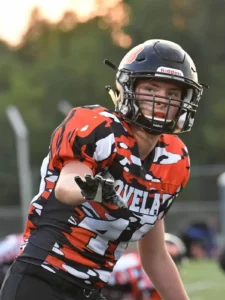
Kate Jackson was a football “Team Mom” and her son was a teammate of Ben when they played for Loveland High School. Ben also competed in lacrosse. Jackson said, “Ben was an important part of my son’s life and an important part of my life and Tori became likewise an important part of my life.”
______________
Become a Ben’s Way Sponsor
As a sponsor of Ben’s Way, you will help us bring this initiative to more schools. Students that are chosen will receive a $25 gift card.
if you would like to sponsor Ben’s Way at a school, or you would like to bring Ben’s Way to your school, please send an email to BensWayInitiative@gmail.com
On Saturday, September 29 Cappy’s Wine and Spirits is hosting a fundraiser for the Ben Morrison Fund featuring the Chuckies in Love band playing the “ultimate throwback tunes, bringing you the iconic sounds of the 70s & 80s”.
Watch Chuckies in Love…
Become a Ben’s Way Sponsor
As a sponsor of Ben’s Way, you will help us bring this initiative to more schools. Students that are chosen will receive a $25 gift card.
if you would like to sponsor Ben’s Way at a school, or you would like to bring Ben’s Way to your school, please send an email to BensWayInitiative@gmail.com
NAMI offers educational programs, support groups, and an information and referral phone line. They work together with their national organization (NAMI) and their state affiliate (NAMI Ohio) to advocate for people living with mental illness and their families.
NAMI Southwest Ohio is committed to the following values:
Recovery: Recovery is possible with comprehensive treatment. Mental illness, like most other illnesses, comprises biological, psychological, and social factors.
Access to Treatment: All individuals should have access to treatment appropriate to their needs.
Needs Adequately Addressed: The needs of all those affected by mental illness, including people living with mental illness, family members, friends and others should be adequately addressed.
No Guilt, Shame, Blame or Stigma: There should be no stigma associated with mental illness.
Collaboration: Collaboration within the mental health community is vital to effective treatment and recovery.
Excellence: All NAMI’s support, education and advocacy programs should be conducted with the highest possible standards.
Inclusion: All segments of the community should be included as we seek to be the voice for mental health in Southwest Ohio.
Respect: All individuals should be treated with respect in every situation.
Openness and Responsiveness to Change: NAMI will be quick to adapt to positive research, medications and treatment, and will be willing to consider changes that will improve the delivery of our mission.
Fiscal Responsibility: Financial policies and decisions will be carefully weighed in order to optimize the use of resources in the most efficient and effective manner.
The Youth America Hotline is a free peer-to-peer hotline network that links callers to community-based peer counseling hotlines.
Call 911 if you are facing a dangerous situationor thinking about hurting yourself
Crisis Text Line
Text START to 741741
The Crisis Text Line is available 24/7 to help you with any kind of crisis. Visit www.crisistextline.org/faq to learn more about how the Crisis Text Line works.
CEO, Dan Gillison, talks to the NAMI community about COVID-19
Local Resources By County
Butler County:
Mobile Crisis Team And Consultation
(844) 4CRISIS (1-844-427-4747)
24-hour Hotline: Need someone to talk to? Call the same Mobile Crisis Team phone number above. They are there to help!
This free and confidential hotline is available 24-7 and provides suicide prevention, crisis intervention and referral information to Clermont County youth and adults.
To refer an adult or child, call (513) 584-5098. Mobile Crisis is available Monday through Friday from 8:30 am to 12:00 am and Saturday and Sunday from 12:00 pm to 8:30 pm.
After hours, referrals can be made through Psychiatric Emergency Services (PES). Call (513) 584-8577. PES will page the Mobile Crisis Team if necessary.
Mental Health Access Point (MHAP) exists as the front door to the Hamilton County public mental health system. MHAP, a division of Central Clinic, provides assessment, support, and connections for children and adults residing in Hamilton County who are in need of mental health services.
The National Suicide Prevention Lifeline is a free, 24-hour hotline available to anyone in suicidal crisis or emotional distress. Calls will be routed to the nearest crisis center to you.
The Veterans Crisis Line connects Veterans in crisis and their families and friends with qualified, caring Department of Veterans Affairs responders through a confidential toll-free hotline, online chat, or text.
Suicide Prevention In College Resource Guide
This online guide, created by Affordable Colleges Online, is designed to offer hope and help for college students who are experiencing suicidal thoughts, as well as their friends and family.
Trained volunteers provide information, referrals, and support to all who have questions about or are affected by serious mental illness. The NAMI Information Helpline is available Monday through Friday, 10:00 am to 6:00 pm EST.
Call 911 if you are facing a dangerous situationor thinking about hurting yourself
Activist Greta Thunberg called world leaders to account on Monday with a blistering indictment of their failure to act on climate change.
The response of at least one world leader was to make fun of her.
President Trump tweeted sarcastically on Monday that Thunberg, who had just charged the audience at the United Nations Climate Summit with stealing “my dreams and my childhood with your empty words,” seemed like “a very happy young girl looking forward to a bright and wonderful future.” Others on the right also mocked and dismissed Thunberg, with conservative commentator Michael Knowles calling the 16-year-old activist a “mentally ill Swedish child” on Fox News.
Knowles appears to have been insulting Thunberg for having Asperger’s syndrome, an autism spectrum disorder. Autism isn’t a mental illness — it’s classified as a developmental disability. But advocates say that attacks like the ones Thunberg has faced are all too familiar for autistic people.
Thunberg may be experiencing especially strong stigma from the right because she’s not just autistic, but also female. “Autistic girls tend to face a lot of pressure not just to act like non-autistic people, but also to live up to the same gendered expectations many girls face,” Bascom said. “We always have to be smiling and compliant.”
When haters go after your looks and differences, it means they have nowhere left to go. And then you know you’re winning!
I have Aspergers and that means I’m sometimes a bit different from the norm. And – given the right circumstances- being different is a superpower.#aspiepower
Cassie Mattia lives in Historic Downtown Loveland, Ohio.
If we don’t protect our youth who will? In May, Ohio Paul Zeltwanger and Thomas Brinkman proposed House Bill 658, which states:
“If a government agent or entity has knowledge that a child under its care or supervision has exhibited symptoms of gender dysphoria or otherwise demonstrates a desire to be treated in a manner opposite of the child’s biological sex, the government agent or entity with knowledge of that circumstance shall immediately notify, in writing, each of the child’s parents and the child’s guardian or custodian. The notice shall describe the total circumstances with reasonable specificity.”
gen·der dys·pho·ri·a
ˈjendər disˈfôrēə/
noun
MEDICINE
The condition of feeling one’s emotional and psychological identity as male or female to be opposite to one’s biological sex. How to pronounce gender dysphoria.
In plainer language House Bill 658, also known as the “Parent’s Rights Bill,” would make any school administrator or teacher who allows or offers gender dysphoria (the condition of feeling one’s emotional and psychological identity as male or female to be opposite to one’s biological sex) treatment, including resources on sex and gender or counseling, for a minor “without the written, informed consent of each of the child’s parents and the child’s guardian or custodian” they could be charged with a felony in the fourth degree. The parents of the student according to the bill would get the ultimate decision whether their child gets access to treatment, including educational materials, counseling or medical services.
If this House Bill is implemented it could have detrimental consequences for teachers and even more importantly for those students affected. Teachers are there to lend their students a helping hand educationally and emotionally in order to prepare them for what’s to come once they are out on their own, why take this from them?
A teacher’s take on House Bill 658
I spoke to one Loveland teacher who wishes to remain anonymous, a mom of a teenager. I’ll call her Susan. She told me that for many students their home life is a wreck and out of control with issues of poverty, broken families, and domestic abuse. “For many of my students, the only adult in their life that can be trusted may be their teacher. Teachers who lend an ear and can be trusted can be an enormous help that often reflects on their academic achievement. We care for the whole child.”
Susan told me that for many students their home life is a wreck and out of control with issues of poverty, broken families, and domestic abuse. “For many of my students, the only adult in their life that can be trusted may be their teacher.”
Susan told me that she just overheard a conversation between her daughter and a friend about a classmate they thought was transgender. “I wondered, do they know what that means? Are they friends with this young person? How do my kid and others treat her? Because I am a teacher, would I be required to file a report with the District? These are all questions that ran through my head as a mom and a teacher.”
Susan said she wants to protect and support all of her kids, her biological ones and the ones that are “her’s” for a school year. “I want to be able to do that freely and openly and with my heart.” She said that some of her students desperately need someone they can trust in their life and the last thing they need is another person that will let them down because politicians want school staff charged as felons if they don’t report that the student herself, or a classroom teacher, principal, gym teacher, bus driver, or classmate may be questioning her gender identity.
Susan asked, “Just what stereotypes am I going to be expected to police?
HB 658 is a harmful bill that takes aim at some of our most vulnerable — transgender youth — by forcing school officials to serve as ‘gender police’ and out them or risk getting a felony.” – Alana Jochum
LGBTQ advocacy
“HB 658 is a harmful bill that takes aim at some of our most vulnerable — transgender youth — by forcing school officials to serve as ‘gender police’ and out them or risk getting a felony,” said Alana Jochum, executive director of LGBTQ advocacy group Equality Ohio. Jochum told NBC News. “This exposes young people to discrimination, harassment, and bullying.”
Jochum couldn’t be more correct if you really take a look at the alarming statistics. One study done by the Cincinnati Enquirer showed that 64% of LGBTQ youth in Ohio heard “negative comments” about their gender identity or sexual orientation from their family and in result, according to another study done by National Transgender Discrimination, 41% attempted suicide. Though many transgender students
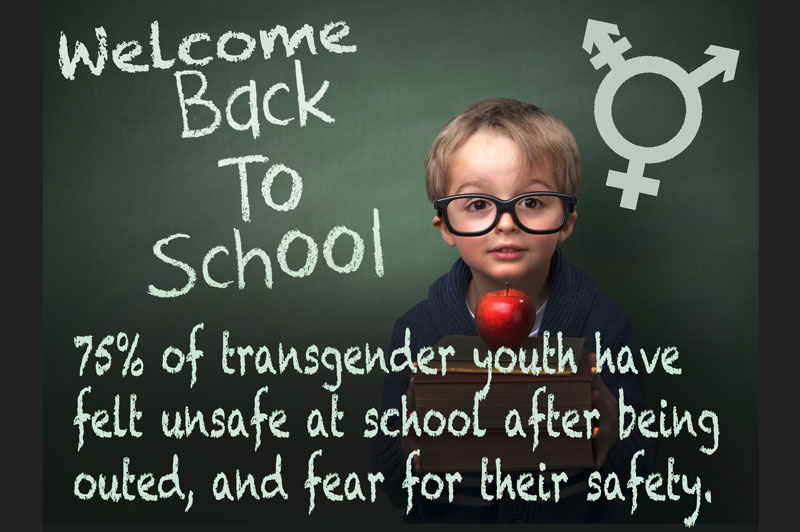
75% of transgender youth have felt unsafe at school after being outed and have lower GPA’s due to missing school in fear of their safety.
have experienced negative comments, violence has become the most popular form of dealing with transgender youth. Disturbingly enough 19% of transgender youth, according to the National Center for Transgender Equality, experience the majority of violent abuse in their home from their own family members. Along with dealing with all the dissension from family members 75% of transgender youth, according to a national survey done by GLSEN (pronounced “glisten”), have felt unsafe at school after being outed and in result have lower GPA’s due to missing school in fear of their safety. With all the facts at hand, The Ohio Education Association who represents 125,000 teachers and support professionals, have openly opposed the bill.
Violence has become the most popular form of dealing with transgender youth.
Kathryn Lorenz is the Loveland Board of Education Vice President
While researching House Bill 658 I managed to only get a response from two local representatives of the Loveland School Board, one being Kathryn Lorenz, the Board Vice President and the other being Loveland School Board Member, Ned Portune. Lorenz’s response was, “In the case of House bill 658, we would have to say that we do not yet have enough information, nor have we met as a board for a few weeks, so we do not yet have a Board statement to make.”
Ned Portune is a member of the Loveland School Board
Portune added that he, “…simply has not been fully informed at this point on HB 658 to have an educated opinion. There are several items in your statement that would certainly give me a gut reaction, and opinion on, if true as presented. But I need time to fully review the Bill, its implications and existing laws to have any formal statement.”
School Superintendent Amy Crouse, High School Principal Peggy Johnson, and assistant principals at the High School did not respond.
Studies show most transgender youth are fully aware of their gender identity by age 4.
After attempting several times to contact both Representatives Paul Zeltwanger and Thomas Brinkman through email and phone about House Bill 658, I, unfortunately, got no response. It wasn’t hard to find Brinkman’s opinion on the issue in several other publications though, voicing to WCPO, “Parents have the right to decide what is best for their children,” and telling WOSU Public Media, “And if somebody doesn’t like it, you’re emancipated at age 18 and you can go do whatever the heck you want.” Seems pretty harsh considering the transgender population represents about 0.3% (700,000) of Americans and studies show most transgender youth are fully aware of their gender identity by age 4. Are we encouraging parents and administrators to discard their students or child’s gender identity in fear of social rejection? Do these children not deserve to live an authentic life?
Fran Hendrick, PCC has offices at Wildflower House in the West Loveland Historic District.
House Bill 658 is expected to be presented to the Ohio General Assembly in the Fall and will be without a doubt one of the most controversial bills to date. Many have opinions on this issue one being Fran Hendrick, a respected and highly educated clinical counselor who specializes in assisting women and girls who are experiencing depression or anxiety triggered by a crisis or major life change. When I presented Fran with House Bill 658 and asked what her opinion was she had a lot to say and rightfully so considering one of her life missions, according to Fran’s website franhendrick.com, is to “gently help you find and shelter your spark (the essence of who you are at your core) and grow it so that it illuminates your person and is radiated through words, actions and decisions, big and small, that make up your daily life.”
In a culture such as ours, it is a matter of life and death for transgender youth to decide if and when to trust another person with their reality. – Fran Hendrick, PCC
“Being a parent takes great courage, even more so when your child presents you with something that you’re unfamiliar with – or even afraid of. In a perfect world, a child who feels somehow ‘different’ from their peers (‘their’ is deliberately gender-neutral), they could consult their parents, who would strive to deeply understand the child’s experience, would provide accurate empathy, and would go on a crash course to learn everything they could about the unfamiliar issue. And, so very fortunate for their children, there are many parents like these.
But in the real world, an adolescent boy saying to his father, ‘Dad, I think I’m a girl’ is very likely to encounter disgust, rejection, rage, or even violence, not empathy and understanding.
While the intent of this bill, giving benefit to grave doubt, could be a deeply uninformed and misguided attempt to protect children, that seems unlikely. My sense is that in truth it is more about attempting to hand parents the power to say no to their child’s gender identity,” Hendrick said, “But gender identity – and sexual orientation, for that matter – are not matters of choice. And in a culture where transgender people are assaulted and even murdered at a rate higher than their cisgender counterparts,where transgender youth are summarily shunned and rejected by their own parents (the rate of homelessness is, not surprisingly, very high), where the suicide rate that results from these atrocious facts is far higher than for other youth – in a culture such as ours, it is a matter of life and death for transgender youth to decide if and when to trust another person with their reality, and, most importantly, whom to trust.
To be “outed” for the choice to trust; or to be prosecuted for trying to be help – these are not protections. Actions like these support bigotry, and increase isolation and despair. – Fran Hendrick, PCC
To be “outed” for the choice to trust; or to be prosecuted for trying to be help – these are not protections. Actions like these support bigotry, and increase isolation and despair. Stopping a teacher from helping such a student, one who is likely alone with the reality of their gender identity, who stands to be emotionally and psychologically rejected, or even physically abused, by their own family is, quite simply, a cruelty. This, I strongly believe, is not what the overwhelming majority of parents want for their own or anyone else’s children. This is bad enough. However, this bill opens the door to much more far-reaching damage than this.”
Is he to be turned in to the gender police?
The talented young male artist who despises sports – is he to be turned in to the gender police? The girl who chooses overalls and a t-shirt rather than a dress and a mani-pedi –what of her? The sponsors of the bill have explicitly said that teachers should be required to inform on them, as well. We have an essential responsibility to ensure that proposed legislation protects vulnerable people from the bigotry endemic in our society.This legislation explicitly deprives them of protection.”
Ultimately what it comes down to is ensuring that our children are and feel safe when going to school. Teachers and administrators are the ones that take on the responsibility of creating that fun, loving and supportive atmosphere so that our children get the best opportunities in life. Passing a bill such as House Bill 658 only presents another obstacle that both teachers and administrators have to overcome. Don’t these professionals have enough obstacles to conquer as is?
Both Justin Haake and Tonya Schaeffer who are Professional Clinical Counselors for Hope Restored Counseling Services in Loveland couldn’t agree more.
Justin Haake is a Licensed Professional Counselor at Hope Restored Counseling Services in Loveland and works primarily with adolescents and adults, specifically during transitional periods in life.
Haake said, “For some, teachers and school administrators may be the only people in schools that feel safe for students to reach out to.Imagine the fear of asking for support, knowing that you’ll either be outed or put the teacher or administrator at risk of a felony.”
Schaeffer said, “From my perspective, this would most likely increase the level of bullying and possible harm to these students.There is already so much shame and stigma attached with Transgender people, and they need as much support as they can get,”
Tonya Schaeffer is a Licensed Professional Clinical Counselor and co-owner of Hope Restored Counseling Services in Loveland.
Schaeffer added, “Support is out there.In fact, we are offering a psycho-educational group starting in September that offers education, support and a safe environment for Transgender students to express themselves.” She said they hope to offer a similar group to parents who are trying to understand what their child is going through, explore what the parents are experiencing and provide support. “We currently serve the LGBTQ community, and we are expanding those services.I recently read a statement that it is estimated that 41% of trans men and women have attempted suicide. I don’t believe this bill would help–it seems like it could only hurt.”
Susan, the mom and teacher said, “I am thankful I live in a community where support services like those provided by Hope Restored, and Fran Hendrick at Wildflower House are nearby for my students and their families.”
Transgender youth have so many mountains to climb within their own scientific makeup and allowing a bill like House Bill 658 to go through in hindsight is taking away their basic rights as Americans and human beings.
“GLSEN (pronounced “glisten”) was founded in 1990 by a small, but dedicated group of teachers in Massachusetts who came together to improve an education system that too frequently allows its lesbian, gay, bisexual, transgender, queer and questioning (LGBTQ) students to be bullied, discriminated against, or fall through the cracks.”



![[VIDEO INTERVIEW] Ben’s Way a new initiative of the Ben Morrison Fund](https://lovelandmagazine.com/wp-content/uploads/2023/09/bens-way-feature.jpg)

![[In Global News] Attacks on Greta Thunberg expose the stigma autistic girls face](https://lovelandmagazine.com/wp-content/uploads/2019/09/EFlEmqmXYAAtzmQ.jpeg)




 If you would like to explore the topic of Transgender youth and adults even further please check out “